
Supreme Court slams CBI for not arresting absconding cops in Dalit death case
Justices warn of action if witness is harmed; say CBI cannot plead helplessness in arresting Madhya Pradesh officers accused in custodial torture The Supreme Court on Tuesday pulled up the CBI for failing to arrest two Madhya Pradesh police officers for their alleged role in the custodial death of a 26-year-old Dalit man in July 2024 at the state’s Myana police station. “This can’t go on like this. Despite a Supreme Court order, you are unable to act. Then what is the use? You are pleading helplessness. He is absconding, proclamation is there, we can’t trace. Please don’t plead helplessness,” a bench of Justices B.V. Nagarathna and R. Mahadevan told the counsel appearing for the CBI. “We will not spare you if anything untoward happens to the sole witness and there is a second custodial event,” the bench added. The court was referring to the apprehensions of the family of the deceased Deva Pardhi that even his uncle, Gangaram Pardhi, who was an eyewitness to the “custodial death”, had reason to be wary of Madhya Pradesh police officers. The Supreme Court on Tuesday pulled up the CBI for failing to arrest two Madhya Pradesh police officers for their alleged role in the custodial death of a 26-year-old Dalit man in July 2024 at the state’s Myana police station. “This can’t go on like this. Despite a Supreme Court order, you are unable to act. Then what is the use? You are pleading helplessness. He is absconding, proclamation is there, we can’t trace. Please don’t plead helplessness,” a bench of Justices B.V. Nagarathna and R. Mahadevan told the counsel appearing for the CBI. “We will not spare you if anything untoward happens to the sole witness and there is a second custodial event,” the bench added. The court was referring to the apprehensions of the family of the deceased Deva Pardhi that even his uncle, Gangaram Pardhi, who was an eyewitness to the “custodial death”, had reason to be wary of Madhya Pradesh police officers. The CBI counsel said three police personnel had been arrested, but two others were absconding. He said the proclamation order against the two policemen had been issued, but the agency was unable to track them. When the bench asked how come one of the absconding officers had filed an anticipatory bail plea in the state high court, the counsel clarified that it was the brother of the accused who had filed the plea. “You are saying he is absconding, so we cannot do anything. What are you doing?” the bench asked, to which the CBI lawyer said the agency had conducted several raids at various places and was also undertaking digital surveillance to track the absconding cops. The court was dealing with the appeal filed by the family of Pardhi challenging the high court’s refusal to order a CBI probe into the alleged custodial death. According to the family, on July 14, 2024, Pardhi was in the midst of preparations for his marriage when the police swooped on their house and arrested him and Gangaram in connection with theft cases. Pardhi died allegedly due to custodial torture. The counsel for the family on Tuesday told the bench that repeated pressure is being put on Gangaram. According to the counsel, he was brutally beaten up in prison by jail officials in connivance with other Madhya Pradesh police personnel, compelling him to retract his statement against the accused officers. “It is very unfortunate,” the bench observed, noting that even after the Supreme Court had on May 15 passed directions for the arrest of the police personnel, two of them continued to be at large. “We will frame charges against the chief secretary…,” the bench warned. According to the CBI, policemen Sanjiv Singh Malviya and Uttam Singh Kushwaha have been absconding since April and the agency has secured non-bailable warrants against them. They have been declared proclaimed offenders and an application has been filed for the attachment of their properties. “You know where they are. You are protecting,” the bench said, to which the counsel explained that the duo had been absconding before the matter came to the CBI. Courtesy : The Telegraph Note: This news is originally published on https:/thetelegraph.com/bha and is used purely for non-profit/non-commercial purposes, especially human rights
Caste census: After stiff opposition from CM’s own camp, commission says converted castes axed
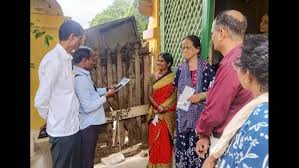
Bengaluru: On a day of much drama, Karnataka State Commission for Backward Classes Tuesday clarified that all Dalit Christian castes have been removed in the final list of castes to be enumerated as part of the socio-economic-educational-political survey, widely known as the caste census. Commission chairman Madhusudan Naik told TOI that the 14 castes were initially included in the draft list but were removed “earlier this month” following public objections. His clarification came late in the day amid intense political drama that unsettled governing Congress, as several Dalit functionaries — including loyalists of chief minister Siddaramaiah such as former ministers H Anjaneya from the Left sect of Scheduled Castes and KN Rajanna from the Valmiki community of Scheduled Tribes — objected to the inclusion of converted castes in the enumeration. While Anjaneya warned of protests, Rajanna criticised both the govt and the commission, saying inclusion of Dalit converted castes would amount to “state-sponsored religious conversion”. However, drama unfolded when a delegation of BJP members led by Chalavadi Narayanaswamy, leader of the opposition in the legislative council, met Naik in the morning demanding that the 14 castes be masked in the enumeration app — just as the commission had done with 34 OBC converted castes last week. This led to a face-off as Naik defended their inclusion, insisting converted castes are eligible for recognition. BJP members strongly objected to the chairman’s assertion and attempted to gherao him. Naik, though, left for a high court hearing on the census. His clarification, that the 14 castes had already been removed, came late in the evening. “The commission’s clarification appears an afterthought to manipulate the situation,” said Narayanaswamy. “The panel is acting as a puppet of the govt.” The census has initially sparked controversy for including 48 converted castes such as ‘Kuruba Christian’ and ‘Kubara Christian’. It included the 14 SC castes as ‘Madiga Christian’, ‘Holeya Christian’and ‘Valmiki Christian’, an ST caste. Last week, the commission said it had masked 34 OBC converted castes following strong opposition. But 14 converted Dalit castes remained. Dalit representatives vehemently protested their inclusion. “It is wrong to include them under the converted category,” said VS Ugrappa, senior Congress functionary and Valmiki leader. “Inclusion of other Dalit converted castes is also wrong since it is a violation of the Anti-conversion Act. Enlisting these castes as converted castes is not just misleading but also mischievous.” He said those from Valmiki community never opted for conversation as they are not untouchable or socially stigmatised or backward like some other Dalits. The developments provided ample ammunition for opposition BJP to attack the govt with. “By ordering a caste census in a tearing hurry, Siddaramaiah has made everybody, including his own party men and cabinet colleagues, unhappy,” said Lahar Singh Siroya, BJP Rajya Sabha member. “As of Tuesday, Vokkaligas, Lingayats, Dalits, OBCs, Brahmins, minorities, tribes, and nomads are all upset with the Congress govt. The CM should ask if his own Kuruba community is with him or if they too are upset.” Courtesy : TOI Note: This news is originally published on https:/timesofindia.com/bha and is used purely for non-profit/non-commercial purposes, especially human rights
Book Review- Caste: a global story by Suraj Milind Yengde
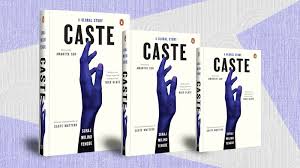
Suraj Milind Yengde in his new book, ‘Caste: a Global story‘ traces global footprint of the anti-caste struggle and how caste and caste-based discrimination become a global phenomenon. Recent cases of caste-based discrimination have been found in top companies like Cisco and higher education institutions in the United States of America. First time, worldwide public discussions are taking place on caste and caste-based discrimination issues. The Cisco and United States university campus incidents were recorded due to the awareness of the global reactions that occurred in the widely publicised case of the institutional murder of Rohith Vemula, a Dalit, in Hyderabad Central University. In this context, the international community endeavours to understand what caste is and caste-based discrimination, and what mechanisms should be developed to address caste-based discrimination in campuses, public institutions, and day-to-day life. The book, “Caste: A Global Story,” attempts to explore, analyse, and observe the Indian caste society from the perspectives of those subjected to it as well as outsiders. This will serve as a prelude to a detailed study of castes globally. The book sets the story on caste centred on India’s hierarchical society and the various forms it takes worldwide (p.21). The author divided his book in six important chapters to explore academic, concepts of caste, caste based discriminations, Dalit response to Black Literature, and caste and race; for the author, it is the prominent voices such as ‘Dalit-Black Live Matters’ along with initiation of the study of caste outside of India like in Trinidad, Cosmopolitan Dalit universalism, and chapter addresses biography of Dalit Agonism- field notes from the Diary of an archivist. There has been various attempt to study caste by many prominent scholars such as Caste: The Origins of Our Discontents By Isabel Wilkerson (2023) Ambedkar in London: William Gould, Santosh Dass, Christophe Jaffrelot (2024), The Evolution of Pragmatism in India by Scott R. Stroud (2023), Becoming Babasaheb: The Life and Times of Bhimrao Ramji Ambedkar (Vol.1): Birth to Mahad (1891-1929) by Aakash Singh-Rathore (2023), and The Trauma of caste by Thenmozhi Soundrarajan (2022). This latest work on the topic by Suraj Yengde explores the historical development of caste and caste-based discrimination beyond time and space. This recent chain of work, based on historical investigation, ethnographic research, and personal story narrations by diaspora, comparative studies of caste and race by social scientists explore and highlight the lived experience of the downtrodden communities and individuals. In this context, Ambedkar’s theoretical writing and his experience during his university days in the United Kingdom and the United State help to understand global inequality and the nexus of caste-race hierarchy. Suraj explores the connection between the anti-caste movement in India and a similar kind of discrimination outside of India. For instance, organisations working on anti-caste connected Dalit lived experiences and experiences of Blacks in the US in order to develop a campaign like Dalit Lives Matter, similar to Black Lives Matter. In the chapter Affairs of Letters: Dalit responses to Black Literature, the author mentions that it is not about literary analysis nor an exercise in comparative literature, but to find out the persistence and map out the history of the one-sided love affair of the Dalit community with Black American literature. And looking critically at the emergence of a literary response to caste and its institutions, and the growing divergence. While mapping it out, he found that the relationship between Dalit and Black literature solidarity has been largely a ‘one-sided’ (p.88) affair. This observation makes sense to a large extent as most of the Dalit literature published in regional languages like Marathi, Hindi, Tamil, and Kannada etc. Despite this limitation, Dalit literature always promotes universal solidarity and an egalitarian society for all oppressed communities by invoking the idea of justice, equality, and freedom. In one of his seminal works, ‘Castes in India: Their Mechanism, Genesis and Development’, Dr. Ambedkar’s observed that, “If Hindus migrate to other regions of earth, Indian caste would become a world problem”. Recently that observation become alive when cases of caste discrimination in UK and USA by the upper caste Indian diaspora were reported similarly, in the year 2021, a federal lawsuit in the USA was filed for caste discrimination in against a Hindu organisation named Bochasanwasi Shri Akshar Purushottam Swaminarayan Sanstha (BAPS). It was alleged the BAPS exploited more than 200 workers (11, Nov, 2021, Aljazeera). In fourth chapter, Suraj also traces caste and caste practice in Trinidad. He observed “Their (Indian origin community) Hindu and caste identity was and continues to be primarily shaped by a brahman-centric form of rituals” (p.141). He also mentioned that caste based occupational category exists among the Indo-Trinidadians. For example, the Pandits Council of Trinidad and Tobago, which is the accredited body of 500 pandits (brahmins), controls the religious aspect of the Hindu community. For a non-Brahman member to obtain membership and become a priest is almost impossible because of caste restrictions. (p.148). Suraj explores how caste practices continue and also their connection with the Indian Hindu fundamental RSS in maintaining such traditions with the upper caste organisation of Trinidad and Tobago. Chapter on ‘Cosmopolitan Dalit Universalism: Dalit Activism and the Promise of an Anti-Caste World’, is a quite interesting one. It presents a fresh look at how the caste system travels not only to the UK and the US, but also to other parts of the world, through the Dalit diaspora, including Malaysia, Kuwait, UAE, Bahrain, etc. It initiated the nurturing of Amebdkarite consciousness by various anti-caste Dalit organisations in particular countries where they get settled (p.207). The Dalit diaspora plays a significant role in galvanizing Ambedkarite consciousness at the international level, with the help of anti-caste thinkers and ideologies such as Buddha, Phule, Periyar, Guru Ravidas, and Kabir. Since most of the Dalit diaspora comprises labourers such as construction workers, supermarket staff, drivers, hotel staff, and cleaning staff, therefore they their life has not been easy. Despite their economic conditions and limited time, they try to develop and maintain Dalit consciousness by
Homebound Director Neeraj Ghaywan Ends Debate On Casting Janhvi Kapoor As Dalit Girl: Has Inner Hunger To Portray A Character

Janhvi Kapoor is one of the top actresses in the industry today and she has been delivering promising performances one after another. The actress who won hearts with her performance in Sidharth Malhotra’s Param Sundari is all set to drench them with emotions now with Homebound, co-starring Ishaan Khatter, Vishal Jethwa. The film is all set to hit the theatres on September 26th and director Neeraj Ghaywan has shared his vision behind casting Janhvi in the role of a dalit girl. Neeraj Ghaywan On Casting Janhvi Kapoor In Homebound At a recent event for Homebound, Ghaywan addressed the conversations around casting Janhvi in a Dalit role, a choice that has sparked questions and debate. The filmmaker said, “In India, we have people from all walks of life. What I was searching for wasn’t just acting skill, but also the inner hunger to portray a character with intensity and truth.” Further, he added, “This character isn’t going to come to you. You have to go to it. You have to step out of your privileged life, confront that reality, and let it settle within you.” He also shared hat casting the right actor wasn’t just about screen presence or line delivery, it was about emotional depth and lived sincerity, especially when telling the stories of historically marginalised communities. For the unversed, Homebound has officially been selected as India’s entry for the Best International Feature Film at the 2026 Oscars. The film marks Ghaywan’s return to direction after nearly a decade and fans are super excited. More about Homebound Homebound had its world premiere on Wednesday in the prestigious Un Certain Regard section at Cannes, where it was met with an enthusiastic audience in a packed hall. The crowd’s excitement was undeniable, culminating in a remarkable 9-minute standing ovation. Homebound, directed by Neeraj Ghaywan, stars Ishaan Khatter, Vishal Jethwa, and Janhvi Kapoor. Backed by Dharma Productions with Martin Scorsese as executive producer, the film follows two best friends, a Muslim and a Dalit, as they chase their dream of becoming cops while navigating caste, religion, love, and survival in a North Indian village. Courtesy : MSN Note: This news is originally published on https:/msn.com/bha and is used purely for non-profit/non-commercial purposes, especially human rights
Dalit women in India fight caste discrimination with farming
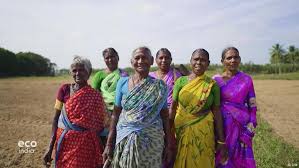
In rural Tamil Nadu, an initiative of Dalit women are turning wasteland into not just crops, but a movement against social exclusion in India. In Tamil Nadu’s Pallur village, a stunning change is underway. A group of Dalit women—historically marginalized and landless—are transforming barren land into thriving farms. Led by community organizer Shakila Kalaiselvan, these women are not just cultivating crops, but also challenging deep-rooted caste and gender discrimination. Their initiative began with courage and sisterhood, as Shakila went door to door rallying support for a shared dream of self-reliance. Breaking Ground: Dalit Women Reclaim Land and Dignity Turning unused land into productive farms was no easy feat. For women who typically survive on daily wages, waiting months for a harvest was extremely challenging. Yet, they persisted. Today, eighty women work in teams, sharing labor and resources. Their success has brought more than food—it’s brought change in many areas. As Burnad Fathima Natesan, a Dalit women’s rights activist, explains, these women no longer endure abuse while working on dominant-caste farms. Now, they grow mangoes in their own gardens, reclaiming both dignity and independence. Sowing Seeds of Social Change The movement is about more than farming. It’s about building a sustainable village with equal access to water, education, and healthcare—services long denied to Dalit communities. Shakila Kalaiselvan points out the stark inequality: essential services are located in dominant-caste areas, leaving Dalit communities with nothing. These women aim to dismantle the structures that exclude them. As they gain financial freedom and assets, they are also experiencing less domestic violence and greater respect. Their journey is a powerful example of how grassroots action can bring real transformation. Madhan Kumar U S Courtesy : DW Note: This news is originally published on https:/dw.com/bha and is used purely for non-profit/non-commercial purposes, especially human rights
Rajasthan News: The temple will be desecrated… Chaos over Dalit entering the temple, video of beating goes viral
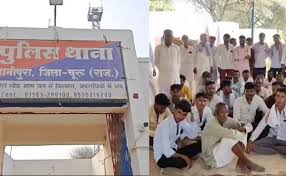
In Churu, Rajasthan, a Dalit man was beaten simply because he was entering a temple. Not only was he not allowed to enter, but he was also subjected to casteist slurs. Churu: A shameful incident has unfolded in Churu district, Rajasthan. It has exposed the harsh reality of caste discrimination that remains deeply ingrained in society even in the 21st century. Dalit youths were prevented from entering a Thakurji temple in Sadasar village of the district and were brutally beaten when they protested. The video of this incident went viral on social media, sparking widespread outrage, prompting police action. On Sunday evening, the Bhagwat Katha had concluded at the village cowshed, followed by a procession. 19-year-old Kanaram Meghwal went to the Thakurji temple with his friends to pay obeisance. Meanwhile, some villagers made casteist remarks and prevented them from entering. When Kanaram protested, the accused kicked, punched, and beat him severely with sticks, injuring him. The video of the incident is rapidly going viral on social media, sparking outrage across the state. Police Action and Public Outrage Following the incident, angry Dalits gathered outside the Bhanipura police station and staged a protest, demanding the immediate arrest of the accused. Police have registered a case against four accused in the case, and two have been detained. However, despite police action, this incident leaves a serious question for society: whether we still face such discrimination today. A Question on Mentality This incident is not just a criminal case, but also reflects the mindset that still persists in the minds of some people. Despite the right to equality enshrined in the Constitution, such cases demonstrate that much work remains to be done to effectively implement legal provisions and change social thinking. This incident reminds us that the fight against racial discrimination is far from over. It challenges every segment of society to speak out against such incidents and ensure that every individual receives respect and equality. Reported by: Gajendra Singh, Sushant Pareek, Edited by: Rakesh Parmar Courtesy: Hindi News
Dalit student beaten in Barabanki for touching lunch box: Accuses fellow student, files police complaint
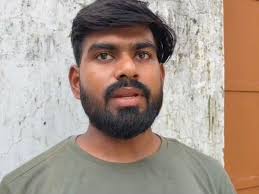
A Dalit student was beaten in the Masauli police station area of Barabanki. The incident occurred on Sunday afternoon at the library located in the cattle market. Udaybhan, son of Ramkumar, a resident of Dafliyan village, alleged that he had gone to the library as usual to study. Around 2 p.m., during lunch time, his lunch box accidentally touched another student, Pradum Shukla’s lunch box. Pradum, making a casteist remark, threw away Udaybhan’s lunch box. Pradum called his friends and beat Udaybhan. He questioned how a student from a lower caste dared to eat with them. Library operator Gaurav also confirmed that the altercation occurred during lunch. At the time of the incident, 10-12 students were present. The victim has submitted a complaint to the Masauli police station in-charge. Udaybhan stated that he is scared by this incident. His studies are being affected by bullying and caste discrimination. He has demanded strict action against the accused. Sarfaraz Warsi Courtesy: Hindi News
Dalit man dies in police custody: Allahabad High Court seeks response from Yogi government, demands ₹25 lakh compensation

Nawabganj Police Station Death Case: Petitioners demand ₹25 lakh compensation for the family and a High Court-monitored investigation Prayagraj: Hearing a public interest litigation (PIL) seeking an investigation into the death of a Dalit man in police custody at Nawabganj police station in Prayagraj, the Allahabad High Court has directed the state government to file its response (counter affidavit) within two weeks. The petitioners have also demanded ₹25 lakh compensation for the deceased’s family members. The family alleges that the man died due to torture in custody on the police station premises, while the police claim he died of a heart attack. Hearing a public interest litigation (PIL) filed by the Advocates Forum and two others, a division bench of Justice Siddhartha and Justice Santosh Rai, in its order on Wednesday, directed the PIL to be listed before the appropriate court on October 10 for further hearing. According to the petitioner’s lawyer, Charlie Prakash, on May 27, the police picked up Hira Lal, a laborer, from his home in connection with a theft case in which no one was named. It is alleged that no family member was allowed to meet Hira Lal, and later the police informed him that Hira Lal had died. Family members were asked to go to the mortuary at Swaroop Rani Nehru Hospital. The PIL alleges that Hira Lal’s body was not handed over to the family members, and the police cremated him at the Daraganj Ghat in Prayagraj. “This is a case of brutal custodial death and murder by the police within the police station premises, in violation of Article 21 (right to life and personal liberty),” argued Charlie Prakash, the petitioner’s lawyer. They demanded the formation of a high-level, independent, and impartial committee headed by a retired High Court judge to investigate the illegal detention, custodial torture, and custodial death of Hira Lal, a resident of Narrepar village, Buduna, under the Nawabganj police station. The PIL also stated, “The investigation should be conducted under the supervision of the High Court and should submit its report within a stipulated time.” Rajan Chaudhary Courtesy: Hindi News
88 locations in 23 districts of Madhya Pradesh declared sensitive for SC-ST crimes

Experts believe that policing alone will not solve the problem. Caste tensions and old rivalries remain a major challenge in these areas. Bhopal. The increasing incidents of crimes against Scheduled Castes (SC) and Scheduled Tribes (ST) in Madhya Pradesh have worried the government. The Home Department, after reviewing the situation in the state, found that cases of such crimes are increasing rapidly in more than half of the districts. Consequently, 88 locations in 63 police station areas across 23 districts have been declared sensitive areas. Police will now develop a special strategy to control crime in these areas. According to the Home Department report, incidents of atrocities against Dalits and tribals have steadily increased in the past few years. Caste disputes, old rivalries, and land disputes, especially in rural areas and small towns, give rise to such incidents. The government has taken this seriously and identified sensitive areas across the state. By issuing a notification, the Superintendents of Police of all the districts have been instructed to maintain special vigilance in these areas and resolve even small disputes immediately. Which areas are sensitive? The police stations and areas declared sensitive include Kotwali in Mandla district, Kosmi and Bharveli in Balaghat, Kotwali and Ganjbasoda in Vidisha, Shujalpur City and Shujalpur Mandi in Shajapur, Vaydinagar in Mandsaur, rural areas, Itarsi and Kotwali in Narmadapuram, Kotwali in Dhar, Padma Nagar, Mandhata and Pandhana in Khandwa, Simrol in Indore, Kotwali, Station Road, Civil Lines and Bamnor in Morena, rural areas in Bhind, Industrial Area and Piplawa in Dewas, Gorabazar in Jabalpur, Kotwali, Cantt, Vijaypur, Aron and Madhusudangarh in Guna, Sirsod, Dinara, Amola, Indaur, Bhaunti, Pipariya and Shivpur in Shivpuri, Sarani and Amla in Betul, Obaidullaganj in Raisen, Bahodapur, Janakganj, Jhansi Road, University and Thathipur in Gwalior, Cantt, Baheria, Banda and Rahatgarh in Sagar. These include Damoh Kotwali, Chhatarpur Civil Lines, Lavkushnagar and Jujharpur, Tikamgarh Kotwali, Ashoknagar Kotwali, Dehar, and Bahadurpur. These steps will be taken According to the Home Department’s notification, steps such as establishing police outposts, community awareness campaigns, and resolving old disputes will now be taken in areas declared sensitive. Police forces have been instructed to take immediate action upon receiving complaints of any incident and assure victims of safety. Furthermore, efforts will be made to build mutual trust by increasing communication with organizations associated with Dalit and tribal communities. Action under the SC/ST Act The state government has also clarified that sensitive areas have been identified under the Scheduled Castes and Scheduled Tribes (Prevention of Atrocities) Act. This Act provides for the protection of victims’ rights, prompt investigation, and strict punishment for the perpetrators. The Home Department states that this step will not only reduce crime but will also reassure Dalit and tribal communities that the administration is committed to their safety. The Challenge of Social Harmony Experts believe that policing alone will not solve the problem. Caste tensions and old rivalries remain a major challenge in these areas. Therefore, community-based initiatives and the promotion of social harmony are also essential. The government has indicated that in the future, peace committees will also be activated in these sensitive areas to prevent minor disputes from escalating into major crimes. What is the SC-ST Atrocities Prevention Act, 1989 Under the Scheduled Castes and Scheduled Tribes (Prevention of Atrocities) Act, 1989, physical assault on Dalits and Adivasis, caste-based insults, land grabbing, forced labor, or social boycott are considered crimes. These cases are investigated by DSP-rank officers, and special courts have been established for speedy trials. This law provides for imprisonment ranging from 6 months to 5 years and a fine for convictions, while serious crimes such as murder, rape, or mass violence can result in up to life imprisonment. Most offenses under the Act are non-bailable, and victims are provided compensation, legal aid, and protection. Ankit Pachauri Courtesy: Hindi News
Rajasthan: Controversy over temple entry in Churu: Dalit youths allegedly assaulted, tension escalates after video goes viral
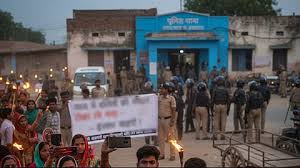
In an incident in Sadasar village of Sardarshahar, youths who went to visit the temple after the Bhagwat Katha were allegedly subjected to caste discrimination and assault. Police filed an FIR after the video went viral. Churu, Rajasthan: A serious controversy has erupted over entry into a temple in Sadasar village of the Sardarshahar tehsil of the district. It is alleged that some youths from the Dalit community were not only prevented from entering the temple but were also assaulted and subjected to casteist remarks. A video of the incident went viral on social media, creating tension in the area, and the police have registered a case and launched an investigation. What is the whole matter? The incident occurred during a procession marking the conclusion of a Bhagwat Katha event held in the village. After the procession, 19-year-old Kanaram Meghwal, along with his friends Sandeep, Mukesh, Vishnu, and Kaluram, went to visit the Thakurji temple in the village. According to the FIR filed by the victim, Kanaram, some people already present in the temple premises stopped them, citing their caste. Allegations of Assault and Caste-Based Insults According to the complaint, when the youths protested this discrimination, the accused, Surajdas Swami, Shankarlal, Himmat Kumar, and Anil, began abusing them. The dispute escalated to the point where the accused allegedly slapped and punched them. Kanaram also alleged that Shankarlal attacked his hand with a stick, injuring him and causing him to fall. The FIR also states that the accused shouted threats in front of the crowd, saying, “We will not allow any Dalit to enter the temple.” Police Initiated Action As soon as the video of the incident went viral, the administration swung into action. Based on the victim’s complaint, a case has been registered at the Bhanipura police station under relevant sections. Meanwhile, members of the Dalit community, enraged by the incident, protested outside the police station, demanding the immediate arrest of the accused. Police have been deployed to maintain peace in the village. Police officials have assured a fair investigation and strict action against the culprits. Rajan Chaudhary Courtesy: Hindi News