
Dalit student assaulted at Jodhpur University hostel; ABVP leader among accused
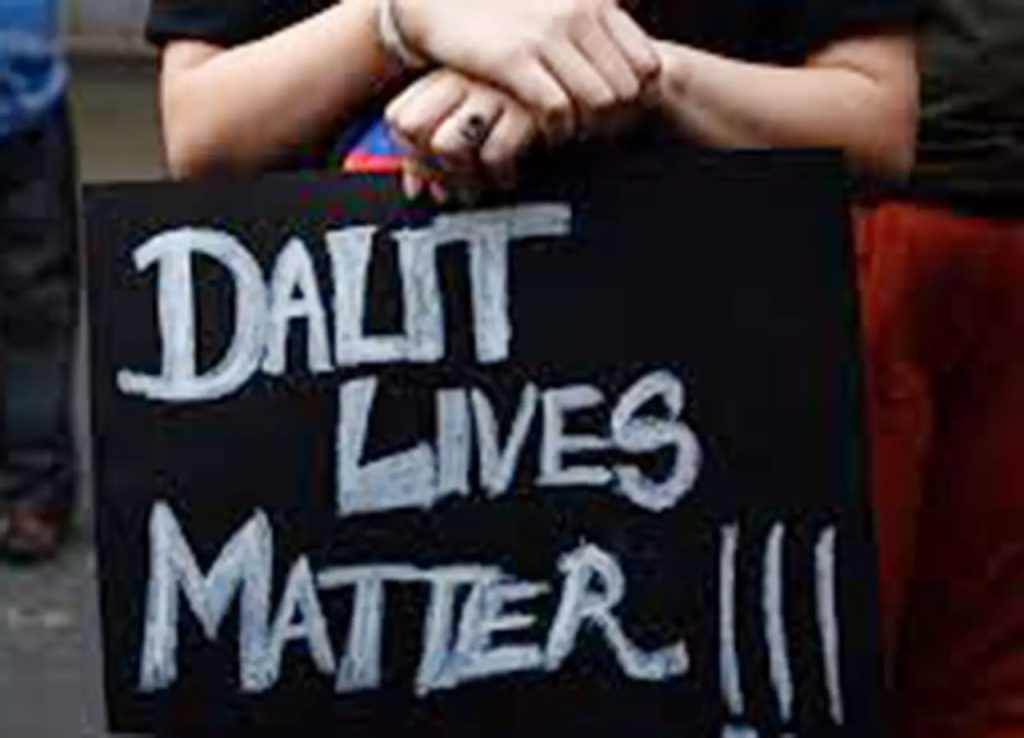
Jodhpur: A Dalit student at Jai Narayan Vyas University’s New Campus in Jodhpur was allegedly assaulted inside the university hostel, with an ABVP leader named among the accused. Police have registered a case under the Scheduled Caste and Scheduled Tribe (Prevention of Atrocities) Act. The victim, Kamal Kishore, a final-year B.Sc student from Jaisalmer, alleged that the attack occurred after he chose not to attend a welcome event for BJP leader Satish Poonia. While many students participated, Kishore remained in his hostel room. According to his complaint, ABVP leader Ravindra Singh Banta and three to four associates forcibly entered the hostel and physically attacked him, hurling casteist slurs. Kishore sustained a finger fracture and serious injuries around his ribs and stomach. He is undergoing treatment at Mathuradas Mathur Hospital in Jodhpur. The incident sparked protests by Dalit organizations, who gathered at Bhagat Ki Kothi police station demanding strict action. Station officer Rajeev Bhadu confirmed that the case has been registered and that investigations are underway. Courtesy : Vartha Bharati Note: This news is originally published on https:/varthabharati.com/bha and is used purely for non-profit/non-commercial purposes, especially human rights
“RSS policy of Nitish-BJP”: Tejashwi Yadav accuses NDA of “anti-Dalit” approach in Bihar
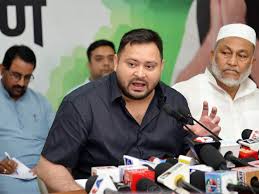
Patna (Bihar) [India], September 28 (ANI): Bihar’s Leader of Opposition and RJD leader, Tejashwii Yadav, accused the JDU-BJP government of anti-Dalit policies on Sunday, claiming that the Scheduled Caste population has a lower participation rate in the government and professional sectors. Sharing the glimpses from the ‘Pataliputra Dalit Conference’ by the National Confederation of Dalit and Adivasi Organisations (NACDAOR), Tejashwi launched a sharp attack against Chief Minister Nitish Kumar and the BJP, accusing them of an RSS-like policy. The RJD leader wrote on X, “Participated in the ‘Pataliputra Dalit Conference’ organised by the National Confederation of Dalit and Adivasi Organisations (NACDAOR). For 20 years, the RSS policy of the Nitish-BJP double-engine government has led to anti-Dalit policies, due to which, despite the population of Scheduled Castes in Bihar being more than 21.3 per cent, the participation of Dalits in government and professional sectors has been limited to just 1.13 per cent.” Further, Tejashwi Yadav claimed that there are caste inequalities in education, land rights, and employment. “Due to the continuous exploitation of Dalits, their condition is pitiable. In the current social structure, significant inequalities persist in areas such as education, land rights, and employment. Only 0.015 per cent of the total Scheduled Caste population are doctors and only 0.1 per cent are engineers,” he wrote. He accused the government of not allocating appropriate funds for the students from the Scheduled Tribes and the Scheduled Castes. He wrote, “The Bihar government is using the funds allocated under the Scheduled Tribe and Scheduled Caste sub-plan for other purposes, as a result of which these sections receive no direct benefit. When it comes to schemes for scholarships, progress, advancement, and improvement for Dalit students, this anti-Dalit government starts making excuses of a shortage of funds.” He also slammed Union Ministers Chirag Paswan and Jitan Ram Manjhi for their alleged silence over the exploitation of the Dalit community. “Chirag Paswan and Jitan Ram Manjhi, who call themselves Dalit leaders, have maintained complete silence on the exploitation of Dalits after getting a share in power,” the X post read. Tejashwi’s remarks come ahead of the Bihar Legislative Assembly elections later this year, as Mahagathbandhan, led by Congress and RJD, is gearing up to challenge the ruling NDA, which comprises BJP and JD(U). (ANI) The article has been published through a syndicated feed. Except for the headline, the content has been published verbatim. Liability lies with original publisher. Written By: TSG Syndication Courtesy : The Sunday guardian Note: This news is originally published on https:/thesundayguardian.com/bha and is used purely for non-profit/non-commercial purposes, especially human rights
Water freezer in Dalit settlement out of order for several months: Kesampur villagers yearn for cold water, village headman assures speedy repair
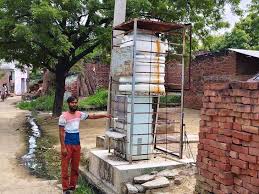
The water freezer installed in the Dalit settlement of Pasaipur village, Bhagya Nagar block of Kesampur, has been out of order for several months. This has caused problems for villagers seeking cold water. Villagers stated that they have complained to the village headman several times, but it has not been repaired yet. The out-of-order water freezer is preventing people from getting cold water in the scorching heat. Villagers Shailendra, Arvind Master, Afsar, Ramdas, Rizwan, and Ram Ratan, along with others, have demanded immediate repairs from village headman Rajesh Pal. They have warned that if repairs are not completed soon, they will submit a petition to the District Magistrate. Villager Rajesh Pal stated that the mechanic was unwell, which delayed the repairs. He assured that the water freezer will be repaired within a day or two, providing relief to the villagers. The village head also appealed to the villagers not to waste water and not to leave taps open. Mohammad Zulfikar Ali Khan Courtesy: Hindi News
Attempt to murder Dalit youth: Villagers rescue him in Tiloi; shop overturned, police taking action
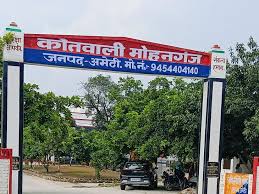
An attempt was made on the life of a Dalit youth in Asni village, Tiloi tehsil, Amethi. The youth’s life was saved by the intervention of villagers. The incident occurred on September 27, 2025, at around 4:30 p.m. The victim, Badri Prasad Kori, filed a written complaint at the Mohanganj police station. Badri Prasad Kori, who runs a puncture shop in the village, stated that a young man from Rani Purva, under the influence of alcohol, came to his shop. The young man hurled casteist slurs at Badri Prasad and also abused the NREGA workers working nearby. When Badri Prasad objected, the young man began kicking and punching him. The attacker snatched a shovel from one of the NREGA workers and attempted to attack Badri Prasad. However, villagers present at the scene intervened and saved Badri Prasad’s life. Upon returning home from the police station, Badri Prasad found that the young man had overturned his puncture shop. Villagers reported that the young man was using casteist slurs and threatening to kill him if he found Kori. The station in-charge stated that a complaint has been received and legal action is being taken. Rajesh Kumar Courtesy: Hindi News
‘Upper-caste community occupied my grandfather’s land,’ says Niranjan Arya:Former CS reveals Dalit land encroachment and workplace bias, sparking social media debate
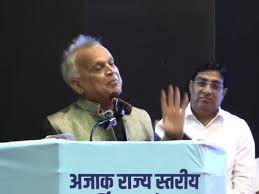
Former Chief Secretary (CS) Niranjan Arya had raised the issue of discrimination against Dalits and the encroachment on their lands. He said – unity is only shown in speeches and books. This discrimination can also be seen in the workplace. Which file will be given to whom, who will be in which seat, which post should be given to whom, who should be seated in which interview? All this is discrimination. Arya had said this at the conference of the Scheduled Caste Employees Association in Jaipur on September 21. A debate has started on social media. Former Chief Secretary said- My village is in Pali district, named Raas. There, the upper-caste community has occupied my grandfather’s land for the past 40 years. I have been trying for the past year, but the occupation cannot be vacated. This is after I served as an IAS officer and Chief Secretary. Upper caste occupied land, unable to get it vacated Former Chief Secretary Niranjan Arya himself comes from the Dalit community. Arya said at the Ajak conference, “When I went to the village recently, someone told me that this land is yours.” I asked – “How is it mine?” Then he told me that these people have been occupying it since your grandfather’s time. They might have borrowed 50-100 rupees. That land is still under their occupation. I was a Collector in five districts, but this matter never came to my attention. Arya said- We are being told that cleaning is your job, then why is the municipal corporation giving cleaning contracts to companies? Our people are doing the cleaning, but someone else is the owner. We don’t have money or entrepreneurship. Others have taken over our business, and we have been reduced to laborers. Sharing his own story, he said, the lawyer’s behavior changed Arya shared an experience and said- After retiring as Chief Secretary, I went to a lawyer for a case. The lawyer belonged to a high community. Since I had retired, half my value was already diminished. When I went the first day, the lawyer offered tea. He entertained me with savories and biscuits. He even came out to see me off. When I went the second time, the lawyer casually asked what my rank was in the IAS. I said, ‘What does that have to do with my case? I have retired, haven’t I?’ Still, I said, let me clear your misunderstanding, my rank was 380. It was because of Ambedkar that I became an IAS. After this, there was a day and night difference in the lawyer’s behavior. When I left after that, they didn’t even come to see me off. Debate on social media After this video of former Chief Secretary Niranjan Arya, a debate has started on social media. One side is arguing in favor and the other against. Some users are raising questions about not being able to get the encroachment removed from their own land despite being the Chief Secretary. Some users have linked it to caste discrimination. Courtesy : Bhaskar English Note: This news is originally published on https:/bhaskarenglish.com/bha and is used purely for non-profit/non-commercial purposes, especially human rights
Chalavadi Narayanaswamy accuses Karnataka government of ‘diverting’ funds meant for Dalit welfare
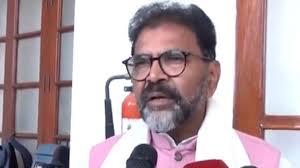
The Bharatiya Janata Party has accused the Congress government of “hoodwinking” Dalits by diverting funds meant for their welfare to other works, including the functioning of the H.N. Nagamohan Das Commission. Addressing a press conference here on Friday, Leader of the Opposition in the Legislative Council Chalavadi Narayanaswamy said the government had earmarked ₹42,000 crore for Dalits’ welfare under Scheduled Castes Sub-Allocation & Tribal-Sub Allocation Act that mandates earmarking funds for the welfare of SC/ST communities in proportion to their population. Of this, ₹21,000 had been diverted to all the departments for taking up various works. Of the remaining ₹21,000 crore, a sum of ₹ 14,000 crore had been diverted to fund guarantee schemes, he alleged. “The remaining amount of ₹7,000 crore has been given to the Social Welfare Department, which had used this for various purposes including organising the International Democracy Day and Constitution Day. These funds have been used even for the functioning of Nagamohan Das Commission that looked into internal reservation among SCs,” he alleged. Much against the claims of the government of providing huge funds for the welfare of Dalits, there were several lapses in providing benefits to Dalit beneficiaries, he alleged. Citing an example, he said earlier, the government used to directly pay the school and college fees of Dalit students. But now, the students were expected to pay their fees and get a reimbursement from the government later, he said. The Hindu Bureau Courtesy : The Hindu Note: This news is originally published on https:/thehindu.com/bha and is used purely for non-profit/non-commercial purposes, especially human rights
The message of a new Dalit party: Preparing to chart a new political course through education and foreign opportunities
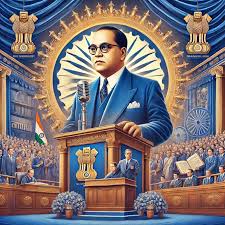
The Dalit Quit India Party is being seen as a symbol of a new political and social direction emerging from education, the support of Indian diaspora, and global opportunities. Dalits want more. Even if they cannot find it in India, they may go to other countries to seek it. This is the message of the Dalit Quit India Party (DQIP), founded by intellectual and Dalit thinker Chandra Bhan Prasad. Although not yet registered as a political party, this group appears to be becoming a force in shaping the direction of Dalit thought. Baba Saheb Bhimrao Ambedkar’s core mantra for Dalits was education. In essence, he advised Dalits to “be educated, organize, fight,” and have self-confidence. Ambedkar was the first untouchable in India to obtain a PhD and study abroad. This is entirely thanks to a scholarship from the Maharaja of Baroda, which allowed him to pursue a law degree and a PhD from Columbia University and the London School of Economics (LSE). Prasad’s initial inspiration came from the farmers’ movement and he also received support from Non-Resident Indians (NRIs). He says that the days when Dalit children were satisfied with a degree from a typical Indian university are over. Now, they must be ambitious and self-confident. Dalits must send their children abroad to study, not just at ordinary universities, but at prestigious institutions like Harvard, Columbia, and the London School of Economics. Children should also be fluent in English and develop skills in science, technology, engineering, and mathematics (STEM), aiming to become faculty members at foreign universities. Their ambitions should be limitless. Prasad’s theoretical basis for this belief is that Dalits lack an elite and, as a result, have no social regulator or agency. Kanshi Ram’s Bahujan Samaj Party (BSP) possessed this potential. However, Kanshi Ram shifted the movement from Ambedkar to Periyar, focusing on the plight of Dalits, even though he himself lived in poverty and deprivation, in order to resonate with his followers. In many parts of India, his BAMCEF devolved into a personality-centered organization of blind followers. Consequently, when someone left the organization, it disintegrated. The final blow was the shift from Bahujan to Sarvajan, which led to the rise of aggressive leaders like Chandrashekhar Azad and his Bhim Army. Prasad also believes that simply acquiring an academic degree from abroad will not suffice, and it is not a solution, as discrimination exists everywhere. According to a 2016 survey of 1,200 individuals of South Asian descent in the United States conducted by Equality Labs (released in 2018), 26 percent reported experiencing physical assault due to their caste, while 59 percent reported experiencing caste-related comments. However, this is the only such survey to date. More than half of those surveyed reported being afraid to identify as Dalit. Some even conceal their caste, while others proudly state it. Kanishka Elupula, a PhD student at Harvard University, told Pulitzer Center researchers during a 2019 project on caste in America, “When I’m at Harvard, I want to be known as an untouchable because I want people to know that.” Cases of caste discrimination have also been filed in US courts, particularly in California, a hub of the technology industry. Various measures have been introduced to address caste issues domestically in India. Maharashtra is the only state that provides scholarships to Dalit students enrolled in foreign universities to cover tuition fees, allowances, and living expenses. A National Council for Affirmative Action was established in 2010 by the Confederation of Indian Industry (CII), chaired by the late J.J. Irani. Based on annual reports, progress on this front is also patchy. There are still no Dalits in the top management levels of any major company, but Dalit matrimony websites are flooded with applications seeking or seeking marriages with individuals employed in multinational companies (MNCs). Dalit-led enterprises, led by the Dalit Indian Chamber of Commerce and Industry (DICCI), are flourishing, and several state governments have changed procurement policies to benefit Dalit contractors. However, it is difficult to predict how politically and socially influential the unification of Dalit Indians in the Indian diaspora can be in the country. After all, the activities of the Indian diaspora have exacerbated many issues. On the other hand, violence against Dalits continues to rise, and National Crime Records Bureau data shows that the conviction rate remains low, at around 25 percent. For Dalits, education and capitalism remain the only paths to progress. Disobedience is the other. Aditi Phadnis Courtesy: Hindi News
Tension in Reddigudem in NTR district as Dalit youth alleges police assault; Section 144 imposed
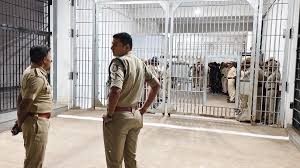
Vijayawada: Tension prevailed at Reddigudem police station in NTR district on Friday after members of the Dalit community staged a protest, alleging that sub-inspector B Mohan Rao assaulted a 23-year-old Dalit youth, Nimmakuri Ravindra. The protesters demanded action against the officer, forcing authorities to impose Section 144 in the area and deploy Rapid Intervention Vehicles to maintain order. According to police, the allegations are false. “Ravindra is one of the accused in a recent case in Paritala, nearly a month ago. He was brought to the station for questioning back then, when he complained of stomach pain, he was immediately rushed to a nearby hospital. Later, he, along with others, staged a protest and falsely alleged that I assaulted him. Following that, local community leaders gave a call for protest on Friday. The situation was immediately brought under control. Ravindra has two criminal cases pending against him,” SI Mohan Rao told TOI. The protests created unease among locals, though officials confirmed that the situation has since stabilized. Police said they are monitoring developments closely to prevent further unrest. Courtesy : TOI Note: This news is originally published on https:/timesofindia.com/bha and is used purely for non-profit/non-commercial purposes, especially human rights
Chhattisgarh and Dalit empowerment: Attacks on Christians are not about conversions
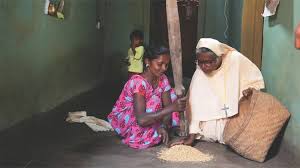
The Sangh Parivar fears the empowerment of Dalits and the spread of education among tribal and poor communities. In September 2019, Thiruvananthapuram MP Shashi Tharoor made a rare blooper. In response to the much-hyped ‘Howdy Modi’ event in Texas, US, the suave parliamentarian posted a “forwarded” photograph on his Twitter (now, X) handle, showing the rousing welcome Jawaharlal Nehru had received without any PR work on a foreign visit. “Nehru & India Gandhi [sic] in the US in 1954. Look at the hugely enthusiastic spontaneous turnout of the American public, without any special PR campaign, NRI crowd management, or hyped-up media publicity,” he tweeted, oblivious of the three apparent mistakes he was committing. Netizens and fact-checkers went on an overdrive on seeing Tharoor misspelling Indira. They went further and dug up more information, which forced the Lok Sabha member to tweet a clarification. Fact-checkers found that the photograph was taken during Nehru’s visit to the USSR, and not the US. They also claimed that the year was 1955. In 1955, a little boy from Kerala, unaware of Nehru’s visit to the USSR’s Magnitogorsk, a geographical anomaly that once consisted almost entirely of iron ore. The boy frolicked with friends on the banks of the River Pampa, now in Kerala’s Pathanamthitta district. Little did he then know that Nehru’s visit to the Soviet Union would soon take him to Durg, now in Chhattisgarh. Related: Religion, prejudice, politics and procedural lapses The migration On 2 March 1955, the USSR and India signed an agreement for an integrated iron and steel works in Bhilai, the twin city of Durg, then in Madhya Pradesh. Three years later, the first furnace roared into life. The Bhilai Steel Plant (BSP) opened up employment opportunities to several skilled and unskilled workers in Tamil Nadu and Kerala. The boy’s father was among those who grabbed the opportunity, and his family shifted from the banks of Pampa to the shores of the Shivnath River, now called a jewel of Chhattisgarh. From Kerala, it was mostly people from central Travancore who went to Bhilai. Having gained the gift of education through the Church Mission Society missionaries, they were prepared for such new opportunities, even when Kerala itself had no industries to speak of. For decades, they lived in the twin cities of Bhilai and Durg, proud contributors to India’s growth story. Their generations grew up there, chose to stay, and built peaceful lives. Today, that peace is frayed. The boy — now all grown up — whose father was an engineer at BSP, now lives in fear because of his Christian identity. They cannot even whisper ‘Hallelujah’ within their four walls. Yes, the Malayali Christian community in Durg, once so rooted and secure, now lives under the shadow of Sangh Parivar forces, especially the Bajrang Dal. Related: Missionaries serving marginalised face criminalisation Bajrang Dal vs house churches In Raipur, Durg, and the surrounding areas of Chhattisgarh, an unofficial directive to close house-churches is reportedly being enforced. These house-churches, mainly run by Pentecostal pastors, are small congregations that meet in private homes rather than formal church buildings. According to a June 2025 ruling by the Madras High Court, private homes in India can generally be used for religious prayer. However, converting a house into a permanent place of worship requires permission from local authorities. ”In Durg, there are fewer than 10 Malayali pastors, but the Christian community is strong, comprising nearly 5,000 families—from Orthodox, Latin Catholic, and Pentecostal denominations such as IPC and Church of God, etc.,” a church council leader from Durg with roots in Kottarakkara, Kollam, told South First. “Most Malayali pastors have registered churches, but some face financial constraints that prevent them from building formal church buildings. So they conduct prayers in their homes,” he said on condition of anonymity. In Bhilai, the plant authorities had allocated acres of land for Christians on lease to build churches. With nearly 30,000 permanent workers in BSP, people from South India, Bengal, and elsewhere were free to live here and practice their faith. Alongside schools and hospitals, religious institutions like churches, mosques, and temples were established. The Orthodox Diocese later built numerous schools, colleges, and professional institutions, while Catholics set up hospitals and schools in Durg. Now, after Vishnu Deo Sai became the Chief Minister of Chhattisgarh, Bajrang Dal members are being forced to stop house prayer meetings. “They come to our prayer centres with police, attack us, and shut down our churches. Police then file cases against pastors for ‘shanti bhang‘ (disturbing peace) and Section 295 (hurting religious sentiments) at the request of Bajrang Dal members. After the arrest of two Malayali nuns, the confidence of Bajrang Dal activists has increased, as the police have not taken action against them,” the church leader said. HC asks Durg to review church rules; no action yet After Bajrang Dal allegedly began shutting down house congregations and prayer meetings through threats and violence, church authorities approached the High Court. Copy of Court Order Copy of the High Court order. The Chhattisgarh High Court has directed the Durg District administration to consider representations from the United Christian Council regarding restrictions on prayer meetings in churches and halls. The petition, filed by the council’s Secretary Obed Das, sought relief against several restrictions, including barring non-Christians, banning prayers in residential or rented halls, limiting prayer duration, and recording attendees. “The administration has been issuing oral instructions restricting who can attend prayer meetings and where they can be held, despite churches being on private land,” a lawyer, who also sought anonymity, told South First. The court ordered the District Magistrate to decide the representations submitted on 6 April and 31 July 2024, after a fair hearing within four weeks. The petition was disposed of with directions to pass an appropriate order. However, the local administration has yet to act. ”Till now, no action has been taken even after the High Court’s direction. So where will we go for justice?” the church leader asked. Rising attacks Article
Dalits were prevented from entering the Durga Puja pandal, and the dominant people brandished sticks and declared they could not worship there.
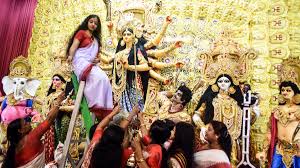
Seoni Durga Puja Pandal: Dalits were prevented from entering the Durga Puja pandal in Seoni. This allegation is being leveled against village strongmen. The victims also filmed the incident. Police have filed a case against three individuals and begun investigating the matter. In Vindhya, dominant individuals prevented Dalits from entering the Durga Puja pandal. Seoni: In Sadak Seoni village, under the Chhapara police station in Seoni district, Madhya Pradesh, members of the Dalit community were prevented from entering the Durga Puja pandal by dominant individuals. The family had come for worship and darshan. Those attempting to visit were abused. Police have filed a case against three individuals in this matter. Case filed against three individuals In fact, this entire incident took place in Sadak Seoni village, under the Chhapara police station. Dalits had come to worship at the Durga Puja pandal. People who had come to visit were abused by the bullies sitting there. A video of this incident has surfaced, showing an elderly man standing with a stick and threatening them. Following the video, a case has been filed against three people. Prevented from Worship According to Chhapara police, Shyamlal Ahirwar stated in his complaint that on Wednesday, he had gone to the public Durga pandal at Durga Chowk with his wife and son to worship. The bullies stopped him from performing the puja, saying, “You cannot perform puja there.” Family works as laborers According to the victim, he earns his living by working as a laborer. While returning from the fields, the accused, Mehrban Singh Thakur, stopped him on the way and said, “I have received numerous complaints against you.” He then objected to his entry into the pandal and threatened to kill him if he spoke too loudly. Shortly after, when he went alone to the pandal to donate, Naresh Thakur and Narayan Yadav insulted him with casteist slurs and refused to accept the donation. After this, when my nephew arrived at the pandal to donate, he was also taken down from the stage. The victim also filmed the incident on his mobile phone. SP Sunil Mehta informed that a case has been registered and arrests will be made soon. Currently, the viral video on social media highlights the caste-based discrimination still evident in society. Edited by: Muneshwar Kumar • Reported by: Jitendra Bhardwaj About the Author Muneshwar Kumar is the Principal Correspondent at Navbharat Times Online. He has 14 years of experience in journalism. He has a special interest in Madhya Pradesh politics, crime, current affairs, and off-beat news. He also has experience in ground reporting for several elections. He has been with Navbharat Times Online since 2020. Courtesy: Hindi News