
BJP MLA protests after FIR against Dalit Muslim residents over ‘tree-cutting’ in Ayodhya
Ayodhya (UP), Oct 16 (PTI) Uttar Pradesh’s Rudauli BJP MLA Ramchandra Yadav staged a ‘dharna’ here after registration of a criminal case against six persons, including four Dalit and two Muslim, over alleged tree-cutting and “stealing of wood”. The protest, staged in front of the Nagar Panchayat office in Rudauli tehsil on Wednesday, later ended following the “assurance” of appropriate action by Circle Officer (CO) Ashish Nigam. Nagar Panchayat Executive Officer Nikhilesh Mishra said preparations were underway for the upcoming ‘Jhalkari Bai Jayanti’ celebration on November 22, where Chief Minister Yogi Adityanath has been invited as the chief guest. During the cleaning work around the Nagar Panchayat premises, a tree was allegedly cut down, following which Mishra lodged a complaint on October 5 at the Baba Bazar police station. SHO Shailendra Kumar Azad said, “The case was registered against six persons, identified as Nishu Ahmad, Aabid Abdul, Lal Bahadur, Ramroop, Siyaram, and Navmi Lal on charges of stealing wood. The matter is under investigation.” Yadav and district BJP general secretary Radhey Shyam Tyagi said they had already apprised Chief Minister Adityanath about the matter, yet an FIR was registered against members of the Kori community. Meanwhile, Ayodhya District Magistrate Nikhil Tikaram Funde has transferred Rudauli Sub-Divisional Magistrate Vikas Dhar Dubey to Sohawal tehsil, following Yadav’s meeting with the chief minister. Angry BJP workers demanded that the administration withdraw the case and take action against those responsible, with Yadav warning that it would be resumed if the FIR was not withdrawn. However, reacting to the protest, BJP district spokesperson Rajneesh Singh said, “Those who staged a dharna against the administration were completely wrong. They should have raised their concerns within the party forum. I demand that the party’s state president and disciplinary committee issue show-cause notices and take action against them.” (This story has not been edited by THE WEEK and is auto-generated from PTI) Courtesy : TW Note: This news is originally published on https:/theweek.com/bha and is used purely for non-profit/non-commercial purposes, especially human rights
Woman booked for abetting suicide of her Dalit lover

Rajkot: Police at Sikka in Jamnagar district registered an FIR against an upper caste woman, Dipali Sonchatra, for allegedly abetting the suicide of her lover, Ashwin Parmar, who was from a scheduled caste and was in a relationship with her for about six years. It was alleged that she harassed him and abused him due to his caste. Police booked Sonchatra for abetment to suicide under Section 108 of the Bharatiya Nyaya Sanhita and under the Scheduled Castes and Scheduled Tribes (Prevention of Atrocities) Act based on a complaint from Hasmukh Parmar, the brother of the deceased. The FIR states that Dipali was in a relationship with Ashwin for five or six years. He wanted to marry her, but she was allegedly avoiding marrying him due to them being from different castes. Hasmukh alleged that Dipali harassed Ashwin and insulted him over his caste. This humiliation led Ashwin to drink acid on Aug 30, which caused his death on Sep 3. Hasmukh stated that he did not initially file a complaint, but after recovering his brother’s phone, he found conversations in which Dipali allegedly made casteist remarks and harassed Ashwin. He then approached police with the evidence. Hasmukh also named three friends of Ashwin’s, who could corroborate the charge that Dipali had been insulting Ashwin due to his caste, which drove him to commit suicide. Police said they have gathered electronic evidence and are investigating the matter. Courtesy : TOI Note: This news is originally published on https:/timesofindia.com/bha and is used purely for non-profit/non-commercial purposes, especially human rights
Dalit boy’s suicide: HC rejects pre-arrest bail to Rohru woman; says prima facie reading of case shows she gave beatings to deceased

Shimla: The Himachal Pradesh high court on Tuesday dismissed the pre-arrest bail petition of the woman who is accused of abetting the suicide of 12-year-old Dalit boy of her village by allegedly confining him wrongfully and assaulting him. The upper-caste woman, Pushpa Devi (50), is from Limbra village in the Rohru sub-division of Shimla district. She is facing charges under the Scheduled Castes and Scheduled Tribes (Prevention of Atrocities) Act, and for wrongful confinement, assault, and abetment to suicide. Dismissing the petition as not maintainable, the bench headed by Justice Rakesh Kainthla held, “A prima facie reading of the status report and FIR shows that the accused gave beatings to the deceased (a member of the scheduled caste) and confined him to the cowshed because the deceased happened to touch the house of the accused, and she wanted a sacrificial goat for purification.” The deceased boy belonged to the Koli community. The court underlined that this offence was committed by the accused because of the caste of the deceased and would not have been committed if the deceased had not been a member of the scheduled caste. Justice Kainthla held that it was not possible to conclude, at this stage, that the petitioner had not, prima facie, committed an offence punishable under Section 3(2)(va) of the Scheduled Castes and Scheduled Tribes Act. The court also upheld the objection taken by additional advocate general Jitender Sharma that the pre-arrest bail petition is not maintainable in view of the bar contained in Section 18 of the SC and ST Act. The case has sparked outrage, highlighting ongoing caste-based discrimination and abuse especially in rural areas of Himachal Pradesh. The police complaint filed by the deceased boy’s father states that the boy died by suicide on September 17, allegedly after consuming poison. He was reportedly harassed and locked in a cowshed by Pushpa Devi the previous evening, Sept 16. The high court had earlier, on Sept 25, ordered the release of the petitioner on interim bail until further orders, considering that she is a woman and is entitled to special consideration. Until then, Police Station Chirgaon had not added Sections 3(2)(v) and 3(2)(va) of the Scheduled Castes and Scheduled Tribes (Prevention of Atrocities) Act in the FIR registered on Sept 20. These sections were added later based on the investigation. The bench also noted that the accused also gave an interview to a local news media channel on Oct 1, in which she admitted that she confined the deceased boy inside her cowshed and stated that she would have not released him until the goat was given to her. “Chain Ram, Kardar made a statement about the caste prejudices prevalent against members of the scheduled caste, like ‘Koli’, who are treated as untouchable and not allowed to enter the house,” observed the court. Courtesy : TOI Note: This news is originally published on https:/timesofindia.com/bha and is used purely for non-profit/non-commercial purposes, especially human rights
‘End this drama’: Rahul Gandhi meets Haryana IPS officer’s wife, daughters; ‘act against accused officers,’ opposition leader tells PM Narendra Modi
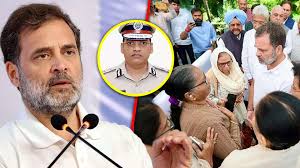
NEW DELHI: Leader of Opposition in Lok Sabha Rahul Gandhi on Tuesday asked Prime Minister Narendra Modi and Haryana chief minister Nayab Singh Saini to take action against the accused cops in the Haryana IPS officer ‘suicide’ case. Rahul Gandhi, along with former CM Bhupinder Singh Hooda and senior Congress leader Kumari Selja, met the officer’s wife and daughters and assured all help to the bereaved family Later, while interacting with journalists, Rahul Gandhi said, “There has been a tragedy. He was a government officer, and the Haryana CM had personally given a commitment that he would initiate a free and fair inquiry and take action. He said this three days ago, but that commitment has not been fulfilled. His two daughters, who have lost their father, are under a lot of pressure.” “My message as LoP to the PM and Haryana CM: fulfil the commitment given to the daughters, allow the funeral, end this drama, and act against the officers exerting pressure on the family,” he added. — PTI_News (@PTI_News) Politicians from across the country are making a beeline to visit the Kumar household in Chandigarh to console the grieving family. Union Minister of State for Social Justice and Empowerment Ramdas Athawale and Telangana Deputy CM Mallu Bhatti Vikramarka met the deceased officer’s wife, IAS officer Amneet P Kumar, in the morning. After meeting the family, Athawale said he had assured them of all support and that the entire country’s SC community is awaiting action against the officers responsible for Kumar’s suicide. Later, Athawale also met Haryana Chief Minister Nayab Singh Saini and discussed the case. Both Athawale and Paswan are allies of the ruling BJP. Courtesy : TOI Note: This news is originally published on https:/timesofindia.com/bha and is used purely for non-profit/non-commercial purposes, especially human rights
Take action, crores of Dalits are watching: Rahul to PM & Haryana CM
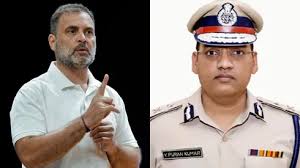
CHANDIGARH: Leader of Opposition in Lok Sabha, Rahul Gandhi on Tuesday met the family of Haryana IPS officer Y Puran Kumar, and said it was a question of justice “not just for a family but for all Dalits”. Calling upon Prime Minister Narendra Modi and Haryana chief minister Nayab Singh Saini to take action against officers in the case, Rahul alleged that Saini had not kept his promise of a fair and transparent inquiry into Kumar’s death. The Wayanad MP spent around 50 minutes with the bereaved family. After stepping out, he told the gathered mediapersons that Puran Kumar’s daughters are “under pressure”. “As Leader of Opposition, I want to give a clear message to Prime Minister Narendra Modi and Haryana chief minister Nayab Saini — the promise made to the daughters of deceased IPS officer Puran Kumar should be fulfilled. Let the last rites of the deceased IPS be performed peacefully. ‘Yeh tamasha bandh kijiye’ (stop this drama). Crores of Dalit brothers and sisters are watching. Strict action should be taken against responsible officers in this matter,” Rahul said. During their meeting, the IPS officer’s wife, IAS officer Amneet Kumar told him that he was relentlessly insulted and driven to suicide, said Rahul. “They were a Dalit couple. Discrimination against the deceased IPS officer wasn’t a matter of 10-15 days but was systematically going on for several years to demoralise him, ruin his career and destroy his dignity and respect. Other officers were conspiring for this,” said the Leader of the Opposition, adding that “justice should be done”. “This is not just a matter of one family, rather, it is a matter of crores of Dalit families living in the country. A wrong message is going out to Dalit brothers and sisters — that no matter how intelligent and sensible a Dalit is, he too can be suppressed and crushed,” Rahul said. Rahul’s sister, Congress general secretary Priyanka Gandhi Vadra, echoed him and said Puran Kumar’s suicide was a “blot” on the country, “It’s proof that Dalits are neither safe nor is there justice for them under the BJP govt,” she tweeted. She alleged that Kumar died by suicide due to caste-based harassment. “His family is wandering in search of justice, but no one is paying any heed,” she said. A few days ago, former Haryana CM and current Leader of the Opposition Bhupinder Singh Hooda demanded an impartial investigation into Puran Kumar’s suicide, and said “no culprit should be spared and no innocent should be harmed”. After Rahul, Lok Jan Shakti Party MP and Union minister Chirag Paswan arrived at Puran Kumar’s residence on Tuesday and consoled the bereaved family. Paswan later told the media: “Today, people are being harassed in the name of caste, which is very sad. An IPS officer was harassed. People live together in harmony in this country, but some people try to break this brotherhood.” Every demand of the bereaved family will be fulfilled, he said. “If they don’t get justice, then no Dalit family will ever push their children forward”, said Paswan. Action would be taken against the accused officers, no matter how high a position they hold, he said, adding: “This is my family, and I will work to get them justice. Strict action will be taken in this matter.” The Union minister said he has spoken with Haryana’s chief minister and home minister. Courtesy : TOI Note: This news is originally published on https:/timesofindia.com/bha and is used purely for non-profit/non-commercial purposes, especially human rights
Sampla flays AAP for politicising ADGP’s suicide, calls it ‘anti-Dalit’
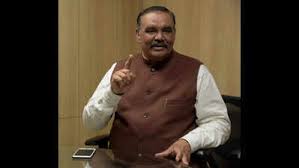
Chandigarh: Former Union minister and ex-chairman of the National Commission for Scheduled Castes, Vijay Sampla, on Monday accused the ruling Aam Aadmi Party (AAP) of playing politics in the name of Dalits over the suicide of Haryana ADGP Y Puran Kumar. Sampla called the Punjab AAP and the govt led by Bhagwant Mann “anti-Dalit”. During a press conference, he said: “It would have been understandable if the Haryana AAP raised this issue, but the Punjab AAP is doing it in Punjab to project a clean face since people of the state are gheraoing their leaders for their negative approach during the floods.” The former minister said the BJP firmly stood with the family of Y Puran Kumar. Claiming that he closely knew the family members of the deceased ADGP, Sampla said he was in touch with the bereaved family and “according to them, there was an addition of the offence in the FIR and all the names were included”. Accusing the AAP of “sheltering those accused of atrocities against Dalits”, the BJP leader said: “AAP MLA Manjinder Singh Lalpura, convicted and sentenced for four years in a case of assaulting a Dalit woman, has neither been expelled from the party nor disqualified from Punjab assembly.” On the other hand, he said, the BJP-led Haryana govt “formed an SIT and will not spare anyone found guilty” in the ADGP suicide case. Hitting out at the AAP, Sampla said: “Before the elections, Arvind Kejriwal promised to appoint a Dalit as deputy chief minister of Punjab, but the promise was forgotten after coming to power.” He also said: “Among the AAP’s 13 Rajya Sabha MPs, not a single one is Dalit. Even from Punjab — home to India’s largest Dalit population — none of the seven Rajya Sabha members belong to the Dalit community.” “The Punjab and Haryana high court reprimanded the state govt for withholding its share of post-matric scholarship funds, which disrupted the education of Dalit students,” Sampla added. MSID:: 124531609 413 | Courtesy : TOI Note: This news is originally published on https:/timesofindia.com/bha and is used purely for non-profit/non-commercial purposes, especially human rights
Punjab: Rivals lap up issue of Haryana IGP’s death as BJP’s Dalit outreach takes a hit
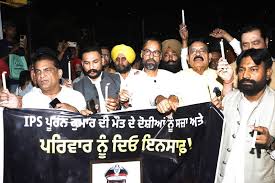
The socio-politico tremors of the death by suicide of Haryana-cadre IPS officer Y Puran Kumar are being felt in Punjab, the state having the largest proportion of Dalit population in the country. The incident is being termed as a case of “institutionalised caste-based discrimination”, which may have political resonance in Punjab that is set to go to the polls in just 15 months. Related news: Suicide by Haryana IPS officer: Punjab Congress to stage candle marches today, BJP says issue politicised Mahapanchayat gives 48-hr ultimatum to arrest Haryana DGP While Punjab’s ruling AAP has quickly lapped up the issue and that of the shoe attack on Chief Justice of India BR Gavai to target the BJP, which rules at the Centre and in Haryana, Congress Dalit leaders led by former CM Charanjit Singh Channi too have put their weight behind the officer’s family. While Punjab’s ruling AAP has quickly grasped the issue and that of the shoe attack on Chief Justice of India BR Gavai to attack the BJP, which rules at the Centre and in Haryana, Congress Dalit leaders led by former CM Charanjit Singh Channi too have put their weight behind the officer’s family. Apart from holding candle marches across the state on Sunday, AAP has got 100 FIRs registered over the shoe attack on the CJI. The party, led by CM Bhagwant Mann and Finance Minister Harpal Cheema, has also claimed of never falling for caste-based politics and blamed the BJP for atrocities against Dalits. On the other hand, political ramifications for the BJP are serious, especially at this time when it is trying to make political inroads into Punjab, mainly by winning over Dalit voters. Party leaders have reportedly not just been in touch with big deras where Dalits pay their reverence but attempts have also been made to woo them through several Centre-sponsored schemes. At this point, the more the issue of the deceased IPS officer lingers, the more it dents the political narrative of the BJP in the state. Realising this, Paramjit Singh Kainth, Punjab state vice-president of the BJP Scheduled Castes Morcha, told The Tribune that whosoever was guilty for atrocities on the late IPS officer should not only be removed from his post but also be booked by the Chandigarh Police under the Scheduled Castes and Scheduled Tribes (Prevention of Atrocities) Act. Eminent sociologist and chairperson of the Institute of Development and Communication, Pramod Kumar, said while the BJP would have to recover from the political setback of this, the Congress was trying to take advantage of resultant “political opportunity”. “While AAP is also trying to project itself as a party that stands by Dalits by registering 100 FIRs, it is also an opportunity for SAD to show its pro-Dalit face. The Dalit voters in Punjab, influenced by both tenets of Sikhism that preaches equality and the Arya Samaj that opposes caste system, have never restricted their political backing for a single party,” Kumar said. “But this incident has highlighted the institutionalised discrimination in the governance system where even the Chief Principal Secretary to the CM could not help the Dalit officer. This has created a narrative of Dalit marginalisation, which could consolidate the Dalit community. The political repercussions for each party, whether good or bad, are there,” he said. Academic Dr Ronki Ram, who has worked on Dalit consciousness and socio-political dynamics in Punjab, however, said on individual level the issue might have found resonance among members of the community, but politics had its own dynamics. “How it pans out will have to be seen, especially as Dalits vote for different political parties and not en masse,” he said. Article_Author Ruchika Khanna Couetesy : The Tribune Note: This news is originally published on https:/thetribune.com/bha and is used purely for non-profit/non-commercial purposes, especially human rights
Reading and writing kept my spirit unbroken: Anand Teltumbde
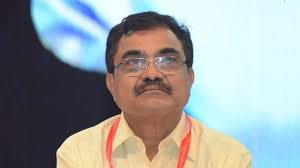
The scholar and activist on the books that shaped his politics, how reading 179 books in jail kept him intellectually alive, and more. Anand Teltumbde is a scholar, writer, and public intellectual whose work spans technology, management, and social justice. He has authored 33 books and contributed extensively to leading journals and periodicals, offering sharp theoretical insights on caste, oppression, and contemporary India. As a committed activist, he has played a significant role in India’s civil rights movement. Born into a poor, landless labourer family, Teltumbde overcame formidable odds to study at Visvesvaraya National Institute of Technology, Nagpur (Bachelor of Engineering), and the Indian Institute of Management Ahmedabad (MBA). He earned a PhD in Management on cybernetic modelling and went on to hold senior corporate positions, including Executive Director at Bharat Petroleum Corporation and Managing Director and Chief Executive Officer at Petronet LNG, before moving to academics. He served as a professor at the Indian Institute of Technology Kharagpur and later as a senior professor at the Goa Institute of Management, where he pioneered India’s first Big Data Analytics centre. In 2018, he was implicated in the Bhima Koregaon case and spent 31 months in prison, an experience that shaped his recently published prison memoir The Cell and the Soul (2025). He has also written a reflective biography of Ambedkar, Iconoclast (2024). Several of his new works are forthcoming. In this interview, Teltumbde reflects on his formative reading in a village school, the influence of Marxist and Dalit thinkers, his lifelong commitment to challenging oppression, and how reading and writing became tools of survival during his incarceration. He also recommends some essential readings for those interested in caste and social justice discourse. Edited excerpts: Tell us about your early relationship with books and reading during your childhood and adulthood? How did these experiences influence your commitment to social justice? I was born in Rajur, a small village in Yavatmal district of Maharashtra, which years later would be branded the farmers’ suicide capital. In those days, our school had only a single classroom but classes up to the fourth standard. When it expanded to the seventh, more cattle sheds were used to house children once the animals were driven out each morning. Books were a luxury; apart from a few stacked in the school office or in the homes of few literate elders, there was almost nothing to read. Yet the school had a tradition: every year, the student who topped the class received a book. That prize was mine for as long as I studied there. In the third standard, illness kept me from the exam, but the teachers awarded me the book anyway. It was a Marathi biography of Joseph Stalin. I could not grasp everything, yet it opened a crack in my world. As a child, I constantly pestered my mother with questions: why didn’t we have land, a cow, goats, or a proper house like others? My parents, landless labourers, bent their backs on others’ fields and at lime factories near the colliery. My mother would brush me off, promising that when I grew up, we would have all these things. Stalin’s story, though half-understood, suggested that inequality was not fate—it could be explained, even fought. That little book became my first key to a locked world. Around the same time, Rajur Colliery—with its large Dalit population—turned into a hub of Ambedkarite activism. We children sat in the front rows as speakers invoked Babasaheb Ambedkar, who had risen to become the most educated man in the world. He became my role model. Still, my earliest lens was not caste but exploitation. I saw it in the lime factories, where my parents laboured for a pittance while owners lived in comfort. Later, even as I came to see the annihilation of caste as the true path to liberation, I resisted the label of “Dalit rights activist”. Rights, to me, were never adjectival—they belonged to all human beings, and to all citizens. Looking back, that little biography of Stalin was more than a prize. It was the seed of my political awakening. Were there any particular books or authors during your formative years who had an impact on your intellectual journey and later writings? I cannot single out one book or author as decisive. I believe every book I read, every person I interacted with, directly or indirectly, shaped how I think and view the world. I was drawn early to revolutionary thought—first to stalwarts like Marx, Engels, Lenin, Trotsky, and Rosa Luxemburg, and later to Marxists from Gramsci and Althusser, Amin down to Žižek, as well as Indian thinkers such as D.D. Kosambi, Debi Prasad Chattopadhyay, and Suniti Kumar Ghosh. I also revered those who laid down their lives for the causes they believed in: Kartar Singh Sarabha, Bhagat Singh, Sukhdev, Rajguru, Chandrasekhar Azad, Ashfaqulla Khan—and the anti-caste crusaders: Ayyankali, Iyothee Thass, Acchutanand, and of course Ambedkar. Ambedkar, however, was my enduring inspiration, internalised through my illiterate parents. Until I moved to Nagpur after the tenth standard, I had not read a page written by or about him, save for a school lesson on his childhood. What we knew came through folklore—songs that celebrated him as a lover of books who built the largest personal library. That image of Ambedkar fostered my own passion for reading and collecting books, a passion that has stayed with me ever since. According to Bloomsbury, “Teltumbde writes of a heartless state that criminalises dissent with political imprisonment, of the relentless grind of injustice, and the profound cost of speaking truth to power.” According to Bloomsbury, “Teltumbde writes of a heartless state that criminalises dissent with political imprisonment, of the relentless grind of injustice, and the profound cost of speaking truth to power.” | Photo Credit: By Special Arrangement Can you share a turning point in your reading or writing life during your younger days? A book, event, or an experience that shaped the writer and thinker you eventually became. As a
After suicide by dalit boy, HP bodies call for mapping of ‘atrocity-prone areas’

Kullu: A number of civil society organisations have come forward calling for the declaration of “atrocity-prone areas” in Himachal Pradesh and have demanded strict police action in the case of suicide by a 12-year-old dalit boy after he was locked up in a cowshed by an ‘upper caste’ family in Shimla’s Rohru region. The People’s Campaign for Socio-Economic Equality in the Himalayas (PCSEEH), an organisation that works for an equal and discrimination-free society in the mountains, has written to chief minister Sukhvinder Singh Sukhu, demanding strict action under the Scheduled Castes and Scheduled Tribes (prevention of atrocities) Act against all those responsible for pushing the “dalit boy to commit suicide” and adequate compensation to the victim’s family. The PCSEEH has also demanded the state govt should identify all the regions of the state where caste-based atrocities are higher and declare them as “atrocity-prone areas” under Rule 3 of the SCST (prevention of atrocities) Rules, 1995. In the letter, PCSEEH national convener Sukhdev Vishvapremi has also stated that the state govt needs to initiate a campaign to create “socially just and safe panchayats” in Himachal Pradesh. A Scheduled Caste boy died after consuming a poisonous substance in Limbda village of Rohru sub-division in Shimla district on Sept 16. According to the police complaint, filed by the father of the victim, the boy committed suicide after he inadvertently entered the house of an ‘upper-caste family’ and a woman of the house locked him up in a cowshed and assaulted and humiliated him. A case has been registered by the Chirgaon police. “It’s not a suicide but a murder. This case is yet another reminder of the fact that how deeply entrenched the caste-based discrimination in Himachal is and how crimes stemming from caste-based mindsets continue to occur frequently in the state. It’s so tragic that such acts still take place even in the 21st century,” PCSEEH national convener Sukhdev Vishvapremi told TOI on Sunday. “We sincerely hope that strict action will be taken against those responsible for the deliberate killing of the boy. There is also an urgent need for the state govt to launch a campaign in coordination with the civil society organisations to make Himachal Pradesh a socially just and safe state,” added Vishvapremi. According to Kuldeep Verma, who runs People’s Action for People in Need (PAPN), an NGO that works against caste-based discrimination in the Sirmaur district of the state, atrocities against dalits are on the rise in Himachal Pradesh due to ineffective implementation of the law. “There are various rules against caste-based discriminations and atrocities but the law is not strictly and effectively implemented by the police, which in most cases tend to side with the accused. And when there is no fear of the law, atrocities in the name of the caste are bound to be committed,” said Verma. “The state govt is empowered by the SC/ST Act to identify and declare regions having a high rate of crimes against the Scheduled Castes as ‘atrocity-prone areas.’ The state govt must take an initiative and declare the Chirgaon area in Rohru as an atrocity-prone area. Such a move will send a strong message against caste atrocities,” added Verma. Led by former MLA Rakesh Singha, members of the Communist Party of India (Marxist) also staged a state-wide protest against dalit discrimination and atrocities in the state last Monday on Oct 6 in the wake of the Rohru incident. Two days later, on Oct 8, a large number of people from the general caste communities took out a march in Rohru and demanded an impartial investigation into the boy’s suicide. The angry crowd also raised slogans against Singha for his comments on the issue. “The protest by the CPM was on humanitarian and constitutional grounds. But the counter-protest by members of the general caste communities shows how polarised the society even in Himachal has become. This divide has further deepened in the last around ten years and is benefitting the politicians only,” said Lal Chand Dhissa, a Kullu-based veteran activist and former IAS officer. “The rot in our society runs deeper than you realise,” added Dhissa. Himachal Pradesh has the second highest population of Dalits in the country after Punjab and the caste-based untouchability and discrimination is widely rampant in the state. Among the 12 districts, Sirmaur has the highest percentage of dalits in the state, followed by Mandi, Solan, Kullu, and Shimla. Box: SCs / STs / OBCs in Himachal Pradesh Category Population Percentage (%) SCs 1,729,252 25.19 STs 392,126 5.7 OBCs 927,452 13.51 Total Population 6,864,602 Source: Census 2011 Box: District Total Population SC Population Percentage (%) Sirmaur 529,855 160,745 30.34 Mandi 999,777 293,739 29.38 Solan 580,320 164,536 28.35 Kullu 437,903 122,659 28.01 Shimla 814,010 215,777 26.51 Source: Census 2011 Box: Top Indian States with Highest SC Population State Population SC Population Percentage (%) Punjab 27,743,338 8,860,179 31.94 Himachal Pradesh 6,864,602 1,729,252 25.19 West Bengal 91,276,115 21,463,270 23.51 Uttar Pradesh 199,812,341 41,357,608 20.70 Haryana 25,351,462 5,113,615 20.17 Source: Census 2011 MSID:: 124500182 413 | Courtesy : TOI Note: This news is originally published on https:/timesofindia.com/bha and is used purely for non-profit/non-commercial purposes, especially human rights
Unchahar murder case of Dalit youth: Policeman suspended, but public anger over lack of action against Home Guard
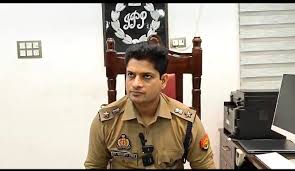
After police negligence was exposed in the case of the murder of a youth in the Unchahar area of Rae Bareli district, Superintendent of Police Dr. Yashveer Singh took action, but it was incomplete. The in-charge of the Dial 112 team, which arrived at the scene and released the accused after questioning, was suspended, but no action was taken against the Home Guard. The incident occurred when the Dial 112 team, number 1770, arrived at a dhaba. Hariom Valmiki, the accused of murder, was present there. Police interrogated him and later released him. Villagers made a video of the incident and made it viral on social media. In-charge suspended, but Home Guard ‘favored’ After the video surfaced, the Superintendent of Police conducted an investigation and suspended the in-charge of Dial 112. However, no action was taken against the Home Guard present on the team. This is what has angered the villagers. He says, “When the in-charge was found guilty, why wasn’t action taken against the Home Guard? Is he being favored by the police?” Action will be taken if the investigation finds him guilty: Commandant When the Home Guard Commandant was contacted regarding this matter, he stated that the case is being investigated. If the investigation finds the Home Guard guilty, strict action will be taken against him. Ashish Kumar Srivastava Courtesy: Hindi News