
Kerala University denies PhD approval to Dalit scholar amid caste discrimination row
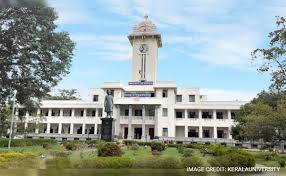
Speaking to TNM, Vipin Vijyan said he had not received any information about the withholding from the University. Prolonging the caste discrimination controversy, the University of Kerala has reportedly withheld the approval of awarding PhD Degree to Dalit scholar Vipin Vijayan while awarding PhD degrees to 64 other candidates. The decision was taken by Vice-Chancellor (in-charge) Mohanan Kunnummal. A PhD degree will be conferred after the candidate successfully completes all requirements, including thesis submission and an open defence. According to reports, the VC approved the PhDs under the syndicate’s consideration, exercising special powers granted under university regulations. The thesis work of 39-year-old Vipin Vijayan, belonging to the Pulaya community, was earlier rejected by CN Vijayakumari, Dean and Head of Kerala University’s Sanskrit department. Vijayakumari is accused of hurling caste-based slurs at the scholar, for which a case is registered against her. Speaking to TNM, Vipin said he had not received any official communication from the University pertaining to this. “I came to know about it from the newspapers. My future course of action will be decided after a detailed inquiry,” he said. On October 15, when Vipin was defending his thesis Vijayakumari disrupted the session, demanding changes in the thesis despite the supervisor’s opposition who validated the arguments made by Vipin in the thesis. According to the scholar, Vijayakumari refused to sign the thesis though both the supervisor and the thesis examining committee chairperson had approved the thesis. During the verbal altercation, Vijayakumari allegedly hurled caste abuses at Vipin. “‘Why do you need a doctorate to add to your name? You have a Pulaya surname, that is enough,’ Vijayakumari told me when I requested her to sign my PhD thesis”, Vipin had told TNM. Reports suggest that after the defence became controversial, the Vice-Chancellor requested the online recording to understand the issues raised during the open defence. However, the research guide responsible for conducting and documenting the open defence reported that no recording was made. Meanwhile, Vipin has filed a complaint against Vijayakumari with the police, the University and the SC/ST commission. The Sreekaryam police has booked Vijayakumari under Sections 3(1)(r) and 3(1)(s) of the Scheduled Castes and Scheduled Tribes (Prevention of Atrocities) Act, which deal with intentionally insulting or abusing a member of the SC/ST community by caste name in public view. Written by:TNM Staff Courtesy : TNM Note: This news is originally published on https:/thenewsminute.com/bha and is used purely for non-profit/non-commercial purposes, especially human rights
Chirag Paswan Announces ‘Dhanyavad Yatra’ in Bihar from January, Revival of Dalit Sena

LJP (Ram Vilas) chief Chirag Paswan plans ‘Dhanyavad Yatra’ to thank voters for NDA’s sweeping mandate, while launching a renewed Dalit Sena structure. Patna: Union minister and Lok Janshakti Party (Ram Vilas) chief Chirag Paswan on Friday announced that he will embark on a statewide tour early next year, once the Kharmas period ends in mid-January. The “Dhanyavad Yatra”, he said, will be aimed at thanking the public for the National Democratic Alliance’s sweeping win in the Bihar Assembly elections.Patna city guide Speaking at a press conference at the LJP (Ram Vilas) office in Patna, Chirag said the yatra will begin immediately after the traditional dahi-chuda feast on Makar Sankranti. “This journey will be our way of expressing gratitude for the historic mandate given to the NDA,” he said. In a move signalling consolidation within his party, Chirag also announced the formation of a new Dalit Sena—an organisation originally created by his father, the late Ram Vilas Paswan, before he founded the LJP in 2000. Taking a swipe at his estranged uncle and former Union minister Pashupati Kumar Paras, Chirag alleged that Paras had “usurped both the party and the original Dalit Sena”.Bihar tourism packages The revived Dalit Sena will be headed by Arun Bharti, LJP (Ram Vilas) MP from Jamui and Chirag’s brother-in-law. Former minister Sanjay Paswan, who long served as state president of the earlier Dalit Sena, will work alongside him. Chirag also announced that the LJP (Ram Vilas) will celebrate its foundation day on November 28 in Patna, marking 24 years since Ram Vilas Paswan launched the party. He said details of the programme would be released soon. The announcements come at a time when the party is seeking to expand its organisational footprint after securing a strong position within the NDA and gaining key portfolios in the newly formed state government. Courtesy : Patna News Note: This news is originally published on https:/patnanews.com/bha and is used purely for non-profit/non-commercial purposes, especially human rights
Tamil Nadu: Dalit student dies after suffering caste-based discrimination and assault, fights for life for 10 days
The student attempted suicide after being subjected to caste-based abuse; father questions police investigation, department offers 6 lakh rupees in aid Villupuram: A heartbreaking case of alleged caste-based discrimination has come to light in Villupuram district, Tamil Nadu. An 18-year-old Dalit student, who attempted suicide after being humiliated by caste-based abuse and assault, died in hospital on Tuesday. The deceased student had been battling for life in the ICU for the past 10 days. The deceased has been identified as S. Gajini, a resident of Vadakuchipalayam. He was a first-year history student at the Government Arignar Anna Arts College. What was the full story? According to sources, the incident occurred on November 6th. Gajini was returning home from a hotel. Meanwhile, three men from the Vanniyar community, who were allegedly intoxicated and riding on the same bike, hit Ghazni’s two-wheeler. The collision led to an altercation. It is alleged that upon learning that Ghazni belonged to the Dalit community, they began hurling casteist slurs at him and physically assaulted him. Sources say that when Ghazni’s father tried to intervene, the three accused fled the scene. Horrified by the humiliation, Ghazni took a drastic step. Three days after the incident, Ghazni attempted suicide at his home. His family immediately rescued him and admitted him to the Government Medical College and Hospital in Mundiyambakkam. He was admitted to the Intensive Critical Care Unit (ICU). After 10 days of treatment, he succumbed to his injuries early Tuesday morning. Questions about the police investigation The Villupuram Taluk police have registered a case under the SC/ST Act against three unidentified men based on the complaint. Police sources say the student was unable to confirm the identity of the accused, making it difficult to trace the suspects. However, the family claims that Ghazni had identified at least one of the attackers. “My son is gone, we want justice.” The deceased’s father, P. Semmeneri, has questioned the administration’s actions. He said, “How difficult is it for the police to track the mobile tower signal at the scene? The police are not conducting a proper investigation because my son is no longer alive. We want justice.” He also demanded that Dalit residents on the route to the bus stop be ensured of safety. Compensation announced: Amidst this tragic incident, the District Adi Dravidar Welfare Department has approved a compensation of ₹6 lakh for the victim’s family. The student’s death has left the area in mourning, and the family is pleading for justice. Rajan Chaudhary Courtesy: Hindi News
Bhopal: A Dalit youth was brutally beaten and dragged by his hair just 500 meters from the police station; police took action after the video went viral.

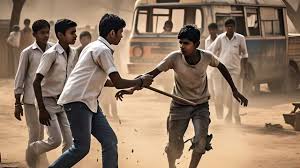
He was beaten with sticks and rods on the road 500 meters from the police station, and his friend who came to his rescue was also attacked; one accused was taken into custody after the video went viral. Bhopal/Narmadapuram: A recent case challenging law and order has emerged in Narmadapuram district, Madhya Pradesh. Five youths brutally beat a Dalit youth at the Makhannagar High School grounds. Shockingly, the scene of the incident is just 500 meters from the police station. The accused committed this crime in broad daylight, creating an atmosphere of terror in the area. On Wednesday, a video of the incident surfaced on social media, causing panic within the police administration. The video clearly shows the accused dragging the young man by his hair and repeatedly assaulting him with sticks and rods. When the victim’s friend tried to rescue him, the accused did not spare him and attacked him as well. What is the whole matter? According to the police complaint, the complainant, Pawan Sharma, and his friend, Pradeep Ahirwar, went to Makhannagar on Monday, November 17th. They had gone there to visit local temples. At around 3 p.m., while returning after having tea near the Tehsil Ground, two local youths present there stopped them. The accused began abusing Pradeep without any reason. When Pradeep and Pawan protested, the situation escalated. Three more youths arrived shortly afterward. The five then attacked Pradeep, brutally beating him with sticks. Referred to hospital in critical condition Seeing the street brawl, passersby intervened and rescued the young men. Seeing a crowd gathering, the accused fled the scene, threatening to kill them. Pradeep suffered serious injuries to his head, back, and arms and legs in the attack. Immediately after the incident, Pawan brought his injured friend to the police station. From there, police sent Pradeep to the local government hospital for first aid, but due to his critical condition, he was referred to Narmadapuram District Hospital. Police Action Given the seriousness of the matter, Makhannagar police have registered a case under the SC/ST Act and other sections of the assault. Acting swiftly, the police have detained one of the accused involved in the incident, while the search for others is ongoing. The remaining accused are being identified based on the video. Rajan Chaudhary Courtesy: Hindi News
16% Dalit population but zero net worth! Baba Saheb’s SC-Buddhist Bank will now bring the dream of self-reliance to life.
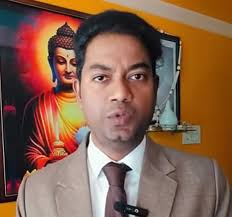
Ambedkar emphasized that over ₹5,000 crore of Dalit funds are deposited in the Brahminical system (such as Saraswat Bank, HDFC, SBI), but we are unable to reach such people. Mumbai – The harsh truth of caste inequality in India’s economic structure has come to light. Rajratna Ambedkar, great-grandson of Dr. B.R. Ambedkar and National President of the Buddhist Society of India, revealed that according to the 2011 census, the Scheduled Caste (SC) community, which constitutes 16.6% of the population, has zero net worth in the cooperative sector. Meanwhile, smaller communities like Brahmins, Sikhs, and Parsis have net worths in the thousands of crores compared to other communities. To address economic inequality, Rajratna Ambedkar launched the ‘Dr. Established the Bhimrao Ramji Ambedkar Multistate Cooperative Credit Society Limited (AMSC), the country’s first Scheduled Caste and Buddhist cooperative credit platform. Branches are operational in Nagpur and Thane. The goal is to transform it into a cooperative bank within the next two years, and move towards becoming a fully nationalized bank within five years. This initiative not only symbolizes economic empowerment but also attempts to realize Dr. Ambedkar’s vision of a self-reliant economy. Rajratna Ambedkar said, “The net worth of 16.6 percent of our population is zero because our money is lying in other people’s banks.” Citing 2011 census data, Ambedkar presented a comparative analysis of the population of different communities and the net worth of their cooperative banks, which are as follows: Muslim population: 14.2 percent (approximately 172 million). Christian population: 2.3 percent. Jain population: 0.4 percent. Parsi population: Exactly 0.006 percent. Their cooperative net worth was estimated to be around ₹10,000 crore. Scheduled Caste (SC) population: 16.6 percent (approximately 200 million), but the net worth in the cooperative sector is zero. Ambedkar clarified that the recently established ‘Dr. Bhimrao Ramji Ambedkar Bank’ (2024-25) has been considered zero due to the unavailability of its audit report. Brahmin population: Estimated 4 Percent, whose Saraswat Bank has a net worth of over Rs 59,000 crore. Sikh population: 1.7 percent. Khalsa Credit Society has a net worth of $75.7 million (approximately Rs 6,300 crore). Ambedkar stressed that funds worth over Rs 5,000 crore belonging to the Dalit community are deposited in the Brahminical system (like Saraswat Bank, HDFC, SBI), but are not being utilized due to lack of access. “How will an 80-year-old person leave the house? So, I am hiring missionaries who go to his house and fill his shareholder form and fill his FD, RD, current account forms, savings account forms. We need missionaries who will go door to door and fill out forms.” Missionary Recruitment: Not a Job, a Call to Mission Ambedkar stated clearly that he was looking for missionaries, not employees. “This is not a 10-to-5 job, but a 24×7 mission. Like Kanshi Ram ji, we need to go from village to village on a bicycle and build an independent economy. Just as Honorable Kanshi Ram ji formed his government four times in this country and elected his own Chief Minister by traveling on a bicycle, we need similar people who will go to villages and create their own independent economy.” Applications for recruitment are due by November 21st at jobs.amsc.co.in. Interviews will be held at the headquarters, where dedication to the mission will be assessed. Currently, the customer base at the two branches is growing rapidly, necessitating a staff increase. Geetha Sunil Pillai Courtesy: Hindi News
Dalit student dies ten days after attempted suicide following alleged caste assault in TN

Villupuram, Tamil Nadu: Ten days after he attempted to take his own life following an alleged caste-based assault, an 18-year-old Dalit student from Vikravandi in Tamil Nadu died of his injuries on Tuesday. The student, S. Gajini of Vadakuchipalayam, was in his first year of a History course at Government Arignar Anna Arts College. The Observer Post reported that the chain of events began on November 6, when Gajini was returning home from a hotel. According to police and local sources, three men from the Vanniyar community, allegedly drunk and riding triple on a motorbike, collided with his two-wheeler and a confrontation followed. When the men learnt that Gajini belonged to a Dalit locality, they allegedly assaulted him and hurled caste slurs before fleeing as his father arrived at the spot. On November 9, Gajini attempted suicide at home. His family immediately took him to the Government Medical College and Hospital in Mundiyambakkam. He was admitted to a local intensive critical care unit, where he received treatment for ten days and died early Tuesday morning. Villupuram taluk police have filed a case under the SC/ST (Prevention of Atrocities) Act against three unnamed men. According to authorities, the investigation has been obstructed by Gajini’s inability to accurately identify his attackers, despite his family’s claims that he recognised at least one of them. Gajini’s father, P. Semmaneri, said “The police are not investigating properly because my son is already dead. Authorities should examine mobile tower data from the location. We want justice,” he told The New Indian Express, adding that Dalit residents who use the same stretch of road need assured safety. The district Adi Dravidar welfare department has announced a compensation of ₹6 lakh for the family. Courtesy : Vartha Bharati Note: This news is originally published on https:/varthabharati.com/bha and is used purely for non-profit/non-commercial purposes, especially human rights
Crimes against dalits up in Tamil Nadu: VCK MP cites data

Chennai: VCK general secretary D Ravikumar on Wednesday said the conviction rate in caste-based crimes in Tamil Nadu was poor. In a statement, he said cases filed by dalits under the SC/ST (Prevention of Atrocities) Act are frequently dismissed as “false”. He alleged that this was due to poor handling of the cases by the law enforcing agencies. Citing the NCRB report for the year 2023, the Villupuram MP said atrocities against dalits in TN were on the rise. He said the state witnessed 1,921 crimes committed against SCs in 2023 as against 1,377 such crimes in 2021. “Unlike neighbouring states such as Andhra Pradesh, Telangana, and Karnataka, where crimes against SCs declined in 2023, TN has recorded an increase,” he added. Ravikumar said as of 2023, there were 6,410 cases being heard in the courts, while 1,502 new cases were added that year, bringing the total pending cases to 7,912. “In 2023, convictions occurred in only 115 cases, while 830 cases resulted in acquittal,” he said, blaming the police and govt’s approach towards caste-based crimes for the poor conviction rate of 12% compared to the national average of 32%. Courtesy : TOI Note: This news is originally published on https:/timesofindia.com/bha and is used purely for non-profit/non-commercial purposes, especially human rights
Dalit MLA denies he was forced to sit on floor during SIR inspection
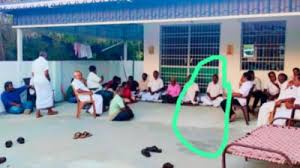
DHARMAPURI: AIADMK legislator V Sampath Kumar on Wednesday refuted allegations that he had been forced to sit on the floor during a special intensive revision (SIR) inspection in Harur assembly constituency in Dharmapuri district on Tuesday. The MLA said he had chosen to sit on the floor to speak on equal terms with senior members of the public. The allegation emerged after Sampath Kumar, who belongs to a dalit community, attended an SIR inspection at the Harur town panchayat office on Tuesday. He was seen sitting on the floor. A few people who witnessed this alleged that a party functionary had compelled him to sit there. Complaints against Harur AIADMK union secretary Pasupathi went viral in social media on Wednesday, prompting accusations of caste discrimination within the party. Political leaders and social activists said the episode revealed caste bias in AIADMK and alleged that dalit members were being sidelined. Sampath Kumar clarified on his X account that: “On Tuesday, during an inspection visit to the town panchayat office, a chair was given to me. However, since senior members of the public were sitting on the floor due to lack of chairs, I chose to sit on the floor among them to speak with them on equal terms. Despite having leg pain, I completed the SIR inspection sitting there. I request everyone not to misunderstand my action or spread false information about it. Please do not circulate any misleading news that could harm my reputation.” Courtesy : TOI Note: This news is originally published on https:/timesofindia.com/bha and is used purely for non-profit/non-commercial purposes, especially human rights
Why Dalits love Mahatma Macaulay
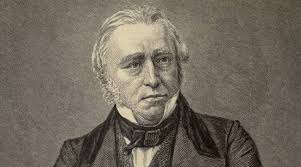
Robert Clive defeated India and didn’t question caste. Mahatma Macaulay envisioned India as a free nation and critiqued caste. That explains why Indians hate one more than the other. For some years now, I have been hosting a Lord Macaulay party at my home for fellow Dalit activists, writers, and intellectuals. Noted scholar D Shyam Babu even gave him the moniker Mahatma Macaulay. Now, this would obviously rile up many Indians who support the decolonisation project India has embarked upon in recent years. PM Narendra Modi said this week that he wants to uproot Lord Macaulay’s influence from Indian education and reverse the colonial mindset. To the British colonialists, the Battle of Plassey may have been a cakewalk, but ruling the colony called India was not. The caste phenomenon turned out to be their biggest headache in ruling this newfound territory. If you study the disruptive force that Macaulay unleashed upon Indian society, you will understand why Dalits want to call him a Mahatma. Before coming to India, Mahatma Macaulay had some idea of caste. In his 10 July 1833 speech in the House of Commons, he was worried: “The worst of all systems was surely that of having a mild code for the Brahmins who sprang from the head of the Creator, while there was a severe code for the Sudras, who sprang from his feet. India has suffered enough already from the distinction of castes.” However unintended it may have been, the colonialists saw caste-based prejudices and discrimination as inappropriate to the civilised world. The campaign that Mahatma Macaulay unleashed on caste was sustained by future British administrators. The colonialist empathy to the Dalit cause that was on display during the Round Table Conferences in the early 1930s was the outcome of what he had sown. BR Ambedkar’s inclusion in Viceroy’s Council as a labour minister mirrored that civilising project of the colonial masters that Lord Mahatma Macaulay had begun. Lord Macaulay’s efforts of seeding sciences and European morals for India bore fruits with Charles Woods’ despatch in 1854. Macaulay’s English education was finally implemented in India, but the monster of caste kept nagging the rulers. “The low castes are still far behind the main body of Hindus in the matter of education…there was formerly a deep-seated prejudice against the admission of low caste children in public schools,” notes Progress of Education in India. The British rulers encountered yet another mutiny-like situation by the caste-ridden Indian society in the form of a violent resistance to the entry of Dalit children into the newly evolving English education system. Still ruled by the East India Company, the education department issued a circular on 20 May 1857 stating that no boy should be refused admission to a government college or school merely on the ground of caste. The Hunter Commission noted that the insistence on the inclusion of low caste children was repeated by the Secretary of State in 1860. After Wood’s Despatch, a battle unfolded between caste and colonialists. In the Kairana district of the Bombay Presidency, six Dalits villages were burned down. Elsewhere, Dalits’ crops were attacked, and children chased away. Fearing social pollution, many schools were shut as privileged caste-children withdrew from schools. The Hunter Commission, set up in 1982, asked the British administration this: “Establishment of special schools or classes for children of low castes be liberally encouraged.” In his report, WW Hunter expressed his government’s inability to enforce the inclusion of depressed class children. That’s when the idea of separate schools came. The Commission had already identified the existence of separate 16 schools in Bombay Presidency and four in Central Provinces. Much against the wishes of the upper caste-nationalists, the British colonialists established separate schools for Dalits all over India. A school was set up in my native village in Azamgarh in Uttar Pradesh too. I am a product of the same school, although this Harjan Bal Vidyalaya admitted students from all castes. Today, the English education that the British introduced in India is unfairly treated as just a language project. It wasn’t. Mahatma Macaulay’s Minutes on Education (1935) is a living testimony of all that he advocated—focus on sciences and Western philosophy. India is the greatest beneficiary of that colonial project. Think of Indians’ superiority in IT and excellence in sciences without Mahatma Macaulay’s Minutes on Education. Think of India’s legal ecosystem without IPC, CrPC, district courts, collectorates, educational institutions, railways, and communication connectivity. Macaulay imagined a free India After my JNU, I have often wondered why Indians hate Mahatma Macaulay more than they hate Lord Clive. After all, Lord Clive sported wartime headgear, held a sword in one hand, gun in the other. There was guile in his eyes. He stared at Indians, fired at them; won an empire for England in the battle of Plassey in the year 1757. Lord Macaulay on the other hand, came to India with two fountain pens and an ink pot. He dressed like royals, sported a gentleman’s hat, and walked in grace. Did Mahatma Macaulay have contempt for India? Look at what he said in his Government of India speech in the House of Commons on 10 July 1833: It would be, on the most selfish view of the case, far better for us that the people of India were well governed and independent of us, than ill governed and subject to us; that they were ruled by their own kings, but wearing our broadcloth, and working with our cutlery, than that they were performing their salams to English collectors and English magistrates, but were too ignorant to value, or too poor to buy, English manufactures. To trade with civilised men is infinitely more profitable than to govern savages. “I allude to that wise, that benevolent, that noble clause which enacts that no native of our Indian empire shall, by reason of his colour, his descent, or his religion, be incapable of holding office,” he said elsewhere in the speech. Did the Lord demean India with
Dalit student dies 10 days after suicide attempt following alleged casteist assault in Villupuram

Family alleges police inaction; case filed under SC/ST Act against unidentified trio VILLUPURAM: Ten days after he attempted to die by suicide over alleged caste discrimination, an 18-year-old Dalit boy from Vikravandi in Villupuram succumbed to injuries on Tuesday. The deceased, S Gajini of Vadakuchipalayam, was a first-year History student at Government Arignar Anna Arts College. According to sources, Gajini was returning home from a hotel on November 6 when three men from Vanniyar community, riding triples on a bike in an inebriated state, rammed his two-wheeler. A scuffle broke out and upon learning that Gajini was from a Dalit locality, the three men allegedly hurled caste slurs and physically assaulted him. The trio fled the spot when the boy’s father intervened, sources said. Three days later, Gajini attempted to die by suicide at his home. His family rescued him and admitted him to the Government Medical College and Hospital in Mundiyambakkam, where he remained in the intensive critical care unit for 10 days before succumbing to injuries in the early hours of Tuesday. Based on a complaint, the Villupuram taluk police have registered a case under the SC/ST Act against three unidentified men. Police sources said the boy could not confirm their identities, making it difficult to trace the suspects, but the family insisted he had identified at least one of the assailants. “How difficult it is to track mobile tower signals at the spot of the incident? The police are not investigating properly because my son is already dead. We want justice,” Gajini’s father, P Semmaneri, told TNIE. He also sought safety for Dalit residents using the route to reach the bus stop. Meanwhile, the district Adi Dravidar welfare department has sanctioned `6 lakh compensation to the bereaved family. (Assistance for those having suicidal thoughts is available on Tamil Nadu’s health helpline 104 and Sneha’s suicide prevention helpline 044-24640050) Krithika Srinivasan Courtesy : TNIE Note: This news is originally published on https:/thenewindianexpress.com/bha and is used purely for non-profit/non-commercial purposes, especially human rights