
Raping Dalit woman is…: Congress MLA’s bizarre theory sparks row, BJP reacts
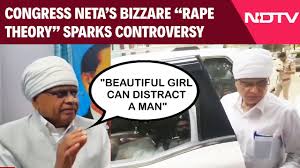
A political controversy has erupted in Madhya Pradesh after Congress MLA Phool Singh Baraiya’s remarks linking rape with religious scriptures sparked widespread outrage. The incident has led to demands for his suspension and expulsion from the party amid sharp criticism from BJP and state leaders. A political storm has erupted in Madhya Pradesh after a video surfaced allegedly showing Congress MLA Phool Singh Baraiya making remarks that appear to link rape with religious scriptures, triggering sharp reactions from across the political spectrum and demands for his suspension and expulsion from the party. The video, which emerged from an interview circulating on social media platforms, shows Baraiya, the Congress legislator from the Bhander Assembly seat, making claims that religious texts offer “spiritual rewards” for sexual violence against women from Scheduled Caste, Scheduled Tribe and Other Backward Class communities. The clip was shared online by the Bharatiya Janata Party, drawing widespread condemnation. In the clip, he is heard saying, “In India, the maximum number of rape cases are among Scheduled Castes, Scheduled Tribes and most OBCs. The theory of rape is that when a man, whatever his state of mind, sees a very beautiful woman while walking on the road, his brain can get disturbed and rape can happen. But among tribals, where are such beautiful women? Among SCs, where are such beautiful women? Among most OBCs, are there such beautiful women? Why does rape happen? Because religious scriptures give such instructions.” He then goes on to invoke religious texts to justify his argument, saying, “I do not want to say anything specific about Hindu religious scriptures, but what I mean is that it is written that when a person does this act, he gets the reward of a pilgrimage. It is written that by having relations with women of certain castes, one gets the spiritual reward of visiting places like Kashi, Prayagraj or Ayodhya. If someone cannot go on a pilgrimage, an option is given to stay at home and get the same reward by forcing himself on their women.” In the same video, Baraiya makes disturbing remarks while referring to sexual violence against infants. “Listen to why rape happens even with four-month-old, ten-month-old or one-year-old babies. Are their organs ready for sex? It happens because it is written that if I rape a girl of this caste, I will get a spiritual reward,” he says. BJP ATTACKS CONGRESS, CALLS REMARKS CRIMINAL The BJP reacted strongly, calling the remarks misogynistic, casteist and criminal. Madhya Pradesh BJP media in-charge Ashish Agrawal shared the video on X and wrote that Baraiya’s words were “not a slip of the tongue but a public display of a sick, perverted and criminal mindset”. “Measuring women on the scale of ‘beauty’ and describing rape of SC-ST women as a ‘pilgrimage reward’ is not a statement, it is an admission of a criminal mentality,” Agrawal said, adding that the comments were an attack on women, Dalits and humanity itself. He demanded immediate action from the Congress leadership, asking whether the party would suspend or expel the MLA or “accept that it stands with an anti-women and anti-Dalit mindset”. CHIEF MINISTER SEEKS EXPULSION Madhya Pradesh Chief Minister Mohan Yadav also condemned the remarks, accusing Baraiya of spreading social hatred. “Phool Singh Baraiya has worked to spread poison in society. Such an MLA should be suspended and expelled from the party so that it is clear he has respect for other sections of society,” Yadav said, adding that he strongly condemned the comments. The Chief Minister urged the Congress leadership to act decisively, especially as senior party leaders were visiting the state. “People of the country want to know what action will be taken,” he said. NATIONAL BJP LEADERS WEIGH IN Senior BJP leader Sambit Patra described the remarks as an insult not only to Sanatan Dharma but to humanity. “He is an MLA holding a constitutional position. Senior Congress leaders were present, yet no one stopped him,” Patra said. He added that the comments hurt the legacy of B R Ambedkar and demanded a response from the Congress leadership. “By evening, the country expects a clear statement and action,” he said. CONGRESS YET TO RESPOND As of Saturday, the Congress had not issued an official response or clarified its stand on the controversy. Baraiya, who has often courted controversy for his statements in the past, has also not publicly addressed the backlash over the video. Ravish Pal Singh Edited By: Sonali Verma Courtesy : India Today Note: This news is originally published on https:/indiatoday.com/bha and is used purely for non-profit/non-commercial purposes, especially human rights
Caste Still Biggest Admission Form In India, Need Anti-Discrimination Law: Rahul

Rahul Gandhi urged Dalit youth to raise their voices and demand implementation of the Rohit Vemula Act. New Delhi: On the 10th death anniversary of Dalit student Rohith Vemula on Saturday, Congress leader Rahul Gandhi said the reality for youngsters from the community has not changed on campuses and stressed the need for an anti-discrimination law. Vemula, a 26-year-old Dalit student of the University of Hyderabad, died by suicide on January 17, 2016, following alleged harassment. In a post in Hindi on X, Gandhi said, “Today marks 10 years since Rohith Vemula’s passing. But Rohith’s question still resonates in our hearts: Does everyone in this country have an equal right to dream?” “Rohith wanted to study; he wanted to write. He wanted to understand science, society and humanity to make this country a better place. But this system could not tolerate a Dalit’s progress,” the leader of the opposition in the Lok Sabha said. Institutionalised casteism, social exclusion, daily humiliation, language that reminded him of his “place” and inhumane treatment — “this was the poison that pushed a promising young man to a point where his dignity was stripped away, and he was left alone”, Gandhi said. “And today? Has the reality for Dalit youth changed? The same contempt on campus, the same isolation in hostels, the same feeling of inferiority in classrooms, the same violence — and sometimes, the same death. Because caste is still the biggest admission form in this country,” he added. That is why the Rohit Vemula Act is not just a slogan but a necessity, the Congress leader asserted. “So that caste-based discrimination in educational institutions becomes a crime, strict action is taken against the perpetrators and the freedom to break, silence and exclude any student on the basis of their caste is ended,” he said. This fight is not just in Parliament, it is a fight of the youngsters on campuses and “it is our fight”, Gandhi said. “Dalit youth — raise your voices, organise yourselves, stand with each other. Demand: Implement the Rohit Vemula Act now. We need an anti-discrimination law now,” he stressed. The Congress governments in Karnataka and Telangana are in the process of implementing the law as soon as possible, he said. “We want an India that is just, humane and equal — where no Dalit student has to pay for their dreams with their life. Rohith, your fight is our responsibility,” Gandhi said. The death of the 26-year-old Dalit student on January 17, 2016, triggered a nationwide agitation against casteism in institutions of higher learning. Gandhi had joined the student protests over Vemula’s suicide. Courtesy : ETV Bharat Note: This news is originally published on https:/etvbharat.com/bha and is used purely for non-profit/non-commercial purposes, especially human rights
Life term till last breath for tantrik who raped, blackmailed minor Dalit girl

Agra: A 30-year-old tantrik has been sentenced to rigorous life imprisonment until his last breath by an Aligarh court for raping and blackmailing a 16-year-old Dalit girl for over two years. He used obscene videos he had recorded of the minor to blackmail her and threatened to kill her family members. In a complaint filed in Sept 2024, the girl’s father said the tantrik frequently visited their home to treat his ill son and exploited this access to repeatedly rape his daughter for nearly two years. “One day, my daughter told me that the tantrik molested her. He had physical relations with her and made a video, which he used to blackmail her,” he said. The father added that on Sept 11, the tantrik came to their house and “threatened to take away my daughter, set the entire house on fire, and would not leave anyone alive”. He also alleged that the tantrik took the girl to hotels and raped her there. “My family is living in fear and terror,” he wrote in his complaint. Based on the complaint, a case was registered under BNS sections 64 (rape) and 351-1 (criminal intimidation), along with provisions of the Pocso Act and the SC/ST Act. The man was arrested shortly thereafter and has remained in judicial custody. A chargesheet was filed weeks later. After hearing both sides, additional district and sessions judge (Pocso court) Abhishek Kumar Bagaria on Friday sentenced the convict to life imprisonment until his last breath, said additional district govt counsel (ADGC) Mahesh Singh. The court also imposed a fine of Rs 65,000. Courtesy : TOI Note: This news is originally published on https:/timesofindia.com/bha and is used purely for non-profit/non-commercial purposes, especially human rights
YSRCP stages protests over activist’s murder
Several speakers stated that hundreds of Dalit families were driven out of Pinnelli, Salman’s last rites were initially blocked, and law and order worsened after the elections. VIJAYAWADA: YSR Congress Party (YSRCP) workers staged statewide protests at Dr BR Ambedkar statues across all district headquarters, condemning the brutal murder of Dalit YSRCP activist Manda Salman of Pinnelli village in Gurazala constituency, following a call given by party president and former Chief Minister YS Jagan Mohan Reddy. Party leaders and SC Cell representatives held dharnas in Srikakulam, Vizianagaram, Eluru, Krishna, NTR, Guntur, Palnadu (Narasaraopet), Kurnool, Tirupati (combined Chittoor), YSR Kadapa, and Anantapur districts, stating that constitutional governance has collapsed in Andhra Pradesh and that political killings and attacks on YSRCP workers have become routine. Leaders said Salman’s murder is a direct consequence of the prevailing ‘Red Book rule’ going on in the State and the police collusion and demanded immediate arrests, suspension of responsible officers, and strict action under the SC/ST Atrocities Act. Several speakers stated that hundreds of Dalit families have been driven out of Pinnelli village, that even Salman’s last rites were initially obstructed, and that law and order have deteriorated gravely after the elections. Courtesy : TNIE Note: This news is originally published on https:/thenewindianexpress.com/bha and is used purely for non-profit/non-commercial purposes, especially human rights
‘Your fight is our responsibility’: Rahul Gandhi calls for pan-India Rohit Vemula Act; Dalit scholar died by suicide in Jan 2016
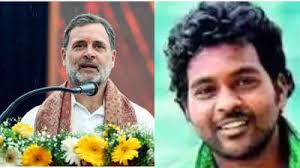
NEW DELHI: Congress leader Rahul Gandhi on Saturday called for a pan-India Rohit Vemula Act to tackle incidents of discrimination against the Dalit community. Vemula, a 26-year-old Dalit student at the University of Hyderabad, died by suicide on January 17, 2016, following alleged caste-based harassment. In a post in Hindi on X, Gandhi wrote, “Today marks 10 years since Rohith Vemula’s passing. But Rohith’s question still resonates in our hearts: Does everyone in this country have an equal right to dream? Rohith wanted to study, he wanted to write. He wanted to understand science, society and humanity to make this country a better place. But this system could not tolerate a Dalit’s progress.””Institutionalised casteism, social exclusion, daily humiliation, language that reminded him (Vemula) of his ‘place’ and inhumane treatment — this was the poison that pushed a promising young man to a point where his dignity was stripped away and he was left alone,” he added. The leader of opposition in the Lok Sabha further alleged that the reality for Dalit students on campuses has not changed, arguing that this is what makes the Rohit Vemula Act “not just a slogan, but a necessity.” “So that caste-based discrimination in educational institutions becomes a crime, strict action is taken against the perpetrators, and the freedom to break, silence and exclude any student on the basis of caste is ended. This fight is not just in Parliament, it is a fight of the youngsters on campuses — it is our fight,” Gandhi said. The Rae Bareli MP called on Dalit youth to raise their voices and demand the Rohit Vemula Act as an anti-discrimination law. “Dalit youth — raise your voices, organise yourselves, stand with each other. Demand: Implement the Rohit Vemula Act now. We need an anti-discrimination law now. The Congress governments in Karnataka and Telangana are in the process of implementing the law as soon as possible. We want an India that is just, humane and equal — where no Dalit student has to pay for their dreams with their life. Rohith, your fight is our responsibility,” Gandhi posted. Vemula’s death had sparked nationwide protests against casteism in institutions of higher learning, accompanied by demands for the resignation of the then Union HRD minister, Smriti Irani. Gandhi had also joined the student protests following Vemula’s death. Courtesy : TOI Note: This news is originally published on https:/timesofindia.com/bha and is used purely for non-profit/non-commercial purposes, especially human rights
TNCC unanimously entrusts Kharge, Rahul to take decisions
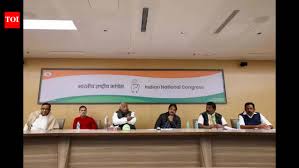
New Delhi/Chennai: A meeting of TNCC functionaries and elected representatives in New Delhi on Saturday “unanimously” entrusted AICC president Mallikarjun Kharge and leader of the opposition in the Lok Sabha Rahul Gandhi to take decisions pertaining to alliance and seat sharing with DMK for the upcoming assembly election in Tamil Nadu. “With regard to election strategy, the party high command will take an appropriate decision in due course, keeping in mind the larger interest of party and people of TN,” AICC general secretary (organisation) K C Venugopal told reporters in New Delhi. Kharge chaired the meeting that lasted more than three hours, and attended by Rahul Gandhi, Venugopal, TNCC chief K Selvaperunthagai, MPs P Chidambaram, Manickam Tagore, Karti Chidambaram, and Professionals’ Congress chief Praveen Chakravarty, among others. Later, Kharge, Rahul and Venugopal, joined by AICC in charge for TN Girish Chodankar, held one-on-one meetings with functionaries and obtained views on alliance. The Congress top brass gave clear directions to functionaries to maintain discipline and refrain from making public statements on alliance matters and advised them to speak in one voice in line with party decisions. The meeting held at the party’s Indira Bhawan headquarters came amid two different viewpoints over alliance with DMK — one pitching for power-sharing arrangement if the alliance wins to form govt and another being that the party should explore an alliance with actor Vijay’s TVK looking at the larger prospects of the Congress in states such as Kerala, which too goes to polls along with TN. Sources said some functionaries informed the leadership about “immature” actions of colleagues reportedly causing a rift in the Congress-DMK alliance, while a few raised concerns about disrespect allegedly shown by DMK partymen, besides not being taken care of in the appointments in boards and trusts. “The predominant view is to continue the alliance with DMK and get a share in power by getting more seats this election,” said a senior leader, privy to the meeting. Venugopal told reporters, the leadership had a detailed and very fruitful discussion with functionaries. “The leadership patiently listened to all opinions and leaders were given full opportunity to express their views. The discussion was constructive and focussed on strengthening the party and its future strategy in TN,” he said, reading out a statement. Asked about what the party’s stand was on the view within Congress on seeking a power-sharing arrangement with DMK, Venugopal reiterated his statement, adding that “concerns of the 40-plus leaders present at the meeting were heard individually and collectively. There are different views and we have heard them and certainly in due course whatever discussion held today will be the guideline for future decisions.” Sharing a video clip from the meeting held at the AICC headquarters on X, Kharge said, “We are confident that people of TN would choose equality, social justice, empowerment and good governance over bigotry, sectarianism, anti-federal and discriminatory politics of the RSS-BJP.” He added, “Congress party is determined to play an important role in fulfilling the aspirations of the people of the state.” Selvaperunthagai told reporters, the TNCC would follow the decision of AICC. The leadership was upset about functionaries speaking about the alliance in public, he added. Courtesy : TOI Note: This news is originally published on https:/timesofindia.com/bha and is used purely for non-profit/non-commercial purposes, especially human rights
From Short Circuit to Political Signal: Akhilesh Yadav, Mayawati and the Battle for Dalit Votes
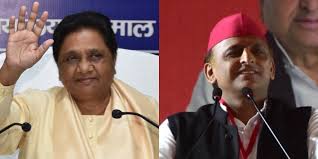
The 2024 general election results indicated that a section of the Dalit population in Uttar Pradesh has begun drifting away from the BJP reportedly due to rising incidents of atrocities and fears surrounding constitutional changes. When smoke suddenly filled the conference hall at the Bahujan Samaj Party’s (BSP’s) Uttar Pradesh headquarters during party chief Mayawati’s 70th birthday press conference due to a short circuit, panic spread among journalists and security personnel present at 12, Mall Avenue in Lucknow. No one was injured, and the incident was quickly brought under control. Within hours, Samajwadi Party (SP) president Akhilesh Yadav demanded a probe into what he described as a serious security lapse. It immediately acquired a political meaning far beyond an electrical fault. His concern, expressed publicly and amplified through social media, triggered a fresh round of political speculation in the politically significant state of Uttar Pradesh. At one level, Akhilesh’s reaction appeared routine and responsible. Mayawati is a former chief minister and a national political figure; any lapse in her security naturally invites questions. But in the deeply layered politics of Uttar Pradesh, few gestures are ever purely administrative. Akhilesh’s intervention was widely read as a calculated political signal, especially aimed at Dalits, for whom Mayawati remains the most recognisable and emotive leader. “The incident itself was minor, but the politics around it is major,” said political analyst Utkarsh Sinha. “Akhilesh Yadav did not need to comment immediately, yet he chose to do so. That choice is political.” Dalits at the centre of Uttar Pradesh’s political equation Dalits constitute nearly 22% of Uttar Pradesh’s population and have historically played a decisive role in shaping the state’s politics. The BSP, under Mayawati’s leadership, formed the government four times, culminating in her landmark 2007 victory when she secured a full majority on her own. That moment marked the peak of Dalit assertion in the state. However, since then, Mayawati’s political graph has steadily declined. She has been out of power for nearly one and a half decade, losing three assembly elections and three Lok Sabha polls since 2012. Today, the BSP has no Member of Parliament in the Lok Sabha and just one MLA in the 403-member Uttar Pradesh assembly. For a party that once ruled India’s most populous state, the fall has been steep. Yet, despite this decline, Mayawati continues to command loyalty among a core section of Dalits, particularly the Jatavs. In the 2024 general elections, the BSP still managed to secure around 9.4% of the vote share in Uttar Pradesh, a figure that underlines her residual influence. “Mayawati may have lost institutional power, but she has not lost symbolic power,” said Syed Qasim, a political commentator based in Lucknow. “For many Dalits, she remains a symbol of dignity and political assertion.” Akhilesh’s 2027 ambition and the search for a broader social coalition Akhilesh’s political ambition is clear: he wants to return to power in Uttar Pradesh in the 2027 assembly elections. The SP has been out of office since 2017, and despite leading the opposition, Akhilesh knows that defeating the Bharatiya Janata Party (BJP) requires expanding beyond the party’s traditional Muslim–Yadav (M–Y) base. In the 2024 general elections, Akhilesh made a conscious attempt to do just that. By popularising the slogan Pichhda, Dalit aur Alpsankhyak (PDA), he tried to stitch together a broader social coalition. The results were striking. The SP jumped from just five Lok Sabha seats in 2019 to 37 seats in 2024, while its INDIA bloc ally Congress won six seats in the state. Political experts widely agree that this surge would not have been possible without support from backward classes, Muslims, and a section of Dalit voters. “The 2024 results showed Akhilesh Yadav’s political maturation,” said Sinha. “He demonstrated that the SP can move beyond its core base. But to sustain this coalition till 2027, Dalits will be crucial.” Mayawati’s strategic distance and Akhilesh’s calculated silence Interestingly, while Akhilesh has been careful in his approach towards Mayawati, the BSP chief has shown little warmth in return. In October 2025, during a rally in Lucknow, Mayawati launched a sharp attack on the SP’s 2012–17 government, accusing it of disrespecting Dalit icons and symbols. Notably, she used comparatively restrained language while referring to the Adityanath-led BJP government, even praising it for maintaining Dalit heritage sites. Akhilesh chose not to respond. His silence was telling. “Akhilesh understands that responding aggressively to Mayawati only helps her consolidate her core voters,” said Sinha. “By staying quiet, he avoids alienating Dalits who still respect her.” This restraint reflects Akhilesh’s broader strategy. Over the years, he has taken several steps to signal his commitment to Dalit issues: forming the Ambedkar Vahini within the SP, installing a statue of Dr B.R. Ambedkar at the party headquarters, and giving prominence to Dalit leaders like Awadhesh Prasad, who won the Ayodhya Lok Sabha seat. “Akhilesh is consciously building an image of inclusivity,” said Sinha. “He wants Dalits to see him not as a rival to Mayawati, but as a leader who respects Dalit aspirations.” The alliance question: Closed door or strategic ambiguity? The memory of the 2019 SP–BSP alliance still looms large. Formed nearly 24 years after the infamous guest house incident, the partnership was historic but short-lived. While it helped the BSP win 10 Lok Sabha seats, it failed to stop the BJP’s dominance and collapsed soon after. Speculation about a future alliance resurfaces periodically, but most experts remain sceptical. Atul Chandra, former editor of The Times of India, offered a blunt assessment. “Alliance with Mayawati is not possible for Akhilesh, as her conditions would be so hard that he will never accept them,” said Chandra. Chandra believes Akhilesh’s current approach is not about reviving an alliance but about consolidating Dalit support independently. “I don’t think Mayawati will join hands with Akhilesh in the next assembly elections, but Akhilesh has certainly sent a strong signal to Dalits about his intent to bring them under his political umbrella,” he said. Mayawati’s cautious politics and the
Probe Dalit man’s custodial death by sitting judge or CBI: MRPS chief

Hyderabad: Alleging serious lapses and an attempt to shield those responsible, Madiga Reservation Porata Samithi (MRPS) founder Manda Krishna Madiga on Friday demanded that the state govt order an inquiry by a sitting judge or the CBI into the alleged custodial death of Dalit man Karla Rajesh in Kodad. He was an accused in a chief minister’s relief fund misappropriation case. Krishna Madiga sought that Chilkur sub-inspector Suresh Reddy be named as A1 and Kodad circle inspector Prathap Lingam as A2 in the case, accusing them of illegal detention and torture, along with provisions of the SC/ST (Prevention of Atrocities) Act. He also demanded that Kodad DSP and Suryapet SP be included as A3 and A4 in the FIR, alleging that they attempted to conceal evidence related to the case. Addressing a press conference here, Krishna Madiga said: ” So far, no police officer was able to say that Rajesh did not die due to police torture.” He alleged that the police system treated the lives of police personnel differently from those of Dalits and accused it of acting carelessly while protecting the accused officers. Drawing a comparison, he said that in Nizamabad, history-sheeter Sheikh Riyaz was encountered and killed within four days of killing a constable, but when a Dalit man like Rajesh was tortured and killed in illegal custody, the law failed to punish those responsible. Courtesy : TOI Note: This news is originally published on https:/timesofindia.com/bha and is used purely for non-profit/non-commercial purposes, especially human rights
More Than A Word: Haryana’s ‘Harijan’ Ban Exposes Enduring Caste Bias
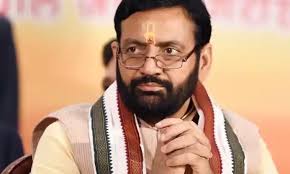
Haryana’s directive banning the use of ‘Harijan’ and ‘Girijan’ in official communication has revived debate on caste and identity in India. Despite earlier central guidelines and Ambedkar’s opposition, the term persists, highlighting how caste discrimination continues to shape social and political life. A recent directive by the Haryana government asking all its departments — public and educational institutes and other institutions — to “strictly avoid” using the terms ‘Harijan’ and ‘Girijan’ in official communications to refer to Scheduled Castes and Scheduled Tribes is indicative of the all-pervading nature of the caste conundrum in India even today. Origins of the term The term ‘Harijan’, or ‘children of God’, was first used by Mahatma Gandhi in 1932 to refer to Dalits. He even started three journals in English, Hindi and Gujarati with the same name in 1933. Gandhiji used the term to avoid words like ‘untouchable’, which stigmatised the Dalit community. By using the word ‘Harijan’, he hoped Dalits would be more acceptable to Hindu society. However, many of the Mahatma’s contemporaries, including B R Ambedkar, objected to the word, terming it condescending and an attempt to avoid the real issue of caste discrimination. In fact, Ambedkar walked out of the Bombay Legislature on January 22, 1938, to protest the use of the word. In effect, the word ‘Harijan’ has been banned by the government in caste certificates and all official communication. In 1982, the Union government directed all states not to use the word ‘Harijan’ to denote Dalits. However, it continued in common parlance. In 2010, a parliamentary committee took note of the fact that the use of the word ‘Harijan’ continued far and wide and recommended that the Ministry of Social Justice and Empowerment issue fresh guidelines to all departments and state governments not to use the term. It even suggested punitive action against those who flouted the order. That all these years later the Haryana government was forced to issue a directive banning the use of the words ‘Harijan’ and ‘Girijan’ in official dealings is proof that casteism is rampant in modern India. The state government reiterated that the Constitution does not use these terms to denote Scheduled Castes and Scheduled Tribes. Politics, caste and identity One school of thought says that Gandhiji used the term ‘Harijan’ to make Dalits more acceptable to upper-caste Hindus, as he did not want to upset influential members of the community whose support he required for his politics. In the last decade, the BJP, as the ruling party, has also been making consistent efforts to rope in Dalits into the Hindu fold. They received some electoral success for their efforts in this direction in the cow belt. Now they are reaching out to Dalits in the southern states in their bid for Hindu consolidation. This has irked activists who are appalled at the lack of sensitivity to issues relating to caste oppression and Dalit identity. More than seven decades after Independence, caste continues to haunt the country’s political landscape. Only a radical change in mindset, not government directives, will bring an end to this scourge. Courtesy : TFPJ Note: This news is originally published on https:/thefreepressjournal.com/bha and is used purely for non-profit/non-commercial purposes, especially human rights
Telangana: Dalit house surgeon dies by suicide after alleged caste-based rejection, sparks outrage
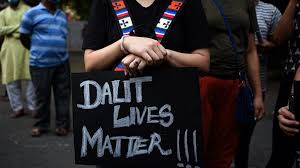
The death of a 23-year-old Dalit house surgeon at the Government Medical College in Siddipet, Telangana, has sparked outrage, with her family and student groups alleging that she was driven to suicide after being cheated and abandoned by a fellow doctor who reportedly refused to marry her, citing her caste. Lavanya from Jogulamba Gadwal district, an MBBS graduate and intern doctor, was found dead in her hostel room on January 5, 2026. A case has been registered under the SC/ST (Prevention of Atrocities) Act and an arrest has been made. The case has reignited debates on caste discrimination in intimate relationships and institutional spaces, with activists arguing that the incident cannot be seen as an “individual tragedy” but must be understood as the outcome of a caste order that continues to govern even the most private spheres of life. In a statement, the Ambedkar Students’ Association (ASA), University of Hyderabad, condemned the death as a case of caste violence and said that for Dalits, intimacy is rarely allowed to exist as an ordinary or secure experience because it is constantly policed by the demand to preserve caste boundaries. The organisation said that when relationships challenge these boundaries, they are disciplined either through violence in the name of honour or through abandonment by partners unwilling to act against the caste order. In both cases, it said, responsibility for the rupture is displaced onto Dalits while the structure that produces the harm remains untouched. The statement said Lavanya’s death exposes a “violent social truth”: that Dalit women’s lives and aspirations are treated as conditional within hegemonic caste structures. It added that Dalit women live under “double jeopardy”, facing intensified exclusion in both public institutions and private relationships. ASA also criticised what it called “sanctioned ignorance” in institutions that claim caste is irrelevant in so-called modern spaces, and narratives that individualise structural violence while allowing caste privilege to operate without consequence. This, it said, enables perpetrators to believe their actions will be condoned. “Lavanya’s death demands more than sympathy. It demands a reckoning with caste power embedded in our institutions, our social relations, and our understandings of love and commitment,” the statement said. Remembering Lavanya as a young woman whose dreams were legitimate and whose dignity was non-negotiable, the Ambedkar Students’ Association said her death shows that society continues to treat Dalit women as expendable, and said it stands in solidarity with her family while demanding justice for B. Lavanya and an end to caste violence against Dalit women. Courtesy : Maktoob Media Note: This news is originally published on https:/maktoobmedia.com/bha and is used purely for non-profit/non-commercial purposes, especially human rights