
CPI’s Candidate Conundrum: Dalit MLA Mukundan Sparks Election Drama

The CPI faces internal strife as sitting Dalit MLA C C Mukundan from Nattika vows to run independently after being denied a party ticket for the upcoming Assembly elections. Mukundan claims party infighting and financial issues as reasons, while his potential replacement, Geetha Gopi, remains unfazed by allegations. The Communist Party of India (CPI) is grappling with internal challenges as the party’s candidate selection process encounters turbulence. Sitting Dalit MLA C C Mukundan from Nattika declared he would run independently after being denied a party ticket for the approaching Assembly elections. Mukundan, known for his clean image in the constituency, attributes the decision to intra-party infighting and financial reasons. He questioned the party’s choice to field former MLA Geetha Gopi, whom he accused of facing several allegations, suggesting that financial considerations played a role in her selection. Despite Mukundan’s allegations and decision, Gopi remains committed to the party’s directive. The CPI has yet to respond officially to Mukundan’s claims, but the unfolding situation has sparked political intrigue, impacting the dynamics in the reserved constituency of Nattika in Thrissur district. Courtesy : Devdiscourse Note: This news is originally published on https:/devdiscourse.com/bha and is used purely for non-profit/non-commercial purposes, especially human rights
Pattas for 2BHK houses handed over to Dalit slum dwellers
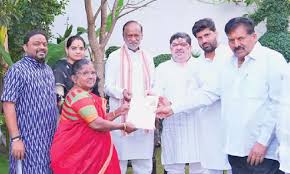
Hyderabad: Ina significant development for the Dalit slum dwellers of Vivekananda Nagar in Gandhinagar division under Musheerabad Assembly, double bedroom house pattas were allotted on Saturday with the support of Minister Ponnam Prabhakar and at the initiative of MP Dr K Laxman.Geographic Reference The allotment comes in the wake of the demolition of houses in the locality, which had left many families displaced. Rajya Sabha member Dr. K Laxman has been continuously fighting for justice for the affected families, bringing the issue to the attention of the National Commission for Scheduled Castes in Delhi and pursuing a political struggle against the state government. The distribution of pattas marks a major relief for the Dalit families, ensuring them secure housing and recognition of their rights. The program was attended by several prominent leaders including Musheerabad MLA Mutha Gopal, Rajya Sabha member Anil Kumar Yadav, and former Gandhinagar corporator Pavani Vinay Kumar, alongside Dr. Laxman. The leaders expressed solidarity with the residents and assured them of continued support in safeguarding their welfare. The move is seen as a step towards addressing long-standing housing issues faced by marginalised communities in Hyderabad. Courtesy : THI Note: This news is originally published on https:/thehansindiaindia.com/bha and is used purely for non-profit/non-commercial purposes, especially human rights
Dalits, backward classes lose out to SP’s core voter constituencies in Uttar Pradesh
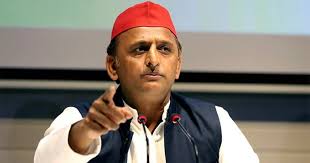
About 70% of SP’s 97 district and metropolitan presidents belong to Yadav and Muslim communities, raising questions over the enforcement of PDA slogan within the party organisation. LUCKNOW: When Samajwadi Party (SP) bagged 37 of 80 Lok Sabha seats in UP in 2024 polls by playing out its PDA (Pichhda, Dalit and Alpsankhyak) narrative, it was expected that leaders from backward classes, Dalits and Muslims would get wider representation in the party structure. However, the current organizational structure reflects the dominance of SP’s core M-Y (Muslim-Yadav) combination. About 70% of the party’s 97 district and metropolitan presidents belong to Yadav and Muslim communities, raising questions over the enforcement of the PDA slogan within the party organisation. Though the Yadav population in the state is estimated to be 8-9%, this core vote bank dominates the SP’s organisation. As many as 42 district president posts have gone to Yadavs. Muslims come second with 24 positions. Only seven people from the general category have been made district chiefs. “SP had achieved success in the 2024 Lok Sabha elections with PDA slogan. Akhilesh Yadav went to the Lok Sabha from Kannauj vacating his Karhal assembly seat. He had the opportunity to field a person from PDA category in Karhal bypoll, but he fielded his nephew Tej Pratap Yadav. SP’s PDA narrative now stands exposed,” a BSP leader said. BJP spokesperson Rakesh Tripathi said SP’s PDA model was a facade. “Outside the family, they will not give major responsibility to anyone. In the organization too, they don’t look beyond the M-Y equation,” he said. SP spokesperson Udayveer Singh said district presidents are chosen based on people’s opinion. “In the state committee, it is ensured that every section of society gets a place,” he said. Namita Bajpai Courtesy : TNIE Note: This news is originally published on https:/thenewindianexpress.com/bha and is used purely for non-profit/non-commercial purposes, especially human rights
In rejig, UP BJP to strike balance in upperCaste and OBC-Dalit representation
Lucknow: With assembly elections due early next year, the much-anticipated organisational rejig in the UP BJP, expected later this month, is likely to swing the spotlight back on party’s bid to strike a balance between the upper caste and the OBC-Dalit combo. Facing the heat over the controversy around UGC equity regulations and the face-off with Swami Avimukteshvaranand Saraswati during the Magh Mela, the BJP leadership is learnt to be treading a cautious path while making moves to consolidate the upper caste, which was the backbone of the party’s electoral success since the early 1990s. The party relayed initial hints recently when it released the fresh list of 11 district presidents, of which six were from the upper caste (three Brahmins and one each from the Thakur, Vaishya and Kayastha community), three were OBC and two were from the Dalit community. The distribution indicated that the party was unwilling to abandon its traditional base while simultaneously ensuring representation of backward and marginalised groups. All eyes are now on the new UP BJP state executive, which will steer the party’s organisational machinery in the election year. Changes are expected to be affected across the state leadership, which has a domination of the upper caste. Of the 18 vice-presidents, 10 are from the upper caste, five are OBC and three are Dalit. Likewise, of the seven state general secretaries, three are from the upper caste, three are OBC and one is SC. Similarly, of the 16 state secretaries, nine are from the upper caste, three are OBC and four are Dalits. As a matter of fact, while CM Yogi Adityanath is a Thakur, UP BJP president Pankaj Chaudhary and state general secretary (organisation) Dharam Pal Singh are OBC. At the same time, the BJP seeks a measured and accelerated outreach to the non-Yadav OBC and non-Jatav Dalit to augment its social coalition that formed the launch pad of its electoral success under the leadership of PM Narendra Modi in 2014. The OBC-Dalit combo has become all the more important for the BJP even as it faces a resurgent opposition and its Piccha Dalit Alpsankhyak (PDA) poll narrative, which is said to have dented the saffron brigade in the 2024 Lok Sabha elections when its tally came down from 62 to 33. Sources said that the UP BJP leadership was coordinating closely with the RSS, the party’s organisational fountainhead, while constituting a new team. The BJP-RSS coordination meetings have already been held in various organisational regions to draw up a formal blueprint of the organisational set-up. A senior UP BJP leader said that besides the caste balance, the party aims to bring in equitable representation of all six regions. Currently, the balance is tilted in favour of the Gorakhpur region, which happens to be the political backyard of not only Adityanath but also Chaudhary. Not surprisingly, the focus is expected to be on five other regions: Kashi, Braj, Awadh, West UP and Kanpur-Bundelkhand. “The party’s foremost priority was to give balanced representation to all castes, communities and regions based on the winnability factor. This would be factored in prominently when the new team is announced,” said UP BJP spokesperson Hero Bajpai. A senior UP BJP leader said that the party is expected to focus on the deployment of youth and women functionaries, the two key electoral blocs, in an attempt to cut across the caste spectrum. Analysts said that while young voters form a large share of UP’s electorate, women voters increasingly determine electoral outcomes. Courtesy : TOI Note: This news is originally published on https:/timesofindia.com/bha and is used purely for non-profit/non-commercial purposes, especially human rights
Disabled Dalit man and migrant worker murdered in Tirunelveli, Tamil Nadu
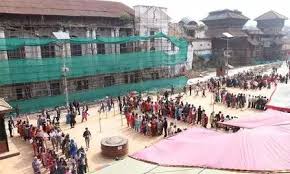
Five other people from the Other Backward Class community were also injured in the attack. On Monday, March 2, a group of nine people allegedly murdered a disabled Dalit man and a migrant worker from Odisha on the basis of caste in Tirunelveli district, Tamil Nadu. The incident took place in Perumapathu village, under the Nanguneri police station. According to The Siasat Daily, the deceased have been identified as 42-year-old John Mark, a resident of Perumapathu village, and 57-year-old Srinath Gadda from Odisha. Police have identified the accused as Kannan, Vasantha Kumar, Anthony Michel, Uchimahali alias Mittai, Raja alias Esakiraja, Subbaiah alias Subhash, and Kalyani, aged between 19 and 21 years. According to a Maktoob Media report, two of the accused were also named in an earlier attack on Dalits, although their identities were not disclosed under the Juvenile Justice (Care and Protection of Children) Act. Some of the attackers were traced and arrested on Tuesday, March 3, and police stated that strict action would be taken against the accused. An official, speaking on condition of anonymity, told PTI, “Police are taking strict action. Some people have been arrested and are being questioned in detail.” Five other people from the Other Backward Class (OBC) community were also injured in the attack. While police initially did not confirm the motive for the attack, later reports indicated that the young men, who belonged to an influential middle caste, allegedly planned the attack to intimidate Dalit youth in the area. How the incident unfolded According to PTI, the victims were at a tea stall on Monday night when a group of nine people on three motorcycles allegedly attacked them with sickles and other weapons, killing Mark and Gadda on the spot. Two of the injured are reported to be in critical condition at the hospital. Police immediately formed six special teams late Monday night and launched an investigation. A police officer, without providing further details, said, “This is a sensitive matter. The police will take strict action.” The incident drew widespread condemnation, and locals from the OBC and Dalit communities protested in the area, demanding the arrest of the accused. The deceased’s family demanded action. On Wednesday afternoon, March 4, the body of Srinath Gadda, a migrant worker from Odisha, was handed over to his family, after which he was cremated at the Tirunelveli Corporation crematorium. John Mark’s family reportedly refused to accept his body, demanding the arrest of the accused. They demanded strict action against the suspects. Tirunelveli District Police stated in a release that a case has been registered and the accused involved in the murder have been arrested and remanded to judicial custody. Police also reported that some individuals are sharing objectionable content related to the case on social media, using abusive and inflammatory language that could disturb public peace. Police stated, “Legal action is being initiated against those spreading such objectionable content on social media.” “Cases have already been registered at the Vijayanarayanam Police Station and Nanguneri Police Station, and efforts are underway to identify and arrest those responsible for such posts.” Tirunelveli Superintendent of Police, Dr. V. Prasanna Kumar, warned that strict legal action will be taken against individuals who spread inflammatory or inciting violence content on social media within the district. Courtesy: Hindi News
Man denies hall for dalit wedding in Erode, booked

Erode: The Perundurai police have booked a marriage hall owner under the Scheduled Castes and the Scheduled Tribes (Prevention of Atrocities) Act for refusing to rent the hall for a dalit couple’s marriage reception. An investigation officer said they booked C Ravi, 45, of Perundurai, who owns a small marriage hall near Anna Silai, based on a complaint lodged by K Rani, 45, a dalit woman from the same area. “Rani approached Ravi in the last week of Feb to book the marriage hall for her younger son’s wedding reception. Ravi confirmed the availability of the hall and agreed to rent it out to her for the event. When Rani met Ravi at the marriage hall’s office on March 3 to hand over advance payment for the hall booking, he asked her about her caste. When he came to know that she was a dalit, he refused to allocate the hall to her,” the officer said. Following this, Rani lodged a complaint with the Perundurai police the same evening. Police registered a case against Ravi under the SC/ST (Prevention of Atrocities) Act and picked him up for interrogation, during which he suffered high blood pressure and fell sick. He was rushed to a private hospital in Perundurai. The officer said Ravi, who was admitted to hospital, would be arrested as and when his condition improves. Courtesy : TOI Note: This news is originally published on https:/timesofindia.com/bha and is used purely for non-profit/non-commercial purposes, especially human rights
In Chhatarpur, miscreants entered the home of a Dalit family at midnight and beat them with sticks for refusing to give them gutkha.
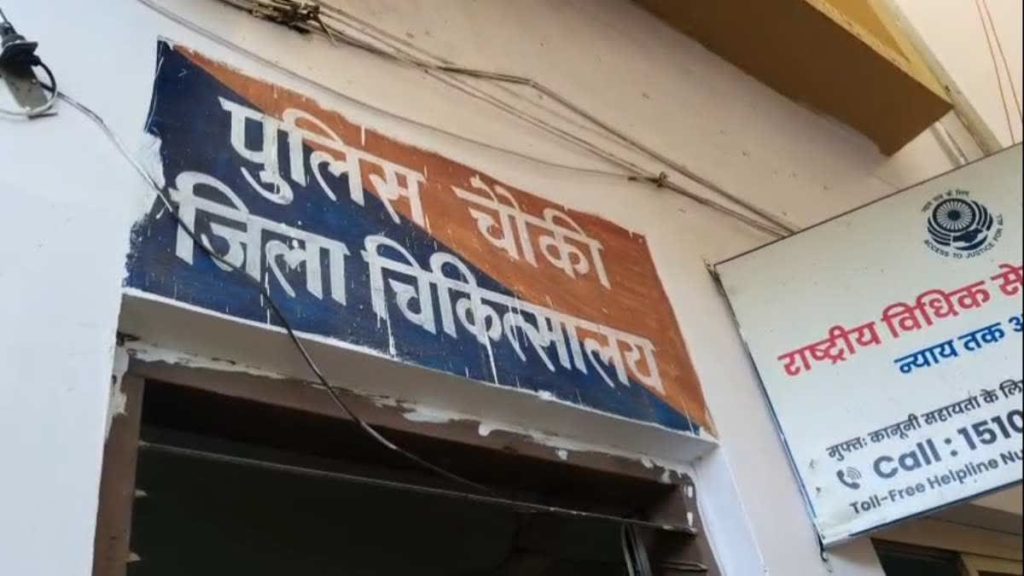
In Chhatarpur, miscreants, angry at being denied gutkha and cigarettes, entered the home of a Dalit family and assaulted them. A case has been filed against 10 accused. Chhatarpur: A case of bullying has come to light in the Bamitha police station area on Wednesday night. Angry at a Dalit family for not opening their shop at night, miscreants entered the home of a Dalit family and launched a deadly attack with sticks, injuring the young shopkeeper, his father, and mother. Police have filed a case against 10 accused in this case and launched a search. Entered and assaulted The entire incident took place in Jhamatuli village, under the Bamitha police station area. Arvind Ahirwar was sleeping in his home late at night when some miscreants entered his shop to buy gutkha and cigarettes. The shopkeeper refused to give them the goods as it was late at night. Enraged, the miscreants used casteist slurs and broke into the house. After which, the miscreants brutally assaulted the shopkeeper and his family. There is an atmosphere of terror in the village after the incident. The miscreants attacked after refusing to give goods. Victim shopkeeper Arvind Ahirwar said, “My father Bisla Ahirwar runs a grocery shop in the village. Around 12 o’clock on Wednesday night, some people including Rana Singh, Shailendra Singh, and Darru Patel arrived at the house and knocked on the gate and asked to open the shop to give them gutkha and cigarettes. But due to the late hour, the shop was refused. This enraged the accused and they started abusing and assaulting him with sticks.” A case has been filed against 10 accused. He further explained, “When my mother and I heard the commotion and went to intervene, the accused assaulted us with sticks. They pelted the house with stones and fired shots to spread terror in the village. Upon receiving information about the incident, the police arrived at the scene, but by then the accused had fled. Based on the complaint of the victim’s family, the police have filed an FIR against 10 people.” Victim Visla Ahirwar stated, “Praveen and Naveen have a liquor contract in the village. Rana Singh and his associates, who are involved in the liquor business, carried out this incident. We also filmed the incident and provided it to the police.” Station House Officer Ashutosh Shroti stated, “A dispute arose over not being given gutkha. A case has been filed against 10 people. The accused are being searched.” Courtesy: Hindi News
Dalit Mahasabha says internal reservation tool to divide community
Rajesh demanded that the caste census report prepared by the Karnataka Backward Classes Department be made public and that reservation policies be implemented based on the findings of that report. MYSURU: Dalit Mahasabha president S Rajesh has urged the government to reject the internal reservation report submitted by Justice H N Nagamohan Das, calling it “unscientific and divisive”. Addressing a press conference on Thursday, Rajesh said the report attempts to divide communities and should not be implemented. He demanded that the caste census report prepared by the Karnataka Backward Classes Department be made public and that reservation policies be implemented based on the findings of that report. “According to the caste census data, there are about 53 lakh people belonging to Scheduled Castes. In this context, the Nagamohan Das report contains several errors,” he said. Rajesh also claimed that Dr B R Ambedkar was never in favour of internal reservation. “If Dr Ambedkar had supported such a system, it would have been clearly mentioned in the Constitution. When Dalits across the country and the state unite, it becomes difficult for dominant castes to control them. Internal reservation is being used as a tool to create divisions among Dalit communities,” he said. He claimed that Justice Nagamohan Das had shown “bias” during the process of preparing the report. “From the very first meeting until the submission of the report to the government, there were indications that he favoured one particular community,” Rajesh said. According to him, during the first meeting, the former judge had stated that one community was extremely backward while another had already received a larger share of benefits. “He has portrayed a community with a larger population as smaller and a community with a smaller population as larger in his report. The survey process was concluded in haste even though data collection in urban areas was not fully completed. Communities such as Adi Karnataka, Adi Dravida and Adi Andhra have been placed in separate groups. This has led to injustice to the Alemari community,” he alleged. He claimed that communities belonging to the same homogeneous group have been placed in different categories instead of being grouped together. Rajesh said the Dalit Mahasabha will urge Chief Minister Siddaramaiah to reject what he described as an “unscientific and prejudiced report” and drop the proposal for internal reservation, which he said threatens the unity and identity of Dalit communities. Courtesy : TNIE Note: This news is originally published on https:/thenewindianexpress.com/bha and is used purely for non-profit/non-commercial purposes, especially human rights
Five arrested for assault on dalit man in Sivaganga
Sivaganga: Police arrested five members after a dalit man was allegedly assaulted by a group following a verbal altercation on Tuesday evening. According to police sources, on Tuesday evening (March 3), the victim, identified as Rasu of Idaikattur, was involved in a heated argument with his acquaintances, Pandiarajan of Chettikulam and Maheswaran of V Pudukulam. While the initial argument appeared to settle, the situation turned violent later that night when Maheswaran, accompanied by a group of supporters, allegedly barged into Rasu’s residence. The group reportedly picked a fresh quarrel before physically assaulting Rasu, who sustained simple injuries in the attack. Following a complaint, Manamadurai police registered a case under various sections of the Bharatiya Nyaya Sanhita (BNS), including rioting, uttering obscene words, voluntarily causing hurt, and criminal intimidation. Given the nature of the assault, police also invoked several sections of the SC/ST (Prevention of Atrocities) Act. A senior police official confirmed that five individuals were arrested so far. A team of police is currently searching for the remaining suspects. To maintain law and order, police personnel were stationed at Idaikattur and surrounding hamlets, and the situation was monitored. VCK chief Thol Thirumavalavan, speaking to reporters here on Thursday evening, said that the Tamil Nadu govt must go beyond simply punishing those responsible for the recent deadly attacks in Perumpathu and Sivaganga. It should also expose the underlying “sinister designs” fuelled by drug use among “dominant groups” that reportedly orchestrated this violence. Courtesy : TOI Note: This news is originally published on https:/timesofindia.com/bha and is used purely for non-profit/non-commercial purposes, especially human rights
JNUTA Calls For Removal Of JNU VC Over Controversial Dalit Remarks: What Happened So Far?
In a letter to Education Minister Dharmendra Pradhan, JNUTA questioned the Ministry and Central Government’s stance on the VC’s comments and the detention of protesting students. The Jawaharlal Nehru University Teachers’ Association (JNUTA) on Thursday called for the removal of Vice-Chancellor Santishree Dhulipudi Pandit due to her controversial remarks on a podcast that dismissed UGC regulations and allegedly contained casteist undertones. In a letter to Education Minister Dharmendra Pradhan, JNUTA questioned the Ministry and Central Government’s stance on the VC’s comments and the detention of protesting students, reported ANI. They also raised concerns about the VC’s political connections with the Union government, suggesting these ties influenced her appointment. JNUTA highlighted the government’s inaction following the violent suppression and detention of students who peacefully protested the VC’s remarks. They argued that this contradicts the government’s commitment to justice and casts doubt on its seriousness about addressing caste discrimination. Demanding the VC’s immediate removal, JNUTA cited multiple instances of her “mis-governance” and noted that similar demands had been made three times in 2025 alone. They accused the government of implicitly endorsing the VC’s casteist views by not acting against her. The association pointed out the VC’s misuse of the ‘None Found Suitable’ (NFS) provision to obstruct faculty appointments for reserved positions, discriminatory promotion practices, and the declining representation of women and SC/ST categories in the student body. Criticising the VC’s false claims about the secrecy of the UGC Equity Regulations and the proportion of women faculty, JNUTA emphasised that these can be easily disproven with available data. They deemed the VC unfit to lead an institution known for academic excellence and social equity, stressing that the Ministry’s reputation is also at stake. JNUTA urged the Education Ministry to take prompt action, asserting that the VC’s continuation is unacceptable and detrimental to the university’s reputation. They emphasised that the need for such regulations is undeniable and refuted the VC’s analysis as condemnable, urging the Ministry to act decisively. What Happened So Far? The Vice Chancellor’s statement, made in a podcast released on February 16, sparked controversy. Discussing the University Grants Commission’s (UGC) Equity (Anti-Discrimination) Rules of 2026, which aim to prevent caste-based discrimination in higher educational institutions, she described the regulations as “unnecessary and irrational.” She commented that “it’s not easy to move forward by demonising someone or constantly portraying yourself as a victim. It’s like a temporary addiction.” This statement quickly stirred a reaction on social media. As the controversy grew, the VC clarified that her statement had been misrepresented. She insisted she did not mean to imply that the Dalit community always plays the victim card, but rather that some people use such language as part of a “woke” ideology. She stated that the controversy was unnecessary and that care had not been taken in formulating the rules, adding, “I myself am a Bahujan.” The Jawaharlal Nehru University Students’ Union (JNUSU) labelled the Vice Chancellor’s remarks as “blatantly casteist” and demanded her resignation. They argued that such statements promote caste discrimination and inequality in universities. The atmosphere on the JNU campus has since become tense, with student organisations insisting that protests will continue until the Vice Chancellor apologises or resigns. As many as 14 JNU students, arrested during a protest march last week, have recently been released after a Delhi court ordered their immediate release. Among those released are JNUSU president Aditi Mishra, vice president Gopika K Babu, joint secretary Danish Ali, former JNUSU president Nitish Kumar, and AISA All India president Neha, among others. The court granted bail to the protesters on February 27, noting that while assaulting police personnel is a serious offence, the accused are students with their careers ahead of them. Courtesy : News18 Note: This news is originally published on https:/news18.com/bha and is used purely for non-profit/non-commercial purposes, especially human rights