
Andhra Pradesh: TDP-RSS call for building Rama temple leads to tensions with Dalits
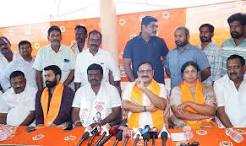
The violence in Akividu traces back to a March 7 visit by Andhra Pradesh Deputy Speaker Raghu Rama Krishna Raju, who, along with RSS members, announced plans to construct a Ramalayam at the site. Tensions broke out between Dalit residents of an Andhra Pradesh village and leaders and workers of the Telugu Desam Party (TDP) and Rashtriya Swayamsevak Sangh (RSS) on March 27, over a dispute regarding the construction of a Rama temple at a structure that houses a local deity. The incident took place in Akividu in Andhra Pradesh’s West Godavari. According to a fact-finding report published by the Human Rights Forum (HRF), alleged illegal attempts were made to convert a Gonthenamma temple into a Ramalayam (Rama temple) in the Pedapeta area of Akividu. Gonethenamma is a deity of the Mala community (Scheduled Caste), the HRF report said. The move was statedly led by TDP MLA and Assembly Deputy Speaker K Raghu Rama Krishnam Raju, along with the RSS. According to HRF, the structure housing the Gonthenamma idol is not a temple in the conventional sense. Instead, it is a choultry (inn) where the idol was also placed. A few decades ago, idols of Rama and Sita were also placed in the building, with the assent of the Gonthenamma temple caretaker, the HRF fact-finding report noted. It is the allegedly “dilapidated condition” of this structure that gave rise to the RSS demand for a Ramalayam. The plan faced pushback from the Dalit residents of Akividu, who opposed the plans to demolish the place of worship of their local deity. Groups led by Deputy Speaker K Raghu Rama Krishnam Raju visited the region twice — first on March 7 and then on March 27, the festival of Sree Rama Navami. The proposal was opposed by a section of villagers, leading to repeated confrontations that escalated further after objectionable social media posts. Speaking at Akivudu on March 7, Raghu Rama Krishna Raju said, “In this Scheduled Caste (SC) colony, how many Hindus are there and how many Christians? Is there no Hindu here?” he asked, allegedly ridiculing their Christian identity. In a separate interview with a Telugu channel, Raghu Rama Raju said that they are all “Hindus at the end of the day.” Following a scuffle that broke out on the first visit on March 7, cases were booked against both sides. However, in the aftermath of the violence that broke out on March 27, only the Dalits were charged with cases. The police booked 58 Dalit persons, of whom 27 were arrested and remanded to judicial custody, the HRF report said. Three days after violence broke out on March 27 in Akividu in Andhra Pradesh’s West Godavari district, representatives of civil rights group Human Rights Forum (HRF) on Monday, March 30, published a fact finding report. The violence broke out on March 27 during Srirama Navami celebrations, leaving three persons injured. The renovation proposal has also been backed by Union Minister of State Bhupathiraju Srinivas Varma. “No matter who comes together or not. We will build a Ram temple in Akividu,” he said. Former Amalapuram MP GV Harsha Kumar on Monday, March 31, proposed a compromise—developing a temple that accommodates both Lord Ram and the local deity—while urging authorities to first consult residents and constitute a committee to address concerns. HRF has urged the Telugu Desam Party (TDP) led Andhra Pradesh government to conduct an impartial inquiry and fix accountability for the clashes. Courtesy : TNM Note: This news is originally published on https:/thenewsminute.com/bha and is used purely for non-profit/non-commercial purposes, especially human rights
Nepal to issue formal apology to Dalits within 15 days

KATHMANDU: Nepal’s new govt said it would issue a “formal state apology” to Dalits and other historically excluded communities within 15 days under prime minister Balendra Shah’s 100-point reform agenda, in what activists described as a historic acknowledgment of generations of caste-based discrimination, exclusion and denial of opportunity. The proposed apology is to be accompanied by measures on social justice, inclusive restoration and historical reconciliation. The agenda said: “We will formally acknowledge the injustice, discrimination and deprivation of opportunities inflicted on Dalits and historically marginalised communities by the state, society and policy structures, and prepare the basis for social justice, inclusive restoration and historical reconciliation.” It added that a reform-oriented programme would be announced too. The promise has drawn attention in a country where Dalits make up about 13-14% of the population but continue to face entrenched exclusion despite constitutional guarantees and laws against caste-based discrimination and untouchability. Activists said nearly 42% of Dalits lived below the poverty line, literacy remained below the national average, and representation in key institutions stayed disproportionately low. For many, the issue remained deeply personal. Saraswati Nepali, president of the Dalit Society Development Forum in Baitadi, recalled that as a child she was not allowed to drink from the same water jar as her classmates and had to walk home for water because she was Dalit. “The state’s official apology will be like a balm for our wounds,” she said. “But for it to heal entirely, govt must effectively ensure all our guaranteed rights. That would give us justice and ensure our dignity.” Dalit activist Hira Lal Bishwakarma welcomed the announcement, but said its meaning would depend on implementation. “The current decision is honourable, but there is fear that it will only be lip service like in the past,” he said. “After announcing such programmes, policies, budgets, and structures are needed. Without them, it is good to show such announcements externally, but the Dalit community does not get justice.” Amrita Ban, 23, a Gen Z activist, told TOI the move had raised expectations among young voters. “A state apology to a community that has faced discrimination for generations is historic and a positive beginning. I strongly welcome the decision…I am hopeful it will also bring concrete measures to end discrimination at its roots.” Rakshya Bam, 26, said, “If govt backs this with budgets, enforcement and accountability, it could mark a significant shift in Nepal’s response to caste injustice. Without that, the apology could become a powerful acknowledgment of the past, but fall short of changing the present.” Courtesy : TOI Note: This news is originally published on https:/timesofindia.com/bha and is used purely for non-profit/non-commercial purposes, especially human rights
Rape Convict Sentenced to 10 Years in Sonbhadra: Court Imposes Fine of ₹55,000 in Case Involving Rape Under False Pretext of Marriage
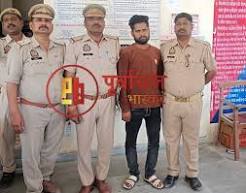
In a significant verdict delivered on Tuesday, the court of Special Judge (SC/ST Act) Abid Shamim in Sonbhadra convicted Dhanesh—alias ‘Stander’ Patel—of rape and sentenced him to 10 years of rigorous imprisonment. The court also imposed a monetary fine of ₹55,000 on the convict. The court clarified that in the event of non-payment of the fine, the convict would be required to undergo an additional six months of imprisonment. The period already spent in judicial custody will be adjusted against the sentence. Half of the imposed fine amount is to be awarded to the victim. This case dates back approximately five years, when a young Dalit woman from the Karma police station area filed a complaint. The woman alleged that Dhanesh—alias ‘Stander’ Patel (son of Rajkumar Raja Patel, a resident of Khairpur Sirsiya Thakurai, under Karma Police Station, District Sonbhadra)—had engaged in sexual relations with her on multiple occasions under the false pretext of marriage. According to the victim, when Dhanesh announced his intention to marry a girl from his own caste community and was confronted about it, he verbally abused her and issued death threats. Subsequently, on May 17, 2021, the Karma police registered an FIR against him under various sections, including those pertaining to rape and the SC/ST Act. The Circle Officer (CO) investigated the matter and, based on sufficient evidence, filed a chargesheet in the court. The court heard the arguments presented by the counsels for both the prosecution and the defense, recorded the statements of seven witnesses, and conducted a thorough examination of the case records. Based on all these facts, Dhanesh—alias ‘Stander’ Patel—was found guilty. Government Counsel C. Shashank Shekhar Katyayan represented the prosecution during the arguments. Manoj Kumar Verma | Sonbhadra Courtesy: Hindi News
CPI meet calls for review of SC verdict
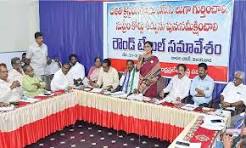
Vijayawada: Around-table organised by the CPI state committee here on Tuesday demanded that Dalit Christians be recognised as Scheduled Castes and called for a review of the recent Supreme Court verdict denying them SC status. The meeting, held at Dasari Bhavan under the chairmanship of CPI state secretary G Eswaraiah, brought together leaders from Left parties, Congress, and various Dalit, labour, women, youth, student, minority and Christian organisations. Speakers expressed concern over what they termed as growing ideological influence on institutions, alleging that such trends were impacting policy decisions and judicial pronouncements. Moving a resolution, Eswaraiah said the Supreme Court’s March 24 judgment reiterated that SC status does not extend to Dalit Christians. He stressed that Paragraph 3 of the 1950 Presidential Order must be removed to enable their inclusion and noted that several petitions on the issue are pending before the apex court.Despite religious conversion, Dalits continue to face social and economic discrimination, he said, adding that denial of SC status deprives Dalit Christians of reservations in education and employment, as well as protections under the SC/ST (Prevention of Atrocities) Act. He also stated that the judgment violates the fundamental rights guaranteed by the Constitution and urged the Centre to seek a review before a full bench of the Supreme Court. AP Congress president YS Sharmila criticised the verdict, stating that it goes against the spirit of the Constitution and fails to adequately consider Articles 14, 15, and 25. She pointed out that the social and economic conditions of Dalits do not change even after religious conversion, making the denial of SC status unjust. She termed it discriminatory that conversion does not affect other castes in the same manner and warned that injustice to nearly 80 lakh Dalit Christians in the state would amount to a serious social concern. Former Union Minister JD Seelam said efforts were made during the Congress regime to address the issue, but remained incomplete due to the government’s tenure ending. CPI national secretary K Ramakrishna said caste discrimination persists from birth to death and cannot be eliminated through religious conversion. He demanded a nationwide caste census and questioned why Dalit Christians should be denied SC reservations when discrimination continues. CPM state secretary V Srinivasa Rao said the Supreme Court verdict is not justified, explaining that caste is a social construct and does not change with religion. He suggested that the issue be examined by a Constitutional bench. YSRCP state spokesperson and former MLC Jupudi Prabhakar Rao recalled Dr B R Ambedkar’s view that the State has no religion and said the verdict would cause irreparable loss to Dalit Christians.The meeting unanimously adopted a resolution urging the Centre to seek a review of the judgment and called upon the Andhra Pradesh Assembly to pass a similar resolution. Courtesy : THI Note: This news is originally published on https:/thehansindia.com/bha and is used purely for non-profit/non-commercial purposes, especially human rights
Dalit History Month | Students Complete All Formalities, Yet Mahatma Gandhi International Hindi University Denies Permission to Screen ‘Ulgulan’!
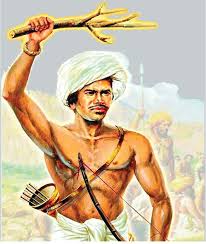
Despite the completion of all formalities, students have yet to receive permission to use the auditorium for this event, which is scheduled for April 3. The students are disheartened regarding the screening of the film on Birsa Munda. Wardha — The screening of the feature film *Ulgulan: Ek Kranti* (Ulgulan: A Revolution)—based on the life of freedom fighter Birsa Munda and organized by students from Jharkhand at the Mahatma Gandhi International Hindi University—has stalled due to administrative confusion and the bureaucratic shuffling of files from one department to another. Despite having completed all necessary formalities, the students have not yet received permission to use the auditorium for this event, which is scheduled for April 3. Rahul Kumar, a resident of Jharkhand’s Garhwa district and a student in the Department of Mass Communication, told *The Mooknayak* that on March 20, he submitted a formal application to the university administration seeking permission to screen the film at the Ghalib Auditorium, located within the Tulsi Bhawan complex. According to the regulations established by the university, it is mandatory to submit such applications at least 10 days prior to the scheduled event—a requirement the student duly fulfilled. The application was forwarded by the Head of the Department, Dr. Sandeep Kumar Verma. On the very same day, the Dean of Student Welfare, Dr. Awadhesh Kumar Shukla, also approved the application and forwarded it to the Registrar, Qader Nawaz Khan. A situation of administrative delay and uncertainty continues to prevail at the Mahatma Gandhi International Hindi University regarding the screening of the feature film *Ulgulan: Ek Kranti*—based on the life of freedom fighter Birsa Munda—which is being organized by students hailing from Jharkhand. Subsequently, on March 23, the file reached the Registrar’s office; however, from there, it was sent back to the office of the Dean of Student Welfare. The file was then forwarded to the Cultural Committee, where the review and certification of the film were completed by March 26. Despite the completion of all necessary formalities, the students have not yet been granted final permission. The administration has now deferred the matter to a meeting scheduled for April 1, a delay that has left the students feeling deeply disappointed. University Regulations Regarding Programs With a view to ensuring that the various programs organized by students are conducted in a systematic, disciplined, and orderly manner—and in alignment with the objectives of the University—the following set of regulations has been established. According to a circular issued by the Registrar, Kader Nawaz Khan, on January 19, 2026: The program must be academic in nature and consistent with the objectives of the University. Applications related to a program must be submitted to the Registrar’s Office at least 10 (ten) days prior to the scheduled date of the program. With the exception of special occasions—such as the birth or death anniversaries of eminent personalities—programs shall be organized exclusively on working days. Applications must be forwarded through the respective Head of the Department. The organization of the program must be conducted under the supervision of the concerned Head of the Department or a committee of faculty members nominated by them. Permission shall not be granted for any student-organized program on days when a program is being organized by the University itself. It is mandatory to attach the subject matter and detailed description of the program along with the application. The application form must be accompanied by a list containing the names of at least 10 students (or, in departments with fewer than 10 students, the names of all enrolled students), along with their department names, mobile numbers, and email addresses. Additionally, the name of the hostel and the respective room numbers must be specified. The resources available within the auditorium must be utilized responsibly. In the event of any damage, the cost of repairs or replacement must be borne by the program coordinator or the organizing team of research scholars/students. Pasting posters, banners, or similar materials on the walls within the University campus is strictly prohibited. The auditorium shall be allocated exclusively to the specific organizing team that applied for it; this allocation is non-transferable and cannot be altered. Posters and banners may be displayed only at the specific venue of the program and at locations designated by the University. The display of posters and banners at any location other than those designated is prohibited. The organizing team must submit an Undertaking (Declaration of Compliance) regarding adherence to the regulations governing the event, forwarded through their respective Head of the Department. 13. The duration of the program shall not exceed two hours, and permission for the program shall be valid until 9:00 PM. Apart from the auditorium and the resources currently available, the university will not provide any additional resources. The organizers themselves must make arrangements for these. Students state that for the past 10 days, they have been continuously making rounds of various offices seeking permission to use an auditorium, yet they have received no clear response. Student Rahul Kumar remarks, “We submitted our application on March 20. The regulations stipulate that permission should be granted within 10 days; however, we are facing nothing but stalling tactics. The file is simply being shuffled from one department to another.” The students have also raised the pertinent question: given that the film has already received certification from the Central Board of Film Certification and all administrative formalities have been completed, why is there such a delay in granting permission? They allege that the deliberate shuffling of the file between departments is a calculated attempt to postpone the event. It is noteworthy that this event had already been announced during the screening of another documentary. Consequently, the failure to secure permission at the eleventh hour casts a shadow of doubt over the students’ efforts and has completely sapped their enthusiasm for organizing the event. Geetha Sunil Pillai Courtesy: Hindi News
BJP Finalizes Plan to Woo Dalit Vote Bank on Ambedkar Jayanti: Know the Full Strategy

Ahead of the Panchayat and urban local body elections scheduled for this year in the state, the BJP is attempting to make inroads into the Congress party’s traditional Dalit vote bank. Jaipur: The BJP has intensified its preparations for the upcoming Panchayat and urban local body elections in the state. Before entering the electoral fray, the party has now actively begun working towards balancing social equations. In this context, the BJP has devised a strategy to penetrate the Congress party’s traditional Dalit vote bank, which accounts for 17 percent of the electorate. To achieve this, the birth anniversary of the architect of the Constitution, Dr. Bhimrao Ambedkar, is being utilized as a primary vehicle. In the politics of Rajasthan, the role of the Dalit—or Scheduled Caste—vote bank is considered pivotal. The Dalit community is estimated to constitute approximately 17 percent of the state’s total population, translating to a numerical strength of around 1.20 crore people. This is precisely why, in every election—whether for the Legislative Assembly, the Lok Sabha, or the Panchayat and local bodies—courting this demographic remains a top priority for political parties. Although this segment has traditionally been considered a Congress stronghold, the BJP has significantly strengthened its grip on this vote bank over the last few years. Dr. Ambedkar remains the most prominent leader of the Dalit community; consequently, the BJP is executing its strategy by placing Ambedkar at the very center of its efforts. On April 14th, the BJP intends to celebrate Ambedkar Jayanti as a grand festival. The party is planning to organize a week-long series of large-scale events to mark the occasion. Through these initiatives, the party aims to expand its outreach within the Dalit community and prominently highlight their issues. Congress Insulted ‘Baba Saheb’: BJP State President Madan Rathore stated that the Congress party has exploited the Dalit community by treating them merely as a traditional vote bank, thereby keeping them deprived of development. He noted that there is now a palpable desire for change within the Dalit community. Keeping this sentiment in mind, the BJP has outlined a series of programs for Ambedkar Jayanti. The party intends to expose the true character of the Congress party before the Dalit community. This year, the Ambedkar Jayanti celebrations on April 14th will be observed as a week-long event. Through seminars and discussions focusing on the life and legacy of Dr. Ambedkar, the party will inform the public about how ‘Baba Saheb’ championed the cause of justice during the drafting of the Constitution, and how it is the BJP that has truly accorded him the respect he deserves. Under the leadership of PM Narendra Modi, sites ranging from Ambedkar’s birthplace to his places of education and *Nirvana* (final resting place) have been developed as “Panch Teerth” (Five Pilgrimage Sites). Several historic initiatives, including the observance of Constitution Day, have been undertaken in his honor. Rathore alleged that the Congress party had hindered Ambedkar’s rise. **Special Focus on the Dalit Community** The BJP will conduct a mega public outreach campaign across the state between April 7 and April 14. Party workers will remain active from the booth level right up to the state level. They will engage in door-to-door interactions to publicize government schemes and the party’s ideology. They will strengthen their outreach in every village and settlement. The campaign will focus primarily on rural areas and Dalit settlements. Workers will visit villages to organize “Chaupal” (community gathering) programs. They will engage in direct dialogue with the people to listen to their grievances. They will highlight Ambedkar’s ideas and his contributions to the Constitution. Cleanliness and public awareness programs will be conducted. Cleanliness drives will be organized at public places. Senior party leaders will be felicitated. Seminars and discussion sessions will be held at the *Mandal*, booth, and *Shakti Kendra* levels. BJP leaders will expound upon Ambedkar’s biography and life story. **Read:** Rajasthan Government’s Major Decision: The Gift of the “Panch Teerth Yatra”—Free Travel to Sites Associated with Baba Saheb Ambedkar. **Door-to-Door and Ward-to-Ward Campaigning:** Under this campaign, BJP workers—as explained by the campaign’s convener and State General Secretary, Pintu Saini—will go from village to village and ward to ward to convey Ambedkar’s ideas, his contributions to the Constitution, and the message of social justice to the people. They will conduct dialogues, meetings, and awareness rallies within Dalit settlements. Party leaders have been instructed to establish contact with influential members of society at the local level and apprise them of the party’s policies. The BJP’s strategy is not limited merely to organizing events; rather, changes are also being implemented at the organizational level. Responsibilities are being assigned to party workers belonging to the Dalit community so that they can effectively convey the party’s message within their own communities. Special emphasis will also be placed on ensuring that government schemes and benefits reach the Dalit community. Party MPs, MLAs, and other elected representatives will also join these gatherings and take Ambedkar’s ideas to the masses. Courtesy: Hindi News
The Promise of SC/ST Empowerment Remains Unfulfilled: A Mere 1.79% Share in Government Tenders; MP Prof. Varsha Gaikwad Seeks President’s Intervention

New Delhi—Under the Central Government’s Public Procurement Policy, the statutory target of procuring a minimum of 4 percent of goods and services from Micro and Small Enterprises (MSEs) owned by Scheduled Castes (SC) and Scheduled Tribes (ST) has, even after nine years, reached only 1.79 percent. This revelation emerged in a written response to Starred Question No. 171 in the Rajya Sabha on March 9. Lok Sabha MP Prof. Varsha Eknath Gaikwad (Mumbai North-Central) wrote to President Droupadi Murmu, appealing for immediate intervention regarding the “inconsistent and neglected” implementation of the policy. What Questions Were Asked in the Rajya Sabha, and What Answers Were Received? MP Golla Baburao asked the Minister of Micro, Small and Medium Enterprises: What are the objectives of the National SC/ST Hub Scheme currently being implemented for Scheduled Caste/Scheduled Tribe entrepreneurs? Is it not true that the government has mandated a 4 percent procurement from SC/ST-owned Micro and Small Enterprises under the Public Procurement Policy for MSEs? And (c) if so, what is the percentage of procurement made from SC/ST enterprises since the implementation of the mandatory 4 percent procurement clause—specifically in the context of the state of Andhra Pradesh? Responding to the question in the Rajya Sabha, the Minister of Micro, Small and Medium Enterprises (MSME), Jitan Ram Manjhi, clarified: (a) Objective of the National SC/ST Hub (NSSH) Scheme: Operational since October 2016, the scheme aims to promote SC/ST entrepreneurship and to facilitate the fulfillment of the mandatory 4% procurement target from MSEs under the Public Procurement Policy. (b) Confirmation of the 4% Target: Yes, under the Public Procurement Policy for MSEs Order, 2012, it is mandatory for all Central Government Ministries, Departments, and Central Public Sector Enterprises (CPSEs) to procure 25% of their total annual purchases from MSEs, and—within that allocation—4% specifically from SC/ST-owned MSEs. (c) Actual Figures: According to data recorded on the MSME Sambandh Portal (launched on December 8, 2017), the percentage of procurement from SC/ST-owned MSEs across the country has been as follows (as of March 5, 2026): Minister Jitan Ram Manjhi stated in the Rajya Sabha that the NSSH scheme has been operational since 2016 specifically to fulfill this 4% target. Nevertheless, the figures indicate that despite rising from ₹544 crore in 2017-18 to ₹3,364 crore in 2025-26, the actual percentage achieved remains far short of the stipulated target. The Minister also acknowledged that data is not maintained on a state-wise basis; therefore, separate data specifically for Andhra Pradesh is not available. What are the Government Regulations? (Public Procurement Policy, 2012) Procurement of 25% of total purchases from MSEs is mandatory. Within that, 4% must be procured from SC/ST-owned MSEs (constituting 4% of the *total* procurement value, not merely 4% of the 25% MSE quota). 3% must be procured from women-owned MSEs. Definition of an SC/ST-owned MSE: In a proprietorship, the owner must belong to the SC/ST category; in a partnership, SC/ST members must hold a 51% stake; or in a company, SC/ST members must hold 51% of the promoter shares. Provision for free tender forms, exemption from Earnest Money Deposit (EMD), reservation of 358 specific items for procurement, and mandatory Vendor Development Programs. The central policy mandates that a minimum of 10 percent of the total value of government procurement and tenders must be sourced from SC/ST entrepreneurs. How are these regulations being disregarded? Responses provided in the Rajya Sabha, along with data from the MSME Samadbandh portal, clearly demonstrate that over a period of nine years, the percentage has risen from a mere 0.48% to just 1.79%. In other words, not even 55% of the 4% target has been achieved. While many CPSEs (Central Public Sector Enterprises) and ministries successfully meet the 25% target for MSEs (Micro and Small Enterprises), they frequently overlook the sub-target specifically designated for SC/ST entrepreneurs. The reasons for this include: A lack of capacity building and market access for SC/ST entrepreneurs. The failure of certain departments to include SC/ST categories in tender documents, or their refusal to accord priority even when an L1 (lowest bid) is received from such entities. A tendency among state governments to either not fully adopt or not effectively implement the Central government’s policy. A lack of effective oversight and monitoring. Addressing this very issue of neglect, Prof. Varsha Gaikwad stated in a letter addressed to the President on March 24: “The Central policy mandates that a minimum of 10 percent of the total value of government procurement and tenders must be sourced from SC/ST entrepreneurs. This policy was formulated with the objective of fostering inclusive economic growth, encouraging entrepreneurship among marginalized communities, and ensuring their equal participation in national development. However, at the state level, this policy is being implemented inconsistently—and, in most instances, is being completely disregarded. Consequently, SC/ST entrepreneurs are being denied their rightful entitlements, and the broader objectives of socio-economic empowerment remain unfulfilled.” She urged the President to issue strict directives to all Central ministries, departments, and state governments to ensure the uniform and equitable implementation of this policy. Furthermore, she called for the establishment of robust monitoring mechanisms, the creation of awareness among procurement officials, and the launch of capacity-building programs specifically tailored for SC/ST entrepreneurs. Geetha Sunil Pillai Courtesy: Hindi News
Why is the participation of Dalit-Adivasi entrepreneurs in government tenders so low? The 4% promise exists only on paper, while in reality, it stands at a mere 1.79% | TM Special
The Promise of SC/ST Empowerment Remains Unfulfilled: A Mere 1.79% Share in Government Tenders; MP Prof. Varsha Gaikwad Seeks President’s Intervention New Delhi—Under the Central Government’s Public Procurement Policy, the statutory target of procuring a minimum of 4 percent of goods and services from Micro and Small Enterprises (MSEs) owned by Scheduled Castes (SC) and Scheduled Tribes (ST) has, even after nine years, reached only 1.79 percent. This revelation emerged in a written response to Starred Question No. 171 in the Rajya Sabha on March 9. Lok Sabha MP Prof. Varsha Eknath Gaikwad (Mumbai North-Central) wrote to President Droupadi Murmu, appealing for immediate intervention regarding the “inconsistent and neglected” implementation of the policy. What Questions Were Asked in the Rajya Sabha, and What Answers Were Received? MP Golla Baburao asked the Minister of Micro, Small and Medium Enterprises: What are the objectives of the National SC/ST Hub Scheme currently being implemented for Scheduled Caste/Scheduled Tribe entrepreneurs? Is it not true that the government has mandated a 4 percent procurement from SC/ST-owned Micro and Small Enterprises under the Public Procurement Policy for MSEs? And (c) if so, what is the percentage of procurement made from SC/ST enterprises since the implementation of the mandatory 4 percent procurement clause—specifically in the context of the state of Andhra Pradesh? Responding to the question in the Rajya Sabha, the Minister of Micro, Small and Medium Enterprises (MSME), Jitan Ram Manjhi, clarified: (a) Objective of the National SC/ST Hub (NSSH) Scheme: Operational since October 2016, the scheme aims to promote SC/ST entrepreneurship and to facilitate the fulfillment of the mandatory 4% procurement target from MSEs under the Public Procurement Policy. (b) Confirmation of the 4% Target: Yes, under the Public Procurement Policy for MSEs Order, 2012, it is mandatory for all Central Government Ministries, Departments, and Central Public Sector Enterprises (CPSEs) to procure 25% of their total annual purchases from MSEs, and—within that allocation—4% specifically from SC/ST-owned MSEs. (c) Actual Figures: According to data recorded on the MSME Sambandh Portal (launched on December 8, 2017), the percentage of procurement from SC/ST-owned MSEs across the country has been as follows (as of March 5, 2026): Minister Jitan Ram Manjhi stated in the Rajya Sabha that the NSSH scheme has been operational since 2016 specifically to fulfill this 4% target. Nevertheless, the figures indicate that despite rising from ₹544 crore in 2017-18 to ₹3,364 crore in 2025-26, the actual percentage achieved remains far short of the stipulated target. The Minister also acknowledged that data is not maintained on a state-wise basis; therefore, separate data specifically for Andhra Pradesh is not available. What are the Government Regulations? (Public Procurement Policy, 2012) Procurement of 25% of total purchases from MSEs is mandatory. Within that, 4% must be procured from SC/ST-owned MSEs (constituting 4% of the *total* procurement value, not merely 4% of the 25% MSE quota). 3% must be procured from women-owned MSEs. Definition of an SC/ST-owned MSE: In a proprietorship, the owner must belong to the SC/ST category; in a partnership, SC/ST members must hold a 51% stake; or in a company, SC/ST members must hold 51% of the promoter shares. Provision for free tender forms, exemption from Earnest Money Deposit (EMD), reservation of 358 specific items for procurement, and mandatory Vendor Development Programs. The central policy mandates that a minimum of 10 percent of the total value of government procurement and tenders must be sourced from SC/ST entrepreneurs. How are these regulations being disregarded? Responses provided in the Rajya Sabha, along with data from the MSME Samadbandh portal, clearly demonstrate that over a period of nine years, the percentage has risen from a mere 0.48% to just 1.79%. In other words, not even 55% of the 4% target has been achieved. While many CPSEs (Central Public Sector Enterprises) and ministries successfully meet the 25% target for MSEs (Micro and Small Enterprises), they frequently overlook the sub-target specifically designated for SC/ST entrepreneurs. The reasons for this include: A lack of capacity building and market access for SC/ST entrepreneurs. The failure of certain departments to include SC/ST categories in tender documents, or their refusal to accord priority even when an L1 (lowest bid) is received from such entities. A tendency among state governments to either not fully adopt or not effectively implement the Central government’s policy. A lack of effective oversight and monitoring. Addressing this very issue of neglect, Prof. Varsha Gaikwad stated in a letter addressed to the President on March 24: “The Central policy mandates that a minimum of 10 percent of the total value of government procurement and tenders must be sourced from SC/ST entrepreneurs. This policy was formulated with the objective of fostering inclusive economic growth, encouraging entrepreneurship among marginalized communities, and ensuring their equal participation in national development. However, at the state level, this policy is being implemented inconsistently—and, in most instances, is being completely disregarded. Consequently, SC/ST entrepreneurs are being denied their rightful entitlements, and the broader objectives of socio-economic empowerment remain unfulfilled.” She urged the President to issue strict directives to all Central ministries, departments, and state governments to ensure the uniform and equitable implementation of this policy. Furthermore, she called for the establishment of robust monitoring mechanisms, the creation of awareness among procurement officials, and the launch of capacity-building programs specifically tailored for SC/ST entrepreneurs. Geetha Sunil Pillai Courtesy: Hindi News
Newly Formed Nepal Government to Apologise to Dalits for Decades of Discrimination

Balendra Shah announced that Nepal’s government will formally apologise to Dalit communities for historical discrimination within 15 days. The move, part of a 100-point reform agenda, aims to address caste-based injustice and promote equality, though its impact will depend on effective implementation. The newly formed government of Nepal has decided to issue a formal apology to Dalit and historically marginalised communities for decades of discrimination and exclusion. Prime Minister Balendra Shah, popularly known as Balen Shah, took oath on March 27 and made the announcement as part of a 100-point Governance Reform Agenda approved in the Cabinet’s first meeting. Government to Acknowledge Historical Injustice According to the official plan, the state will recognise the injustices faced by Dalits due to long-standing social practices and state policies. “The government will formally apologise on behalf of the state within 15 days and announce programmes focused on justice, equality, and socio-economic upliftment,” the agenda states. This move is being seen as one of the most significant steps by any Nepali government to address caste-based discrimination. Deep Roots of Caste Discrimination Nepal has a long history of caste hierarchy linked to the traditional Hindu social order. The Muluki Ain of 1854 had legally enforced caste divisions and treated Dalits as “untouchables.” Although untouchability was abolished in 1963 and equality was guaranteed in later constitutions, discrimination continues in practice. Dalits, who make up around 13% of the population, still face barriers in education, jobs, and access to public resources. Reports by global organisations have repeatedly highlighted these inequalities. Balen Shah’s Rise to Power Shah became Nepal’s 47th Prime Minister after being appointed by President Ram Chandra Paudel. His rise reflects a shift in public mood, especially among younger voters demanding change. His leadership comes after major protests in 2025, led largely by young people, against corruption and poor governance. The protests resulted in the fall of the previous government and fresh elections. A former rapper and engineer, Shah is considered one of the youngest leaders to hold the post and represents a new political wave in the country. 100-Point Reform Plan Focuses on Governance and Justice The government’s 100-point agenda includes reforms in administration, anti-corruption measures, digital governance, economic policy, and public services. The inclusion of an apology to Dalits highlights the government’s focus on social justice along with governance reforms. Dalit leaders and activists have welcomed the decision. Many, however, stressed that the real impact will depend on how effectively the promised reforms are implemented. Next Steps and Expectations The government has set a 15-day deadline to issue the formal apology and announce detailed programmes for upliftment and inclusion. Observers say the move could mark a new phase in Nepal’s efforts to build a more equal and inclusive society. Courtesy : TOP Note: This news is originally published on https:/theobserverpost.com/bha and is used purely for non-profit/non-commercial purposes, especially human rights
Controversy over Registrar Appointment at Madras University: Dalit Professor Alleges Discrimination and Procedural Irregularities in Interview Process
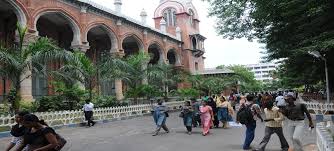
Madras University Registrar Appointment: Allegations of Discrimination and Procedural Irregularities in Interview; SC/ST Commission Seeks Report Tamil Nadu: A 54-year-old Associate Professor belonging to the Dalit community, currently serving at a college in Chennai, has leveled serious allegations regarding the selection process adopted for the post of Registrar at the University of Madras (UoM). He claims that irregularities were committed at multiple levels during the interview held in June 2025. The professor himself was one of the candidates for this position. He expressed astonishment that, despite five out of the nine candidates being Dalits, not a single representative from this community was included in the entire selection committee. Regarding this matter, the professor approached the Madras High Court in December of last year. He has petitioned the court to direct the university to conduct a fair selection process utilizing a valid and properly constituted committee. Furthermore, he has demanded that the appointment be made strictly on the basis of merit, while also ensuring that his own candidature is duly considered. Applications for the post of Registrar were invited in May of last year, as the then-Registrar, S. Elumalai, was scheduled to step down from his position in June. Initially, a total of 15 individuals applied; of these, four were declared ineligible, and two candidates failed to appear for the interview. Consequently, a total of nine candidates appeared for the interview on June 24. The Associate Professor—who possesses over 24 years of experience in the fields of teaching and research—stated in an interview that the majority of the candidates did not perceive the process as fair. He asserted that not everyone was accorded equal opportunities and that the entire exercise appeared to be nothing more than a mere eyewash. He alleged that it seemed as though the selection committee had already pre-determined the current Registrar, Rita John, as the chosen candidate for the post. Another candidate—a 55-year-old professor from Madras University itself who appeared for the interview—also raised questions regarding the allocation of time during the process. He stated that while all other candidates were allotted only 10 to 15 minutes, the incumbent Registrar was evaluated for a full 46 minutes. He further alleged that Rita John already shared a close acquaintance with several members of the committee. According to the rules, the Vice-Chancellor (VC) is supposed to preside over this interview. In the VC’s absence, this responsibility typically falls to a Syndicate Committee constituted under the Secretary of the Higher Education Department. However, in this instance, the responsibility was entrusted to J. Innocent Divya—the then Commissioner of the Directorate of Technical Education (DoTE)—a move that casts a shadow of doubt over the entire process. According to departmental sources, Divya was appointed by the former Higher Education Secretary, C. Samayamoorthy. Samayamoorthy was transferred on June 23, and the interviews were scheduled for the very next day, June 24. Candidates are now questioning why the interviews were conducted with such haste—specifically, before the new Secretary, P. Shankar, could assume charge. The professor further questioned why the process was not deferred until the arrival of the new Secretary, Shankar, given that there is no provision allowing anyone other than the designated selection committee members to conduct such proceedings. Notably, the former Secretary, Samayamoorthy himself, had appeared for an interview for the post of Registrar at Bharathiar University just one week prior to the interviews held at the University of Madras. Candidates have also expressed strong objections regarding the lack of Dalit representation within the committee. They argue that, in accordance with UGC regulations, representation from the Dalit community is mandatory within such committees and cannot be compromised under any circumstances. In light of this, a member has lodged a complaint regarding these irregularities with the SC/ST Commission. Consequently, the Commission has issued stern directives to the Higher Education Department, mandating the submission of a comprehensive report on the entire interview process by the first week of April. Responding to these allegations, a senior administrative official at the University of Madras presented the institution’s stance. He asserted that the interviews were conducted in a completely impartial manner and that the position was awarded strictly on the basis of merit. The official clarified that this appointment does not involve any form of bribery, pressure, or irregularity. The official also informed that, since assuming the post of Registrar, Rita John has relinquished her previous positions as a Syndicate member and Head of the Department (HoD) of Theoretical Physics. Rajan Chaudhary Courtesy: Hindi News