
Neo-Nazi Who Claims to Be Transgender Sent to Women’s Prison in Germany Amid Mockery Concerns

The 55-year-old far-right activist failed to report to prison last August to serve a 1.5-year sentence for slander and incitement to hatred. They were placed in a women’s prison in Chemnitz, Saxony, despite suspicions of exploiting gender laws. Liebich legally changed gender while appealing the sentence, a move widely seen as mocking Germany’s self-determination act introduced under Olaf Scholz. A self-proclaimed transgender neo-Nazi has been transferred to a women’s prison in Germany amid accusations of exploiting the country’s gender self-identification laws. Marla-Svenja Liebich, born male and originally named “Sven” before legally registering as a woman, was extradited on Wednesday from the Czech Republic to a prison in Chemnitz, Saxony. The German far-right provocateur, who has been photographed at rallies wearing a Nazi-style uniform, had gone on the run last August after failing to report to serve a one-and-a-half-year jail sentence for slander and incitement to hatred. While appealing the 2023 conviction, the 55-year-old changed legal gender under a reform that eased the process. Liebich’s “transition” was widely seen as a deliberate mockery of the self-determination act, triggering intense debate over possible abuse of the law. The reforms, introduced by Olaf Scholz’s centrist coalition, simplified changing one’s name and gender on official documents. Appearing publicly in women’s clothing while sporting a moustache, Liebich claimed the change and request for a female prison were needed to avoid “discrimination” from male inmates. Sven Liebich was a prominent figure in Germany’s anti-vaccine movement during the Covid pandemic before adopting a woman’s name. Credit: Craig Stennett/Getty Images In 2022, Liebich disrupted an LGBTQ pride parade in Halle, labelling participants “parasites on society”, according to activists. A local prosecutor said Liebich was “co-operative” during extradition. Prison authorities are now deciding how to carry out the sentence. German officials previously confirmed the placement in a women’s prison was based on registered gender, not biological sex. Liebich has been a longstanding activist in eastern Germany’s right-wing extremist circles and is classified by Saxony’s intelligence services as a “Right-wing extremist” operating statewide and nationally. Photos show the activist at protests featuring black-clad marchers with red, white and black flags, wearing an armband reading “Sicherheits-Abteilung” (“security department”) — the same initials as the Nazi Brownshirts (SA). Former Chancellor Olaf Scholz had defended the gender reforms, stating: “We show respect to trans, intersex and non-binary people, without taking anything away from others. This is how we continue to drive the modernisation of our country. This includes recognising realities of life and making them possible by law.” The case has since drawn sharp criticism, prompting the new government under Chancellor Friedrich Merz to commit to reviewing the law. (inputs from The Telegraph) Courtesy : Outlook India Note: This news is originally published on https:/outlookindia.com/bha and is used purely for non-profit/non-commercial purposes, especially human rights
Parliament passes Transgender Persons Amendment Bill, 2026 with Rajya Sabha approving it today

Parliament has passed the Transgender Persons (Protection of Rights) Amendment Bill, 2026, with the Rajya Sabha approving it today. The bill was passed by the Lok Sabha yesterday by a voice vote amid an Opposition-led walkout. The bill seeks to redefine the category of transgender, removes the provision of self-perceived gender identity and excludes several socio-cultural identities as well as transmasculine individuals from its ambit. It also further defines transgender persons within a biological framework, based on intersex variations and differences in sexual development. Replying to the discussion on the Bill in the Rajya Sabha, Social Justice and Empowerment Minister Dr Virendra Kumar said the government is compassionate towards the well-being of the transgender community. He said the Bill has provisions to empower the transgenders and give them dignity. The Minister said that the NDA government has taken several initiatives to bring transgender people to the mainstream and stop discrimination against them. Starting the discussion in the Upper House, Congress MP Renuka Chowdhury said this bill dilutes the privacy of an individual provided under the Constitution. Opposing the Bill, Ms Chowdhury said self-identification cannot be taken away through bureaucratic certification. Criticizing the government, she said that the proposed bill undermines the fundamental rights and dignity of transgender persons. Calling such a move wrong and illegal, she argued that forcing transgender persons to provide their identity through official certificates is against the spirit of equality and dignity guaranteed by the constitution. She also questioned the government’s approach for not properly consulting with the transgender community before bringing the Bill. She also referred to the Supreme Court’s landmark NALSA judgement of 2014, which recognized the right of transgender persons to self-identify their gender. Ms Chowdhury said the proposed Bill violates the principles laid down in that judgement and fails to respect an already established legal framework. DMK MP Tiruchi Shiva also opposed the Bill, saying that even if the Bill is passed in Parliament with a majority, it will be struck down by the Supreme Court. He further added that the Bill violates Articles 14, 15, 19 and 21 of the Constitution and it deprives the community of the right to freedom, dignity and self-determination. Supporting the Bill, BJP MP Medha Vishram Kulkarni said, ” This Bill ensures justice, dignity, protection from criminalisation and legal safeguards for transgender persons. She also thanked Prime Minister Narendra Modi for bringing this bill with certain amendments in order to ensure that the benefits reach the deserving people in a proper manner. She said there is a need for a law that brings justice to real transgender individuals and punishes fake ones. Mrs Kulkarni said the benefits should be extended to those who are transgender by birth. She said that the amendment to extend punishment will bring down the rate of crime and forced identities. TMC’s Saket Gokhale said that 31% of Transgender people in India have attempted suicide because of the discrimination that they are facing. He alleged that now the government is going to start discriminating against them as though social discrimination were not enough. He called it unacceptable. Mr Gokhale expressed concern that gender is going to be decided by the Chief Medical Officer and a District Magistrate, and the bill does not prescribe any qualifications for the Chief Medical Officer. Sanjay Singh of AAP said the Bill is a big let-down for the transgender community. He accused the government of not doing anything for the community. RJD’s Manoj Kr Jha said that prejudices against transgender people should stop, and they should be able to live with dignity. He added that self-determination of gender should not be taken away. CPI(M)’s John Brittas said it is a black-letter day and the Bill is taking India a century back. He pleaded with the government to either withdraw the Bill or refer it to a Select Committee. Jaya Bachchan of the Samajwadi Party also questioned the government over the legislation. She sought to know what the urgency was in bringing the Bill, without examining it with the depth and care that it deserved. Courtesy : NOA Note: This news is originally published on https:/newsonair.com/bha and is used purely for non-profit/non-commercial purposes, especially human rights
Congress says they are in touch with DMK, AAP and other Opposition parties; BJP won’t secure two-thirds majority

Senior Congress leader says party is coordinating with all Opposition parties that voted against the delimitation Bill in April ahead of the Monsoon Session. The Congress is in touch with all Opposition parties that voted against the proposed Constitution amendment bill on delimitation earlier this year and is confident the government will not secure the two-thirds majority required to pass it if it is reintroduced during the Monsoon Session of Parliament, senior party leader Jairam Ramesh said on Thursday. Ramesh’s remarks come amid speculation that the Centre may bring back a revised Constitution amendment bill to operationalise the women’s reservation law through a fresh delimitation exercise. Speaking after a meeting of the Congress Parliamentary Strategy Group at Congress Parliamentary Party chairperson Sonia Gandhi’s residence, Ramesh said the party was coordinating with allies and other Opposition parties that had united to defeat the legislation in April. “We are in touch with all parties including the DMK who voted with us on the 17th April. We are in touch with all parties, which voted together collectively on the 17th. We are in touch with the DMK; we are in touch with the Aam Aadmi Party.” He said the Samajwadi Party had played a crucial role in defeating the government’s proposal. “We are in touch with the Samajwadi Party, and I can tell you that the top leadership of the Congress Party, which means the Congress president and the leader of the opposition in the Lok Sabha are in touch.” Ramesh said the Congress would continue to coordinate with these parties as they shared concerns over the proposed delimitation exercise and its potential implications. He alleged that the BJP’s approach to delimitation in Assam and Jammu and Kashmir had raised serious concerns and cautioned against believing speculative media reports about the government’s numbers in Parliament. “The reality is that they have a long way to go to secure a two-thirds majority in the Lok Sabha, and there is no scope for achieving it. Nevertheless, let me reiterate — such a two-thirds majority would be a tainted one.” Referring to the BJP’s 2024 Lok Sabha election campaign, Ramesh said the party had sought an overwhelming mandate but failed to achieve it. “They desired a two-thirds majority and raised the slogan of ‘crossing 400’ in the 2024 Lok Sabha elections; the public rejected them — they secured 240 seats — and now they are in pursuit of a two-thirds majority.” He described any attempt to secure such a majority after the elections as “an insult to the public mandate” and “an insult to the Constitution”. The Congress Parliamentary Strategy Group meeting, attended by party president Mallikarjun Kharge, Leader of Opposition in the Lok Sabha Rahul Gandhi and other senior leaders, finalised the party’s strategy for the Monsoon Session beginning July 20. Among those present were AICC general secretary K C Venugopal, P Chidambaram, K Suresh, Naseer Hussain, Manickam Tagore, Kumari Selja, Tariq Anwar, Shashi Tharoor, Manish Tewari and Ramesh. The Opposition INDIA bloc is scheduled to meet on July 20 to formulate a joint strategy for the session, while the Centre has convened an all-party meeting on July 19. The government is expected to introduce key legislation during the session, including the proposed Constitution amendment bill on delimitation and increasing the number of Lok Sabha seats, as well as another Constitution amendment bill seeking the removal of the prime minister, chief ministers and other ministers if they remain in custody for 30 consecutive days in serious criminal cases. Besides opposing the government’s legislative agenda, the Opposition plans to raise issues including the alleged NEET paper leak, the alleged embezzlement of donations at the Ram temple in Ayodhya, rising fuel prices and the proposed India-US trade deal during the session, which is scheduled to run from July 20 to August 13. COurtesy : TNIE Note: This news is originally published on https:/thenewindianexpress.com/bha and is used purely for non-profit/non-commercial purposes, especially human rights
Congress gets strategy in place for opposition
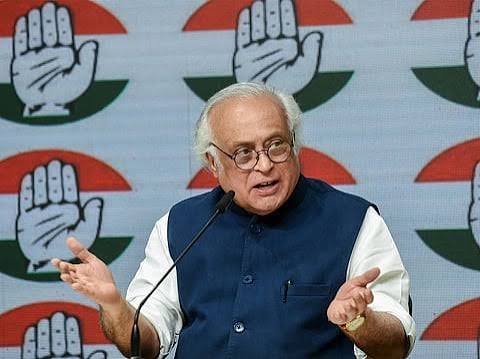
Addressing a press conference after the meeting, Congress general secretary Jairam Ramesh asserted that the BJP will not secure a two-thirds majority in the Lok Sabha. NEW DELHI: The Congress on Thursday said that it would oppose the constitutional amendment bills related to delimitation, dismissal of ministers and chief ministers, and other bills on FCRA and Higher Education, during the Monsoon session of Parliament beginning July 20. The decision was taken at the key strategic meeting, attended by senior Congress leaders, including party chief Mallikarjun Kharge, Sonia Gandhi, Leader of the Opposition in Lok Sabha Rahul Gandhi and others. Addressing a press conference after the meeting, Congress general secretary Jairam Ramesh asserted that the BJP will not secure a two-thirds majority in the Lok Sabha. “We have learnt that the Union Home Minister (Amit Shah) is making efforts to bring back the Delimitation Bill. The government failed to secure a two-thirds majority on 17th April, suffering a significant setback. It now wants to reintroduce the Bill.” This was discussed along with the Constitution amendment bill, which seeks to remove ministers from office for 30 days over serious offenses, he said. The home minister has “split parties” and is looking to manage a two-thirds majority by “cunningness,” which would be an insult to the Constitution, he said, adding that such a majority would be a “blot on democracy”. “LoP Rahul Gandhi and Congress president Mallikarjun are in touch with all parties that had supported us on April 16 and 17 in defeating the government’s delimitation bill,” he said. “The Congress Party has consistently maintained that it will strongly oppose the Delimitation Bill and will continue to do so. We will also make every effort to maintain the unity and solidarity of all Opposition parties,” he said. There was also some discussion on the ‘One Nation, One Election,’ on which a JPC has been constituted, Ramesh said. “We will also oppose the Viksit Bharat Shiksha Adhishthan Bill in its entirety. The Bill may be introduced during this session. There is also a possibility that the FCRA Amendment Bill will be introduced. We will oppose it as well. We had opposed it earlier, following which the government withdrew the Bill. However, we are now hearing that it may be brought back,” Ramesh said. The party will also corner the government on the alleged theft of donations from the Ram Mandir. Preetha Nair Courtesy : TNIE Note: This news is originally published on https:/thenewindianexpress.com/bha and is used purely for non-profit/non-commercial purposes, especially human rights
‘Cabinet expansion very soon’: Congress hints at Karnataka reshuffle after Rahul-DKS meeting
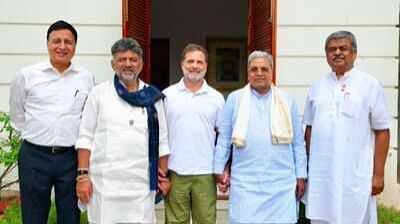
NEW DELHI: Congress general secretary Randeep Singh Surjewala on Thursday said the Karnataka cabinet expansion is expected to take place ‘very soon’, indicating that the exercise could be completed before the upcoming assembly session as consultations with the party leadership continue in Delhi. His remarks came after Karnataka chief minister DK Shivakumar, former CM Siddaramaiah, state Congress president BK Hariprasad and other senior leaders met Leader of Opposition Rahul Gandhi and Congress general secretary (organisation) KC Venugopal to discuss the long-pending cabinet expansion. Speaking to reporters, Surjewala said the discussions had only begun and it was too early to announce a timeline. “Today, CM DK Shivakumar, former CM and Congress Working Committee member Siddaramaiah, our PCC President BK Hariprasad, and many of our ministers and senior Congress leaders arrived in Delhi. DK Shivakumar and Siddaramaiah have met Rahul ji, and they have met with the General Secretary (Organisation), KC Venugopal. The discussions have just begun. I cannot give you a specific date right now; all I can say is that these are preliminary discussions. The Karnataka cabinet expansion will take place very soon,” he said. Surjewala said there are 20 vacancies in the cabinet and the post of Speaker is also lying vacant. “There are 20 vacancies in the cabinet, and the post of Speaker is also vacant. Let the consultations take place; anything can be said only after the discussions. The endeavour will be to fill as many vacancies as possible, or indeed all of them. Yes, I fully expect the cabinet formation to be completed before the Assembly session begins,” he added. Earlier in the day, Shivakumar shared details of the meeting on X. “Called on Leader of the Opposition Shri Rahul Gandhi in New Delhi today, along with AICC General Secretary in-charge of Karnataka Shri Randeep Singh Surjewala, former Chief Minister Shri Siddaramaiah, and KPCC President Shri BK Hariprasad. We remain committed to the welfare of our people and the continued development and progress of the state,” he posted. The Congress has been holding consultations on the cabinet expansion for several weeks. The exercise is expected to balance regional representation, caste equations and organisational priorities while filling 20 vacant ministerial berths. The expansion has gained significance ahead of the Karnataka assembly session beginning in August, with the party aiming to strengthen governance and prepare for upcoming local body elections. Nearly 50 aspirants are reportedly in the race for the available cabinet positions, making the final selection a politically sensitive exercise. Courtesy : TOI Note: This news is originally published on https:/timesofindia.com/bha and is used purely for non-profit/non-commercial purposes, especially human rights
‘500 farmers join CJP protest’: Sonam Wangchuk gets support from Rakesh Tikait, Kejriwal at ‘packed’ Jantar Mantar
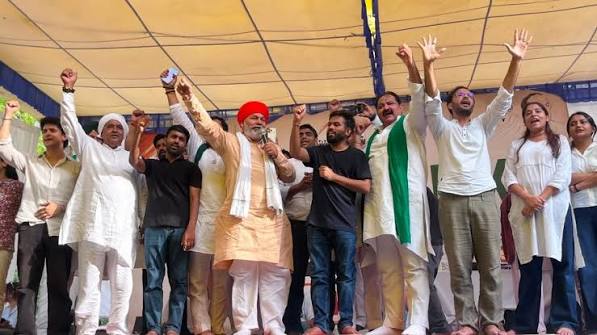
NEW DELHI: Climate activist and educator Sonam Wangchuk’s protest gathered fresh momentum on Thursday as farmer leader Rakesh Tikait reached New Delhi’s Jantar Mantar with around 500 farmers, strengthening the ongoing agitation against the Centre and adding to the demand for Union education minister Dharmendra Pradhan’s removal over the NEET fiasco. The development came as Wangchuk’s indefinite hunger strike entered its 19th day, with doctors warning that his health has become increasingly fragile after he lost more than 9 kg. Welcoming Tikait’s support, the Cockroach Janta Party (CJP) posted on X, “jhukti hai sarkaar, jhukane wala chahiye!” The protest also received backing from several opposition leaders and parties on Thursday. After remaining silent for weeks, the Congress made its first official intervention, reaching out to Wangchuk and urging him to end his indefinite fast while assuring him that the party would continue to demand Dharmendra Pradhan’s removal. The appeal came on the 19th day of Wangchuk’s hunger strike. Congress general secretary K C Venugopal said, “we share the anguish and outrange the Wangchuk feels, especially due to the lack of accountability within the Modi Govt – for the collapse of the examination system in particular.” Congress leader Sachin Pilot also expressed solidarity with the activist and appealed to him to end his fast. Referring to Rahul Gandhi’s stand, Pilot wrote on X, “The ordeal faced by students and their families due to the paper leak and various irregularities has shaken everyone. Rahul Gandhi ji and our party believe — the youth are the future of the country. No injustice of any kind will be tolerated against them. Students must get justice.” Earlier in the day, former Delhi chief minister and AAP supremo Arvind Kejriwal also joined the protest at Jantar Mantar and shared the stage with Wangchuk before a large gathering. Kejriwal demanded the resignation of Dharmendra Pradhan and went a step further by backing Wangchuk as his replacement. He said, “Exam papers are being leaked constantly, day after day. There are irregularities in the papers and flaws in the evaluation process… When the NEET paper leaked, 20 students committed suicide, yet the government took no measures to assure anyone that leaks wouldn’t recur. Further leaks followed the NEET incident, and the CBSE evaluation system was compromised, yet no action was taken against the company involved.” He added, “It appears the government is consumed by arrogance. I want to tell the government: either listen to the voice of the youth, or these very young people will throw you out of power in 2029… I urge the Prime Minister and the country’s 1.4 billion citizens to desire that Sonam Wangchuk be appointed as the education minister in his place.” Earlier in the day, Samajwadi Party MP Dimple Yadav also extended support to Wangchuk’s protest and visited Jantar Mantar. Moreover, apart from several senior opposition leaders, including Arvind Kejriwal, Mamata Banerjee and Akhilesh Yadav, the CJP-led protest has also drawn support from prominent public figures. Stand-up comedian Kunal Kamra and actors Swara Bhaskar and Prakash Raj visited Jantar Mantar to express solidarity with Sonam Wangchuk. Meanwhile, doctors treating Wangchuk warned that his condition continues to worsen as the hunger strike entered its 19th consecutive day. His attending physician, Dr Satish Lamba, cautioned that the activist could face multi-organ complications if the fast continues. Wangchuk began his indefinite hunger strike on June 28 after joining a protest organised by the Cockroach Janta Party (CJP). During a medical briefing, Dr Lamba said Wangchuk has lost more than 9 kg and now weighs 56.9 kg. His condition is being monitored round the clock by a team of doctors. “Today, on the 19th day of hunger strike, his total weight loss exceeds 9 kilograms. His blood sugar today is 80 mg/dL, and his pulse is 72 beats per minute. His blood pressure readings are 105/61 mmHg while lying down and 101/65 mmHg while sitting,” Dr Lamba reported. Doctors said Wangchuk remains hydrated and mentally alert, but medical tests show that his body has entered the second stage of prolonged starvation, significantly increasing the risk of serious health complications if the hunger strike continues. Courtesy : TOI Note: This news is originally published on https:/timesofindia.com/bha and is used purely for non-profit/non-commercial purposes, especially human rights
Kheri: 15-Year-Old Dalit Girl, Allegedly Raped, Dies by Suicide Days After Testifying Against Accused

A 15-year-old Dalit girl who was allegedly raped took her own life at her home in a village under Neemgaon police station in Kheri district on Monday. The teenager was found hanging from a noose inside her house, sending shockwaves through the local community. The case has become highly sensitive because the victim and the accused belong to different communities. Police officials acted quickly to prevent any unrest. Senior officers, including Superintendent of Police Khyati Garg and the local Chief Judicial Officer, rushed to the spot after receiving the news. Police forces have been deployed in the village to maintain peace and order. Accused Arrested Earlier This Month The tragedy follows a complaint filed by the girl’s mother on July 5. Based on her statement, police registered a case under Section 65 of the Bharatiya Nyaya Sanhita, which deals with rape of a girl under 16 years of age, along with relevant sections of the POCSO Act. According to the complaint, the 21-year-old accused, who lives in the same village, entered the girl’s house around 5 pm on July 5 when her family members were working in the fields. Police arrested him that very night and sent him to jail the next day. SP Khyati Garg shared details about the case. She said, “Preliminary investigation by the local officer has revealed that the girl and the accused were in a relationship for over two years. The victim had initially denied the rape allegations, but after the FIR was lodged, she confirmed them in her statement recorded before the court under BNSS Section 183.” Police Investigate Circumstances Leading to Suicide Authorities are now trying to understand what drove the young girl to take such a drastic step. Police have not ruled out the possibility that she was under severe emotional stress after giving her testimony against the accused in court. A police official speaking on the condition of anonymity said, “Testifying in such cases can be extremely traumatic for young survivors. We are looking into all aspects of what she went through in the days after her statement.” The girl’s body has been sent for postmortem examination. Officials have made it clear that further legal action will depend on the postmortem report findings. A local resident who knew the family shared, “She was such a young girl. Her family is devastated. No one expected this to happen.” The incident has raised fresh concerns about the mental health support available to survivors of sexual violence, especially those from marginalized communities. Police continue to investigate all circumstances that led to this heartbreaking event. Courtesy : TOP Note: This news is originally published on https:/theobserverpost.com/bha and is used purely for non-profit/non-commercial purposes, especially human rights
CO Soumya Asthana, who was investigating the Lalita Gautam murder case in Meerut, has been removed; CO Ramprakash will take over the investigation.

A major reshuffle has been made in the Meerut Dalit student murder case. CO Soumya Asthana, who was investigating the Lalita Gautam murder case, has been removed. A departmental inquiry has also been initiated against her. A departmental inquiry has been initiated against CO Soumya Asthana The newly appointed CO of Brahmapuri will investigate the murder case. The Lalita Gautam murder case has been in the news across the state. Rambabu Mittal, Meerut: A major administrative change has been made in the investigation of the infamous Dalit student Lalita Gautam murder case. CO Soumya Asthana, who was investigating the case, has been removed from the investigation. Her jurisdiction has also been changed. The investigation of this highly controversial murder case has now been handed over to the newly appointed CO of Brahmapuri, Ramprakash. Investigation initiated against CO Soumya Asthana According to sources, an internal departmental inquiry has also been initiated against CO Soumya Asthana. He is accused of being lenient towards some of the accused in the case and attempting to provide them relief during the investigation. In light of these allegations, the police department has decided to change the investigating officer. However, the department’s final conclusion on these allegations will only be revealed after the departmental inquiry is complete. The Lalita Gautam murder case has been a topic of discussion across the state since its inception. The victim’s family and various social organizations have consistently demanded a fair investigation. Meanwhile, the decision to change the investigating officer is being considered a significant administrative step in the case. PAC constable Ankit remains in the news The most discussed aspect of the case has been the accused, Ankit, a constable in the PAC. It is reported that during the initial investigation about 50 days ago, it was stated that insufficient evidence was found against him. However, events quickly changed, and following the lathi charge during a Dalit protest, the police arrested and jailed the accused, Ankit. This action raised many questions about the investigation process and the role of the police. CO Ramprakash will investigate As the new investigating officer, CO Ramprakash will thoroughly review the entire case again. Police officials say that all available evidence, witness statements, and technical facts will be examined impartially to bring the investigation to a logical conclusion. Victim’s family hopes for justice The change of investigating officer in the Lalita Gautam murder case and the initiation of a departmental inquiry have once again brought the case into the spotlight. All eyes are now focused on the new investigation. The victim’s family hopes that the new investigation will be impartial and that effective action will be taken against the culprits based on the evidence. It will also reveal whether there was any negligence or bias in the departmental investigation. Edited by: Vivek Mishra About the author Vivek Kumar Mishra is a Senior Digital Content Producer at Navbharat Times Online (NBT.Com). He monitors the political developments in Uttar Pradesh. UP Political Analysis, keeping an eye on the events taking place in Uttar Pradesh. Courtesy: Hindi News
Lights, camera, caste

This remarkable compendium of scholarship on the intersection of caste and Indian cinema opens up a conversation that goes beyond the portrayal of characters on screen. For several decades, scholars believed that caste does not exist in Indian cinema, or if it does, that it could be studied only through the oppression of Dalits or lower castes. Making a significant departure in cinema studies, The Routledge Companion to Caste and Cinema in India emphasises that caste is an everyday phenomenon in India, and so is its representation in cinema—both on the screen and behind the scenes. The volume, co-edited by Joshil K. Abraham and Judith Misrahi-Barak, begins on a provocative note. The editors note in their Introduction that a year before Raja Harishchandra (1913) was released, a filmmaker named Ramchandra Gopal Torne had already released Shree Pundalik. If Dadasaheb Phalke, and not Torne, came to be known as the father of Indian cinema, was it because the former was born in a Chitpavan Brahmin family? Misrahi-Barak is currently Professor Emerita at the University of Montpellier Paul-Valéry. Abraham, a brilliant scholar, tragically ended his life in December 2025, when he was just 43. The two editors had earlier collaborated on a volume, Dalit Literatures in India (Routledge, 2015). The present work extends the discussion from Dalits to the entire spectrum of caste. The volume brings together 29 essays on various films produced in different Indian languages over the last 100 years. Some contributors are renowned scholars associated with different institutions across continents, while some are young researchers. Such is the staggering spectrum of the films examined that even an ardent cinema lover might find several titles unfamiliar. This volume, which brings together 29 essays on films made in different Indian languages over the last 100 years, helps us understand not only how caste is depicted and received in cinema, but also how it operates in society at large. This volume, which brings together 29 essays on films made in different Indian languages over the last 100 years, helps us understand not only how caste is depicted and received in cinema, but also how it operates in society at large. | Photo Credit: By special arrangement The Routledge Companion to Caste and Cinema in India Edited by Joshil K. Abraham and Judith Misrahi-Barak Routledge India Pages: 440 Price: Rs.1,595 The films can be divided into three broad categories: those which bring a clearer focus on caste, those that invisibilise caste, and the ones that have not been perceived as about caste at all. It is here that the volume often becomes most penetrating. Lagaan (2001) and Chak De! India(2007) are projected as nationalistic works that seek to dissolve sectarian differences and unite the nation. Such is the power of a nationalistic theme that most scholars missed the uneasy matrix of caste that dominates the narrative. In the former, it is thanks to the kindness of the privileged-caste protagonist Bhuvan that the untouchable Kachra gets a place in the team. In the latter, it is the Brahmin Vidya Sharma who alone can captain the hockey team. In his essay, “‘Untouchable’ Body, Labour and Remuneration in Lagaan”, the scholar Purnachandra Naik argues that Kachra serves the role of a subservient and selfless untouchable, the ideal image of a Dalit that Mohandas Karamchand Gandhi had once envisaged. Commenting on the popular reception of Kachra’s role, Naik writes that he is the surplus labour(er) who is “not only expropriated on screen but also commodified and treated off screen for sadistically casteist popular consumption and profit”. Clearly, films made on progressive themes may also betray the caste biases of the filmmaker. In an incisive essay titled “Caste Voyeurism and Kannada New Wave Cinema”, Mahima Raj C. examines two iconic movies to argue that even the dead bodies of oppressed castes receive unfavourable treatment on screen. The corpse of a Brahmin man is at the centre of the narrative in Samskara (1970), and the corpse of a Dalit man in Grahana (1978)—but the two are not shown in the same way. The Brahmin’s corpse and its final rites consume a large part of the theological debate in the movie, based on the eponymous novel by U.R. Ananthamurthy. But the body is never shown entirely on the screen, except for the shot when he dies—a close shot of his face with mouth wide open. By contrast, Grahana “runs wild” in its portrayal of the Dalit man’s “degenerating body images”. Elite filmmakers, distanced from reality One also senses that as India sees increasing political assertion by oppressed castes, elites have become more distanced from the reality. Is it their coping mechanism to avoid the questions that now land with greater force? Consider this. When Achut Kanya (1936) was being made, its director Himanshu Rai and producer Franz Osten worked to erase caste divisions on the set. Not only did every crew member eat together at the canteen, but Rai even asked the protagonist Ashok Kumar Ganguly to drop his Brahmin surname. In the following decades, several eminent male actors would go simply by “Kumar” . It was a quiet transformation that India could once undergo. In absolute contrast, one can turn to the contemporary filmmaker Anubhav Sinha who is known for films that confront social reality. In an interview he gave after Article 15(2019), a film on caste violence, he proudly proclaimed that he did not know the caste of any of his 300 crew members. He simply deluded himself into believing that caste had vanished during the making of his film. Only those who have never been the victims of caste can afford that delusion. Obviously, then, in Article 15 it is a St. Stephen’s graduate, a Brahmin IPS officer, who alone can be the saviour of the Dalits. There is a sharp decline in the social consciousness of contemporary filmmakers when compared to the likes of Shyam Benegal and Govind Nihalani, who pioneered the new wave Hindi cinema in the 1970s. Caste and Cinema is a remarkable
Foundation stones laid for Dalit families’ homes at Pariyathukavu

Higher Education Minister Roji M. John inaugurating the foundation stone-laying ceremony for homes to be built for seven Dalit families under the Paryathukavu Unnathi project on Thursday. Higher Education Minister Roji M. John inaugurating the foundation stone-laying ceremony for homes to be built for seven Dalit families under the Paryathukavu Unnathi project on Thursday. | Photo Credit: R.K. Nithin Higher Education Minister Roji M. John on Thursday laid the foundation stones for houses of seven families belonging to a Dalit settlement at Pariyathukavu near Malayidamthuruth, close to Kizhakkambalam in Ernakulam. The houses are being funded by the State government as part of their rehabilitation on the same land. “Supporting marginalised sections of society is the policy of the State government, and the function exemplified this commitment,” Mr. John said after laying the stones. The Minister attributed the successful outcome to a collective effort involving Chief Minister V.D. Satheesan, ministers, the district administration, and a team of legal experts led by the Advocate General. The government will continue to support the families beyond the construction of houses, he said. Presiding over the function, Kunnathunadu MLA V.P. Sajeendran handed over the cheque for the advance amount to the building contractor. Benny Behanan, MP, attended. Each family will be provided with a 1,000-sq.ft. house, to be completed under government supervision within a year through sponsorship. The houses will have three bedrooms with attached bathrooms, a dining hall, a living room, a sit-out, and a kitchen. All seven families have been allotted five cents with road access. The dispute was amicably resolved last month after the family of the late Kannatt Sankaran Nair, who had won ownership rights over the land through a prolonged legal battle, agreed to allot five cents each to the seven families residing in the settlement within the 2.69 acres of disputed property. It was also agreed that the government would withdraw the cases registered against those who had protested during the 15 attempts to evict the families following a Supreme Court order The Hindu Bureau Courtesy : The Hindu Note: This news is originally published on https:/thehindu.com/bha and is used purely for non-profit/non-commercial purposes, especially human rights