
Rahul Gandhi vs C Joseph Vijay: Can TVK chief do what Arvind Kejriwal could not?
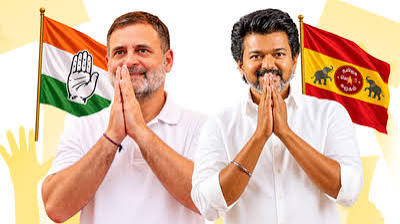
The honeymoon period between Tamil Nadu chief minister C Joseph Vijay’s Tamilaga Vettri Kazhagam (TVK) and its coalition partner, the Congress, appears to be over. Barely months after the two parties came together to form the government, they are already sparring over a question that is ostensibly about the 2029 Lok Sabha election: Who should be the opposition’s prime ministerial face – Rahul Gandhi or Vijay? What began as statements and counter-statements between the two party leaders has quickly acquired a sharper political edge. TVK PWD minister Aadhav Arjuna pitched Vijay as a potential national leader, arguing that the country’s highest political office should go to a leader from Tamil Nadu. On the other hand, state minister S Rajesh Kumar said Congress ministers in the Tamil Nadu cabinet would resign if TVK did not support Rahul Gandhi as the PM candidate in 2029. The confrontation spilled into the assembly as well. Congress Legislature Party leader and MLA Tharahai Cuthbert was shifted on August 31 from the section allotted to TVK legislators to the front row of the opposition benches. But beneath the immediate fight over Rahul versus Vijay lies a much bigger question: Does Vijay intend to remain a powerful Tamil Nadu leader, or does he see the state’s 2026 mandate as the launchpad for a national political project? And if the latter is the plan, can he succeed where Arvind Kejriwal could not? Vijay’s extraordinary first step The scale of Vijay’s rise explains why the 2029 debate has surfaced so early. The April 2026 Tamil Nadu assembly election ended nearly six decades of dominance by the DMK and AIADMK. TVK, only two years old, emerged as the largest party with 108 seats in the 234-member assembly. The DMK won 59 and AIADMK 47, while Congress secured five seats, with the remaining seats going to smaller allies. TVK was therefore not merely a new party that performed better than expected. It emerged as the central political force in an election that disrupted the state’s traditional two-party equilibrium. There was, however, one problem: 108 seats were still short of the 118 required for a simple majority. That made Congress indispensable. Vijay eventually formed the government with the support of MLAs from Congress [5], VCK [2] and IUML [2], along with outside support from the Left parties [4]. The MDMK, which has two MLAs, later extended its support. Congress moved away from its long-standing association with the DMK and backed a TVK-led government along with smaller allies, taking the coalition’s strength to 121. Vijay was sworn in as CM on May 10. Congress had submitted its letter of support after the election, making it clear that its support would be conditional on TVK keeping “communal forces” out of the alliance. C Joseph Vijay-Gfx The 234-member assembly currently has seven vacancies following the resignation of six AIADMK MLAs and Vijay vacating his second seat, Trichy East. The effective strength of the House is therefore 227, bringing the majority mark down to 114. The political equation is unusual. Congress is the junior partner, with only five seats, but its support helped Vijay cross the majority mark. At the same time, TVK’s 108 seats give Vijay overwhelming dominance within the coalition. That inversion may be at the heart of the present tension. Congress had been with the DMK in the pre-poll alliance and had never secured a place in MK Stalin’s cabinet. After the results, however, it quickly moved to TVK’s side and helped Vijay form the government. The alliance therefore contains a built-in contradiction: the party that needs Vijay’s government to survive does not want Vijay to emerge as the leader of the national opposition. C Joseph Vijay-Gfx3 The ‘agnipath’ of Vijay’s path Vijay’s route to Delhi runs into a problem that no amount of success in Tamil Nadu can entirely solve: numbers. Tamil Nadu sends 39 MPs to the Lok Sabha. Even a TVK sweep in 2029 would leave Vijay nowhere close to the 272 seats needed for a majority in the 543-member House. History, however, offers a little hope. In the past, India has had PMs whose parties did not come close to a Lok Sabha majority. HD Deve Gowda became PM in 1996 after the Janata Dal won just 46 seats, emerging as the consensus choice of the United Front with Congress support. IK Gujral followed a year later under much the same arrangement, with the Janata Dal holding only around 45 seats. Chandra Shekhar became prime minister in 1990 after breaking away from the Janata Dal with just 64 MPs, relying on outside support from Congress. This may give Vijay some hope. But it is also where the historical comparison begins to fray. The coalition politics that made these leaders PMs belonged to a different national landscape where coalition governments were a norm. The BJP, however, has changed that equation, building the NDA into a durable national coalition rather than the loose, post-election arrangements that defined much of the 1990s. The opposition, meanwhile, has come together in the form of the INDIA bloc which Vijay’s TVK is not part of yet. And yet, paradoxically, being outside the INDIA bloc may give Vijay an advantage over Rahul Gandhi. Rahul comes with the weight of the Congress’s history: its national footprint, its alliances and rivalries, the Nehru-Gandhi legacy and the political resistance that the party can provoke among regional leaders. Vijay comes with much less baggage. He would enter a coalition conversation not as the leader of a decades-old national party, but as a new political force with a mass following built before he entered politics. C Joseph Vijay-Gfx2 That distinction could matter if the next Lok Sabha produces another fractured mandate. But that is a big if, and one that looks unlikely in the present circumstances. Congress MP Karti Chidambaram has already put the arithmetic bluntly: “Every party has dreams, ambitions, and desires … but we know what the political reality is. There are 543 constituencies.” Thus, for Vijay, even
HC seeks reply on SOP for arrest, detention of transgenders
New Delhi: Delhi High Court on Wednesday asked the Centre and Delhi Police to inform it about the steps being taken to lay down an SOP for probe agencies when interrogating, arresting or detaining a transgender person. A bench of Chief Justice DK Upadhyaya and Justice Tejas Karia issued notices to central govt, police as well as Delhi govt on a PIL by law student Taaran Chandna, who said that while Delhi Police has a standing order for the arrest of women and senior citizens, it is “wholly silent” on transgender persons. The petitioner submitted that in May, NHRC issued the Advisory for Ensuring the Welfare of Transgender Persons, 2.0 for the formulation of an SOP to govern the arrest, detention, search, interrogation and imprisonment of transgender persons. However, no such SOP or guideline has been formed for Delhi, he said. The bench, while asking “the Union of India, Delhi Police and state govt to file their reply,” said that “in the meantime, we direct that the advisory issued in May 2026 shall be considered and appropriate steps as permissible in law shall be taken.” The court listed the matter for Nov 18. In the PIL, Chandna said the SOP governing the arrest and personal search of transgender persons by Delhi Police was needed to protect their fundamental rights to bodily integrity, dignity, equality and non-discrimination guaranteed under the Constitution. The “concrete and continuing harm” due to the SOP “vacuum” can be seen when the police in May 2025 arrested three transgender persons, the plea said. It alleged that despite one of them possessing female genital anatomy and another holding a valid certificate of identity, all three were physically searched by a male police officer “without any enquiry into their gender identity, without seeking self-declaration, and without consent”. Courtesy : TOI Note: This news is originally published on https:/timesofindia.com/bha and is used purely for non-profit/non-commercial purposes, especially human rights
Court Allows Electronic Evidence in Dalit Youth Murder Case

. The court dismissed the counter-affidavits and technical objections filed by the MLC’s defence counsel, who opposed the petition Kakinada:Principal District and Sessions Judge (SC, ST Special Court), Rajamahendravaram, on Thursday allowed the petition of prosecution seeking permission to record electronic evidence, including CCTV footage, while questioning YSRC MLC Anantha Satya Udaya Bhaskar Rao (Anantha Babu) and his wife Roja in the murder case of Dalit youth Veedhi Subrahmanyam. The court dismissed the counter-affidavits and technical objections filed by the MLC’s defence counsel, who opposed the petition. Special public prosecutor Muppalla Subba Rao appeared for the prosecution. Principal District Judge Junaid Ahmed Maulana issued the orders after hearing the arguments of both sides The prosecution sought to correct the number of Section 65-B certificates taken on record. The prosecution informed the court that the number had been erroneously recorded as “32”, whereas the actual number submitted is “54”. Advocates for the accused opposed the plea and sought dismissal of the petition at the preliminary stage itself, contending that it is not legally maintainable. After hearing both sides, the judge allowed the corrections sought by the prosecution. Courtesy : Deccan Chronicle Note: This news is originally published on https:/deccanchronicle.com/bha and is used purely for non-profit/non-commercial purposes, especially human rights
‘Preventing Dalits From Temple Entry Amounts to Untouchability’: Madras HC
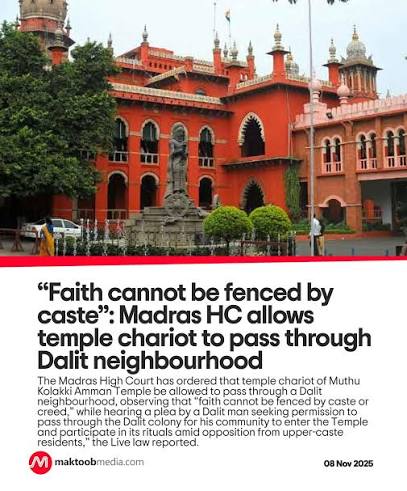
The Madras High Court has held that preventing a person belonging to a Scheduled Caste from entering a temple or participating in a temple festival on caste grounds amounts to the practice of untouchability and violates the fundamental right guaranteed under Article 17 of the Constitution. Justice D Bharatha Chakravarthy made the observation while hearing a petition filed by V Sundaram in connection with the Arulmigu Muthu Mariamman Temple chariot festival at Ramanayakkanpalayam in Salem district. ‘Nobody Can Be Prevented on Caste Grounds’ The petitioner had sought equal participation for members of the Milagu Kattan Adidravidar Community in the temple festival and directions to prevent certain individuals from excluding them. The Tamil Nadu government told the court that a peace committee meeting had been held and that everyone had been allowed to participate in the festival irrespective of caste or creed. It also said that disputes over “Karaikarargal rights” could be taken before a civil court. Sundaram’s counsel, however, urged the court to ensure that members of the community would not face similar exclusion during future festivals. The High Court referred to the Tamil Nadu Temple Entry Authorisation Act, 1947, and said that a person cannot be stopped from entering a temple because of caste. “This Court has also repeatedly passed orders that on the basis of a non existing thing called ‘caste’ nobody can be prevented entry or participation in the temple festival,” the court observed. The court further said that preventing a Scheduled Caste person from entering a temple on casteist grounds would amount to the practice of untouchability. “If any person prevents another person from entering the temple on casteist grounds, particularly if a person belonging to a Scheduled Caste is prevented from entering the temple, such an act would amount to the practice of untouchability and would constitute a violation of the fundamental right guaranteed under Article 17 of the Constitution of India,” Justice Chakravarthy said. The court added that those responsible for such acts could be prosecuted in accordance with law. State Assures No Discrimination The Tamil Nadu government assured the court that there would be no discrimination in participation in the temple festival in future years. The court clarified that disputes concerning the right to conduct or administer the festival could be pursued before the competent authority under the Hindu Religious and Charitable Endowments framework or before the appropriate civil court. Since the festival was already underway and people from all communities had been allowed to participate, the court closed the petition. Courtesy : TOP Note: This news is originally published on https:/theobserverpost.com/bha and is used purely for non-profit/non-commercial purposes, especially human rights
FIR prod to Nadda over ‘purification’ incident; ‘essential to teach lesson,’ says Kharge
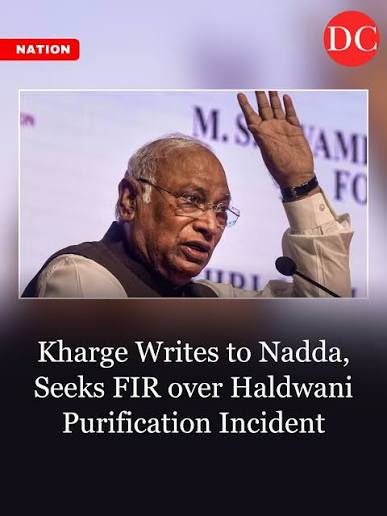
Hindutva activists had carried out the “shuddhikaran” at the venue of a Congress rally at Haldwani in Uttarakhand on August 8, Kharge, a Dalit, had told the Rajya Sabha on August 14 Rajya Sabha Opposition leader Mallikarjun Kharge has written to House leader J.P. Nadda reminding him of his assurance of investigation and action on the “purification” ritual conducted at the spot where the Congress MP had delivered a speech last month. Hindutva activists had carried out the “shuddhikaran” at the venue of a Congress rally at Haldwani in Uttarakhand on August 8, Kharge, a Dalit, had told the Rajya Sabha on August 14. “In response to my intervention, you stood up in the House and said, ‘Sir, what Honorable Kharge ji has said is indeed a very sad matter. It is not only sad for the Congress Party, but it is sad for all of us…. Whatever has happened will definitely be investigated. I want to say that the Bharatiya Janata Party never supports such activity. I condemn it, and the National President will also look into it deeply. The hurt caused to your sentiments is a matter of regret for all of us’,” Kharge wrote to Nadda on Wednesday. “But I am surprised that even after 24 days of this incident, not even a First Information Report (FIR) has been filed against the organisations and individuals involved in this heinous act in Haldwani. “The most objectionable aspect of this incident was that at the Ramlila Maidan site where I addressed the rally, purification was carried out in violation of the spirit of the Indian Constitution and human values.” Kharge, the Congress president, underlined how things had remained unchanged nearly a century after B.R. Ambedkar’s 1927 satyagraha for granting Dalits access to a water tank in Mahad in present-day Maharashtra. “Even when Babasaheb Dr. Bhimrao Ambedkarji drank the water from the tank during the Mahad agitation, people filled with casteist arrogance purified it by pouring 108 pots of cow urine and cow dung into it and chanting mantras,” he wrote. “I want to be clear that this issue transcends my personal responsibility or that of the president of the Indian National Congress, and it concerns the broader sentiments of millions of people who face this brutal reality daily. “It is essential to teach these wrongdoers a lesson. Therefore, this anger is not mine, but the expression of millions of such people; it is an issue of a mindset that directly affects a segment of society.” Kharge concluded: “Therefore, I once again request you that in the light of these facts and the assurance given in the Rajya Sabha, you should direct the Chief Minister of Uttarakhand to ensure that a First Information Report is registered against the persons and organisations involved in this incident….” His letter came days after Lok Sabha Opposition leader Rahul Gandhi vowed to get Kharge justice and demanded an FIR be registered under the SC-ST (Prevention of Atrocities) Act, 1989. Instead, an FIR has been filed against Rahul — ironically, under the SC-ST Act — on the ground that he had insulted Dalits by falsely projecting the venue clean-up as a shuddhikaran against a member of the community. Congress supporters on Tuesday burnt copies of the ancient Hindu code Manusmriti, which lays down caste norms, in front of the RSS office here. The Congress has protested in several cities and submitted complaints to multiple authorities in Uttarakhand. Senior BJP leaders, including Uttarakhand chief minister Pushkar Singh Dhami, have defended the shuddhikaran while giving it a communal angle, claiming it was a response to divisive slogans chanted at Kharge’s meeting by people from a particular community. The controversy comes at a time when the BJP is trying to persuade anti-reservation activists to shun aggressive protests against caste-based affirmative action. Courtesy : The Telegraph Note: This news is originally published on https:/thetelegraph.com/bha and is used purely for non-profit/non-commercial purposes, especially human rights
Dalit woman panchayat president alleges caste discrimination, seeks action against officials in TN
Malarvizhi further alleged that her cheque-signing authority had been taken away, and that cheques for payments relating to works she undertook were being withheld. VILLUPURAM: Kodungal village panchayat president G Malarvizhi on Monday attempted to self-immolate at Villupuram Collectorate following administration inaction on her petition alleging caste discrimination. After police prevented her from self-immolating, she was allowed to submit her petition. Her petition sought action by the Villupuram collector against the panchayat vice-president, her relative, and certain local officials over alleged caste discrimination, intimidation, interference in her official duties, and attempt to strip her of her administrative powers. Malarvizhi told TNIE, “I belong to the Scheduled Caste community. Because of that, I was denied a chair at the panchayat office and prevented from hoisting the national flag during official occasions. I was also prevented from participating in panchayat-related activities for nearly four-and-a-half years.” She alleged that panchayat vice-president Muniyammal and her brother Kathavarayan, both caste Hindus, had kept the ward members under their influence and repeatedly threatened her with a no-confidence motion. “If I attempted to take decisions independently, the ward members would support a no-confidence motion and prevent me from functioning,” she added. She had brought the issue to the notice of the previous Block Development Officer (BDO) and the present BDO. However, they advised her to adjust with Kathavarayan instead of taking action on her complaints, she alleged. Malarvizhi further alleged that her cheque-signing authority had been taken away, and that cheques for payments relating to works she undertook were being withheld. She had also approached the Superintendent of Police’s office with a complaint, a few months back. Following discussions, she claimed, the persons concerned had assured her that such incidents would not recur. However, she alleged that the BDO, Kathavarayan, panchayat clerk Ramachandran, vice-president Muniyammal, and ward member Suresh subsequently pressured her to agree to an alleged commission of more than Rs 10 lakh in connection with 100-day employment scheme works. She claimed they ridiculed her and told her she could not do anything if she refused to cooperate. Malarvizhi urged the Collector to inquire into her allegations, take action against those responsible, release the pending payments for completed works, and restore her cheque-signing authority. Krithika Srinivasan Courtesy : TNIE Note: This news is originally published on https:/thenewindianexpress.com/bha and is used purely for non-profit/non-commercial purposes, especially human rights
BJP trying to portray Rahul as anti-Dalit leader: TPCC president Jagga
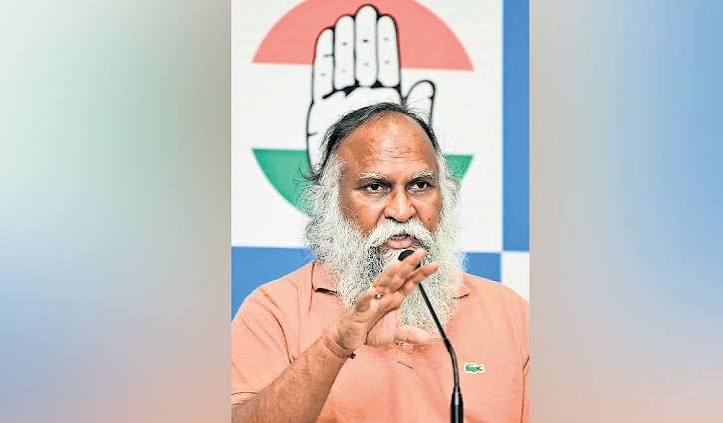
Jagga Reddy also recalled that how the BJP had appointed Bangaru Laxman as its national president but later removed him, this reflected the BJP’s approach towards Dalit leaders. HYDERABAD: Accusing the BJP of deliberately misrepresenting Rahul Gandhi’s remarks to portray him as “anti-Dalit”, Congress working president T Jayaprakash Reddy on Thursday said that saffron party leaders have no moral right to level such allegations. Addressing the media at Gandhi Bhavan here, he said: “The BJP and its affiliated organisations had recently tried to create an anti-Dalit image for Rahul Gandhi.” Referring to “some BJP-affiliated organisations performing purification rituals” after AICC president Mallikarjun Kharge’s visit to Uttarakhand, he said: “Rahul Gandhi had questioned such conduct. He advised the BJP and its affiliated organisations against indulging in such practices. But the BJP is intentionally giving a distorted interpretation of Rahul Gandhi’s comments and using them for political propaganda.” The former Sangareddy MLA, who is popularly known as Jagga Reddy, said that Rahul Gandhi was the “boss” of the Congress but neither he nor his family members have any arrogance. “In contrast, the BJP functions with arrogance, and it routinely opposes and works against the Congress and its leaders,” he added. “Whenever Rahul Gandhi walks alongside Mallikarjun Kharge, he lends support to him,” Jagga Reddy said, citing this as an example of Rahul Gandhi’s respect for Kharge. Jagga Reddy also recalled that how the BJP had appointed Bangaru Laxman as its national president but later removed him, alleging that such decisions reflected the BJP’s approach towards Dalit leaders. Courtesy : TNIE Note: This news is originally published on https:/thenewindianexpress.com/bha and is used purely for non-profit/non-commercial purposes, especially human rights
Karimnagar Dalit families’ Indiramma homes caught in 22A list
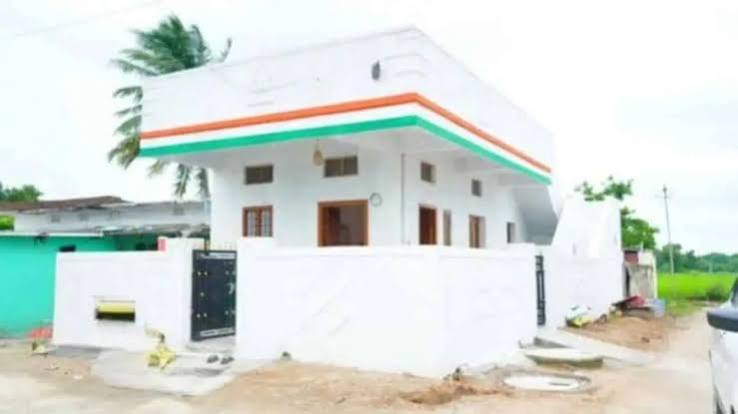
The listing has triggered panic among families who say they only learned of the restriction when they tried to deal with their properties. Hyderabad: Nearly 45 acres of land on which Indiramma houses were built for Dalit families decades ago in Karimnagar district has landed on the state’s prohibited property list under Section 22A of the Registration Act, leaving hundreds of beneficiaries unable to register or transfer their own homes. The affected land spans six villages in Gangadhara mandal: Gangadhara, Gattubuthkur, Garshakurthy, Kondaipalli, Burugupalli and Kachireddypalli, where the state government had allotted two guntas of land to each Dalit family in 1975-76 and constructed houses under the Indiramma scheme. The plots were registered in the beneficiaries’ names at the time, residents said, but were quietly added to the 22A prohibited list without any prior intimation. The listing has triggered panic among families who say they only learned of the restriction when they tried to deal with their properties. Many have since approached revenue officials and filed representations through Prajavani, the government’s public grievance redressal programme, demanding that the land be delisted. Kondaipally sarpanch Malliala Vinaysagar, also known as Thirupathi, said three acres in his village alone had been swept into the 22A list. About 80 Dalit families were sanctioned Indiramma houses there in 1975-76 and built them on patta land donated by a local landlord, patta land, not government or assigned property, he said. Officials who received the beneficiaries’ representation acknowledged the error and assured that the matter had been escalated to higher authorities for correction, Vinaysagar said. Gangadhara tahsildar Ambati Rajitha, responding to the concerns, distinguished assigned and patta land. Assigned land will continue to remain under the 22A restriction, she said, but houses built on patta land are eligible for removal from the list. In Kondaipally’s case, she said revenue records confirm the houses stand on patta land, and she has written to the district collector seeking the delisting. The houses will be removed once a response is received from higher officials, she added. The problem is not confined to Gangadhara. Agricultural land in Choppadandi mandal, including plots in Gumlapur, Ragampet, Chityalapalli and Chakunta, has also reportedly been caught up in the prohibited list, with affected landholders similarly filing representations through Prajavani. The Karimnagar cases mirror a wider pattern playing out across Telangana this year. Property owners in Hyderabad and several districts have reported valid plots, flats and houses being pushed into the 22A category, in some instances because a single subdivision within a survey number was classified as government land, dragging the entire survey number into the ban. In Patancheru constituency alone, BRS leader T Harish Rao has claimed more than 50,000 acres across five mandals were placed under the restriction. Chief Minister A Revanth Reddy has publicly assured that genuine owners will not lose their properties and has promised orders to denotify wrongly listed land. For the Dalit families of Gangadhara mandal, however, the assurance so far remains limited to verbal commitments from local officials, with the final decision resting on a response from the district collector’s office. Courtesy : TSD Note: This news is originally published on https:/thesiasatdaily.com/bha and is used purely for non-profit/non-commercial purposes, especially human rights
In letter, Sonia told of ‘administrative and political suppression’, says Telangana minister Surekha
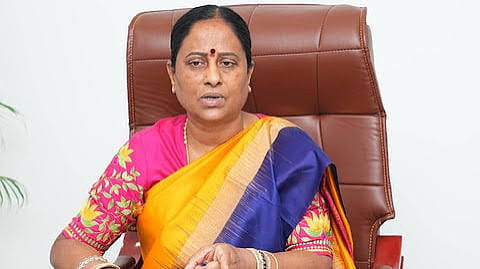
A major grievance in the letter was the alleged curtailment of her authority as Minister. Surekha claimed that several important decisions were taken without her knowledge and that directions. HYDERABAD: Days before the AICC cleared her ouster from the state Cabinet, Endowments Minister Konda Surekha had sought Congress Parliamentary Party chairperson Sonia Gandhi’s intervention, alleging that she was subjected to “sustained political and administrative suppression” by Chief Minister A Revanth Reddy and sections of the ruling party. On Thursday evening, Surekha released a 10-page letter dated August 22 that she had sent to Sonia Gandhi. The letter was also addressed to Rahul Gandhi, Mallikarjun Kharge, KC Venugopal and Meenakshi Natarajan. A major grievance in the letter was the alleged curtailment of her authority as Minister. Surekha claimed that several important decisions were taken without her knowledge and that directions from the CMO had reduced her role to a largely nominal one. She cited the constitution of the Yadadri Temple Trust Board and the transfer of funds meant for the development of the Sammakka-Saralamma temple as examples of being sidelined. She also alleged that her former OSD N Sumanth was removed without informing her and was subsequently subjected to police action. Surekha also alleged delays in funds for projects including the Smart City Model Bus Stand and Bondi Vagu development in her Warangal East constituency, claiming that several works had not received the same priority as those in neighbouring constituencies. She objected to Station Ghanpur MLA Kadiyam Srihari holding a review meeting with Endowments officials without informing her, saying such actions undermined the authority of the minister concerned. Surekha further alleged that local leaders and public representatives were being encouraged to act against her and that attempts were being made to politically isolate the Konda family in the erstwhile Warangal district. She also alleged that different political standards were being applied to Congress leaders, referring to Revanth’s remarks on former MLA T Jayaprakash Reddy’s possible electoral plans and his appeal at Parkal for the re-election of MLA Revuri Prakash Reddy. Another grievance concerned the show-cause notice issued to her over remarks made by her daughter, Susmita Patel. Surekha questioned whether a minister could be held responsible for the personal statements of a family member merely because she was the mother. Despite her grievances, Surekha said her faith in the Congress, its ideology, democratic values and national leadership remained unwavering. Courtesy : TNIE Note: This news is originally published on https:/thenewindianexpress.com/bha and is used purely for non-profit/non-commercial purposes, especially human rights
Vijay will be PM with Rahul Gandhi’s support, says TVK MLA
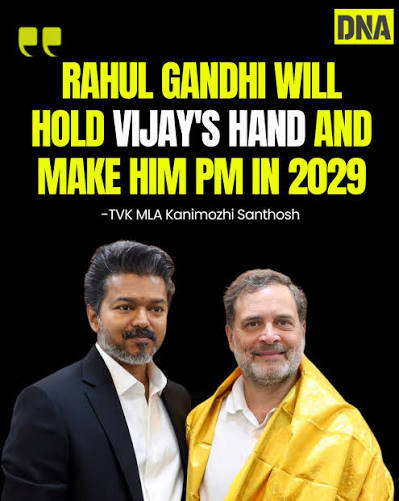
The statements drew attention, with a section of TVK supporters putting up wall posters in Madurai and other parts of the state, claiming that Vijay would become the next PM. CHENNAI: The ‘Rahul or Vijay for PM’ debate is rumbling on with leaders of TVK and Congress wanting their chieftain to be the prime ministerial candidate for the 2029 Lok Sabha elections. While Congress leaders have made it clear that Rahul Gandhi remains their choice, TVK legislator Kanimozhi Santhosh on Wednesday said Vijay would become the PM, with Rahul himself paving the way for him. Kanimozhi – an astrologer – who claims to have predicted C Joseph Vijay’s ascension to CM-ship, was confident that Rahul will make Vijay the PM in 2029. On Wednesday, the Kavundampalayam MLA, before taking part in the Assembly proceedings, predicted that Vijay would become PM in 2029. She said the next PM would come from TN. She further elaborated, “It was Congress leader Rahul Gandhi who helped our Thalapathy (Vijay) sit in the CM’s seat. So, he himself will hold Thalapathy’s hand and take him to Delhi in 2029 and make him sit there (as PM).” When asked by the media who would be Tamil Nadu CM if Vijay became PM, she replied, “Let’s see when it comes.” On the other hand, Congress is batting for Rahul, saying he has the support of the Tamil Nadu CM. Congress floor leader Tharahai Cuthbert on Wednesday told reporters that Rahul was the accepted leader and claimed that Vijay had also made it clear that Rahul should become the PM. She described the claims of TVK cadre as “fan mentality”. She said, “They still have a fan mentality. So naturally, they will consider their own leader to be the PM. There are no two opinions when it comes to the views of Vijay’s fans. There is nothing wrong in what they are doing. Therefore, you should not draw any conclusions based on this.” The statements drew attention with a section of TVK supporters putting up wall posters in Madurai and other parts of the state, claiming that Vijay would become the next PM. Meanwhile, BJP state president Nainar Nagenthran and senior BJP leader Pon Radhakrishnan on Wednesday claimed that cracks are appearing in the TVK-Congress alliance over the PM’s chair issue. On Tuesday in Tenkasi, Energy and Law Minister C T R Nirmal Kumar told reporters that there was no confusion within the alliance, and urged the media not to blow the issue out of proportion. S Kumaresan Courtesy : TNIE Note: This news is originally published on https:/thenewindianexpress.com/bha and is used purely for non-profit/non-commercial purposes, especially human rights