
MP: Dalit youth thrown onto garbage at midnight, then set on fire… Mother who came to rescue him after witnessing the brutality in Sagar was also attacked…

Shameful incident in Sagar’s Chandpur village. The victim’s mother alleges casteist abuse and threats to burn him alive. Sagar (Madhya Pradesh): A shameful and horrific incident has come to light in Sagar district of Madhya Pradesh, where some miscreants are accused of dragging a Dalit youth onto a roadside garbage heap and burning him alive. When the youth’s mother intervened to extinguish the fire, the accused also mistreated her. The victim was taken to the district hospital in critical condition, where his condition is currently stable. What is the whole matter? According to a report in the Free Press Journal, police reported the incident on Wednesday. The incident occurred in Chandpur village in the Rahli area of Sagar district. According to reports, the Dalit youth was allegedly set on fire in the middle of the market. According to the police, the victim, identified as Hemraj Ahirwar, sustained severe burn injuries in the fire. The victim’s 62-year-old mother, Kesrani Ahirwar, has filed a complaint at the Rahli police station, demanding strict action against the accused. The incident is said to have occurred a few days ago. It is reported that the police only took action after news of the incident went viral on social media. What did the mother say in the complaint? Kesrani stated in her complaint that at around 12 a.m. on October 11th, her son, Hemraj, was lying in an intoxicated state near a shop. Two men, identified as Hemraj, son of Kalu Ahirwar, and Naresh, son of Lachhu Sahu, arrived. It is alleged that they first collected garbage near Hemraj (the victim) and then set him on fire. Hearing her son’s cries, Kesrani ran to his rescue and managed to extinguish the fire. However, during this time, the two accused also mistreated her, hurled casteist slurs at her, and threatened to burn her alive. Frightened by this horrific incident, the mother mustered courage and first rushed her injured son to the hospital. She then contacted the police. Kesrani also alleged that these accused have previously been involved in serious crimes and now pose a threat to the lives of her entire family. Rajan Chaudhary Courtesy: Hindi News
Kerala High Court Directs BCI to Approve Two Seats for Transgender Students in All Law Colleges
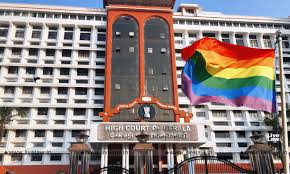
The order came after a transgender woman, denied admission despite qualifying in the Kerala Law Entrance Examination 2025, cited the NALSA judgment and the Transgender Persons Act, 2019. The Kerala High Court on Friday directed the Bar Council of India (BCI) to approve two seats for transgender students in all law colleges across the state. Justice V.G. Arun issued the interim order while hearing a petition seeking to expedite the decision on the proposal, which had been pending before the BCI. The court noted that the issue could not be kept waiting indefinitely for the Council to act. During the hearing, the petitioner’s counsel informed the court that the BCI had earlier been directed to finalise a date for its General Council meeting to decide on the matter. However, the BCI’s standing counsel told the court that the proposal had been placed before the Standing Committee for Legal Education, which, after deliberation, decided that the final decision must be taken by the General Council. The standing counsel also said it was not possible to specify when the next General Council meeting would be held. Taking note of the delay, Justice Arun remarked, “In my opinion, the issue cannot wait endlessly for the General Council of the Bar Council to meet.” Accordingly, the court issued an interim direction to the BCI to approve the Kerala government’s request, communicated through a letter dated August 6, for the creation of two seats for transgender students in all law colleges across the state. The directive came while hearing a petition filed by a transgender woman who was denied admission to Government Law College, Kozhikode, despite qualifying in the Commissioner for Entrance Examinations’ Kerala Law Entrance Examination (KLEE) 2025. The petitioner referred to the landmark NALSA v. Union of India judgment and the Transgender Persons (Protection of Rights) Act, 2019, in support of her plea. Courtesy : Outlook India Note: This news is originally published on https:/outlookindia.com/bha and is used purely for non-profit/non-commercial purposes, especially human rights
Bihar Elections 2025: Big signals emerging in Bihar…People have complete faith in the Rahul-Tejashwi duo, every promise of the ‘Grand Alliance’ will be fulfilled.

Congress leader Pawan Khera said that Bihar voters have faith in Rahul Gandhi and Tejashwi Yadav to fulfill their promises. The Grand Alliance has released its manifesto, which focuses on the welfare of Bihar. Meanwhile, the Election Commission has issued a notice to Prashant Kishore for registering his name on a duplicate voter list. New Delhi: The election bugle has been sounded in Bihar, and the voting dates have also been announced. As the polling date approaches, the political heat in the state is increasing. All the contesting parties are trying to woo Bihar voters in different ways. Meanwhile, the Grand Alliance has released its election manifesto. Congress leader Pawan Khera has reacted to the Grand Alliance’s manifesto. The people of Bihar have full confidence Congress leader Pawan Khera said on Tuesday that voters are confident that Congress leader Rahul Gandhi and the Grand Alliance’s chief ministerial candidate, Tejashwi Yadav, will fulfill their election promises in the upcoming Bihar Assembly elections. He said that the manifesto focuses on the welfare of Bihar and reflects the alliance’s dedication to the people. These are the big signs in Bihar Dismissing speculation about a rift in the alliance over seat sharing, the Congress leader said that the public is confident that Rahul Gandhi and Tejashwi will fulfill their promises. Those who want to see a split are losing elections. He further said that the India Block has gained an edge by announcing its chief ministerial candidate and manifesto, which clearly indicates which way the wind is blowing. Rahul and Priyanka will campaign The Congress leader said, “We announced our chief ministerial candidate first. Our manifesto is also coming first, so you can understand which way the wind is blowing.” Rahul Gandhi, Congress leader Priyanka Gandhi Vadra, Congress President Mallikarjun Kharge, and all our star campaigners will campaign in their respective constituencies. Notice issued to Prashant Kishor Meanwhile, the Election Commission has issued a notice to Prashant Kishor, founder of the Jan Suraj Party, seeking a response within three days regarding alleged duplicate voter lists in Bihar and West Bengal. Explanation required within three days According to a notice issued by the Returning Officer of the Kargahar Assembly constituency, “According to a news item published on October 28, 2025, your name is listed in the voter lists of Bihar and West Bengal… Therefore, you must submit your version regarding your name being listed in more than one constituency within three days.” Criticism from Opposition Parties The Election Commission of India conducted a Special Intensive Revision (SIR) to update the voter list, which was criticized by opposition parties. This notice has drawn attention amid the intensive scrutiny of the voter list in Bihar, steps being taken by election officials to ensure transparency ahead of the upcoming elections. Edited by: NBT Desk Courtesy: Hindi News
The Bihar election campaign begins after Chhath, with Amit Shah, Yogi Adityanath, and Rahul Gandhi and Tejashwi Yadav launching a “direct attack” on each other.

Bihar Election News: With the Chhath festival over, the Grand Alliance and the NDA have geared up for a strong electoral campaign. Home Minister Amit Shah, Rajnath Singh, and Yogi Adityanath are holding a rally today, Wednesday, October 29th. Rahul Gandhi and Tejashwi Yadav are also in the fray. Patna: The countdown for the first phase of voting in the 2025 Bihar Assembly elections has begun. With the Chhath festival over, political heavyweights have entered the fray today. Not only are Amit Shah, Rajnath Singh, and Yogi Adityanath entering the battleground of Bihar today, but Rahul Gandhi and Tejashwi Yadav are also campaigning for the Grand Alliance. First, learn about the NDA’s campaign today. The NDA has put all its efforts into the Bihar elections. Many prominent leaders from Delhi to Uttar Pradesh are taking to the streets today, October 29th. Union Home Minister Amit Shah, Defense Minister Rajnath Singh, and UP CM Yogi Adityanath, along with Delhi CM Rekha Gupta, will also campaign for the Bihar elections today. Learn about these leaders’ schedules first… Amit Shah will seek votes for Maithili Thakur in Alinagar today. Amit Shah will hold a rally in Alinagar, Darbhanga, at 12:15 pm. After this, he will campaign in Rosera, Samastipur, at 1:30 pm, and then in Bhagwanpur, Begusarai, at 3 pm. Chief Minister Nitish Kumar will hold road shows in four assembly constituencies in Nalanda district today, October 29th. He will also hold a rally in Harnaut. Defense Minister Rajnath Singh will hold an election rally in Hayaghat, Darbhanga. He will also hold rallies in Barh and Chapra. While UP Chief Minister Yogi Adityanath will target Siwan and Buxar, holding rallies in both locations. While Delhi Chief Minister Rekha Gupta is scheduled to hold election rallies in Muzaffarpur and Patna Sahib. MP CM Mohan Yadav has been assigned to today’s election rallies in Banka, Bhagalpur, and Madhepura. Grand Alliance’s Election Campaign The Grand Alliance is also going to give the NDA a tough fight in this election campaign. Today, Rahul Gandhi and Tejashwi Yadav will take the field together to counter the NDA’s attacks. Both leaders will jointly lead the election campaign from the same platform. Priyanka Gandhi is also coming to Bihar. Rahul Gandhi and Tejashwi Yadav will jointly hold election rallies from the same platform in support of the Grand Alliance candidates in Muzaffarpur and Darbhanga. Tejashwi Yadav will hold back-to-back election rallies in six assembly seats of Chhapra today, October 29th. However, Priyanka Gandhi will not begin campaigning today. Priyanka Gandhi will hold public meetings in Bachhwara in Begusarai on November 1, 2025, in Lakhisarai and Rosera (Samastipur) on November 3, and in Govindganj and Chanpatia (East Champaran) on November 6. Congress President Mallikarjun Kharge will hold election rallies in Kuchaykot (Gopalganj) on October 31, Amarpur (Banka) on November 3, and Kutumba (Aurangabad) on November 5. Compiled by: Rishikesh Narayan Singh About the Author Rishikesh Narayan Singh is in charge of Bihar-Jharkhand for Navbharat Times Digital. A 20-year journey in journalism spans from Janmat TV, IBN 7, ETV Bihar-Jharkhand, News18 Bihar-Jharkhand, to Times Internet. After starting from the national capital, Delhi, Bihar is now his workplace. Courtesy: Hindi News
Senior RJD neta, bro Tej object to Tejashwi’s ‘nayak’ poster

Patna: Not only the BJP but his own party’s national general secretary Abdul Bari Siddiqui took exception to projection of the INDIA bloc CM face Tejashwi Prasad Yadav as the hero of the people of Bihar, or, ‘jannayak’. While RJD posters with Tejashwi’s photograph, captioned “Bihar ka Nayak” have come up ahead of the assembly elections, he as well as Congress leader and LoP in Lok Sabha, Rahul Gandhi, were first called ‘jannayak’ during the recent ‘Voter Adhikar Yatra’ in the state against the special intensive revision of electoral rolls.Siddiqui said it will take Tejashwi time and hard work to get the title of ‘Jannayak’, which is exclusively used for Bharat Ratna Karpoori Thakur, a socialist leader and former CM.“Tejashwi is currently doing politics based on his father and RJD chief Lalu Prasad’s legacy. He is the ‘virasat’ of Lalu Prasad’s politics and may get this honour after establishing himself by following the footsteps of his father and Thakur,” he said. BJP national office-bearer Rituraj Sinha also said the titles like ‘Jananayak’ and ‘Lokanayak’ are earned. “The public bestows these titles based on work and contributions. Thakur and Jayaprakash Narayan did such works because of which they were given the titles of ‘Jananayak’ and ‘Lokanayak’ respectively. Referring to Siddiqui’s statement, BJP national spokesperson Shehzad Poonawalla said neither public nor his own colleagues have confidence in him. “Despite contesting elections for years, he has failed to earn people’s trust. Even within his circle, from RJD leader Abdul Bari Siddiqui to Samajwadi Party MLA Ravidas Mehrotra, besides his brother Tej Pratap Yadav, no one sees him as a true leader. In reality, he is neither a people’s leader nor a capable leader; he is a villain of corruption, dynastic politics, criminalisation and jungle raj,” he said. Another BJP spokesman Ajay Alok said Tejashwi is not a ‘nayak’ (hero) but ‘nalayak’ (worthless). Tej Pratap also attacked Tejashwi and Rahul for being called ‘jannayak’ by their party supporters. “Calling yourself ‘jannayak’ doesn’t make you a people’s leader. Karpoori Thakur, Ram Manohar Lohia, Ambedkar and Mahatma Gandhi were the real ‘jannayak’. Rahul and Tejashwi are under the ‘chatrachaya’ (protection and patronage) of Lalu Prasad. If that protection is removed, they will be nothing,” Tej, the elder son of the RJD chief, said.Courtesy : TOINote: This news is originally published on https:/timesofindia.com/bha and is used purely for non-profit/non-commercial purposes, especially human rights
Dalit Youth Assault Case- Gurugram Police arrest eight, apprehended a minor
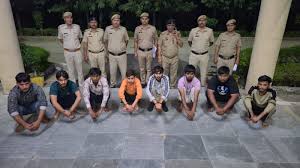
The Gurugram Police arrested eight people and apprehended a minor for allegedly assaulting a Dalit youth and hurling casteist abuse at him. The accused had allegedly fought with the youth over bursting firecrackers during Diwali in Jatola village, Farrukhnagar. The victim, Kartik, 21, was sitting outside his house when a group of seven to eight people, including arrived on a motorcycle. They allegedly assaulted him and allegedly made caste remarks. Kartik fled to his house, but the group followed, attacked him again, and threatened to kill him and his family. He later lodged a complaint with police. The accused have been identified as Ankit, 20; Himanshu, 21; Ansu, 19; Pawan, 23; Abhay, 20; all residents of Jatola; Yogesh, 22; from Farrukhnagar; Rachit, 21, from Kawali village in Rewari; and Anshu, 20, from Khol, Rewari, along with a minor aged 16. According to the police, the accused wanted to take revenge following an argument over firecrackers on October 20 (Diwali), which led to the assault. The police recovered a motorcycle used in the crime. The minor has been included in the investigation as per legal procedures, while the other eight accused were produced in court on October 25 and sent to judicial custody. Courtesy : BW Police World Note: This news is originally published on https:/bwpoliceworld.com/bha and is used purely for non-profit/non-commercial purposes, especially human rights
Harish insulted Dalits with comments on Cabinet: Telangana minister Adluri
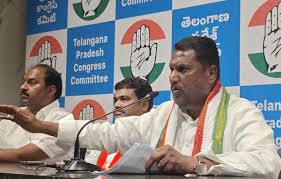
Speaking to the media at Jubilee Hills Ministers Quarters, he accused the BRS of running a “Bandipotu politics” (politics of dacoits) for a decade. HYDERABAD: SC, ST and Minority Welfare Minister Adluri Laxman Kumar on Monday slammed BRS leader T Harish Rao for calling the state Cabinet a “Dandupalyam batch” (criminal gang). Terming the BRS leader’s remarks “disrespectful and shameful”, Laxman Kumar demanded an open apology from the former for insulting ministers who belong to Dalit communities and weaker sections. Speaking to the media at Jubilee Hills Ministers Quarters, he accused the BRS of running a “Bandipotu politics” (politics of dacoits) for a decade. Stating that the Congress government, under the leadership of Chief Minister A Revanth Reddy, was ensuring inclusive governance, he said: “When I challenged Harish Rao to an open debate, he backed off. If he has courage, he should come forward and discuss these issues before the people.” Koppula arrested BRS leader and former minister Koppula Eshwar and his party colleague Korukanit Chander were arrested from the 125-feet Ambedkar statue here on Monday, when they reached there for a debate with SC, ST and Minority Welfare Minister Adluri Laxman Kumar. Eshwar dared Laxman to a debate on welfare schemes but the latter wanted to debate with former minister T Harish Rao. Police took both Eshwar and Chander into custody and shifted them to a police station. Laxman had earlier challenged BRS working president KT Rama Rao or Harish Rao to a debate. Courtesy : TNIE Note: This news is originally published on https:/thenewindianexpress.com/bha and is used purely for non-profit/non-commercial purposes, especially human rights
From oral histories to digital archives: How Gauri Gupta is fighting caste discrimination
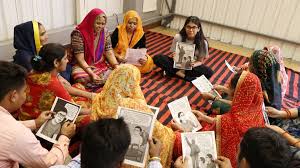
Gupta’s work goes beyond awareness and education. The People’s Collectives regularly brings Dalit and Tribal leaders together with government officials including panchayat representatives Gauri Gupta, a 17-year-old woman, is quietly shaking up the social landscape in India. Caste discrimination and atrocities still shape lives across the country. And, this young activist has taken it upon herself to amplify long-ignored voices. Through her organisation, The People’s Collectives, Gupta is combining oral histories, digital innovation, education and legal reform to create real change for Dalit and Tribal communities. “Our goal is to decentralise caste power and return agency to people whose voices have been silenced for generations,” Gupta explains. Already, her work spans four states: Gujarat, Karnataka, Maharashtra, and Rajasthan. Recording lives, not just numbers At the core of The People’s Collectives is a participatory oral history project. So far, over 350 testimonies from Dalit and Tribal communities have been collected. Some team members are focused on migrant labourers working in construction, brick kilns, and agriculture; sectors where Dalit and Adivasi voices are rarely heard. “The stories we document are archives of resistance. They refuse to be erased,” Gupta says. A virtual museum against untouchability Taking her mission online, Gupta is building a digital Untouchability Museum, the first of its kind in India. The museum will showcase 56 objects connected to caste discrimination such as segregated brooms, pots, and tin plates each paired with firsthand accounts. The museum is a tool for learning. By combining history with digital storytelling, Gupta hopes to turn memory into public education, helping young people understand the lived realities of caste-based oppression. The People’s Collectives has launched Caste Consciousness Clubs in 83 schools across India. These student-led groups use a caste sensitivity curriculum to cultivate empathy and critical thinking from a young age. Beyond schools, the organisation has created a rights-based multilingual toolkit for over 2,600 members of Dalit-Bahujan communities. The toolkit explains legal rights, safety measures, and education entitlements in simple language. Gupta’s work goes beyond awareness and education. The People’s Collectives regularly brings Dalit and Tribal leaders together with government officials including panchayat representatives in rural Rajasthan, to discuss policy and reforms. The organisation has also run legal aid camps in partnership with universities, helping 65 families file FIRs under the Scheduled Castes and Scheduled Tribes (Prevention of Atrocities) Act. A special initiative called Tribal Vikas has registered 1000 members from denotified tribes giving them access to healthcare, education, and housing programs. “These legal recognitions are not just paperwork,” Gupta says. “They are identity, dignity, and access, the first steps toward justice.” Supporting economic independence The People’s Collectives also promotes financial empowerment. About 90 Dalit youth have received micro-grants for vocational training in areas. These include tailoring, beauty, and computer skills. Many have used this support to achieve financial independence and build sustainable community projects. Strategic partnerships and CSR funding have allowed Gupta to expand her programs, securing over $25,000 from different organisations. Her team also mobilised youth collectives across multiple districts to campaign for transparency and equity. Gauri Gupta’s unique approach is all about insistence on community-led action. She combines archival research with digital tools and grassroots organising. This makes Dalit and Tribal people the narrators and decision-makers of their own stories, rather than saviours occupying their spaces. Courtesy : The Statesman Note: This news is originally published on https:/thestatesman.com/bha and is used purely for non-profit/non-commercial purposes, especially human rights
UPSC Editorial Analysis: Supreme Court’s 2025 Judgment on Transgender Rights
General Studies-2; Topic: Welfare schemes for vulnerable sections of the population by the Centre and States and the performance of these schemes; mechanisms, laws, institutions and Bodies constituted for the protection and betterment of these vulnerable sections. Introduction The Supreme Court’s judgment in Jane Kaushik vs Union of India (2025) has reignited national debate on the implementation failure of transgender rights in India. Despite the 2014 NALSA judgment and the Transgender Persons (Protection of Rights) Act, 2019, the apex court found that most governments—both central and state—failed to enforce protections and welfare schemes for transgender persons. Background: NALSA Judgment (2014) In National Legal Services Authority (NALSA) vs Union of India (2014), the Supreme Court: Recognized transgender persons as the “third gender.” Affirmed their fundamental rights under Articles 14, 15, 16, and 21 of the Constitution. Upheld the right to self-determination of gender identity, independent of medical or surgical proof. Directed the Central and State governments to: Treat transgender persons as a socially and educationally backward class (SEBC). Provide reservations in education and employment. Ensure access to health care, education, and public facilities. Conduct sensitization programs to promote inclusivity. The verdict was hailed globally as a landmark for gender justice, comparable to judgments on LGBTQ+ rights in other democratic nations. Legislative Follow-Up: Transgender Persons (Protection of Rights) Act, 2019 Enacted to implement NALSA’s directions and protect transgender persons from discrimination. Key provisions: Prohibits discrimination in education, employment, healthcare, housing, and public services. Establishes the National Council for Transgender Persons (NCTP) to advise the government. Mandates welfare measures and social inclusion. Criticisms of the Act: Requires a certificate of identity from a District Magistrate, diluting NALSA’s principle of self-identification. Does not provide clear reservation quotas, despite NALSA’s directive. Lacks penalties or monitoring mechanisms for non-compliance. Insufficient attention to livelihood generation and healthcare access. Hence, while the law exists, it has remained largely symbolic and poorly implemented across India. Significance of the Supreme Court’s Intervention Reinforces judicial commitment to substantive equality, not just formal equality. Recognizes state inaction as a violation of fundamental rights, expanding accountability. Institutionalizes implementation by creating a committee-led reform structure. Sends a clear message to bureaucracies that neglect of marginalized groups invites constitutional scrutiny. Revives public discourse and empowers civil society movements advocating transgender rights. Key Directives Issued by the Supreme Court The Court issued a series of directions to revive enforcement and accountability: Formation of an Advisory Committee headed by Justice (Retd.) Asha Menon, to: Evaluate the implementation of the 2019 Act and its Rules. Recommend a “viable equal opportunity policy” for transgender persons. Time-bound implementation: Union and state governments must frame policies within three months of receiving the Committee’s report. Guidelines to institutions: Educational and healthcare institutions must ensure gender-sensitive policies, infrastructure, and grievance mechanisms. Recognition of omission as violation: The Court held that failure to act (state inaction) can also violate fundamental rights under Article 21. Dimensions of Failure and Exclusion Administrative Apathy Many states have not formed welfare boards, notified rules, or allocated budgets. Lack of data collection and absence of performance indicators hamper monitoring. Welfare schemes, where they exist, remain underfunded and uncoordinated. Social and Institutional Prejudice Transgender persons continue to face stigma, ridicule, and exclusion in schools, workplaces, and healthcare systems. Institutional structures—police, schools, and local governance—often remain insensitive or discriminatory. The failure of governance reflects broader societal bias and not mere bureaucratic delay. Multi-Dimensional Exclusion Education: Dropout rates are high due to bullying and lack of acceptance. Employment: Many transgender persons depend on begging or sex work due to exclusion from formal jobs. Health: Lack of access to gender-affirming care, hormone therapy, and mental health support. Social Security: Difficulty in obtaining identity cards, ration cards, or bank accounts due to mismatched gender details. Way Forward Institutional Measures Establish Transgender Welfare Boards and grievance redressal mechanisms in every state. Conduct annual audits on policy outcomes and fund utilization. Create gender desks in educational and healthcare institutions. Affirmative Action Implement reservations in education and employment, in line with NALSA. Introduce skill development programs, entrepreneurship schemes, and micro-credit access. Extend coverage under PM Jan Dhan Yojana, Ayushman Bharat, and housing schemes. Legal and Administrative Reforms Amend the 2019 Act to make self-identification absolute. Strengthen enforcement provisions and penalize discrimination. Introduce Uniform Guidelines for recruitment, HR policies, and workplace inclusion. Awareness and Sensitization Conduct mandatory gender-sensitization training for public officials, teachers, and medical staff. Integrate gender diversity modules in school curricula. Promote positive media representation to challenge stereotypes. Access to Health and Welfare Provide free gender-affirming care in government hospitals. Establish dedicated mental health and counselling units for the transgender community. Simplify procedures for changing name and gender in official documents. Social Transformation Encourage community-based organisations (CBOs) to participate in implementation. Launch public campaigns to normalize transgender presence in public life. Promote political representation and participation in decision-making. Conclusion For India, ensuring the dignity and inclusion of transgender persons is not only a legal obligation but also a moral and developmental necessity. True democracy can be achieved only when every citizen, irrespective of gender identity, lives with dignity, security, and equality before the law. Courtesy : Insight IAS Note: This news is originally published on https:/insightias.com/bha and is used purely for non-profit/non-commercial purposes, especially human rights
Odisha Continues to Face Severity of Dalit Oppression
The state had the sixth highest cases of incidents of Dalit oppression over the past four years (NCRB data), including acts of bestial violence, social boycotts, and judicial discrimination. The people of Odisha must be undergoing fatigue built on almost years and years of perpetuation of atrocities on Dalits in the state, which remains the sixth highest in incidents of oppression on Dalits in India. This is contrary to the notional assumption that the people of Odisha are God-fearing and their faith rests on the premises of Lord Jagannath, who, in essence, is believed to be a tribal deity, his origin dating back to over thousands of years. The deity is said to be the Patitapavan, which in essence connotes that He is for the Patits (the most oppressed). Leaving aside the legends, numerous incidents of Dalit oppression have been reported in Odisha over the past four years, including acts of bestial violence, social boycotts, and judicial discrimination. According to the National Crime Records Bureau (NCRB) data, Odisha has the sixth highest cases of atrocities on Dalits. In 2020, there were 2,046 incidents, in 2021, the incidents reported stood at 2,327, in 2022, there were 2,902 incidents and in 2023, the reported incidents were 2,696, taking the total to 9,971 incidents in the past four years. Activists cite “poor implementation of protective laws and low conviction rate for atrocities as factors the help perpetuating the problem”, Biswapriya Kanungo, an advocate and social activist fighting for the oppressed, told this writer. What about people from the upper strata who fuel such acts of oppression? Kanungo says “this trend has exacerbated in the past one decade when the political system has shown an attitude of acquiescence to the practice of oppression of people from the lower strata or Dalits.” Reports and case studies from 2020 to 2025 document several incidents of Dalit oppression in Odisha, including brutal public humiliation, social boycotts, and denial of basic rights. “Regardless of legal protection, that are so ineffective, a deep-seated caste-based discrimination persists, particularly in rural areas, where the incidents never come to light or rather get buried in obscurity”, laments Kanungo. Most instances of Dalit oppression in Odisha are marked by physical violence and systemic discrimination. While there are laws in place to prevent such atrocities, Dalits have been facing persistent exploitation and social exclusion, especially in the rural interiors. This is compounded by an ineffective justice system that fails to protect victims. In June 2025, two Dalit men from Pana community were subjected to public humiliation coupled with physical assault by a mob in Kharigumma village in Ganjam district. They were falsely accused of cattle smuggling whereas they were transporting three cows for a wedding dowry. They were forced to drink drain water and crawl on their knees. The incident sparked widespread outrage. An incident that the National Human Rights Commission took suo motu cognisance of. In 2012, in another cruel incident in Lothra area in Bolangir district, an upper-caste mob set fire to the houses of 30 Dalit families for a reason that cannot be condoned in any society. Intolerance Toward Assertiveness After setting the houses on fire, the mob blocked the roads preventing the police and fire brigade from entering the village. This violence was reportedly a backlash against the growing economic and political assertiveness of Dalits in the region. In 2012, the NHRC issued a notice to the Odisha government regarding the social boycott of 13 Dalit families in Ganjam district. The families were denied access to shops, water sources, temples, and irrigation, and were also forced to wash clothes for a pittance. Kanungo recollects that it was in 2008, when the upper-caste majority virtually massacred Dalits and tribals in a riot that claimed over 17 lives and rendered thousands homeless, Many families were forced to take shelter in camps worse than ghettoes, while a sizable population of the tribals remained holed up in the deep woods without anything for sustenance. That incident created a global ripple and panic. The entire gamut of the social turmoil was allegedly created by the hands of Right-wing elements from the state and from Delhi who helped fuel the fire with hate-speeches and propaganda. That brought a turning point politically, when the then Chief Minister Naveen Patnaik broke his party, Biju Janata Dal’s (BJD) nine-year-long political alliance with the Bharatiya Janata Party (BJP) on the grounds of inciting communal unrest. Systemic and Institutional Discrimination In many parts of rural Odisha, Dalits are frequently denied access to public amenities, including temples, hotels, tea stalls, and public wells till date. During a 2016 incident in Nayagarh, upper-caste villagers refused water from a tanker because it had first served a Dalit hamlet. In 2025, courts in Odisha drew criticism for imposing caste-discriminatory bail conditions, such as ordering Dalit men to perform manual scavenging work. This practice, which links bail to traditionally stigmatised occupations, has been condemned by legal experts everywhere in India. Yet, this practice is still followed, as we see people getting into in filthy septic/sewer tanks digging out dirty sediments in neck deep toxic human waste. Even with advancements, untouchability continues in many subtle and overt forms in the state. In some villages, Dalits are not served by village barbers or washermen. During the 2021 Cyclone, Yaas, Dalit communities in rural areas were reportedly ostracised and denied access to rehabilitation facilities, added Kanungo. Inner Conflicts Some Dalit sub-castes in Odisha, like the Doba and Kaibarta, have been found to practice discriminatory behaviour against lower-ranked Dalits, such as the Ganda community. This promotes perpetuation of the cycles of oppression within the marginalised community itself. Isolation in Death An 80-year-old woman faced social isolation in death in Deogarh district, simply because five decades ago, she had married outside her caste. Her body was left abandoned till some local volunteers dared the oppressors and arranged her last rights with full respect. The act of compassion and courage shown by the volunteers drew appreciation from various quarters. To top