
MGNREGA dilution an attack on Dalits rural poor and federalism Bajwa
Chandigarh, Leader of the Opposition in Punjab Assembly Partap Singh Bajwa on Friday said, with the VB-G RAM G Bill, Centre will have “another tool” to discriminate against Opposition-ruled states by cutting funds arbitrarily. He criticised the BJP-led Union government over the Bill — aiming to replace the Mahatma Gandhi National Rural Employment Guarantee Act (MGNREGA) — calling the decision “ideologically driven”. Bajwa said the move was aimed at weakening the statutory right to work embedded in MGNREGA and dismantling one of the most important social security schemes in the country. He termed it an attack on the legacy of Mahatma Gandhi. The LoP opposed the proposal to change the funding structure with the new scheme — from 100 per cent central assistance to 60:40 cost-sharing between the Centre and the states — saying it would put an additional financial burden on the already-stressed states. “This will give the Centre another tool to discriminate against the Opposition-ruled states by cutting funds arbitrarily. It undermines cooperative federalism and threatens a crucial employment support system for rural India,” Bajwa said. Highlighting Punjab’s financial situation, the Congress leader said the Centre has repeatedly squeezed Opposition-ruled states by withholding the rural development fund and delaying GST compensation. Imposing extra financial responsibility would further weaken state finances, the LoP said. According to Bajwa, the policy shift would hit Dalits, landless labourers and marginalised rural workers the hardest. “This is not a reform but an attack on social justice,” he added. He said MGNREGA, enacted by the Congress-led UPA government under former prime minister Manmohan Singh, had gained global recognition for providing a rights-based framework to address rural unemployment. (This story has not been edited by THE WEEK and is auto-generated from PTI) Courtesy : The Week Note: This news is originally published on https:/theweek.com/bha and is used purely for non-profit/non-commercial purposes, especially human rights
Dalit man dies in hospital days after ‘casteist’ attack in UP’s Mau SHO shunted
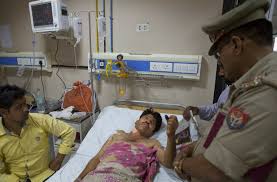
Mau (UP), A 35-year-old Dalit man who was injured in an assault in the Ramapur police station area of Mau district last month has died during treatment at Lucknow’s King George’s Medical University, police said on Friday. Following the death, additional police force has been deployed at the Ramapur police station as a precautionary measure. The deceased was identified as Sameer Kumar, a resident of Azad Nagar in the Ubhaon police station area of Ballia district, according to officials. Sameer’s brother Sumit Kumar alleged that on the evening of November 25, four named persons and two unidentified men travelling in a four-wheeler brutally assaulted Sameer near a canal close to Mayari village. He alleged that the attackers used caste-based slurs and left Sameer critically injured. On receiving information, family members rushed to the spot and admitted Sameer to the district hospital in Mau. As his condition deteriorated, he was referred to a trauma centre in Varanasi and later shifted to King George’s Medical University in Lucknow for advanced treatment, where he succumbed to his injuries on Thursday. Police said a case was registered on December 7 — around 12 days after the incident — against four named and two unidentified accused under relevant sections, including provisions of the SC/ST Act, based on the complaint of the victim’s family. Additional Superintendent of Police Anoop Kumar said Sameer was allegedly attacked by Robin Singh and members of his gang. He also said complaints were received against the station house officer for not taking prompt action in the case. “Ramapur SHO Kanchan has been removed with immediate effect and a probe has been ordered against her. If she is found guilty during the inquiry, strict action will be taken,” the ASP said. (This story has not been edited by THE WEEK and is auto-generated from PTI) Courtesy : The Week Note: This news is originally published on https:/theweek.com/bha and is used purely for non-profit/non-commercial purposes, especially human rights
Dalit woman’s video goes viral in Moradabad, police make shocking claim regarding molestation allegations
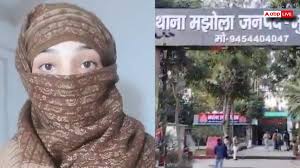
Moradabad News: In the viral video, the woman alleges that the accused were let off with minor charges instead of serious ones, which has increased her fear. The woman has questioned the police. In Moradabad, Uttar Pradesh, a Dalit woman from the Majhola police station area has made sensational allegations of molestation and harassment by some influential men. She has also released a video, which is now viral on social media. In the initial investigation, the police have claimed that the woman’s brother is an accused in a rape case, and she made this video under pressure to save him. The matter is currently under investigation. In the viral video, the woman alleges that the accused were let off with minor charges instead of serious ones, which has increased her fear. The woman has clearly stated that if anything happens to her, the police and administration will be responsible. She has also questioned the working of the Majhola police. Currently, this matter has gained significant attention at the local level. What is the whole matter? The woman, a resident of the Majhola police station area, released this video on Thursday. In the viral video, the woman says that some people are forcibly pressuring her and trying to intimidate her by sending objectionable messages through Instagram. The woman claims that she complained to the police about the entire matter, and a case was registered, but no strict action was taken against the accused. She has demanded intervention from senior police officers. Claim of making the video to save her brother In this matter, SP City Ranvijay Singh says that a case was previously registered against the woman’s brother, in which he was sent to jail. Following this, the application given by the woman and the viral video are being investigated along with technical evidence. Further action will be taken based on the facts that emerge. By: Obaidur Rahman Courtesy: Hindi News
Kodad Rural CI Suspended in Dalit Youth’s Custodial Death

The police department has also taken a serious view of the incident and placed Pratap Lingam under suspension while transferring Suresh Reddy and attaching him to the district police headquarters Hyderabad: Kodad Rural Circle Inspector Pratap Lingam was placed under suspension while Chilukuru Sub-Inspector Suresh Reddy was transferred in connection with the alleged custodial death of one K Rajesh, a Dalit, recently. The Dalit associations alleged that Rajesh died while undergoing treatment due to harassment by the police. Rajesh bore the brunt of the police for lodging a complaint related to irregularities in CMRF cheque. The police took Rajesh into custody for four days and tortured him. He died while in police custody. Taking a serious note of the incident, several dalit organizations staged a protest alleging that Rajesh died because of the police torture. The police department has also taken a serious view of the incident and placed Pratap Lingam under suspension while transferring Suresh Reddy and attaching him to the district police headquarters. Courtesy : Deccan Chronicle Note: This news is originally published on https:/deccanchronicle.com/bha and is used purely for non-profit/non-commercial purposes, especially human rights
MGNREGA dilution assault on Dalits, poor, says Partap Singh Bajwa
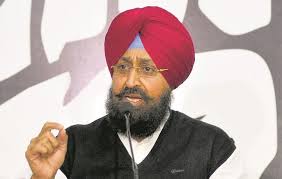
Said the BJP’s policy shift would disproportionately hurt society’s most-vulnerable sections Leader of Opposition in the Punjab Assembly, Partap Singh Bajwa, on Friday launched a scathing attack on the BJP-led Union Government over its move to replace the Mahatma Gandhi National Rural Employment Guarantee Act (MGNREGA) with the proposed “VB G RAM G” scheme, terming it a deliberate, ideologically driven attempt to dismantle the statutory right to work. Bajwa said the BJP’s policy shift would disproportionately hurt society’s most-vulnerable sections. “Dalits, landless labourers and marginalised rural workers will bear the brunt of this regressive decision. This is not reform — it is ideological vandalism and an unapologetic attack on social justice,” he stated. Bajwa said the move was not a routine policy adjustment but a direct assault on the legacy of Mahatma Gandhi and a calculated rollback of one of independent India’s most transformative social security legislations. He warned that shifting MGNREGA from 100 per cent central funding to a 60:40 Centre–state cost-sharing formula would place an unbearable fiscal burden on states already under severe financial stress. “This decision arms the Centre with yet another tool to discriminate against Opposition-ruled states by arbitrarily curtailing funds,” Bajwa asserted. — TNS Courtesy : The Tribune Note: This news is originally published on https:/thetribune.com/bha and is used purely for non-profit/non-commercial purposes, especially human rights
Citing lynching of Dalit youth, Party says law and order has collapsed in UP
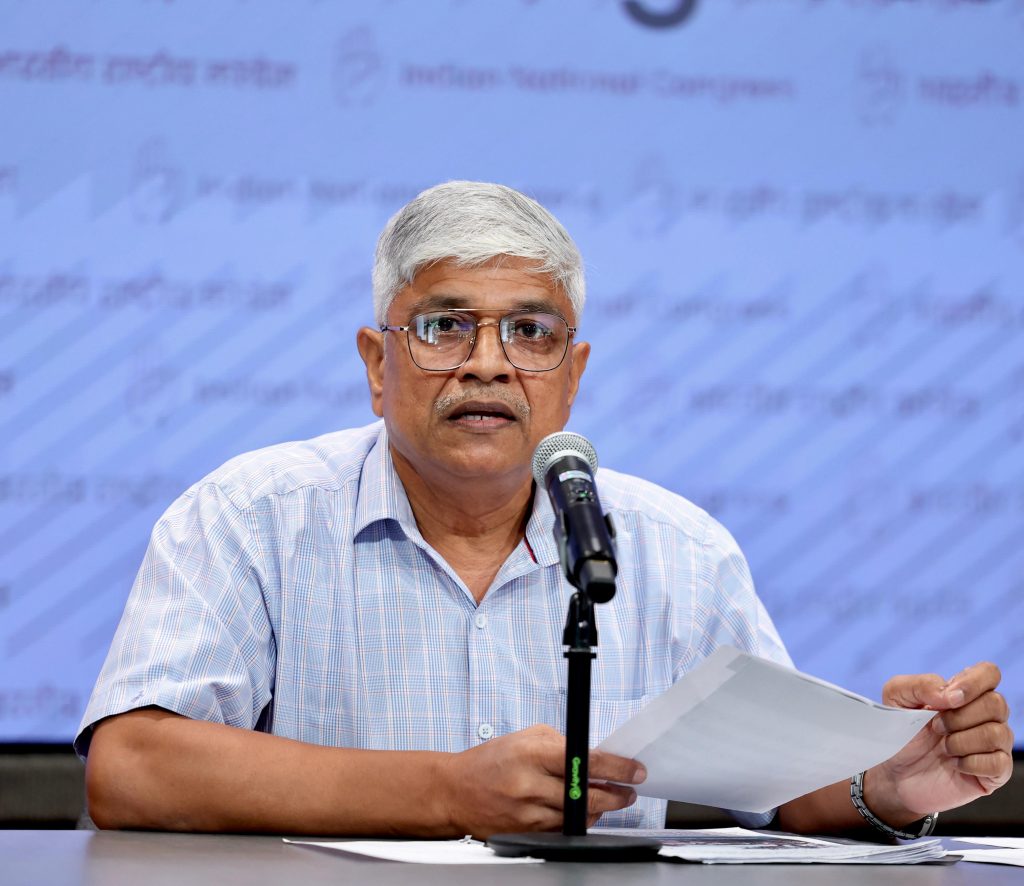
Spokespersons: Shri Rajender Pal Gautam & Shri Imran Masood: Shri Rajinder Pal Gautam, and Shri Imran Masood, MP, alleged that with the complete collapse of law and order in UP, criminals are having a free run and they have no fear of law. Demanding the resignation of Uttar Pradesh Chief Minister Yogi Adityanath over the brutal lynching of a Dalit youth in Raebareli, the Congress Party today alleged total collapse of law and order in the state with rising atrocities on Dalits, women and Muslims. The Congress leaders also played a video recording of the lynching of a Dalit youth in Raebareli, who was beaten to death in front of the cameras. They said, when he mentioned Rahul Gandhi while dying, the attackers mocked him. Demanding the resignation of the Chief Minister, Shri Rajinder Pal Gautam sought Rs 1 crore each in compensation for the families of the victims of such incidents. Besides, he said, these cases should be tried in a fast-track court in a time-bound manner. Shri Rajinder Pal Gautam said that during the last ten years, there has been an alarming increase in the atrocities against Dalits in UP, with institutional discrimination having become the new normal. Quoting National Crime Records Bureau, he disclosed that in five BJP-ruled states, there has been an increase of 75 percent in cases of atrocities against the Dalits, with UP alone accounting for 26.2% of such incidents. Shri Imran Masood, MP, alleged that the Constitution of the country was under threat. He said, Yogi government had completely failed on the issues of law and order and corruption. He added that crimes against Dalits, women and Muslims were on the rise. He asserted that the Yogi government was blatantly violating the Supreme Court guidelines and continuing to carry out bulldozer justice in the state. He said, it is not the rule of the law that is prevailing in the country, but the rule of the BJP’s ideology. He alleged that the BJP is patronising and protecting those who are spreading hatred and violence. The Congress leaders disclosed that Leader of Opposition Rahul Gandhi spoke to the victim’s family over phone. Besides, Amethi MP KL Sharma and PCC President Ajay Rai visited the family. The Congress will soon constitute a fact-finding team to look into such incidents and will also release a report. Monday, October 6, 2025 Courtesy : INC Note: This news is originally published on https:/indiannationalcongress.com/bha and is used purely for non-profit/non-commercial purposes, especially human rights
Rahul Gandhi calls G RAM G bill anti-rural poor, vows to force government to withdraw it
NEW DELHI: Raising the battle stakes over MGNREGA with the BJP, Congress leader Rahul Gandhi Friday said Congress will force the Modi govt to withdraw the disbanding of the job guarantee scheme, with the party warning that farmers’ protest forced the Centre to roll back the “three black farm laws”. ‘Congress also warned that after MGNREGA, the BJP will target the acts on forest rights, food security and land acquisition, while RTI has already been hollowed out. In comments issued while abroad, Rahul said MGNREGA provided the vulnerable sections with “leverage” and “bargaining power” which brought down “exploitation” and distress migration, while improving wages and working conditions.”That leverage is precisely what this govt wants to break … Prime Minister Modi’s targets are clear: weaken labour, weaken the leverage of rural India, especially Dalits, OBCs and adivasis,” he said, adding the VB-G RAM G will enfeeble the job guarantee that was “rural poor’s last line of defence”, and is “anti-state and anti-village”. Rahul’s statement of intent – he did not participate in the LS debate as he is in Germany for an international political meeting – came as the Congress Working Committee is set to meet on Dec 27, likely to discuss an action plan for a nationwide stir. Congress MPs Jairam Ramesh and Manickam Tagore warned, “Farmers protested and forced the PM to roll back the three farm laws. The CWC will hopefully come out with an action plan on how to raise the issue.” The leader of opposition in Lok Sabha added, “We will stand with workers, panchayats and states to defeat this move and build a nationwide front to ensure this law is withdrawn.” With a joint protest inside the Parliament chambers, the opposition believes the issue can serve as an important outreach to the weaker sections while papering over the divisions that mar the anti-BJP bloc. The opposition members have in recent days spoken about the protests against the land acquisition bill and the farm laws, to argue that weakening of the job scheme structure will have resonance with the poor who have come to depend on MGNREGA. Jairam Ramesh said, “Like the three black farm laws were to impact the farmers, this G Ram G law will hurt the vulnerable sections.” That advocacy groups and NGOs will complement their effort in taking the message to target groups has only bolstered their hope of an effective agitation. Courtesy : TOI Note: This news is originally published on https:/timesofindia.com/bha and is used purely for non-profit/non-commercial purposes, especially human rights
ED moves HC against dismissal of its case against Sonia, Rahul Gandhi
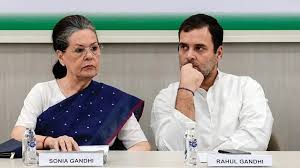
NEW DELHI: Enforcement Directorate Friday moved Delhi high court challenging a trial court’s Dec 16 order that dismissed its prosecution complaint (equivalent to a police chargesheet) against Congress MPs Sonia Gandhi and Rahul Gandhi, and others, in the National Herald laundering case. The criminal revision petition is likely to be listed for hearing next week. ED contended that Special Judge Vishal Gogne overlooked critical evidence of money laundering while holding that cognizance of the agency’s complaint in the case was “impermissible in law” since it was based on a private complaint filed by BJP’s Subramanian Swamy and not on any FIR for an offence listed in the schedule to Prevention of Money Laundering Act (PMLA). The trial court observed that despite receiving Swamy’s complaint and consequent summoning order in 2014, CBI had refrained from registering an FIR. “However, ED went ahead with recording an ECIR relating to money laundering on June 30, 2021, when no FIR (with CBI or any other law enforcement agency) existed in relation to the scheduled offence,” the court added. The agency has accused Sonia and Rahul Gandhi, along with late Congress functionaries Motilal Vora and Oscar Fernandes, as well as Suman Dubey, Sam Pitroda, and a private company, Young Indian Private Ltd. (YIL), in which Sonia and Rahul are majority shareholders, of conspiracy and money laundering. ED alleged that they acquired properties worth Rs 2,000 crore belonging to Associated Journals Limited (AJL), which publishes National Herald newspaper. In 2010, YIL acquired AJL’s debts from Congress for Rs 50 lakh, thereby taking control of AJL’s properties. In 2014, ED began probing the financial transactions among Congress, AJL, and YIL, and accused Sonia, Rahul, and other Congress functionaries of conspiring to usurp AJL’s assets. Courtesy : TOI Note: This news is originally published on https:/timesofindia.com/bha and is used purely for non-profit/non-commercial purposes, especially human rights
Rahul Gandhi engages with Indian diaspora in Germany
Amritsar: Leader of the Opposition in the Lok Sabha and Congress Member of Parliament Rahul Gandhi held a series of high-level meetings during his visit to Germany on Friday. He met former German Chancellor Olaf Scholz and German environment minister Carsten Schneider, discussing a wide range of issues of mutual interest. In addition, Rahul Gandhi also interacted with leaders of the Indian Overseas Congress (IOC) as part of his overseas engagement, informed Rajwinder Singh, Convener of the Indian Overseas Congress (Europe) over phone from Berlin. Rajwinder informed that Rahul Gandhi held in-depth discussions on global affairs, international trade, and several bilateral issues. He said special emphasis was laid on strengthening Indo-German relations amid the current global challenges. IOC chairperson Sam Pitroda along with other IOC leaders, also accompanied Rahul Gandhi during his German visit, which began on Dec 15 and will conclude on Dec 20. According to IOC Convener Europe, Rahul Gandhi also expressed concern over the declining state of manufacturing in India and stressed the importance of boosting domestic production to strengthen the country’s economic foundation. In a separate meeting with German environment minister Carsten Schneider, Rahul Gandhi discussed the shared global challenge of climate change. Both leaders exchanged views on the urgent need for sustainable, people-centric solutions to address environmental concerns and ensure a secure future, said Rajwinder. Providing further details of the visit, Arathi Krishna said that Rahul Gandhi held a detailed meeting with IOC leaders from across the world. During the interaction, discussions were held on the IOC’s roadmap for 2026–27, and plans were finalised for key upcoming events in the United Kingdom and the United States. She added that Rahul Gandhi also addressed the Indian diaspora at the “Connecting Cultures” event organised by the IOC. The interaction highlighted a strong cultural bond and meaningful engagement with Indians living abroad. Arathi further informed that during the event, Rahul Gandhi emphasised that the Congress party stands firmly in defence of truth and democratic values. Courtesy : TOI Note: This news is originally published on https:/timesofindia.com/bha and is used purely for non-profit/non-commercial purposes, especially human rights
When RSS-Modi Attack Macaulay and English, They Attack Upward Mobility of Dalits, Shudras, Adivasis
The upper caste and the rich can continue to learn English in expensive private institutions, it is the Bahujans who will suffer. The Rastriya Swayamsevak Sangh (RSS) and the Bharatiya Janata Party (BJP) have opened another front of attack on the future of the Dalit/Shudra/Adivasis. This front has nothing to do with Muslims. In a certain sense, though it appears anti-Christian, it does not affect the future of Christian population of India, which is very small in number. This front is English education. Though their attack appears to be on colonialism and Lord Thomas Babington Macaulay, it is fundamentally against the English education of the Dalit/Shudra/Adivasis, who are slowly getting English education and hoping to compete with the upper castes in all states and at the national level. English is also enabling them to enter into global markets. This language came into their life through Mahatma Phule, Savitribai Phule and Dr. B.R Ambedkar, not through Macaulay. It was Ambedkar who gave them the confidence with unparalleled command over English in India during the freedom struggle and in writing books and the constitution. He had shown the oppressed castes that this language can become a tool of their liberation from their historical slavery. Sanskrit was used as a tool to enslave the Dalit/Shudra forces with a design for millennia. English became a counter weapon in the hands of the oppressed and exploited castes. Now the RSS/BJP, is systematically using an OBC Narendra Modi, as the prime minister, to deny English to these castes. I, as a first generation writer in English from a Shudra shepherd community, know the power of English as a liberative language. For us it is not a Macaulay language but an Ambedkar language. It is an Indian and Dalit-bahujan liberation language. Why it is not a Christian language The Telangana social, economic, educational, employment, political and caste survey has shown that though the Christian population is very small in terms of numbers, its English education level is as higher as that of Brahmins, Reddys and Kammas. Perhaps that is because the church system established English medium schools along with churches in several places. However, for them it was a language of job either in India or abroad or of prayer. No Christian scholar of India used it as a liberative tool as Ambedkar, who was not a Christian. For him it was a language that could change the life of the oppressed and exploited people in future. It is also a fact that not many Shudra/OBCs have become Christians and hardly send their children to Christian English medium schools. Some upper castes, particularly Brahmins have become Christian and most Hindu upper castes sent their children to learn that language in Christian schools. Brahmins, Banias, Kayasthas, Khatris and Kshatriyas are the most English educated elite in contemporary India. They have also not used that language as a tool of liberation from caste oppression. Of late, the Shudra-OBCs are realising that Ambedkar’s English writings have helped them to gain the reservation benefits and also the importance of learning the English language. The Telangana caste survey has shown that the most backward in the English education parameter are Adivasis/Dalits and OBCs in that order. According to the Telangana castes survey, Iyers and Iyyangars (they are shown as a separate caste group in the survey) and the Brahmins of the state are most English educated. The highest private school education so far is acquired by Iyyangars/Iyyars and Brahmins. They are the most powerful in the bureaucracy of Telangana. Historically these communities were privileged. Earlier they controlled Sanskrit and Persian language as well. The rich among Muslim have Urdu, Arabic, Persian and English. Even today the Muslim Nawabs are English educated like high end Brahmins. All their languages are not regional and confined to one small area. They are global languages and all Indian languages. They too never used those languages to liberate the oppressed castes. When they ruled the nation before the colonial period they pretended as if caste and human untouchability do not exist. They went by what the Brahmin court pundits told them. English in our times The Telangana caste survey also has shown the overall development of Shudra/OBC/Dalit/ Adivasi communities is more linked to English medium education than land. Even the most landed families are looking for an English educated employee in settling the marriage alliance. That is the reason why the Government schools are converted into English medium in the state. The idea of English medium and employment got into the life of the Shudra/OBC/Dalit/Adivasis because of Ambedkar’s fight for new liberation direction during the post-colonial period. No other freedom fighter made as much impact in their homes as Ambedkar did. Ambedkar is not like Gandhi to upper castes, nor like Rabindranath Tagore to the Bengali Bhadralok, nor like Jinnah to Muslim separatists, he is a reformer, a new language teacher and an employment source and divine figure for the oppressed castes. No Indian from marginalised castes knows about Macaulay as source of English language in their lives, and they only know Ambedkar as the source of English language education, employment, in India or abroad, and also protecting them in courts. And yet, the RSS/BJP Macaulay mania will have serious implications to their lives. The Macaulay mania Why are the RSS/BJP top leaders like Mohan Bhagwat and Narendra Modi have started identifying English language education to the British official, Macaulay? The RSS/BJP leaders’ pro-Sanskrit and anti-regional language bias towards languages like Bengali has also come out clearly in the debate in the parliament about Vande Mataram Vs Jana Gana Mana, the present national anthem. Pandit Jawaharlal Nehru in his letters to the chief ministers and his final opinion was very clear that understanding Vande Mataram is difficult whereas Janagana Mana is easily understood (Indian Express, 10 December) not only by Indians but by foreigners. Both its anti-Macaulay campaign and subtly opposing regional languages in favour of Sanskrit or Hindi is a long term deceptive policy of