
UP Assembly: CM Yogi Adityanath Slams Opposition Over Silence On Killing Of Dalit Hindu Youth In Bangladesh

CM Yogi Adityanath slammed the opposition in the UP Assembly over its silence on the killing of a Dalit Hindu youth in Bangladesh, accusing it of appeasement politics and selective outrage, and warning of strict action against infiltrators and illegal activities. Lucknow, 24 December: Chief Minister Yogi Adityanath, while speaking in the Legislative Assembly on an international issue, strongly cornered the opposition. Condemning the incident in Bangladesh, the Chief Minister said that a Dalit Hindu youth has been killed there, yet the opposition has maintained silence. Opposition accused of selective outrage Parties that stage protests and candle marches on issues like Gaza fall quiet when Hindus and Sikhs face atrocities in Bangladesh or Pakistan. The Chief Minister described this as a result of appeasement politics and asserted that atrocities against any innocent Hindu or Dalit are unacceptable. Dalit community treated only as vote bank, CM alleges The Chief Minister said that a Dalit youth has been murdered in Bangladesh, but not a single word has come from the opposition, even as they shed tears over the Gaza Strip. When that youth was killed, their voices were silenced because they viewed the Dalit community merely as a vote bank. Appeasement politics blamed for situation in Bangladesh This is the reality that reflects their policy of appeasement, which led to the creation of Bangladesh. Had Bangladesh and Pakistan not been formed, Hindus would not have been burnt in this manner. If anyone attempted such acts, they would have known the consequences. This is our guarantee of security. Demand for Assembly resolution condemning incident Hindus are being killed in Bangladesh, yet the opposition will not speak. They take out candle marches on the Gaza issue, but when Hindus are killed in Pakistan and Bangladesh, their mouths remain shut. This is their truth. A resolution condemning the Bangladesh incident should be passed, and it should come from the Leader of the Opposition. We condemn this incident. Warning against infiltrators and illegal activities We will show the way out to Bangladeshis and Rohingyas from the state who do not come forward to support them, because you have facilitated votes for many of them. You have also committed the sin of getting Aadhaar cards made for many of them. Keep these facts in mind. Every single matter will be screened. Very effective action will be taken. Strong message on national security and atrocities Living in our country and committing crimes against our people, and committing atrocities against innocent Hindus and innocent Sikhs there this cannot be acceptable. Courtesy : TFPJ Note: This news is originally published on https:/thefreepressjournal.com/bha and is used purely for non-profit/non-commercial purposes, especially human rights
Why did Dr. Ambedkar burn Manusmriti and What was its impact on Dalits and Hindu Society?
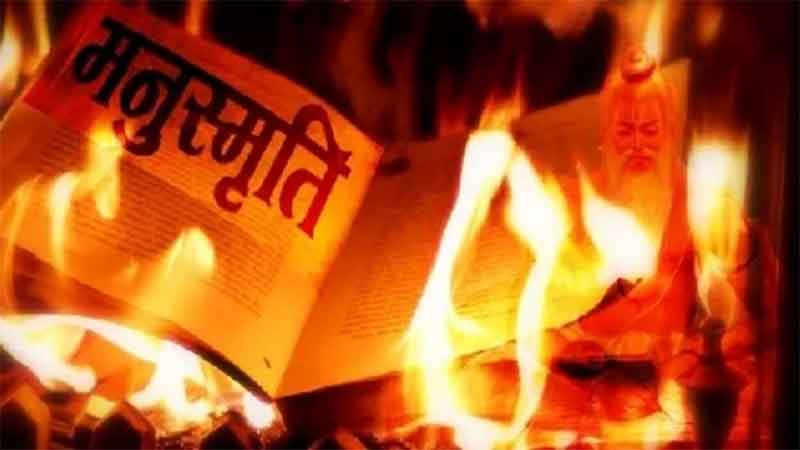
Dr. B.R. Ambedkar, a pioneering leader in India’s Dalit (formerly known as Untouchable) rights movement and the architect of the Indian Constitution, publicly burned copies of the “Manusmriti” (also known as the “Laws of Manu”) on December 25, 1927, during a massive gathering in Mahad, Maharashtra. This event, now commemorated annually as “Manusmriti Dahan Diwas” (Manusmriti Burning Day) or Equality Day, was a pivotal act of symbolic protest rooted in the Mahad Satyagraha—a non-violent campaign demanding Dalits’ equal access to public resources, particularly the Chavdar Tank (a water reservoir historically barred to them by upper-caste Hindus). in Annihilate Caste The “Manusmriti”, an ancient Hindu legal text attributed to the sage Manu (circa 200 BCE–200 CE), outlines the “Chaturvarna” system—a hierarchical social order dividing society into four castes (Brahmins, Kshatriyas, Vaishyas, and Shudras), with Dalits positioned outside as “untouchables.” Ambedkar viewed it as the scriptural foundation of caste-based discrimination, untouchability, and gender inequality, justifying practices like barring lower castes from temples, water sources, and inter-caste marriages. He argued that as long as Hindus revered such texts, genuine reform was impossible, stating in his speech at the event: “It would be futile to expect that any person who revered the Manusmriti could be genuinely interested in the welfare of the Untouchables.” His broader aim was not merely to end untouchability but to uproot the entire “Chaturvarna” system at its ideological core, ridiculing orthodox defenders by saying, “They have not read Manusmriti… we will never accept it.” Ambedkar likened the burning to revolutionary acts like Gandhi’s bonfires of foreign cloth during the independence struggle, emphasizing it as a necessary rejection of oppressive traditions: “If this has become ancient, then why do you have any objection to someone burning it?” He even issued a stark warning: “If unfortunately, Brahminism does not end by burning Manu Smriti, then we will have to either burn the people suffering from Brahmanism or leave Hinduism.” The ceremony itself was defiant: After upper-caste authorities blocked access to venues and supplies, Dalit organizers secured alternative land from a Muslim supporter. Ambedkar arrived by boat to evade transport boycotts, and participants—over 3,000 strong—took oaths affirming equality before the text was ritually torn and burned page by page on an open altar inscribed with slogans like “Bury Brahminism” and “Untouchability should be destroyed.” This act was not an attack on all Hindu scriptures (Ambedkar spared texts like the Vedas or Upanishads, which he saw as less prescriptive of caste) but a targeted strike against what he called the “casteist rulebook” enabling systemic oppression. Impact on Dalits The burning was a transformative moment for Dalits, serving as a clarion call for self-assertion and resistance against centuries of dehumanization. It empowered marginalized communities by rejecting the religious legitimacy of their subjugation, framing equality as a non-negotiable right rather than a charitable concession. For the first time, Dalits actively destroyed a sacred symbol of their oppression, fostering a sense of agency and unity—evident in the event’s scale and the subsequent resolutions passed, which declared Dalits’ equal claim to public spaces and inter-caste solidarity. This act catalysed broader Dalit mobilization, influencing movements like the temple entry campaigns and Ambedkar’s eventual mass conversion to Buddhism in 1956, where nearly 500,000 Dalits renounced Hinduism to escape caste dogma. It laid ideological groundwork for affirmative action policies (reservations) in the Indian Constitution and inspired ongoing Dalit literature, activism, and cultural assertions—such as annual “Dahan Diwas” celebrations that keep the fight against untouchability alive. Today, it remains a beacon for Dalit rights, highlighting persistent issues like caste violence and discrimination, and reinforcing the community’s resolve: as one observer noted, “People still face caste-based discrimination in every aspect of their life.” Impact on Hindu Society For Hindu society, the burning was profoundly disruptive, exposing fractures in the orthodox framework and igniting fierce backlash while sowing seeds of reform. Upper-caste Hindus, particularly Brahminical elites, decried it as an assault on tradition, with media outlets branding Ambedkar “Bhim Asur” (demon Bhim) and intensifying efforts to suppress Dalit gatherings. This polarization deepened communal tensions in Mahad and beyond, underscoring the chasm between reformist and conservative factions. Yet, it compelled introspection and debate on caste’s scriptural roots, challenging the notion that Hinduism was inherently egalitarian and pressuring leaders like Gandhi to engage more directly with untouchability (though Ambedkar critiqued Gandhi’s approach as paternalistic). The event contributed to a wave of social reform, influencing Hindu thinkers to question “Manusmriti’s” authority and paving the way for legal changes like the abolition of untouchability in 1950. Its legacy endures in contemporary Hindu society, where it fuels discussions on caste privilege, gender roles (as “Manusmriti” also subordinates women), and secularism—warning against “cultural fascism” from groups like the RSS that revive hierarchical ideals. Ultimately, Ambedkar’s act reshaped Hindu discourse, making caste critique a mainstream (if contentious) issue and advancing India’s trajectory toward constitutional equality. S.R. Darapuri I.P.S.(Retd), National President, All India Peoples Front Courtesy : Counter Currents Note: This news is originally published on https:/countercurrents.org/bha and is used purely for non-profit/non-commercial purposes, especially human rights
Yogi flags ‘vote bank politics’ over murder of Dalit in B’desh

Lucknow: Chief Minister Yogi Adityanath on Wednesday attacked the opposition for “shedding tears” over victims of the war in Gaza but not uttering a word for a Dalit youth who was murdered in Bangladesh recently. “This is because of your vote bank politics and communal appeasement,” he said. “A Hindu would not have been murdered and set on fire if Bangladesh did not become Pakistan,” he said, asking the opposition to put forward a censure motion against the Bangladesh incident. Yogi said he hoped the opposition would not protest when illegal migrants from Bangladesh and Rohingya are expelled from the country. He accused the opposition of getting illegal migrants registered as voters. “You have even committed the sin of providing them with Aadhar cards as well,” he said. “Everything is going to be screened soon, and action will be taken accordingly,” Yogi said. Responding to the CM, leader of opposition, Mata Prasad Pandey, said that his party was ready to pass a censure motion on the Bangladesh incident. He also countered the CM, questioning him on how he knew if the youth killed was a Dalit. Pandey categorically pointed out that it was the Indian govt which has given protection to exiled former Bangladesh PM Sheikh Hasina. Courtesy : TOI Note: This news is originally published on https:/timesofindia.com/bha and is used purely for non-profit/non-commercial purposes, especially human rights
Three get life term for murdering Thoothukudi Dalit farmer in 2015

The murder was allegedly committed after the victim refused to withdraw a complaint he had lodged against them under the SC/ST (Prevention of Atrocities) Act in 2013. THOOTHUKUDI: The Thoothukudi Protection of Civil Rights (PCR) Court on Wednesday sentenced three accused to triple life imprisonment, one to double life imprisonment, and another to rigorous imprisonment in connection with the murder of a Scheduled Caste farmer in 2015. According to sources, six persons — K Esakkimuthu (36), C Thalavai (45), M Sivaramalingam (34), P Duraimuthu, V Kasi (42) and E Kannan (45), all hailing from Vellur village — were accused of brutally murdering K Arumugaraja (42), a farmer, at Srivaikuntam on April 2, 2015. The murder was allegedly committed after the victim refused to withdraw a complaint he had lodged against them under the SC/ST (Prevention of Atrocities) Act in 2013. The SC/ST Act case was pending before the Srivaikuntam court, in which all the five accused, along with Kannan, were named. During the course of the trial, one of the accused, P Duraimuthu, died. Delivering the verdict, Sessions Judge P V Vasheeth Kumar of the Special Court for trial of cases under the SC/ST Act held the accused guilty of murder. While pronouncing the judgment, the court sentenced Esakkimuthu, Thalavai and Sivaramalingam to triple life imprisonment and imposed a fine of Rs 13,000 each. The court awarded double life imprisonment to Kasi along with a fine of Rs 7,000, and sentenced Kannan to five years of rigorous imprisonment with a fine of Rs 12,000. It may be recalled that prime accused Sivaramalingam, who was also wanted in another case, had attempted to slip away from police watch by sneaking into the Thoothukudi Bar Association premises and a section of advocates sheielded him from police arrest. However, the police contingent led by Assistant Superintendent of Police C Madhan Kumar forced him to surrender before the judicial magistrate. Courtesy : TNIE Note: This news is originally published on https:/thenewindianexpress.com/bha and is used purely for non-profit/non-commercial purposes, especially human rights
Haryana: Dalit minor confined, tortured over suspicion of theft in Palwal, 10 booked
While one person accused in the matter had been arrested so far, three prime accused are absconding. The police in Haryana’s Palwal have filed a case against 10 members of a family for allegedly torturing and wrongfully confining a 12-year-old Dalit boy for several hours after accusing him of theft, the Hindustan Times reported. The incident took place on the night of December 10. While one person accused in the matter has been arrested so far, three prime accused are absconding, the newspaper reported. The members of the family have been charged with voluntarily causing hurt and wrongful confinement. They were also booked under provisions of the Scheduled Caste and Scheduled Tribe Prevention of Atrocities Act and the Juvenile Justice Care and Protection of Children Act. The police was quoted as saying that the family allegedly tied the boy’s limbs and repeatedly gave him electric shocks. The minor told the investigators that he had also been sexually abused by the family. He is being treated in hospital for burn injuries. The boy carries lights during wedding processions to financially support his family. On December 10, he was returning to Banchari village from Hodal town near Palwal with two other children when a car with persons who were allegedly drunk began chasing them at around 11.30 pm. The boy told the police that while trying to escape he jumped into the premises of a house and the other children ran towards the village. The family living in the house caught the minor, suspecting he was a thief, and assaulted him, the newspaper quoted the police as saying. They called the police hours later. The three prime suspects who are absconding filed anticipatory bail petitions on Monday. A hearing in the sessions court on Wednesday was adjourned after a medical report on the injuries sustained by the minor was presented, the Hindustan Times reported. The matter will be heard next on January 8. Courtesy : Scroll Note: This news is originally published on https:/scroll.in/bha and is used purely for non-profit/non-commercial purposes, especially human rights
Mayawati expresses concern over ‘anti-India and anti-Hindu incidents’ in Bangladesh
Referring to the recent killing of a Dalit youth in Bangladesh, the BSP chief said, “The public anger that has erupted on the streets across India over the brutal killing of a Dalit youth there is natural.” BSP president and former Uttar Pradesh chief minister Mayawati on Thursday expressed concern over “anti-India and anti-Hindu incidents” in Bangladesh and urged the Centre to take more effective steps. In a series of posts on her official X handle, Mayawati said, “In recent days, the manner in which anti-India and anti-Hindu incidents are taking place in Bangladesh makes it necessary for the central government to act with greater alertness and take more effective steps in line with people’s expectations.” She said it is well known that Hindu minorities in neighbouring Bangladesh are being subjected to communal violence and persecution. “The way Hindu minorities in Bangladesh are being harassed by targeting their life, property and religion has created a wave of concern not only in our country but also elsewhere,” she said. Referring to the recent killing of a Dalit youth in Bangladesh, the BSP chief said, “The public anger that has erupted on the streets across India over the brutal killing of a Dalit youth there is natural. The Government of India is expected to immediately take proper cognisance of this and play a more active role at every level, which appears to be the need of the hour.” Mayawati alleged that while atrocities, oppression and discrimination against Dalits and tribals had continued in India for centuries, the situation in Bangladesh is no less serious. “Although caste-based hatred, oppression and exploitation against Dalits and tribals continue in our country, the atrocities being committed in neighbouring Bangladesh are extremely painful and a matter of grave concern,” she said. She added that concerns in India over the condition of minorities in neighbouring countries remained constant. She expressed confidence that public support would be with the government on the issue and urged it to pay due attention. Courtesy : Money Control Note: This news is originally published on https:/moneycontrol.com/bha and is used purely for non-profit/non-commercial purposes, especially human rights
Amma’s Pride: Trans Filmmaker Shiva Krish’s Doc on Tamil Nadu’s First Trans Marriage Eyes Oscars
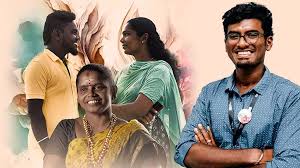
A Tamil documentary chronicling a mother’s support for her trans daughter’s pioneering marriage in Tamil Nadu has qualified as India’s sole trans-led Oscar contender. “Amma’s Pride”, a poignant 28-minute Tamil documentary short directed by transgender filmmaker Shiva Krish, has qualified as India’s only trans-led entry in the Documentary Short Subject category for the 98th Academy Awards. The film chronicles mother Valli’s unwavering support for her transgender daughter Srija, who pursued love and became part of Tamil Nadu’s first legally registered transgender marriage to Arun Kumar, facing societal stigma, school expulsions, and legal hurdles along the way. It secured eligibility after screening at the Academy-qualifying Woodland Hills event on 10 December 2025 in Los Angeles, following festival triumphs like Best Short Documentary at IDSFFK Kerala; Shiva Krish stresses that true allyship begins at home, Valli calls for parental acceptance of trans children, and the film has garnered over 60 global screenings plus 275,000 online views through campaigns like “Path to Pride”, marking a milestone for queer Indian cinema amid no official Academy statements yet. Valli’s Transformative Journey of Love and Advocacy At the heart of “Amma’s Pride” lies Valli’s profound evolution from initial shock upon learning of Srija’s transgender identity to becoming her fiercest protector and advocate. The documentary intimately documents their shared struggles over five years, including Srija’s expulsion from school due to discrimination, relentless community backlash, and the couple’s fight for legal marriage recognition in conservative Tamil Nadu society. Valli’s powerful on-camera reflection captures this shift: “Parents should support their trans children from the start. I will have the greatest satisfaction when loving and accepting them becomes the norm across families.” This raw testimony, woven with home videos and candid interviews, humanises the narrative, revealing not just pain but resilience and joy in Srija’s relationship with Arun. Shiva Krish, drawing from her own experiences as a trans woman and filmmaker, incorporates vital statistics to underscore the stakes: India’s 2011 census recorded over 4.8 lakh transgender individuals, yet trans-led stories from the country remain exceedingly rare, often overshadowed by mainstream narratives. The film’s unfiltered portrayal blending tears, laughter, and triumphs transforms statistics into lived realities, spotlighting how one family’s bond challenges deep-rooted prejudices and inspires viewers to reconsider acceptance. Trailblazing Path from Festivals to Oscar Spotlight “Amma’s Pride” embarked on its remarkable journey with a premiere in late 2024, quickly amassing international acclaim through over 60 screenings worldwide, from LGBTQIA+ film festivals and law schools to even remote locations like Antarctica via specialised groups. Key accolades include the Best Short Documentary at the International Documentary and Short Film Festival of Kerala (IDSFFK), the Jen Lynn Award at Hobnobben Festival, and the Sher Vancouver Award, propelling it toward Oscar contention. Qualification came through rigorous Academy standards, achieved via a theatrical run at the Woodland Hills venue a feat for any independent short, let alone a trans-led Indian production funded partly through crowdfunding despite early financial barriers. Post-qualification buzz has surged on social media, with Instagram campaigns like “For Your Consideration” and panels in New Delhi alongside organisations such as the Naz Foundation amplifying discussions on trans rights, marriage equality, and family dynamics. This entry builds on Shiva Krish’s prior work in social-issue storytelling, including features on marginalised communities, and positions India alongside global south voices gaining traction at the Oscars. It also follows in the footsteps of other Indian hopefuls in recent years, yet stands uniquely as a beacon for trans narratives, reshaping perceptions without diluting its intimate, community-rooted focus and reaching 275,000 online viewers through the “Path to Pride” initiative. Chhavi Chandani Courtesy : TLI Note: This news is originally published on https:/thelogicalindian.com/bha and is used purely for non-profit/non-commercial purposes, especially human rights
India’s First Transgender Football League Kicks Off in Kolkata, Empowering 200+ Players
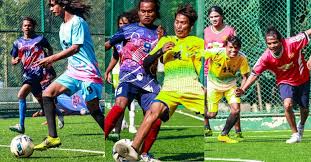
Kolkata’s groundbreaking eight-day tournament unites 16 teams of over 200 transgender athletes, fostering inclusion through football amid historic rights advocacy. India’s first Transgender Football League launched in Kolkata on December 20, drawing 200+ players from 16 teams in an eight-day tournament celebrating inclusion, skill, and visibility amid growing calls for transgender rights in sports. India’s inaugural Transgender Football League launched on December 20, 2025, in Kolkata, featuring 16 teams and over 200 transgender players competing for the Transgender Cup. Organised by the West Bengal Transgender Persons Welfare Board in partnership with the All India Football Federation (AIFF), the eight-day tournament at Vivekananda Yuba Bharati Krirangan celebrates inclusion and visibility. Players expressed unprecedented empowerment, with officials hailing it as a milestone for transgender rights; no major incidents reported as matches progress smoothly into semifinals. A Vibrant Launch with Record Participation The tournament erupted into life with colourful opening ceremonies at Kolkata’s iconic Vivekananda Yuba Bharati Krirangan, a 120,000-capacity stadium usually reserved for international matches. Over 200 transgender athletes from across India-spanning ages 18 to 45-fielded 16 teams, including powerhouses like the Kolkata Trans Warriors, Chennai Rainbow Strikers, Mumbai Pride FC, and Delhi United Queens. Matches unfold daily from 9am to 5pm, blending high-energy football with cultural performances featuring folk dances and rainbow flags. Vital statistics underscore the event’s scale: more than 5,000 spectators attended the opener, with live streams on AIFF’s YouTube channel reaching 50,000 views in the first 24 hours. Player Divya Maligi, a 28-year-old striker from Bengaluru who once faced rejection from local clubs, beamed, “We’ve never felt more seen-football gives us a platform to dream beyond discrimination. For the first time, we’re not sidelined; we’re stars.” Tournament director Rajat Mitra, a former AIFF official, elaborated, “This is about skill, not stereotypes. These athletes train rigorously, often juggling day jobs as tailors or performers. They’re role models proving transgender talent thrives when given a chance.” West Bengal Sports Minister Aroop Biswas officiated the kick-off, stating, “This league aligns with our vision of sports for all, fostering unity in diversity.” Empowerment Through Grassroots Training Beyond the pitches, the league humanises its participants through dedicated support systems. Since 2023, the West Bengal Transgender Persons Welfare Board has run free training camps in Kolkata, partnering with local coaches to build skills in dribbling, tactics, and fitness. Many players, like Chennai’s captain Priya Singh, credit these sessions for transforming lives: “I was homeless two years ago; now I lead my team. This isn’t just a game-it’s survival and hope.” The event offers cash prizes totalling ₹5 lakh, plus scholarships for top scorers to pursue coaching certifications, ensuring long-term impact. Health and welfare tents provide free medical check-ups, counselling, and hormone therapy consultations, addressing common challenges like access to gender-affirming care. No injuries or disruptions marred the first four days, with semifinals slated for December 26, building anticipation for the December 28 final. From Legal Milestones to Historic First This league emerges from decades of advocacy amid systemic barriers. The landmark 2014 NALSA judgment by the Supreme Court recognised transgender persons as a “third gender” with equal rights, yet sports bodies often lagged, citing eligibility concerns. Kerala pioneered with a transgender cricket league in 2023, but football-a national obsession-lacked a national platform until now. The 2019 Transgender Persons (Protection of Rights) Act further mandated equal opportunities, spurring state initiatives. Grassroots efforts intensified post-pandemic, with transgender welfare boards in states like Maharashtra and Tamil Nadu hosting trials that fed into this tournament. Organisers scouted talent via social media drives on Instagram and WhatsApp groups, drawing participants from remote areas like Manipur and Odisha. Globally, it echoes events like the U.S. Trans Football League, but India’s version stands out for government backing, signalling policy shifts under the National Sports Policy 2024 emphasising inclusivity. Syed Muskan Shafiq Courtesy : TLI Note: This news is originally published on https:/thelogicalindian.com/bha and is used purely for non-profit/non-commercial purposes, especially human rights
Congress leader Rahul Gandhi, along with Sonia and Priyanka, among 6 leaders issued notice by court, accused of sedition!
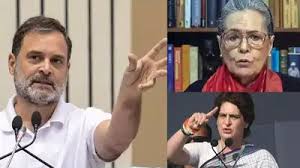
Rahul Gandhi MP MLA Court Notice: The Lucknow MP-MLA court has issued notices to 6 Congress leaders. Rahul Gandhi, Priyanka Gandhi, Sonia Gandhi, and others will have to respond by January 5th. They have been accused of making anti-national statements. Rahul Gandhi, Sonia and Priyanka issued notice by court Abhay Singh Rathore, Lucknow: Congress MP Rahul Gandhi from Raebareli constituency in Uttar Pradesh, Congress leaders Sonia Gandhi, Priyanka Gandhi Vadra, and six other senior Congress leaders have been issued notices by the court. The Lucknow MP-MLA court issued the notices to the Congress leaders. The court has set January 5th as the date for all the accused to respond to the notice. Advocate Napendra Pandey had filed a complaint in the Lucknow MP-MLA court on September 9th. The plaintiff’s lawyer, Kunwar Pratap Srivastava, told the court that Rahul Gandhi, in his statement at the inauguration of the Congress headquarters, had said that he was fighting against the BJP, RSS, and the Indian nation. It should be noted that this entire matter is related to the alleged speech given during the inauguration of the newly constructed Congress headquarters in Delhi. The hearing in this case took place on Wednesday in the court of Special ACJM (MP-MLA) Judge Alok Verma. Anti-national and seditious statements After the hearing, the court issued notices against Congress MP Rahul Gandhi, Congress President Mallikarjun Kharge, Rajya Sabha MP Sonia Gandhi, KC Venugopal, MP Priyanka Gandhi Vadra, and Jairam Ramesh. The plaintiff alleges that this statement falls under the category of anti-national and seditious statements. It was also stated that other senior Congress leaders supported Rahul Gandhi’s statement, which further increases its seriousness. The complaint also alleges that Rahul Gandhi is misleading the public by making false statements against responsible individuals holding constitutional positions and is trying to spread animosity in society. According to the plaintiff, such statements can lead the country towards a situation like a civil war, which is an anti-national act. After hearing all sides, the court has initially deemed the case admissible and issued notices to the accused Congress leaders, asking them to present their arguments on January 5. Edited by: Dhirendra Singh About the Author Dhirendra Singh is a Senior Journalist at Navbharat Times Online. Dhirendra Singh writes news on politics, crime, governance, and other issues. He also has experience in ground reporting in Uttar Pradesh, Delhi, and Jammu and Kashmir. He has about 11 years of experience in the field of journalism. He started his career in Delhi, where he covered several beats, including crime reporting. He has gained reporting experience at Hindustan Samachar News Agency Delhi, Navodaya Times Delhi, Rajasthan Patrika Uttar Pradesh, Amar Ujala Jammu and Kashmir, and Dainik Jagran Lucknow Uttar Pradesh. During his reporting in Jammu and Kashmir, he also covered the Pulwama terrorist attack and the curfew. He also has experience reporting during assembly elections. Currently, for about 4 years, he has been responsible for writing news on various beats such as politics, crime, soft stories, and other issues for Navbharat Times Digital in Uttar Pradesh and Uttarakhand. He studied journalism at the prestigious Delhi University South Campus (2013-14 batch). Courtesy: Hindi News
Ashwini Vaishnaw: Rahul Gandhi’s praise for Karnataka jobs affirms Make in India success
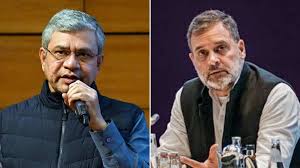
NEW DELHI: Rahul Gandhi’s praise for “transformative” job creation in Karnataka led I&B minister Ashwini Vaishnaw Wednesday to assert that it was an acknowledgement of the success of PM Narendra Modi’s ‘Make in India’ programme. He said on X, “Thanks Rahul Gandhi for acknowledging the success of PM Modi’s ‘Make in India’ programme. As you have noted, we are becoming a producer economy as we implement our PM’s vision.” In a recent social media post, the LoP in Lok Sabha had cited a news report to highlight the hiring of 30,000 staff in 8-9 months, the fastest factor ramp-up seen in India so far, by Foxconn in the Congress-ruled Karnataka. Rahul had said, “It is transformative job creation. What makes it even more powerful is that the unit is largely women-led, with around 80% women, most aged 19-24, and for many, this is their first job. Karnataka is setting an example by creating an ecosystem where manufacturing can grow at this scale and speed. This is India we must build: jobs with dignity, and opportunities for all.” Officials pointed out that it was during Covid that the Modi government, tapping into the widespread recognition to diversify supply chains, nudged Apple’s vendors, including Foxconn, to shift significant parts of their manufacturing operations from China. The nudge often resembled a covert operation as Beijing sought to block reshoring. At the time, it was a BJP government in Karnataka and Centre’s production linked incentives played a major role as it provided sops to mobile manufacturers. The government followed it up with incentives for electronic components. Since then Foxconn has bolstered its operations in the country with a large presence in Tamil Nadu and is also looking at facilities in UP. Courtesy : TOI Note: This news is originally published on https:/timesofindia.com/bha and is used purely for non-profit/non-commercial purposes, especially human rights