
Cal HC orders SFIO to investigate Rose Valley assets attached by ED
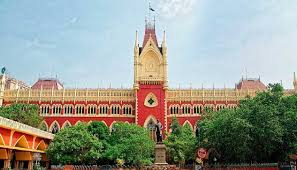
Kolkata: Calcutta High Court on Tuesday directed Centre to order the Serious Fraud Investigation Office (SFIO) to investigate Rose Valley assets worth Rs 1,171 crore attached by ED across the country, and submit a comprehensive report within a month. The division bench of justices Rajarshi Bharadwaj and Uday Kumar noted that Rose Valley-linked cases had been pending with Calcutta HC since 2016. “The attached assets constitute public money in every sense, held in trust for restitution to victims,” the bench stated. Earlier, after the bench had asked the SFIO to conduct an audit following allegations of bias against the asset disposal committee, the statutory body had raised objections before the HC stating “jurisdictional” trouble over conducting forensic audit of the committee, since it cannot be called an “office”. The division bench clarified, “No direction has been or is being issued to SFIO to conduct any audit or assessment of the receipt and payments of Asset Disposal Committee per se… Rather, the forensic audit mandate pertains squarely to the attached assets of the Rose Valley Group of Companies, which indisputably qualify as “companies” incorporated under the relevant company laws. These assets, valued between Rs 20,000 to 30,000 crore and presently under attachment by the ED, form the corpus central to the multi-crore chit fund scam that has defrauded thousands of innocent depositors.” Sebi, CBI, ED, ADC, Rose Valley representatives, and depositors, were directed to extend unconditional cooperation by furnishing all requisite documents, electronic data, physical access, and clarifications within seven days of SFIO’s requisition. Centre was directed to take a decision after perusing the report as to whether SFIO needed to proceed with forensic auditing. The order comes a day after the Supreme Court on Monday rejected the ED’s petition seeking a stay on HC’s forensic audit order. Courtesy : TOI Note: This news is originally published on https:/timesofindia.com/bha and is used purely for non-profit/non-commercial purposes, especially human rights
Hatred fuelled on basis of caste and religion, claims Congress after Dalit woman’s killing in U.P.

The party claims the State tops in crimes against SCs, flags delay in releasing crime data The Congress on Monday criticised the Yogi Adityanath government in Uttar Pradesh over the alleged killing of a Dalit woman in Meerut, accusing the Bharatiya Janata Party of fostering hatred on the basis of caste and religion and selective use of State power. A Dalit woman was allegedly killed and her 20-year-old daughter abducted in a village in Meerut district last Thursday. The police said a 22-year-old man has been arrested in connection with the crime. The incident led to tension in the area, following which additional police forces were deployed. The abducted daughter was later traced to neighbouring Saharanpur district on Saturday, officials said. Addressing a press conference in the national capital, Congress Scheduled Caste department chairman Rajendra Pal Gautam alleged that caste-based animosity and religion-based hostility was being encouraged under BJP rule. “Hatred is being fuelled in the country on the basis of caste and religion, and this is happening under the patronage of BJP governments,” Mr. Gautam alleged. The Congress leader accused the Uttar Pradesh administration of targeting Dalits, tribals and backward classes through what he described as the selective use of coercive measures. Referring to the State government’s practice of demolishing properties of alleged offenders, he said such action appeared to be guided by caste and religious considerations. “When a Dalit is oppressed in the State, the bulldozer does not move,” he alleged. Recounting the Meerut incident, the Congress leader said the woman was killed when she attempted to resist the abduction of her daughter. He also claimed that Congress party representatives were stopped from meeting the victim’s family. “If the police showed the same diligence in preventing crime and ensuring punishment for the guilty, such incidents would not recur,” he said. Mr. Gautam further alleged that if the accused belonged to a Dalit, tribal or backward community, action such as demolition would have followed swiftly. “The law should not operate on the basis of caste or religion. If it does, the country will weaken,” he said. ‘No data since 2022’ He also criticised the government for not releasing data on atrocities committed against Dalits after 2022, calling it a failure of governance. Claiming that Uttar Pradesh accounted for the highest number of cases of atrocities against Dalits in the past five years, he said that BJP-ruled States together contributed a majority of such cases nationally. Questioning restrictions on protests, Mr. Gautam said the authorities had earlier denied permission for demonstrations citing procedural requirements. “If a rape or killing occurs, do we have to wait 10 days to demand justice?” he asked. The Uttar Pradesh government has not yet responded to the Congress’s allegations. The Hindu Bureau Courtesy : The Hindu Note: This news is originally published on https:/thehindu.com/bha and is used purely for non-profit/non-commercial purposes, especially human rights
Dalit atrocities rising in BJP-governed states: Congress
NEW DELHI: In the wake of the abduction of a Dalit girl and the murder of her mother in Uttar Pradesh’s Meerut, Congress on Monday alleged that Dalit atrocities are rising in BJP-governed states, but the Centre has not released the anti-Scheduled Castes (SC) crime data for the last four years, while the Union home ministry is not allowing protests against atrocities on the bizarre grounds that a 10-day notice is required for permission. Former Delhi minister and Congress SC department chairman Rajendra Pal Gautam said National Crime Records Bureau (NCRB) data on Dalit atrocities was last released in 2022 and has not since been made public. He said between 2019 and 2022, crimes against SCs registered a massive growth of 13.1%, with UP topping the charts. He said BJP-governed UP, MP, Rajasthan, Maharashtra, and Bihar “account for 76% of total atrocities against Dalits.” Gautam alleged Delhi Police denied permission to Congress to hold a dharna against the Meerut abduction-murder of Dalit women on Monday, saying a 10-day notice should be given to the administration. “If a rape or a murder takes place, and there is urgency to highlight it, should we wait for 10 days to protest? What kind of norm is this?” he asked. The former minister said the BJP govt is taking away the constitutional right to protest and seek justice. He claimed that SC atrocities are rising because the government is not allowing protests to demand action from a reluctant administration. He said the number of unregistered cases is very high, arguing a total of 57,582 cases were registered nationally in 2022, while a central government-launched helpline call for Dalit atrocities received over 6.5 lakh calls in 2021—in which only 825 cases were registered against 3.33 lakh calls on the helpline in UP, and 718 cases were lodged out of 58,000 calls in Bihar. The Congress leader said UP has created “bulldozer justice,” but the bulldozer is rusted when the perpetrators of atrocity are upper castes, while it razes the houses within hours when the culprits are Dalit, minority, or backward. Courtesy : TOI Note: This news is originally published on https:/timesofindia.com/bha and is used purely for non-profit/non-commercial purposes, especially human rights
Power tussle intensifies in state with a new push for ‘Dalit CM’
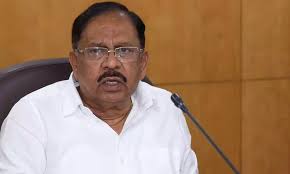
Bengaluru: Speculationis growing within political circles that the leadership tussle between Chief Minister Siddaramaiah and Deputy Chief Minister D.K. Shivakumar is unlikely to ease unless Lok Sabha Leader of the Opposition Rahul Gandhi intervenes. Amid this backdrop, a section of Dalit leaders and organisations are stepping up efforts to press for a Dalit chief minister in Karnataka, adding a new dimension to the ongoing power struggle within the ruling Congress. Sources said plans are underway to organise a major Dalit rally in the Old Mysuru region, demanding that the community be given the top post. Several Dalit leaders are reportedly exerting pressure on Home Minister Dr G. Parameshwara, one of the most prominent Dalit faces in the state, to grant permission and lend support to the proposed rally. A group led by Venkataramanaswamy, popularly known as ‘Papu’ of Chamarajanagar, met Dr Parameshwara in Tumakuru on Sunday and sought a date for the rally. However, Parameshwara is said to have advised the delegation to wait for some more time, indicating caution amid the sensitive political situation within the party. Sources close to the developments said Parameshwara, who is considered part of the Siddaramaiah camp, is reluctant to openly back a Dalit rally at this juncture. As a long-time loyalist of the Congress and a close associate of AICC president Mallikarjun Kharge, Parameshwara is reportedly unwilling to take a stand that could be perceived as going against the party’s central leadership. Though he recently met Kharge in Delhi, Parameshwara described it as a courtesy call, and details of their discussion have not been disclosed. Meanwhile, Parameshwara’s supporters staged a protest near the Congress headquarters in Delhi, demanding a “Dalit CM” for Karnataka. Adding to the pressure, DSS leader Mavalli Shankar said that if Siddaramaiah were to step down, Parameshwara should be appointed chief minister, citing his loyalty and long service to the party. He announced that a Dalit rally would be organised soon to strengthen the demand. Mavalli Shankar also argued that despite decades since Independence, many senior Dalit leaders have not been adequately represented in top constitutional and executive positions. “This time, that injustice should not be repeated,” he said. At the same time, pro-Siddaramaiah AHINDA organisations have begun preparations to hold rallies across the state to support the chief minister continuing in office. Sources said rallies are being planned in Mysuru and Hubballi, with another major event likely in central Karnataka, possibly in Haveri or Davanagere. With competing rallies being planned by different social and political groups, the Congress leadership in Karnataka appears to be entering a critical phase, as internal dynamics intensify and pressure mounts on the high command to intervene and restore balance. Courtesy : The Hans India Note: This news is originally published on https:/thehansindia.com/bha and is used purely for non-profit/non-commercial purposes, especially human rights
Swami Vivekananda’s views on the Hindu caste system and its Ambedkarite / Dalit–Bahujan Critique
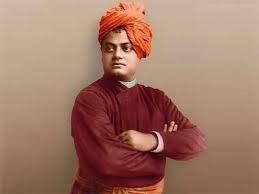
Swami Vivekananda’s views on the Hindu caste system were complex, internally contradictory, and evolved over time. He criticised caste-based discrimination and untouchability, yet defended the theoretical framework of Varna and stopped short of advocating the annihilation of caste as later demanded by Dr. B.R. Ambedkar. in Annihilate Caste By SR Darapuri Below is a clear, structured, and academically balanced account of his position. Vivekananda’s Basic Position: Varna vs. Caste Swami Vivekananda consistently distinguished between: Varna – which he described as a functional division of labour and Jāti (caste by birth) – which he admitted had become degenerate and oppressive. His Claim was that the original Varna system was based on guna (qualities) and karma (work), not on birth. He believed that Varna was socially useful in ancient times and the problem was hereditary fixation and ritual hierarchy, not Varna itself. Critique of Caste-Based Discrimination Vivekananda strongly condemned Untouchability, Social exclusion, denial of education to Shudras and Brahminical arrogance and priestly monopoly. He called untouchability a “great national sin”, he blamed upper-caste Hindus for India’s weakness and decline and He insisted Shudras must be educated and uplifted. He said: “So long as the millions live like brutes, no number of politics will save this country.” Defence of Varna Order Despite his social criticism, Vivekananda did not reject caste altogether. He argued that society naturally produces different types of people, Varṇa represented psychological and occupational diversity and complete social equality was neither possible nor desirable. He even said that all societies have caste-like divisions and modern class systems are merely new forms of caste. This defence places him closer to reformist Hinduism than to radical social democracy. His View on Shudras and “Lower Castes” The progressive aspects of Swami Vivekanand are: He declared Shudras were oppressed historically, asserted that education and power must reach them and he predicted the rise of Shudras as inevitable. His prophecy was that “The next Buddha will be born among the Shudras.” He also said that the next raj will be of Shudras. His limitations were that he did not call for destruction of the caste system, he saw uplift as moral–spiritual, not structural–legal and he never demanded political power or constitutional safeguards for Dalits. Vivekananda vs. Ambedkar (Brief Contrast) Vivekananda criticised Birth-based caste as degenerated Varna but Dr. Ambedkar Saw it as a structural system of graded inequality. Vivekananda defended the Varna system whereas Dr. Ambedkar completely rejected it. Vivekananda treated Untouchability as a moral sin whereas Dr. Ambedkar saw it as a crime requiring law. Vivekananda saw spiritual reform as its solution whereas Dr. Ambedkar stood for Annihilation of caste and law. Vivekanand said that Hindu scriptures required to be reinterpreted whereas Dr. Ambedkar rejected them as creators of the caste system. Ambedkar famously argued that reformers like Vivekananda underestimated the structural violence of caste. Why Vivekananda Did Not Reject Caste Entirely Three key reasons were: Vedantic framework as he believed Hindu philosophy could be morally purified without social rupture. His fear of social chaos as he saw caste abolition as potentially destabilising Indian society. His elite reform perspective which made his approach top-down and moral, not subaltern or political. Scholarly Assessment Most historians agree that Vivekananda was progressive for his time but not radical enough to challenge caste as an institution. His ideas helped Hindu reform, not Dalit emancipation From a Dalit–Bahujan or Ambedkarite perspective, his approach is seen as: Ethically sympathetic but structurally inadequate. Swami Vivekananda: Condemned caste oppression, opposed untouchability and supported Shudra uplift. But he: defended Varna, did not call for annihilation of caste and prioritised spiritual reform over social justice. Thus, he remains a reformist within Hinduism, not a revolutionary against caste. Swami Vivekananda’s Thought from an Ambedkarite and Dalit–Bahujan Perspective (Sympathetic yet Structurally Weak) From an Ambedkarite and Dalit–Bahujan perspective, Swami Vivekananda’s engagement with the question of caste can be described as sympathetic reformism, but one that fails to challenge the foundational structure of the caste system. According to Dr. B.R. Ambedkar, caste is not merely a moral aberration or social evil; rather, it is a system of division of labourers, rooted in the division of labour itself. It is an institutional arrangement that determines and restricts an individual’s social, economic, and intellectual possibilities from birth. Ambedkarite / Dalit–Bahujan Critique (a) The Fundamental Problem of Defending Varna From an Ambedkarite standpoint, Vivekananda’s greatest limitation lies in his theoretical defence of the Varna system. Ambedkar unequivocally argues: “There is no fundamental difference between Varna and caste; Varna is the philosophical justification of caste.” From this perspective, Vivekananda’s claim that Varna was originally based on guna (qualities) and karma (work) is regarded as historically and sociologically untenable. Dalit–Bahujan thinkers argue that any social system which determines occupation, status, and social worth across generations on the basis of birth is inherently oppressive. (b) Moral Critique versus Structural Critique Swami Vivekananda viewed untouchability as a “sin” and a form of “immorality,” whereas Dr. Ambedkar understood it as a form of crime and institutionalized social violence. This marks the fundamental divergence between the two approaches: Vivekananda sought solutions in moral purification, compassion, and spiritual awakening whereas Ambedkar located solutions in law, political power, social rights, and structural transformation. From a Dalit–Bahujan standpoint, moral exhortations without structural change amount to little more than consolation for the oppressed. (c) The Shudra Question and the Question of Power Vivekananda expressed sympathy for the Shudras and spoke of their uplift, but: He did not raise the issue of political representation, he did not demand redistribution of resources and power and he did not propose dismantling Brahmanical monopoly over knowledge For Ambedkar, the liberation of Shudras and Ati-Shudras meant education, organization, and power. Vivekananda’s thought does not reach this level of political and institutional clarity. (d) Scriptures, Religion, and Caste While Vivekananda attempted to portray caste as a “distortion” through reinterpretation of Hindu scriptures, Ambedkar arrived at a far more radical conclusion that “Caste is the soul of Hinduism; unless the religion itself is transformed, caste cannot be
Teacher’s Atrocity on Disabled Dalit Student in Azamgarh: “Whenever I teach Chemistry, you won’t come to class… You belong to the Chamar caste…”

Beaten for being 10 minutes late, stepped on his leg, and threatened to be thrown from the roof. Azamgarh – A highly shameful incident in Azamgarh district of Uttar Pradesh has exposed the cruel side of society where caste discrimination and physical disability are mocked. Indrajeet Kumar, a disabled Dalit student studying at Vivekananda High School and Inter College, was allegedly subjected to extreme cruelty by his chemistry teacher, Yogendra. For being just 10 minutes late, the student was not only beaten but also had his leg stepped on, causing injury, and was threatened with being thrown from the roof. When the frightened student grabbed the teacher’s sweater, the teacher allegedly made casteist remarks, saying, “You are a Chamar, and you grabbed my sweater.” Narrating the incident in a video, the student Indrajeet explained that he comes to school by bicycle and was slightly delayed due to his locomotor disability (difficulty in walking). Indrajeet said in a pained voice, “As soon as I entered, the sir started scolding me. He said that whenever he teaches Chemistry, I won’t be allowed in his class. I went outside, but some boys who were late were allowed inside. After that, 20-25 more students came late, and they were also allowed in.” When Indrajeet insisted on being allowed in, he was beaten. He further revealed that the teacher hit him on the head, face, and stomach, stepped on his leg, and tried to push him off the roof. When the student grabbed his sweater, the teacher angrily said, “You are from the Chamar caste, and you grabbed my sweater.” After this, other boys were also called and beaten. Indrajeet, who struggles to come to school despite his disability, said, “I was late because of my disability, but why did I get punished?” The victimized student filed a complaint with the police, but they allegedly reprimanded him and tried to hush up the matter. The student said, “We went to file a complaint, but nothing happened. They chased us away.” The incident has gone viral on social media, where journalist Piyush Rai shared the video and brought it to public attention. The post has received thousands of views, and people have demanded the teacher’s arrest. Opposition parties and Dalit organizations have termed it a caste-based atrocity and demanded immediate action from the Yogi government. Geetha Sunil Pillai Courtesy: Hindi News
Gender-inclusive Pongal celebration embraces transgender
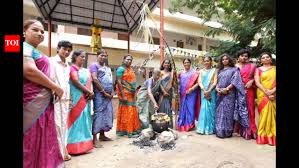
Madurai: To reaffirm gender equality and create safe, inclusive educational spaces, the Madurai Institute of Social Sciences, in association with the Transgender Resource Centre, organized a gender-inclusive Pongal celebration on Monday. More than 450 college students participated in the event, which was seen as a step towards social equality and acceptance for members of the transgender community within academic institutions, said head of social work department M Nishanth. Priya Babu, founder of the Transgender Resource Centre, said cultural celebrations provide an important platform to break social barriers and encourage meaningful interaction between students and members of the transgender community. Two transwomen — Mastani and Shreya — studying second-year economics at Madurai Kamaraj University were invited to the stage. Mastani told TOI, “Usually we would like to celebrate with our families, but it is not possible for all of us. I really enjoyed the celebrations. We played many games like uriyadi, lemon on the spoon. We had dance and music performances. Such celebrations effectively enforce inclusion, in addition to awareness programmes in colleges.” Addressing the gathering, Priya highlighted the crucial role educational institutions play in shaping young minds and supporting individuals during periods of personal transition. “Nearly a 50% of student’s time is spent in educational institutions and the remaining 50% in households. When individuals experience gender-affirming thoughts, creating a safe and supportive space within colleges, it will ensure that they do not drop out of colleges,” she said. More than 25 trans men and trans women participated in the celebrations. “Usually we keep pongal department-wise and end our celebrations. This year it is more meaningful,” Nishanth said. Priya urged other educational institutions across the state to adopt similar initiatives and celebrate festivals in a gender-inclusive manner. Such efforts, she said, would help reduce stigma and ensure that transgender students feel valued and supported in their pursuit of education. Courtesy : TOI Note: This news is originally published on https:/timesofindia.com/bha and is used purely for non-profit/non-commercial purposes, especially human rights
Civic seat for transgenders & health shield for citizens: Revanth
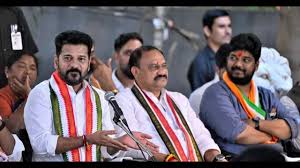
Hyderabad: Chief minister A Revanth Reddy on Monday proposed nominating a transgender person as a co-option member in every municipal corporation in Telangana, beginning with corporations likely to go to polls in Feb, to ensure their direct representation in civic bodies. Addressing a welfare programme at Praja Bhavan for children, senior citizens and specially challenged persons, the CM said the proposal would be placed before the cabinet shortly. Drawing parallels with the existing practice of co-opting minorities in local bodies, he said transgender persons too deserve institutional representation to raise community issues independently. Revanth also announced Rs 2 lakh financial assistance to specially challenged persons who marry within the community, adding that the benefit would be extended even if a non-disabled person marries a specially challenged individual. The CM said the state govt would unveil a comprehensive health policy in the upcoming budget session to ensure access to medical treatment for every citizen. Noting that rising healthcare costs are forcing families to sell assets, he said the Assembly would deliberate in detail on expanding state-supported medical care. Another key announcement was a proposed Bill to cut 10–15% of the salaries of govy employees who neglect their parents, with the deducted amount credited directly to the parents’ accounts after verification by revenue officials. The govt is also setting up senior citizen day-care centres, ‘Pranaam’, across the state. Revanth reiterated strict implementation of reservations for specially challenged persons in jobs and education, citing the appointment of a Paralympics medallist to a Group-II cadre post as an example of the government’s commitment to dignity and self-respect. The programme was attended by deputy CM Bhatti Vikramarka and ministers Adluri Laxman and D Anasuya Seethakka. Reaffirming Telangana’s social justice agenda, Revanth said the Centre was adopting the state’s caste survey model for a nationwide caste census. Courtesy : TOI Note: This news is originally published on https:/timesofindia.com/bha and is used purely for non-profit/non-commercial purposes, especially human rights
‘Rahul Gandhi has no right to be the Leader of the Opposition’, why is Jagadguru Rambhadracharya so furious now? Find out
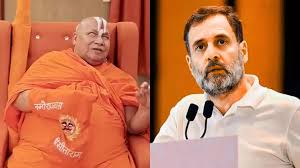
During a discourse in Jaipur, Jagadguru Rambhadracharya launched a scathing attack on Rahul Gandhi, saying that someone who insults India and Indian culture abroad has no right to be the ‘Leader of the Opposition’. This is not the first time; Rambhadracharya has previously questioned Rahul’s lineage and culture. Jagadguru Rambhadracharya targets Rahul Gandhi again Jaipur: Tulsipithadhishwar Jagadguru Swami Rambhadracharya has once again given a strong statement regarding Congress leader Rahul Gandhi. Speaking to news agency ANI, Rambhadracharya said that a person who goes abroad and insults India and Indian culture, does he have the right to become the Leader of the Opposition? His implication was that Rahul Gandhi does not have the right to be the Leader of the Opposition. Rambhadracharya is currently giving discourses in Jaipur. It was during this time, while speaking to the media, that he made the statement about Rahul Gandhi. Remove the word Jagadguru from your name – Congress leader A few days ago, Swami Rambhadracharya had also given a statement regarding Rahul Gandhi. He had said that Rahul Gandhi should be removed from the post of Leader of the Opposition. Congress leaders across the country protested against this statement. Andhra Pradesh Congress Committee President V. Gurunadham criticized Jagadguru Rambhadracharya’s statement, saying that his statement is strange. As a Jagadguru, he is interfering in political issues. In such a situation, you (Rambhadracharya) should remove words like Jagadguru from your name because there is no point in having such words before your name. Swami Rambhadracharya has also given the statement ‘Rahul Gandhi is not a Hindu’ Two years ago, Swami Rambhadracharya had given a highly controversial statement regarding Rahul Gandhi. He had said that his grandmother’s father himself used to say that he was unfortunately a Hindu. Then he married a Parsi. He is the grandson of Feroze Gandhi, therefore he himself is not a Hindu. Angered by the statement made by Rahul Gandhi in Parliament, Swami Rambhadracharya launched a scathing attack on Rahul Gandhi in Chitrakoot. He also said that Rahul Gandhi has gone insane and that he doesn’t know a single word of Indian culture. Authored by: Pulkit Saxena • Contributed by: Ramswaroop Lamrod About the Author Pulkit Saxena is a Digital Content Producer at Navbharat Times Online. Starting his journalism career in Delhi, he now covers Rajasthan politics, crime, current affairs, and offbeat news. He has been working in the media for about 7 years. He holds a first-class postgraduate degree in Journalism from Makhanlal Chaturvedi University and has been associated with NBT (Digital) for the past 3 years. Courtesy: Hindi News
Why did Priyanka Gandhi get a big responsibility in Assam? Learn about the political signals behind this decision

In Assam, the Congress party has given Priyanka Gandhi a major responsibility, appointing her as the chairperson of the party’s screening committee. This decision was not taken suddenly; rather, several political messages are hidden behind it. Priyanka Gandhi given a major responsibility in the Assam elections New Delhi: The Congress party has appointed Priyanka Gandhi Vadra as the chairperson of the screening committee for the Assam Assembly elections. This is a decision that is being seen as having far-reaching political implications both within and outside the party. This is the first time that a member of the Gandhi family has been given the responsibility of selecting candidates for a state assembly election. Fear of defections: The political context of Assam makes this decision even more significant. Chief Minister Himanta Biswa Sarma is not only counted among the influential leaders of the BJP, but he is also a vocal critic of the Gandhi family. In this situation, by giving the responsibility of Assam to Priyanka, the party wants to show that it is fielding the same political leadership in his stronghold that has a strong grip on the organization. The Congress also fears that some party leaders might switch sides before the elections. Defections are not new in Northeast politics. The Congress has already suffered the consequences of this in the past. Therefore, the top leadership wants to have control over the candidate selection process. It is hoped that Priyanka will promote only those leaders who have a clean image, ideological commitment, and loyalty to the organization so that there is no defection after the elections. The work of the screening committee may seem technical, but it is one of the decisive processes in electoral politics. The main task of the screening committee is to scrutinize the potential candidates from each assembly constituency, their political background, commitment to the organization, social acceptability, and most importantly, the possibility of defection. Although the final approval is given by the Central Election Committee (CEC), the responsibility of deciding which names reach the CEC rests with the screening committee. Assam is not new to Priyanka. Although she may not have been formally visible in the 2021 assembly elections, her role at the strategic level was crucial. The decision to appoint Chhattisgarh Chief Minister Bhupesh Baghel as the senior observer for Assam was also part of the same strategy. This time too, Bhupesh Baghel and Karnataka Deputy Chief Minister D.K. Shivakumar have been appointed as senior observers for Assam. The Congress’s position in Assam is not very weak. In the 2021 assembly elections, out of 126 seats, the NDA got 75 and the Congress alliance got 50 seats. The difference in vote percentage was only 1.6%. The NDA got 43.9% and the Congress alliance got 42.3% of the votes. This shows that if there is better coordination among the opposition, the contest could be tough this time. This is where Priyanka’s role becomes crucial. Signs of a comeback in UP: Assembly elections are to be held in Uttar Pradesh in 2027. UP is the state where Priyanka was in charge of the Congress for a long time. The party is now once again preparing to sharpen its strategy around her. On January 12, Priyanka’s birthday, the UP Congress launched a special 100-day strategy. In the 2022 assembly elections, the contest narrowed down to a fight between the BJP and the SP. This caused significant damage to the Congress. Now the party wants to break new ground by focusing on social justice and OBC politics. The responsibility of the screening committee in Assam and the preparations for 2027 in UP indicate that the Congress is gradually establishing Priyanka in a broader political role. This role is not limited to campaigning but is related to strategy, organization, and leadership. Authored by: Hemant Rajoura • Edited by: Akshay Srivastava About the Author Hemant Rajoura is a Special Correspondent at Navbharat Times. He deeply covers the politics of major opposition parties including Congress, SP, and RJD. He also keeps a close watch on important news related to health, science, and policy. Ground reporting, clarity of analysis, and strong access to reliable sources are the hallmarks of his journalism. Courtesy: Hindi News