
DK Shivakumar skips Davos event aftermeeting Rahul Gandhi, triggers fresh buzz
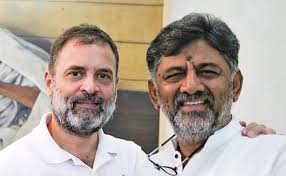
Bengaluru: A day after meeting senior Congress leader Rahul Gandhi, Karnataka deputy chief minister DK Shivakumar has cancelled his scheduled visit to the World Economic Forum (WEF) in Davos, Switzerland, citing official engagements in New Delhi and Bengaluru. In a statement issued Saturday, Shivakumar’s office said the DCM has a series of meetings lined up with AICC functionaries in connection with the Assam assembly elections. It also said he is spearheading the Congress campaign against the Union govt over MGNREGA, due to which a five-day special session of the Karnataka assembly is scheduled to begin on Jan 22. The World Economic Forum will hold its 56th annual meeting in Davos from Jan 19 to Jan 23, bringing together nearly 3,000 leaders from more than 130 countries amid heightened geopolitical tensions, economic uncertainty and rapid technological change. The summit, themed “A spirit of dialogue”, aims to provide a platform for leaders from govt, business and civil society to rebuild trust and explore collaborative solutions to global challenges. Shivakumar was in New Delhi to attend a preparatory meeting related to the Assam elections when he briefly met Rahul, triggering speculation in political circles in Karnataka. His decision to skip the Davos event comes amid talk of a CM change in Karnataka. This was the second meeting between Shivakumar and Rahul in a week. Earlier, both Shivakumar and chief minister Siddaramaiah had met Rahul at the Mysuru airport. There were also reports that Rahul had asked Shivakumar to meet him in Delhi for discussions. Earlier in the day, home minister G Parameshwara said Shivakumar’s Delhi visit was purely organisational in nature. “He has gone to Delhi on the instructions of the AICC president. He has been given the responsibility for the Assam elections, and he has gone there for discussions related to that. Besides this, I am not aware of any other matter,” Parameshwara said. Before meeting Rahul, Shivakumar had said, “How can I disclose (what is discussed)? It is not a public issue to be discussed. It is between me, my party high command, and my chief minister.” Courtesy : TOI Note: This news is originally published on https:/timesofindia.com/bha and is used purely for non-profit/non-commercial purposes, especially human rights
TNCC unanimously entrusts Kharge, Rahul to take decisions
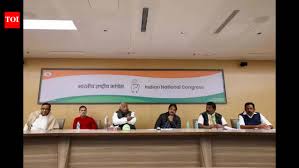
New Delhi/Chennai: A meeting of TNCC functionaries and elected representatives in New Delhi on Saturday “unanimously” entrusted AICC president Mallikarjun Kharge and leader of the opposition in the Lok Sabha Rahul Gandhi to take decisions pertaining to alliance and seat sharing with DMK for the upcoming assembly election in Tamil Nadu. “With regard to election strategy, the party high command will take an appropriate decision in due course, keeping in mind the larger interest of party and people of TN,” AICC general secretary (organisation) K C Venugopal told reporters in New Delhi. Kharge chaired the meeting that lasted more than three hours, and attended by Rahul Gandhi, Venugopal, TNCC chief K Selvaperunthagai, MPs P Chidambaram, Manickam Tagore, Karti Chidambaram, and Professionals’ Congress chief Praveen Chakravarty, among others. Later, Kharge, Rahul and Venugopal, joined by AICC in charge for TN Girish Chodankar, held one-on-one meetings with functionaries and obtained views on alliance. The Congress top brass gave clear directions to functionaries to maintain discipline and refrain from making public statements on alliance matters and advised them to speak in one voice in line with party decisions. The meeting held at the party’s Indira Bhawan headquarters came amid two different viewpoints over alliance with DMK — one pitching for power-sharing arrangement if the alliance wins to form govt and another being that the party should explore an alliance with actor Vijay’s TVK looking at the larger prospects of the Congress in states such as Kerala, which too goes to polls along with TN. Sources said some functionaries informed the leadership about “immature” actions of colleagues reportedly causing a rift in the Congress-DMK alliance, while a few raised concerns about disrespect allegedly shown by DMK partymen, besides not being taken care of in the appointments in boards and trusts. “The predominant view is to continue the alliance with DMK and get a share in power by getting more seats this election,” said a senior leader, privy to the meeting. Venugopal told reporters, the leadership had a detailed and very fruitful discussion with functionaries. “The leadership patiently listened to all opinions and leaders were given full opportunity to express their views. The discussion was constructive and focussed on strengthening the party and its future strategy in TN,” he said, reading out a statement. Asked about what the party’s stand was on the view within Congress on seeking a power-sharing arrangement with DMK, Venugopal reiterated his statement, adding that “concerns of the 40-plus leaders present at the meeting were heard individually and collectively. There are different views and we have heard them and certainly in due course whatever discussion held today will be the guideline for future decisions.” Sharing a video clip from the meeting held at the AICC headquarters on X, Kharge said, “We are confident that people of TN would choose equality, social justice, empowerment and good governance over bigotry, sectarianism, anti-federal and discriminatory politics of the RSS-BJP.” He added, “Congress party is determined to play an important role in fulfilling the aspirations of the people of the state.” Selvaperunthagai told reporters, the TNCC would follow the decision of AICC. The leadership was upset about functionaries speaking about the alliance in public, he added. Courtesy : TOI Note: This news is originally published on https:/timesofindia.com/bha and is used purely for non-profit/non-commercial purposes, especially human rights
Who is Emily Suski, the law dean hire University of Arkansas dropped within days? The transgender issue that made the offer vanish

Less than a week after announcing a new dean for its law school, the University of Arkansas reversed course. The offer made to Emily Suski, a legal scholar with a focus on health, poverty and education law, was withdrawn after objections from state politicians over her views on transgender student athletes. The decision has become a fresh example of how political pressure is shaping faculty hiring and leadership choices at public universities. A dean appointment that unravelled quickly On January 9, the University of Arkansas announced that Emily Suski, an associate dean and professor at the University of South Carolina, had been selected as the next dean of its law school after a public and extended search. The university’s provost, Indrajeet Chaubey, praised her scholarship and highlighted her work on medical and legal partnerships that support low-income children. The position came with a five-year contract and annual compensation of $350,000, according to documents reviewed by The New York Times. Within days, however, the appointment collapsed. On Wednesday, the university said it was withdrawing the offer, citing “feedback from key external stakeholders.” By Thursday, it added that it had no further statement. The amicus brief at the centre of the backlash State legislators soon made clear what the concerns were about. According to The New York Times, Suski had signed an amicus brief filed with the Supreme Court last year in support of transgender student athletes. The brief, signed by Suski and 16 other legal scholars, addressed a narrow legal question: whether sex assigned at birth should be the sole factor in determining which sports teams students may join. It argued that the case before the Supreme Court should be sent back to lower courts for further review. Arkansas State Senator Dan Sullivan said the views expressed in the brief conflicted with state law. “If you look at some of her opinions to the Supreme Court and amicus briefs, I think she has not reflected the laws of the state of Arkansas,” Sullivan, a Republican from Jonesboro, told The New York Times. Arkansas was the first state to ban gender-affirming medical care for minors, a policy backdrop that has intensified scrutiny of issues related to gender identity. Political pressure and funding concerns The withdrawal of the offer did not happen in isolation. Nicole Clowney, a Democratic state representative who teaches at the law school, told The New York Times that a small number of legislators and one executive branch official threatened the university’s funding after learning about Suski’s involvement in the brief. Clowney said she viewed the episode as a free speech issue and described Suski as highly qualified for the role. The Speaker of the Arkansas House of Representatives, Brian Evans, a Republican, said in a statement that his office was not involved in the decision. Governor’s support for the reversal Arkansas Governor Sarah Huckabee Sanders publicly supported the university’s move. Her spokesperson, Sam Dubke, said in a statement quoted by The New York Times, “Governor Sanders appreciates the University of Arkansas, Fayetteville, for reaching the common sense decision on this matter in the best interest of students.” The case before the Supreme Court that prompted the amicus brief was argued this week, keeping the issue in national focus even as the university moved on from its decision. Suski’s response Suski issued a written statement on Thursday expressing disappointment at the reversal. “I have been informed that the decision was not in any way a reflection of my qualifications to serve as dean,” she wrote, according to The New York Times, “but rather the result of influence from external individuals.” Her academic work has centred on health, poverty and education law, including Title IX, the federal civil rights law that prohibits sex-based discrimination in education programmes. Before entering academia, she worked as a staff attorney at the Legal Aid Justice Center in Charlottesville, Virginia. A trend in higher education? The episode fits into a wider pattern. In recent months, conservative leaders have accused universities of drifting leftward, and institutions have disciplined or dismissed faculty members over speech related to gender and race. Political influence has also affected leadership choices elsewhere, including at the University of Florida, where the selection of a president was overturned by a statewide board of political appointees. At Arkansas, the law school search had been conducted publicly, with four finalists giving open presentations. The abrupt end to Suski’s appointment has prompted questions about whether universities will increasingly shield hiring processes from public view to avoid similar outcomes. For now, the University of Arkansas has said it has “decided to go in a different direction,” while the controversy around Emily Suski’s brief tenure as a dean-designate continues to ripple through debates on academic freedom, political oversight and the boundaries of university autonomy. Courtesy : TOI Note: This news is originally published on https:/timesofindia.com/bha and is used purely for non-profit/non-commercial purposes, especially human rights
From Short Circuit to Political Signal: Akhilesh Yadav, Mayawati and the Battle for Dalit Votes
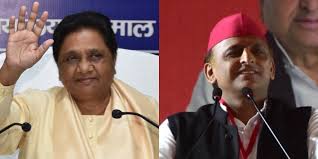
The 2024 general election results indicated that a section of the Dalit population in Uttar Pradesh has begun drifting away from the BJP reportedly due to rising incidents of atrocities and fears surrounding constitutional changes. When smoke suddenly filled the conference hall at the Bahujan Samaj Party’s (BSP’s) Uttar Pradesh headquarters during party chief Mayawati’s 70th birthday press conference due to a short circuit, panic spread among journalists and security personnel present at 12, Mall Avenue in Lucknow. No one was injured, and the incident was quickly brought under control. Within hours, Samajwadi Party (SP) president Akhilesh Yadav demanded a probe into what he described as a serious security lapse. It immediately acquired a political meaning far beyond an electrical fault. His concern, expressed publicly and amplified through social media, triggered a fresh round of political speculation in the politically significant state of Uttar Pradesh. At one level, Akhilesh’s reaction appeared routine and responsible. Mayawati is a former chief minister and a national political figure; any lapse in her security naturally invites questions. But in the deeply layered politics of Uttar Pradesh, few gestures are ever purely administrative. Akhilesh’s intervention was widely read as a calculated political signal, especially aimed at Dalits, for whom Mayawati remains the most recognisable and emotive leader. “The incident itself was minor, but the politics around it is major,” said political analyst Utkarsh Sinha. “Akhilesh Yadav did not need to comment immediately, yet he chose to do so. That choice is political.” Dalits at the centre of Uttar Pradesh’s political equation Dalits constitute nearly 22% of Uttar Pradesh’s population and have historically played a decisive role in shaping the state’s politics. The BSP, under Mayawati’s leadership, formed the government four times, culminating in her landmark 2007 victory when she secured a full majority on her own. That moment marked the peak of Dalit assertion in the state. However, since then, Mayawati’s political graph has steadily declined. She has been out of power for nearly one and a half decade, losing three assembly elections and three Lok Sabha polls since 2012. Today, the BSP has no Member of Parliament in the Lok Sabha and just one MLA in the 403-member Uttar Pradesh assembly. For a party that once ruled India’s most populous state, the fall has been steep. Yet, despite this decline, Mayawati continues to command loyalty among a core section of Dalits, particularly the Jatavs. In the 2024 general elections, the BSP still managed to secure around 9.4% of the vote share in Uttar Pradesh, a figure that underlines her residual influence. “Mayawati may have lost institutional power, but she has not lost symbolic power,” said Syed Qasim, a political commentator based in Lucknow. “For many Dalits, she remains a symbol of dignity and political assertion.” Akhilesh’s 2027 ambition and the search for a broader social coalition Akhilesh’s political ambition is clear: he wants to return to power in Uttar Pradesh in the 2027 assembly elections. The SP has been out of office since 2017, and despite leading the opposition, Akhilesh knows that defeating the Bharatiya Janata Party (BJP) requires expanding beyond the party’s traditional Muslim–Yadav (M–Y) base. In the 2024 general elections, Akhilesh made a conscious attempt to do just that. By popularising the slogan Pichhda, Dalit aur Alpsankhyak (PDA), he tried to stitch together a broader social coalition. The results were striking. The SP jumped from just five Lok Sabha seats in 2019 to 37 seats in 2024, while its INDIA bloc ally Congress won six seats in the state. Political experts widely agree that this surge would not have been possible without support from backward classes, Muslims, and a section of Dalit voters. “The 2024 results showed Akhilesh Yadav’s political maturation,” said Sinha. “He demonstrated that the SP can move beyond its core base. But to sustain this coalition till 2027, Dalits will be crucial.” Mayawati’s strategic distance and Akhilesh’s calculated silence Interestingly, while Akhilesh has been careful in his approach towards Mayawati, the BSP chief has shown little warmth in return. In October 2025, during a rally in Lucknow, Mayawati launched a sharp attack on the SP’s 2012–17 government, accusing it of disrespecting Dalit icons and symbols. Notably, she used comparatively restrained language while referring to the Adityanath-led BJP government, even praising it for maintaining Dalit heritage sites. Akhilesh chose not to respond. His silence was telling. “Akhilesh understands that responding aggressively to Mayawati only helps her consolidate her core voters,” said Sinha. “By staying quiet, he avoids alienating Dalits who still respect her.” This restraint reflects Akhilesh’s broader strategy. Over the years, he has taken several steps to signal his commitment to Dalit issues: forming the Ambedkar Vahini within the SP, installing a statue of Dr B.R. Ambedkar at the party headquarters, and giving prominence to Dalit leaders like Awadhesh Prasad, who won the Ayodhya Lok Sabha seat. “Akhilesh is consciously building an image of inclusivity,” said Sinha. “He wants Dalits to see him not as a rival to Mayawati, but as a leader who respects Dalit aspirations.” The alliance question: Closed door or strategic ambiguity? The memory of the 2019 SP–BSP alliance still looms large. Formed nearly 24 years after the infamous guest house incident, the partnership was historic but short-lived. While it helped the BSP win 10 Lok Sabha seats, it failed to stop the BJP’s dominance and collapsed soon after. Speculation about a future alliance resurfaces periodically, but most experts remain sceptical. Atul Chandra, former editor of The Times of India, offered a blunt assessment. “Alliance with Mayawati is not possible for Akhilesh, as her conditions would be so hard that he will never accept them,” said Chandra. Chandra believes Akhilesh’s current approach is not about reviving an alliance but about consolidating Dalit support independently. “I don’t think Mayawati will join hands with Akhilesh in the next assembly elections, but Akhilesh has certainly sent a strong signal to Dalits about his intent to bring them under his political umbrella,” he said. Mayawati’s cautious politics and the
Probe Dalit man’s custodial death by sitting judge or CBI: MRPS chief
Hyderabad: Alleging serious lapses and an attempt to shield those responsible, Madiga Reservation Porata Samithi (MRPS) founder Manda Krishna Madiga on Friday demanded that the state govt order an inquiry by a sitting judge or the CBI into the alleged custodial death of Dalit man Karla Rajesh in Kodad. He was an accused in a chief minister’s relief fund misappropriation case. Krishna Madiga sought that Chilkur sub-inspector Suresh Reddy be named as A1 and Kodad circle inspector Prathap Lingam as A2 in the case, accusing them of illegal detention and torture, along with provisions of the SC/ST (Prevention of Atrocities) Act. He also demanded that Kodad DSP and Suryapet SP be included as A3 and A4 in the FIR, alleging that they attempted to conceal evidence related to the case. Addressing a press conference here, Krishna Madiga said: ” So far, no police officer was able to say that Rajesh did not die due to police torture.” He alleged that the police system treated the lives of police personnel differently from those of Dalits and accused it of acting carelessly while protecting the accused officers. Drawing a comparison, he said that in Nizamabad, history-sheeter Sheikh Riyaz was encountered and killed within four days of killing a constable, but when a Dalit man like Rajesh was tortured and killed in illegal custody, the law failed to punish those responsible. Courtesy : TOI Note: This news is originally published on https:/timesofindia.com/bha and is used purely for non-profit/non-commercial purposes, especially human rights
More Than A Word: Haryana’s ‘Harijan’ Ban Exposes Enduring Caste Bias
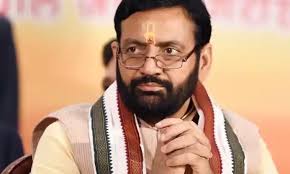
Haryana’s directive banning the use of ‘Harijan’ and ‘Girijan’ in official communication has revived debate on caste and identity in India. Despite earlier central guidelines and Ambedkar’s opposition, the term persists, highlighting how caste discrimination continues to shape social and political life. A recent directive by the Haryana government asking all its departments — public and educational institutes and other institutions — to “strictly avoid” using the terms ‘Harijan’ and ‘Girijan’ in official communications to refer to Scheduled Castes and Scheduled Tribes is indicative of the all-pervading nature of the caste conundrum in India even today. Origins of the term The term ‘Harijan’, or ‘children of God’, was first used by Mahatma Gandhi in 1932 to refer to Dalits. He even started three journals in English, Hindi and Gujarati with the same name in 1933. Gandhiji used the term to avoid words like ‘untouchable’, which stigmatised the Dalit community. By using the word ‘Harijan’, he hoped Dalits would be more acceptable to Hindu society. However, many of the Mahatma’s contemporaries, including B R Ambedkar, objected to the word, terming it condescending and an attempt to avoid the real issue of caste discrimination. In fact, Ambedkar walked out of the Bombay Legislature on January 22, 1938, to protest the use of the word. In effect, the word ‘Harijan’ has been banned by the government in caste certificates and all official communication. In 1982, the Union government directed all states not to use the word ‘Harijan’ to denote Dalits. However, it continued in common parlance. In 2010, a parliamentary committee took note of the fact that the use of the word ‘Harijan’ continued far and wide and recommended that the Ministry of Social Justice and Empowerment issue fresh guidelines to all departments and state governments not to use the term. It even suggested punitive action against those who flouted the order. That all these years later the Haryana government was forced to issue a directive banning the use of the words ‘Harijan’ and ‘Girijan’ in official dealings is proof that casteism is rampant in modern India. The state government reiterated that the Constitution does not use these terms to denote Scheduled Castes and Scheduled Tribes. Politics, caste and identity One school of thought says that Gandhiji used the term ‘Harijan’ to make Dalits more acceptable to upper-caste Hindus, as he did not want to upset influential members of the community whose support he required for his politics. In the last decade, the BJP, as the ruling party, has also been making consistent efforts to rope in Dalits into the Hindu fold. They received some electoral success for their efforts in this direction in the cow belt. Now they are reaching out to Dalits in the southern states in their bid for Hindu consolidation. This has irked activists who are appalled at the lack of sensitivity to issues relating to caste oppression and Dalit identity. More than seven decades after Independence, caste continues to haunt the country’s political landscape. Only a radical change in mindset, not government directives, will bring an end to this scourge. Courtesy : TFPJ Note: This news is originally published on https:/thefreepressjournal.com/bha and is used purely for non-profit/non-commercial purposes, especially human rights
Telangana: Dalit house surgeon dies by suicide after alleged caste-based rejection, sparks outrage
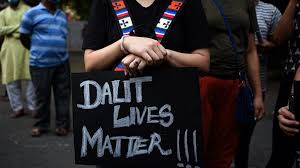
The death of a 23-year-old Dalit house surgeon at the Government Medical College in Siddipet, Telangana, has sparked outrage, with her family and student groups alleging that she was driven to suicide after being cheated and abandoned by a fellow doctor who reportedly refused to marry her, citing her caste. Lavanya from Jogulamba Gadwal district, an MBBS graduate and intern doctor, was found dead in her hostel room on January 5, 2026. A case has been registered under the SC/ST (Prevention of Atrocities) Act and an arrest has been made. The case has reignited debates on caste discrimination in intimate relationships and institutional spaces, with activists arguing that the incident cannot be seen as an “individual tragedy” but must be understood as the outcome of a caste order that continues to govern even the most private spheres of life. In a statement, the Ambedkar Students’ Association (ASA), University of Hyderabad, condemned the death as a case of caste violence and said that for Dalits, intimacy is rarely allowed to exist as an ordinary or secure experience because it is constantly policed by the demand to preserve caste boundaries. The organisation said that when relationships challenge these boundaries, they are disciplined either through violence in the name of honour or through abandonment by partners unwilling to act against the caste order. In both cases, it said, responsibility for the rupture is displaced onto Dalits while the structure that produces the harm remains untouched. The statement said Lavanya’s death exposes a “violent social truth”: that Dalit women’s lives and aspirations are treated as conditional within hegemonic caste structures. It added that Dalit women live under “double jeopardy”, facing intensified exclusion in both public institutions and private relationships. ASA also criticised what it called “sanctioned ignorance” in institutions that claim caste is irrelevant in so-called modern spaces, and narratives that individualise structural violence while allowing caste privilege to operate without consequence. This, it said, enables perpetrators to believe their actions will be condoned. “Lavanya’s death demands more than sympathy. It demands a reckoning with caste power embedded in our institutions, our social relations, and our understandings of love and commitment,” the statement said. Remembering Lavanya as a young woman whose dreams were legitimate and whose dignity was non-negotiable, the Ambedkar Students’ Association said her death shows that society continues to treat Dalit women as expendable, and said it stands in solidarity with her family while demanding justice for B. Lavanya and an end to caste violence against Dalit women. Courtesy : Maktoob Media Note: This news is originally published on https:/maktoobmedia.com/bha and is used purely for non-profit/non-commercial purposes, especially human rights
Jagan says TDP behind murder of YSRCP’s Dalit activist
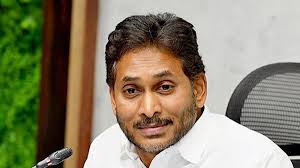
During the conversation, Salman’s brother reportedly detailed the alleged atrocities of local TDP leaders in Pinnelli village. VIJAYAWADA: Former chief minister and YSR Congress Party president YS Jagan Mohan Reddy strongly condemned the killing of party activist Manda Salman in Palnadu district. Expressing outrage, he said law and order in the State had completely deteriorated and alleged that the Dalit activist was unjustly murdered by TDP leaders. He remarked that attacks on YSRCP workers and leaders had become routine, while police, instead of offering protection, were colluding with ruling party leaders. Jagan Mohan Reddy spoke to Salman’s brother over the phone, conveyed his condolences, and assured the family that the party would stand firmly by them. He promised that once the YSRCP returns to power, strict action would be taken against those responsible. During the conversation, Salman’s brother reportedly detailed the alleged atrocities of local TDP leaders in Pinnelli village. The former chief minister urged party workers not to panic, assuring them of full support from the party. He emphasised that justice would be ensured under due process of law once YSRCP regains power. Courtesy : TNIE Note: This news is originally published on https:/thenewindianexpress.com/bha and is used purely for non-profit/non-commercial purposes, especially human rights
10 Years Later, Rohith Vemula’s Fight Remains Dalit Students’ Reality
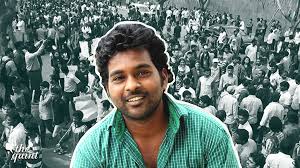
Nothing will change until society and academia decide to preach, propagate, and practice the ideas of Babasaheb. Exactly 10 years ago, Rohith Vemula, a 28-year-old Dalit student and PhD scholar at the University of Hyderabad, died by suicide. Along with him, four other students had been expelled for raising their voices against their suspension, a practice that had become rampant in the university. Their access to the hostel, mess, administrative buildings, and common rooms were revoked—and their scholarships were put on hold. Rohith, along with his friends, protested against this act of injustice in the open, with a photo of Babasaheb Ambedkar by their side. But even in the face of widespread outrage and sustained agitation, the university refused to revoke their expulsion. At last, Rohith could not take it any longer. Nothing will change until society and academia decide to preach, propagate, and practice the ideas of Babasaheb. An Ambedkarite, Rohith was a voice of reason who was vocal on social issues. His death was not merely a personal tragedy, but a case of institutional failure. An Ambedkarite, Rohith was a voice of reason who was vocal on social issues. His death was not merely a personal tragedy, but a case of institutional failure—a fate that has long plagued Dalit students and that of oppressed castes for generations in the ecosphere of Indian educational institutions. For generations, oppressed-caste students have been cornered, harassed, and pushed to breaking point in hostile academic environments. Rohith’s death created much furore and sparked a spate of protests across various educational institutions in India. Students and citizens took to streets in opposition to such instances of caste-discrimination-related deaths—and criticised this very visible act of apartheid. Professors, who were critical of the university’s complicity in driving Rohith to his death, were suspended. Some others resigned in the face of such a brutal case of discrimination. In spite of these acts of defiance and dissent, and much noise and agitation, a crucial question remains: what came of these struggles? What has changed in the decade since Rohith Vemula’s death? What ensued was a deliberate reframing of caste and the discrimination it produces—transforming it from a lived social oppression into a contested political question. Rohith’s life couldn’t incite the support, resources, or opportunities he deserved, but his death was instrumentalised for this. The issue that once centred Rohith soon erased him. He was pushed to the back of a protest that he had started, the repercussions for which he faced alone. The reason for this was his oppressed caste background, one that left him bereft of socio-economic capital and political means to survive the casteist atmosphere of Indian educational institutions. This lack of resources made him vulnerable to attacks on his character and mental health, followed by coercive attempts to delegitimise his identity. Such vilification of marginalised students has long been used to enforce and justify the caste-based notions of purity and pollution, thereby legitimating caste discrimination in educational instructions. A preventable tragedy was deliberately overshadowed by turning it into a political issue, so as to put it to rest. Ten years since Rohith’s death, little has changed in the plight of marginalised students in Indian educational institutions. According to a report in The Wire, between 2019 and 2021, 98 Dalit students died by suicide across various educational institutions in India—a number so jarring it should have awakened the consciousness of the society. But the answer is one of negation. In 2019, Dr Payal Tadvi, a 26-year-old student belonging to a tribal community, died by suicide at the hostel of a government-run hospital in Mumbai. Dr Tadvi was repeatedly harassed by her seniors with caste slurs. The case lingered on with no delivery of justice. Nothing will change until society and academia decide to preach, propagate, and practice the ideas of Babasaheb. Dr Payal Tadvi was repeatedly harassed by her seniors with caste slurs. The case lingered on with no delivery of justice. In January 2025, the Supreme Court of India ordered the University Grants Commission (UGC) to submit a report on the instances of caste discriminations in Indian educational institutions. What came to light was an astonishing fact. In the academic year 2023-24, 1,503 instances of caste discriminations were recorded across 3,522 institutions in India, out of which only 1,426 cases were followed up with further procedures. These figures are but instances that were reported to relevant authorities. Most of such instances go unreported, for fear of inviting the violence of the upper caste communities. The Numbers That Refuse to Disappear Caste is the social structure on which the Indian society rests, shaping all aspects of life, including politics. Much of the politics in India is governed, driven, and affected by its society. It is a sum total of this very dual character of caste that marginalised students don’t have access to resources, privileges, and capital. Although reservation is a constitutional right, it is routinely ignored in elite institutions such as the IITs and IIMs, which have been long regarded as the bastions in the field of science and technology. This isn’t an isolated instance of overrepresentation of upper caste students in Indian educational institutions but an everyday reality of Dalit or Adivasi students, who, despite having secured enough marks, checking off qualification rules, and following due process, have been repeatedly denied admissions in Indian educational spaces for generations together. With these many hurdles, the process of access to educational spaces in India thus in itself become a punishment. In a caste-driven society like India, one’s caste decides who will be able to avail education. It is in this aspect that the marginalised students fall short of, for their disadvantaged caste location puts them up for endless struggles and taunts to get an admission to these prohibited campuses. One needs aesthetic, ideas, language and a refined taste to succeed in Indian academia. Such an ideal situation is only possible in the case of a person who has grown with an excess of resources, for its
Bizarre Indian Tradition: Why do thousands of transgender women marry Lord Aravan and then mourn the very next day?
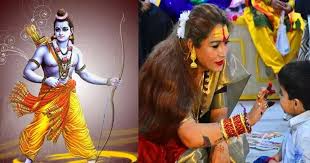
Transgender marriage tradition: Transgender people are a unique part of society, and learning about them is always interesting. They are neither completely male nor completely female. They are present in our festivals, and it is believed that their blessings are very powerful, so one should avoid their negativity or curses. However, their lives and customs are quite different from those of ordinary people, which is why ordinary people know very little about them. Today we will learn some surprising facts about the world of transgender people. The Mystery of Transgender Children A son is born from a man and a daughter from a woman, but if the balance of sperm and egg is equal, a transgender child is born. There have been different beliefs about this in society. Welcoming New Transgender Individuals When a new person joins the transgender community, there is a collective feast and singing and dancing. Several rituals are also performed; this welcome ceremony is a unique way of entering their community. Marriage to Lord Aravan A special festival is celebrated in Tamil Nadu. In this 18-day festival, transgender women (Aravani) marry Lord Koothandavar (Aravan), considering him their husband. The temple priest puts the ‘Thali’ (mangalsutra) on them, and they dress up like brides. This ritual is based on the story from the Mahabharata where Lord Krishna, in the form of Mohini, married Aravan. The Tradition of Mourning (Observing Widowhood) The day after the marriage, Lord Aravan’s sacrifice is commemorated. After his death, the Aravani women mourn like widows. They break their bangles, remove their mangalsutras, and wear white clothes to lament. This tradition brings to life Aravan’s sacrifice and Krishna’s grief in the form of Mohini. The Story of Shikhandi According to ancient beliefs, Shikhandi from the Mahabharata was also considered a transgender person. This is why Arjuna was able to defeat Bhishma in the war. This story shows that transgender people have a history and significance dating back to ancient times. Arjuna and Brihannala In the Mahabharata, when the Pandavas had to spend a year in exile in the forest, Arjuna lived as Brihannala. This story shows that the role of transgender people has been significant not only in society but also in history and epics. Beliefs about Origin According to one belief, eunuchs originated from the shadow of Lord Brahma. According to another belief, they originated from Arishta and Sage Kashyapa. These stories give a glimpse into the mystery and depth of their lives. The Importance of Blessings It is said that the blessings of eunuchs are very powerful. Therefore, it is considered auspicious to invite eunuchs on auspicious occasions such as weddings, birthdays, or housewarming ceremonies. Their presence is considered a symbol of good fortune and happiness for people. By: Shivani Singh Courtesy : Hindi News