
Five arrested for assault on dalit man in Sivaganga
Sivaganga: Police arrested five members after a dalit man was allegedly assaulted by a group following a verbal altercation on Tuesday evening. According to police sources, on Tuesday evening (March 3), the victim, identified as Rasu of Idaikattur, was involved in a heated argument with his acquaintances, Pandiarajan of Chettikulam and Maheswaran of V Pudukulam. While the initial argument appeared to settle, the situation turned violent later that night when Maheswaran, accompanied by a group of supporters, allegedly barged into Rasu’s residence. The group reportedly picked a fresh quarrel before physically assaulting Rasu, who sustained simple injuries in the attack. Following a complaint, Manamadurai police registered a case under various sections of the Bharatiya Nyaya Sanhita (BNS), including rioting, uttering obscene words, voluntarily causing hurt, and criminal intimidation. Given the nature of the assault, police also invoked several sections of the SC/ST (Prevention of Atrocities) Act. A senior police official confirmed that five individuals were arrested so far. A team of police is currently searching for the remaining suspects. To maintain law and order, police personnel were stationed at Idaikattur and surrounding hamlets, and the situation was monitored. VCK chief Thol Thirumavalavan, speaking to reporters here on Thursday evening, said that the Tamil Nadu govt must go beyond simply punishing those responsible for the recent deadly attacks in Perumpathu and Sivaganga. It should also expose the underlying “sinister designs” fuelled by drug use among “dominant groups” that reportedly orchestrated this violence. Courtesy : TOI Note: This news is originally published on https:/timesofindia.com/bha and is used purely for non-profit/non-commercial purposes, especially human rights
JNUTA Calls For Removal Of JNU VC Over Controversial Dalit Remarks: What Happened So Far?
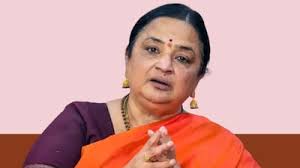
In a letter to Education Minister Dharmendra Pradhan, JNUTA questioned the Ministry and Central Government’s stance on the VC’s comments and the detention of protesting students. The Jawaharlal Nehru University Teachers’ Association (JNUTA) on Thursday called for the removal of Vice-Chancellor Santishree Dhulipudi Pandit due to her controversial remarks on a podcast that dismissed UGC regulations and allegedly contained casteist undertones. In a letter to Education Minister Dharmendra Pradhan, JNUTA questioned the Ministry and Central Government’s stance on the VC’s comments and the detention of protesting students, reported ANI. They also raised concerns about the VC’s political connections with the Union government, suggesting these ties influenced her appointment. JNUTA highlighted the government’s inaction following the violent suppression and detention of students who peacefully protested the VC’s remarks. They argued that this contradicts the government’s commitment to justice and casts doubt on its seriousness about addressing caste discrimination. Demanding the VC’s immediate removal, JNUTA cited multiple instances of her “mis-governance” and noted that similar demands had been made three times in 2025 alone. They accused the government of implicitly endorsing the VC’s casteist views by not acting against her. The association pointed out the VC’s misuse of the ‘None Found Suitable’ (NFS) provision to obstruct faculty appointments for reserved positions, discriminatory promotion practices, and the declining representation of women and SC/ST categories in the student body. Criticising the VC’s false claims about the secrecy of the UGC Equity Regulations and the proportion of women faculty, JNUTA emphasised that these can be easily disproven with available data. They deemed the VC unfit to lead an institution known for academic excellence and social equity, stressing that the Ministry’s reputation is also at stake. JNUTA urged the Education Ministry to take prompt action, asserting that the VC’s continuation is unacceptable and detrimental to the university’s reputation. They emphasised that the need for such regulations is undeniable and refuted the VC’s analysis as condemnable, urging the Ministry to act decisively. What Happened So Far? The Vice Chancellor’s statement, made in a podcast released on February 16, sparked controversy. Discussing the University Grants Commission’s (UGC) Equity (Anti-Discrimination) Rules of 2026, which aim to prevent caste-based discrimination in higher educational institutions, she described the regulations as “unnecessary and irrational.” She commented that “it’s not easy to move forward by demonising someone or constantly portraying yourself as a victim. It’s like a temporary addiction.” This statement quickly stirred a reaction on social media. As the controversy grew, the VC clarified that her statement had been misrepresented. She insisted she did not mean to imply that the Dalit community always plays the victim card, but rather that some people use such language as part of a “woke” ideology. She stated that the controversy was unnecessary and that care had not been taken in formulating the rules, adding, “I myself am a Bahujan.” The Jawaharlal Nehru University Students’ Union (JNUSU) labelled the Vice Chancellor’s remarks as “blatantly casteist” and demanded her resignation. They argued that such statements promote caste discrimination and inequality in universities. The atmosphere on the JNU campus has since become tense, with student organisations insisting that protests will continue until the Vice Chancellor apologises or resigns. As many as 14 JNU students, arrested during a protest march last week, have recently been released after a Delhi court ordered their immediate release. Among those released are JNUSU president Aditi Mishra, vice president Gopika K Babu, joint secretary Danish Ali, former JNUSU president Nitish Kumar, and AISA All India president Neha, among others. The court granted bail to the protesters on February 27, noting that while assaulting police personnel is a serious offence, the accused are students with their careers ahead of them. Courtesy : News18 Note: This news is originally published on https:/news18.com/bha and is used purely for non-profit/non-commercial purposes, especially human rights
A Group of Trans Women in India Helped Vaccinate Almost 1,500 Children
“People started inviting us in, offering us tea, and asking for advice,” one trans woman involved in the campaign said. A group of transgender women in India helped vaccinate nearly 1,500 children over the past two years as part of a non-governmental pilot program, organizers reported this week. The Sakhee Project, which launched in April 2023, sought to improve vaccination rates and health outcomes for migrant communities in the Indian state of Maharashtra. The program was operated by the nonprofit non-governmental organization ZMQ Development and funded by the international health partnership Gavi, per a post about the project on Gavi’s website published Thursday. Looking to combat vaccine skepticism and mistrust of officials among migrant residents — especially those who are undocumented — organizers enlisted trans women to bridge the communication gap. Members of the trans cohort were collectively dubbed “Sakhee didi” (a common Hindi phrase denoting a trusted sister-like friend), and were trained to go door-to-door providing vaccine information and accompanying health workers to perform immunization. “Migrant families often fear authorities, especially if they lack documents,” ZMQ founder Hilmi Quraishi explained, per Gavi. “We needed a bridge between the health system and the community.” Two years later, the Sakhee didis have filled that role, helping vaccinate almost 1,500 children in Maharashtra by reaching about 40 households per day, according to Gavi’s report. Across three cohorts of children, all had received at least one vaccination dose since 2023, and community members reportedly adhered to vaccination schedules more consistently. Despite early incidents of mistrust and abuse directed at the women, including fears that they would kidnap and injure children, community attitudes shifted over time, some of the workers recalled. “At first, we were chased away,” said, Amrin Khan, one of the women who acted as a Sakhee didi. “Later, people started inviting us in, offering us tea, and asking for advice. They would say, ‘Come in, sister. Sit down and talk.’” That’s a significant shift for trans people in India, who face heavy marginalization, stigmatization, and violence. As many as 80% of trans women in the region rely on sex work or begging to survive, Indian trans activist Abhina Aher told Open Democracy in 2023. The organizers and workers of the Sakhee Project hoped that the program would provide better work opportunities and a chance to push back against common anti-trans prejudice — and appear to have succeeded. “They [the Sakhee didis] made our work much easier,” nurse and midwife Yasmeen Khan told Gavi. “When we went with them, people opened up. They were excellent communicators and played a crucial role in overcoming vaccine hesitancy.” Unfortunately, it’s not clear what the future holds for the Sakhee didis or the life-saving initiative they made possible. Gavi’s report noted that the project, described as a two-year pilot program, “has since ended,” and did not provide information about any plans for its future. Them contacted ZMQ via its website for further details, but did not immediately receive a reply. Economic and social opportunities are slowly opening up for trans people in India, though discrimination and abuse are still common. In 2021, another nonprofit organization chose Maharashtra as the site for Kinnar Vidyalaya, a school providing free education specifically for trans students of all ages. The following year, the Indian Department of School Education and Literacy hired three trans teachers for government school positions for the first time in history. Here’s hoping the celebrated Sakhee didis can likewise start well-deserved careers in public health soon. By Samantha Riedel Courtesy : Them Note: This news is originally published on https:/them.com/bha and is used purely for non-profit/non-commercial purposes, especially human rights
‘Conflict has reached our backyard’: Rahul Gandhi targets Centre after Iranian warship sunk in Indian Ocean

NEW DELHI: Leader of opposition Rahul Gandhi on Thursday targeted the Centre after a US submarine sank an Iranian warship, IRIS Dena, warning that the conflict in West Asia poses serious risks for India’s energy security. In a post on X, Rahul Gandhi said the world was entering a turbulent phase and accused Prime Minister Narendra Modi of saying “nothing”. “The world has entered a volatile phase. Stormy seas lie ahead. India’s oil supplies are under threat, with more than 40% of our imports transiting the Strait of Hormuz. The situation is even worse for LPG and LNG,” Rahul Gandhi wrote. Rahul also referred to the sinking of the Iranian frigate IRIS Dena, which had recently taken part in the Indian Navy’s Milan naval exercise before heading back through the Indian Ocean. “The conflict has reached our backyard, with an Iranian warship sunk in the Indian Ocean. Yet the Prime Minister has said nothing,” he said. Calling for stronger leadership in the face of growing geopolitical tensions, Rahul said the country needed a firm and steady response. “At a moment like this, we need a steady hand at the wheel,” he wrote. “Instead, India has a compromised PM who has surrendered our strategic autonomy,” Rahul said. The remarks came after the US Navy sank the Iranian Moudge-class frigate IRIS Dena in the Indian Ocean earlier this week using a Mark-48 torpedo launched from a submarine, an attack that reportedly killed dozens of sailors. Iran has strongly condemned the strike, calling it an “atrocity at sea” and warning that the United States would “bitterly regret” the precedent set by attacking the vessel. Iranian officials also pointed out that the frigate had recently visited India as part of naval engagements linked to the Milan exercise. The incident comes amid a rapidly widening conflict in West Asia, with missiles, drones and rockets being exchanged across Iran, Israel and other parts of the region. Courtesy : TOI Note: This news is originally published on https:/timesofindia.com/bha and is used purely for non-profit/non-commercial purposes, especially human rights
Iran crisis: Rahul Gandhi questions PM Modi’s ‘silence’ on warship sinking in ‘our backyard’
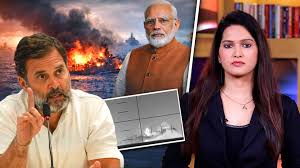
NEW DELHI: Congress MP Rahul Gandhi said PM Narendra Modi’s silence in the wake of “conflict” and the sinking of an Iranian warship showed that the PM had “surrendered strategy sovereignty”. The opposition party also slammed govt for “undoing” the foreign policy painstakingly built over the last seven decades. Rahul said the world had entered a volatile phase and “stormy seas” lay ahead, with oil supplies and 40% of Indian imports transiting through the Strait of Hormuz under threat. “The conflict has reached our backyard, with an Iranian warship sunk in the Indian Ocean. Yet the PM has said nothing. At a moment like this, we need a steady hand at the wheel. Instead, India has a compromised PM who has surrendered our strategic autonomy,” he said. Congress president Mallikarjun Kharge said the PM’s silence after the sinking of the Iranian ship that was India’s guest showed “Modi government’s reckless abdication of India’s strategic and national interests”. He also questioned the “absence” of maritime rescue and relief when 38 Indian-flagged commercial ships along with 1,100 sailors were stuck in the conflict-hit region. He said the government had also not made public the plan to deal with rising oil prices and limited reserves, especially after agreeing with the US to stop import from Russia. One crore Indians were in Gulf region countries and there were desperate messages from medical students seeking help, he said. “Clearly, Modi’s surrender is both political and moral. It demeans India’s core national interests and destroys our foreign policy carefully built and followed by successive governments over the years,” Kharge said. Courtesy : TOI Note: This news is originally published on https:/timesofindia.com/bha and is used purely for non-profit/non-commercial purposes, especially human rights
‘Exploitation’: Rahul Gandhi takes ‘compromised individual’ dig at Centre after US waiver on Russian oil
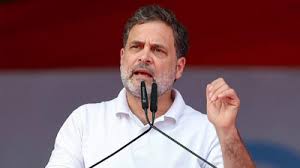
Lok Sabha leader of opposition Rahul Gandhi on Friday slammed PM Narendra Modi-led government over its foreign policy in the backdrop of the recent waiver issued by the United States for India allowing New Delhi to buy Russian oil, alleging that it was the result of the “exploitation of a compromised individual.” Taking his criticism to X while retweeting a video shared by the Congress of his speech in the Lok Sabha on concerns related to India’s trade sovereignty, Rahul wrote: “India’s foreign policy emerges from the collective will of our people. It should be rooted in our history, our geography, and our spiritual ethos based on Satya and Ahimsa. What we are witnessing today is not policy. It is the result of the exploitation of a compromised individual.” In the video shared by the Congress, Rahul can be heard blaming Prime Minister Modi and calling him “compromised.” He said, “The US will tell us who we can or cannot buy oil from — if it’s Russia or Iran, the US will decide. But our Prime Minister will not decide.” Earlier in the day, Congress targeted the Centre after the United States announced that it would allow India to continue purchasing Russian oil, questioning how long this “American blackmail” would continue.In a post on X, Congress general secretary Jairam Ramesh wrote: “Trump ka naya khel, Dilli dost ko kaha, Putin se le sakte ho tel, kab tak chalega ye Ameriki blackmail (Trump’s new game; told his friend in Delhi you can get oil from Putin; how long will this American blackmail continue?).” The remarks came after the US issued a temporary waiver allowing India to continue buying Russian oil, saying the move was intended to stabilise global energy supplies amid rising tensions in the Middle East. US treasury secretary Scott Bessent said: “President Trump’s energy agenda has resulted in oil and gas production reaching the highest levels ever recorded. To enable oil to keep flowing into the global market, the Treasury Department is issuing a temporary 30-day waiver to allow Indian refiners to purchase Russian oil.” He added that Washington expects India to increase energy imports from the United States in the future. “India is an essential partner of the United States, and we fully anticipate that New Delhi will ramp up purchases of US oil,” Bessent wrote, noting that the temporary measure would “alleviate pressure caused by Iran’s attempt to take global energy hostage.” The waiver comes at a time when India faces potential risks of energy supply disruptions in Middle East following escalating tensions in the region. The situation intensified after a joint US-Israel military strike on February 28 on Iran that killed Ali Khamenei and several senior officials. India sources nearly 40 percent of its oil imports from the region, with a significant share transported through the strategically crucial Strait of Hormuz. Meanwhile, Russia has indicated that it is ready to redirect crude shipments to India to offset potential supply disruptions caused by the conflict. According to Reuters, nearly 9.5 million barrels of Russian oil are currently positioned near Indian waters and could reach the country within weeks. The potential shift in supply follows Iranian strikes on vessels in the region, raising fears that the Strait of Hormuz could be partially closed — a development that could affect roughly 40 percent of India’s crude imports. Courtesy : TOI Note: This news is originally published on https:/timesofindia.com/bha and is used purely for non-profit/non-commercial purposes, especially human rights
“No Permission Needed”: Dalit Bahujan Front Rebuilds Ambedkar Statue Platform in Telangana After Government Demolition
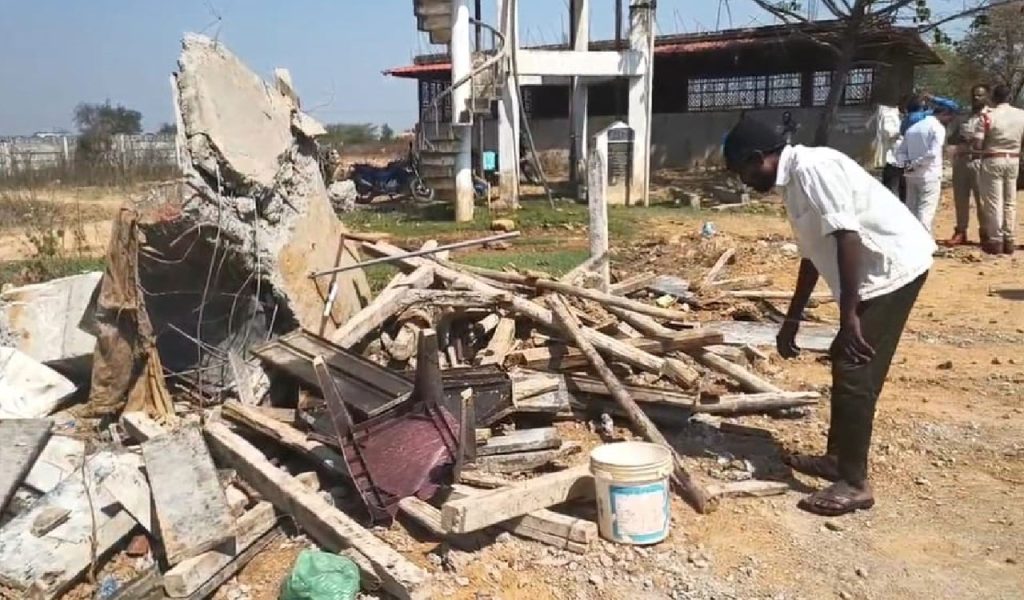
Dalit activists rebuilt an Ambedkar statue platform in Velur village, Wargal mandal, a day after R&B officials demolished it under police protection overnight. Dalit activists staged a protest and rebuilt a platform for installing a statue of Dr B. R. Ambedkar at Velur village in Wargal mandal on Wednesday, a day after Roads and Buildings department officials demolished the original structure under police protection. The incident has drawn sharp criticism from Dalit organisations across the district. What Happened at Velur Village Members of the Dalit and backward class communities in the village had constructed a platform along with pillars around it about a week ago with the intention of installing a statue of Dr Ambedkar. R&B officials subsequently objected to the construction, claiming the land on which the platform was built belonged to their department, even though the location was reportedly around 50 feet away from the road. Following a complaint from R&B officials, Gouraram police registered a case against 14 Dalits from the village. On Tuesday night, R&B officials removed the platform under police security, drawing immediate anger from the community. Community Returns, Builds Again News of the demolition spread quickly and drew Dalit activists from across the district to the village on Wednesday. Despite the presence of police, a large number of people gathered and constructed a fresh platform at the same site. Dalit Bahujan Front secretary Shankar addressed the gathering and made clear that the community would not be deterred. “We will not tolerate any attempt to create obstacles in our efforts,” he said, warning that they would confront anyone who tried to prevent the installation of the statue. Shankar also dismissed the need for any official permission for the act. He said the community had every right to install the statue of Dr Ambedkar and that no approval was required from any authority, as Ambedkar was the principal architect of the Indian Constitution. Courtesy : TOP Note: This news is originally published on https:/theobserverpost.com/bha and is used purely for non-profit/non-commercial purposes, especially human rights
Reservation vs affirmative action
Dalit assertion in India is different from Black political mobilisation in the US. For one, the faculty of elite institutions in America are much more diverse than in India. Reservations were designed as corrective mechanisms in a society where social capital, networks and inherited privilege determine life trajectories The recurring charge that marginalised communities advance by ‘playing the victim card’ reflects a deep misunderstanding of both history and constitutional morality. In India, the language of victimhood is often deployed to delegitimise Dalit assertion and trivialise structural discrimination. Yet, constitutional democracy does not treat the articulation of injustice as a pathology; it treats it as the starting point of reform. The debate must therefore shift from personalities to principles: from rhetorical dismissals to a substantive examination of Dalit rights, and from superficial comparisons with American race politics to a grounded comparative analysis of affirmative action in the US and reservation policy in India. Attempts to equate Dalit assertion with Black political mobilisation in the US frequently ignore a fundamental difference identified by B R Ambedkar. He argued that untouchability is structurally distinct from slavery. Slavery, however brutal, permitted the theoretical possibility of emancipation through legal abolition. Untouchability, by contrast, was a system of graded exclusion embedded in social, religious and economic life. It did not merely subordinate; it stigmatised and segregated across generations. Ambedkar warned that statutory reform alone would not dissolve caste stigma. The social order would require sustained intervention—educational, administrative and political—to dismantle entrenched hierarchies. The Indian Constitution thus embedded reservations not as charity, but as instruments of equal citizenship. Consider faculty diversity in elite institutions. In the US, even the most prestigious universities have institutionalised diversity monitoring. At Harvard, roughly a quarter of the faculty belongs to minority groups such as Blacks, Hispanics and Asians. This has not diluted academic excellence; Harvard continues to rank at the top globally. Contrast this with India’s premier science and technology institutions. An analysis published in Nature reported that at leading IITs and at the Indian Institute of Science, nearly 98 percent of professors are drawn from socially privileged castes. Assistant and associate professors too show a similar skew. Even in universities celebrated for progressive politics, representation of scheduled castes, scheduled tribes and other backward classes among faculty remains disproportionately low. This divergence is not incidental. In India, recruitment processes often involve roster complexities, interview-stage filtering, and the recurrent declaration of candidates as ‘not found suitable’. These mechanisms cumulatively impede the entry of marginalised scholars into higher decision-making echelons. The issue, therefore, is not about ‘victimhood’, but about measurable access to institutional power. A comparison of government workforce statistics further clarifies the structural gap. In the US, Whites constitute approximately 61 percent of the population and hold about 59 percent of federal government positions—a narrow variance. Black Americans form roughly 18 percent and hold about 12 percent of federal positions. While disparities remain, representation is broadly aligned with demographic presence, and Black participation in higher administrative tiers has steadily improved over decades. In India, the demographic picture is starkly different. SCs, STs and OBCs together constitute close to 80 percent of the population. Yet their aggregate representation across Union government services is just above 50 percent. This headline number conceals deeper stratification: marginalised groups are concentrated in Group C and D positions, while their presence in Group A and senior civil services remains far below their proportionate share. The representational gap—nearly 28 percentage points between population share and government jobs—cannot be dismissed as incidental. It signals enduring barriers to upward mobility within the state apparatus itself. Another important distinction lies in the scope of intervention. In the US, affirmative action historically extended beyond public universities to federal contracting, corporate diversity mandates and structured minority enterprise programmes. Even where judicial retrenchment has occurred in recent years, diversity practices remain embedded in corporate governance and hiring frameworks. In India, reservations are largely confined to public sector employment and publicly funded educational institutions. The private corporate sector, which commands increasing economic influence, operates without comparable mandatory inclusion mechanisms. Moreover, disparities in primary and secondary education—where marginalised children disproportionately attend under-resourced schools—compound inequality long before university admissions begin. Thus, the structural ecosystem supporting Black upward mobility in the US has been broader than the Indian framework supporting Dalit advancement. The claim that Dalit assertion mirrors a ‘temporary drug’ mischaracterises the nature of constitutional safeguards. Reservations were not designed as emotional compensations; they were designed as corrective mechanisms in a society where social capital, networks, and inherited privilege determine life trajectories. Empirical evidence across wealth distribution, land ownership, literacy, and professional representation demonstrates persistent intergenerational disparity among Dalits and Adivasis. While Black Americans continue to face racial inequality, their integration into mainstream educational and administrative institutions is measurably higher than Dalit integration into elite Indian institutions. The argument, therefore, is not about comparative suffering as a moral competition. It is about recognising that the structural design of caste exclusion has produced uniquely durable inequalities. Public acknowledgment of this reality is not self-pity; it is democratic accountability. A mature democracy does not silence marginalised voices by branding them perpetual victims. It measures inclusion, audits outcomes, and reforms institutions accordingly. If India seeks to become a genuinely developed nation, representation in knowledge systems, civil services, and wealth creation cannot remain skewed. The relevant question is not whether Dalits speak too often of discrimination. It is whether the Republic has fulfilled its constitutional promise of equality of status and opportunity. To describe Dalit rights discourse as “victimhood” is to misunderstand both history and the Constitution. Assertion is not weakness; it is participation in the democratic project. The true benchmark of progress will not be rhetorical discomfort with grievance, but tangible parity in education, employment, and institutional authority. Only when representation reflects demographic reality—and when stigma no longer determines destiny—can the debate on victimhood finally become obsolete. Nethrapal Nethrapal | Commissioner of income tax and author of The Pain of Merit (Views are personal) Courtesy : TNIE Note: This news
Internal reservation: Dalit Ministers hold meetings to arrive at a consensus ahead of Karnataka Cabinet meeting on March 5
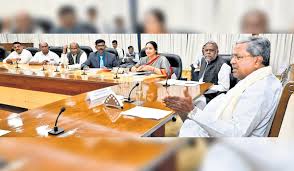
Ahead of the Cabinet meeting during which the internal reservation issue is scheduled to be discussed, Dalit Ministers held parleys to arrive at a possible broader consensus on the issue that has now driven a wedge among Scheduled Castes and left the Cabinet divided Ahead of the Cabinet meeting on Thursday during which the internal reservation issue is scheduled to be discussed, Dalit Ministers on Wednesday held parleys to arrive at a possible broader consensus on the issue that has now driven a wedge among Scheduled Castes and left the Cabinet divided. The BJP, meanwhile, has announced a State-wide protest against the confusion. Ministers from both the Dalit Right (Holeya) and the Dalit Left (Madiga) castes separately met Congress president Mallikarjun Kharge, the senior most Dalit leader in the State. Dalit Left Ministers K.H. Muniyappa and R.B. Thimmapur also met Dalit Right Minister G. Parameshwara to find a possible solution. Kharge’s guidance Mr. Muniyappa said they held a comprehensive discussion with Mr. Kharge on implementing internal reservation, and the latter gave guidance to arrive at a settlement. “A just and balanced sharing of reservation among the SCs will be discussed with the Chief Minister,” he said. The Cabinet is divided over the government’s decision to kickstart the recruitment process for 56,432 posts, adhering to the 50% cap in reservation and without internal reservation among SCs. While the Dalit Right Ministers are against internal reservation within 15% quota for SCs, the Dalit Left Ministers are insisting the internal reservation matrix should be drawn for the 15% quota. Meanwhile, defending the decision, another Dalit Right Minister Priyank Kharge told presspersons about the legal hurdles, “The government favouring social justice stopped recruitment process before the internal quota matrix was drawn. Based on empirical data, the legislature passed a law. How are we then against internal reservation? If someone goes to court, is it the government’s fault? There are a total of six cases in court.” Stating that everything had to be done legally, he said, “We have been transparent. We are ready to provide 6% as backlog. Let the court give its verdict.” On the opposition to 15% reservation for SCs, he said, “Is there empirical data for 15%? It (data) was (based on) a 15-year-old census. We do not know how it was arrived at.” State-wide protest Accusing the Congress government of meting out injustice to Scheduled Castes communities, the BJP has warned of a State-wide protest if provisions were not made for including internal reservation for SC communities during the proposed recruitment initiative. Addressing a press conference in Bengaluru on Wednesday, BJP State president B.Y. Vijayendra took exception to the decision to go ahead with the recruitment without internal reservation and also peg the total reservation quantum at 50% as against 56% provided by the erstwhile BJP government. He warned that this would create unrest among oppressed communities. Mr. Vijayendra accused Chief Minister Siddaramaiah of meting out injustice to Dalits despite coming to power with the support of communities from AHINDA (Kannada acronym for Minorities, Backward Classes and Dalits). He said that the government was citing the reservation issues being challenged before the court as an “alibi.” Right and Left divide The Dalit Left communities, under the Federation of Madiga Sanghas, are also seeking legal opinion about the government decision to keep away internal reservation from the recruitment process. A handbill issued to create awareness in the community terms the decision on internal reservation as “betrayal by Congress”. On the other hand, welcoming the government’s decision to hold recruitment with 15% quota and without internal reservation, the Federation of Karnataka State Dalit Right Communities has asked the government to reject the H.N. Nagamohan Das Commission report as “unscientific” since it had “under reported” the numbers of Dalit Right by spreading communities in various other categories. K.H. Muniyappa Courtesy : The Hindu Note: This news is originally published on https:/thehindu.com/bha and is used purely for non-profit/non-commercial purposes, especially human rights
Dalit outfit’s 13-year wait for Ambedkar statue ends in TN’s Erachakulam
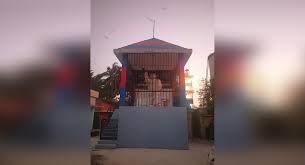
Sources said the authorities did not grant permission to the outfit to install the statue allegedly because it did not have patta land. KANNIYAKUMARI: Deputy Chief Minister Udhayanidhi Stalin is scheduled to unveil a nine-ft bronze statue of Dr BR Ambedkar at Arulgnanapuram in Erachakulam on Friday, bringing to fruition the 13-year-long struggle of Tamil Nadu Dalit Rights Protection Movement that has been trying to install the statue. Sources said the authorities did not grant permission to the outfit to install the statue allegedly because it did not have patta land. Vai Dinakaran, president of the outfit said the unveiling of the statue would help the DMK garner Dalit community votes in the district. After 13 years of struggle, we received permission from the district administration to instal a 9-feet bronze statue of Dr Ambedkar last year. We staged 42 protests for this over the last 13 years, including black flag protest, hunger protest and a month long continuous protest in 2024. Both the previous DMK and previous AIADMK governments refused permission stating the land meant for installing the statue was not a patta land. Hence, we brought 2.5 cents patta land and installed the statue.” The deputy Chief Minister unveiling the statue will make the Ambedkar followers happy and would help the DMK in the assembly election, he added. M Abdul Rabi Courtesy : TNIE Note: This news is originally published on https:/tkenewindianexpress.com/bha and is used purely for non-profit/non-commercial purposes, especially human rights