
AAP disengages from INDIA bloc, says alliance was only for 2024 LS polls
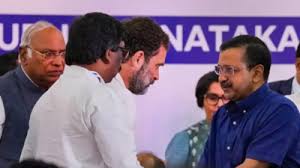
NEW DELHI: AAP on Tuesday disengaged itself from the INDIA bloc, saying the opposition grouping was formed only for the 2024 Lok sabha polls. It also alleged BJP and Congress had entered a “secret, corrupt deal”. The statement came as Congress and 15 other opposition parties wrote to PM Narendra Modi demanding a special session of Parliament on developments following the Pahalgam terror attack. AAP made the same demand separately. AAP national media in-charge Anurag Dhanda said on X , “The real alliance is between BJP and Congress behind the scenes. Rahul Gandhi says only that which benefits Modi politically. In return, Modi saves the Gandhi family from going to jail. Neither of them is interested in providing basic facilities like schools, hospitals, electricity and water to the countrymen.” “To clean Indian politics, we must end this behind-the-scenes collusion. Rahul Gandhi and Modi may appear as opponents on stage but the truth is that they’ve become guarantees of each other’s political survival. Congress’s weak politics empowers BJP, and BJP’s rule hides Congress’s corruption,” Dhanda alleged in a statement issued by the party later. Asserting that the INDIA bloc was formed specifically for the 2024 Lok Sabha elections, Dhanda said, “The alliance ensured that opposition parties secured 240 seats – this is a significant achievement.” He drove home the point that the alliance as far as AAP had lived its purpose and the party was not part of the bloc anymore. “AAP will contest every state election on its own. We will be contesting all seats in Bihar later this year, “ Dhanda told TOI. “In Parliament, however, our MPs will support the opposition’s position based on what is best for the country and our MPs will vote accordingly in both Lok Sabha and Rajya Sabha,” Dhanda said. AAP and Congress have had a turbulent equation even as INDIA bloc partners. After much to and fro on seat sharing talks and much resistance to the alliance from the Congress’s Delhi unit, the two parties finally did fight as allies in Delhi and also in Gujarat and Haryana in the Lok Sabha polls but were pitted against each other in Punjab. Later last year, the two parties failed to reach a consensus on seat-sharing in the Haryana assembly polls and fought against each other. In the Delhi assembly elections earlier this year too both parties fought a bitter battle that had put a big question mark on how both AAP and Congress would carry off as allies in the INDIA bloc. Courtesy : TOI Note: This news is originally published on https://timesofindia.com/ and is for use by the non-military/non-commercial community, especially those in the human rights sector.
Tragic Murder of Dalit Youth Sparks Investigation
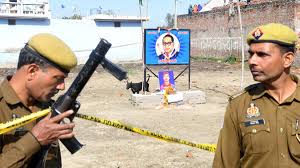
A 22-year-old Dalit youth named Sagar Kori was found murdered with his throat slit in a village. His body was discovered inside a cattle shed near his home after he went missing Tuesday night. Police have sent the body for postmortem and are investigating the crime. A shocking murder has unfolded in a local village where a 22-year-old Dalit youth, Sagar Kori, was found dead with his throat slit, police report. Kori, a resident of Pure Ram Chauhan ka Purwa, was discovered inside a cattle shed near his home after disappearing Tuesday night. His body surfaced early Wednesday. The local police, led by Sangrampur Station House Officer Brijesh Singh, have dispatched the body for postmortem and are actively probing the motive and potential suspects in this alarming case. (With inputs from agencies.) Courtesy : Devdiscourse Note: This news is originally published on https://devdiscourse.com/ and is for use by the non-military/non-commercial community, especially those in the human rights sector.
Judge rules federal prisons must continue providing hormone therapy to transgender inmates
WASHINGTON: The federal Bureau of Prisons must continue providing hormone therapy and social accommodations to hundreds of transgender inmates following an executive order signed by President Donald Trump that led to a disruption in medical treatment, a federal judge ruled Tuesday. US District Judge Royce Lamberth said a federal law prohibits prison officials from arbitrarily depriving inmates of medications and other lifestyle accommodations that its own medical staff has deemed to be appropriate. The judge said the transgender inmates who sued to block Trump’s executive order are trying to lessen the personal anguish caused by their gender dysphoria, which is the distress that a person feels because their assigned gender and gender identity don’t match. “In light of the plaintiffs’ largely personal motives for undergoing gender-affirming care, neither the BOP nor the Executive Order provides any serious explanation as to why the treatment modalities covered by the Executive Order or implementing memoranda should be handled differently than any other mental health intervention,” he wrote. The Bureau of Prisons is providing hormone therapy to more than 600 inmates diagnosed with gender dysphoria. The bureau doesn’t dispute that gender dysphoria can cause severe side effects, including depression, anxiety and suicidal thoughts, the judge said. The Republican president’s executive order required the bureau to revise its medical care policies so that federal funds aren’t spent “for the purpose of conforming an inmate’s appearance to that of the opposite sex.” Lamberth’s ruling isn’t limited to the plaintiffs named in the lawsuit. He agreed to certify a class of plaintiffs consisting of anyone who is or will be incarcerated in federal prisons. Trump’s order also directed the federal Bureau of Prisons to ensure that “males are not detained in women’s prisons.” In February, however, Lamberth agreed to temporarily block prison officials from transferring three incarcerated transgender women to men’s facilities and terminating their access to hormone therapy. The plaintiffs are represented by attorneys from the Transgender Law Center and the American Civil Liberties Union. Lamberth, a senior judge, was nominated to the bench by President Ronald Reagan in 1987. Courtesy : TOI Note: This news is originally published on https://timesofindia.com/ and is for use by the non-military/non-commercial community, especially those in the human rights sector.
INTERVIEW | ‘Basavaraju killing a success, but gun can’t kill ideology’
The killing of a top Maoist should not be seen as a death blow to the outfit, which has an extensive structure, says Ashok Prasad, former Special Secretary of Internal Security.The recent successes of security forces in their anti-LWE (Left-Wing Extremism) operations endorse the integrated policy of the government of the day, says Ashok Prasad, former Special Secretary of Internal Security and ex-Special Director of Intelligence Bureau. He tells Mukesh Ranjan that he exuded confidence that the state apparatus has now started dominating the military formations of the Maoists. Excerpts: How do you see one of the biggest anti-Naxal operations in recent times, in Chhattisgarh, where nearly 70 Maoists have been killed? It is a major achievement of the security forces. It is also a significant endorsement of the governments’ policy and integrated strategy. The multi-pronged strategy of successive Union governments has gained momentum and is beginning to dominate the military formations of the LWEs. The success is also due to the ‘All-India Response System’ in place. How significant an impact will the killing of Maoist leader Basavaraju have on the left-wing movement? The elimination of Basavaraju is a massive setback to Maoists and a devastating blow to the morale of the outfit’s ground-level cadre. His death will boost the morale of the security forces and inspire them to pursue the extremists more vigorously. This operation proves that nothing succeeds like success. However, the killing of a top Maoist should not be seen as a death blow to the outfit, which has an extensive structure. Do you agree that recent successes of the security forces signal the beginning of the end for Maoists? This is a complex question that does not permit a binary ‘Yes-No’ answer. Naxal movements in India are multifaceted and chronic sociopolitical phenomena that demand complex and persistent remedies. Violence is the most visible aspect, and the government’s strategy has made a significant dent in the movement, resulting in substantial containment of bloodshed below the tolerance threshold. The movement has suffered major setbacks in the past, too, but it has resurfaced. Will going aggressively against Maoist leaders and cadre eliminate Naxalism? The Centre has fixed a target to do it by March 2026. Aggressive actions can lead to higher attrition among the Maoist cadres and result in significantly lower levels of violence, as they would prefer escaping the wrath of the forces. However, aggression does nothing to undermine the political, ideological and social components of the Naxal movement and its public support, nor does it address the root causes, like perceived deprivation among people under the influence of Maoists, which gave birth to the movement in the first place. What more must the government do to choke their ideological, operational and financial bases? The government already has a constant, coordinated and focused strategy to deal with Maoist violence. Key progress has been made. Difficulties faced by security agencies and civil administration on the ground — especially those about access to terrains, communication and other resources — have been addressed. Other mitigation steps like surrender policy are major initiatives. But the main issue is the ideological and political appeal of Maoists among the masses, which you can’t kill with a gun. Do you think that alienation of the poor local population feeds and justifies the armed rebellion of Naxal leaders and cadres against the state? Poverty plays an important role in the spread of the Naxal movement, but the key lies in perceived inequality in resource availability and exploitation by those higher up in the food chain. These are exploited by vested interests in mobilising a support base, which is subsequently used to spread violence. While the moral and ethical justification for political violence is a subject of debate the world over, in the context of internal security, particularly in India, this is unequivocally illegal and undemocratic. Courtesy : TNIE Note: This news is originally published on https://thenewindianexpress.com/ and is for use by the non-military/non-commercial community, especially those in the human rights sector.
India’s Net Foreign Direct Investment Plummets by 96.5% to Reach Record Low

Net FDI stood at $353 million in fiscal year 2025, down sharply from $10 billion the previous year. New Delhi: India’s net foreign direct investment (FDI) plummeted 96.5% to a record low of $353 million in fiscal year 2025, down sharply from $10 billion the previous year. The Reserve Bank of India (RBI), in its latest monthly bulletin released on Wednesday (May 21), attributed the drop to large fund repatriations as investors exited through profitable initial public offerings (IPOs) and as Indian firms increased their investments overseas. A hot IPO market, featuring companies like Hyundai Motor and Swiggy, allowed long-term investors to realise significant gains. Simultaneously, Indian companies stepped up investments abroad to capitalise on shifts in global supply chains. The RBI stated that “Net FDI moderated…reflecting the rise in net outward FDI and repatriation FDI.” This decline in net FDI – the difference between gross FDI inflows and both outward investments by Indian companies and funds taken out by foreign entities – occurred despite a strong rise in gross FDI. Made with Flourish Investors withdrew $49 billion from India in FY25, an increase from $41 billion the year before. High-profile exits included those by Alpha Wave Global and Partners Group from major share sales like Swiggy and Vishal Mega Mart. A report by the Indian Venture Capital and Alternate Capital Association (IVCA) and EY highlighted that private equity and venture capital exits totaled $26.7 billion, a 7% year-on-year increase. Open market exits were dominant, though IPOs backed by private equity gained momentum. For example, Hyundai’s promoters took home proceeds from its Rs 27,870 crore listing as it reduced its stake. A key Swiggy investor reportedly made over $2 billion post-IPO. Telecom firm Singtel’s sale of its Airtel stake and tobacco company BAT’s divestment from ITC in March 2024 also likely contributed to the FY25 repatriation figures. These large IPOs often coincided with India’s stock market indices hitting record highs, such as the surge in late September of last year. Despite the drop in net figures, some see these trends positively. The IVCA/EY report suggested this activity signals a “mature market,” where foreign investors can smoothly enter and exit, which “reflects positively on the Indian economy.” Furthermore, gross inward FDI showed robust growth, rising 13.7% to $81 billion in 2024-25, according to RBI data. The central bank noted this investment remains concentrated, with over 60% flowing into manufacturing, financial services, electricity and energy, and communication services. Net inflows of ‘stable’ FDI were 86% lower than the $2.67 billion in ‘volatile’ portfolio flows for the year. Courtesy : The Wire Staff, The Wire Note: This news is originally published on https://thewire.com/ and is for use by the non-military/non-commercial community, especially those in the human rights sector.
Kerala HC allows transgender couple’s plea to have their names entered as ‘parents’, instead of father and mother, in child’s birth certificate
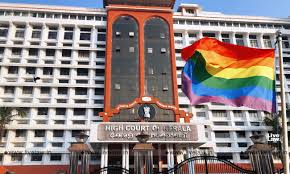
Kochi: In a significant judgment, Kerala high court has allowed a transgender couple’s petition to have their names entered in their child’s birth certificate as ‘parents’, by omitting the usual columns specifying ‘father’ and ‘mother’. The bench of Justice A A Ziyad Rahman passed the order on a petition filed by Zahhad, a transman, and Ziya Paval, a transwoman — both natives of Kozhikode and India’s first transgender parents. Zahhad had given birth to a child in Feb 2023. The birth certificate, issued by Kozhikode corporation under the Kerala Registration of Birth and Death Rules, 1999, listed Ziya as the father and Zahhad as the mother. The petitioners approached the corporation officials to change the details to reflect both as parents rather than as mother and father, but their request was rejected. The couple then approached high court, contending that Zahhad, now living as a man in society, being identified as the mother would cause complications in the future. They expressed concerns that a certificate indicating a man had given birth could cause difficulties for the child during school admissions, passport and Aadhaar applications, and other official processes. They sought a directive to denote them simply as ‘parents,’ without assigning the roles of father and mother. Allowing the plea, the bench directed the Kozhikode corporation to modify the birth certificate within two months by removing the columns for father and mother and incorporating the names of the petitioners as parents without referring to their genders. A detailed judgment is awaited. Courtesy : TOI Note: This news is originally published on https://timesofindia.com/ and is for use by the non-military/non-commercial community, especially those in the human rights sector.
Telangana IAS Officer to Principals: Make Students Clean Toilets — “They’re Not From Posh Families Where Food Appears at a Snap!”

The remarks have been widely criticized for their insensitivity and perceived reinforcement of caste-based stereotypes, particularly as they target students from Scheduled Castes (SC) attending TGSWREIS institutions, which were established to provide quality education and uplift marginalized communities. Hyderabad – A major controversy has engulfed Telangana’s social welfare education system following the viral spread of an audio clip on May 28, 2025, purportedly featuring Dr. V.S. Alugu Varshini, a 2012-batch IAS officer and Secretary of the Telangana Social Welfare Residential Educational Institutions Society (TGSWREIS). In the clip, Dr. Varshini is allegedly heard instructing school principals to assign students cleaning duties, including washing toilets and maintaining hostel rooms, as part of their daily routine. The remarks, which have drawn widespread condemnation, have ignited a fierce debate about caste discrimination, child rights, and the role of the Gurukul system in uplifting marginalized communities. The Controversial Audio Clip The audio, which surfaced on social media platforms, reportedly captures Dr. Varshini speaking at a recent review meeting with school principals. She is heard defending the assignment of cleaning tasks—such as sweeping floors, cleaning blackboards, washing toilets, and even cooking meals—as part of the state government’s “holistic education” model. “If any parent objects, tell them it is my order,” she allegedly said, criticizing principals for hesitating to implement these tasks due to fear of parental backlash. Dr. Varshini is said to have justified the directive by arguing that students, primarily from underprivileged and marginalized communities, do not come from “posh families where food appears at the snap of a finger.” She emphasized that such tasks teach essential life skills, claiming students would spend no more than 20 hours over six months on these activities, which she described as “not hard labour.” In the clip, Dr. Varshini reportedly cited her own experience as a student performing similar duties, referring to it as Shram Daan (voluntary service), and encouraged principals to share images of students performing such tasks in their groups as an example. She also addressed a specific instance where a student was asked to make rotis, questioning, “What’s wrong with that?” and suggesting it was a valuable learning experience. Furthermore, she allegedly warned that parents who threaten school staff over these tasks could face consequences, including show-cause notices and the potential expulsion of their children. The remarks have been widely criticized for their insensitivity and perceived reinforcement of caste-based stereotypes, particularly as they target students from Scheduled Castes (SC) attending TGSWREIS institutions, which were established to provide quality education and uplift marginalized communities. The viral audio clip sparked an immediate and intense reaction on social media, particularly on X, where users condemned Dr. Varshini’s remarks as exploitative and reflective of a “Manuvadi mindset” within the bureaucracy. The opposition Bharat Rashtra Samithi (BRS) swiftly condemned Dr. Varshini’s remarks, with MLC K. Kavitha labeling them “anti-poor” and exploitative. Kavitha highlighted that under the previous BRS government, each welfare school received ₹40,000 monthly to hire four temporary workers for cleaning tasks, a funding allocation she claimed was withdrawn by the Congress government since August 2024. She also noted that assistant caretakers were removed from 240 schools, forcing students to take on kitchen and cleaning duties. Kavitha demanded Dr. Varshini’s immediate removal from her post and strict action to address the issue. Dr. R.S. Praveen Kumar, a former IPS officer and ex-Secretary of TGSWREIS, who is credited with transforming social welfare schools into centers of excellence, also strongly criticized the remarks. Praveen Kumar, in a sharp post on x addressed to CM Revanth Reddy, questioned whether such directives were given without the minister’s approval, pointing out the hypocrisy of imposing such measures only on underprivileged students while elite corporate schools remain unaffected. He demanded that Reddy, along with his ministers and officials, lead by example by cleaning their own toilets daily and sharing proof with the public. Additionally, he urged sanitation workers to boycott the CM’s residence in protest. The letter, dedicated to SC/ST communities, accuses the Congress government of eroding the dignity of marginalized groups while they remain subjugated. “Jai Bhim. Jai Telangana,” he concluded, calling for an end to this discriminatory practice. Courtesy : Geetha Sunil Pillai, The Mooknayak Note: This news is originally published on https://themooknayak.com/ and is for use by the non-military/non-commercial community, especially those in the human rights sector.
Chittorgarh Cops Under Scrutiny After Failing to Apply POCSO & SC/ST Act in Dalit Minor’s Abduction Case
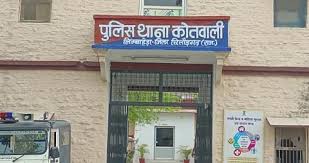
Following media exposure of the case, the SC/ST Act provisions were hurriedly added on May 29. Chittorgarh- In a shocking display of negligence, the Nimbahera Kotwali Police in Chittorgarh, Rajasthan, have come under scrutiny for their handling of a kidnapping case involving a 15-year-old Dalit minor girl. Despite the gravity of the crime, the police failed to invoke the Scheduled Castes and Scheduled Tribes (Prevention of Atrocities) Act (SC/ST Act) and the Protection of Children from Sexual Offences Act (POCSO Act), registering the case solely under Section 137(2) of the Bharatiya Nyaya Sanhita (BNS), 2023. Following media exposure of the case, the SC/ST Act provisions were hurriedly added on May 29. However, in this entire matter, while the investigation and action should have been handled by an officer at the Deputy Superintendent of Police (DySP) rank as per departmental rules, Nimbahera DySP Badrilal Rao was not even informed about the case. Child rights experts state that in cases involving minors, after recovery, the victim must be presented before the Child Welfare Committee to ensure a thorough investigation and appropriate action. On May 24, a Dalit woman residing in Bapu Basti filed a complaint at the Kotwali police station, stating that on May 23 around 3 PM, an accused from Bada Kasai Mohalla, Nimbhaheda, unlawfully entered her home and forcibly took away her 15-year-old minor daughter on a motorcycle. According to the woman, she was away for work in the neighborhood at the time, leaving her daughter and younger son alone at home. The son reported that the accused had forcefully abducted his sister. When the family went to the accused’s house to inquire about their daughter, the accused’s family responded by saying, “The girl will return, our son has taken her with him,” and threatened them against filing a police complaint. They also warned that if a complaint was lodged, something severe could happen to the minor. The Mooknayak spoke to the family, who revealed that the minor had previously known the accused but was no longer in contact. She had been living at her maternal grandparents’ home, while the accused’s residence was just eight to ten lanes away. The family suspects that multiple individuals may have been involved in the abduction. Despite several days passing since the complaint was filed, the Nimbhaheda Kotwali police have neither recovered the minor girl nor arrested the accused. Shockingly, in a serious case involving the abduction of a Dalit minor, the police failed to immediately invoke relevant sections of the SC/ST Act and the POCSO Act, indicating an attempt to downplay the gravity of the incident. Sources suggest that while the accused and the victim were previously acquainted, this does not diminish the severity of the crime. As per regulations, cases related to atrocities against Dalits must be investigated by an officer of Deputy Superintendent of Police (DySP) rank. However, Kotwali Station House Officer (SHO) Ram Sumer Meena assigned the case to a sub-inspector-level officer and deliberately avoided adding SC/ST Act provisions to prevent the matter from reaching higher authorities. This reflects the police’s arbitrary and negligent approach. The minor’s mother expressed her anguish, saying, “My daughter’s entire life is at stake. The accused has full support from his family, and we fear he may commit a serious crime against her.” The victim’s family has pleaded for immediate action and the safe return of their daughter. While the Rajasthan government has repeatedly affirmed its commitment to delivering justice for Dalits and marginalized communities, the local police’s conduct in this case raises questions about these claims. The SHO’s handling of the matter not only casts doubt on police functioning but also exposes a biased and irresponsible attitude in sensitive cases Courtesy : Geetha Sunil Pillai, The Mooknayak Note: This news is originally published on https://themooknayak.com/ and is for use by the non-military/non-commercial community, especially those in the human rights sector.
Casteist Abuse and Threats: Haryana Schoolboy Harassed, Police Delay FIR Despite Complaint
The delay in justice has left Jansu’s family in severe distress. Jansu has stopped attending school, fearing further harassment—a tragic blow to his education and mental well-being. Jind, Haryana- A shocking case of caste-based harassment has emerged from Christ Raja Convent School in Jind, where an 8th-grade Dalit student, Jansu Chauhan, faced prolonged abuse, threats, and intimidation from his classmate’s family—with alleged complicity from a school teacher. The incident, rooted in caste hatred, exposes the systemic failures of law enforcement and educational institutions in protecting marginalized students. The ordeal began with a minor argument between Jansu and his classmate Jivansh over a phone call. However, it escalated horrifically when Jivansh’s father, Vikas Sharma, and uncle, Deepak Sharma, called Jansu and subjected him to casteist slurs (“Chude, Chamaar, Bhangi”), death threats, and derogatory abuse. They allegedly threatened to strip his parents—a clear attempt to humiliate the family for their Valmiki (Dalit) identity. Jansu’s mother, a homemaker, revealed that this was not an isolated incident. In her police complaint filed on May 17, she stated that Vikas and Deepak had been harassing her son for three years, often waiting outside the school to intimidate him and record videos. She also accused a teacher, Hariom Koshish, of supporting the accused. Despite the severity of the complaint, Patiala Chowki Police Station in Jind failed to register an FIR immediately. It took eight days of relentless follow-up before Case No. 179 was finally filed on May 25, under Sections 296, 351(2), 3(5) BNS and Sections 3(1)(r) & 3(1)(s) of SC/ST (Prevention of Atrocities) Act, 1989 Shockingly, only Deepak Sharma was named in the FIR, while Vikas Sharma and teacher Hariom Koshish were excluded—despite being named in the complaint. The delay in justice has left Jansu’s family in severe distress. Jansu has stopped attending school, fearing further harassment—a tragic blow to his education and mental well-being. His mother’s struggle highlights how caste privilege manipulates police and legal systems, denying Dalit families timely justice. Currently, Deepak Sharma is in 14-day judicial remand, but activists demand action against all accused, including Vikas and the teacher. – Reported by Dr. Krishan Kumar, an expert on caste issues in Haryana. Courtesy : The Mooknayak Note: This news is originally published on https://themooknayak.com/ and is for use by the non-military/non-commercial community, especially those in the human rights sector.
25 Years Ago, This Student Changed His University — But No One Gave Him Credit
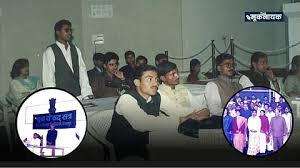
In the year 2000, Deen Dayal Upadhyay (DDU) Gorakhpur University held its annual Youth Parliament competition. Among the participants was Vikram Harijan, then a final-year BA student and a Dalit, who was selected to play the role of the Leader of the Ruling Party. The topic assigned to him was the Women’s Reservation Bill. .Today, Dr. Vikram Harijan is an Assistant Professor in the Department of Medieval and Modern History at Allahabad University. But back then, during the heated Youth Parliament session, Vikram raised a sharp, forward-thinking point: while the university debated women’s rights and representation, its own application forms and ID cards carried only the father’s name, leaving no space for the mother’s name. This issue sparked attention, and soon after, the university administration implemented changes to include mothers’ names on all forms and identity cards — a significant reform for the time. However, years later, as national debates around women’s issues resurfaced, Vikram claims the credit for this change was quietly shifted. According to him, then-Vice Chancellor Prof. Radhe Mohan Mishra began publicly taking sole credit for the reform, erasing the role played by Vikram and his original intervention. Vikram has shared with The Mooknayak several newspaper clippings from that time where his name was omitted, despite being the catalyst for the reform. In the Hindustan newspaper, many years later, the discussion on the women’s reservation bill that day was mentioned. But Vikram Harijan’s name was missing.Photo courtesy – by special arrangement Recalling the event from 25 years ago, Vikram says, “During my speech, I held up the university’s ID card and showed it to everyone. I said, ‘Today we’re discussing the Women’s Reservation Bill, but right here in our university, we don’t even have the option to include a mother’s name on official documents.’” The point resonated deeply among those present. Vikram remembers that after the session, Vice Chancellor Mishra acknowledged the issue, saying, “Women’s caste changes after marriage — there’s nothing I can do about that. But from today, the mother’s name will be included on all university forms and ID cards.” In the years that followed, however, Vikram noticed his name fading from the media coverage. Instead, the Vice Chancellor was credited as the sole reformer. Today, Vikram still expresses disappointment over this erasure, calling it “discrimination.” Reflecting on his student days, Dr. Vikram says, “I was naturally inclined towards debates, speeches, and writing competitions. I learned about the Youth Parliament and wanted to participate, but it wasn’t easy for me. After several attempts, and with the help of Prof. Ankur Gupta and Prof. Harsh Sinha, I finally made it in. I was chosen to lead the discussion on the Women’s Reservation Bill.” He vividly remembers quoting the legendary poet Sahir Ludhianvi during his speech: “Mardon ne banai jo rasmen, usko haq ka farman kaha, aurat ke jinda jalne ko, kurbani aur balidan kaha.” He spoke passionately about women’s rights and highlighted the university’s own shortcomings. “The next day, on February 11, all the newspapers covered the issue,” Vikram recalls. Fast forward to the present, Vikram says he felt overlooked again when Prime Minister Modi’s government passed the Women’s Reservation Bill in Parliament. “On that occasion, Hindustan newspaper ran a feature story. They quoted Ankur Sir and Harsh Sinha Sir, but there was no mention of the point I had raised in the Youth Parliament. The article simply quoted the Vice Chancellor saying that mothers’ names would now be included in university records. Photos of several people were published, but I was mentioned only in passing — just that I’m now an Assistant Professor at Allahabad University.” Courtesy : Rajan Chaudhary, The Mooknayak Note: This news is originally published on https://themooknayak.com/ and is for use by the non-military/non-commercial community, especially those in the human rights sector.