
Not all colours of the rainbow: How this new short film dives into the life of the LGBTQIA+ community, and more

What happens when you can be a transperson with your lover, but scared of coming out as Dalit? The short film Tara is looking for that answer, and an OTT home Often, the intersections that make a person, doesn’t fit into our version of reality. Tara, a 20-minute fictional film, beautifully puts across the conundrum of which part of ourselves is palatable to our nearest and dearest, even a lover. The protagonist of the movie, Tara, is a transwoman who falls in love with a heterosexual man. Tara is tapped into her female sensuality, and so when she meets Aman, the frontman of the band that is playing at a party, their chemistry is palpable. Writer-director Ashutosh S Shankar, who is a psychology graduate and spends his time between Mumbai and Pune, is a queer Dalit and explains that the story came out from the conversations of between his trans friend in Pune and him. “She and I kept talking about how we are forced to manoeuvre our way around our identities,” he says. The 26-year-old was more inclined to movies since his childhood. “I tried my hand at filmmaking. I did a couple of internships, I even worked at a production houses and took up director’s assistant gigs for a couple of years. At the same time, I was writing a bunch of scripts, getting a certain worldview of the politics, coming from the community. But I was also trying to make sense of these identities. I kept asking myself ‘How do I make sense of this?’” he adds. One of the things that really stood out to us was that when Tara takes Aman back to her place she asks him to wait outside the door for two minutes. When she finally opens the door to let him in there is a wall that seems to be missing a frame, only the rectangle imprint remains. Most might miss it, but for those who know, know. That comes from a personal experience of Shankar’s, he tells us. “Whenever my father’s colleagues would come home, we would hide Babasaheb’s portrait and it was after many years when we as a family decided that we are no longer going to do this anymore,” he explains. The expression on Tara is one of guilt and helplessness as she puts back the frame on the wall after Aman leaves. As we see Tara fall in love, we also see her fear developing — the fear of being found out — a fear that many from the Dalit community suffer from while navigating the world. “Right now am I in a position that I can say who I am, but many of us can’t because there are real life consequences that have to do with you earning a living if you come and say you are a Dalit,” he says. The movie is also produced by Zena Sagar, who herself is a transwoman, and has been one of the agitators leading the Against Trans Bill Campaign against the Transgender Persons (Protection of Rights) Amendment Act, 2026 which came to effect in March. “When we began making the movie a year ago, the Transgender Act was not there and now the release of the film is even more vital. People like Zena and hundreds of trans persons have been at the receiving end of transphobia and have been completely stripped of their autonomy,” he says. Currently, the film has been featured at film festivals, and the producers and Shankar are trying to find a limited release or even an OTT platform, but it has been difficult. “A theatre release is difficult for short films because of the duration so we are trying for some kind of OTT release, but the terms are very unfair,” he says. “One OTT platform offered us only Rs 40,000 which is not even a fraction of what it took us to make the movie to make with the additional rider that we cannot show the movies at any festivals. While it works for many, I am holding out for something better,” he adds. We hope Shankar finds someone because otherwise how will you know what happened between Aman and Tara? Our lips are sealed. Arpika Bhosale Courtesy : Mid-Day Note: This news is originally published on https:/mid-day.com/bha and is used purely for non-profit/non-commercial purposes, especially human rights
Dalit youth beaten for protesting the theft of a submersible pump: Caste-related abuses and death threats, FIR filed
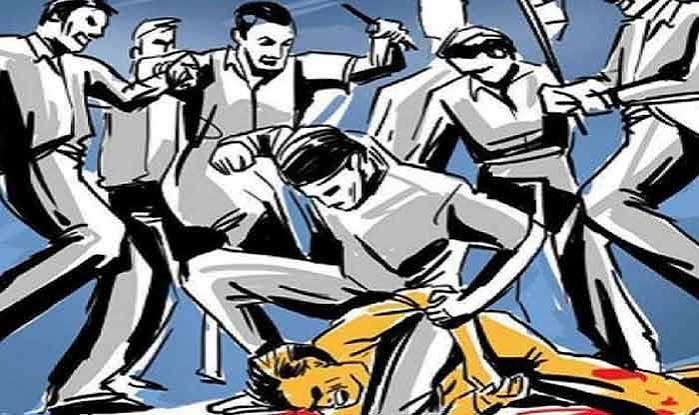
A Dalit youth was beaten and subjected to caste-related abuse in Suriyawan, Bhadohi, for protesting the theft of a submersible pump. Following court orders, police have registered a case against the accused, Ajay Shukla, and three unidentified individuals. The victim, Jawahar Lal Gautam, a resident of Mauramshala, stated that on the night of June 12th, he had attended a wedding. During the incident, the submersible pump was stolen from his hand pump. On June 16th, he learned that Ajay Shukla, a resident of Mauramshala (Khanapur), had stolen the submersible pump along with three or four unidentified individuals. The victim alleges that on the evening of June 18th, when he went to the house of the accused, Ajay Shukla, to ask for his submersible pump, Ajay hurled caste-related abuses at him, kicked and punched him, and threatened to shoot him if he returned home. After the incident, the victim filed a complaint with the Bhadohi Superintendent of Police after failing to receive a hearing at the local level. Police have subsequently registered a case under sections 303(2) (theft), 115(2) (voluntarily causing hurt), 352 (insult with intent to provoke breach of the peace), 351(3) (criminal intimidation) of the IPC and sections of the SC/ST Act and have begun an investigation. Shyam Shukla | Masudhi (Bhadohi), Bhadohi (Sant Ravidas Nagar) Courtesy: Hindi News
Mayawati Fires Nephew Akash Anand Again Despite Dalit Bahujan Leadership Vacuum
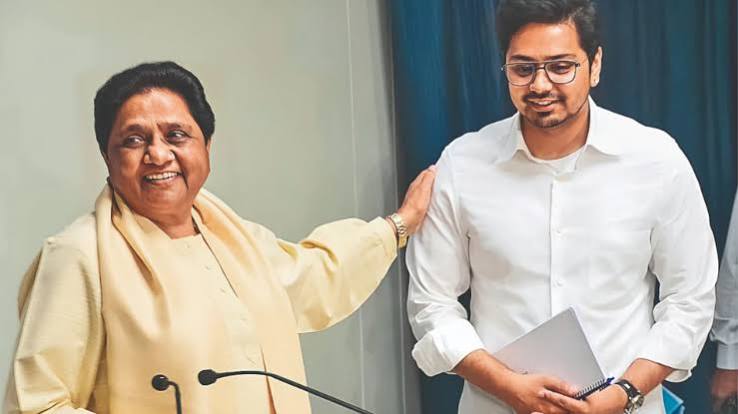
BSP sources claim Mayawati was upset Akash Anand had departed so drastically from her own measured, tame speeches. Mayawati’s repeated sidelining of Akash Anand, reliance on Satish Mishra and outreach to Brahmin, Thakur and Jat leaders reveal deep churn in the BSP and Dalit politics in UP ahead of 2027. Ajoy Bose asks: Can this confused strategy revive her party or speed up its decline? The Bahujan Samaj Party (BSP) supremo Mayawati publicly humiliating her nephew and political heir Akash Anand for the third successive year is a new low even for her erratic eccentricity. Coming as it does just a few months before the crucial Assembly polls in Uttar Pradesh, it is the latest blow to a party desperately struggling to survive in what was considered a decade ago as her political bastion. Anand, 30, had been inducted nearly three years ago by Behenji as her successor, ostensibly to rejuvenate the rapidly declining BSP, abandoned by a growing number of young Dalits in recent years. But she herself has shattered his credibility by forcing him on a bizarre rollercoaster ride, propelling him up and down in rapid succession. The young BSP leader’s fluctuating fortunes have seen him being anointed as her political successor in December 2023, abruptly sacked from his post in the middle of the 2024 Parliamentary poll campaign for harshly criticising the Bharatiya Janata Party (BJP) as “terrorist” and “Taliban”, his power reinstated soon after the elections, thrown out again a year later for anti-party activities along with his father-in-law and veteran BSP leader Ashok Sidharth, reinstalled after an abject apology but now once again stripped of his post for being “politically immature”. A Jibe at BJP Costs Anand His Job Insiders in the BSP revealed that the latest blunder by Anand that cost him his job, was a rousing speech at Jewar in Greater Noida late August that savagely indicted both the BJP state and Central government. Flagging off the 2027 election campaign, announcing the name of the local BSP candidate, the young Dalit leader, much like his aunt in her early activist days, used both rhetorical flourish and sarcastic wit to expose the many unfulfilled promises by the ruling party. Although he also criticised the Congress and the Samajwadi Party, the bulk of the speech was a frontal assault on the BJP which was repeatedly cheered by the sizeable crowd. Sources close to the BSP indicated that Mayawati was upset that nephew and successor had departed so drastically from her own measured and tame speeches. She is also believed to have been influenced by her chief adviser, confidante and lawyer Satish Mishra, who is known to be close to the BJP, that it was unwise for such a senior party leader to upset the state administration at such a sensitive period before the elections. Significantly, Satish Mishra already hugely influential has become even more powerful in recent weeks after the recent expulsion of the other important BSP Brahmin leader Anant Kumar Mishra for anti-party activities. Mayawati last month announced that the lawyer-turned-politician would be assigned more responsibilities in view of the coming elections and would be responsible for dealing with the Election Commission as well as his other responsibilities in managing legal and media matters. A veteran Dalit activist who was earlier close to the BSP supremo lamented, “Behenji has grown increasingly dependent on her lawyer’s advice and nobody else in the party really matters”. There is also talk of a revival of the Dalit-Brahmin alliance supposedly forged by Satish Mishra that swept the BSP to an incredible victory nearly two decades ago. Yet, there appears to be no sign of any surge of fresh support for Mayawati among Brahmins who abandoned her long ago as has other caste groups across the board, along with Muslims ,who now feel that under Satish Mishra’s influence the BSP has become a B-team for the BJP. Interestingly, while Akash Anand was missing from both the party meetings held by Mayawati to discuss Uttar Pradesh and national affairs, the new face that was prominent in the front rows was Prince Yukesh Singh, the son of the late BSP leader Uma Shankar Singh, a Thakur businessman from Ballia in eastern Uttar Pradesh. The recently deceased leader, a wealthy construction magnate who faced corruption charges that were later withdrawn with the help of the Uttar Pradesh government, had won three successive Assembly elections from Rasra constituency. BSP insiders said that Prince Yukesh, who has inherited his father’s business, was being groomed to take over his political mantle. There is also some consternation among Mayawati’s dwindling Dalit supporters about her surprising pursuit for electoral support from communities like Brahmin, Thakurs, and Jats who have traditionally been hostile to them. They were surprised at Mayawati’s open support to Jat leader Jayant Chaudhary in the latter’s recent verbal battle with Samajwadi Party leader Akhilesh Yadav. Indeed, considering the long battle between Dalits and Jats in western Uttar Pradesh, it is baffling how the most important Dalit leader has come out in defence of “the dignity of the Jat community”. This confused strategy by Mayawati not prioritising her goals of getting back her core Jatav base along with other Dalits before thinking of a grander all-caste alliance may cost her in the coming elections. Although the alternative Dalit leader Chandrasekhar Azad does not have either the professional cadre or Mayawati’s vast financial resources, he does have considerable personal charisma and a motivated volunteer force. While this may not be enough to win Azad’s party many seats, unless he comes to a deal or at least an understanding with the INDIA bloc, he is likely to draw away even more of the BSP base which dropped in the last Parliamentary polls to just nine percent. Mayawati could have arrested further decline and even improved her miserable performance in the last Assembly election of just a single seat, had she allowed Akash Anand to at least put up a serious fight as an Opposition party to
Dalit Consciousness and the Crisis of Democracy
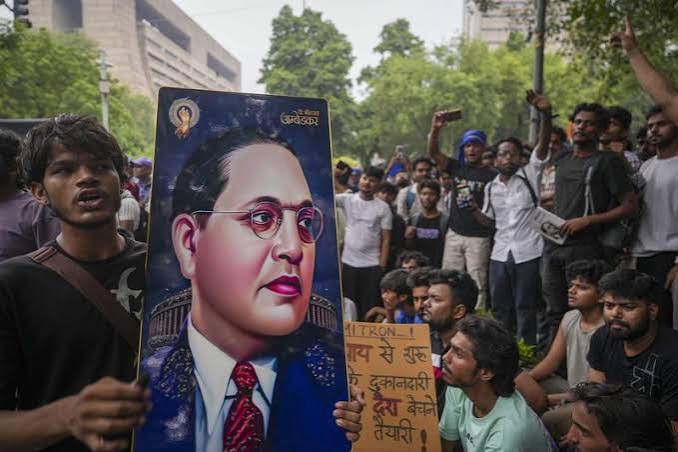
Elections, however regular, cannot sustain democracy if social hierarchies continue to deny dignity and equal opportunity to large sections of society. A Cockroach Janata Party (CJP) supporter holds a portrait of Dr Bhim Rao Ambedkar, as supporters gather during a protest march, at the Jantar Mantar, in New Delhi on July 20, 2026. Photo: PTI/Karma Bhutia. Since the Constitution came into existence, India has experienced a persistent crisis of democracy, irrespective of the political parties in power. One of the deepest structural causes of this crisis is the caste system, historically rooted in the Hindu social milieu, which continues to shape social relations and access to power. Dr. B.R. Ambedkar’s effort to bring justice, liberty, equality and fraternity into the constitution is diametrically opposite to the caste system. The Constitution is an excellent document that could function as a hand book for an elite society. Unfortunately, Hindu India was not prepared to accept the logistics of democracy and undo the inequality built into the caste system. Shudras and Dalits were prohibited from acquiring land, wealth, and education as per Hindu shastras. Therefore, the Constitution did not matter much to their lives. The fundamental rights surely gave rights to the oppressed. Article 14 guarantees equality before law. Article 15 prohibits discrimination on grounds of religion, race, caste, sex, or place of birth. Article 16 ensures equality of opportunity in matters of public employment. These rights, read together with the preamble and the directive principles of state policy, provide a vision of a society free from exploitation and upholding the dignity of every human being. Democracy beyond elections India is frequently celebrated as the world’s largest democracy. Since Independence, it has sustained universal adult franchise, periodic elections, peaceful transfers of power within a constitutional framework. These achievements are no less important in a nation marked by immense linguistic, religious and cultural diversity. Yet, democracy cannot be reduced to elections. Electoral competition is only one dimension of democratic life. Democracy becomes meaningful only when citizens enjoy equal opportunities to participate in public life and influence collective decisions. The distinction between procedural democracy and substantive democracy is therefore crucial. Procedural democracy ensures the right to vote; substantive democracy ensures that every citizen possesses equal dignity, equal opportunity, and equal access to justice. The crisis of Indian democracy emerges precisely from the widening gap between these two ideals. Ambedkar and the democratic revolution India became a republic on January 26, 1950. The written Constitution was adapted and at the implementation level, all the coveted posts were occupied by the privileged caste people. Ambedkar had expressed deep apprehension that political independence, without social transformation, could leave entrenched caste hierarchies substantially intact. Periyar E. V. Ramaswamy said that ‘After India was freed from British rule power was transferred into the hands of Brahmins’. Ambedkar’s campaign for the annihilation of caste did not achieve its intended result. It was his biggest disappointment. By that time, the Shudras, who were in the majority, had acquired some lands and properties and also indulged in some small-scale trading. The Vysyas, being less in number, had parted with their customs to dis-burden themselves. There were agitations and movements by members of the Shudra community in some pockets of the country. But the Dalits, the so-called untouchables, were left in the lurch. Their status quo remained as such intact. Brahmins and members of the dominant caste held power, both at the union and state levels, across the key institutions – the legislature, executive, judiciary and the media. The educational exclusion of Dalits and many other historically disadvantaged communities severely restricted their access to positions of power. The Constitution was limited only to procedural conduct of elections. The rest, like selection of candidates, voting pattern, allocating ministerial berths, all depended on the wishes of the dominant caste and continues to be the case till this day. The most important democratic achievement of the Constitution, in my view, was universal adult franchise – the principle of one person, one vote and one value – to which Ambedkar was deeply committed despite the opposition by many including the unassailable Gandhi. The vote gave Dalits a measure of political identity even when social equality remained absent. Speaking before the Constituent Assembly on November 25, 1949, Ambedkar warned that India was entering a life of contradictions. While there is political equality there is deep social and economic inequality. This contradiction, he argued, would eventually endanger democracy itself unless social democracy accompanied political democracy. Ambedkar recognised caste as the greatest obstacle to democratic citizenship. A society divided into graded inequalities cannot cultivate fraternity, and without fraternity, equality remains fragile and liberty becomes the privilege of the few. The Constitution therefore sought not merely to establish representative institutions but to initiate a social revolution against inherited hierarchies. The crisis of democracy in contemporary India The present democratic crisis in India manifests itself in multiple ways. Democracy has increasingly been equated with electoral victories. Governments derive legitimacy through elections, yet democratic legitimacy also depends upon constitutional morality, institutional autonomy, judicial independence, media freedom, and protection of civil liberties. Elections alone cannot guarantee democratic governance. This aspect needs to be looked into seriously. Especially the post-2014 government that has little respect for democratic norms. Firstly, the composition of the members in the selection committee to appoint the election commission was changed in 2023. The Chief Justice of India (CJI) was removed from the committee which selects the Chief Election Commissioner (CEC) and other members of the Election Commission (EC), thereby denying the participation of the judiciary in the democratic process raising concerns about the independence of the EC. Second, the ownership and editorial independence of sections of the mainstream media have increasingly become subjects of concern, particularly because of their perceived proximity to political and corporate interests. A section of the mainstream media has increasingly been criticised for functioning less as an independent watchdog and more as a supporter of the political establishment. The increasing concentration of media ownership and the
‘Formulate climate policy for marginalised’
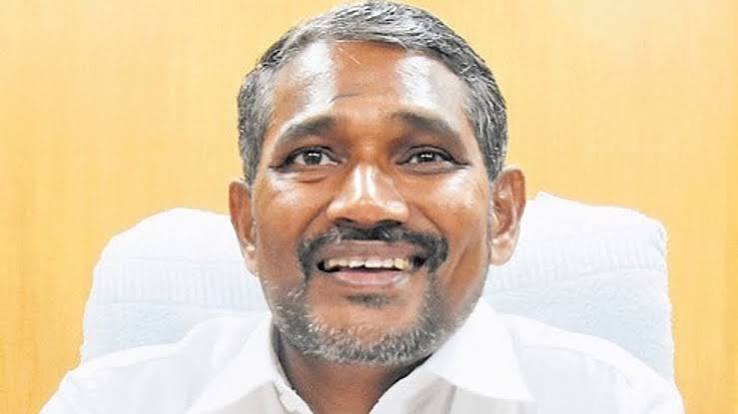
They also highlighted the role of sanitation workers, many of whom belong to Dalit communities, in restoring public spaces after disasters, while lacking adequate occupational safety. CHENNAI: Citing that Dalit and Adivasi settlements in several coastal districts of Tamil Nadu are facing disproportionate risks from floods, cyclones and extreme heat due to poor infrastructure and their location in low-lying areas, activists have sought a dedicated climate-justice policy for the marginalised communities. Following a consultation with activists from across the state, NGOs working in related fields recently submitted a charter of 16 demands to Social Justice Minister Vanni Arasu in this regard. In the charter, Comprehensive Society for Community Development Organisation (COSCO), in collaboration with National Dalit Watch of the National Campaign on Dalit Human Rights, said caste-based spatial segregation had pushed several SC and ST habitations into environmentally fragile areas. The organisations identified vulnerable settlements across Chennai, Cuddalore, Nagapattinam, Pudukkottai, Kancheepuram, Tirunelveli and Kanniyakumari, where they said inadequate drainage, drinking water, sanitation and healthcare infrastructure increased the impact of disasters and worsened inequalities. They also highlighted the role of sanitation workers, many of whom belong to Dalit communities, in restoring public spaces after disasters, while lacking adequate occupational safety. Among their short- and long-term demands is a state-supported programme to train youth in vulnerable coastal settlements in swimming, flood rescue and evacuation. Courtesy : TNIE Note: This news is originally published on https:/thenewindianexpress.com/bha and is used purely for non-profit/non-commercial purposes, especially human rights
Enes Kanter Freedom challenges WNBA leadership after Cathy Engelbert departure amid transgender athlete fight and Chicago Sky lawsuit
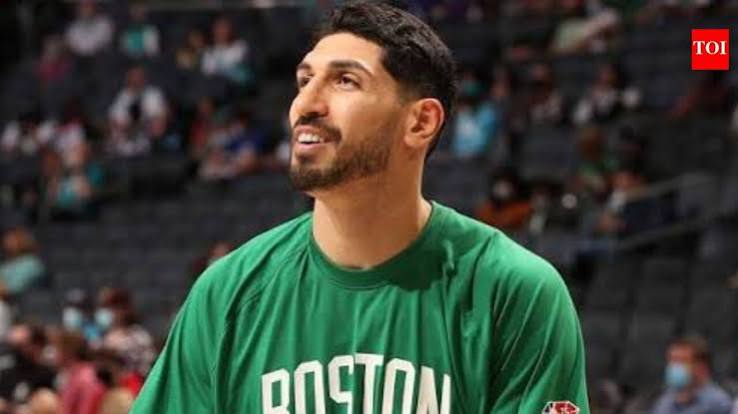
Former NBA player Enes Kanter Freedom has put himself forward as a possible replacement for WNBA Commissioner Cathy Engelbert, who announced on Friday that she will step down at the end of 2026. The move comes as Kanter Freedom remains at the center of the league’s debate over transgender athletes in women’s sports. His announcement also comes one day after he filed a federal lawsuit over his removal from a Chicago Sky game last month. Enes Kanter Freedom wants to replace Cathy Engelbert as WNBA commissioner Kanter Freedom made his position clear on Friday after Engelbert’s announcement. In a post on X, he wrote, “MAKE @WNBA FEMALE AGAIN,” before explaining why he believes he should lead the league. “Commissioner Freedom Has a Nice Ring to It. While the reported retirement of #WNBA Commissioner Cathy Engelbert is a win for women and an admission that the league’s rules must change, her retirement does not solve the systemic issues which must be addressed in order to protect women’s sports. “If the WNBA is unable to define what a woman is, then I, Enes Kanter Freedom, would be more than happy to step in as commissioner and lead this league back to greatness and restore fairness for all women. I’ll bring common sense. I’ll bring fairness. And yes, I’ll bring a dictionary.” Engelbert’s decision is not an immediate exit. According to the WNBA, she will retire at the end of the year after more than seven years as commissioner. The league said she will also help with the search for her replacement. Her time in charge has included major growth for the WNBA, but also criticism over issues including transgender athlete rules, player safety and officiating. The next commissioner will therefore take over at a time when the league is growing quickly while dealing with several difficult issues. Enes Kanter Freedom’s lawsuit follows Chicago Sky ejection Kanter Freedom’s commissioner push came just a day after he sued the Chicago Sky, the City of Chicago and the Metropolitan Pier and Exposition Authority over his removal from Wintrust Arena on Aug. 23. The incident happened during the Sky’s game against the Indiana Fever. Kanter Freedom was wearing a shirt that read, “WOMAN noun. adult human female,” before he became involved in a heated exchange with Sky guard Natasha Cloud. He was later escorted out and subsequently banned from attending Sky home games at Wintrust Arena. In his 15-page federal complaint, Kanter Freedom says his First Amendment rights were violated because he was removed while expressing his views. ESPN reported that the lawsuit was filed in the Northern District of Illinois. The Sky has given a different account of the incident. Team owner Michael Alter said Kanter Freedom stood up, moved toward the court and was viewed as a potential threat to player safety. Kanter Freedom, however, continues to argue that the incident was about his views on women’s sports and free speech. His latest move now places him in the middle of the WNBA’s leadership discussion as well as its ongoing transgender athlete debate. Courtesy : TOI Note: This news is originally published on https:/timesofindia.com/bha and is used purely for non-profit/non-commercial purposes, especially human rights
‘Bones will mend but shattered dreams?’ Rahul Gandhi meets Bihar student protesters shot at with AK-47
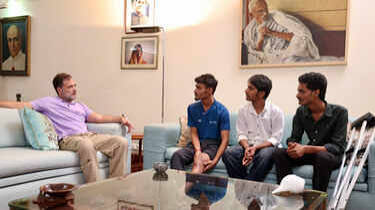
NEW DELHI: Congress leader Rahul Gandhi on Sunday shared a video of his interaction with three students who were injured during police action amid recent student protests in Bihar. The three were part of a group of students from Bihar who met the Lok Sabha leader of opposition at his Delhi residence on September 3. In a social media post, Gandhi said the three students had been “shot at”, referring to a protest in Siwan, Bihar, on July 25. “Think about it: what crime had these children committed that they were shot? They had asked the government for just three things — education, employment, and accountability,” the Raebareli MP wrote on X. The leg bone of one of the students, he added, was shattered after he was hit by a bullet fired from an AK-47. “Along with it, his dream of joining the Army and serving the country was shattered too. Bullets tore through the shoulders of two other students,” Rahul Gandhi wrote. “They were not criminals. They were children from poor families who had gone out to study carrying the dreams of their families — some wanted a good job, while others wanted to change the circumstances of their homes,” he added. The Congress leader further remarked that while their physical wounds would heal, there is no answer to how the psychological trauma they had suffered could be treated. “Mr prime minister, Mr chief minister — their broken bones will heal. Can you give them back their broken dreams?” Rahul Gandhi said, questioning Prime Minister Narendra Modi and Bihar chief minister Samrat Choudhary. Several parts of Bihar witnessed student protests, some of which turned violent, on July 25 as part of a broader agitation by the Cockroach Janta Party (CJP) in Delhi. The CJP was leading protests demanding the resignation of then-Union education minister Dharmendra Pradhan over the NEET paper leak issue, along with reforms in the education system. The CJP, which had been protesting at Delhi’s Jantar Mantar since June 21, called off its agitation on July 25, shortly after Pradhan resigned. Union minister Pralhad Joshi has since been given additional charge of the Education ministry. The Bihar government has told the Supreme Court that a police constable fired four rounds from an AK-47 into the air after being trapped in a crowd, while maintaining that no protester was injured in the firing. The constable has since been suspended. Courtesy : TOI Note: This news is originally published on https:/timesofindia.com/bha and is used purely for non-profit/non-commercial purposes, especially human rights
Punjab shunts DSP, lines 3 cops over ‘torture’ of youth who waved black flag at CM; Rahul dials victim
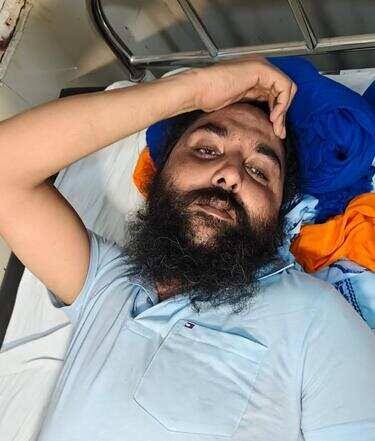
Patiala: Punjab govt and state police headquarters on Saturday transferred Sunam DSP Harwinder Singh and sent three other officers to Police Lines after a youth who waved a black flag at chief minister Bhagwant Mann alleged custodial torture. Lok Sabha Leader of Opposition Rahul Gandhi telephoned the youth amid mounting political pressure. Sangrur Rural DSP Dalbir Singh said Harwinder Singh had been posted to Police Training Academy in Bahadurgarh, Patiala. Inspector and SHO Prateek Jindal, sub-inspector and SHO Baljit Singh, and ASI Harpreet Singh were directed to report immediately to Sangrur Police Lines pending a departmental inquiry. Mohanjit Singh of Sheron village in Sangrur district’s Sunam subdivision climbed onto a rooftop and waved a black flag during an official gathering addressed by Mann on Sept 2, protesting against the state’s drug problem. Police detained him under Sections 126 and 170 of Bharatiya Nagarik Suraksha Sanhita. After securing bail, he was admitted to Sangrur Civil Hospital. Mohanjit alleged that police gave him electric shocks, pulled his beard, tore his religious symbol of faith, rubbed salt into his wounds and forcibly administered substances to fabricate a positive dope test. Punjab Pradesh Congress Committee president Amarinder Singh Raja Warring visited Mohanjit in hospital on Saturday and arranged the call with Gandhi, who praised his courage and pledged support. Warring demanded the officers’ dismissal and criminal prosecution. He and Punjab Leader of Opposition Partap Singh Bajwa petitioned National Human Rights Commission for an independent investigation. Congress also announced a statewide agitation to wave black flags wherever Mann travels. Sangrur police defended the preventive detention, describing Mohanjit as a history-sheeter named in eight FIRs, including cases involving attempt to murder, dacoity and Arms Act offences. Police said a mandatory medical examination before his production before the sub-divisional magistrate found no fresh visible injuries. Finance minister Harpal Singh Cheema condemned the incident and said the inquiry was examining the allegations. Sunam MLA and cabinet minister Aman Arora also condemned the episode, saying police officers he questioned had strongly denied the assault allegations. Courtesy : TOI Note: This news is originally published on https:/timesofindia.com/bha and is used purely for non-profit/non-commercial purposes, especially human rights
‘Trust shattered’: Rahul backs students protesting against MPSC paper leak in Maharashtra
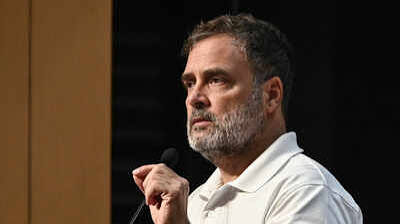
NEW DELHI: Lok Sabha leader of opposition Rahul Gandhi on Sunday backed students protesting against alleged irregularities in Maharashtra Public Service Commission (MPSC) examinations, saying that “every student is tormented by the BJP regime”. In a post on X, Rahul said thousands of students were protesting in Maharashtra because their trust in the system had been “shattered”. “In Maharashtra, thousands of students are on the streets, protesting peacefully – the reason isn’t just one exam or recruitment, but a trust that’s been shattered by the entire system,” Rahul said. “Whether it’s the central or state government, every student is tormented by the BJP regime. Paper leaks, stalled recruitments, the unbearable cost of education, inhumane conditions in hostels, food like poison, fraud in DBT and now, they’ve seized control of a constitutional body like MPSC and destroyed its credibility,” he added. The Congress leader urged the government to listen to the students and act immediately, warning that their protests would grow louder until justice was served. “Every demand from students for their successful future is justified. The government must listen to their voice and act immediately – otherwise, this echo of the students will only grow louder until justice is served,” Rahul said. Rahul’s remarks came amid an ongoing Mumbai Police probe into the alleged leak of the question paper for the MPSC Food and Drug Administration (FDA) Inspector examination. MPSC conducted the offline examination for Drug Inspector posts on March 22. Candidates had subsequently raised concerns over a possible paper leak, but alleged that their complaints were not acted upon. The recruitment process was later completed, with a merit list of 488 candidates published. MPSC has since cancelled the recruitment process for Drug Inspector Group-B posts under the Food and Drug Administration Department following a preliminary inquiry into alleged malpractice in the screening examination. A police inquiry prima facie indicated that one candidate had received the question paper before the examination and benefited from it, the commission said. It added that it considered the seriousness of the findings before deciding to cancel the recruitment process. Police have also arrested six people, including three MPSC officials, in connection with the alleged question paper leak in the 2026 Drug Inspector Group-B screening examination, which has now been cancelled. Courtesy : TOI Note: This news is originally published on https:/timesofindia.com/bha and is used purely for non-profit/non-commercial purposes, especially human rights
8 Indian Transgender Celebrity Promoting LGBTQR+ 2025
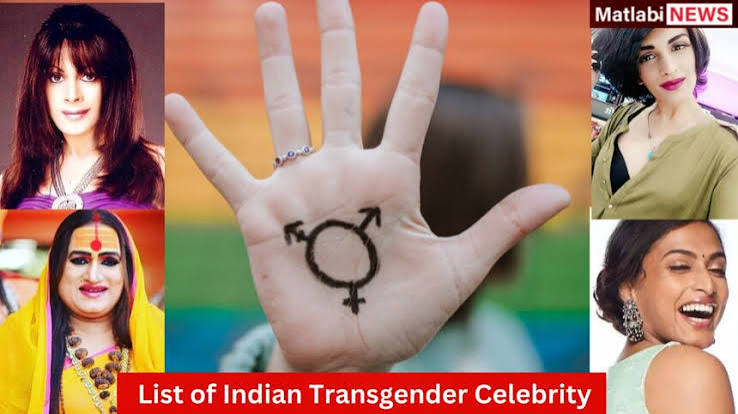
8 Indian Transgender Celebrity Promoting LGBTQR+ 2025. The LGBTQ group, for a very long time, has been fighting for their rights in every country all over the world so that the government of that country allows people to marry on their wish. Most countries, including India, ban people of the same sex from marrying each other. Gay, bisexual, lesbian, and transgender people are fighting for their rights so that same-sex marriage becomes legal in India. Many transgender people are also fighting for their rights to equality in many workplaces. The Indian entertainment industry has always been welcoming for trangenders as well. Let’s uncover the list of Indian transgender celebrities that have been working in Bollywood. Indian Transgender Celebrity List Bobby Darling Trinetra Haldar Gummaraju Ivanka Das Kalki Subramaniam Padmini Prakash Anjali Ameer Laxmi Narayan Tripathi Gaurav Arora Bollywood movies, as well as the other entertainment industry, have been welcoming and supportive to the transgender community and these people who have been working in the industry are the live proof of that. Let’s go with the list of Indian transgender celebrities. Bobby Darling A very popular Bollywood personality who was formerly known as Pankaj Sharma as a male and now is transitioned into Bobby Darling who considered herself as female. She has been part of many popular Bollywood movies like Apna Sapna Money Money, Kya Kool Hain Hum and Tum Dick and Harry. Trinetra Haldar Gummaraju Trinetra Haldar is an Internet personality who is a doctor as well a content creator who documented the series of transitions from being a male to female. She educate people regarding this sensitive topic and also flaunts her sexuality proudly. Ivanka Das A beautiful transgender woman who is model, actor, dancer, as well as choreographer. She has appeared in many reality shows like dance Deevani and was featured in the Netflix web series, Bombay Begum. Vanita Kharat Vanita Kharat Played Maid in Kabir Singh. Know All About Her 2026 Kalki Subramaniam Another very beautiful transgender woman who has been working in the entertainment industry and got her recognition for her role in Sarkar in a song called Oru Viral Puratchi. She majorly works in the Tamil movies and in few Hindi movies as well, with being an actress, she is also a transgender activist. Padmini Prakash Padmini Prakash is not from the entertainment industry, but a popular celebrity as she is the first Indian transgender news anchor. She joined the Tamil Channel Lotus News Channel in 2014. Anjali Ameer Another transgender woman who is an actress majorly work in Malayalam film industry. She is known for a role in Tamilian Film Peranbu where she got her recognition all around India. Laxmi Narayan Tripathi Laxmi Narayan is a famous personality as well as actress from the Bollywood industry. With that she is a dancer and a motivational speaker, she is well known for her activism for the transgender community and their rights. Gaurav Arora Gaurav Arora now known as Gauri Arora is it transgender woman who came out in a reality show in India. She is an actress as well as model who has been worked in multiple movies as well as TV shows like Love Games, Raaz Reboot and Aadha Ishq. Supritha Sathyanarayan Supritha Sathyanarayan: The Engineer Who Walked Away From UST Global to Become One of Kannada TV’s Favourite Faces Conclusion All these transgender women are happy about their transition and share their stories proudly on social media as well as with people around them. Although they have to face some difficult times with some people who still treat transgender people in a different way, it is time that we accept a sexuality and move on with our own lives. So this was 8 Indian Transgender Celebrity Promoting LGBTQR+ 2025. I hope you have found the answer to your question. For all the latest updates regarding entertainment and fashion, stay tuned with Matlabi News, your one-stop solution for all hot trends and gossip. Courtesy : Matlabi News Note: This news is originally published on https:/matlabinews.com/bha and is used purely for non-profit/non-commercial purposes, especially human rights