
Ballia: Case filed against BJP leader for threatening to kill SC research scholar
BJP leader Alok Singh accused of abusing and threatening to kill a SC research scholar of Lucknow University over phone, case filed on basis of viral audio clip. Ballia (Uttar Pradesh): A Bharatiya Janata Party (BJP) leader, believed to be close to former Prime Minister Chandrashekhar’s son and Rajya Sabha MP Neeraj Shekhar, has been accused of abusing and threatening to kill a SC research scholar of Lucknow University. Police informed on Tuesday that a case has been registered in this matter. According to police, an FIR was lodged at Ubhaon police station late Monday night on the complaint given by Deepak Kanaujia, a resident of Turtipar village. Deepak Kanaujia, who is a research scholar at Lucknow University, alleged in his complaint that BJP leader Alok Singh called him on May 21 and used caste-related abusive language and threatened to kill him. According to the complaint, during the conversation, Alok Singh said, “Record this, I am not afraid of the administration or law and order of Uttar Pradesh.” Arun Kant Tiwari, BJP’s Bilthara Road area president, confirmed that Alok Singh is associated with the party and is also a close relative of Neeraj Shekhar. Deepak Kanojia also alleged that Alok Singh has had a long-standing political dispute with his family. He said that his father, Kamlesh Kanojia, was under stress due to constant harassment and due to this he died of a heart attack on October 31, 2023. Deepak feared that Alok Singh may now harm his mother, who is living alone in the village. Superintendent of Police Omvir Singh said that an audio clip related to the threat had recently gone viral on social media. In this case, a preliminary investigation was conducted by Rasra Circle Officer Alok Gupta, on the basis of which a case has been registered against the accused Alok Singh under sections 352 (intentional assault) and 351 (3) (criminal intimidation) of the Indian Penal Code (BNS) and sections of the SC / ST (Prevention of Atrocities) Act. Courtesy: Rajan Chaudhary, Hindi News
Dalit woman attacked in Karnataka, customer hurled casteist abuses – CCTV footage viral

An argument over a 500 rupee note in Kundapur, Karnataka, turned into casteist remarks and violence; police register case. Karnataka: A case of casteist attack and abuse on a Dalit woman has come to light in Mavinakatte area of Kundapur taluk in Udupi district. It is alleged that the victim Lakshmi, who works in a medical shop, was attacked by customer Yasmin and casteist slurs were used. Yasmin got angry on suggestion of digital payment, incident captured in CCTV According to a report by News Karnataka, a woman named Yasmin wanted to buy medicine by paying a 500 rupee note. When Lakshmi told that there was no change in the shop and she suggested PhonePe or digital payment, Yasmin lost her temper. The argument escalated to a scuffle and casteist abuses. The entire incident was recorded in the CCTV camera installed in the shop, the footage of which has now gone viral on social media, seeing which people are angry. Victim admitted to hospital, SP visits Lakshmi, injured in the attack, has been admitted to Kundapur Taluk Hospital. As soon as the incident was reported, Udupi District Superintendent of Police Hariram Shankar reached the hospital and met the victim and went to the shop to inquire about the matter. Speaking to the media, the SP said that the matter is being taken seriously and strict legal action will be taken on the basis of evidence. A case has been registered at Kundapur Rural Police Station and investigation is underway. Dalit organizations demand strict action This incident has increased tension at the local level. Dalit organizations and social workers have demanded strict action against the accused under sections of the Indian Penal Code including Section 3 of the SC/ST (Prevention of Atrocities) Act. The police is investigating the CCTV footage and statements of eyewitnesses are being recorded. Frontline workers need respect and social reform This case not only exposes the truth of caste discrimination, but also shows the kind of abuse frontline workers face in their everyday lives. Social activists have demanded speedy justice and social reform in such cases. The administration has assured that the case will be investigated impartially and the culprits will be punished according to the law. Courtesy: Rajan Chaudhary, Hindi News
Dalit woman judge sought leave, Jharkhand High Court made ‘adverse remarks’ in ACR — Supreme Court issued notice!

Allegation of adverse remarks being recorded after filing a petition in the Supreme Court against denial of child care leave. New Delhi: The Supreme Court on Wednesday issued a notice to the Jharkhand High Court. This notice has been issued on the latest application filed by a Dalit woman judge, in which she has alleged that adverse remarks were made in her Annual Confidential Report (ACR) after filing a petition in the apex court against not getting childcare leave. A bench of Justice Prashant Kumar Mishra and Justice Manmohan recorded the argument of senior advocate A.K. Sinha, who appeared on behalf of the Jharkhand High Court. He told the court that as per the suggestion given by the Supreme Court on June 6, the High Court has now decided to grant 92 days of childcare leave to the woman judge. However, the counsel appearing for the judge raised serious concerns before the bench and said that the adverse remarks were made in the ACR only after the petition was filed on May 23. The judge’s counsel said, “One more thing is very disturbing. Some remarks have been made in my ACR now, which have been made after the filing of this petition. I am an officer from the Scheduled Caste category and I have disposed of a large number of cases.” He also said that the judge concerned is “one of the best performing officers.” The counsel questioned the timing of the ACR remarks and said, “Please look at the timing…” To this, the Supreme Court directed the Jharkhand High Court administration to file a reply to the allegations levelled by the judge that adverse remarks were made in his ACR after the petition was filed. Courtesy : Rajan Chaudhary, Hindi News
Dalit child did not get prasad in the bhandaar in Unnao, was beaten up with casteist abuses!
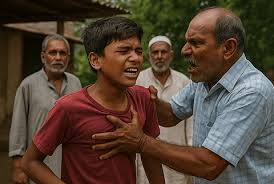
A case of alleged caste discrimination and assault on a Dalit teenager who had gone to take prasad in a bhandaar in Bangarmau area of Unnao district of Uttar Pradesh has come to light. On the complaint of the victim’s family, the police have registered a case under the SC-ST Act and other sections. Unnao (Uttar Pradesh): A case of assault on a Dalit teenager who had gone to take prasad in a bhandaar in Mohaddinpur village of Bangarmau Kotwali area of Unnao district, using casteist abuses, has come to light. The incident took place on the last Tuesday of the month of Jyeshtha, when a bhandaar was organized in the village by Radhelal and Pyarelal, sons of Hiralal. According to the report published by the magazine, the victim Sumit (son Pradeep) had gone to take prasad in the bhandaar, but it is alleged that he was not given prasad. At the same time, the victim’s father Pradeep alleged that while beating the child, he was told, “This bhandaar is not for you.” Not only this, he was also prevented from entering the temple. When Pradeep reached to talk to the organizers about this incident, he was also abused and casteist words were used against him. Pradeep has also recorded a video of this entire incident, which has been handed over to the police as evidence. What did Bangarmau police say? Bangarmau Kotwali in-charge inspector Chandrakant Singh informed that an FIR has been registered against Radhelal and Pyarelal on the complaint of the victim Pradeep son of Babulal. A case has been registered against them under the SC-ST Act and the relevant sections of the Indian Justice Code (BNS). The police have arrested both the accused and the legal process is going on. Courtesy: Rajan Chaudhary, Hindi News
Dalit minor girl sexually abused for over two years by 14 people, seven arrested

A case of prolonged sexual abuse came to light in Anantapur, Andhra Pradesh, after six people, and a minor, were arrested in connection with a reported gangrape of a Dalit minor girl. The 15-year-old was sexually abused for more than two years by 14 people, sources said. Six individuals were arrested, and a juvenile was detained, in connection with an alleged serial gang-rape of a Dalit minor girl in Puttaparthi area of Andhra Pradesh’s Anantapur district. According to the police, the six accused were remanded to judicial custody for the alleged sexual abuse of a 15-year-old girl over a period of two years. District Superintendent of Police V Ratna, at a press meet on Monday, revealed the details of the crime, saying that the case came to light in the Edgurallapalli village under Ramagiri mandal of Puttaparthi area of the district. She said all six accused were arrested on June 9 after a case was registered, based on a complaint filed by the survivor. According to the officer, the arrested were identified as Achampalli Vardhan (21), Talari Murali (25), Badagorla Nandavardhan Raj, alias Nanda (23), Arencheru Nagaraju, alias Haryana Cheruvu Nagaraju (51), Boya Sanjeev (40), Budida Rajanna (49). In the complaint filed by the survivor, the seven accused, along with seven others, allegedly took turns over a period of two years and sexually assaulted her. The investigation is underway to apprehend all persons involved in the case. The seven others named in the complaint are said to be on the run, the police said. The case is registered under various relevant sections of Bharatiya Nyaya Sanhita – 2023 (BNS), Protection of Children from Sexual Offences Act – 2012 and Information Technology Act, 2000. Meanwhile, Andhra Pradesh Chief Minister Nara Chandrababu Naidu expressed anguish over the gangrape and another murder of a woman in the state. He called for swift action in the cases and stressed anguish that the accused must be punished without delay. “Officials must complete investigations quickly, file charge sheets and ensure the trials are concluded at the earliest. Strong evidence must be gathered with utmost care to ensure the harshest possible punishment to all the accused,” he said. However, YSR Congress Party president and former chief minister Jagan Mohan Reddy alleged that the accused in the case were linked with the ruling Telugu Desam Party. In a long post on X, Jagan accused the Naidu government of being apathetic towards crime. “As an indicator of Govt’s insensitivity, the state has witnessed 188 rapes and 15 rape-murders in one year. Even recently, an Intermediate tribal student of Anantpur Dist. was found murdered and her body dumped in woods with signs of a brutal attack,” the post read. In the post, Jagan also questioned the TDP-led government’s attitude and action towards women, calling it “disgraceful” and “preposterous”. “Is this the safety they promised? Is this the dignity they protected?” he said in conclusion. Courtesy : Apoorva Jayachandran, India Today Note: This news is originally published on https:/indiatoday.com/ and is for use by the non-military/non-commercial community, especially those in the human rights sector.
“When has there been no heat?” Dalit lives in climate crisis
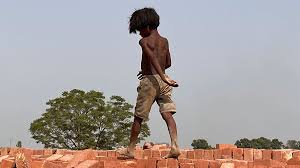
India has been grappling with intense heat waves in recent years and is witnessing a burgeoning literature dealing with heat stress. Out of 28 states in India, 23 have made their Heat Action Plans to manage heat stress in their respective jurisdiction. From media reports to academic studies, one aspect that is always at the centre is the vulnerable groups who are at risk of heat waves and are divided mainly based on two conditions- gender and poverty. These are the two overriding categories under which the identity of caste is subsumed in the discourse of heat stress vulnerability. I find the ongoing discourse to be caste blind: on one side, there is a reluctant acknowledgement in some places that people from the marginalised castes are at risk, while on the other side, questions such as who these marginalised caste people are, what are their experiences of suffering, and how their vulnerability is exacerbated by heat stress and climate change remain largely unexplored. “When has there been no heat? When have there not been high temperatures? High temperatures have always been there. There might be a difference of a degree or two. This year the high temperature is 46, last time it might have been 45. High temperature is a fact every year and bring immense pain every time. Only someone who has worked at the brick kilns or is currently working can really understand what this pain feels like.” This is how Ram Kumar, a Dalit brick kiln worker from Rajasthan, described his plight of facing the brunt of extreme heat stress. In the Hindu caste order, Dalits have historically been relegated to ritually polluted occupations, which not only are considered polluted by others but are also insidious to the well-being and health of Dalits. One such example is that of the Brick kiln industry, which employs more than 10 million migrant labourers who are predominantly from Dalit and Adivasi communities. Various estimates suggest that more than 50% of labourers at Brick Kilns come from Dalit communities. Working at Brick Kiln requires working under the heat stress at every stage of the work, from the procurement of the clay, its tempering and moulding, drying of the constructed bricks, firing (which exposes the worker to even more heat), to loading and unloading of the bricks. Under these circumstances, what Ram said about heat becomes more relevant to reflect on. The Dalit labourers at Brick Kilns have always suffered the afflictions of heat waves and are the worst affected by them; however, a discussion on occupational heat exposure of informal labourers has only started recently under the name of climate change. In another conversation, a Dalit migrant worker from Bihar shared, “We have no option but to suffer; the dwelling stays very hot inside throughout the day and night- we are forced to sleep outside.” This quote highlights the poor infrastructure of his dwelling and the lack of adequate cooling mechanisms. For people like him, the shade of a tree is the only respite during heat waves. During frequent visits to brick kilns in western Uttar Pradesh, I always encounter labourers taking shelter under the trees during the afternoon, while their small children play around them in the nearby fields. Generally, moulders at the brick kilns are provided with solar panels to meet their electricity consumption; however, these panels can only help them to charge their phones and light one bulb at night to work. From March to June, when there are frequent heat waves, moulders shift their timings to early morning and late night and live in a continuous sleep deficit. Shifting work timing is one of the few aspects under their control, as the production of bricks is based on the piece rate wage system, which, despite being exploitative, offers them some freedom to choose the timing of work. However, the substandard living conditions of kiln workers, marked by a lack of sufficient potable water, basic sanitation, and adequate shelter, remain entirely beyond their control. For instance, the roof of their 5-feet-high dwelling is made up of tin, which is considered a heat-trapping material, and therefore, in times of heat waves, the tin roof leads to an increased temperature inside the hut day and night, forcing them to take shelter under the open sky. Many other factors, including child labour, characterise the brick kiln industry. On my routine visits to brick kilns, I also encounter numerous small children, aged between 5 and 14, playing with mud bricks. They do a variety of labour owing to the piece wage rate system, which incentivises child labour, ranging from moulding to loading and unloading bricks. Except for very rare kids, most children’s fate at the brick kilns is the same. With their birth, their fate is predestined to work at the kilns- inheriting a life of toil not by choice, but by caste. All the children I interviewed had been helping their parents with moulding since their early years. Many of them bore visible injuries and rashes — mosquito bites from sleeping outside their hutments. As Ramesh explained, “the dwelling releases hot gas at night, making it difficult to sleep indoors.” In addition to this, several children had sustained injuries from heavy bricks falling on their hands and feet while working. Most of the time, Kilns are situated at rural-urban peripheries, which are far from the local schools, and because of the absence of transport and money, the children assist their parents to finish their targets. Because of their Dalit identity, many times they are subjected to caste slurs that are normalised in the guise of jokes by the local employees. French sociologist Edgar Morin brought the concept of polycrisis, which refers to a set of interwoven and overlapping crises involving complex inter-solidarity of problems, antagonisms, crises, uncontrollable processes, and the general crisis of the planet. The life of Brick Kiln workers is an example of this polycrisis, which is exacerbated by anthropogenic climate change and where debt bondage, piece rate
40-year-old Dalit manual scavenger falls into manhole in Tamil Nadu; dies
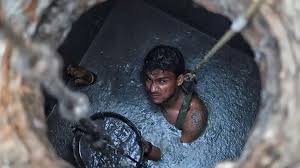
In January this year, the Supreme Court banned manual scavenging in all major cities, including Hyderabad, and warned criminal action against officers or contractors still engaging in it. A 40-year-old Dalit manual scavenger died on Sunday, June 8, after he accidentally slipped into a manhole while trying to clean a sewage in Tamil Nadu’s Thoothukudi district. The incident occurred behind the Tiruchendur Government Hospital. The deceased has been identified as Sudalaimani, who hailed from Tirunelveli district. Sudalaimani worked as a contract worker. On Sunday, he along with other sanitation workers, was deployed by the Tiruchendur municipality to clear a blockade in an underground drainage system located behind the hospital. While trying to enter the manhole, Sudalaimani slipped and fell inside. Although he was pulled up by the fire and rescue team and rushed to the government hospital, doctors pronounced him dead on arrival. A case under section 194 (accidental death) was registered. However, there is mention of death due to manual scavenging, The News Minute reported. Manual scavenging in India The Manmohan Singh-led UPA government introduced the Prohibition of Employment as Manual Scavengers and Their Rehabilitation Act, 2013, banning all forms of manual scavenging, including the handling of human excreta, in India. It is a cognizable and non-bailable offence. Lakdikapul Gated CommunitySt JosephsGermanten Hospital However, under Section 2(g) of the Act, a manual scavenger is defined as a person who manually cleans, carries, disposes of, or handles human excreta from insanitary latrines, open drains, or pits connected to such latrines, as well as from railway tracks or similar locations. Importantly, this definition does not cover those working in sewers or septic tanks and further states that workers who use protective equipment are not considered manual scavengers. In 2014, the Supreme Court ordered compensation of Rs 10 lakh to families of those who died while cleaning sewers and septic tanks. In January this year, the top court banned manual scavenging in all major cities – Chennai, Hyderabad, Delhi, Bengaluru, Kolkata and Mumbai – and warned criminal action against officers or contractors still engaging in it. Courtesy : TSD Note: This news is originally published on https:/thesiasatdaily.com/ and is for use by the non-military/non-commercial community, especially those in the human rights sector.
Congress Expels 5-Time MP, Digvijaya Singh’s Brother, For ‘Derogatory Remarks’ On Rahul Gandhi
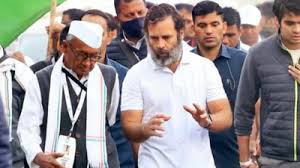
The Congress party expelled Laxman Singh, a former MLA and brother of ex-chief minister Digvijaya Singh, for six years due to alleged anti-party activities. The Congress on Wednesday expelled former Madhya Pradesh MLA Laxman Singh, who is brother of ex-chief minister Digvijaya Singh, from the primary membership of the party for six years for “anti-party activities”. The action against Laxman Singh, also a five-time MP, came after he repeatedly made “derogatory” remarks against party leader Rahul Gandhi. The Congress had earlier issued a show cause notice against him saying why action should not be taken against him for his remarks. recommended by “Congress president has expelled Laxman Singh, former MLA, Madhya Pradesh, from the primary membership of the Indian National Congress for a period of six years with immediate effect due to his anti-party activities,” Tariq Anwar, member secretary of the Congress’ Disciplinary Action Committee, said in a statement. The statement did not elaborate based on what “anti-party activities” it had acted against Laxman Singh. The MP Pradesh Congress Committee (PCC) had made a recommendation to the party leadership for initiating action against him for his alleged anti-party activities and the matter was sent to the Disciplinary Action Committee of the AICC. Laxman Singh has been a five-time MP and three-time MLA from Madhya Pradesh. He was first elected to the state legislature in 1990. He became an MP for the first time in 1994 from Rajgarh. He switched to the BJP in 2004 when he was elected to the Lok Sabha again. He returned to the Congress fold in 2013. Last month, the Congress issued a show-cause notice to Laxman Singh, younger brother of party veteran Digvijaya Singh, saying his “derogatory” remarks targeting senior party leaders, including Rahul Gandhi, have “crossed all acceptable limits”. It said his remarks have caused “serious damage” to the party’s “image and dignity”. On April 25, Laxman Singh had attacked the party leadership in the aftermath of the Pahalgam terror attack. “Rahul Gandhi and Robert Vadra are naive. The country is suffering the consequences of their immaturity,” he had said during a condolence meeting organised to pay tributes to the Pahalgam victims. The notice was issued to Laxman Singh on May 9 by party’s Disciplinary Action Committee (DAC) member secretary Tariq Anwar. It said, “This is to bring to your notice that a complaint has been received from MP Congress chief Jitu Patwari and All India Congress Committee (AICC) general secretary in-charge of MP Harish Chaudhary regarding your repeated public statements that have caused serious damage to the image and dignity of the Congress.” “It has been further noted that your recent statement has crossed all acceptable limits, particularly the derogatory and disrespectful remarks directed at senior party leadership, including the Honourable Leader of the Opposition in Lok Sabha Shri Rahul Gandhi,” the notice said. On April 25, Laxman Singh had also targeted Jammu and Kashmir Chief Minister Omar Abdullah, saying he could be “in cahoots with terrorists”. Targeting Vadra, he had said, “Robert Vadra’s statement that the terrorists attacked because they did not allow Muslims to offer namaz on the road is not only irresponsible but also a statement that poses a threat to the security of the country. I am saying all this in front of the camera, so that no one is confused. Congress should think 10 times before speaking, otherwise the public will answer in the elections.” Get Latest News Live on Times Now along with Breaking News and Top Headlines from India, and around the world. Courtesy : Times Now Note: This news is originally published on https:/timesnow.com/ and is for use by the non-military/non-commercial community, especially those in the human rights sector.
‘Deplorable hostels, delayed scholarships’: Rahul Gandhi writes letter to PM Modi; demands action on issues of students
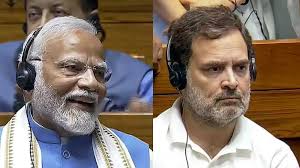
NEW DELHI: Leader of opposition in the Lok Sabha, Rahul Gandhi, wrote to Prime Minister Narendra Modi Tuesday highlighting two major issues that he says are obstructing educational opportunities for 90 per cent of students belonging to marginalised communities. In the letter dated June 10, Gandhi addressed the poor conditions in residential hostels of students from backward communities and delays in their post-matric scholarships. “Firstly, the conditions in residential hostels for students from Dalit, ST, EBC, OBC and minority communities are deplorable,” the Congress leader said. Recalling his visit to the Ambedkar Hostel in Darbhanga, Bihar, he said students had shared several concerns about the state of the facilities. These included overcrowded rooms where 6–7 students were forced to share a single space, unhygienic toilets, unsafe drinking water, no proper mess facilities, and a complete lack of access to libraries or the internet. Gandhi also drew attention to the severe delays in disbursing post-matric scholarships to those those from marginalised communities. He cited the example of Bihar, where the scholarship portal had remained non-functional for three years, resulting in no student receiving aid during that period. “Even thereafter, the number of Dalit students receiving scholarships fell by nearly half, from 1.36 lakh in FY23 to 0.69 lakh in FY24. Students further complain that the scholarship amounts are insultingly low,” he added. Calling for immediate action, Gandhi urged the government to audit all hostels for students from Dalit, Scheduled Tribes (ST), Economically Backward Class (EBC), Other Backward Classes (OBC), and minority communities and allocate adequate funds to ensure proper infrastructure, sanitation, food, and academic support. He also emphasised the need for the timely disbursement of post-matric scholarships and an increase in the amounts awarded. Gandhi said that although he cited Bihar as an example in his letter, such failures are prevalent all across the country. Courtesy : TOI Note: This news is originally published on https:/timesofindia.com/ and is for use by the non-military/non-commercial community, especially those in the human rights sector.
Revanth meets Rahul, Kharge in Delhi as AICC weighs portfolio reshuffle, cabinet strategy
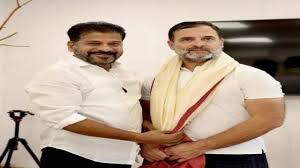
Hyderabad: Chief minister A Revanth Reddy met with AICC president Mallikarjun Kharge and senior leader Rahul Gandhi to discuss the allocation of portfolios to the three newly-inducted ministers and the possibility of a wider cabinet reshuffle. The Congress high command is said to have firmly advised Revanth to ensure social justice remains the guiding principle in the reallocation of portfolios—a directive with both symbolic and political resonance. Significantly, soon after the meeting, the AICC summoned senior minister and party heavyweight N Uttam Kumar Reddy to the national capital, fuelling speculation about a deeper shake-up within the cabinet. While there has been no official word on whether the leadership is contemplating dropping any ministers, the move has revived buzz in party circles about possible exits or marginalisation of underperforming incumbents. Uttam was accompanied by his wife and Kodad MLA N Padmavathi Reddy, whose name is reportedly under consideration either for inclusion in a future cabinet expansion or as one of the four working presidents of the Telangana Pradesh Congress Committee (TPCC). This development is being seen as part of a larger balancing act within the party, aimed at accommodating key social and regional stakeholders ahead of local body elections. Bhatti also set to be called Though deputy chief minister Bhatti Vikramarka was not present in Delhi, sources confirmed that a senior AICC leader held telephonic discussions with him following Revanth’s meeting with the top leadership. There are strong indications that Bhatti too may be called to Delhi for further consultations, although his office did not confirm any such move as of late Tuesday night. “The high command has wrapped up discussions with the Karnataka leadership, where a decision was taken to conduct another caste census. The focus now shifts to Telangana,” a senior AICC functionary said. “The leadership is set to deliberate not only on the portfolios for the new ministers but also the political ramifications of a larger reshuffle. Consultations with Revanth, Uttam, and most likely Bhatti will continue into the night or take place on Wednesday. The announcement of new portfolios is expected on Wednesday or Thursday,” the source added. 4 working presidents Revanth’s meeting with Rahul Gandhi and Kharge lasted over two hours and went beyond cabinet matters. The discussion also covered the pending appointments of four TPCC working presidents, district and block-level Congress presidents, the campaign committee, and the AICC programme implementation committee chairperson. The strategy for upcoming local body elections and plans to target the BJP-led Centre’s ‘11 years of failure’ were also prominently discussed. Sources said that AICC general secretary (organisation) KC Venugopal had submitted a detailed chart of portfolios currently held by Revanth, Bhatti, Uttam, and other ministers to Rahul Gandhi and Kharge. Also tabled was a performance report prepared by AICC Telangana in-charge Meenakshi Natarajan, which included candid feedback from party MLAs and senior leaders—reportedly touching on both strengths and lapses in the current cabinet. Revanth also extended formal invitations to Rahul Gandhi and Kharge to address public meetings in Telangana highlighting the successful completion of the state’s caste survey, the passage of the 42% BC quota legislation, and the party’s commitment to SC categorisation. Dates are being finalised in coordination with the central leadership, around which the TPCC will organise major rallies. Vivek meets Kharge, CM Meanwhile, newly-inducted minister G Vivek Venkatswamy also met Kharge on Monday and Revanth on Tuesday. While Vivek maintained publicly that he would work diligently with whichever portfolio he is given, sources indicate he is lobbying for the energy or education portfolio. He was reportedly advised by the leadership to concentrate on strengthening the party in the run-up to the local polls and to aggressively campaign against the BJP’s record at the Centre. Courtesy : TOI Note: This news is originally published on https:/timesofindia.com/ and is for use by the non-military/non-commercial community, especially those in the human rights sector.