
If mother is SC and father is from general category, will the child get reservation? Know what this latest order of Bombay High Court says
The bench said, “In case the parents belong to different castes, it is necessary to prove that the child has experienced social backwardness as a member of the Scheduled Caste. Only innate relationship is not enough.” Mumbai- Bombay High Court has rejected the claim of a student to be of ‘Chambhar’ (Scheduled Caste) caste. The court said that the student did not prove that he has faced any discrimination or deprivation due to his mother’s caste. The bench gave this decision on the petition of Sujal Mangala Birwadkar (original name: Sujal Santosh Mokal), who challenged the order of Raigad District Caste Certificate Verification Committee dated April 15, 2024. Sujal claimed that he belongs to the ‘Chamar’ (Scheduled Caste) community because of his mother, although his father is from the ‘Hindu farmer’ (general caste). What was the controversy? According to the background of the case, Sujal’s father Santosh Mahadev Mokal belongs to the ‘Hindu farmer’ (general caste) and mother Mangala belongs to the ‘Chamar’ (Scheduled Caste) community. Both are employed in the Central Armed Police Force, who got married in 2004, but in 2016 a court in Alibag approved their divorce. Sujal’s custody was given to his mother. During his primary education, Sujal’s caste certificate was registered as father’s caste, but after divorce his mother changed his name to ‘Sujal Mangala Birwadkar’ and at the time of admission in Kendriya Vidyalaya, Nashik, his caste was registered as ‘Chamar’. In 2023, while studying at Navneet Junior College, Sujal’s mother got a ‘Chamar’ caste certificate made for him, following which the college administration sent it to the Raigarh District Verification Committee for verification. The committee, based on three investigations conducted by the vigilance cell, found that Sujal never faced any discrimination or social deprivation due to his mother’s caste. The committee particularly noted the fact that Sujal’s mother was in a government job and did not ask for any alimony from her husband after the divorce, which shows their financial stability. Hearing the case, a bench of Justice Revati Mohite Dere and Justice Dr. Neela Gokhale said, “Unless it is proved that the child has suffered social or economic discrimination due to the caste of the mother, he cannot be given Scheduled Caste status. The court said in its decision, “The petitioner has failed to prove that he has faced any kind of inferiority complex, social exclusion or deprivation of educational opportunities due to the caste of his mother. He has been educated in prestigious institutions like Kendriya Vidyalaya and it is clear from his standard of living that he did not have to face any special difficulty.” The bench further said, “In the case of parents belonging to different castes, it is necessary to prove that the child has experienced social backwardness as a member of the Scheduled Caste. Mere inborn connection is not enough.” With this decision, the court dismissed Sujal’s petition and upheld the order of the verification committee. This case is another example of many cases where courts demand concrete evidence of social backwardness before issuing caste certificates. According to legal experts, this decision sets an important precedent for future cases where disputes arise over the caste determination of a child due to different castes of the parents. Geetha Sunil Pillai Courtesy : Hindi News
‘It’s not just a chair, it’s a question of justice’—Know about a Dalit professor’s 20-year struggle for the right to ‘equal pay for equal work’ at Andhra’s Veterinary University!
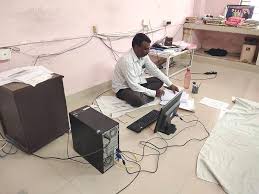
Distressed by the university’s evasive attitude and non-compliance of the court’s order, Dr. Ravi has also written a letter to President Draupadi Murmu on 23 May 2025, in which he gave details of his 20-year struggle. He told how the university controller had recommended paying the arrears from 2014 as per the court’s order in 2020, but no action was taken. Tirupati- On June 20, a picture emerged from the Dairy Technology College of Sri Venkateswara Veterinary University (SVVU), which once again exposed the caste discrimination deeply rooted in Indian educational institutions. In the picture, Dalit Assistant Professor Dr Ravi Varma was seen sitting on the floor of his office, working on his computer as his chair was removed by Associate Dean Ravindra Reddy. This incident is just another humiliation for Dr Ravi, who has been fighting for respect, equal pay and justice in the institution for the last 20 years. He has been denied his rights despite court orders, UGC regulations and even the intervention of the President of India. Two decades of discrimination The period of institutional harassment and struggle for Dr Ravi began in 2005, when he was appointed as a contractual Assistant Professor in the Department of Dairy Technology. Despite doing the same work as permanent professors, he received a fraction of their salary, and his contract was renewed every six months with a break of 2-3 days—a strategy adopted to avoid giving job security to contractual employees. In 2010, the University Grants Commission (UGC) made a rule that contractual teachers should get “equal pay for equal work”. When SVVU ignored this, Dr Ravi moved the Andhra Pradesh High Court. The university, in its response to the Andhra Pradesh High Court directions, said that Verma is not entitled to the salary suggested by the UGC, as he was not selected by a selection committee and also does not have the NET qualification required by the UGC. This statement is contrary to the university’s actions in 2012 and 2013, when selections were made by waiving the NET qualification and regular pay scales suggested by the UGC were given. Even today, there are 5 assistant professors who do not have the minimum required qualification of NET, but are getting the benefit of regular pay scales with full allowances. RTI documents reveal that between 2012-2013, SVVU appointed more than 150 faculty members without NET qualification, all of whom received full pay and promotions. In contrast, Dr Ravi remained stuck in a contractually restricted position – despite the Supreme Court’s 2016 “equal pay for equal work” judgment and repeated orders of the AP SC/ST Commission. Despite the court order, the university did not comply following which Dr Verma also filed a contempt of court petition which is still being heard. In October 2024, Dr Ravi met the Vice Chancellor and apprised him of his problems. The VC assured justice, but no action has been taken till date. The incident of Dr Ravi working on the floor was a reminder of historical caste discrimination where Dalits were denied even basic respect. He took this step in protest against the policies of the institution. According to university sources, the HoD had received a supply of new chairs and Dr Ravi was given a chair, but on June 19, when he was on a day off, Associate Dean Dr Reddy removed the chair, saying it was for another department. The next day the HoD placed a visitor chair in Dr Ravi’s office, but when he returned, he started working sitting on the floor in protest of the insult. The matter escalated until the VC and principal intervened and mediated. Sources say Dr Reddy apologised, but this is not confirmed. Some faculty members believe that the removal of Dr Ravi’s chair was a deliberate act, especially in view of his 20-year struggle for equal pay and pending contempt proceedings against the university for disobeying judicial orders. When the pictures went viral on social media, Bahujan organisations protested vehemently. The YSR Congress Party questioned Chief Minister Chandrababu Naidu, asking, “Why is a Dalit professor being treated like this in your government?” Dismayed by the university’s evasive attitude and non-compliance of the court order, Dr. Ravi has also written a letter to President Draupadi Murmu on May 23, 2025, in which he gave details of his 20-year struggle. He told how the university controller had recommended in 2020 to give arrears from 2014 as per the court order, but no action was taken. He wrote “I am not financially capable enough to keep fighting” and explained how this system exhausts the resources of academics from marginalized and deprived communities by engaging them in legal battles. The Mooknayak has sought a response from the VC and Registrar on the university’s disregard of court orders. The report will be updated on receiving their response. Geetha Sunil Pillai Courtesy : Hindi News
Harassment of Dalit woman: Kerala SC/ST Commission directs case against complainant
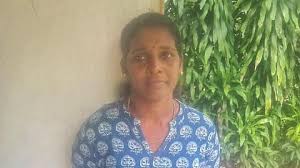
Bindu, a domestic worker was wrongfully charged over a missing gold chain complaint and faced harassment by officers in Peroorkkada police station. The Kerala State SC/ST Commission has directed the Thiruvananthapuram police to register a case against complainant Omana Daniel after a Dalit woman, wrongfully accused of theft, was subjected to custodial harassment and sexual abuse. Bindu, a 39-year-old Dalit woman who had worked as a domestic help for four years, was taken into custody by Peroorkkada police on April 23 for questioning in connection with a missing two-and-a-half sovereign gold chain, reportedly belonging to the household where she had been employed. The chain was later recovered from the complainant’s residence, revealing serious misuse of the law and negligence of human rights provisions by the police. According to Bindu, she received a call from the Peroorkada police station around 3:30 pm, informing her about a complaint filed against her. She was held in custody and interrogated until 3 am the next morning. “They used very harsh and bad language. They never asked whether I committed the crime or not. They asked where the gold was,” Bindu told TNM earlier, when the issue came into light. Despite no evidence being found at her residence during a police search, Bindu was booked under Section 305 (theft) of the Bharatiya Nyaya Sanhita (BNS). She alleged that she was denied food during custody, threatened with the arrest of her husband and two daughters if she did not surrender, and humiliated in front of her family. Peroorkada police have denied the allegations of harassment but are yet to issue an apology to her. On May 6, the Thiruvananthapuram Cantonment Assistant Commissioner was directed by the State SC/ST Commission to file an enquiry report within 20 days. The incident adds to the growing list of custodial abuse cases in the state, raising concerns over the systemic violation of human rights, particularly against marginalized communities. Written by:TNM Staff Courtesy : TNM Note: This news is originally published on https:/thenewsminute.com/ and is for use by the non-military/non-commercial community, especially those in the human rights sector.
Kerala SC/ST panel orders case over false theft complaint against Dalit domestic worker

The commission observed that the accused was subjected to severe mental agony, social humiliation and physical distress due to the false accusation and unlawful custody. THIRUVANANTHAPURAM: The state SC/ST commission has directed the police to register a case and initiate an investigation against Omana Daniel, a resident of Ambalamukku, who filed a false theft complaint against a dalit woman that resulted in her illegal detention and mental harassment by the police. R Bindu, a domestic worker from Panayamuttam in Panavoor, was accused by Omana of stealing a gold chain from her house. The complaint was filed on April 23, although the chain was reportedly lost on April 18. However, the chain was later recovered from Omana’s own house. According to the commission’s order, the assistant commissioner’s report clearly states that Bindu was unlawfully detained by the police for nearly 20 hours, without proper legal grounds. She was held overnight at the police station, subjected to harsh questioning, and kept in custody until noon the following day, without informing her family The commission observed that Bindu had been subjected to severe mental agony, social humiliation and physical distress due to the false accusation and unlawful custody. It stated that she is entitled to seek legal remedy and can file a formal complaint at the Peroorkada Police Station. Taking suo motu case of the incident, the commission has instructed the Station House Officer of the Peroorkada Police Station to register a case if Bindu files a complaint, and to ensure a fair and thorough investigation into the role of the complainant and others involved. Courtesy : TNIE Note: This news is originally published on https:/thenewindianexpress.com/ and is for use by the non-military/non-commercial community, especially those in the human rights sector.
Madhya Pradesh: Upper caste men beat up Dalit family cultivating field, snatch seeds
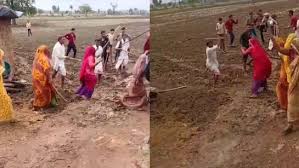
Four of the victims, who suffered serious injuries, have been admitted to the Lateri Government Hospital. A video of the incident has gone viral on social media. It triggered massive outrage and led to calls for strict action against the accused. The opposition also attacked the ruling BJP government in the state. Bhopal: In a shocking incident, which is a stark reminder of the prevailing caste system in India, some upper caste men beat up a Dalit family sowing seeds in a field. The incident was reported from Narayanpura village of Lateri tehsil in Madhya Pradesh. Land belongs to us: Dalit family Meanwhile, the Dalit family which was beaten up allegedly by some men from the Gurjar community, claim that the land on which they were sowing seeds belongs to them. The family said that the men not only beat them and the women sowing seeds, but also snatched the soyabean seeds from them and sowed them in their own field. The victims alleged that the upper caste men did so only to assert their dominance and supremacy. Four of the victims, who suffered serious injuries, have been admitted to the Lateri Government Hospital. The incident triggered massive outrage and led to calls for strict action against the accused. The opposition also attacked the ruling BJP government in the state. The victims belonged to the Ahirwar community. They claimed that the attack was unprovoked. One of the victims was quoted by NDTV as saying, “We were sowing seeds on our own land when Murari, Hansraj, Gudda, Parvat, and Bunty came and started beating us. They hit the women too. They took away our seeds and later sowed them in their field as if to assert their dominance.” Portion of land is government owned, says administration Meanwhile the local administration said that a portion of the land on which the family was sowing the seeds belongs to the government. They said that this might have led to the dispute. The Dalit family however claims that the land legally belongs to them. Those beaten up belong to the Ahirwar community. The family also claims that they were being repeatedly pressurised by the accused to not cultivate the land. The Vidisha Police said that they are investigating the matter. According to a senior official, there was a dispute between the 2 parties and this led to the incident. He said that police are also looking at the medical report of those injured and strict action will be taken against the accused. The opposition Congress party has slammed the BJP government. They said that the incident was yet another example of the growing incidents of atrocities against Dalits in Madhya Pradesh. The party also expressed solidarity for the victims and demanded immediate arrest of the accused. Mani Raj Courtesy : News Nine Note: This news is originally published on https:/newsnine.com/ and is for use by the non-military/non-commercial community, especially those in the human rights sector.
Torture of two dalit men: Ganjam police nabs main accused

IIC of Dharakote police station Chandrika Swain said so far, 12 people have been arrested in connection with the incident. BERHAMPUR: Five days after two dalit men were assaulted and tortured on cattle smuggling suspicion at Dharakote, Ganjam police arrested the prime accused in the case and produced him in court on Friday. The accused is 20-year-old Rajesh Samal of Jahada village. Rajesh reportedly led the mob which assaulted and tortured Babula Naik and Bulu Naik of Singipur village on June 22. IIC of Dharakote police station Chandrika Swain said so far, 12 people have been arrested in connection with the incident. Efforts are underway to nab others involved in the case. According to the FIR filed by the victims, they were transporting a cow and two calves to their village on a cargo auto-rickshaw when a mob intercepted them at Kharigumma. Accusing them of transporting the cattle illegally, the group demanded Rs 30,000 to release the animals. The FIR said when the victims refused to comply, the miscreants tied their limbs, thrashed them, partially shaved their heads at a local salon and forced them to crawl for nearly two km to Jahada village. They were also forced to consume grass and drain water at Jahada. Courtesy : TNIE Note: This news is originally published on https:/thenewindianexpress.com/ and is for use by the non-military/non-commercial community, especially those in the human rights sector.
Exclusive: Park Sung-hoon discusses playing transgender Hyun-ju on Squid Game 3

Actor Park Sung-hoon takes on a groundbreaking role as Hyun-ju, a transgender woman, in Squid Game 3. His performance highlights empathy and moral strength amid the series’ intense drama. Actor Park Sung-hoon has played his share of antagonists’ characters that make you grit your teeth and occasionally hurl popcorn at the screen. But in ‘Squid Game 3’, the Korean star flips the script in more ways than one. As Hyun-ju, a transgender woman who displays remarkable empathy and strength amidst the series’ trademark chaos, Sung-hoon delivers a performance that’s tender, layered, and full of quiet power. In an exclusive chat with India Today, the actor opened up about the challenges and choices that came with portraying Hyun-ju, and what made him say yes when most people turned down the offer. “So, I did have my concerns and worries being a cisgender actor playing a transgender character,” he admitted. “I thought it would be a challenge, but I knew that it would help me grow as a person and as an actor,” he explained. What makes Hyun-ju compelling isn’t just her identity, but the way she navigates the brutal games with unwavering grace. “I think Hyun-ju being a transgender woman is just one of the qualities that she has,” Sung-hoon said. “She has other amazing qualities – like she’s a selfless person, she cares about others and she has a good moral compass. So, I wanted to focus on those qualities.” That emphasis on humanity pays off in one of the most heart-wrenching scenes of the season, where Hyun-ju makes a moral choice that will get fans talking. When asked whether he would make the same decision in real life, the actor didn’t hesitate. “I definitely would make the same choice that Hyun-ju made, because I love kids and I know that the sacred value of life surpasses everything else. And now that I have three, not two friends, I would have run back to them. But one difference that I would have is that after finding the exit and opening the door, I would look back once at the exit maybe,” he remarked. This role marks a significant tonal shift for the ‘Queen of Tears’ actor, who previously stirred strong reactions as the manipulative Ha Do-yeong in ‘The Glory’. “Because I’ve been doing a lot of villains lately, I think this was a really nice air-freshening thing for me,” he added with a laugh. When it comes to his personal ranking of roles that have shaped him, ‘Squid Game’s’ Hyun-ju has earned his top billing. “Ranking first would be Hyun-ju, definitely, and ranking second would be Eun-seong of ‘Queen of Tears’, and ranking third is a character that I’m currently filming for a Korean TV show called ‘Efficient Dating for Singles’.” And as for his fans in India? Park had a special message: “I want to make the time to definitely go see the Indian fans as soon as possible.” ‘Squid Game 3’ premieres on Netflix today. The season has a total of 6 episodes. Courtesy : India Today Note: This news is originally published on https:/indiatoday.com/ and is for use by the non-military/non-commercial community, especially those in the human rights sector.
Rahul Gandhi met the people of Vishwakarma community, shared the plan to progress
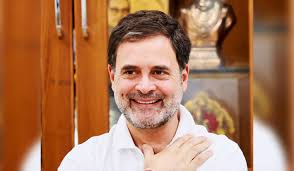
A video of Rahul Gandhi was shared by the Congress in which Rahul Gandhi met the people of Vishwakarma community. Rahul Gandhi also discussed their problems and gave them a roadmap to move forward. In this special conversation, he emphasized the importance of caste census and explained how economic progress is incomplete without social justice. Courtesy: Hindi News
‘Can he spend a night in a village in Bihar’, Prashant Kishor’s big challenge to Rahul Gandhi before the elections, know
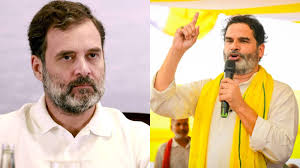
Bihar Assembly Elections: Jan Suraj Party chief Prashant Kishor said that Rahul Gandhi does not travel in Bihar. Prashant Kishor has given a political challenge to Rahul Gandhi, asking if he can do this? Prashant Kishor has given this challenge to Rahul Gandhi in an interview to ANI. This challenge given by PK remains a topic of political discussion. Patna: Amid political fervor in Bihar ahead of the upcoming assembly elections, Jan Suraj Party chief Prashant Kishor targeted Leader of Opposition in Lok Sabha Rahul Gandhi and questioned his commitment to Bihar and accused him of making only showy gestures instead of real political involvement. In an interview with ANI, Kishor, who is tirelessly traveling across remote areas of Bihar as part of his ambitious journey, challenged Gandhi to spend even a night in a village in Bihar to prove his connect with the grassroots of the state. Challenge to Congress leader He said that Rahul ji keeps coming and going here, but does not actually travel. If Rahul Gandhi has ever spent even a night in any village of Bihar, then tell us. If he can spend even a night in any village, we will accept it. He said that you sit in Delhi and laugh at the name of Biharis and sit here and give gyaan. He also targeted Telangana Chief Minister Revanth Reddy’s comment about Bihari people and demanded an apology from him. He accused the Congress of years of expectations and disrespect towards the people of Bihar. Challenge to Rahul Gandhi Kishore said that Revanth Reddy is the Chief Minister in Telangana, it has been two years since he became the Chief Minister. Before that he was in TDP (Telugu Desam Party) and before that he was in RSS and BJP. After becoming the Chief Minister, he officially said that doing labour is in the DNA of Biharis. Biharis are born to do labour. Why did he say this? Because most of the officials of his rival KCR had a background from Bihar. So he meant that the condition of Telangana is bad because Biharis are running it. And to justify this, he added another statement that working as a labourer is in the DNA of Biharis and that is why KCR appointed them to the bureaucracy. Biharis ki Baat- PK He stressed that you tell Biharis that they have worked as labourers and then come here and give big gyaan. Apart from this, the Jan Suraj chief reminded that in 1989, the then Prime Minister Rajiv Gandhi had said that he would make Bihar the centre of development. He asked where did that money go? Even after that Congress remained in power, so tell us what did you do for Bihar? Kishore said that if Congress has apologized for the injustice done to the Sikhs, then Rahul Gandhi should also apologize to the Biharis before campaigning in Bihar. If Bihari people are born only for labour, then why are you coming here? Just go to Telangana and campaign and get your votes there. Bihar Assembly Elections When asked how many seats the Congress will win in the upcoming Bihar Assembly elections, Kishor said it will depend on Lalu ji’s donations. He said the Congress has no existence in Bihar. For the last 25-30 years, it has been just a party carrying Lalu ji’s bags. If Rahul Gandhi really has the political strength, he should contest elections alone in Bihar. Ask Lalu ji for 40 per cent seats and see what happens. In Bihar, the Congress dances to Lalu ji’s tunes. Whatever he decides, happens. Bihar is expected to go to polls later this year in October or November; however, the Election Commission of India (ECI) is yet to announce the dates. Jan Suraj an option While the NDA, comprising the BJP, JDU and LJP, will want to retain power in Bihar once again, the India Block, comprising the RJD, Congress and Left parties, will want to oust Nitish Kumar from power. Kishor has pitched his party Jan Suraj as another option in the state. In the current Bihar Assembly of 243 members, the National Democratic Alliance (NDA) has 131 MLAs, including 80 MLAs from the BJP, JDU-45, HAM(S)-4, and support from 2 independent candidates. The opposition India Bloc has 111 members, including 77 MLAs from the RJD, 19 from the Congress, 11 from the CPI(ML), 2 from the CPI(M) and 2 from the CPI. About the author Ashutosh Kumar Pandey Active in print, digital and electronic journalism for more than 16 years. Degree in Political Science and Journalism. Started writing in Jansatta, Hindustan and Dainik Jagran in 2003. ETV, Maurya TV, Focus TV, Union Ministry of Information and Broadcasting, Prabhat Khabar. Courtesy : Hindi News
Jaishankar’s veiled dig at Rahul: Slams ‘Constitution in hand’ politics; blames Gandhi family for Emergency
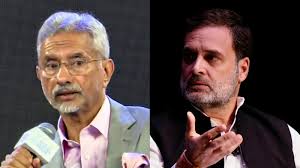
NEW DELHI: External affairs minister S Jaishankar on Friday took a veiled dig at the Congress party and its leader Rahul Gandhi, accusing them of hypocrisy over their public display of constitutional values. While not naming anyone directly, Jaishankar criticised those who “flash the Constitution” but fail to uphold its spirit. “What respect can you see towards the Constitution by those who are still not apologising for the Emergency?” he said. “Nothing happens by roaming around with a copy of the Constitution. It should be respected from the heart.” Reflecting on 1975 Emergency, Jaishankar said, “Some people flash the Constitution in their hands but the feeling in their hearts are different… Political parties also have a DNA and they have, to date, never expressed regret for imposing Emergency.” He went on to describe the Emergency as a dark attempt to break the nation’s spirit. “When a family is considered above the nation, things like Emergency take place,” he said. “This entire exercise, in a way, was to break the morale of the country and the society… Many people, who were not even in politics, were impacted. Those who were in politics were well aware that doing politics meant an inevitable arrest, and those who were arrested were unaware if and when they would be released.” Jaishankar also added with a message: “The one lesson that Emergency taught us is to never take freedom for granted.” Earlier, Prime Minister Narendra Modi also marked the occasion, calling the Emergency the “darkest chapter” in the history of India’s democracy. The Emergency was imposed on June 25, 1975, and lasted until March 21, 1977. It was declared under Article 352 by then-President Fakhruddin Ali Ahmed, citing internal disturbances, and was the first peacetime Emergency in India’s history. Courtesy : TOI Note: This news is originally published on https:/timesofindia.com/ and is for use by the non-military/non-commercial community, especially those in the human rights sector.