
Pradhan dubs Cong rally as ‘political tourism’ by ‘prince’
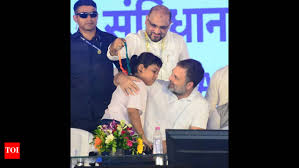
Bhubaneswar: Union minister Dharmendra Pradhan on Friday criticised the ‘Samvidhan Bachao’ rally of Congress in Bhubaneswar, addressed by Rahul Gandhi and Mallikarjun Kharge, as mere “political tourism” by the “Congress prince”. Pradhan accused the Congress of using “vote theft” as a new excuse following repeated electoral defeats, particularly with the upcoming Bihar election in mind. He asserted that the people of Odisha and the nation have seen through the Congress’s tactics and will continue to reject what he described as anti-people and anti-constitutional forces. The minister’s comments came as Rahul vowed to prevent any repeat of alleged electoral misconduct in Bihar, similar to what he claimed occurred in Maharashtra. In an X post, Pradhan wrote the Congress rally is not about “saving the Constitution” but rather “saving Rahul and Congress”. He wrote, “The unwavering public trust in Odisha’s BJP govt is troubling Congress. Congress has no presence or existence in Odisha, as the poor, Dalits, tribals, farmers, and labourers of Odisha rejected Congress decades ago. Rahul’s talk about the interests of Odisha’s poor is nothing but a deception.” Stating that Congress has historically always neglected the rights of the poor and marginalised sections, the minister said the money sent by Congress govts from Delhi was often looted by middlemen and they used SC, ST and backward classes as a vote bank. “Clearly, the rights of the poor and the land of the tribals are safe only when Congress is not in power,” he wrote. “Congress faced crushing defeats in states like Maharashtra and Haryana, after which Rahul and Kharge blamed the Election Commission and democratic institutions for their loss. It is ironic that the Congress party, which imposed an emergency on the country by strangling democracy and trampling the Constitution, is now preaching about saving the Constitution,” he said. Making similar observations, deputy chief minister K V Singh Deo said the rally was political theatre in its most familiar form. “Ironically, the party that now claims to ‘save the Constitution’ is the very one that has amended it more than any other — not always in the spirit of strengthening democracy, but often to serve narrower political ends,” he said. “‘Thotha chana baje ghana’ (empty declarations echo loudest). But the people of Odisha vote not on noise — they vote on merit. And they continue to choose progress over posturing,” he added. Courtesy : TOI Note: This news is originally published on https:/timesofindia.com/ and is for use by the non-military/non-commercial community, especially those in the human rights sector.
Mitr Clinic gets new avatar: India’s first transgender clinic in Hyderabad gets new lease of life
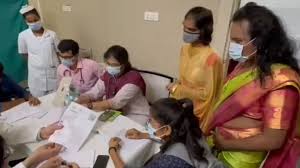
HYDERABAD: Mitr Clinic, India’s first exclusive clinic for transgenders set up in 2021 in Narayanguda, had a new lease of life after Tata Trust came to their rescue to fund the clinic after USAID stepped back. Having reopened on May 2, 2025, the Mitr Clinic has donned a new name – Sabrang. Managed by the YR Gaitonde Centre for AIDS Research and Education (YRGCARE), an NGO focusing on HIV/AIDS treatment, the clinic will be open from Monday to Saturday, 10am to 6pm. It was in Jan 2025 when the clinic was forced to close after its funding from the United States Agency for International Development (USAID) was halted. All USAID funding was frozen following an order from US President Donald Trump. As a result, many members of the transgender community who were dependent on the clinic found it difficult to access the healthcare they needed. “Many prefer to come to this clinic since it provides privacy to the transgender community. Until Jan, the clinic used to serve 350 members of the LGBTQIA+ community,” said a member of the community. For 24-year-old Radhakrishnan, who works as a traffic assistant with the state police, Sabrang is where he hopes to continue his transition to a trans man. “For a few months, when the clinic was closed, I struggled. I was used to visiting Mitr regularly for hormone therapy. I had nowhere else to go when it was shut,” he said. Similarly, Ayesha Meera, a transgender woman who used to work as a counsellor for Mitr and now works as an advocacy officer for the Trans Equality Society, said: “I used to live in Tenali and travel 7-8 hours every day for hormone therapy at Mitr. Now that the clinic is open again, I can continue doing it. “Meanwhile, June being Pride Month, the clinic manager organised a pot-luck on Saturday, attended by their regular patients. “Here, I am not made to feel ashamed, and I feel comfortable. At other clinics, I was taunted and looked down upon,” a transgender person told TOI. “The HIV treatment programme is extensive. They provide PREP (Pre-Exposure Prophylaxis, a medication to prevent HIV, anti-retroviral therapy, and PEP (Post-Exposure Prophylaxis, a medication to cure HIV). It’s also a place for the community to socialise and bond – it’s more like a second home,” said Rohit Mohite, a sexual health manager. Courtesy : TOI Note: This news is originally published on https:/timesofindia.com/ and is for use by the non-military/non-commercial community, especially those in the human rights sector.
Transgender activist, Trump supporter: Who was Sophia Hutchins? Caitlyn Jenner’s manager who died in ATV accident

Transgender activist and former Donald Trump campaign surrogate Sophia Hutchins lost her life in a tragic ATV crash close to her manager Caitlyn Jenner’s house, TMZ reported on Friday. The 29-year-old had been riding an ATV along the road near Caitlyn’s residence when she collided with the bumper of a passing car. The crash sent the ATV over the edge of the shoulder, causing both Sophia and the vehicle to plunge 350 feet into a ravine. Sophia was declared dead Wednesday morning in Malibu, TMZ reported citing law enforcement and family sources. Who was Sophia Hutchins? Sophia Hutchins was a transgender entrepreneur, political surrogate for Donald Trump’s 2024 presidential campaign, and longtime friend and manager of Caitlyn Jenner. Born in Bellevue, Washington, she studied economics and finance at Pepperdine University, where she stepped down as class president during her junior year to focus on her gender transition. Inspired by Jenner’s public coming out in 2015, Hutchins credited the Olympian with giving her the confidence to fully embrace her transition, according to the New York Post. After graduating, Hutchins founded the sunscreen brand Lumasol and launched her own consulting firm. She became active in politics, supporting Trump’s 2024 presidential campaign, making media appearances, and attending events at Mar-a-Lago, including the election night watch party. “It’s been a wild ride. From the convention & inauguration in 2016, to 2020, to the most insane campaign in US history in 2024, I love this family as if they were my own. I will keep fighting for America in any way I am told- we’ve made it this far and I don’t plan on stopping, only speeding up,” she wrote, adding, “There is no team of people, led by the man himself, The 47th POTUS @realdonaldtrump I would want to do it with! MAKE AMERICA GREAT AGAIN!” Courtesy : TOI Note: This news is originally published on https:/timesofindia.com/ and is for use by the non-military/non-commercial community, especially those in the human rights sector.
UP: Dalit youth killed in Rampur, two accused arrested after encounter with police, know the whole matter
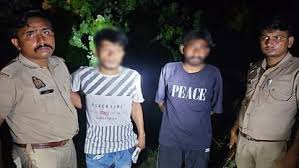
In the case of murder of a Dalit youth, the police have arrested two accused during an encounter. One accused was injured by a bullet in retaliatory action by the police. On July 8, Suraj was attacked with sticks and iron rods, after which he died during treatment. After the death of a Dalit youth resident of village Bhainsia Jwalapur, who was injured in the fight, the police arrested two accused youths during an encounter on Friday night. One accused was injured by police bullets and is admitted in the district hospital. On July 8, Ranjit, son of late Mohan Lal, resident of village Bhainsia Jwalapur, filed a report against eight people, naming three people of village Saktua. It was alleged in the report that his brother Suraj (19) was injured by eight youths on the Nainital highway by beating him with sticks and iron rods. CO Ravindra Pratap Singh said that on Friday the police arrested Imran and Rizwan, residents of village Saktua and Nitin, resident of village Tamra, who came to light. After this, Suraj died during treatment in Rudrapur hospital on Friday night. According to the CO, Kotwali in-charge Balwan Singh was patrolling with his team late on Friday night. On the Nainital highway, an informer informed that two youths related to the incident of Dalit youth Suraj were seen on the road near GD Goenka School in village Dibdiba, adjacent to the Uttarakhand border. After this, the police surrounded Shakir son of Mohammad Sabir, resident of Mohalla Paharganj, Ward No. 15, Police Station Rudrapur Udham Singh Nagar and Vishal son of Rajkumar, village Tamra and tried to catch them. According to the Kotwali in-charge, at 2:45 in the night, both the youths started entering the guava orchard on the roadside. During this, Shakir fired at the police party with a pistol, in which the policemen narrowly escaped. During this, the police retaliated in self-defense. The police bullet hit Shakir’s right calf due to which he got injured and fell on the spot. The police caught the accused. A pistol and two cartridges were recovered from the accused’s possession, while Vishal was caught from a guava orchard. It is claimed that two cartridges have been recovered from Vishal. The police brought the injured Shakir to the community health center. After this, the doctors referred him to the district hospital. The police have taken action to arrest both the accused youths. Senior officials also inspected the spot at night. The forensic team also reached the spot and collected evidence. CO Ravindra Pratap Singh said that so far five people have been arrested in the assault incident. The police is conducting raids to arrest the remaining accused, who will be arrested soon. Published by: Vimal Sharma Courtesy: Hindi News
Cong assures support to Dalit, tribal detainees after Karchhana violence
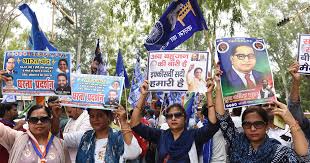
Prayagraj: Senior Congress leaders, including Uttar Pradesh Congress President Ajay Rai, Congress MP from Barabanki Tanuj Punia, and Allahabad MP Ujjwal Raman Singh, visited Naini Jail on Saturday to meet individuals from Dalit and tribal communities who were arrested following the recent Karchhana unrest. The leaders assured that the party will provide all possible support, including legal assistance, to those in custody. They emphasised that the party stands firmly with the marginalised and will continue to fight for their rights. Ajay Rai described the Karchhana incident as “deeply unfortunate” and said: “The way Dalit and tribal individuals were targeted is unacceptable. The Congress party will not leave them alone. We are committed to ensuring they receive justice.” Ujjwal Raman Singh said the Congress has always stood with the oppressed and the underprivileged. “We will ensure these detainees face no further hardship and are granted a fair and speedy legal process,” he said. Tanuj Punia said: “We believe these arrests were made with political bias. The Congress party is taking this issue seriously and will do everything possible to secure justice and support their release through legal means.” The leaders also demanded a fair and impartial investigation into the incident and vowed to pressurise the govt for strict action against those responsible. The Karchhana violence took place when supporters of Nagina MP Chandrashekhar Azad went on a rampage for over two hours, damaging about a dozen vehicles and pelting police with stones. They accused police of not allowing the Azad Samaj Party (Kanshi Ram) chief to meet the family of a Dalit man allegedly burnt to death in Karchana and that of a “rape survivor” in the nearby Kaushambi district. The mob damaged three police vehicles, and cops resorted to baton charge to disperse them. About half a dozen persons were reportedly injured in the clash. Police, after registering an FIR against 53 named and over 500 unknown persons, roped in 15 teams to ensure the arrest of troublemakers. Courtesy : TOI Note: This news is originally published on https:/timesofindia.com/ and is for use by the non-military/non-commercial community, especially those in the human rights sector.
Food Habits as Marker of Caste
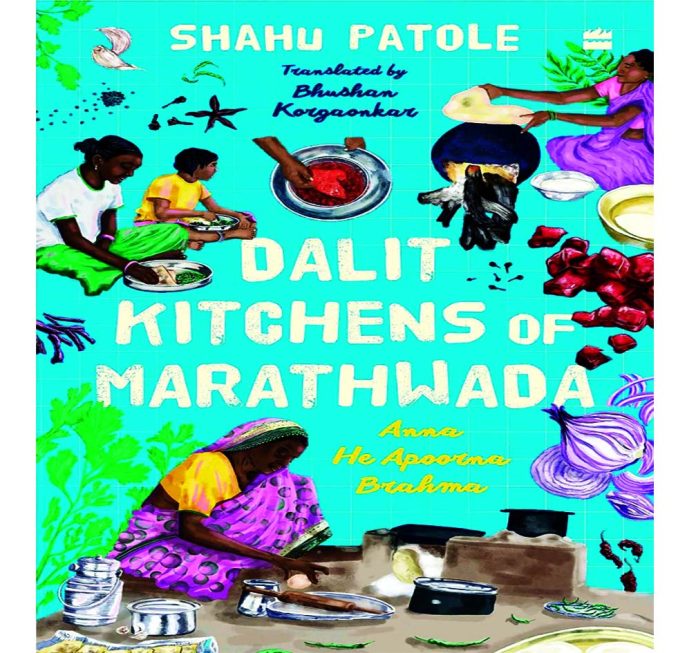
Dalit cuisine is not about choice; it’s about accessibility. Their food practices are a result of deprivation, not abundance. Even today, most Dalits navigate meals not as a matter of taste, tradition, or celebration-but as a question of survival. As one Dalit writer, Anita Bharti, pithily puts it, “The upper-caste minimum is our maximum.” I came face-to-face with this unsettling reality during a conversation that began warmly, reflectively, but left a deep impression on me. I met Shahu Patole the author of much acclaimed book ‘Dalit Kitchens of Marathwada’ at the Jaipur Literature Festival earlier this year. Expecting a discussion on regional variations or perhaps culinary culture viewed through a sociological lens, I was instead led into a world I had neither experienced nor fully imagined. That single interaction-and later, the book itself-influenced me more deeply than I had anticipated. Perhaps that’s because of where I come from. As a Kashmiri Brahmin, I grew up in a cultural setting where caste-as it manifests in much of India-was virtually absent. Kashmiri society was historically divided along religious lines, not fragmented into caste hierarchies. Terms like “impure,” “untouchable,” or even the notion of “separate kitchens” were alien to our vocabulary. We never had to confront the daily violence of caste. It was not part of our lived reality. That explains why ‘Dalit Kitchens of Marathwada’ revealed a world I had never encountered-not even in the margins of my upbringing. I had naively assumed that food was a great equalizer, a universal act of sharing. The book showed me how wrong I was. It spoke of denied ingredients, segregated utensils, and the humiliation wrapped into everyday meals-not as distant history, but as current lived experience. What emerges from reading the book is that food is not just what we eat-it is who we are, where we belong, and how we are perceived? Whether through caste in India or class in Western societies, cuisine reflects deep-rooted structures of power, identity, and aspiration. Recognizing this helps us understand not just eating habits, but also the underlying social dynamics, and in the case of Indian Dalits, of inclusion, exclusion, and resistance. ‘Dalit’ refers to the over 16% of Indians historically excluded from the Hindu caste system and relegated to menial, hereditary occupations with no scope for upward mobility. Though un-touchability was outlawed in 1947, caste-based exclusion continues to persist across different regions – though not as sharp as it used to be. The term ‘Dalit-meaning “broken” or “scattered”-was first used by Jyotirao Phule and later championed by B.R. Ambedkar. It was further politicized by the Dalit Panthers in 1972 as a symbol of anti-caste assertion. Denied access to land, markets, and communal kitchens, Dalits have had to make do with what remained-scraps, discarded parts, and coarse grains. Their culinary traditions have emerged from this exclusion, eating beef, pork, wild greens, and offal not by preference but by compulsion. These methods have evolved into rich food heritages, yet their cuisine carries the deep scars of stigma and shame, and remains marginalized in both popular culture and academic study. No wonder, Indian food taboos divide not only humans from gods but also upper castes from oppressed communities. The Brahmin obsession with satvik food-devoid of meat, garlic, onion, or root vegetables-is projected as morally superior, while Dalit and tribal diets, born out of scarcity and survival, are dismissed as impure. Therefore, from what we eat to how it’s cooked and who serves it, every layer of food culture is shaped by centuries of social stratification. Shahu Patole has been bold in arguing that in India, food is never just food-it is memory, identity, status, and most critically, caste. His book is a manifesto of remembrance, dignity, and defiance. The issue is not whether bee larvae are nutritious or jowar rotis are fashionable, but why some are mocked for what they eat while others are applauded. Shows like Master Chef India and critics like Vir Sanghvi promote a sanitized, upper-caste version of Indian cuisine-glossy thalis and dairy-laden desserts-while ignoring the food of the oppressed. Another Dalit writer, Chittibabu Padavala, elaborates on this point by asserting that in India, food is far more than sustenance-it is a social identifier shaped by caste, hierarchy and purity politics. “The push for vegetarianism-especially when backed by state coercion, vigilante violence, or digital food policing-is not about health or climate alone, but about enforcing Brahmanical norms across society.” One wonders whether Shahu Patole is familiar with the large sections of Brahmin communities-Kashmiri, Bengali, Assamese, etc.-who are non-vegetarians. Needless to mention, that Hitler was vegetarian and therefore food habits are not indicators of one’s moral character. The irony is stark. The second-largest meat-eating population in the world is now being subjected to culinary uniformity. The myth of a unified Indian cuisine-by attempting to erase Dalit food practices from literature and media-is bound to fail. Coming back to Shahu Patole, his book, originally published in Marathi as Anna He Apoorna Brahma, documents the food customs of the Mahar and Mang communities of Maharashtra. The work serves both as cultural archive and political critique. He offers recipes for dishes made from every part of the animal-bones, blood, intestines, bee larvae plucked from walls, and the epiglottis of the goat-all treated as delicacies. A dish made from dill easily foraged in the village is common, as are onions toasted on an open flame, and chutneys made from fat chilies pounded into a fiery mash with salt. When I asked Shahu if bee larvae is a good source of protein, and if bhakris provide good nutrition, he was indignant. “It doesn’t matter,” he insisted. “That’s not what people were thinking when they foraged. It was what was accessible, and it was what was cooked. These analytical frameworks that assign one meaning to each dish are luxuries our communities never had.” Patole notes, “We all know the plates of the upper castes, but our meals remain in the shadows.” His work brings those shadows into visibility. While India faces twin
NOS funding cuts signal systemic exclusion of Dalits, minorities from educational opportunities

In a manner, it is an extension of the violence visited upon the Dalits and the minorities by Hindutva proponents on the streets and in homes A recent piece of news reported by a few national English dailies, but which didn’t seem to get much traction in regional newspapers or in public discussions, was regarding a substantial cut in the number of National Overseas Scholarships (NOS). The NOS programme was instituted in 1954-55 to provide financial support to students from Scheduled Castes (SC), Denotified Nomadic Tribes (DNT), semi-nomadic tribes, landless agricultural labourers, or traditional artisan categories, with a family income below Rs 8 lakh per annum, for study and research in foreign universities. Left in limbo On July 1, the Ministry of Social Justice and Empowerment announced provisional scholarship awards to only 40 of the 106 candidates selected for NOS for the academic year 2025-26, with a statement that letters for the remaining 66 candidates “may be issued… subject to availability of funds.” In previous years, all students in the selected list had received provisional scholarship letters at the same time, but this year less than half of the selected candidates received the award letters, leaving the rest in limbo, not knowing what the outcome is going to be. A Ministry official was quoted as saying by Hindustan Times, “It is an issue with the Cabinet Committee on Economic Affairs not approving the money allocated to these scholarship schemes. We have the money but we also need green signal from above to give it out.” The Cabinet committee is headed by Prime Minister Narendra Modi. BJP govt’s larger agenda While this may appear to be a minor glitch in the flow of funds — which will be rectified in a short time and all the selected candidates allowed to pursue their higher studies and further their careers — a closer look will suggest there is much more to the picture than what is apparent. And that it is in line with a much larger agenda of the BJP government of systematically denying students of the SC, ST and minority communities scholarships and much needed support for their education. A simple enumeration of developments in the last few years will serve to place the matter into perspective: In the 2022-23 Union Budget, there was a huge reduction of over 99 per cent in funds allocated to the Maulana Azad Education Foundation (MAEF), which works for the educational upliftment of minority communities such as Muslims, Christians, Sikhs, Buddhists, Parsis and Jains. While the previous year’s Budget allocated Rs 90 crore, the 2022-23 Budget allotted a paltry Rs 1 lakh to the foundation. As a result, the stipend payments of more than 1,400 PhD scholars from these communities have been stalled since January 2025 and some from even earlier. Funds for the National Fellowship for SC and ST students were cut by 99.99 per cent as the allocation dropped from Rs 240 crore in the revised estimates (RE) for 2024 to just Rs 0.02 crore in the budget estimates (BE) for 2025. The National Testing Agency (NTA) initially released a selection list of 865 scholars in March 2025 for the National Fellowship for SC and ST students, but a ‘revised list’ was issued in April which cut down selections to only 487 of the previously chosen candidates. The NOS scheme, mentioned earlier, saw a reduction of 99.8 per cent from Rs 6 crore in RE 2024 to Rs 0.01 crore in BE 2025. In 2022, the Union Ministry of Social Justice and Empowerment had excluded “topics/courses concerning Indian Culture/heritage/History/Social studies on India based research topics” from the NOS scheme. The Pre-Matric Scholarship for Minorities was reduced by 72.4 per cent to Rs 90 crore in BE 2025 from Rs 326.16 crore in RE 2024. It has also been restricted to students of classes IX and X. The Post-Matric Scholarship for Minorities has been decreased by 69.9 per cent, from Rs 1,145.38 crore in RE 2024 to Rs 343.91 crore in BE 2025. The Merit-cum-Means (MCM) Scholarship first saw a reduction 42.6 per cent to Rs 19.41 crore in the 2025 Budget. According to the latest reports, it has been discontinued due to “overlap with similar schemes of other ministries.” The Dr Ambedkar Scheme of Interest Subsidy on Educational Loan for Overseas Studies for OBC and OEC students incurred a cut of 56.66 per cent to Rs 8.16 crore from Rs 15.30 crore in BE 2025. An RTI enquiry filled by activist MA Akram brought to light that more than 50 per cent of the funds slotted for minority educational programmes have not been used. Specifically, of the Rs 305.8 crore allocated for fee reimbursement scheme, Rs 174.23 crore remained unutilised. Maulana Azad Foundation shut Even more tellingly, on February 7 of this year, the Ministry of Minority Affairs (MoMA) issued an abrupt order to close down the Maulana Azad Education Foundation, without assigning any reasons for the decision. The Foundation was established in 1989, coinciding with the birth centenary of Maulana Abul Kalam Azad, the first Education Minister of India, as a non-profit organisation under the MoMA to address the educational disparities faced by minority communities, particularly Muslims, in India. Over the years, it has provided significant service for the educational upliftment of minorities through a variety of schemes spanning across the entire spectrum of education from the primary to higher education and research. Despite this, the order of closure came without any warning. It also mandated the transfer of surplus funds worth Rs 669.71 with the Foundation to the Consolidated Fund of India. Criticism of MoMA It is crucial to note that the Parliamentary Standing Committee on Social Justice and Empowerment, chaired by BJP lawmaker PC Mohan, was quite caustic in its criticism of the Ministry of Minority Affairs for the sharp reduction in funding and the inordinate delays in funding approvals. In its report of January 2025, the Committee stated that the delays and cuts have left students and institutions
Tamil Nadu SC/ST commission investigates death of Dalit medical student in Coimbatore
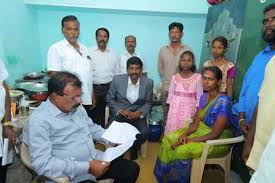
She was found dead in a restroom at the institute on Sunday morning, with the door latched from the inside. COIMBATORE: The Tamil Nadu State Commission for Scheduled Castes and Scheduled Tribes has initiated an investigation into the death of a postgraduate medical student at a private hospital in Coimbatore. While the National Commission for Scheduled Castes (NCSC) has taken suo motu cognizance of the case, the state commission conducted an inquiry on Friday based on petitions from several organizations, according to sources. Sources indicate that K Bhavapoorani (29), from Vagurampatti in Namakkal, belonged to the SC Arunthathiyar community. She was pursuing a postgraduate degree in anesthesiology at PSG Institute of Medical Sciences and Research in Coimbatore city. She was found dead in a restroom at the institute on Sunday morning, with the door latched from the inside. She was on night duty and was last seen by colleagues around 1.00 am on Sunday. Multiple calls were made to her mobile when she was not seen. She was later found dead in a restroom around 7.00 am. The Peelamedu police stated that a case was registered under Section 194 (suspicious death) of the BNS Act, and further investigation is underway. The state commission conducted an inquiry on Friday. National Commission for SC seeks report on PG medical student’s death in Coimbatore SC/ST commission members S Selvakumar and M Pon Dhous held an inquiry with the victim’s family members. Government officials, including police officials and the institute’s management, have also recorded their statements. “There were no external injuries on the body as per the initial findings of the post-mortem held on Monday. The body was handed over to the family after the post-mortem. A syringe with a drug was found inside the restroom, which will be examined in a laboratory. The cause of death will be known only after the post-mortem report is released. The victim’s family is raising multiple questions, casting doubt on the nature of her death,” sources said. Courtesy : TNIE Note: This news is originally published on https:/thenewindianexpress.com/ and is for use by the non-military/non-commercial community, especially those in the human rights sector.
Dalit Teen Assault Sparks Uproar in Muzaffarnagar

A Dalit teenager in Muzaffarnagar was allegedly assaulted by five individuals who also made casteist remarks against him. The authorities have registered a case under various sections, including those of the SC/ST Act, following the teenager’s complaint. In a disturbing incident in Muzaffarnagar, a Dalit teenager has reportedly been assaulted by five individuals who also made caste-related slurs against him, as confirmed by local police on Sunday. The alleged attack took place in Badhai Kala village when 19-year-old Gullu was on his way to a shop. A confrontation ensued in which, according to the victim’s complaint, the perpetrators – identified as Azad, Ankur, Nitin, Deepak, and Saurabh – verbally abused and physically assaulted him. The accused have been charged under pertinent sections, including those of the Scheduled Castes and Scheduled Tribes (Prevention of Atrocities) Act, according to Charthawal Station House Officer Jasvir Singh. The case has raised significant concerns about caste-based violence in the region. Courtesy : Devdiscourse Note: This news is originally published on https:/devdiscourse.com/ and is for use by the non-military/non-commercial community, especially those in the human rights sector.
“What has Gandhi family ever done apart from looting in greed of power?” BJP’s Ram Kadam hit back at Rahul Gandhi
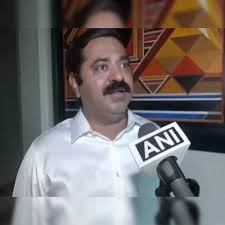
Mumbai (Maharashtra) [India], (ANI): Bharatiya Janata Party (BJP) MLA Ram Kadam on Saturday hit back at Rahul Gandhi’s statement, accusing the Gandhi family of “looting in the greed of power” and claiming that the Congress is “bound to lose” in Bihar and is already preparing excuses for its likely defeat. Speaking to ANI, Ram Kadam said, “What has the Gandhi family ever done apart from looting in the greed of power? They were slammed by the court, every evidence presented… They are bound to lose in Bihar and thinking of what excuse to tell people after losing…” Kadam’s remarks come after Rahul Gandhi accused the Election Commission of India of “hatching a conspiracy” for “chunav chori (election theft)” in Bihar. While addressing Samvidhan Bachao Samavesh in Bhubaneswar on Friday, Congress MP Rahul Gandhi accused the Election Commission of India of “hatching a conspiracy” for “chunav chori (election theft)” in Bihar, referring to the poll body’s decision to revise electoral rolls in the state ahead of the assembly election there. Gandhi said that ECI is “working as a BJP wing” and alleged that similar attempts to “steal election” are being made in Bihar, just like they were made in Maharashtra. “BJP is attacking the constitution. Yesterday I was in Bihar. Just like ‘chunav chori’ was done in Maharashtra, similar attempts are being made to do “chunav chori” in Bihar. EC has hatched a new conspiracy for ‘chunav chori’. EC is working as a BJP wing, it is not doing its own job,” Rahul Gandhi said. Referring to the Maharashtra Assembly election in which Mahavikas Aghadi suffered a staggering loss last year, Rahul Gandhi said that over 1 crore new voters were added then. Congress MP added that the same “theft” is being done in Bihar. “In Maharashtra, between Lok Sabha and Vidhan Sabha elections, one crore new voters were added. Nobody knows who were these voters and where did they come from. We told EC several times to provide us with the voter list and videography. But EC does not provide us with the same. They are going to do the same ‘chori’ in Bihar, that was done in Maharashtra. I went to Bihar yesterday and with INDIA alliance leaders, I said that we will not let EC and BJP do a ‘chori’ of Bihar elections,” he said. Courtesy : TET Note: This news is originally published on https:/theeconomictimes.com/ and is for use by the non-military/non-commercial community, especially those in the human rights sector.