
Congress leader calls Rahul Gandhi 2nd Ambedkar, BJP decries insult of Dalits

Congress leader Udit Raj compared Rahul Gandhi to Ambedkar, triggering strong backlash from BJP leaders who called it an insult to the Dalit icon. BJP demanded an apology from Congress for allegedly undermining Ambedkar’s legacy. Congress leader Udit Raj stirred a political controversy on Saturday after drawing parallels between Rahul Gandhi and Dr BR Ambedkar. His remarks sparked a sharp backlash from several BJP leaders, who called the comparison a “big insult” to the architect of the Constitution. Taking to X, Udit Raj wrote, “Other Backward Classes people will have to think that history does not give opportunities for progress again and again. They should follow and support what Rahul Gandhi said in the Talkatora Stadium conference. If they do so, then Rahul Gandhi will prove to be the second Ambedkar for them.” Congress leader Rahul Gandhi on Friday admitted that not conducting a caste census earlier was his mistake and pledged to correct it now. He told the gathering that it was not the Congress party but he himself who had erred in not pushing for a caste census earlier. “I regret that if I had known more about your history and issues, I would have got the caste census conducted. That is my mistake and not that of the Congress. I am going to correct that mistake now,” Gandhi said. Union Minister Kiren Rijiju strongly objected to the comment, saying, “I take serious objection to the Congress comparing Babasaheb Ambedkar with Rahul Gandhi.” BJP Spokesperson Pardeep Bhandari also reacted sharply. In a post on X, he said, “This is a big insult of Baba Saheb Ambedkar! There is a competition of ‘bootlicking’ in Congress. Kerala BJP president Rajeev Chandrasekhar also hit out at Udit Raj and Rahul Gandhi. “First, Rahul Gandhi should do something for the country. He has not done any work even for a day in his life so far. He is living on taxpayers’ money, lives in a big house. He should first do something for the country, people and say something good about the country, then people will decide what is he,” he wrote on X. Courtesy : India Today Note: This news is originally published on https://indiatoday.com/bha and is used purely for non-profit/non-commercial purposes, especially human rights.
MPDO booked for sexual harassment of Dalit woman in Andhra’s Prakasam

In response, Madiga Reservation Porata Samiti (MRPS) leaders staged a protest in front of the Mandal Office on Saturday. ONGOLE: A Mandal Parishad Development Officer (MPDO) in Tarlupadu mandal of Prakasam district was booked for sexual harassment and under the SC/ST (Prevention of Atrocities) Act, following a complaint by a Dalit woman staff member. According to Tarlupadu SI Brahmanaidu, the accused officer, Chakrapani Prasad, allegedly harassed the woman—an office assistant on daily wages for the past 10 years—on two consecutive days last week. The first incident occurred on Monday evening when he allegedly misbehaved with her after calling her into his room. The following day, she did not attend work out of fear. On Wednesday, the officer reportedly tried to forcibly pull her into the restroom, causing minor injuries to her hand. She later filed a complaint at the Tarlupadu police station on Thursday night. In response, Madiga Reservation Porata Samiti (MRPS) leaders staged a protest in front of the Mandal Office on Saturday. Tahsildar assured them that the matter would be reported to higher authorities. The accused officer is currently absconding. Courtesy : TNIE Note: This news is originally published on https://thenewindianexpress.com/bha and is used purely for non-profit/non-commercial purposes, especially human rights.
Another announcement by Nitish Kumar before Bihar elections, now a big step taken regarding transgender
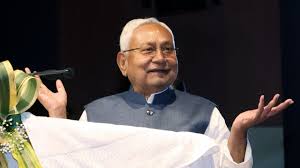
CM Nitish Kumar has taken a big step regarding transgender. The CM has ordered the formation of Safai Karamchari Commission in the state. This commission will have a chairman, a vice-chairman, five members, including a woman/transgender. The work of this commission will be to give suggestions to the government regarding the interests of the sanitation workers, protection of their rights. Amid the stir of assembly elections in Bihar, the Nitish government is making many announcements. The government announced to increase the pension of journalists on Saturday. At the same time, now the government has given a big gift to the sanitation workers. The Nitish government has now taken a big step regarding transgender. Actually, CM Nitish Kumar has ordered the formation of Safai Karamchari Commission in the state. Nitish Kumar gave this information by posting on social media handle X on Sunday. CM Nitish Kumar posted on social media handle X and said, I am happy to inform that I have directed the department to constitute Bihar State Safai Karamchari Commission to ensure protection of rights and interests of Safai Karamcharis, welfare, rehabilitation, social upliftment, redressal of grievances and monitoring of various welfare schemes in the state of Bihar. What will be the work of the commission? The CM further said, this commission will give suggestions to the government regarding the protection of the rights of the Safai Karamcharis, their rights and will review the welfare schemes related to the people engaged in cleaning work and take action to implement it. Transgenders will also be included in the commission The Bihar State Safai Karamchari Commission will have a chairman, a vice-chairman and five members, out of which one will be a woman/transgender. This commission will play an important role in connecting the deprived sections of the society associated with cleaning work in the state to the mainstream and in their social and economic development. Big announcement for journalists The assembly elections in Bihar are near. Regarding this, all the parties want to do public in their interest. The Nitish government is also making big announcements almost daily. An announcement was made for journalists on Saturday. CM Nitish Kumar said, under the Bihar Patrakar Samman Pension Scheme, now all eligible journalists will be given a pension of Rs 15,000 instead of Rs 6,000 every month. Also, in case of death of journalists receiving pension under Bihar Patrakar Samman Pension Scheme, their spouse has been instructed to be given a pension amount of Rs 10,000 instead of Rs 3,000 per month. Along with this, he also announced about electricity. The CM had said, from August 1, 2025, i.e. from the bill of July month, all domestic consumers of the state will not have to pay any money for electricity up to 125 units. This will benefit a total of 1 crore 67 lakh families of the state. Courtesy: Hindi News
Laxman accuses Cong of neglecting backward classes

Mysuru: MP and national president of the BJP Backward Classes Morcha, K Laxman, alleged that the Congress, which ruled the country for over 50 years, did nothing for the development of backward classes. He also opposed the Telangana model caste census. Speaking at a seminar on caste census organised by the Social Justice Awareness Forum, Mysuru division, he accused the Congress of discarding reports submitted by various commissions aimed at uplifting backward classes economically, socially, and educationally. Laxman claimed that former Prime Minister Jawaharlal Nehru, who governed for 17 years, ignored the Kaka Kalelkar Commission report, which recommended reservations in employment and education for backward classes. He further alleged that subsequent Congress leaders, including Indira Gandhi and Rajiv Gandhi, followed suit by neglecting these reports, effectively throwing them into the dustbin. He also accused the Congress of rejecting the Mandal Commission report. Targeting Congress leader Rahul Gandhi and Karnataka chief minister Siddaramaiah, Laxman claimed they portray themselves as champions of backward classes while betraying them. He alleged that Rahul Gandhi’s DNA reflects opposition to backward classes, pointing to the Congress govt’s rejection of the Kantharaju Commission report in Karnataka, which led to a loss of Rs 165 crore in taxpayers’ money. Laxman criticised Rahul Gandhi’s suggestion to conduct a caste census in Karnataka on the lines of Telangana. In Telangana, Muslims were included in the backward classes list, increasing the reservation to 52%, which he described as an injustice to genuine backward classes. He urged that the Telangana model should not be followed in Karnataka under any circumstances. Courtesy : TOI Note: This news is originally published on https://timesofindia.com/bha and is used purely for non-profit/non-commercial purposes, especially human rights.
Maya: Rahul doing ‘selfish politics’

Lucknow: A day after the Leader of Opposition in Lok Sabha Rahul Gandhi said at a programme in Delhi that the Congress fell short of understanding issues faced by OBCs, which made space for BJP, BSP national president Mayawati likened it to shedding “crocodile tears”. In a long post on X, she said, “The admission by the Leader of Opposition in the Lok Sabha that the Congress Party was not true and trustworthy in matters of political and economic hopes, aspirations, and getting reservation and constitutional rights for the people of the country’s huge population of Other Backward Classes (OBC) is not a new thing, rather it seems more like selfish politics of saying what it does not mean.” She said that Rahul Gandhi’s statement was as well-known as the Congress party’s sad and unfortunate attitude towards crores of exploited, deprived, and neglected SC/ST community of the country, due to which the people of these classes formed their own party, Bahujan Samaj Party (BSP), so that they could uphold their self-respect and self-esteem. She also said that due to its attitude towards OBCs, Congress remained out of power in major states of the country, including UP. “After losing power, they have started remembering these classes and are shedding crocodile tears,” she added. “In the current situation, BJP’s NDA also seems to be adopting the same double-faced attitude towards these classes,” she said. Courtesy : TOI Note: This news is originally published on https://timesofindia.com/bha and is used purely for non-profit/non-commercial purposes, especially human rights.
Bawankule Calls Rahul Gandhi’s Caste Census Push ‘Too Late To Matter’
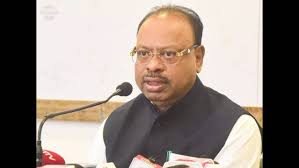
Nagpur: State revenue minister Chandrashekhar Bawankule dismissed Congress leader Rahul Gandhi’s recent support for a caste-based census as ‘delayed wisdom’ and politically opportunistic, stating that the Congress “never delivered justice to OBCs during its decades in power.” “Rahul Gandhi and his party remembered OBCs only during election time,” Bawankule told the media here on Saturday. “For 50 years, they used our votes and ignored our demands. Their last-minute support for a caste census means little now.” Bawankule said that it was Prime Minister Narendra Modi who gave the OBC Commission constitutional status and acted on the long-standing demand for caste enumeration. “The Congress has no moral right to seek OBC votes anymore,” he said. Addressing allegations of phone-tapping by NCP MLA Rohit Pawar, Bawankule called the claims a ‘media stunt’. “There are legal formalities for phone surveillance. You can’t just tap anyone’s phone on a whim,” he said. He also countered Shiv Sena (UBT) MP Sanjay Raut’s sweeping corruption remarks. “If 75% of ministers are corrupt, name them. Empty accusations don’t help anyone,” Bawankule said, adding, “Sensationalism won’t save a sinking newspaper.” On governance matters, the minister confirmed that all bogus birth certificates across districts must be withdrawn by August 15. “District collectors have acknowledged the directive. This will ensure integrity in public documentation,” he noted. Bawankule defended deputy CM Ajit Pawar’s stern words to bureaucrats, calling them “constructive feedback for public good.” He said, “Ajitdada tours from 7 am. If he finds lapses during field visits, he’s right to call them out.” Regarding ongoing deliberations over cabinet reshuffles, Bawankule clarified that such decisions rest solely with the chief minister, Devendra Fadnavis. “Every minister must act in a way that preserves public trust,” he added. On administrative reforms, Bawankule said 12 state civil service officers were recently promoted to IAS. He also emphasised the need to recognise long-serving officials by giving them additional merit marks during evaluation. Addressing misuse of the ‘Ladki Bahin’ scheme, the minister warned: “If men have wrongly claimed benefits meant for women, they should face criminal charges and repay the funds.” Bawankule said the govt will implement the Supreme Court’s verdict on scrub forest lands, covering 86,000 acres, and address questions around pre-1996 and commercial land allotments accordingly. Speaking about a likely meeting between Fadnavis and NCP founder Sharad Pawar, Bawankule welcomed it, saying, “Sharad Pawar’s vast experience can help address the concerns of sugarcane and dairy farmers.” Courtesy : TOI Note: This news is originally published on https://timesofindia.com/bha and is used purely for non-profit/non-commercial purposes, especially human rights.
Rahul Gandhi slams ‘Institutionalised Manuwad’ in higher education; demands immediate filling of reserved posts
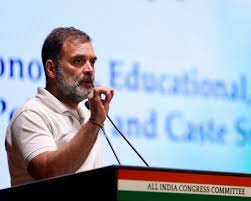
Rahul Gandhi on Friday slammed what he called “solid evidence of the deprivation of Dalits, Bahujans and institutionalised Manuwad,” after government data revealed a significant backlog in filling reserved category posts in higher education, and demanded that all vacant positions be filled immediately. The data, revealed in the Rajya Sabha by Minister of State for Education Sukanta Majumdar in response to a question raised by Professor Manoj Kumar Jha of the Rashtriya Janata Dal on vacancies over the past five years, highlighted a glaring gap for OBC, Dalit, and Tribal communities, as appointments from the general category far outweigh those from reserved categories, with the highest number of seats filled under the general category. For instance, only 84 professors from the OBC category have been appointed against a sanctioned strength of 423, reflecting a staggering 80% vacancy rate. Only 111 professors from the Dalit community have been appointed in the last five years, against a required 308, resulting in a 64% vacancy rate. Similarly, only 24 professors from the Tribal community were appointed out of the mandated 144, marking a stark vacancy rate of 83%. As of June 30, 2025, central universities across India had a total of 18,951 sanctioned teaching posts — professors, associate professors, and assistant professors. Of these, 14,062 were filled, leaving 25% of posts vacant. While the general category saw a relatively lower vacancy rate of 15%, the shortfall was significantly higher for reserved categories. Among OBCs, only 2,197 appointments were made against 3,688 sanctioned posts, reflecting a 40% vacancy rate. For the Dalit community, just 1,599 out of 2,310 posts were filled, resulting in nearly 30% of seats lying vacant. The gap was even more striking for the Scheduled Tribe (ST) community — only 727 of 1,155 posts were filled, leaving 37% of positions unoccupied. Notably, the highest number of seats were filled under the general category. In central universities, professor positions for Scheduled Tribes remain largely unfilled, with 83% of posts vacant, while 80% of OBC and 64% of SC professor posts also remain vacant. A similar pattern is seen in associate professor positions, with 65% vacancies for STs, 69% for OBCs, and 51% for SCs. Rahul Gandhi alleged that “this is not mere negligence but a well-planned conspiracy, to keep Bahujans out of education, research, and policymaking.” The Opposition leader said the exclusion of Bahujans from academia was not accidental but deliberate. “Due to the lack of adequate participation of Bahujans in universities,” he highlighted, adding, “the issues of marginalized communities are deliberately excluded from research and discourse.” “In the name of NFS (Not Found Suitable), thousands of qualified SC, ST, OBC candidates are being declared unfit under a Manuwadi mindset, and the government is unwilling to take any accountability,” he said. Calling the situation “completely unacceptable,” Gandhi demanded that “all vacant positions must be filled immediately, Bahujans should get their rights, not Manuwadi (follower of Manu) exclusion.” In response to Professor Manoj Kumar Jha’s question regarding the number of vacancies and the proportion of candidates declared “Not Found Suitable” (NFS) in reserved categories over the last five years, the Ministry avoided giving specific figures. Instead, it offered a generic explanation that sidestepped the core concern of systemic bias. The Minister of State for Education admitted that, “The details of the number of candidates ‘Not Found Suitable’ by selection committees for teaching posts in Central Universities are not maintained centrally.” While the government claimed that UGC regulations ensure “a transparent and objective selection procedure,” it offered no data to back that claim or to rebut the allegations of caste-based discrimination in appointments. Critics argue this reflects a broader Manuwadi framework, where upper-caste dominance in academia limits opportunities for OBC, Dalit, and Tribal communities, reinforcing caste-based hierarchies. Congress leader Randeep Singh Surjewala called this a “systemic erasure, not meritocracy.” Tribal Army, a vocal advocate for Indigenous rights in India, also sharply criticized the government’s track record on social justice and representation. “While the BJP may be showcasing the presence of a Prime Minister from the OBC community and a President from the tribal community,” it stated, “the stark reality is that 80% of professor posts for the OBC category and 83% for the ST category in central universities remain vacant.” “These figures,” they said, “are not just a sign of neglect but testify to deliberate discrimination. Governments pat themselves on the back by providing representation in symbolic positions, but when it comes to real empowerment, such as appointments to professor, associate professor, or assistant professor positions, these communities are sidelined with the excuse of being ‘not found suitable.’” Calling the practice “a blatant disregard for the principles of social justice,” Tribal Army warned, “If this situation persists, this game of depriving millions of marginalized people of education and opportunities under the guise of symbolic leadership will continue unabated.” RJD Spokesperson Priyanka Bharti said, “The ruling class still does not appear sensitive or committed to the welfare of marginalized social groups!” Courtesy : Maktoob Media Note: This news is originally published on https://maktoobmedia.com/bha and is used purely for non-profit/non-commercial purposes, especially human rights.
Geeli Puchchi: A Messy Tale of Caste and Desire
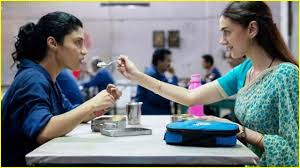
“Geeli Puchhi,” one of the four segments within the film Ajeeb Dastans, directed by Neeraj Ghaywan, intricately weaves the narrative around two central characters: Bharati, a Dalit queer woman employed as a ‘machine-man’ in a factory, and Priya, a Brahmin woman who is also grappling with questions about her sexuality while working as a data operator in the same factory. “Bhool gayi thi kya hum Dalit hai? Table-kursi ka sirf khaana milega; table-kursi ka kaam nahi” (“Have you forgotten we are Dalits? They will allow us to eat at a table but not work at one.”) This line from the movie Ajeeb Dastans aptly encapsulates what many Dalits go through in the 21st century. It portrays a time when societal values profess to support the upliftment of Dalits, yet this support seems to wane when it comes to their involvement within the confines of their workplace or home. Society’s morality lies in a grey area, allowing it to treat Dalits like equals but only to the extent that they do not interfere in their designated spaces, like their home or workplace—just like in the movie when Bharati was ‘allowed’ to enter their house but not given the same utensil to eat from. “Geeli Puchhi,” one of the four segments within the film Ajeeb Dastans, directed by Neeraj Ghaywan, intricately weaves the narrative around two central characters: Bharati, a Dalit queer woman employed as a ‘machine-man’ in a factory, and Priya, a Brahmin woman who is also grappling with questions about her sexuality while working as a data operator in the same factory. This film stands out for its inclusivity, with the director being a Dalit person himself and the protagonist, for the first time in Indian cinema, being a Dalit queer woman. Both women in the movie are shown to be morally grey, which is also a break from the typical ‘aspirational heroine complex’ of Bollywood. Interestingly, they are confronted with the same underlying themes of gender, caste, and sexuality, yet their responses to them are extremely different, navigating the complex web of intersectionality in India in starkly different ways. Their inter-caste queer love is something that Bollywood or even the broader anti-caste discourse has not explored before. Although the film could be critiqued for casting an upper-caste woman (Konkona Sen Sharma) as a Dalit woman, it courageously ventures into territories previously unexplored in Indian cinema. The film’s cinematography is a standout element, effectively immersing the audience in Bharati’s humiliation and Priya’s profound sense of loneliness. The movie is divided into two main colours: blue and orange. This deliberate choice becomes evident from the outset, as Bharati is linked with blue and Priya with orange through their clothing. An interesting visual metaphor unfolds when Bharati enters the factory; the camera captures orangish cylinders on the ground, while Bharati and her fellow workers occupy the blue side. Interestingly, this symbolic use of colour is given more depth by the historical significance of blue, a colour favoured by Ambedkar for its representation of an egalitarian open sky, where all stand as equals. The tension between the difficulties faced by the blue-collared worker and her potential to break free embodies a sense of liberation and sustains the anti-caste colour of blue. Through this review, I try to highlight the intricate knots that bind individuals to their social contexts, shedding light on the multifaceted realities that shape lives in the world’s largest democracy. I also try to shed light on how different social factors affect the characters in the movie and whether any of the characters are ‘at fault’ for doing what they did, or if it is a bigger play of societal norms that led them to their actions. ‘Intersectionality,’ a term often discussed but rarely comprehensively understood, is the crucible in which identities are forged and disparities perpetuated. For many people in the world, understanding how social factors affect people’s daily lives is a struggle, but for those who do understand this, connecting more than one social factor becomes an even tougher task. Most people understand the hindrances of a lower-caste woman through one lens only—either her caste or her gender. More so, her sexuality, class, and other social factors are either ignored or seen as separate things entirely. Kimberlé Crenshaw talks about a case in a factory where Black women were not getting employment, whereas women in general were. The court dismissed the appeal for hiring Black women and said that they should not be allowed to create a ‘super-remedy’ outside what the relevant statutes stood for. This shows how people think social factors lie on a linear spectrum with no intersection. According to her, the main issue for Black women is that there is no ‘framing the problem;’ in the previous case, the court saw sexism and racism in play as an either/or but not as a combined form of oppression. The collective disparaging social factors of a Black woman are not framed. And because their identity falls under both a ‘woman’ and a ‘person of color’ category within public discourses that only look to respond to one or the other, the interests of a Black woman are often marginalized in both. This also leads to the burden shifting to the most privileged members of a group (Black men in the Black Lives Matter movement or white women in the feminist movement) and results in a ‘single-axis framework,’ which distorts the analysis of people affected by social factors. In the same way in India, the kind of problem a Black woman faces in the U.S., a Dalit woman faces in India. The phrase, ‘All women are upper-caste and all Dalits are men,’ shows the underlying ‘invisibilisation’ of Dalit women in broader anti-caste and feminist movements. A Dalit queer woman, like Bharati, becomes even more marginalized in broader caste, sexuality, and feminist movements. Her gender and her caste play a big role in deciding her position in the factory. She is seen as a ‘man’ because of her behavior, which
Caste Violence and the ‘Valmiki Caste’ in Haryana: Atrocities, Trauma, and Resistance
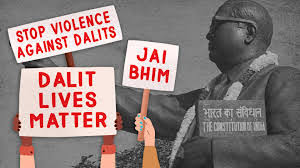
Casteist minds still resist the idea that a Valmiki can rise beyond socially imposed boundaries, that they too can become teachers, doctors, artists, or leaders. Atrocities against Dalits have been a big challenge for Dalits as well as governments. Because, as Dalits have been waking up about their rights, they have become objectives for casteist minds, and they have tried to break their confidence and even dismantle their leadership. The Indian caste system always endorses structures of social exclusion and discrimination. It would hardly be an exception to find a Dalit who has not experienced discrimination of some kind. The Valmiki community, a Dalit sub-caste traditionally associated with sanitation and manual scavenging, has particularly suffered under the weight of this oppressive system. The caste “Valmiki” does not refer to a single caste but rather a group of communities that were historically forced into occupations considered impure or degrading, especially manual scavenging and cleaning. Unfortunately, still today, Valmikis, who are associated with their hereditary professions, are accepted by Savarnas and Dalits also. However, if someone tries to establish him/herself, s/he would face dual exclusion from Dalits and non-Dalits. Even though India gained independence more than seventy-seven years ago and enacted a constitution that guarantees equality and dignity for all, many caste-bound occupations continue to function as inherited fates. Casteist minds still resist the idea that a Valmiki can rise beyond socially imposed boundaries, that they too can become teachers, doctors, artists, or leaders. This systemic prejudice is evident in many everyday situations and becomes glaringly violent in others. A striking recent example is the case of Jansu Chauhan, a Class 8 student at Christ Raja Convent School in Jind, Haryana. His father is a schoolteacher and his mother a homemaker. It was very unbelievable that an ignorable quarrel between Jansu and a classmate, Jivansh, during a telephonic conversation, turned into a horrifying episode of casteist abuse and threats because of Jansu’s caste identity. Following the argument, Jivansh’s father, Vikas Sharma, and his uncle, Deepak Sharma, called Jansu and unleashed a torrent of caste-based slurs—terms like “Chude,” “Chamaar,” and “Bhangi”—words that have been used for generations to shame and degrade Dalit individuals. The abuse went beyond words; they threatened to strip Jansu’s parents and kill him and his father, aiming to reduce the family to a state of terror. many difficulties, on May 17, 2025, Jansu’s mother lodged a complaint at Patiala Chowki in Jind. She described how her son had been harassed continuously for three years. She named not just the relatives of Jivansh but also a teacher, Hariom, who allegedly supported the harassment. She described that Vikas and Deepak Sharma often stood outside the school, harassed her son, and made videos to mock and intimidate him. However, the police delayed registering an FIR for eight days. When they finally did, on May 25, 2025, the FIR—registered as Case No. 179—only mentioned Deepak Sharma’s name. The other two accused, including the teacher named explicitly in the complaint, were excluded. The FIR invoked Sections 296 and 351(2) of the Bharatiya Nyaya Sanhita (BNS) along with Sections 3(1)(r) and 3(1)(s) of the SC/ST (Prevention of Atrocities) Act, 1989. But the selective naming of the accused and the delay in filing the FIR point to a larger issue: the collusion of caste and prejudices of state institutions. Even in a formal educational setting, and even when supported by a written complaint, a Valmiki child’s trauma was not taken seriously. Jansu has now stopped attending school. The trauma inflicted on him has not only interrupted his education but also left a deep emotional scar. After a few weeks, another shocking incident occurred—this time in the 12 Quarter Road area of Hisar district—on July 7, 2025, Ganesh, a minor young boy from the Valmiki community, was celebrating his birthday with his family. Loudspeakers were used during the celebration, reportedly beyond the legal time limits, which disturbed a nearby police outpost. What followed was a brutal overreaction by the police. Without a warrant and in the absence of a female officer—both in violation of standard legal procedures—the police forcibly entered the home. They beat members of the family, including women; Ganesh died during this trauma. Later, the video of the police attack circulated widely on social media, sparking anger and mourning. Members of the Valmiki community gathered at the Civil Hospital of Hisar, where Ganesh’s body had been taken for postmortem. They refused to cremate the body and demanded justice. Their demands were registration of an FIR against the officers involved, a CBI inquiry, termination of the involved personnel, financial compensation, and a government job for a family member. For ten days, from July 8 to July 17, they held a peaceful protest. The government initially ignored their demands and even issued a coercive notice under the Haryana Honourable Disposal of Dead Body Act, 2025, mandating cremation within 12 hours—a move widely seen as an attempt to suppress resistance. Finally, on July 17, after public pressure and ongoing protest, the government agreed to all five demands. Ganesh was cremated on July 18, 2025. The incident served as a painful reminder of other brutal caste crimes in Haryana—particularly Gohana (2005) and Mirchpur (2010). In 2020, a young man from the Valmiki community—Raman Valmiki—died under mysterious circumstances in judicial custody. His death also sparked protests by Dalit organizations, particularly by Balmikis. However, later investigation revealed that Raman’s death occurred due to health issues. Yet, it was still an institutional murder because it is the duty of the jail authorities to provide immediate medical facilities. One thing that must be discussed here is why all these atrocities have occurred specifically against the Balmikis. I investigated and found some answers to this question: Balmikis are not aware of the value of icons. Due to this ignorance, they are misled by misinformation and end up following icons who are not well established. Due to a lack of education, Balmiki representatives are fewer in the system than their proportion in the population.
Revanth Reddy government betrayed Dalits and Adivasis, failed to implement SC/ST Declaration, says KTR
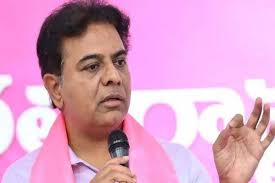
BRS leader KT Rama Rao accused the Congress government of betraying SC and ST communities by not implementing its poll promises. He said only K Chandrashekhar Rao could restore Telangana’s progress and urged voters to reject the Revanth Reddy regime. Kamareddy: Terming the Revanth Reddy government anti-Dalit and anti-tribal, BRS working president KT Rama Rao on Friday said the government was betraying SC and ST communities by failing to implement the Chevella SC/ST Declaration, which was released by AICC chief Mallikarjun Kharge ahead of the 2023 Assembly polls. Addressing the Dalit “Atmagourava Garjana” meeting held at Kamareddy on Friday, Rama Rao dubbed the Congress manifesto the biggest lie of the century, which deceived all sections of Telangana. He asserted that only K Chandrashekhar Rao could restore the State’s progress. “KCR fought for 14 years to realise Telangana and honoured Ambedkar like no other Chief Minister, by naming the State Secretariat after him and installing a 125-foot statue in Hyderabad,” he said. The BRS working president said that while Chandrashekhar Rao implemented the Dalit Bandhu scheme to empower SCs, the Congress promised to enhance the benefit to Rs 12 lakh and came to power. He ridiculed the Congress leaders for delivering nothing after promising Rs 6 lakh for Dalit and tribal housing, 26 per cent quota in government contracts under the SC/ST Declaration. Charging the Revanth Reddy government with mismanagement, Rama Rao said farmers were denied timely Rythu Bandhu aid and loan waivers were slashed from Rs 50,000 crore to Rs 12,000 crore. He remarked that promises of Aasara pensions, one tola gold for brides, and two lakh jobs for youth had all proven to be empty slogans. “Gurukul schools became an abode for scores of talented students from weaker sections under the BRS regime. But today, they have become unsafe, with hundreds of students dying due to food poisoning, while Revanth Reddy spent Rs 1.35 lakh on a plate of food during a visit to Vemulawada,” he said. He rubbished Congress leaders for spreading lies about debt, and stated that only those who could generate revenue could govern effectively. While the people of Telangana benefited during the K Chandrashekhar Rao government, money was now flowing only into Rahul Gandhi’s account under the Revanth Reddy regime, he stated, urging the people to use their vote as a weapon to oust the oppressive Congress regime and ensure a BRS victory in the upcoming local body elections. Warning that only a strong mandate could bring Revanth Reddy and his officials to their senses, he promised that the BRS would continue its fight for Dalits and tribals to ensure justice. Courtesy : Telangana Today Note: This news is originally published on https://telanganatoday.com/bha and is used purely for non-profit/non-commercial purposes, especially human rights.