
What Happens When The Margins Are Marginalised? Mx. Yashika, Caste, And The Crisis Within India’s Trans Movement

The pain in Mx. Yashika’s voice isn’t just from this smear campaign. It’s from being betrayed by movements she’s worked tirelessly to uplift. Mx. Yashika’s story begins not with triumph, but with a tremor. One that cuts through the tattered jacket of solidarity in India’s trans rights movement. A Dalit trans scholar from Saharanpur, she recently became the target of public, casteist allegations by none other than a senior member of the Uttar Pradesh Transgender Welfare Board, per a January 2025 report by The Probe. The Hindu reports, Devika Devendra S. Manglamukhi, alleged that Yashika had fraudulently obtained her caste and transgender identity certificates. These are claims which Yashika vehemently denies and has legally contested. The notice served by Yashika (with pro bono help from Chambers For Justice, a New Delhi-based law firm) demands not just a retraction, but reparations for a betrayal that feels as institutional as it is personal. “Caste atrocities against Dalit trans and queer people were never even taken into consideration,” she says. At stake here is more than one person’s dignity. It’s the erasure of Dalit trans voices from movements that claim to speak for all trans people. It’s the reproduction of caste supremacy within LGBTQIA+ spaces that purport to be inclusive. And it’s the heartbreak of being ghosted (not just by dominant-caste-led queer institutions) but also by platforms dedicated to Dalit rights. As Yashika puts it, “[Most people] ignore Dalit trans issues.” What does the notice reveal? On July 6, 2025, Devika posted on Instagram, alleging that Mx. Yashika had forged her Scheduled Caste and Transgender ID certificates. These accusations were echoed in news platforms like UP Tak and TNF Today (the latter has since been deleted but was referenced in the legal notice served by Yashika), claiming NHRC intervention, which the legal notice debunks as entirely fabricated. The UP Tak report falsely stated: “Yashika (…) has violated the rules and fraudulently got two certificates made for herself. One of these is a Scheduled Caste certificate, and the other is a Transgender Identity Card issued by the District Magistrate.” The article further insisted that trans persons should only be recognised under the OBC category as per a 2014 decision, thus implying that caste-based reservations are illegitimate for trans individuals. Such assertions not only misrepresent the NALSA judgment but also overlook the lived realities of caste and gender-based oppression. SDM Ankur Verma, cited in the same report, clarified that his office had received no formal complaint. Despite this, Devika allegedly weaponised WhatsApp groups like ‘National Network of Trans’ and ‘Webline Transgender’ to circulate defamatory content, including urging others to shame Yashika. The notice also claims Devika “used and circulated photographs of [Yashika] without her consent, which constitutes a gross invasion of her privacy.” Over and above deadnaming her repeatedly, the screenshots from these groups reference Yashika’s caste identity, her father’s name, and calls to ostracise her. The legal notice that was issued was acted upon by Advocate Sourabh Rai of Chambers for Justice, who accused Devika of criminal defamation under the Bharatiya Nyaya Sanhita and of violating provisions under the SC/ST (Prevention of Atrocities) Act and the IT Act. Devika mangalmukhi message national network of trans Devika has previously publicly targeted another Dalit trans activist. An April 2025 report by The News Minute says she had also levelled similar accusations against activist Grace Banu, another fierce advocate of horizontal reservation, at the Talkatora Police Station. She alleged that Grace had robbed and threatened her on December 22, 2024. The parallels are impossible to ignore. Transgender activists who advocate for horizontal reservation are among the other complainants listed by Devikai in her formal complaint. Ritwick Das, an activist based in Lucknow and Delhi, and Jane Kaushik, an activist based in Delhi, are among them. A pattern of casteism within queer spaces Yashika is not new to exclusion. She tells FII that while pursuing an M.A. in Human Rights at Panjab University, Chandigarh, she was denied hostel access solely due to her gender identity. This was until a 2022 Punjab & Haryana High Court order forced the administration to comply. “My family never helps me. I experienced gender exclusion from Dalit spaces as well as caste oppression among trans or cis people in the upper caste,” she explains. The very institutions she turned to for protection replicate the same hierarchies she tried to escape. The current attack, she alleges, stems from a long-standing disagreement over reservation policy. While Yashika and several Dalit trans activists advocate for horizontal reservations (recognising caste and gender identity as overlapping systems of oppression), Devika has publicly argued that all trans persons should not be categorised under SC/ST/OBC on the WhatsApp group named National Network of Trans. Yashika believes this erases the unique oppression faced by Dalit trans individuals and flattens the community into a monolith. The structural vulnerability deepens these wounds. “I never had family support. I faced intentional and systematic exclusion,” Yashika says. Even in queer spaces, caste determines who gets platformed and who gets policed. In Uttar Pradesh, she adds, “Dalit trans persons are living in fear, which is why they don’t come out openly in Uttar Pradesh,” due to fear of harassment from both the state and dominant-caste queer groups. “I feel very unsafe due to casteism and misgendering.” Where is our media? The silence around Yashika’s case is deafening. Despite the clear legal record and digital evidence of defamation, several well-known platforms (including those focusing on Dalit rights) have refused to cover her story. “Some promised they would and ghosted me,” she says. The media’s silence only shows their underlying discomfort with intersectionality. Dalit trans persons often find themselves erased from both the Dalit movement (which tends to be cis-heteronormative) and the queer movement (dominated by upper-caste voices). “They ignored our visibility and alienated us,” Yashika says. “There is no Dalit liberation without the appropriation and inclusion of Dalit trans persons in the Dalit movement.” Dalit Queer India, a collective Yashika is in conversation, affirmed her experience.
India’s biggest state introduces jobs, housing, and health support for trans people
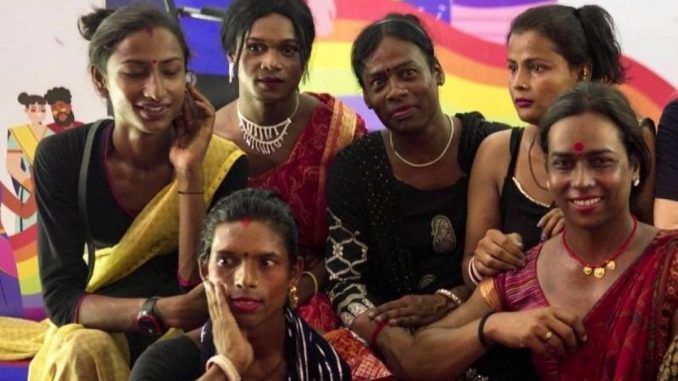
The government of Uttar Pradesh, India’s most populous state, has announced a major policy change to support its transgender population. The state’s flagship youth entrepreneurship initiative, known as the CM Yuva scheme, will now include transgender individuals as eligible participants. The expanded program will offer a range of support, including vocational training, access to interest-free loans, housing assistance, healthcare benefits, and pensions. The state is also setting up 100 dedicated welfare centers across its districts to provide skill-building opportunities in areas such as tailoring, digital literacy, culinary work, and beauty services. Each of Uttar Pradesh’s 75 districts is also expected to reserve two public sector job positions for transgender individuals. This marks a shift toward greater inclusion in employment and public life. “These steps are about giving dignity and opportunity to those who have been marginalized,” said Asim Arun, the state’s Social Welfare Minister. He emphasized that the government aims to bring transgender individuals into the mainstream through economic empowerment and social support. Transgender participants will also gain access to national welfare programs such as Ayushman Bharat for health coverage, the Pradhan Mantri Awas Yojana for housing, and other state-level subsidies and benefits. Officials say efforts are underway to carry out community surveys and awareness campaigns to ensure the program reaches those in need. The CM Yuva scheme was first launched in 2018 to support young entrepreneurs in Uttar Pradesh. It provides interest-free loans of up to ₹5 lakh (about USD 6,000) for small business ventures. To date, more than 40,000 people have benefited from the program. The government has allocated ₹1,000 crore (approximately USD 120 million) for the scheme in the 2024–2025 budget. With this new focus on transgender inclusion, the initiative aims to reduce economic inequality and promote broader participation in public life. Officials hope it will also set an example for other Indian states to follow. This development comes amid a growing national conversation about the rights and recognition of transgender people in India, where legal protections have improved but access to social and economic opportunities remains limited. Courtesy : Transgenderfeed Note: This news is originally published on https://transgenderfeed.com/bha and is used purely for non-profit/non-commercial purposes, especially human rights.
Yes, I went to China but you… External Affairs Minister S Jaishankar reminded Rahul Gandhi of old things
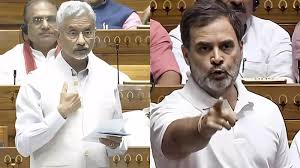
External Affairs Minister S Jaishankar targeted Congress leader Rahul Gandhi in Parliament and said that he did not go to China for any secret meeting. He expressed surprise at an opposition leader meeting the Chinese ambassador secretly during the 2017 Doklam crisis, while the Indian Army was facing the Chinese Army. New Delhi: External Affairs Minister S Jaishankar on Monday attacked Congress leader Rahul Gandhi without naming him during a discussion on the Pahalgam attack and Operation Sindoor in Parliament. S Jaishankar said that yes, I went to China but I did not go for any secret meeting. At the same time, an opposition leader used to hold secret meetings with the Chinese ambassador. Referring to the 2017 Doklam crisis, Jaishankar said that an opposition leader did not consider it appropriate to seek information from the government or the Ministry of External Affairs on this issue, instead he met the Chinese ambassador and got the information. Jaishankar said that it is surprising that they do not want to listen to the elected foreign minister of the country, but want to listen to the people of other countries. He said that this happened when our army was strongly confronting the Chinese army in Doklam. At that time there was a need for national unity, not behind-the-scenes meetings. Some people were enjoying the Olympics sitting in China Jaishankar further said that when China was issuing staple visas to the citizens of Arunachal Pradesh and Kashmir, some leaders were watching the Olympics sitting in China. I neither went to China to watch the Olympics nor for any secret agreement. Amit Shah stood up in the middle of the debate and defended the foreign minister At the same time, when the opposition repeatedly started interrupting the foreign minister’s statement, Amit Shah got furious and stood up in the middle of the debate and reprimanded the opposition leaders. Amit Shah said that I object that they do not trust the foreign minister of their country but trust the leaders of another country. All except 3 countries including Pakistan supported Operation Sindoor Rejecting the opposition’s claims that India did not get support from abroad after the Pahalgam attack, External Affairs Minister S Jaishankar said in the Lok Sabha on Monday that out of the 193 members of the United Nations, all except Pakistan and three other countries supported Operation Sindoor. Participating in the discussion in the Lok Sabha on the subject of Operation Sindoor, Jaishankar rejected the opposition’s allegations on China’s support to Pakistan and said that the partnership of the two countries has been going on for 60 years since the time of Congress. The Foreign Minister said in the House that it was necessary to give a clear message to Pakistan after the Pahalgam attack. If our limits were crossed, then it was necessary to send a message that the results would not be good. Curated by: Sanjeev Kumar About the author Sanjeev Kumar is a Senior Digital Content Producer at Navbharat Times Online. He has more than 6 years of experience working on national, politics, current affairs and Bihar-Jharkhand news. He is currently covering national news, politics and Delhi news for Navbharat Times Online. Courtesy : Hindi News
Congress’s big rally in Patna before Bihar elections, Rahul Gandhi will be involved, plan to show strength
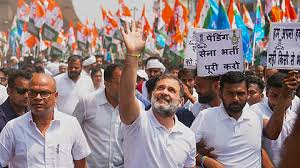
Before the Bihar assembly elections, Congress is going to hold a big rally at Gandhi Maidan in Patna. Many big leaders including Rahul Gandhi will attend this rally. Congress wants to show its strength by holding an election rally before the code of conduct is imposed, so that they can get enough time for election campaign. Patna: Before the Bihar assembly elections, the Congress party is going to hold a big rally in Patna. This rally will be held at Gandhi Maidan in Patna. Rahul Gandhi and many big leaders of the party will attend the rally. Congress has planned to hold an election rally before the code of conduct is imposed. The rally can be held in the last week of August or in September. The date of the rally will be decided after getting Rahul Gandhi’s approval. This decision was taken by Congress leaders in a meeting today. Plan to show its strength by holding a big rally Congress is fully prepared for the assembly elections to be held in Bihar. The party wants to show its strength by holding a big rally in Patna. The rally will be held at Gandhi Maidan, so that more and more people can be reached. Rahul Gandhi will also attend the rally, which will increase enthusiasm among the workers. More time will be available for election campaign Congress wants to hold a rally before the code of conduct is imposed. This will give them more time for election campaign. The date of the rally has not been decided yet. But, it can be held in the last week of August or in September. The date will be announced after Rahul Gandhi’s approval. In the meeting held today, Congress leaders discussed the preparations for the rally. They made many plans to make the rally a success. Ajay Maken’s screening committee will recommend the names of the candidates Earlier, a screening committee has been formed under the chairmanship of Ajay Maken for Bihar elections by Congress President Mallikarjun Kharge. The committee will recommend the names of the candidates. Meanwhile, an attempt will be made to instill enthusiasm and zeal among the Congress workers through the rally at Gandhi Maidan in Patna. Edited by: Ravi Sinha About the author Ravi Prakash Sinha is a Senior Journalist (Principal Digital Content Producer) at Navbharat Times Online. He has 25 years of experience in current affairs, Jharkhand-Bihar politics and ground reporting. Ravi Sinha has been working with NBT (Digital) for the last 3 years. Courtesy : Hindi News
Operation Sindoor debate: ‘From LoP to LoB – Leader Opposing Bharat’ – Anurag Thakur slams Rahul Gandhi in Lok Sabha
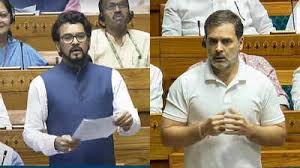
NEW DELHI: BJP MP Anurag Thakur on Monday launched a scathing attack on leader of opposition Rahul Gandhi during a discussion on Operation Sindoor in the Lok Sabha, accusing him of consistently opposing India and aligning with Pakistan’s propaganda. “He has become LoB from LoP. LoB stands for Leader Opposing Bharat. Opposing India and the Prime Minister is his agenda,” Thakur said, adding, “I don’t know whether he becomes the poster boy of Congress or not, but he has become the poster boy of Pakistan’s propaganda.” The remarks came during a debate in the Monsoon session, where the BJP leader criticised Gandhi for his alleged silence on the brutal details of the Pahalgam terror attack and the opposition’s overall stance. “Of all the opposition MPs who have spoken here till now, not even one MP has stood up and said that in this terrorist attack, people were asked about his religion and asked to recite Kalma, their pants were removed and then they were killed. Tell me what pain did the opposition MPs have in saying this?” Thakur questioned. He further said, “When the defence minister was discussing the achievements of the Indian Army, there was no applause, no one was thumping the table,” pointing towards the lack of support from the opposition benches even during moments meant to honour India’s armed forces. Anurag Thakur also accused the Congress of attacking the military through cartoons and derogatory remarks. “India fought on two and a half fronts, everyone knows about the two fronts, but in this half front, there is also a Rahul Occupied Congress. Look at the social media, in the last two months, Rahul Occupied Congress has made disgusting and insulting cartoons against the Prime Minister and the Indian Army. Rahul Occupied Congress called the Army chief a roadside goon. Rahul Gandhi should apologise to the entire country and the Indian Army.” The BJP MP’s fiery comments reflect the ruling party’s sharp pushback against the opposition’s questioning of government actions in Jammu and Kashmir and underline the increasingly polarised political narrative in Parliament. Courtesy : TOI Note: This news is originally published on https://timesofindia.com/bha and is used purely for non-profit/non-commercial purposes, especially human rights.
Framed, Not Freed: Bureaucratization Of Trans Identity In India
The judgment in NALSA v. Union of India (2014) was historic, not just for its re-imagining of transgender as a “third gender,” but also for rooting this re-imagination in constitutional morality. Based on provisions in Articles 14, 15, 19(1)(a) , and 21 of the Indian constitution , the Court reaffirmed entitlements to dignity, autonomy, and self-description— highlighting that gender identity is core to liberty. But declaratory power is only one side. A decade after, NALSA is more talked about than followed. This article interrogates its transformative ambition, scrutinizes the legislative and policy implications—focusing on the Transgender Persons Act (2019) — and argues for a more ambitious rights-based legal architecture that fuses recognition and redistribution. Law vs. Reality: A Shaky Implementation While the Court mandated that governments ensure equal access to education, healthcare, jobs, and social services for transgender communities after NALSA, progress has been inconsistent. Many states have failed to establish functioning Transgender Welfare Boards or dedicate targeted funding streams. Some welfare programs only exist on paper, providing little material support. A central shortcoming lies in legal gender recognition. Despite NALSA affirming self-identification; local authorities frequently demand medical or psychological evaluations before issuing gender identity certificates. Trans individuals are regularly compelled to substantiate their internal sense of self—a practice the ruling had explicitly rejected as discriminatory. Without a formal enforcement mechanism, discrimination persists in schools, hospitals, workplaces, and police stations with little recourse. Transgender people continue facing barriers. Certification over Selfhood: The Legal Backsliding After NALSA The Transgender Persons (Protection of Rights) Act 2019 was intended to build on the achievements of NALSA but marks a legislative step backward based on the desire for bureaucratic control over an individual’s autonomy. Although the title of the Act is promising it actually undermines the heart of NALSA’s ruling, by transforming a self-identification framework into one shaped by state sanctioned and bureaucratized processes. Specifically: sections 5-7 of the Act require transgender persons/individuals to apply for a certificate of identity from a District Magistrate. Where a Trans person wishes to obtain recognition as male or female, proof of gender-affirming surgery must be provided. This is intrusive and direct contradiction of NALSA- which asserted that gender identity of an individual is based on self-determination without medical intervention. In effect, the Act lays-out hierarchies of legitimacy with respect to Trans identities. In addition- the Act only provides ephemeral references to non-discrimination, not regulations setting out penalties, enforcement processes or remedies. The Act criminalizes harm in name only and does not create opportunities for institutional design preventing harm. · The Act’s silence on reservations- a very important part of the NALSA framework- is glaring; without affirmative action, equality is simulacrum. · Worse even than that – the Act was passed without consultation with Trans communities; it is very clearly a top-down, paternalistic rights framework. Recognition is not enough : Socio – Economic Realities Whereas NALSA and the 2019 Act are concerned with identity recognition, they say nothing about the material deprivation that marks the lives of the majority of transgender individuals in India. · The literacy rate of transgender individuals in the 2011 Census stood at only 51.06% below than national average 74% -numbers which probably underestimate the full extent of exclusion. · Despite legal recognition, Trans individuals continue to have deep-seated obstacles to shelter, education, and health. Schools are still places of harassment and dropout; government hospitals are not trans-friendly, with inadequate trained personnel or welcoming policies. Even programs such as Ayushman Bharat, which now formally include transgender care, have bleak implementation. · Housing continues to be insecure: Trans individuals are regularly denied rental contracts and barred from shelters. In the absence of tenancy rights or anti-discrimination housing legislation, even government programs remain out of reach. · Layered exclusions get worse for Dalit, Bahujan, Adivasi, and disabled Trans individuals—communities rendered invisible by the uniform legislative framework. State and central welfare schemes tend to demand gender-matching documents, shutting individuals out of their rights if legal recognition doesn’t match lived identity. Recognition alone will not tear down structural violence. A rights framework must incorporate redistributive justice and intersectional protections. Developing a Trans-Affirmative Legal Framework While the Indian legal framework is comparable to England and South Africa in its stated protections against discrimination based on a person’s sex, it is lacking in legislation that protects against discrimination based on a person’s gender identity and gender expression. While both article 15 prohibits discrimination on the basis of “sex”, the protections that exist under the Indian Constitution have not yet been fully realized with action from the necessary corrective amending legislation. What is needed now is a dedicated statute (similar to the UK’s Equality Act and South Africa’s Promotion of Equality and Prevention of Unfair Discrimination Act). A law of this nature must: · Define and prohibit direct, indirect, structural, and intersectional discrimination; · Apply to both public and private actors alike; · Provide civil remedies including compensation, injunctions, and organizational accountability; · Create equality commissions at both national and state levels to oversee implementation. Affirmative action must be part of any recent legal structure. As suggested by the NALSA recognition, we need horizontal reservations for Trans people as part of affirmative action in education and public employment as remedial measures of social disadvantage and inequity. Among other things, the state governments of Tamil Nadu and Karnataka include Trans persons within the OBC/MBC classification or a reasonable quota in public service examinations. Most importantly, Trans communities must have a seat at the table of law-making—they need to be practitioners of the law in terms of the drafting process, applications of the law, and in bodies which hold jurisdiction over the implementation and monitoring of the law. Appropriately engaging Trans communities makes sure their dignity is not interpreted or processed through a cisnormative or bureaucratic lens. Remember too that equality is not given, but built into. Recognition Is The Floor, Not The Ceiling A decade since NALSA, it is clear that recognition without redistribution is not enough. Transgender persons continue to
The end of the love of Sania of Baghpat and Dalit youth Sagar will make you cry, both paid a heavy price for falling in love

The walls of religion and caste in Baghpat killed a love story. The society did not accept the relationship of Muslim girl Sania and Dalit youth Sagar. In this case of honor killing, Sania was murdered, while Sagar is still missing. Baghpat News: A case of honor killing has come to light from Baghpat in Uttar Pradesh, which will shock you. This love story that came to light from Baghpat will shake your heart. Another love story has died in the name of society’s thinking and false honor. Let us tell you that Sania and Sagar loved each other. Sania was from a Muslim family and Sagar was from the Dalit community. This relationship between the two became the reason for their death. What is the whole story? The incident is from Palda village of Doghat police station area of Baghpat. Sania was from the Muslim community and belonged to an influential family of the village. While Sagar was the son of a Dalit and poor labourer. Sagar worked at a brick kiln in Himachal Pradesh. When Sagar returned to the village on festivals, both of them started meeting each other. Slowly with time, their relationship turned into love. But people bound by the chains of society, religion and caste could not accept this relationship. Caught while trying to escape According to the information, both of them tried to meet each other several times secretly from their families and run away together. The last time they ran away from the village, the family members caught them on the way. After this, Sagar was beaten badly and thrown somewhere in a half-dead condition. While Sania was taken home and first killed and then suffocated by placing a pillow on her face. Attempt to hide murder Let us tell you that after the murder of Sania, her body was quietly buried in the village graveyard. Due to the village being Muslim majority, no one raised any question for two days and the matter was completely suppressed. The secret was revealed by the father’s plea During this time, when there was no news of Sagar, his father started searching. After this, the father lodged a complaint with the police about his son’s disappearance and feared that his life was in danger. Understanding the seriousness of the matter, the police started investigating. Some suspects were detained and the revelations made during the interrogation shocked everyone. The secret of the murder was revealed during interrogation The layers of the entire murder case started getting revealed during the interrogation of some suspects detained by the police. During interrogation, the accused created a sensation by confessing to the murder of Sania. After the confession, the police took immediate action and dug up Sania’s grave and took the body into custody and sent it for post-mortem. On the other hand, Sagar is still missing and no clue about him has been found, which has further deepened the concern about the case. Manudev Upadhyay Courtesy : Hindi News
Cast(e) in stone: An exploration of how inequality exists in a global village, and not just India
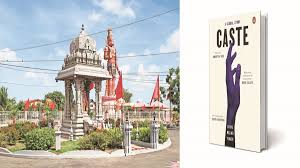
Here the author traces anti-caste movements across the world, their political assertions, setbacks, achievements. What offers an interesting insight is how Dalit organisations beyond the shores are not sponsored or supported by India-based institutions. In July 2023, a video went viral of a dominant caste man, reported to be a Brahmin, urinating on a tribal man in Madhya Pradesh. The latter sat slouching and the culprit, identified as a ‘pandit’, towered over him, urinating on his face and body. More disturbing than the incident was the support the culprit subsequently received from his community. In September 2024, in Karnataka’s Dakshina Kannada district, a 67-year-old Dalit man was brutally assaulted by a high-caste Gowda shopkeeper with a wooden pole when the former sought shelter from heavy rain and wanted to rest near the shop. More recently, in Uttar Pradesh’s Etawah, a group of upper-caste men allegedly tonsured the head of a katha vaachak (religious preacher) and his aide after finding that they hailed from the Yadav community. Shortly after this incident, in Odisha’s Ganjam district, men of the Dalit Pana community were beaten up and forced to crawl with grass blades between their teeth and also to drink drain water by so-called Savarnas (dominant castes). They were alleged to have smuggled cattle which came out to be a falsehood. These are just a tiny sample from a regular flow of such news from across India’s vast geography and cultural landscape. The political dispensation of a state hardly makes a difference. Caste consciousness, in all its shameful manifestations, is ingrained in the Indian psyche, and except the occasional expression of disgust and surprise, such incidents hardly shake the national conscience in any effective way. But is it just an Indian phenomenon? Caste beyond borders After penning Caste Matters and co-authoring The Radical in Ambedkar, Suraj Milind Yengde has come out with his latest to shed light on caste’s obstinate tendency to exist and stir societies in faraway lands and climes. Caste: A Global Story is an outcome of the author’s decade-long research based on historiography, archival resources, ethnography and personal encounters, bringing to the fore contemporary Dalit experiences among the Indian diaspora from the Caribbean to Europe, to Africa, to the Middle-East and to South Asia. A WEB Du Bois Fellow at Harvard University, Yengde is a world-renowned scholar on caste studies. Named among the ‘25 Most Influential Young Indian’ by GQ magazine, he spent his childhood in Nanded, the headquarters town of the district by the same name in Marathwada. The region has been home to one of the most radical forms of Dalit politics for over a century where visions of Kabir and Ravidas found resonance among the underprivileged before—aided by a Dalit-Black bond and BR Ambedkar’s ideas of fighting upper-caste dominance —it created an early template of Dalit political activism. The author writes with a position of seeing and experiencing caste politics at close quarters. Literature as resistance A deep insight is offered into literature becoming a powerful starting point of Dalit assertion of identity and dignity. It has been a way to reclaim an area, which from time immemorial remained out of reach for the oppressed and as an exclusive domain of the dominant, particularly Brahmins. It helped challenge the age-old narrative of impurity and punishment and assert Dalit agency. A comparative study of Black and Dalit literature brings out similarities and points of divergence. While both said how discriminations were institutionalised, Dalit literature looked at caste hierarchies couched in religious and social sanctions whereas Black subjugation stemmed from centuries of slavery and a system of apartheid based on colour. What tied the two strands was a spirit to rise above hardened debilitating subjugation. A substantial fieldwork is done in Trinidad, one of the earliest destinations of indentured labour from India where 40% of the population is of Indian origin. A majority of them belong to low-caste hierarchies. Yengde meets community leaders and tries to understand the caste dynamics on a distant land from their ancestors’. Do castes play a role in Trinidadian society? Interestingly, they do, but only in religious institutions and in trying to find worship and fellowship in the Hindu dharma. They are nearly absent in people’s lives in terms of intense rigidities found in India. Conversations with people like Pandit Amar Sreeprasad, an Ahir by caste; Pandit Parasaram who draws a Brahmin lineage; and Ravi Maharaj, an RSS functionary, are interesting and revealing. The author traces anti-caste movements across the world, their political assertions, setbacks, achievements. What offers an interesting insight is how Dalit organisations beyond the shores are not sponsored or supported by India-based institutions. They do appear as a disparate set of anti-caste believers under the banner of Ambedkar, Ravidas, Valmiki, Dalit Christian or Buddhist congregations, but somewhere their commitment to raise their community issues and seek social justice unite them into a single bloc. Yengde makes the point that the ability of caste to transcend time and space must be analysed through its multiple ‘diasporic nations’ that draws from one site of origin —India. He has also been immensely successful in bringing out parallels that exist in experiences of caste and race oppression, making a case for a global solidarity to fight inequalities. At the same time, an appeal goes out to dominant castes, who are carriers of social and religious creed that cannot tolerate human equality, to self-educate and agitate against the caste system rather than stand by it. Thought-provoking, the book offers quite a few new insights into caste dynamics in the global village that we live in. To borrow from Amartya Sen’s crisp Foreword, nearly verbatim, it is a remarkable work to understand and confront the challenges of cast-in-stone inequalities worldwide. Written by Amitabh Ranjan Courtesy : F E Leisure Note: This news is originally published on https://feleisure.com/bha and is used purely for non-profit/non-commercial purposes, especially human rights.
From Bihar to Kerala, from women to Dalit-OBC… who will replace Dhankhar?
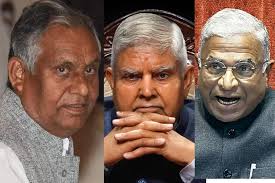
Preparations have started for the election of the post of Vice President in the country. Jagdeep Dhankhar resigned from this post on the first day of the monsoon session i.e. on July 21. Now all eyes are on the candidate for the post of Vice President, who will he be, what will be his background and from which state? After the resignation of Jagdeep Dhankhar, the chair of the Chairman of the Rajya Sabha is lying vacant. The monsoon session of Parliament is going on. In such a situation, now the Rajya Sabha is running without a Chairman. There is no doubt that after Dhankhar’s resignation, the government must have also started searching for the next candidate for this post. So far, separate meetings of many big leaders have also been held in Delhi. However, no name has been revealed yet as to who will sit on this chair, but discussions have started in the political corridors about different states. These states include West Bengal to Bihar and Andhra Pradesh to Tamil Nadu. Dhankhar’s resignation from the post of Vice President is being considered a big setback for the government. The way Dhankhar had embarrassed the government with his statements for the last few weeks is not hidden from anyone. As the Chairman of the Rajya Sabha, his confrontation with the opposition parties was also often in the headlines. Even his comments on the Supreme Court were in the news. While reacting to the Supreme Court’s decision regarding the Governor of Tamil Nadu, he even said that the courts cannot order the President. There were many other issues on which Dhankhar not only openly expressed his views but sometimes he also put the government in an uncomfortable position. What if there is a problem regarding Bihar? The Vice President’s chair has fallen vacant at a time when assembly elections are going to be held in Bihar. At present, there is an NDA government in Bihar and Nitish Kumar is leading it. Apart from this, there is also discussion about the states of South India. Assembly elections are going to be held in many states of the South next year. BJP is considered to be an expert in setting the equation just before the election. It is being speculated that to set its electoral equation in Bihar, BJP can play the Vice President’s card, but a problem is getting stuck in it that Harivansh Narayan Singh is already the Deputy Chairman of the Rajya Sabha, who comes from Bihar and is an MP from JDU quota. Nobody knows what will happen in Bihar elections, questions on Nitish too There is a lot of discussion going on in the political corridors that BJP will not touch Harivansh Narayan. This is because no one knows what will happen in Bihar elections. The biggest crisis in this is about Nitish Kumar. Perhaps BJP knows very well that no one knows when Nitish Kumar will turn back. Therefore, BJP’s full effort will be to select one of its leaders or someone associated with the organization for the post of Vice President, who at least does not try to make the government uncomfortable in future. If a leader of the allied parties sits on this post, then BJP may have to face pressure in future. To a large extent, BJP was looking similar in recent times regarding Dhankhar. Took oath as Vice President in 2022 On August 11, 2022, Jagdeep Dhankhar took oath as the 14th Vice President of India. Before being elected Vice President, Jagdeep Dhankhar was the Governor of West Bengal. He was appointed Governor in July 2019. During his tenure, he was in the news many times for his confrontation with the Mamata Banerjee government. Dhankhar, who hails from Jhunjhunu district of Rajasthan, was a lawyer by profession. He became an MP for the first time in 1989 and later also served as a minister in the Central Government. BJP is not only an expert in giving surprises, but also tries to capitalize on every small and big issue in the elections. In Lutyens Delhi, there is a buzz that this time BJP’s focus may be on the South. Even before the 2024 Lok Sabha elections, BJP’s focus has been more on the states of the South. BJP’s hold in the South is weak. The party wants to further strengthen its presence in the states of the South. This includes states like Tamil Nadu, Kerala, Karnataka and Andhra Pradesh. Finance Minister Nirmala Sitharaman comes from Tamil Nadu and has been handling the Finance Ministry since 2019. Kerala, Andhra Pradesh, Tamil Nadu as well as Sangh background Apart from Bihar, if any state is getting the most votes, it is Kerala and Andhra Pradesh. Venkaiah Naidu has also been the Vice President from Andhra Pradesh. Assembly elections are going to be held in Kerala next year. There is a possibility that BJP may appoint a leader associated with the organization in Kerala to this post. Apart from this, Andhra Pradesh is being discussed because there is a TDP government here and N Chandrababu Naidu is the Chief Minister. TDP is currently a part of NDA and is playing an important role at the center. Similarly, there are assembly elections in Tamil Nadu next year. With the intention of strengthening its hold in Tamil Nadu, BJP can declare someone from here as a candidate for the post of Vice President, but it is also believed that whoever BJP nominates for this post, the Sangh will play an important role in it and background will also be given importance. Woman or Dalit-OBC formula There is a growing discussion in the political corridors that BJP can adopt the Dalit-OBC formula along with the women formula to give a befitting reply to the opposition. Just like in the 2022 presidential election, BJP surprised everyone by making Draupadi Murmu its candidate. Draupadi Murmu comes from the tribal community. In the same way, BJP can adopt the Dalit-OBC formula
Dalit tractor driver assaulted: Lekhpal suspended in Khaga, police registered Dalit harassment case
The Lekhpal of Garha village has been suspended for assaulting a Dalit tractor driver in the Dhata police station area of Fatehpur district. The police have registered a case of Dalit harassment against the Lekhpal and one of his companions. According to the incident, Nanka Sonkar, a resident of Narihai village of Dhata police station area, alleged that when he reached the private borewell of Lekhpal Kailash Nath Shukla posted in Garha Khas village of Kishanpur circle with bricks in a tractor, the Lekhpal and one of his unknown companions abused and assaulted him without any reason. The victim had given a written complaint to the police and demanded action. On the basis of this complaint, the police have registered a case against the accused Lekhpal and his companion and started investigation. Dhata police station in-charge Ankur Kaithwas said that the matter is being investigated and further action will be taken on the basis of that. SDM Abhineet Kumar has suspended the Lekhpal with immediate effect. Vikash Trivedi Courtesy: Hindi News