
Rahul, Kharge skip Red Fort event, draw BJP fire
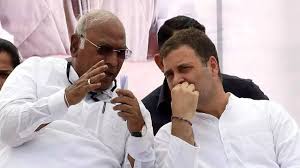
NEW DELHI: Absence of Rahul Gandhi and Mallikarjun Kharge, leaders of opposition in Lok Sabha and Rajya Sabha, respectively, from the Independence Day event at Red Fort on Friday drew a sharp reaction from BJP which alleged that the main opposition party, Congress, has hit a “new low” with its top functionaries “insulting” the country by “boycotting” the event. Rahul had attended the programme last year but was absent this time. Kharge was absent last year as well. The Congress leadership steered clear of making a statement on the issue but sources said party heads have chosen to distance themselves from such events as they feel the governing dispensation discriminates against opposition members in terms of seating arrangements and protocol. “Even those holding constitutional positions are not shown due respect – instead of being seated in the front row, they are placed in the third row,” a source said. BJP sources refuted the charge as a “lame alibi”. “We are following the same protocol that they had put in place,” a source said. “From opposing a party to insulting the nation – every time you think Congress can’t fall further, they hit a new low,” BJP said. “Only a handful of chairs were empty at Red Fort, and no points for guessing who missed the event again,” BJP said, posting a media report on X about Rahul and Kharge skipping the official event. The stalemate over seats and protocol is not new and has seen BJP and Congress engage in a war of words with BJP members alleging in the past that during UPA era, its members were not given seats i VIP areas. Courtesy : TOI Note: This news is originally published on https:/timesofindia.com/bha and is used purely for non-profit/non-commercial purposes, especially human rights.
GMR group conducts aviation training program for transgender persons in Kochi

With this, beneficiaries will be imparted with domain-specific knowledge and practical skills that will help them enhance employability in the airport and aviation services. GMR Aero Academy Kochi, operating partner of the Additional Skill Acquisition Programme (ASAP) by the Government of Kerala, has commenced a professional training program for transgender beneficiaries under ‘Project Pride’. ‘Project Pride’ is a collaborative initiative supported by the Kerala State Social Justice Department and the Kerala Knowledge Economy Mission (KKEM), a press release informed. Funded by the Social Justice Department of the Kerala government, the training program provides beneficiaries with a 90-day offline course with certification in Airport Operations. The training is delivered by GMR Aero Academy at its Kochi centre. With this, transgender beneficiaries will be imparted with domain-specific knowledge and practical skills that will help them enhance employability in the airport and aviation services. A state-wide webinar was conducted by GMR Aero Academy on January 27, to raise awareness and draw engagement from all over Kerala. The formal inauguration of Project Pride was held on August 4 and was attended by the Minister for Higher Education and Social Justice, Dr. R Bindu. Commenting on this initiative, CEO of Airport Strategic Initiatives, GMR Group, Andrew Acquaah Harrison stated, “Project Pride is more than a training program – it is a platform for empowerment, dignity, and social inclusion. At GMR, we believe in building opportunities for all, and this collaboration with the Government of Kerala is a testament to what can be achieved when industry and public institutions work together to foster equity. We are proud to be part of this transformative initiative.” Courtesy : TSD Note: This news is originally published on https:/thesiasatdaily.com/bha and is used purely for non-profit/non-commercial purposes, especially human rights.
Revision of report on internal reservation for Scheduled Castes sought; protest staged
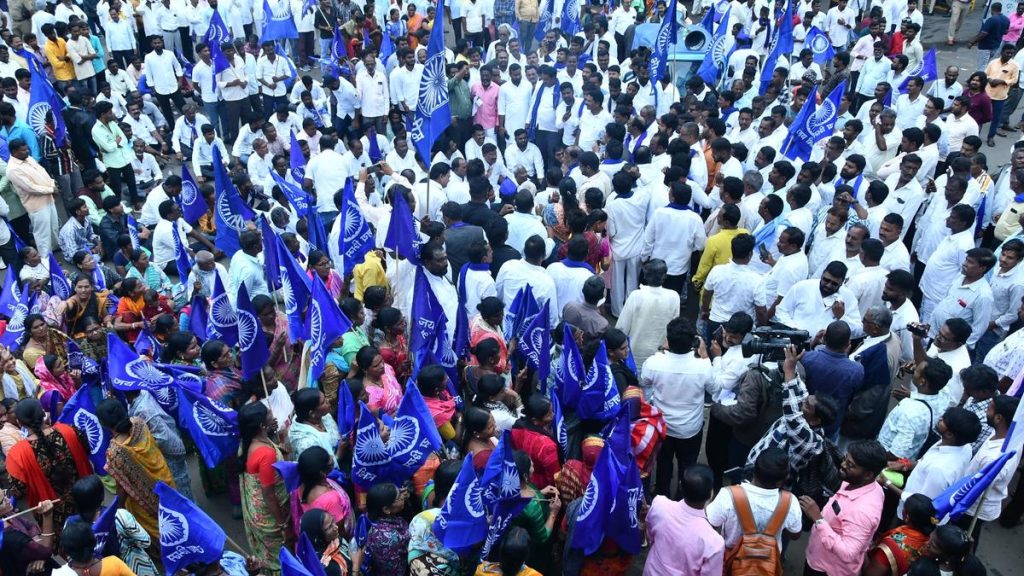
Members of the Dalit Right community take out a procession and stage a demonstration outside the Deputy Commissioner’s office in Kalaburagi Thousands of the Dalit Right community members took out a procession and staged a demonstration outside the Deputy Commissioner’s office in Kalaburagi on Thursday, opposing the H.N. Nagamohan Das Commission report on internal reservation among Scheduled Castes. Organised under the banner of Scheduled Castes Right Community Internal Reservation Protection Committee, community leaders, members of caste-based organisations and supporters gathered at Jagat Circle where they paid floral tributes to B.R. Ambedkar before marching to the Deputy Commissioner’s office. The rally, accompanied by drum beats, echoed with slogans such as Jai Bhim and Down with the biased Nagamohan Das report. Banners emblazoned with Jai Bhim fluttered during the procession. Upon reaching the district administrative complex, the protesters blocked vehicular movement for nearly two hours disrupting traffic movement. As vehicles were diverted to different roads, several narrow streets and circles saw traffic jams and heavy congestion. The agitators, meanwhile, in a symbolic gesture of dissent, burnt copies of the Nagamohan Das Commission report. They said that the Nagamohan Das Commission report is unscientific and the recommendations of the report appear to be highly biased. They also noted that the report wrongly clubbed several sub-castes belonging to the Scheduled Castes Right group under the Scheduled Castes Left thereby affecting the distribution of internal reservation benefits. “There are several flaws in the Nagamohan Das Commission report. Many castes which are part of the Scheduled Castes Right have been brought under Scheduled Castes Left. The Scheduled Castes Right communities population size has also been shown smaller than their actual size,” State vice-president of the BJP’s Scheduled Castes Morcha Ambaraya Ashtagi said during the protest. Clarifying that the protest is not against the Madiga community, which got a relatively greater share in the Scheduled Castes reservation in the commission’s report, another Dalit Right leader Arjun Bhadre said that the Scheduled Castes Right communities did not have an objection to the 6% reservation allocated to Scheduled Castes Left communities which include the Madigas. “This is not a fight against the Madiga community. We have no objection to the 6% reservation they enjoy. This is a struggle to secure a fair share of internal reservation for the Scheduled Castes Right communities based on our actual population,” he said. Mr. Bhadre also noted that most enumerators were instructed to use a specific app for the survey but were not provided equipment/tablets. “Later, the app was uninstalled from their devices resulting in the deletion of thousands of survey entries and a re-survey was conducted for those families. The abrupt shift in survey method from ration card-based to Aadhaar-based resulted in the leaving out of at least eight lakh children who did not have Aadhaar. The enumerators were not provided identity card, leading to unverified surveys and most of the Scheduled Castes population was not covered,” Mr. Bhadre said. Leaders who spoke at the agitation site said that the population size of the Scheduled Castes Right communities was around 40 lakh and criticized the Nagamohan Das Commission for recording it as 30 lakh. “Around 10 lakh-15 lakh Dalit Christians were wrongly included under the Scheduled Castes Left category. These numbers must be corrected and our (Scheduled Castes Right) rightful share in internal reservation ensured. The government should approve the report only after such corrections are made,” Mr. Bhadre insisted. A memorandum, addressed to the Chief Minister, was later submitted to the district administration before the protest concluded. Prominent Scheduled Castes Right leaders including Mariyappa Halli, Vishal Dargi, A.B. Hosamani, Basanna Singe, Dinesh Doddamani, Mallappa Hosamani, Arjun Gobbur, Ramesh Pattedar, Mahantappa Sangavi and Srinivas Khelagi participated in the agitation. Courtesy : The Hindu Note: This news is originally published on https:/thehindu.com/bha and is used purely for non-profit/non-commercial purposes, especially human rights.
Protest held in Mysuru against Nagamohan Das Commission report on internal reservation
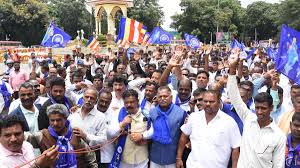
The protest was called by the Karnataka State Federation of Dalit Right Groups, which alleged that their population was undercounted and hence, the quantum of reservation has been reduced. The federation urged the government to reject the report and conduct the survey afresh for providing internal reservations. It alleged that more than 40 lakh people belonging to various sub-castes under Dalit right groups were either kept out of the purview of the survey or were not enumerated at all. Instead of the Dalit right groups, members of other castes have been included in Chitradurga, the federation said. Besides, more than 40% of the people under Bengaluru city limits have not been accounted for, it added. Instead of carrying out the survey for a projected population of 1.47 crore, the survey has been restricted to 1.16 crore people, out of whom, 1.05 crore people were surveyed, according to the leaders of the federation. The report was also faulted for not adhering to the norms stipulated for recommending the reservations based on sub-castes. Community leaders allege that faulty enumeration has led to serious errors in data collection, and hence the recommendations are based on false figures. Urging the State government to reject the report, the federation warned that all elected representatives from the SC community in Congress will have to face the consequences. In case the report was accepted by the government, all MLAs and Ministers belonging to SC right groups should tender their resignation, the federation added. Courtesy : The Hindu Note: This news is originally published on https:/thehindu.com/bha and is used purely for non-profit/non-commercial purposes, especially human rights.
Communal Tensions Erupt After 40-Year-Old Dalit Woman Brutally Murdered In Madhya Pradesh’s Burhanpur
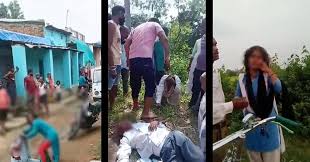
The city observes Burhanpur Bandh and markets remained closed; accused in police custody Burhanpur (Madhya Pradesh): Madhya Pradesh’s Burhanpur district observed a ‘Bandh’ on Thursday morning as communal tensions flared up after the brutal murder of a 40-year-old woman by a man belonging to a minority community on Wednesday evening. SP Ashutosh Bagri said that the accused has been arrested and FSL team is collecting evidence from the spot for further investigation. After the post-mortem, enraged members of Vishwa Hindu Parishad (VHP), Bajrang Dal, Hindu Mahasabha, Bhim Army, and BSP took out a funeral procession in the town on Thursday morning. Police made tight security arrangements to maintain law and order in the town. Traversing the main streets of the town, they submitted a memorandum to SDM Ajmer Singh Gaur, demanding capital punishment for the accused. During the rally, participants raised slogans and urged people to close their businesses. They expressed concerns over rising violence and urged authorities to take strict action against the perpetrators. They had also gheraoed Shikarpura police station, demanding capital punishment against the accused on Wednesday evening. MLA Archana Chitnis met the victim’s family and assured them of strict action against the accused and financial assistance. She said she had talked to CM Mohan Yadav. As per reports, the incident occurred at victim Sharda Sirture’s home, when accused Sheikh Salim, of Maharashtra, barged into the house and attacked her with a hammer. Sharda’s brother-in-law Mithun Sirture tried to intervene and got into a scuffle with Salim. However, Salim pushed him away and struck Sharda on the head three to four times. She sustained a skull fracture and bled profusely. She was rushed to the hospital but succumbed to her injuries at the district hospital. Sharda’s husband, Manoj Sirture, said that she had left home for work on Wednesday and he was not at home during the incident, as their son was in hospital. SP Bagri said that prima facie, the incident occurred due to personal relations between the victim and accused, which had gone sour for some reason. To maintain peace, additional police forces have been deployed in the area as community members seek justice for Sharda. Courtesy : TFPJ Note: This news is originally published on https:/thefreepressjournal.com/bha and is used purely for non-profit/non-commercial purposes, especially human rights.
40yo man gets life in jail for raping Dalit girl in 2022

Meerut: A special Pocso court in Bulandshahr sentenced a 40-year-old man to life imprisonment for raping and threatening a 15-year-old Dalit girl three years back. The court also imposed a fine of Rs 50,000 on him. Special public prosecutor Mahesh Raghav said, “On July 7, 2022, while the girl was alone at her house, a man from her neighbourhood barged in and raped her. He then threatened to kill her if she reported the incident. After her parents, who work as sanitation workers, returned from their shifts, the survivor narrated her ordeal.” Based on her parents’ complaint, an FIR was registered under IPC sections 376C (rape) and 442 (house trespass), section 5/6 of the Pocso Act, and 3(2) (V) SC/ST Act. Subsequently, the accused was arrested and a chargesheet was filed in the court. “During the trial, six witnesses testified. The girl’s testimony and medical report played a crucial role in the conviction. The man’s pleas for mercy were rejected,” he added. While pronouncing the sentence on Wednesday, the court of Additional District Judge Manoj Kumar Singh observed, “Such a heinous and most serious crime of aggravated sexual assault has left a negative impact on the body and mind of the victim.” Courtesy : TOI Note: This news is originally published on https:/timesofindia.com/bha and is used purely for non-profit/non-commercial purposes, especially human rights.
The Dalit Leader Who Chose Pakistan, Became Law Minister, Then Returned To India: Jogendra Nath Mandal’s Story

Know the untold story of Jogendra Nath Mandal, a prominent Dalit leader who became Pakistan’s first Law Minister, only to return to India after Jinnah’s death amid rising religious extremism. With India marking its 79th Independence Day, the tale of Jogendra Nath Mandal, the eminent Dalit leader who opted for Pakistan over India during Partition, presents a heart-wrenching and lesser-known page from the history of the subcontinent. Disillusioned with India’s social order and initially attracted by the promises of Muhammad Ali Jinnah, Mandal became the first Law Minister of Pakistan. But his expectations were thwarted as religiosity did a rapid turnaround, eventually forcing him back to India. Born into a farmer’s family belonging to the Namasudra community (a Dalit group) from Barisal, British India, Jogendra Nath Mandal overcame odds to seek education, eventually graduating with a law degree in 1934. Far from practicing law, he spent his life fighting against injustice and striving for the betterment of Dalits. Mandal’s political life started with Barisal municipal elections, where he worked relentlessly to enhance the lives of marginalized people. During the 1937 provincial election, he defeated the Congress district committee president and secured the Bakarganj North-East assembly seat as an independent candidate. Under the initial influence of Subhas Chandra Bose, Mandal was eventually drawn towards the Muslim League when Bose quit Congress. Mandal was also highly impressed by Dr. B.R. Ambedkar. Mandal was pivotal in making Ambedkar win the 1946 Constituent Assembly polls from Bengal when Ambedkar lost from Bombay. Mandal was a member of the Constituent Assembly himself and played a significant role in formulating the Indian Constitution through his deliberations and suggestions to Ambedkar. Influenced By Jinnah, Warned By Ambedkar In the 1946 riots, Jogendra Nath Mandal went through East Bengal, advising Dalits not to retaliate against Muslims but to consider both groups as victims of oppression by Hindu upper castes. It was then that he sided with the Muslim League and became a close associate of Muhammad Ali Jinnah. Although he was not the first to favor India’s partition, he eventually became convinced that the condition of Dalits would never change in an upper-caste dominated Hindu-majority country and Pakistan could provide a better alternative. In October 1946, Jinnah selected Mandal as one of the five representatives of the Muslim League in the interim Indian government. When Mandal opted to immigrate to Pakistan after Jinnah’s assurances, he was cautioned by his peer and India’s leading Dalit leader, Dr. B.R. Ambedkar. However, influenced by Jinnah, Mandal opted for Pakistan. Pakistan’s First Law Minister And Later Disillusionment On Partition, Jogendra Nath Mandal shifted to Pakistan and became its Constituent Assembly member and temporary chairman. Jinnah assigned him the responsibility of chairing the first session of the Constituent Assembly of Pakistan. By a stroke of fate, while Dr. Ambedkar was made India’s first Law Minister, Jogendra Nath Mandal was made Pakistan’s first Law Minister and Labour Minister. Yet, Mandal’s dreams started to fall apart soon after Jinnah’s demise in September 1948. He saw firsthand the worst kind of discrimination inflicted upon Dalits and was shook to the core by the growing violence against Hindus in Pakistan. His political stock declined sharply after Jinnah’s death. Even though he made sincere appeals to Pakistan’s first Prime Minister, Liaquat Ali Khan, regarding the issues faced by Hindus and Dalits, his appeals came to naught. Mandal had dreamed about Pakistan being a country where Dalit emancipation could bloom, but the open discrimination against Hindu minorities crushed all his dreams. Religious extremists started oppressing Hindus, and Mandal felt more and more alone in Pakistani politics. The Painful Return To India A chain of events following the death of Jinnah disillusioned Mandal, who felt that there was no one remaining in the government that would ensure promises to minorities were kept. He witnessed the emergence of people who were bent on putting religion into the state. Things became so tough for Mandal in Pakistan that he was forced to escape. In 1950, Pakistan enacted the controversial ‘Objectives Resolution,’ which was favored by nearly all Muslim members of the Constituent Assembly (with the exception of Mian Iftikharuddin) but opposed by nearly all minority members. Even one of the minority members had the following to say: If Jinnah were alive, this resolution would never have been passed.” Mandal stayed in Prime Minister Liaquat Ali Khan’s cabinet until 1950, even grumbling all along about atrocities committed on Dalits in East Pakistan. Jogendra Nath Mandal eventually put in his resignation on October 8, 1950. In his letter of resignation, he showed deep despair regarding the future of the minorities and listed the reasons why he had lost faith. He mentioned hundreds of Dalit killings in Bengal by the army, police, and Muslim League activists, which hurt him deeply and totally severed his attachment to Pakistan. Upon resigning from the Pakistani government, Mandal’s re-entry into India, or more precisely West Bengal, caused a political commotion. He migrated to India in 1950. Ironically, in India too he was suspicious of his own kind because of his Pakistani background. Though he had been a close confidant of Dr. Ambedkar, India’s leading Dalit leader prior to Partition, Mandal now had no political backing. He spent his later years in a highly backward section of Calcutta until his death in 1968. Mandal tried to revive his political life by repairing his Congress connections, running elections in North Calcutta in 1952 and 1957, a Dalit reserved constituency, but lost both times. He died in 1968 from a heart attack while he was crossing a river by a boat. The reason for his death is still uncertain since no post-mortem was carried out. Stay informed on all the latest news, real-time breaking news updates, and follow all the important headlines in india news andworld News on Zee News. Written By Nitin Kumar Courtesy : Zee News Note: This news is originally published on https:/zeenews.com/bha and is used purely for non-profit/non-commercial purposes, especially human rights.
Jharkhand High Court Raps BIT Mesra Over Dalit Student’s Death, Grants ₹20 Lakh To Kin, Issues Guidelines To Prevent Ragging In Colleges
The Jharkhand High Court has awarded Rs.20 Lakh as compensation to be paid by BIT Mesra, Polytechnic College, to the parents of a 3rd semester student, who was allegedly subjected to casteist slurs in the name of Harijan/Dalit and multiple violent assaults leading to his death. Terming the incident as a “brutal assault”, Justice Sanjay Prasad came down heavily on the College over their negligent attitude and poor administration, including their failure to maintain required discipline which resulted in the tragic death of the student The court also pulled up the college for not building a proper boundary wall, failing to keep operational CCTV cameras, giving false information to parents of the deceased that he had consumed excessive alcohol in order to conceal the incident, and their abject failure to provide proper medical treatment to the deceased in the College Dispensary. It said, “Article 21 is the Right to Live is a fundamental right guaranteed under the Constitution of India and this right to live cannot be taken away by the negligence and administrative failure of the concerned College Authorities or State Authorities concerned and there should not be any gap or casual approach.” The Court also issued preventive guidelines to be adopted by Government and Private College Authorities in order to prevent ragging and assaulting of students: Tie up with good government and private hospitals with ambulance facilitates; Establish dispensaries in all schools and colleges with one male and female doctor, equipped with necessary kits and medicines; All engineering and technical institutions to have at least two male and female doctors with proper first aid kits; Maintenance of necessary security personnel with functional CCTV cameras inside and outside the classrooms and at the main doors of hostels; Establishment of a grievance cell to monitor students and to maintain coordination between needy students and college administration; Creation of website or portal for redressal of grievances of students and parents; and, Preparation of Standard Operation Procedure to maintain security system for movement of students. It further said: “… this Court directs the Principal Secretary, Higher Technical Education, Govt. of Jharkhand and Director General of Police, Govt. of Jharkhand to prepare a comprehensive SOP for the entire Engineering and Medical Colleges and all the Technical Institutes imparting Graduate Degree and Post-Graduate Degree and Diploma to the students to prepare SOP by keeping medical dispensaries/medical hospital in the College premises near the hostel so that they may be able to get the timely treatment in case of emergency or need of an hour or for any other medical exigency or requirement”. The court further directed the authorities to prepare SOP for the entire Technical Institutes, Medical, Engineering and Technical Institutes, MBA Colleges imparting education, with hostel facilities having over 1000 boys. The court directed the authorities to impress upon the Deemed Universities like BIT MESRA and others to have tie-up with the local administration and the reputed Government Hospitals as well as private Hospitals in the State or the concerned Districts where such Colleges are situated and running. Background It is alleged that the deceased student was “brutally assaulted” inside the college premises and later outside by a mob of 10–15 individuals with belts, shoes, and kicks in November 2024. It was alleged that he later became unconscious and the college authorities informed his family that he was unwell due to excessive wine consumption and allowed them to take him home. However, his condition worsened the following day and he subsequently passed away while receiving treatment. Based on witness statements and confessional records, four accused— who were current and former students of the college, were booked under BNS Section 103 (murder) r/w 3(5) (common intention) . They were also booked under provisions of the Scheduled Caste and Scheduled Tribe (Prevention of Atrocities) Act for intentionally abusing and insulting a member of Scheduled Caste in public. The accused moved the High Court in separate appeals challenging the trail court’s orders rejecting their bail pleas. At the outset, the Court noted that the College Administration had misled the parents of the deceased in order to conceal the assault committed by the appellants and had also refrained from naming any doctor for treating the deceased at the medical dispensary. It said the College authorities have remained negligent and they have shown no control over the administration in the College and even the boundary wall of the College is not so satisfactorily constructed in the College, as not only the students of the College but also the staff and security personnels of the College are able to scale the boundary wall of the College campus. At some place, it shows that they have left the place insecure for the movement of the students and anti- social elements at risk.” “Had the University Authorities had taken prompt action and pay medical attention towards the treatment of deceased Raja Paswan, his life could have been saved. But, as a result of their sheer negligence and neutral approach, they let off their hands by sending the student with their parents instead of taking them to the good Government Hospital with the mature faculty and security personnels of the College. Hence, the College administration shall remain cautious in future,” the Court added. The court was told that the college had taken several steps in the aftermath of the incident, the Court however said that it was not “fully sufficient” noting that the SOP by the college did not establish hospital/clinic having at least two male, two female doctors when over 1000 students are residing at the hostels of BIT MESRA campus. It further remarked”This Court further finds that there are several instances of commission of suicide by the students in premium institutions like IITs, NITs, AIIMS and various Engineering and Technical Colleges and despite the guideline issued by the UGC and the Hon’ble Supreme Court, the College Administration have not been able to curb the menace of harassment and ragging meted out to the students by the fellow senior students
Independence Deferred: Caste And The Struggle For True Freedom In India
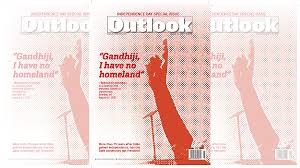
Seven decades after 1947, constitutional guarantees of equality remain unmet for Dalits. Outlook’s August 2023 issue urges reflection and action against persistent caste oppression. On August 15, 1947, India won independence from British rule. Freedom from colonial control was followed by the framing of a new Constitution, which came into force on January 26, 1950. Drafted under the chairmanship of Dr. B.R. Ambedkar, a Dalit leader, jurist, and social reformer who had himself faced lifelong caste discrimination, the Constitution guaranteed liberty, equality, and fraternity to all citizens. The Indian Constitution abolished untouchability through Article 17 and prohibited caste-based exclusion, aiming to dismantle structures that had oppressed Dalits and other marginalised communities for centuries. Ambedkar warned in his final speech to the Constituent Assembly on November 25, 1949, “We are entering a life of contradictions. In politics we will have equality, and in social and economic life we will have inequality. How long shall we continue to live this life of contradictions?” He stressed that political democracy would not survive without social democracy, a condition still not met nearly 80 years on. Across rural and urban India, caste remains a marker of privilege and deprivation. Dalit communities continue to face barriers to land ownership, access to education, and dignified employment. Cases of caste-based violence, including murders over inter-caste marriages or access to common resources, are recorded annually in National Crime Records Bureau data. The persistence of manual scavenging, banned under law, and the segregation of Dalit settlements in many states underline the gap between constitutional ideals and lived reality. Independence Day celebrations often speak of unity and progress, but for millions, the freedom promised in 1947 and codified in 1950 is incomplete. India may be sovereign, but it is not yet free from the deep-rooted social hierarchies that deny full equality. The struggle for true independence, one that dismantles caste oppression, remains ongoing. The issue included Baluta: A Cry From The Heart. The first Dalit autobiography to be published, Baluta created a stir when it appeared in Marathi in 1978. Set in Mumbai and rural Maharashtra of the 1940s and 50s, its author, the poet, Daya Pawar depicts the stark reality of caste violence and untouchability in this classic. It also celebrates the resilience, dignity and courage of the Dalit community and their fight for equality in an unequal society. In How About A Museum Of Untouchability To Display Caste Oppression?, Y.S. Alone writes that the practice of untouchability and how heinous crimes that are committed in the name of caste such as brute killings, rapes, and public beatings are still in practice. He asks: How about a space that depicts all of this? Snigdhendu Bhattacharya’s Ambedkar And Gandhi: Conflicting Ideas On Dalit Liberation recalls how Ambedkar saw no hope for Dalit liberation without “political separation from the Hindus.” Gandhi, while agreeing that the honour of Hinduism could not be saved “without eradicating untouchability root and branch,” considered the idea of Dalit political separation from Hinduism “suicidal” for the national movement. Outlook in collaboration with The Banyan hope to spark conversations in drawing rooms across India that reflect on mental health experiences in all their diversity. – The ‘Infinite Elephant’ is by Usha, who lives with a mental illness. She found her freedom in love. The elephant, she says, represents hope and freedom. In It’s Not Impossible To Smash The Caste System, Bhattacharya speaks to Anand Teltumbde, a scholar and civil rights activist known for his extensive work on B.R. Ambedkar’s life and work as well as the eradication of caste. Teltumbde was arrested in connection with the Elgar Parishad case in 2020 and released on bail in November 2022 after spending 31 months in jail. The 72-year-old spoke to Bhattacharya about the caste system and the possibility of dismantling it. Independence gave India political freedom, but for many, life is still shaped by caste, exclusion, and discrimination. As Outlook’s August 2023 issue shows: the fight for dignity, equality, and real freedom is far from over, and it is a struggle that each of us must keep alive. Courtesy : Outlook India Note: This news is originally published on https:/outlookindia.com/bha and is used purely for non-profit/non-commercial purposes, especially human rights.
Dalit youth dies by suicide, alleges cop assault, caste abuse in Bengaluru
Relatives said Nagesh was not financially sound enough to retrieve his vehicle and feared further police harassment. CHIKKAMAGALURU : A Dalit youth from Samse village in Kalasa taluk died by suicide after alleging police assault and caste abuse by Kudremukh police personnel. The deceased, Nagesh of Bastigadde, hanged himself on Wednesday. In a complaint filed earlier at Kudremukh police station, Nagesh had accused constable Siddesh of thrashing him and hurling casteist slurs on July 15. According to the complaint, Nagesh was returning in his autorickshaw around 10.30 pm when he saw Siddesh and two locals standing on the road with their vehicle parked across it. Using his mobile phone torch to navigate, Nagesh approached them, prompting Siddesh to suspect he was filming them drinking alcohol. The constable allegedly assaulted and abused him. Instead of acting on his complaint, police registered a counter-case against Nagesh, accusing him of obstructing a public servant on duty. His autorickshaw and pesticide sprayer were seized, though he later secured bail. Relatives said Nagesh was not financially sound enough to retrieve his vehicle and feared further police harassment. In his death note, Nagesh accused Siddesh of torture and named PSI Adarsh for failing to act on his complaint. Following his death, his relatives staged a protest demanding the dismissal of Siddesh and Adarsh and compensation of Rs 50 lakh for the bereaved family. (If you are having suicidal thoughts, or are worried about a friend or need emotional support, someone is always there to listen. Call Sneha Foundation – 04424640050, Tele Manas – 14416 (available 24×7) or iCall, the Tata Institute of Social Sciences’ helpline – 02225521111, which is available Monday to Saturday from 8 am to 10 pm.) Courtesy : TNIE Note: This news is originally published on https:/thenewindianexpress.com/bha and is used purely for non-profit/non-commercial purposes, especially human rights.