
Tippiri Tirupathi: New commander of Naxals, a Dalit from Telangana
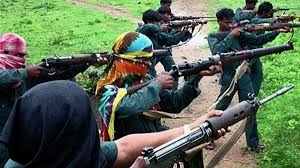
Tirupathi, in his 60s, hails from Korutla in Telangana’s erstwhile Karimnagar district. Hyderabad: Continuing the legacy of Telugu leadership within the Maoist movement, Tippiri Tirupathi, a Madiga Dalit operating under the alias Devuji, has been appointed as the new general secretary of the CPI (Maoist), according to sources in security forces. Tirupathi, in his 60s, hails from Korutla in Telangana’s erstwhile Karimnagar district. His elevation follows the killing of Nambala Keshav Rao alias Basava Raj during Operation Kagaar on May 21 a watershed moment that marked the first time in decades that the Maoists found themselves without a supreme leader, and the first successful neutralization of such a high-ranking Naxalite by security forces. Intelligence sources identified two frontrunners to succeed Keshav Rao, Tippiri Tirupathi and Mallojula Venugopal Rao. While Tirupathi leads the Central Military Commission (CMC), the party’s armed wing, Venugopal Rao serves as the current ideological head. Ultimately, the organization selected Tirupathi for the top position. In a significant parallel appointment, Madvi Hidma alias Santosh, commander of the People’s Liberation Guerrilla Army (PLGA) 1st Battalion, has been designated as secretary of the Dandakaranya Special Zonal Committee (DSZC). This role makes him responsible for party activities across Chhattisgarh’s Bastar division, considered a crucial operational region for the Maoists. through organizational ranks due to his early involvement and tactical acumen. Now commanding Battalion 1 of the PLGA, Hidma oversees one of the most lethal and rigorously trained units within the Maoist structure. Operating primarily across Sukma, Dantewada, and Bijapur regions of Chhattisgarh, this battalion distinguishes itself as the most heavily armed formation, with 80 percent of personnel equipped with automatic or semi-automatic weapons, including AK-series rifles, self-loading rifles, and light machine guns. Given his strategic importance, Hidma operates within a three-layer security cordon. Beyond his PLGA role, he serves as a Dandakaranya Special Zonal Committee member and has been inducted into the CPI (Maoist) Central Committee, making him among the youngest to achieve such status. The Maoists currently face their most severe leadership vacuum and organizational crisis in years. Since Operation Kagar’s launch, they have been unable to convene core committee meetings as cadres and leadership remain scattered. Security forces have strategically surrounded the Karregutta hills, a traditional safe haven along the Telangana-Chhattisgarh border from all directions. “Special forces discovered the leadership transition after interrogating Kamlesh, a Maoist Central Committee member who recently surrendered in Andhra Pradesh,” revealed a top source in the anti-Naxal squad. Since the 2004 merger that created the CPI (Maoist) by unifying the CPI (Marxist-Leninist) People’s War, predominantly active in Andhra Pradesh with the Maoist Communist Centre of India from Bihar and West Bengal, undivided Andhra Pradesh has consistently provided leadership to India’s Naxal movement. This tradition encompasses figures like Kondapalli Seetharamaiah, a former schoolteacher who established the CPI (ML) People’s War in 1980, and Nambala Keshava Rao alias Basavaraju from Srikakulam, who became the CPI (Maoist) General Secretary in 2018 and gained recognition for his military strategies. The significance of this regional influence was underscored when the merger was announced in Hyderabad, highlighting undivided Andhra Pradesh’s centrality to the movement. SNV Sudhir Courtesy : DH Note: This news is originally published on https:/deccanherald.com/bha and is used purely for non-profit/non-commercial purposes, especially human rights.
Bokaro District Administration Launches Campaign for Transgender Identity Cards and Rights
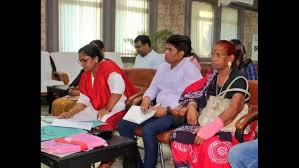
Bokaro: Deputy commissioner Ajay Nath Jha on Tuesday said the district administration will roll out a campaign to issue identity cards to the transgenders living in the district. The announcement came during a transgender welfare committee meeting, which deliberated on the steps needed to be taken to ensure the recognition of transgenders and securing their rights. Jha said that a comprehensive social and economic mapping of all transgenders in the district will be conducted. “The survey will help assess their living standards, livelihood opportunities, education, and healthcare status. Complete confidentiality would be maintained during the process so that individuals can share information without hesitation and with dignity,” he said. The administration also plans establishment of a transgender help desk at the collectorate premises. “It will provide information on govt schemes, pensions, healthcare services, and legal aid. It will also act as a grievance redressal platform to ensure quick solutions to community issues,” he said. Jha also said that the transgender community is an integral part of society and deserves equal rights, opportunities, and respect. Courtesy : TOI Note: This news is originally published on https:/timesofindia.com/bha and is used purely for non-profit/non-commercial purposes, especially human rights.
CP Radhakrishnan wins VP race: Rooted in RSS, non-confrontational – meet new vice president of India
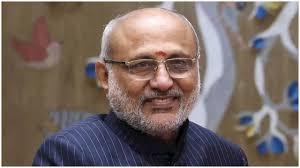
NEW DELHI: National Democratic Alliance’s (NDA) candidate, CP Radhakrishnan, was elected as India’s 15th Vice President after securing 452 votes in Tuesday’s election. His rival, Justice B Sudershan Reddy of the INDIA bloc won 300 votes and 15 votes were deemed invalid. The contest, held in Parliament House in New Delhi, came just weeks after the resignation of Jagdeep Dhankhar on health grounds in July. Voting took place between 10am and 5pm, followed by counting in the evening. Prime Minister Narendra Modi cast the first ballot, with senior ministers including Amit Shah, Rajnath Singh and JP Nadda also voting. Congress leaders Rahul Gandhi, Mallikarjun Kharge, Sonia Gandhi and Priyanka Gandhi Vadra were among those representing the opposition. The NDA’s numerical strength made Radhakrishnan’s victory almost certain. Several parties chose to abstain from the voting. The Biju Janata Dal and the Bharat Rashtra Samithi abstained, while the Shiromani Akali Dal boycotted the poll. Who is CP Radhakrishnan? Born on October, 20 1957 in Tiruppur, Tamil Nadu, he began as an RSS swayamsevak and joined the Bharatiya Janasangh in the 1970s. Twice elected MP from Coimbatore (1998, 1999), he chaired the Standing Committee on Textiles and served on finance and PSU committees. He was also part of delegations to the UN General Assembly and Taiwan. As BJP’s Tamil Nadu president (2004–2007), he led a 93-day, 19,000 km ‘Ratha Yatra’. Later, he became the party’s in-charge for Kerala (2020–2022). As Coir Board chairman (2016–2020), he oversaw record exports worth ?2,532 crore. Held gubernatorial roles in Jharkhand, Maharashtra, Telangana, and Puducherry, where he was known for extensive outreach. Regarded as a seasoned organiser with over four decades in public life and deep roots in Tamil Nadu’s political fabric. Courtesy : TOI Note: This news is originally published on https:/timesofindia.com/bha and is used purely for non-profit/non-commercial purposes, especially human rights.
India‘Kicked With Boots, Abused With Slurs’: 62-Year-Old Retired Dalit Bank Official Alleges Assault, Caste Abuse by Adoor Police
A retired bank official from Pallikkal has accused the Adoor Police of physically assaulting him without any reason. The victim, Babu (62), alleged that despite filing complaints months ago with the Chief Minister, the Legislative Petition Committee, and the SC/ST Commission, he has not received justice. Speaking to the media, Babu recalled the incident from May 27. He said he had a financial dispute with another person which was settled at the Adoor police station under the mediation of the Circle Inspector (CI). After the settlement, the CI stepped out, asking Babu to write a statement confirming he had no further complaints. “At that time, SI Anoop Chandran entered the station, abused me verbally, and beat me without any reason,” Babu said. According to him, his wife, who was waiting outside, pleaded with the officer not to harass him because of his poor health. “Instead, the SI verbally abused her too and even used casteist slurs against us. He kicked me with his boots and used extremely offensive language,” Babu alleged, adding that both he and his wife are Dalit activists. Following his complaint, SI Anoop Chandran was transferred from Adoor station to the district control room. However, Babu claims no real action has been taken against the officer. “The SC/ST Commission had also sought a report on the incident from the police, but it has not been submitted till now,” he said. Courtesy : TOP Note: This news is originally published on https:/theobserverpost.com/bha and is used purely for non-profit/non-commercial purposes, especially human rights.
24-yr-old dalit youth beaten, forcedto ‘consume poison’ over love affair
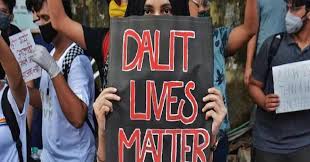
Lucknow: Tension gripped Azamgarh’s Naushera village on Monday after the murder of a 24-year-old dalit loco pilot, who was allegedly thrashed and forced to consume poison by six men linked to a dispute over a love affair. The victim’s family and locals later blocked the Azamgarh–Gorakhpur National Highway, demanding strict action against the accused. Later, police force from three stations and senior officers reached the spot and got the protestors evicted, ensuring stern action. Lured, Beaten and Poisoned The deceased, Durgesh Kumar, son of Indal Ram of Naushhera village under Jiyanpur police station, was working as a loco pilot since 2021, with postings in Gorakhpur and Chandigarh. He was reportedly in a relationship with the daughter of a fellow villager Ganesh Yadav, which the girl’s family opposed. According to his younger brother Ajit Kumar, Durgesh was called on Saturday evening by one Gyanendra Mishra under the pretext of “settling matters.” On reaching the spot, Durgesh was surrounded by Ganesh Yadav, Ajay Yadav, Shravan Yadav, Sheru Yadav, Govind Yadav, and Mishra. A video clip that surfaced shows the youth being slapped, pinned, and assaulted by multiple men. Ajit alleged that the accused later forced Durgesh to drink a poisonous substance and abandoned him at a deserted location. Last Call Before Death Durgesh managed to call Ajit from a second mobile phone hidden in his pocket, narrating the assault and naming his attackers. Ajit rushed to the spot and took him to hospital, but doctors declared him dead within minutes of arrival. Highway Blocked, Heavy Deployment After the postmortem, grieving family members placed the body on the highway and, joined by villagers, staged a massive protest demanding immediate arrests. The blockade caused traffic snarls as police struggled to pacify the mob. Considering the tense situation, force from three police stations and PAC personnel were deployed. Durgesh’s father broke down, saying: “He was the only earning member of my family. They have snatched my son, my light.” Police Action SP (Rural) Chirag Jain confirmed that an FIR was lodged against six accused under murder and related sections. “The victim’s family has alleged he was beaten and forced to drink poison. The video evidence shows the accused clearly. Raids are on to arrest them,” he said. Additional DG, Varanasi Zone, Piyush Mordia, told TOI that the autopsy revealed poisoning as the cause of death and viscera was preserved for further examination. A police force was deployed in the village while efforts are on to nab the accused. Courtesy : TOI Note: This news is originally published on https:/timesofindia.com/bha and is used purely for non-profit/non-commercial purposes, especially human rights.
In a new book, a journalist writes about the life of a young Dalit boy growing up in Mumbai
An excerpt from ‘Scum of the Earth: A True Story from the Margins’, by Rakshit Sonawane. When the Giraffe brand compass box was launched in the market, it became an instant craze among students. Within a week, everyone in Avinash’s class had one – except him. One evening, when he had accompanied Godavari to the market, he saw the compass box at a stationery shop. He told her about it, and she hesitantly inquired about its price. The shopkeeper promptly presented one of the compass boxes at the counter and mentioned its price. “Oh, we’ll buy it later,” she said, handing it back. Avinash knew the reason behind her answer and kept quiet. At school the next day, Panvelkar announced that he would conduct a special coaching class after school hours to prepare deserving students for the elementary and intermediate grade drawing examinations conducted by the state government. A few interested students raised their hands. Avinash wanted to take the class as well, but he did not raise his hand – signing up for the special class meant paying an extra fee. He avoided looking at Panvelkar and kept doodling in his notebook with a pencil stub, desperately wishing for some magic that would make him disappear from his teacher’s sight. “What about you?” he heard Panvelkar ask, but he did not look up. There was silence in the class. “Avinash, I’m asking you,” Panvelkar said. Prasad nudged him, and Avinash’s heart missed a beat. He stood up and looked around. The entire class was agog over the conversation that was unfolding. “Not interested?” Panvelkar asked. Avinash avoided making eye contact with his teacher and didn’t say anything. “You will pick up very fast,” Panvelkar said. “I want students like you.” “I’ll ask my parents,” Avinash mumbled, hanging his head. Panvelkar looked at him, bewildered. “All right,” he said. “Let me know.” That evening, when Avinash brought up the topic at home, Godavari got irritated. “Where will the money come from? You think it grows on trees?” she shouted. Without saying another word, he went and sat on the threshold of the house, looking at the fascinating spectacle of the city spread out below, vibrant as ever. A few days later, while walking in the school corridor during recess, Avinash spotted Panvelkar coming down the corridor from the opposite direction. To avoid him, he started walking behind some students. Keeping his head down as he walked, Avinash hoped that Panvelkar had not seen him, but in vain. “Avinash,” he heard Panvelkar’s voice and stopped. “Have you told your parents about the drawing class?” “Err … yes, sir,” he said. “But they said there was no need to join it.” “Why? What’s the problem?” Panvelkar asked. “They are not interested.” Panvelkar looked at him for a while. “Are you interested?” “I am, but …” “But?” “They say we can’t afford it.” “Oh. Ask your mother or father to see me, and you start coming to the extra class from today,” Panvelkar said. Avinash nodded. He wasn’t sure how his parents would react, but he hoped that Panvelkar would convince them to let him join the class. The temptation of playing with colours was irresistible. So, that day, he stayed back after classes and went to the art classroom. Without a word, Panvelkar opened a cupboard and provided him with pencils, colours, brushes and paper. Then he started instructing all the students in the class, and Avinash soon got lost in his favourite subject. Reaching home late in the evening, he found Godavari busy cooking and his father away on duty. She greeted him with a glare. “Why are you so late?” she demanded. When he told her about what had happened, she calmed down and after a long pause said, “Your education is becoming more and more expensive by the day.” The next day, when Avinash and the other students were in the art class, Dagadoo appeared at the door of the classroom. He was dressed in his watchman’s uniform. Avinash went to Panvelkar and told him that his father had come to meet him. Panvelkar asked him to continue with his work and went to talk to Dagadoo. The students in the class looked at one another, their eyebrows raised in curiosity. “That’s my father,” Avinash said. “Your father is a watchman?” Atharva asked. “Yes,” Avinash replied. Atharva shrugged, while some of the more amused students giggled. After a brief whispered conversation, Dagadoo folded his hands, smiled and left. “Your father has agreed to let you attend this class,” Panvelkar told Avinash when he came back in. “You can continue now.” When Avinash reached home that evening, Dagadoo told him that Panvelkar had waived the fee for him. It came as a beautiful surprise, and from that day onwards, Avinash started finding the school less repulsive. He would wait eagerly for the regular classes to conclude so that he could rush to the art classroom A month later, Panvelkar announced that an inter-school painting competition had been organised. He selected Avinash and three others, including Atharva, from the entire school to participate in it. When Avinash hesitated, Panvelkar called him closer and whispered that he would also provide the necessary drawing material for the competition, which was in two weeks’ time. The competition venue was the spacious hall of another school nearby. On the day of the competition, as he was nearing the entrance, Avinash saw Atharva approaching. They smiled and wished each other luck as they walked in together. “I had gone to a temple today to offer special prayers for my success,” Atharva said, pointing at the tilak, the holy mark, on his forehead. “You didn’t go?” Avinash shook his head. “We follow Buddhism, and there is no god in Buddhism,” he said as Atharva cast him a scornful glance. Suddenly, a cat crossed their path, startling Atharva, who halted and retraced a few paces, muttering something inaudibly. “What happened?” Avinash asked. “Didn’t you see the cat
Telangana HC clears constable post for Dalit woman after 8 yr case
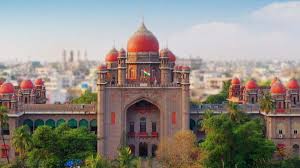
Division Bench upholds single-judge order, dismisses govt appeal against appointment under SC and local quota in 2015 constable recruitment. Hyderabad: A Dalit woman has secured an appointment as a police constable after the Telangana High Court upheld her petition. The court directed that she be considered under the Scheduled Caste reservation and local quota. In the 2015 recruitment for Stipendiary Cadet Trainee Civil Police Constable and Armed Reserve Constable posts, K Sangeetha of Hyderabad’s Gowliguda was rejected on the grounds of being a non-local candidate. She challenged the decision by filing a petition before the High Court in 2017. A single-judge bench ruled in March 2025 that she was entitled to be appointed under the SC reserved category and local quota. The state government and police recruitment board filed appeals questioning this order. A division bench of Chief Justice Apresh Kumar Singh and Justice GM Mohiuddin at the Telangana High Court on Monday dismissed the appeals, upholding the earlier direction for her appointment. Posted by P N Sree Harsha Courtesy : TSD Note: This news is originally published on https:/thesiasatdaily.com/bha and is used purely for non-profit/non-commercial purposes, especially human rights.
Safeguarding Transgender Rights in India

For Prelims: Transgender Persons (Protection of Rights) Act, 2019, NALSA Judgement 2014, Transgender Persons (Protection of Rights) Rules, 2020, Garima Greh. For Mains: Indian Society and the Challenges faced by Transgenders, Reforms for Transgender Persons, Transgender Persons (Protection of Rights) Act – Provisions and Associated Concerns Why in News? The National Human Rights Commission (NHRC) hosted a National Conference on Transgender Rights aimed at addressing systemic discrimination, strengthening institutional support, and reaffirming constitutional guarantees for transgender persons in India. How Does the Legal & Constitutional Framework Uphold the Rights of Transgender Persons in India? Transgender Definition: As per the Transgender Persons (Protection of Rights) Act, 2019, a transgender person is someone whose gender identity does not match the gender assigned at birth. Population: India has around 4.8 million transgender persons (Census 2011). This includes individuals with intersex variations, gender-queer identities, and socio-cultural identities such as kinnar, aaravani and jogta, etc. Part of LGBTQIA+: Transgender persons are represented by the “T” in LGBTQIA+, which stands for Lesbian, Gay, Bisexual, Transgender, Queer, Intersex, and Asexual. The “+” covers other identities like non-binary and pansexual, reflecting the evolving understanding of gender and sexuality. Legal & Constitutional Framework Transgender Persons (Protection of Rights) Act, 2019: Created a comprehensive legal structure for the protection and empowerment of transgender persons. Key Provisions Include: Non-Discrimination Clause: Prohibits exclusion or unfair treatment in education, employment, healthcare, housing, and access to public services. Self-Identification: Recognises the right to self-perceived gender identity, allowing individuals to obtain identity certificates from the District Magistrate without the requirement of medical or psychological assessments. Healthcare Access: Mandates provision of gender-affirming medical care, HIV surveillance, and inclusion in public health insurance schemes. Statutory Institutional Mechanism: Establishes the National Council for Transgender Persons (NCTP) to advise the central government on welfare policies, monitor implementation, and coordinate inter-ministerial efforts. Landmark Judgments: NALSA v. Union of India (2014): Marked a historic shift by recognising transgender persons as the “third gender”. Affirmed that gender identity is integral to dignity, equality, and personal autonomy under articles 14, 15,19 and 21 of the Constitution. Framed transgender rights as a matter of human rights, not just legal identity. Karnataka High Court in Ms. X vs State of Karnataka, 2024 upheld the right of transgender persons to change name and gender on birth certificates, as permitted under the Transgender Persons (Protection of Rights) Act, 2019 and Transgender Persons (Protection of Rights) Rules, 2020. Election Commission Directive (2009) introduced an “others” option in voter registration forms, allowing transgender individuals to avoid male or female classification. What are the Key Challenges Faced by Transgender Persons in India? Marginalisation: Historical invisibility continues to impact social and economic inclusion, despite progressive laws judgements (NALSA v. Union of India-2014). Transgender persons face stigma, bullying, and rejection, which leads to their poor mental health. A NALSA survey found 27% were denied healthcare due to gender identity. Gender-affirming treatments cost Rs 2–5 lakh and are often not covered in insurance. Ayushman Bharat TG Plus provides medical coverage but its awareness and accessibility remain limited. The literacy rate among transgender persons stands at 56.1%(2011 Census), significantly lower than the national average of 74%, highlighting the lack of a gender-sensitive curriculum across the country. Economic Exclusion: Transgenders face employment bias, workplace hostility, and lack of gender-neutral facilities, limiting economic opportunities. 92% experience economic exclusion (NHRC 2018) and 48% are unemployed (ILO 2022). Despite a 2024 RBI circular allowing transgender and queer persons to open joint bank accounts and nominate partners, access to financial services remains limited due to institutional gaps and low awareness. Law Enforcement and Social Protection Gaps: Garima Greh shelters, though progressive in intent, face issues like inadequate funding, poor awareness, and limited state coverage. Despite the 2019 Act, challenges in ID issuance, complex certification processes, and issues like police harassment and family rejection continue to hinder self-identification and timely support for transgender persons. Institutional mechanisms for child protection and elder care often exclude gender-diverse individuals. Key Measures For Transgender Welfare in India SMILE Scheme & Garima Greh provides rehabilitation, skill development, healthcare, and livelihood support for transgender persons. Ayushman Bharat TG Plus offers health insurance coverage for gender-affirming treatments and healthcare needs. National Portal for Transgender Persons facilitates access to schemes, services, and grievance redressal. Transgender individuals are included under the disability pension scheme with a specific “transgender” option. The Ministry of Home Affairs (2022) directed prisons to ensure privacy and dignity for third-gender inmates. Under state-level Initiatives, Maharashtra has set up transgender cells in colleges, while Kerala provides university reservations and hostel facilities for transgender students. What Measures Should be Taken for Transgender Empowerment in India? Legal Framework: The Transgender Persons (Protection of Rights) Act, 2019 must be fully implemented by setting up grievance redressal cells, a central digital portal for applications, conducting audits, and training police, health, and education officials on transgender rights and gender sensitivity. Economic Empowerment: Promote gender-inclusive policies, diversity hiring, financial schemes, and entrepreneurship support, scaling successful corporate models like Tata Steel’s diversity program. A World Bank report (2021) estimates that integrating transgender persons into the workforce could boost India’s GDP by 1.7%. Access to Social Services : Schools and colleges should implement inclusive policies, provide teacher training, prevent bullying and discrimination, expand counselling services, ensure gender-neutral washrooms, and promote peer and teacher support for transgender students. Ensure insurance coverage for gender-affirming treatments, establish dedicated clinics, expand mental health services, and provide sensitivity training for providers. Awareness Campaign: Conduct gender sensitisation programs, encourage diverse media representation, support cultural events like the Koovagam Festival, and promote campaigns like “I Am Also Human” to reduce stigma. Courtesy : Drishti IAS Note: This news is originally published on https:/drishtiias.com/bha and is used purely for non-profit/non-commercial purposes, especially human rights.
After the Voter Rights Yatra in Bihar, Congress is busy campaigning to keep the atmosphere hot against the government, released a newsletter

Bihar Assembly Election 2025: After the Voter Rights Yatra in Bihar, now the Congress is publicizing the purpose of this journey. It is accusing the BJP of vote theft and tampering with the voter list through SIR. Patna: Congress has started publicizing its purpose after Rahul Gandhi’s Voter Rights Yatra in Bihar. After the journey, the Congress released a newsletter. It tells about Rahul Gandhi’s nationwide campaign to “expose vote theft and protect democracy”. Regarding Rahul Gandhi’s visit to Bihar, the Congress has said that this journey was done to protect the rights of voters. This journey passed through 25 districts. The process of assembly elections in Bihar is likely to start after mid-October. Before this, the National Democratic Alliance (NDA) and India Alliance (INDIA Bloc) are putting all their strength to create an atmosphere in their favor. Congress said – will protect the rights of voters Congress has told about Rahul Gandhi’s campaign against “vote theft” in a post on X. Congress has said that the purpose of his Voter Rights Yatra in Bihar is to protect the rights of voters. Congress said, “Our campaign against vote theft has exposed how BJP is stealing votes and rigging elections in connivance with the Election Commission.” Congress has urged people to read the newsletter so that they can get more information. The newsletter explains in detail the campaign against electoral malpractices. It says that Rahul Gandhi exposed “voter fraud and the role of the Election Commission (ECI) in helping the BJP” for months. It also says that the real turning point came when he caught more than one lakh fake votes in Bangalore Central. After this, he started the Voter Rights Yatra in Bihar to convey the message directly to the people. Voter rights claim to become mass movement The newsletter claims, “What started as a leader’s fight has now become a mass movement to protect our right to vote.” It said the yatra highlighted the disenfranchisement of lakhs of voters through the Special Intensive Revision (SIR) of voter lists. The yatra covered 1300 km in Bihar and included 18 rallies. These were attended by All India Alliance leaders like RJD leader Tejashwi Prasad Yadav, CPI-ML’s Dipankar Bhattacharya and VIP’s Mukesh Sahni. The newsletter also said that Rahul Gandhi had a tea party with Bihar residents declared “dead” in the Election Commission’s SIR draft voter list. He participated in harvesting makhana with farmers in Purnia. He also traveled on a Bullet with his sister Priyanka Gandhi and Tejashwi. The newsletter alleged that BJP people are “stealing votes” in five ways. These methods are – fake and invalid addresses, misuse of Form 6, duplicate voters, bulk voters at the same address and invalid photographs. Curated by: Suryakant Pathak About the author Suryakant Pathak is a consultant at Navbharat Times Online. He has been doing journalism for the last 31 years. He writes news, analysis and blogs on India’s international relations, political-social developments in the country and the world. He started as a reporter in Dainik Bhaskar in 1995. Courtesy: Hindi News
‘Punjab is struggling with floods, this gentleman is touring Malaysia’: AAP’s Anurag Dhanda hits out at Rahul Gandhi
NEW DELHI: Aam Aadmi Party (AAP) national media in charge Anurag Dhanda on Sunday took a jibe alleged that Congress leader and Leader of Opposition (LoP) Lok Sabha Rahul Gandhi was “touring Malaysia” at a time when Punjab was reeling under floods. In a post on X, Anurag Dhanda shared, “If there are elections in Punjab, this person will show up asking for votes, but today when Punjab is struggling with floods, this gentleman is touring Malaysia?” As of Saturday, 46 people have lost their lives due to floods in Punjab, according to the officials. Punjab finance minister Harpal Singh Cheema said that nearly 2,000 villages and over four lakh people have been affected. He said that 24 teams of the National Disaster Response Force (NDRF) and two teams of the state disaster response force (SDRF) are on the ground, supported by 144 boats and a state government helicopter. Earlier BJP IT Department in-charge Amit Malviya launched a scathing attack on Congress leader Rahul Gandhi, accusing him of going on a “clandestine vacation” to Langkawi, Malaysia, amidst the Bihar Assembly elections. Malviya took to the social media platform X to share a picture of Gandhi, questioning the timing and purpose of his trip. In a post on X, Amit Malviya shared, “Rahul Gandhi has slipped away yet again–this time on a clandestine vacation in Langkawi, Malaysia. Looks like the heat and dust of Bihar’s politics was too much for the Congress Yuvraj, who had to rush off for a break. Or is it another one of those secret meetings that no one is supposed to know about? Either way, while people struggle with real issues, Rahul Gandhi is busy perfecting the art of disappearing and vacationing.” Earlier, Rahul Gandhi launched a newsletter, standing firm on his revelations of alleged “vote theft” against the Election Commission of India (ECI) and the ruling Bharatiya Janata Party (BJP) in the Centre. “The opposition leader Rahul Gandhi’s campaign against ‘vote theft’ is exposing how the Election Commission and BJP are colluding to steal your vote and rigging the elections,” Congress posted on X while informing about the release of a newsletter that entails Gandhi’s “atom bomb” presser. In his press conference held on August 7, Gandhi alleged over one lakh fake voters in the Mahadevapura assembly constituency in Karnataka’s Bengaluru Central. The newsletter also highlights Gandhi’s ‘Vote Adhikaar Yatra’ in Bihar, where he was joined by his allies in the INDIA bloc, including Bihar LoP and Rashtriya Janata Dal (RJD) leader Tejashwi Yadav. Courtesy : TOI Note: This news is originally published on https:/timesofindia.com/bha and is used purely for non-profit/non-commercial purposes, especially human rights.