
No Dalit-Tribal Child in Kerala to be Left Behind in Knowledge-Based Progress: CM Vijayan
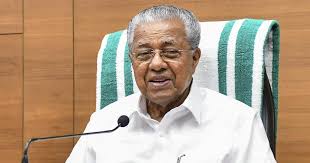
Over 13 lakh students, including 4.5 lakh SC and 80,000 ST students, currently benefit from various pre- and post-matric scholarships under the state’s e-Grants programme, regardless of family income. Kasaragod- Chief Minister Pinarayi Vijayan on Thursday said that no student from Scheduled Castes (SC), Scheduled Tribes (ST), or other marginalised communities should be left behind in the state’s march towards a knowledge-driven new Kerala. Speaking at the event at Durga Higher Secondary School Auditorium, Kanhangad, the Chief Minister said the government’s primary goal is to integrate marginalised sections into the mainstream and provide equal opportunities in education, employment, and social welfare. The campaign, which begins on Gandhi Jayanti, is under the motto: “Leap towards knowledge and employment”, reflecting Gandhiji’s vision of social inclusivity. CM Vijayan highlighted the state’s flagship initiatives aimed at empowering marginalised communities. The Unnathi Scholarship has already enabled over 1,000 SC/ST students to pursue higher education abroad. Technical training programmes under the government’s skill development schemes equip students from these communities to secure employment within six months of course completion. He also pointed to Palakkad Medical College, which admits 72 SC/ST students annually. Since 2014, 413 SC and 15 ST students have graduated as doctors, serving Kerala’s healthcare system. Additionally, the Training for Career Excellence (TRACE) programme provides stipendiary training to more than 5,000 youths in engineering, law, nursing, paramedical, management, and journalism. The CM underlined the Smart Study Room initiative, offering Rs 2.5 lakh per unit, and highlighted the state’s LIFE and SAFE housing schemes, ensuring that marginalised families receive secure homes. Over 13 lakh students, including 4.5 lakh SC and 80,000 ST students, currently benefit from various pre- and post-matric scholarships under the state’s e-Grants programme, regardless of family income. The CM also stressed the importance of ongoing campaigns, covering sanitation, anti-drug drives, healthcare, employment, rights awareness, and disaster preparedness. He said the government’s commitment is to ensure that “the taste of development and touch of welfare reaches every region, leaving no one behind”. (IANS) The CM stressed the importance of ongoing campaigns, covering sanitation, anti-drug drives, healthcare, employment, rights awareness, and disaster preparedness. Courtesy : The Mooknayak Note: This news is originally published on https:/themooknayak.com/bha and is used purely for non-profit/non-commercial purposes, especially human rights
1 dead after Dalit community centre collapses in Muzaffarnagar
Agra: A 55-year-old man, Deshveer Singh, was killed after the lintel of a Dalit community chaupal in Chandedi village of Muzaffarnagar collapsed on Wednesday night, said police on Thursday. Three others, who were present at the time, escaped unhurt. Ajit Singh, a villager, said, “First, the wall of the centre collapsed, after which the roof came down. Deshveer was sitting in the room and was buried under the debris. He was rushed to the hospital, where he was declared dead. The body was sent to the post-mortem house.” The chaupal, a recently constructed community centre used for social and religious gatherings, was built around five months ago. The incident has sparked outrage among villagers, who are demanding accountability for the poor construction quality. Authorities have launched an investigation into the cause of the collapse. DSP (Budhana), Gajendra Pal Singh, said, “The body was handed over to the family after post-mortem. The SDM and Tehsildar have inspected the spot. Further investigation is on, and action will be taken accordingly.” Courtesy : TOI Note: This news is originally published on https:/timesofindia.com/bha and is used purely for non-profit/non-commercial purposes, especially human rights
Tamil Nadu has worst discrimination record against Dalits: Governor RN Ravi
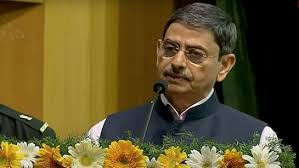
“In our state (TN), this issue remains, and every time, at every forum, I raised this issue. I will continue raising it,” Ravi said. CHENNAI: Governor RN Ravi, who has been claiming that the crime against SCs were rising and that they face persistent hardships, on Thursday charged that TN has the “worst record” as far as social discrimination against Dalits is concerned. The governor made these remarks while speaking at the Gandhi Jayanthi celebrations here. “In our society, there were a lot of distortions, and many sisters and brothers were treated as untouchables. They were not allowed to share public space. And we moved forward. We have done significant work. But, in our state (TN), this issue remains, and every time, at every forum, I raised this issue. I will continue raising it,” Ravi said. “There are schools where there are partitions – one side Dalit students and the other side non-Dalit students. Where are we? In this social discrimination against Dalits, our state has the worst record. And we must wake up, and it is possible (to change this),” he added. He said while the rest of the country has, by and large, addressed this problem, in Tamil Nadu it is an everyday affair. Courtesy : TNIE Note: This news is originally published on https:/thenewindianexpress.com/bha and is used purely for non-profit/non-commercial purposes, especially human rights
Supreme Court to Decide if 50% Quota Cap Applies to Colleges Built Exclusively for SCs
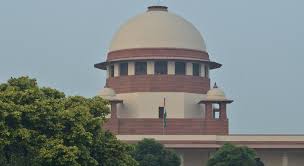
This case stems from an Allahabad High Court decision that struck down 70% reservation for Scheduled Castes in four SCP medical colleges in Uttar Pradesh. The High Court, citing the limit set in the Indra Sawhney case (1992), termed this 70% reservation as unconstitutional. New Delhi- The Supreme Court has decided to consider a very important question. The question is whether the 50% ceiling on reservations also applies to medical and educational institutions created specifically for Scheduled Castes (SCs) under the Special Component Plan (SCP). This case stems from an Allahabad High Court decision that struck down 70% reservation for Scheduled Castes in four SCP medical colleges in Uttar Pradesh. The High Court, citing the limit set in the Indra Sawhney case (1992), termed this 70% reservation as unconstitutional. Students affected by the High Court’s decision approached the Supreme Court. A bench led by Chief Justice of India BR Gavai and Justice K. Vinod Chandran has issued notices to the central and state governments, seeking their responses on the petition. What is the complete issue? The Special Component Plan (SCP) was launched in 1979 for the educational and social upliftment of backward classes, especially Scheduled Castes. Under this, separate hostels, scholarships, and even universities were established specifically for SC students. Four medical colleges were built under this plan in Ambedkar Nagar, Kannauj, Jalaun, and Saharanpur in Uttar Pradesh, where 70% of the seats were reserved for SC students. Funding for these colleges comes from a special central government scheme (DAPSC), which is meant solely for the welfare of the SC community. What do the petitioners say The petitioners argue that the High Court made a mistake. Their main point is that the Indra Sawhney case dealt with reservations in general institutions, not in institutions created specifically for the advancement of SC/STs. They warn that if the High Court’s decision is upheld, the consequences will be severe: It would endanger not only these four colleges in UP but also similar schemes running in states like Karnataka, Telangana, Andhra Pradesh, and Tamil Nadu. It could raise questions about special hostels, scholarships, and even central universities like Babasaheb Bhimrao Ambedkar University (BBAU) built for SC/ST students. It would deal a blow to decades of affirmative action meant to uplift marginalized communities. The Supreme Court’s ruling on this matter will have far-reaching implications. If the Court upholds the High Court’s decision, educational opportunities for students from backward classes could shrink. On the other hand, if the Court rules in favor of the petitioners, it would affirm that reservation exceeding 50% is constitutional in institutions created exclusively for disadvantaged groups. All eyes are now on the Supreme Court’s next hearing. Geetha Sunil Pillai Courtesy : The Mooknayak Note: This news is originally published on https:/themooknayak.com/bha and is used purely for non-profit/non-commercial purposes, especially human rights
BANAE Convention: The New Dalit Intellectuals Are Asking a Different Question Beyond Reservations
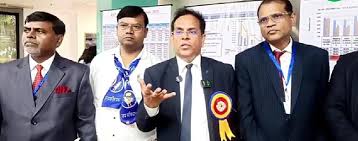
Engineers from 23 States Converge at BANAE Meet, Question Gap Between Policy and Reality New Delhi: In a powerful display of collective concern, engineers and professionals from the Dalit community gathered recently from across India at the national convention of the Babasaheb Ambedkar National Association of Engineers (BANAE). The two-day event, held on 21-22 September at New Delhi, to mark the organization’s 38th foundation year, became a platform for a data-driven critique of the implementation of government policies, highlighting a stark gap between planning and ground-level execution. The convention saw participation from nearly 350 engineers and professionals from 23 states, who engaged in intense discussions on critical issues like education, employment, health, and economic empowerment. Speaking with The Mooknayak, BANAE’s Secretary General, Sanjay Sagar, outlined the primary goal of the gathering. “Our issue was to understand the role of our intellectual group, our engineers,” Sagar stated. “They have gathered from 23 states. Their role is to figure out how we can approach society and the government to further the idea of inclusive growth, so that society can benefit. We have problems, and we want solutions.” He emphasized that the focus was on a factual analysis of government action. “Our aim has been to make people understand what the government’s planning and policies are, what the framework is, and what the implementation status is. We discussed the facts and deliberated on how to develop society, how to develop the mindset of the society, and on many student-related issues.” Sagar detailed that the discussions were comprehensive, covering the intended role of the community, the government’s responsibilities, and constitutional provisions. The underlying theme was to bridge the disconnect between policy intent and outcomes. The convention saw participation from nearly 350 engineers and professionals who engaged in intense discussions on critical issues like education, employment, health, and economic empowerment. For Two Dalit Students, a Dream Was Denied by a Technicality. Here’s How Delhi HC Stepped In. The “Shocking” Education Data: Rising Population, Falling Enrollment A central and alarming point of discussion was the recent data on education. Sagar presented an analysis based on figures from UDISE+ (Unified District Information System for Education), calling the trends “shocking.” “The data that emerged shows how, for decades, the rights of the Dalit, oppressed, and backward classes are being usurped,” he asserted. “This discussion is based on the government’s own data.” He provided a detailed breakdown: “In 2018-19, the total number of children aged 3 to 17 was 37 crore 83 lakh, but the enrollment was merely 26 crore 3 lakh. And by 2023-24, this enrollment dropped to 24 crore 80 lakh. The straightforward point is, if the population is increasing and enrollment is decreasing, it is a major cause for concern.” This data analysis led to a key resolution emerging from the convention. Sagar explained, “The main topic of discussion was that if the population is growing, we must approach the government to establish more and better schools for our children’s education and facilities, so that they can get opportunities for education. This was our aim.” The convention saw participation from nearly 350 engineers and professionals who engaged in intense discussions on critical issues like education, employment, health, and economic empowerment. Supreme Court to Decide if 50% Quota Cap Applies to Colleges Built Exclusively for SCs A positive development at the convention was the presence and commitment of Faggan Singh Kulaste, Chairman of the Parliamentary Committee for the Welfare of Scheduled Castes and Scheduled Tribes. “The most positive aspect was that Mr. Kulaste attended our event,” Sagar shared. “He answered questions on many issues with candour and assured us that he is always with the society. He said he would act as a medium between us and the government to find solutions to these problems.” When asked about the way forward, Sagar was clear about the strategy. “In our future strategy, we want to approach the current government. We want to create a pressure group and tell them that your planning and policies are very good, but inclusive growth is not happening at the grassroots level.” He pinpointed the problem at the implementation stage. “The people who are implementing these policies have a mindset of exclusivity, and they are creating exclusion. Because of this, the implementation at the ground level is not being completed.” Quoting Dr. B.R. Ambedkar, he added, “The constitution will prove good if the people implementing it are good. In today’s date, where the implementers are good, we have seen good implementation of government policies. But in many places, most places, there are people with an old mindset who are not giving opportunities to others, which is creating a hurdle in systemic change.” The convention saw participation from nearly 350 engineers and professionals who engaged in intense discussions on critical issues like education, employment, health, and economic empowerment. Ashoka Vijaya Dashami: Ambedkar’s Historic Explanation on Why He Chose Buddhism Over Hinduism- “We Have Come Out of Hell” Concluding his perspective, Sagar made an appeal to view the nation’s youth as a vital asset. “If the population is increasing and enrollment is decreasing, the government should reassess and review the gap between the Right to Education and the National Education Policy,” he urged. He highlighted the demographic dividend, stating, “In our country, if 66%… two-thirds of the population is under 34 years of age, and our country is called Youth India… if we capitalize on this youth, give them good training and good education, then why can’t we capitalize on them, send them abroad and earn revenue from them, just like other countries are doing? We will try to work on this as well.” The BANAE convention has marked a significant moment, presenting the organized, data-driven, and strategic voice of the educated Dalit professional class, a voice that is no longer limited to grievances but is moving forward with a clear agenda for policy reform and effective implementation. Geetha Sunil Pillai Courtesy : The Mooknayak Note: This news is originally published on https:/themooknayak.com/bha and
Dalit youth dies in police custody: 5 policemen suspended after 4 days of uproar, 27.50 lakh compensation, know how the administration bowed down in Dungarpur?
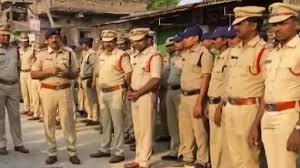
After four days of protests by the victim’s family and the tribal community, the administration relented; the victim’s family was awarded 27.50 lakh rupees, the father was given a contract job, and 5 policemen were suspended. Dungarpur, Rajasthan. The four-day tense situation following the custodial death of a youth at the Dovda police station in the district has finally ended. An agreement was reached between the administration and the deceased’s family late Wednesday evening, ending the days-long protest. What was the whole matter? The controversy began on September 26th when Dovda police detained a youth named Dilip Ahari in connection with a theft case. During police interrogation, Dilip’s health suddenly deteriorated. He was immediately taken to a local hospital in Dungarpur, from where he was referred to Udaipur for better treatment. However, Dilip died while undergoing treatment at a hospital in Udaipur on September 30. According to media reports, news of Dilip’s death sparked outrage among the tribal community and the victim’s family. They launched a protest, accusing the police of serious custodial assault. The protest first began outside the Dowada police station and later reached the district collectorate, leading to a tense situation. Four days of protests and negotiations followed. The angry protesters placed three key demands before the administration: A compensation of ₹1 crore for the victim’s family. A government job for a family member. Immediate and strict action against the accused policemen. Several rounds of negotiations were held to resolve the dispute. Led by Aspur MLA Umesh Meena and BAP MP Rajkumar Roat, the protesters engaged with the administration. On Tuesday, talks were held in the presence of TAD Minister Babulal Kharadi and Udaipur MP Mannalal Rawat, but they remained inconclusive. Finally, on Wednesday, a 10-member delegation led by MLA Umesh Meena met with Additional District Magistrate (ADM) Dineshchandra Dhakad and Additional Superintendent of Police (ASP) Ashok Kumar. After several hours of meetings, an agreement was reached between the two parties. Key Points of the Agreement The following points were agreed upon under the agreement reached between the administration and the victim’s family: Compensation: The victim’s family will receive financial assistance of ₹27.50 lakh. Job: The deceased Dilip’s father, Jivraj Ahari, will be given a contract job as a Class IV employee in the TAD hostel. Action: Five police officers, including Dovada Police Station Officer Tejkaran Singh and Head Constable Vallabhram Patidar, have been suspended for negligence in the case. Restoration of Peace and Funeral Following the announcement of the agreement, Dilip’s body was taken from the Udaipur hospital mortuary for a post-mortem examination. His last rites will be performed in his native village, Kalariya, on Thursday. With this agreement, the tension that had persisted in the area for the past four days has ended and peace has been restored. Rajan Chaudhary Courtesy: Hindi News
Discrimination against Dalit medical students: SC Commission issues notice to AIIMS and Health Ministry; find out what the matter is?
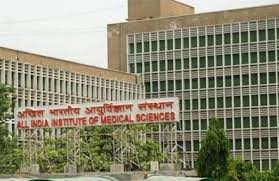
In its notice, the National Commission for Scheduled Castes (NCSC) has sought an action report from the AIIMS Director and the Ministry’s Secretary within 15 days. New Delhi. The National Commission for Scheduled Castes (NCSC) has taken a serious view of the discrimination, inhumane working conditions, and suicides faced by PG (postgraduate) medical students from the Scheduled Caste (SC) community in India’s prestigious medical colleges and universities. The Commission has issued notices to the All India Institute of Medical Sciences (AIIMS), New Delhi, and the Union Ministry of Health and Family Welfare, seeking a response within 15 days. The Commission’s action follows a detailed complaint filed by Dr. Lakshya Mittal, a laparoscopic, general, and laser surgeon from Rajasthan and the National President of the United Doctors Front (UDF). Dr. Mittal sought the Commission’s immediate intervention to protect the rights of PG medical students from the Scheduled Caste community, prevent suicides, and regulate working conditions. What’s in the complaint? In his petition (dated July 8, 2025), Dr. Mittal presented the following problems faced by students from the Scheduled Caste community to the Commission. Inhumane duty hours – PG students in medical colleges are made to work continuously for 24 to 36 hours. In many cases, the duty hours are extended to 72 hours. Violation of fundamental rights – Students are forced to work in conditions that violate Article 21 (Right to Life and Dignity) and Article 42 (Right to Humane Working Conditions) of the Constitution. Caste discrimination and harassment – Scheduled Caste students often face caste-based remarks and discrimination from classmates, roommates, and faculty. Increase in suicides and dropouts – Due to long duty hours and discrimination, dozens of students commit suicide or drop out of courses every year. The Commission said, ‘Respond within 15 days.’ In its notice (File No. SSW-II/BE/HFW/2025/301685), the National Commission for Scheduled Castes has sought an action report from the AIIMS Director and the Secretary of the Ministry within 15 days. The Commission has clarified that if a response is not provided within the stipulated time, it will be considered a violation of the Commission’s powers and the Commission may take action similar to that of a civil court. The NMC Task Force Report is also serious. In his complaint, Dr. Mittal also cited the report of a task force constituted by the National Medical Commission (NMC) in August 2024. This task force, headed by Dr. Suresh Bada Math (NIMHANS), studied the mental health and suicides of postgraduate students. The report clearly stated that continuous 24-hour duty and excessive workload not only seriously impact the mental and physical condition of doctors, but also pose a threat to the safety of patients. To address this problem, the Uniform Central Residency Scheme was created in 1992, but its guidelines have not been properly implemented to date. Rules exist, but they are not enforced. Residency Scheme 1992: This prohibits junior residents from working more than 12 hours continuously and not exceeding 48 hours per week. It also guarantees weekly leave and annual leave. PGMER Guidelines 2023: This states that “PG students will work within reasonable working hours and will be given adequate rest.” It also provides for 20 days of annual leave and weekly leave. But according to Dr. Mittal, both these rules are being completely ignored. The silence of the college management and the NMC has worsened the situation. Shocking Suicide Statistics According to the NMC report (August 10, 2022), 55 PG medical students committed suicide in the last five years, with a significant number of them belonging to the Scheduled Caste category. These cases have come to light in the past: Balmukund Bharti (2012, AIIMS Delhi): Suicide due to caste discrimination. Dr. M. Mariraj (2018, Ahmedabad): Attempted suicide due to discrimination by colleagues. Female MBBS intern (2023, Amritsar): Suicide due to caste-based harassment, case filed against professors and batchmates. JIPMER, Puducherry (2024): Junior doctors accused the head of the department of caste-based discrimination. Lokendra Singh Dhande (2024, Bengaluru): Suicide due to caste-based harassment by classmates. Speaking to The Mooknayak, Dr. Mittal said, “Scheduled Caste students overcome significant difficulties and social barriers to reach medical college. But even after admission, they face serious problems such as discrimination, unequal treatment, and inhumane duty hours. Long and unrelenting duty hours lead to mental and physical breakdowns, which not only impact their careers but also, at times, prove fatal for their lives. The future of these students working in medical education and healthcare can only be secured if the Commission intervenes immediately and concretely in this matter. The Commission’s intervention will not only protect the fundamental rights of these students but can also save the lives and futures of millions of talented young people.” What are the demands? The NMC should immediately implement the Uniform Residency Scheme 1992. Section 5.2(ii) of the PGMER 2023 should be amended to establish a duty limit of 8 hours per day and a maximum of 48 hours per week. An independent third-party monitoring agency should be established to determine fines and penalties for non-compliance. A special committee should be formed to monitor and prevent caste discrimination in medical colleges. This case not only represents a fight for the rights of Scheduled Caste students but also exposes the true nature of India’s medical education system. When students aspiring to become doctors are subjected to discrimination and inhumane conditions, it is a serious warning to both society and the government. Ankit Pachauri Courtesy: Hindi News
SC slaps Rs 5 lakh fine on Delhi PWD for engaging manual sewer cleaners, including minor, outside its premises
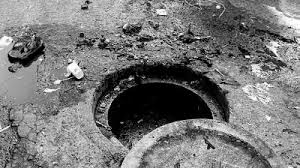
The bench, while observing that its October 2023 directions had been flouted, warned directing FIRs against the erring officials upon future violations. NEW DELHI: The Supreme Court on Thursday imposed a Rs 5 lakh fine on the Delhi government’s Public Works Department (PWD) for engaging manual sewer cleaners, including a minor, right outside the top court in violation of its orders prohibiting the practice. A bench comprising Justices Aravind Kumar and N V Anjaria expressed displeasure at the PWD’s response, following reports that labourers without protective gear were made to manually clean drains outside Gate F of the top court. The bench, while observing that its October 2023 directions had been flouted, warned directing FIRs against the erring officials upon future violations. “It would be reasonable to impose a cost for having undertaken such work as evidenced from the photographs annexed with this application. Hence, we direct PWD to deposit the sum of Rs 5 lakh to the National Commission for Safai Karmacharis within four weeks,” the top court directed. In a word of caution, the top court maintained not only those from the PWD but other officials needed “to wake up from slumber” to ensure compliance of its directions “in letter and spirit”. “We make it clear that in the event of recurring, this court would be compelled to direct registration of FIR under the BNS and the BNSS.” Senior advocate K Parameshwar, assisting the bench as an amicus curiae, said the incident clearly reflected a disregard for the court’s binding directions. He pointed out that video evidence had documented the involvement of a minor and that specific details of those forced into manual work had been provided. “The minor was engaged, and it’s specifically recorded in the video. A police complaint was sought to be lodged at Tilak Marg station but neither the police nor the PWD took appropriate action. This is not merely a labour law violation rather it is a breach of constitutional obligations. Let the fine be recovered from the officers themselves,” he said. The bench, in its order, referred to its directions issued on October 20, 2023 and did not agree to the submissions of the PWD counsel that it was only de-silting the covered drains for the purpose of keeping in mind the ensuing monsoon and the officials were not at fault. The top court, however, said, “In respect of the incident at Gate F and B of the Supreme Court of India, the drains have been constructed, and for desilting the said drain, the PWD has engaged the services of contractors who are said to have acquired labourers without safety gears. There is no doubt that the agreement entered into by the contractor with the PWD would mandate that the contractor should provide safety gears and prohibit the engagement of labourers under 18 years of age.” “The orders issued by this court by order October 20, 2023 seem not to have percolated, in other words, have been consciously ignored,” the top court said. The bench continued, “We have said this for more than one. Firstly, the affidavit in reply filed by PWD does not disclose that there have been serious steps taken either to warn the contractors for undertaking, or having undertaken the work, or entrusting the work without the use of protective gears.” “Secondly, the top court said no steps were taken either to put the contractor under notice or to issue any notice for blacklisting. This clearly indicates that the officials seem to be dragging their feet,” it said. The bench said it had made it explicitly clear that in the event of an untoward incident, the court would direct registration of FIR against the concerned officials. “At this stage, we detest from doing so for a simple reason that no incident has occurred and to ensure that neither the officials nor the contractor appointed by them allow the worker to enter the drain or soft water drain or sewer without protective gear,” it said. The bench had taken note of photographs showing manual scavenging and hazardous cleaning being done at one of the gates of the apex court. The top court was dealing with applications filed in a public interest litigation, which has raised the issue of manual scavenging. Courtesy : TNIE Note: This news is originally published on https:/thenewindianexpress.com/bha and is used purely for non-profit/non-commercial purposes, especially human rights
Odisha Cabinet approves 10-hour shifts; allows night shifts for women
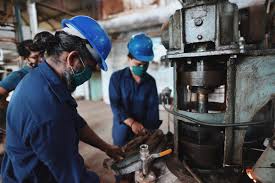
The overtime work limit has been increased from 115 hours to 144 hours every financial quarter. The Odisha government on Monday (September 29, 2025) increased the daily working hours to 10 hours, subject to a 48-hour weekly cap. It also allowed women in private establishments to work night shifts subject to their written consent. The Cabinet, chaired by Chief Minister Mohan Majhi, approved an amendment to the Factories Act, 1948, aimed at promoting industrial investment and creating more employment opportunities. “The State government has extended the total number of hours of work without an interval to six hours and increased the spread over up to 12 hours inclusive of intervals for rest,” read the official statement. “Where a worker works for more than the prescribed hours, they would be entitled to wages at the rate of twice their ordinary rate of wages for overtime work,” it added. Moreover, the overtime work limit has been increased from 115 hours to 144 hours every financial quarter. “Women can be employed in all factories for all types of work. They may also be employed before 6 a.m. and beyond 7 p.m. with their written consent,” the government said. These reforms are expected to attract new investments, enable factories to meet peak demand and increase productivity, the government said. Development of model schools In another significant decision, the Cabinet approved the development of model schools under the Godabarisha Adarsha Vidyalaya (GAV) scheme at the gram panchayat level, with a focus on inclusive and quality education. Aligning with the objectives of the Right to Education (RTE) Act, 2009, the GAV scheme aims to ensure equal access to education and holistic development of the student community. “This initiative is in line with the vision of the National Education Policy (NEP), 2020 and the NIPUN Odisha scheme, and places a special focus on enhancing foundational literacy and numeracy skills to empower children socially and educationally,” the statement added. In the first phase, spanning three years (2025-26 to 2027-28), a total of 2,200 model schools will be constructed with an estimated outlay of ₹12,000 crore. Satyasundar Barik Courtesy : The Hindu Note: This news is originally published on https:/thehindu.com/bha and is used purely for non-profit/non-commercial purposes, especially human rights
Poverty biggest trigger for suicides, lack of education a catalyst – report
There are wide regional variations when it comes to suicides. While Kerala tops the list at 30.6 per lakh population, Bihar has the lowest suicide rate in the country at 0.7.But one factor stands out sharply: income. A vast majority of victims came from households earning less than Rs 1 lakh a year, showing how poverty and financial insecurity push people to the edge. The less educated are also more vulnerable. More than four in five victims had not studied beyond higher secondary school. Men in their 30s and early 40s were the most affected, while among women the highest toll fell on those aged 18 to 30. Strikingly, among children under 18, more girls died by suicide than boys, as opposed to the trend visible in every other age group. Courtesy : The Times of India Note: This news is originally published on https:/timesofindia.com/bha and is used purely for non-profit/non-commercial purposes, especially human rights