
Man Held For Raping Minor Dalit Girl In Uttar Pradesh’s Sant Kabir Nagar
Superintendent of Police (SP) Sandeep Kumar Meena said the accused, identified as Badre Alam, was arrested around 3 am from a village under Khalilabad police station limits on Sunday. – Badre Alam, 32, accused of raping dalit girl in UP. – He was arrested around 3 am from a village under Khalilabad police station limits. – Police said he allegedly refused to stop despite warnings, so the police opened fire and he was injured in the right leg. A 32-year-old man accused of allegedly raping a minor Dalit girl was arrested here on Sunday morning, police said. Superintendent of Police (SP) Sandeep Kumar Meena said the accused, identified as Badre Alam, was arrested around 3 am from a village under Khalilabad police station limits on Sunday. He said that when the police team was taking Alam towards Khalilabad Kotwali, he allegedly tried to flee on the pretext attending nature’s call. He allegedly refused to stop despite police warnings, so the police opened fire and he was injured in the right leg, he added. Curated by: Jinit Parmar Courtesy : Outlook India Note: This news is originally published on https:/outlookindia.com/bha and is used purely for non-profit/non-commercial purposes, especially human rights
A Shift in Dalit Politics in Uttar Pradesh
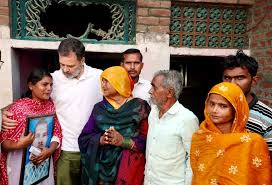
As the BSP, once seen as the primary political vehicle of Dalit assertion, is facing criticism for its growing silence, Rahul Gandhi’s recent activism, particularly his vocal stance against Dalit atrocities, has begun to trigger a political churning in the community. LoP in the Lok Sabha and Congress leader Rahul Gandhi meets the family members of late Hariom Valmiki, a Dalit man allegedly lynched in Raebareli, in Fatehpur, Uttar Pradesh. Photo: PTI Leader of opposition in the Lok Sabha, Rahul Gandhi, on Friday (October 17) sharply criticised the Yogi Adityanath-led Uttar Pradesh government following the brutal lynching of Dalit man Hariom Valmiki, saying the incident has “shaken the nation’s conscience” and exposed the continuing vulnerability of Dalits in India. Gandhi, who met the victim’s family in Fatehpur district, alleged that the local administration attempted to intimidate them and prevent his visit – an act he described as a “failure of the system that shields the guilty instead of protecting the victim.” Dalit politics in focus The recent alleged attempt to throw an object towards Chief Justice of India B.R. Gavai inside the Supreme Court, and the death by suicide of senior Dalit IPS officer Y. Puran Kumar in Haryana on October 7, 2025, reignited debate over Dalit security, dignity, caste discrimination and institutional bias. After attempting to throw an object towards CJI Gavai, advocate Rakesh Kishore loudly proclaimed slogans in praise of ‘Sanatan Dharma’. He reportedly shouted, “Sanatan ka apman nahi sahenge (We will not tolerate the insult of Sanatan Dharma)”. Gandhi’s recent activism on Dalit issues, particularly his vocal stance against atrocities, has begun to trigger a political churning among Dalits over their future political alignment. The Bahujan Samaj Party (BSP), once seen as the primary political vehicle of Dalit assertion, is facing criticism for its growing silence. Mayawati’s silence at Lucknow rally At the BSP rally held on October 9 in Lucknow, to mark the death anniversary of party founder Kanshi Ram, a massive crowd had gathered to hear party supremo Mayawati. However, her speech disappointed many Dalit supporters who expected a strong condemnation of recent caste-based violence. Mayawati targeted the opposition INDIA bloc parties Samajwadi Party (SP) and Congress, more than the ruling Bharatiya Janata Party (BJP). In fact, she even praised the BJP government for maintaining Dalit heritage sites. “The Samajwadi Party is two-faced – it remembers Dalits only when out of power but forgets them once in office,” she said, adding, “The Congress, too, had weakened the Constitution during the Emergency.” Notably, she avoided mentioning any specific recent atrocity – neither the attempt to throw an object on CJI Gavai nor the Hariom Valmiki lynching – something that many BSP supporters found disheartening. “The state government has, to some extent, maintained Dalit parks and memorials using ticket revenues,” she said, drawing a contrast with what she described as the SP neglect of such sites. Political decline of the BSP Mayawati’s reluctance to work at the grassroots level and her perceived soft corner towards the BJP have deepened the crisis within Dalit politics. The BSP’s political graph has been steadily declining over the past decade and a half. In Uttar Pradesh, where the party had formed a majority government in 2007, it now has only one MLA in the state assembly and no representation in Parliament. Observers believe that Mayawati’s absence from active ground politics has weakened the BSP, leading to fragmentation of its core Dalit base. While Jatav Dalits have largely remained loyal, non-Jatav Dalits – who shifted to the BJP during the Narendra Modi wave in 2014 – began moving towards the INDIA bloc in 2024. Analysts say that Rahul Gandhi’s Bharat Jodo Yatra helped build Dalit confidence in him. Opposition parties have also fuelled concerns that the BJP might alter the constitution and end reservations – a fear that has pushed Dalits closer to the INDIA alliance. As the Congress lacks a strong organisational base in Uttar Pradesh, the Samajwadi Party (SP) has emerged as the principal beneficiary, drawing Dalit support alongside its traditional Muslim and backward-class voters. However, in the 2024 general election, the Congress increased its tally from one seat in 2019 to six, while the SP won 37 out of 80 seats. Dalit churning and emerging alignments The ongoing churn in Dalit politics suggests that Rahul Gandhi is eyeing a political opening in Uttar Pradesh, attempting to reclaim the community that once formed the Congress’s core support base before the rise of Kanshi Ram and Mayawati. According to Shashi Kant Pandey, a professor at the department of political science, Babasaheb Bhimrao Ambedkar University, “Rahul Gandhi’s strong pitch for caste census and his vocal stance against Dalit atrocities is gradually making the Congress a political choice for Dalits. However, it will take time for the party to benefit from this shift due to its weak organisational structure in the state.” Pandey added that while Mayawati retains a sustainable vote bank, her failure to expand beyond Dalit support limits her electoral strength. “She secured nearly 9.3% votes in the last general election, but without support from other communities, this cannot translate into seats,” he said. Voices from the Dalit community Dalit thinker R.P. Gautam, who is also associated with the Congress, believes that the community is searching for leadership capable of challenging the BJP’s dominance. “No doubt, Mayawati and the BSP gave a voice and political identity to Dalits, but her reluctance to work on the ground has disappointed many,” Gautam said. “Indeed, Gandhi is vocal against Dalit atrocities, but his party rarely ensures their representation in power. Now the time is over for optics politics — eating with Dalits is not enough to get their support. Parties must give Dalits a real share in power if they want their loyalty,” he added. Rahul Gandhi’s message During his visit to Fatehpur, Gandhi said, “The brutal murder of Hariom Valmiki has shaken the conscience of the entire nation. In the eyes of his family, there was both pain and a question –
Over 20 households, over 200 disciples… A Bangladeshi transgender, Babu Ayanal Khan, had been living in India as Jyoti for 30 years.
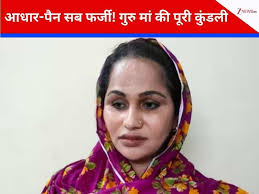
The 44-year-old transgender, known as the Miraculous Jyoti Maa in Mumbai’s Shivaji Nagar, turned out to be a Bangladeshi citizen. Police investigations revealed that she had been operating an illegal network in India under a fake identity for the past 30 years. Shivaji Nagar: In the Govandi, Rafiq Nagar, Kurla, Deonar, Narpoli, and Trombay areas, the 44-year-old transgender, posing as Jyoti Maa, would bless her devotees 24 hours a day. People would bow their heads and pray, believing Jyoti Maa to be a goddess. Jyoti Maa’s influence can be gauged by the fact that many local leaders even visited her court. In such circumstances, no one could have imagined that the Jyoti Maa, whom they considered a miraculous goddess, was actually a vicious criminal. According to the Shivaji Nagar police, several cases have been registered against this alleged Jyoti Maa for kidnapping, assault, and other serious charges. Furthermore, this transgender person is not an Indian citizen but a Bangladeshi citizen who has been living in India illegally for the past 30 years by changing his name and identity. Come to India at the age of 14 This Bangladeshi transgender person, Jyoti Maa, alias Babu Ayanal Khan, entered India illegally at the age of 14. Here, he concealed his true identity and lived in Muslim-dominated areas, and then, seeing an opportunity, established a base in Govandi. Local police reported that Babu Ayanal Khan, alias Jyoti Maa, has built a large network of transgender people over the years, including over 200 transgender followers. Investigations have revealed that he owns over 20 houses and other properties in Mumbai and its suburbs. His followers are implicated in most of the incidents reported against transgender people on trains, highways, in homes, and elsewhere. Most of these transgender people are fake. Police are now conducting a thorough investigation into this gang and its illegal assets and network. It is suspected that Jyoti Ma possesses assets worth crores of rupees. This is how Jyoti Ma’s activities were exposed An officer with the Shivaji Nagar police stated that a crackdown is underway against Bangladeshi immigrants living illegally. Recently, eight Bangladeshi nationals were arrested in the Govandi area, some of whom were transgender. After rigorous interrogation, police obtained information about Jyoti Ma, also known as Babu Ayanal Khan, leading to Khan’s arrest. The investigation also revealed that Jyoti Ma helped Bangladeshi immigrants settle in Mumbai. When police examined her documents, her birth certificate, Aadhaar card, and PAN card were all found to be fake. Her gang of transgender individuals are active in the Shivaji Nagar, Govandi, Rafiq Nagar, Kurla, Deonar, Narpoli, and Trombay areas, and are said to be living there using fake documents. The hunt for these illegal Bangladeshi immigrants continues. However, Shivaji Nagar police produced Jyoti Ma, alias Babu Ayanal Khan, in a local court, where he was remanded to judicial custody. Authored by: Manish Jha •Edited by: Rahul Mahajan About the Author Manish Jha, who began his career in TV journalism, moved from Madhubani, Bihar, and settled completely in Mumbai. In his 14-year career, he has worked on the desk in addition to reporting. He has been covering crime stories for NBT for the past seven years. Courtesy: Hindi News
Two-month-old baby rescued after transgender woman brings her to hospital

Chennai: A two-month-old baby girl was rescued by authorities in Tiruvallur on Tuesday after a transgender woman brought her to the Tiruvallur Govt Hospital for treatment. The hospital staff grew suspicious and informed the police and child welfare committee officials. Police said the transgender woman, identified as Mavathi alias Malathi (30), brought the sick baby to the hospital. When the doctor asked about the baby’s family, Malathi gave confusing answers, which made the hospital staff suspicious. During questioning, Malathi told police that she bought the baby from a poor couple in Andhra Pradesh for 2.1 lakh, adding that the parents could not afford to raise the child. An officer said, “We are checking her statement and trying to find the baby’s real parents. The reason for buying the baby is not yet clear.” Officials from the child welfare committee (CWC) later examined the baby at the hospital and said she was healthy and safe. The baby was then moved to a government-run home for infants. Police have registered a case and are looking for the baby’s biological parents. Courtesy : TOI Note: This news is originally published on https:/timesofindia.com/bha and is used purely for non-profit/non-commercial purposes, especially human rights
Cong netas sought cash for ticket: MLA

Patna: Internal disputes in the Congress have come to the fore in Purnia with sitting MLA Md Afaque Alam on Sunday accusing Purnia MP Pappu Yadav and the party’s state incharge, Krishna Allavaru, of engaging in corrupt practices and brokering the assembly ticket for crores of rupees. Alam’s allegations followed the announcement of Md Irfan Alam as the Congress candidate for the Kasba constituency. He also appealed to party leaders Rahul Gandhi and Mallikarjun Kharge to intervene and investigate the matter. A purported audio clip of Alam discussing the ticket with state Congress president Rajesh Ram has circulated widely on social media, although its authenticity has not been verified. The Congress candidate, Md Irfan, is considered close to Pappu Yadav. Alam alleged that Congress leader Shakeel Ahmad assisted in finalising a deal worth crores in exchange for the ticket. “We have been continuously becoming MLAs from Congress. I appeal to Kharge and Rahul ji to conduct an investigation. The party’s image is being tarnished. They have made such people candidates who have worked to defame the grand alliance,” he said. In the three-minute sixteen-second audio, Alam can be heard discussing the ticket, while Rajesh Ram is purportedly heard saying that the process has been finalised but is pending further action. The audio, however, remains unverified. Congress has denied ticket renewal to four-time sitting MLA Alam from Kasba and awarded it to Md Irfan, who is considered a close associate of Pappu Yadav. Md Irfan’s own distress over the ticket issue was captured in a video on Oct 17, in which he was seen crying profusely. The video went viral on social media, showing him overcome with emotion. On the same night, Pappu Yadav confirmed on social media that Irfan had been given the ticket by Congress. Courtesy : TOI Note: This news is originally published on https:/timesofindia.com/bha and is used purely for non-profit/non-commercial purposes, especially human rights
‘Resign or Die’: Principal, Two Instructors Booked for Harassing Dalit Woman at UP Training Institute
Police have filed an FIR against the principal and two employees of the Government Industrial Training Institute for allegedly harassing a Dalit woman employee, officials said on Friday. Kotwali Station House Officer (SHO) Kshitij Tripathi said the case was registered based on a complaint filed by the husband of the woman employee. The accused have been identified as principal Amit Kumar Dwivedi, radio instructor Ravindra Singh, and electrical instructor Dhananjay Singh. According to the FIR, the complainant’s wife, Arun Kumari, works as a work manager at the institute. On October 14, Ravindra Singh and Dhananjay Singh allegedly used caste-based slurs against her while she was on duty and pressured her to take voluntary retirement. When Kumari reported the matter to the principal, he too allegedly used caste-based remarks against her. The complaint further states that the principal threatened her with death and asked her to quit her job. Police said the case has been registered and an investigation is underway. Courtesy : The Observer Post Note: This news is originally published on https:/theobserverpost.com/bha and is used purely for non-profit/non-commercial purposes, especially human rights
Dalit man beaten, urinated on over dispute in Madhya Pradesh’s Katni; four booked under SC/ST Act

A Dalit man in Madhya Pradesh’s Katni district has alleged that he was brutally assaulted, urinated on, and subjected to caste-based abuse by a group of upper-caste men, sparking anger and drawing comparisons with earlier cases of caste violence in the state. The attack reportedly took place on October 13 in Matwara village under Bahoriband police station limits, following a dispute related to the construction of a Gram Panchayat office. According to officials, the altercation began when Rajkumar Chaudhary, a resident of the village, objected to the use of illegally mined gravel near his farmland for the Panchayat building. His objection allegedly provoked Sarpanch Ramanuj Pandey and three others — Ram Bihari Pandey, Pawan Pandey, and Satish Pandey who then assaulted him. In his complaint, Chaudhary claimed that the accused beat him and urinated on him while hurling casteist insults. Katni Additional Superintendent of Police (ASP) Santosh Dehariya said that a case has been registered under the Bharatiya Nyaya Sanhita (BNS) and the Scheduled Castes and Scheduled Tribes (Prevention of Atrocities) Act. “Based on the victim’s statement, we have filed an FIR. Statements from villagers who witnessed the incident are being recorded since it happened in public view,” he said, adding that efforts were on to trace the accused. The ASP also confirmed that before Chaudhary’s complaint, the sarpanch had lodged a separate case against him on the same day, accusing him of using abusive language and issuing threats. “Chaudhary went to the district hospital for treatment and then filed his complaint. Both cases have been registered and investigations are ongoing,” Dehariya said. The incident has reminded many of the 2023 Sidhi district case, where a viral video showing a man urinating on a tribal youth sparked nationwide outrage and led to the demolition of the accused’s property. Rights groups have called for swift action in the Katni case, saying it reflects the persistence of caste-based violence despite strict laws intended to prevent such atrocities. Courtesy : MM Note: This news is originally published on https:/muslimmirror.com/bha and is used purely for non-profit/non-commercial purposes, especially human rightsC
Row over ‘caste bias’: college says student’s conduct was unsatisfactory
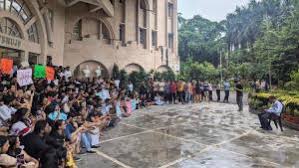
Pune’s Modern College of Arts, Science and Commerce, which has drawn criticism after former student Prem Birhade alleged caste discrimination for withholding a verification certificate, on Saturday said that his conduct as a student was “unsatisfactory”. In a statement posted on social media, college principal Nivedita Ekbote rejected claims of bias and said that the institute had earlier issued Mr. Birhade three recommendation letters and bona fide certificates. A day earlier, The Hindu had reported about the allegations levelled by Mr. Birhade, a Dalit youth based in London, saying that a U.K.-based company had “asked my college if I had studied there. The college did not respond. Why? Because you don’t want us to get ahead in life. This is the struggle of me, my family, my community”. In response to the principal’s statement, Mr. Birhade said he would file a defamation and harassment case against the college, reiterating his charge of caste discrimination. “If you want us to hang a broom and a pot around our necks now, that is not going to happen,” he said in a video statement on Saturday. Gajanan Ekbote, chairperson of the Progressive Education Society that runs the college and the principal’s father, dismissed the allegations as “false and baseless”. “The earlier recommendation letters were provided by faculty members who have now retired. When the request for a new recommendation letter came, we said we would first need to verify the records, as the principal did not know him. There was no delay. The company had not given us any deadline. We sent the letter as soon as we received a reminder,” he told The Hindu. Meanwhile, Vanchit Bahujan Aghadi leader Prakash Ambedkar issued a statement criticising the college. “Why was he [Mr. Birhade] fit for recommendation then, but now, he secured a place abroad, the college suddenly finds his character problematic? Let’s be honest. This isn’t about discipline. This is about discomfort. Discomfort with a Dalit student daring to rise beyond the limits society quietly sets for him!” Mr. Ambedkar added, “What the college has done isn’t just unethical, it’s a targeted and discriminatory act! It’s academic sabotage rooted in caste prejudice! Instead of celebrating his success, they chose to block his path. We need to call this what it is: caste-based discrimination. And it’s not just wrong, it’s criminal!” The Hindu Bureau Courtesy : The Hindu Note: This news is originally published on https:/thehindu.com/bha and is used purely for non-profit/non-commercial purposes, especially human rights
Is Bihar’s caste census becoming an election issue?:Upper castes raise concerns, Dalits and OBCs insist on counting

The caste census is stirring debate across Bihar, with opinions sharply divided along community lines. Sita Sharan, 42, from the Bhumihar community, runs a fast food shop in Patna. “Caste census should happen. We should know how many people belong to each group. It won’t harm anyone,” he says. Likewise, 42-year-old Tinku Jha, a Brahmin from Vaishali, sees no threat in the exercise. In contrast, Prince, from the Rajput community, is firmly opposed to the census and also rejects caste-based reservations. Among supporters is Bhola Prasad, a 60-year-old Yadav farmer from Sonpur in Saran. “Caste census must happen. Work and opportunities should be distributed according to population. Those opposing it are already ahead in everything, including jobs,” he argues. Yet, a section of upper-caste voters remains apprehensive. Is the caste census shaping the Bihar Assembly elections? How do different communities view it, and which parties are likely to benefit or lose? To explore this, we spoke with residents in Saran, Vaishali, and Patna, and consulted experts on the potential electoral impact. Background: Caste survey and census in Bihar Bihar conducted a caste survey in 2023 under the Mahagathbandhan government, with CM Nitish Kumar and Deputy CM Tejashwi Yadav in power. The caste-based census report was released on October 2, 2023. This was the first state-level caste survey in the country since independence. First, a look at Bihar’s population by caste according to the report… Following Bihar’s survey, the central government announced on April 30, 2025, that a nationwide caste census would be conducted. The exercise will take place in two phases alongside the general population census in 2026–27. The decision came after sustained pressure from both political parties and the public, as the last caste-based census in India was carried out in 1931. What communities regarded as upper caste think about the caste census Rajputs: Economic focus over caste 29-year-old Prince Ranjan Singh, a Rajput from Saran working in a medical lab, opposes the caste census. “In my view, the census should focus on the poor. Give resources to those who need them. Who is stopping anyone? With 500–600 crore, you could build 100,000 houses for the poor,” he says. Prince advocates for reservations based on economic criteria rather than caste, arguing that caste-based quotas have failed to address social backwardness. “Reservation should not be based on caste, but on poverty. Every caste has rich and poor. The current system is limping,” he adds. Bhumihars: Strong support for census 42-year-old Sita Sharan, a Bhumihar from Saran who runs a fast food shop and works as a Flipkart delivery partner, considers the caste census essential. “Caste enumeration is completely necessary, but a half-hearted survey is useless,” he says. Sita Sharan explains the practical benefits: “The caste census should happen, and it causes neither harm nor advantage. It will simply reflect the population of each community, giving them proportional strength. This will not create animosity in society. What use is reservation if people do not get access to education?” Brahmins: Census not harmful 42-year-old Tinku Jha, a Brahmin from Vaishali who supports his household through labor work, also backs the census. “Caste enumeration does not harm anyone. Each community will receive its share based on population. Those opposing it have their own views. Some may lose, some may benefit,” he says. For Tinku, bigger election issues are the poor state of government schools, unemployment, inflation, and migration. “If Bihar had better employment opportunities, people would not have to go to Chennai, Visakhapatnam, or Punjab for work,” he notes. What did communities regarded as Dalits-Mahadalits say about caste census? Reservation has become a joke, employment is key Ritik, a Dalit student at Patna University, says the reservation system has lost its effectiveness. “Reservations have become a joke because government jobs are declining. When institutions shut down, there are no jobs. Without jobs, where will reservation be implemented? The caste census is being conducted, but what is its operative purpose?” He questions the practical impact of the census: “The survey revealed that 33% of families earn less than ₹6,000 per month. What has been done after discovering this? They simply counted. Counting alone does not solve anything.” Caste census essential for children’s future Dilip Kumar Das, 45, from the Mahadalit Ravidas community in Khadka Tola, Saran, sees the census as crucial for planning his children’s future. A father of three, he wants them to become doctors and engineers. “The caste census is 100% necessary. It will help design schemes for every community, which will automatically support Bihar’s development,” he says. Addressing those who oppose the census, Dilip adds, “Reservation should be allocated according to population. Some people misuse the system—leaders like Chirag Paswan and Jitan Ram Manjhi already have advantages; they should now step aside.” He stresses that beyond education, health, and unemployment, the caste census remains a significant issue for Mahadalits. Views from OBCs and EBCs Upper-caste dominance and political opposition Bhola Prasad Yadav alleges that upper-caste groups opposing the caste census control jobs across sectors. He believes unemployment, migration, and inflation are bigger election issues than the caste census. “Still, caste enumeration will remain an issue for people, but during elections it becomes more of a political debate than a public concern,” he says. ‘PM Modi’s caste, yet no benefit’ Gautam Kumar, a Teli student at Patna University (Telis fall under Bihar’s EBC category), supports the caste census and insists reservations should reflect population share. “Even though PM Modi belongs to our caste, the community has seen no benefits,” he says. On its electoral significance, he adds, “We should benefit according to population, but nothing has happened so far.” Caste census as a tool for reservation reform Suraj Kumar, an OBC student at Patna University, describes the census as a means to reform reservations while highlighting economic inequalities. “The caste survey was correct because reservation must match caste population percentages,” he says. However, 20-year-old Shiv Kumar, also OBC, warns that political parties may exploit the census to increase casteism. “The census
Dalit graduate alleges caste bias by Pune college cost him Heathrow job offer
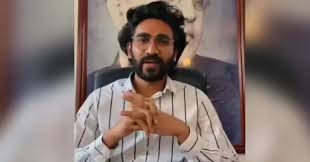
Pune: Prem Birhade, a Dalit student from Nandurbar who recently completed his postgraduate studies at the University of Sussex, has alleged that caste-based discrimination by Pune’s Modern College of Arts, Science and Commerce forced him to forfeit a job offer at Heathrow Airport in London. The allegation was brought to public attention by Vanchit Bahujan Aghadi (VBA) chief Prakash Ambedkar, who accused the college of denying mandatory credential verification due to caste prejudice. According to Ambedkar, Prem had submitted all required documents to Modern College for verification, a standard process needed by employers abroad. However, the college allegedly refused to complete the verification after inquiring about his caste. Ambedkar claimed that the institution’s principal, Dr. Nivedita Gajanan Ekbote, who also serves as Maharashtra Vice-President of the Bharatiya Janata Yuva Morcha, allowed her political affiliation to influence administrative decisions. “This verification had earlier been issued when Prem went to pursue higher education in London,” Ambedkar said. “But when he requested it again for employment, the college administration’s behaviour changed once his caste became known.” He described Prem’s experience as “a stark example of how caste discrimination continues to follow Dalit youth, even after overcoming social and economic hardships.” In a viral video, Prem displayed his documents, stating, “I am not begging; I am demanding my rights.” In another post, he wrote, “The UK gave me a degree and a job, but a Pune college took away the opportunity,” adding that his struggle had now become “for society.” Responding to the allegations, Dr. Ekbote said the institution declined to issue a fresh education reference due to what she described as “unsatisfactory conduct and disciplinary concerns” during Prem’s time as a student. However, her statement acknowledged that the college had earlier issued him three Letters of Recommendation and one Bonafide Certificate. Social media users criticised Pune’s academic elite for perpetuating exclusion under the guise of meritocracy. Senior advocate Sanjay Hegde remarked that the case illustrated “the kind of merit-based gatekeeping that strengthens the argument for diversity quotas in all fields.” Academic commentator Prof. Ravikant observed that the ordeal revealed “the structural hate and humiliation marginalised caste students endure when seeking international opportunities.” Writer Raju Parulekar called the incident “an example of systemic Brahminism still dictating access to professional opportunities,” while advocate Priyadarshi Telang said the case shows how “caste discrimination can ripple across borders and derail lives.” Courtesy : Vartha Bharathi Note: This news is originally published on https:/varthabharathi.com/bha and is used purely for non-profit/non-commercial purposes, especially human rights