
Dalit, Tribal Women Lose Strongholds as NMC’s 2025 Reservation Draw Reshapes Nagpur’s Civic Map
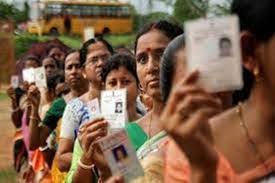
Nagpur’s civic map has been redrawn once again, with the 2025 Nagpur Municipal Corporation (NMC) reservation draw overturning long-standing caste and gender alignments. While 76 of 151 total seats remain reserved for women, the latest reshuffle has dealt a major blow to Scheduled Caste (SC) and Scheduled Tribe (ST) women leaders who had emerged as powerful local voices since 2017. In the last civic election, 15 seats were reserved for SC (women), giving dalit women a stronghold across north and east Nagpur. But in the new 2025 chart, half of those wards have been rotated to SC (open) or General (women), forcing several sitting corporators out of their constituencies. Among the worst hit are Sneha Nikose (Prabhag 9A, Congress), whose ward is now open, and Shakuntala Parve (Prabhag 20A, BJP), who also loses her SC (women) seat. Veteran corporators like Kanta Rarokar (23A, BJP), Usha Palat (31A), Minakshi Telgote (36A), and Ujwala Bankar (38A) face similar displacements, as their wards shift out of the women’s quota. The change has fractured traditional dalit clusters in Prabhags 5, 7, and 20, once known as SC-ST belts, now replaced by OBC and General category seats. For the first time in two terms, no single SC (women) cluster remains intact in the city’s northern zone — a major setback for grassroots dalit women leadership. In contrast, ST (women) seats remain relatively stable, retaining six of the total 12 ST positions. Congress corporator Asha Uikey (8A) and Jyoti Bhisikar (21A) are expected to retain influence, while the conversion of Prabhag 34B to ST (women) has opened new opportunities for emerging tribal leaders from east Nagpur. Overall, SC representation remains at 30 seats and ST at 12, but the internal balance has shifted sharply. Political observers see this as the end of an era where dalit women leaders enjoyed secure, cluster-based representation. The 2025 elections, they say, will test whether the social and political capital these women built through years of grassroots work can endure beyond the protective boundaries of reservation. Written by TLN Team Courtesy : The Live Nagpur Note: This news is originally published on https:/thelivenagpur.com/bha and is used purely for non-profit/non-commercial purposes, especially human rights
Dhanapur: A broken electricity pole in a Dalit settlement has been lying broken for two years; villagers are worried; the department has given assurances.
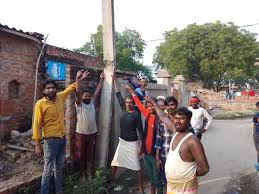
An electricity pole has been lying broken for the past two years in the Ahikoura Dalit settlement in the Dhanapur area of Chandauli district. The pole could collapse at any time, raising the possibility of a major accident. Villagers are angry with the electricity department. The broken pole is located in a street in the settlement, frequented by young children, women, and the elderly. Villagers say this road is dangerous 24 hours a day. A serious accident could occur at any time if the pole collapses, for which the electricity department will be held responsible. Villagers stated that they have contacted electricity department officials and employees several times to resolve this issue. Villager Sushil reported that each time they were only given assurances, but even after two years, no solution has been found to the broken pole. While the BJP government makes lofty claims of development, no leader or official has taken any initiative to replace the broken electricity pole in the Dalit settlement for two years. The villagers even informed a local BJP leader about the issue, but he ignored it, leaving them disappointed. Villagers Sushil Kumar, Ravi Kumar, Chandu Bauddh, Dhananjay, Raju, Writer, Suraj, Shankar, Dukhau, Ramharkh BDC, Shivpujan, Rambhavan Ram, Santosh, Chhotelal, Deepak Ram, Basanti, and Nirmala, among others, have drawn the attention of the District Magistrate, Chandauli, demanding an immediate solution. SDO of the Electricity Department, Sudhir Kumar, stated that the problem will be resolved soon and the pole replaced. Mukesh Kumar Maurya Courtesy: Hindi News
No road to Dalit settlement in Koraon: Villagers of Babhanpatti have to take a 2-kilometer detour to reach the main road
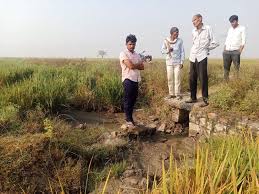
In Babhanpatti village in the Koraon area of Prayagraj (Allahabad), residents of the Dalit settlement have to take an additional 2-kilometer detour to reach the main road. This problem persists due to the lack of a culvert, preventing the unpaved road from connecting to the main black road. According to villagers, a dirt road was constructed in 2010. This road is primarily used by residents of the Harijan settlement. Due to the lack of a culvert, they have to travel a longer route to reach the Ghade Ghadwa settlement. If a culvert is constructed on this road, the two roads will be connected. This will reduce the distance to the main road to approximately 800 meters, saving villagers time and labor. Several villagers, including Raghav Prasad Harijan, Sheshmani Dubey, Vikas Sunil Adivasi, and Chandrama Harijan, have drawn the attention of the government and concerned authorities to this problem. Shamim Ghani Shaikh Courtesy: Hindi News
Police invoke SC/ST Act in Dalit youth’s murder; main suspect shot, arrested in TN’s Tiruchy

Palakkarai police shot the prime suspect R Sathishkumar in the knee and arrested him at Melur in Srirangam after he allegedly pushed down two police personnel and tried to escape. TIRUCHY: A day after 26-year-old youth from a SC community, Thamaraiselvan, was hacked to death by a gang inside the police residential quarters in Marsingpet, police invoked SC/ST (Prevention of Atrocities) Act against the suspects, following protests from his family members. Subsequently, Tiruchy West tahsildar S Prakash handed over cheque for Rs 6 lakh to the victim’s mother, B Parvathi, as compensation under the Act. The family then received Thamaraiselvan body from the hospital after autopsy and conducted the funeral. On Monday night, Palakkarai police shot the prime suspect R Sathishkumar in the knee and arrested him at Melur in Srirangam after he allegedly pushed down two police personnel and tried to escape. Sathishkumar and two injured policemen Mathavaraj (32) and George William (37) have been admitted in the Srirangam Government Hospital. Acting on information shared by Sathishkumar, a police team tracked his accomplices who were hiding near the Yatri Nivas in Srirangam. Upon seeing police, the group tried to flee and allegedly fell into a pit. Nandhakumar suffered fracture in his arm, while Prabhakaran and Ganesan sustained leg fractures. All three were taken to MGMGH. On Tuesday all of them were arrested under the SC/ST Act. One more suspect Ilamaran was detained by locals inside the police quarters on Monday and handed over to police. Courtesy : TNIE Note: This news is originally published on https:/thenewindianexpress.com/bha and is used purely for non-profit/non-commercial purposes, especially human rights
Bihar exit polls: Looking back at past predictions across states; how close were they to actual results?
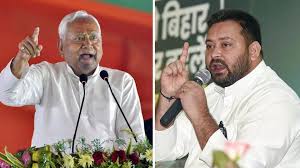
NEW DELHI: With the final phase of the Bihar assembly elections wrapping up on Tuesday evening, all eyes now turn to the exit polls — the political prelude to the much-anticipated counting day. The high-stakes battle, primarily between the ruling NDA alliance and the opposition Mahagathbandhan, also marks the debut of Prashant Kishor’s Jan Suraaj, which has campaigned vigorously on promises of change. As Bihar waits for the first projections to roll in, here’s a look at how exit polls fared in five major elections held in the recent past — Maharashtra, Delhi, Haryana, Jharkhand, and the Lok Sabha — and whether the predictions matched the final results. Maharashtra: Predictions underplayed a landslide Exit polls: Pollsters had predicted an edge for the BJP-led Mahayuti alliance (BJP, Ajit Pawar’s NCP, and Eknath Shinde’s Shiv Sena), projecting between 150 and 170 seats in the 288-member assembly. The opposition Maha Vikas Aghadi (MVA) was expected to secure 110 to 130 seats, while smaller parties were forecast to win 8 to 10. Results: The Mahayuti performed far beyond expectations, sweeping 235 of the 288 seats, handing a decisive victory to the BJP-led alliance. The scale of the win exceeded most projections, showing a clear miss for the exit polls. Delhi: Exit polls broadly accurate, with minor deviations Exit polls: Surveys predicted a strong lead for the BJP, while some overestimated AAP’s performance. Results: The final tally stood at BJP 48, AAP 22, and Congress 0. Pollster P-Marq proved most accurate, predicting AAP at 26 and BJP at 44, a deviation of just four seats per party. Poll Diary also closely matched the outcome, forecasting AAP’s 22 seats precisely and coming within two seats for BJP. Haryana: Exit polls misread the tide completely Exit polls: Predictions gave Congress a clear upper hand with 44 to 64 seats, while the BJP was expected to manage 15 to 32 seats. Results: The BJP stunned pollsters and opponents alike, winning 48 seats, an all-time best for the party in Haryana. The Congress managed 37, nine short of the majority mark. The outcome sharply contrasted with exit poll estimates, making Haryana one of the biggest misses for psephologists in recent elections. Jharkhand: Exit polls drowned in a political downpour Exit polls: Most surveys predicted a neck-and-neck contest between the NDA and the INDIA bloc, giving around 38 seats to the JMM-led coalition and 40 to the BJP-led alliance. Results: When the results were declared on November 23, the INDIA bloc led by Hemant Soren’s JMM swept 50 of 81 seats, a resounding mandate. The exit polls, almost unanimously, failed to anticipate the scale of the INDIA bloc’s win. Lok Sabha 2024: ‘400 paar’ predictions fall flat Exit polls: Predictions for the 2024 general elections had painted a landslide for the BJP-led NDA, with some pollsters going as far as forecasting “400-paar”. Results: The NDA won 293 seats, well below the forecast, while the BJP managed 240 seats, 63 fewer than in 2019 — losing its solo majority for the first time since 2014. The INDIA bloc, led by Congress, surprised observers with 235 seats, underlining the extent of the exit poll miscalculations. What to expect in Bihar As Bihar’s 2025 verdict inches closer, the spotlight is now on the exit polls — whether they will capture the pulse of the voter or once again misfire, as in several recent elections. With Nitish Kumar seeking to defend his legacy and Tejashwi Yadav attempting to unseat him, the political stage is set for another fascinating test. Courtesy : TOI Note: This news is originally published on https:/timesofindia.com/bha and is used purely for non-profit/non-commercial purposes, especially human rights
“Unhappy with the Bihar ticket distribution, seniors are not respected in this Congress,” Shakeel Ahmed questions Rahul Gandhi

Shakeel Ahmad Resigns: Following Shakeel Ahmed’s resignation from the Bihar Congress, a new revelation has now emerged. This revelation was made by Shakeel Ahmed himself. He has raised questions about ticket distribution and the new Congress of Rahul Gandhi’s era. Patna: Senior Congress leader Dr. Shakeel Ahmed has resigned from the party’s primary membership. He stated, “I am saddened. I was also unhappy with the ticket distribution in the Bihar elections.” Shakeel Ahmed resigned from the Congress in a lengthy letter. Although he cited personal reasons in the letter, he later revealed the truth in a conversation. Shakeel Ahmed was unhappy with the ticket distribution Senior leader Dr. Shakeel Ahmed said, “The reason is that I am angry, and what happened in the elections, especially the ticket distribution, was disappointing.” Although I announced three years ago that I wouldn’t contest elections. People stay in the party for family, but none of my sons wants to join the party now. People also stay in the party for respect and recognition, and if that’s not provided, why would anyone stay? Seniors are no longer respected in the Congress – Shakeel Ahmed Taking a dig at the party, he said, “Only those created by Rahul Gandhi are left in the party today. Why should we stay where seniors are not respected? We are resigning from the party, but we still have full faith in it. It’s not so easy to say that Rahul Gandhi’s leadership is failing. If senior leaders, even those who have said they don’t want to become MPs or MLAs, nor do they want their children to become MLAs, are still in the party, it’s for respect and recognition.” The decision was made 15 days ago. He said, “I deliberately chose today because I had made the decision 15 days ago, but I didn’t want to send the wrong message by resigning in the middle of the elections. I didn’t want the party to lose even five votes because of me, so I didn’t resign earlier. The elections ended at 6 p.m., and I sent my resignation to the Congress President around 6:05-6:10 p.m.” Exit polls aren’t always accurate – Shakeel On the IANS-Matterize exit poll for the Bihar Assembly elections, Dr. Shakeel Ahmed said, “I haven’t seen any exit polls yet, but exit polls and opinion polls aren’t always accurate. Even in 2015, all opinion polls and exit polls failed. We don’t believe they are always accurate.” Edited by: Rishikesh Narayan Singh About the Author Rishikesh Narayan Singh is in-charge of Bihar-Jharkhand for Navbharat Times Digital. His 20-year journey in journalism spanned from Janmat TV, IBN7, ETV Bihar-Jharkhand, News18 Bihar-Jharkhand to Times Internet. After starting in the national capital, Delhi, he now works in Bihar. Courtesy: Hindi News
Dalit woman raped for eight years under false pretenses of marriage: Asif accused of forced religious conversion, feeding her beef, and forcing her to undergo an abortion

A Dalit woman in Akbarpur has accused a young man named Asif of raping her for eight years under false pretenses of marriage. The woman alleges that Asif forced her religious conversion, fed her beef, and forced her to wear a burqa. She has also alleged forced abortion and attempted murder. Police have registered a case of rape against Asif and attempted rape against his father and brother and have begun an investigation. In her complaint to the police, the woman stated that Asif, a resident of Miranpur in Akbarpur, has relatives in her village. They met about eight years ago and began communicating. During this time, Asif, under false pretenses of marriage, began raping her. According to the woman, on September 6, 2023, Asif took her to his home and raped her. When she resisted, he stabbed her in the hand, injuring her. After keeping her at his home for a few days, Asif took her to Ludhiana. When the woman became pregnant, Asif abandoned her and returned home. The woman somehow reached Asif’s home, where Asif, his father Jalaluddin, and brother Arif forcibly administered medication and caused her to have an abortion. After recovering, she was taken to a madrasa, where she was converted to Islam. She was then fed beef and forced to wear a burqa. When she protested, she was also subjected to casteist abuse. The woman stated that on October 30, 2025, Asif drove her out of his home and, despite repeated persuasion, refused to keep her with him. On Monday, the woman reported the matter to the police. Police Inspector Srinivas Pandey stated that based on the complaint, a case has been registered against Asif for rape under the pretext of marriage, and against her father and brother for attempted rape. He stated that both applications are being investigated, and one of the accused is being interrogated. Courtesy: Hindi News
Former IPS Dr. B.P. Ashok, who resigned in 2018 over changes to the SC/ST Act, said, “Like demonetization, a ‘caste ban’ law should be enacted.”
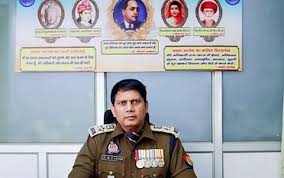
Dr. Ashok shared several experiences of caste discrimination during his police career. He claimed that despite his outstanding work, he was denied service medals, while officers with lesser qualifications received medals based on their caste and recommendations. Dr. Ashok offered a unique suggestion to empower the weaker sections of society, saying that at least one member of every family should study law. He said, “Knowledge of law gives a person respect and reduces the fear of injustice. No one asks a lawyer’s caste; it’s their status.” New Delhi – Dr. B.P. Ashok, a former senior officer of the Uttar Pradesh Police Service, social reformer, and founder of the ‘Caste Eradication Campaign,’ has said that true equality in the country can only be achieved when caste identification is completely eliminated. Describing the caste system as the biggest curse on society, he stressed the need for a “caste ban” law. In a candid conversation on the “Power Talk with Sanjeev” podcast, Dr. Ashok discussed his resignation to the President in protest of the Supreme Court’s decision on the SC/ST Act in 2018, the injustices he faced during his service due to casteism, and the issues of caste discrimination prevalent in society. Dr. Ashok recalled the 2018 incident when the Supreme Court, in a decision, weakened the provision for immediate arrest under the SC/ST Act and made investigation mandatory. Dr. Ashok was in the Training Department at the time. He explained, “This provision was made so that dominant classes could not oppress the weaker classes and force them into compromises. When this provision was abolished, there was anger among the Dalit and tribal communities across the country.” He further said, “Peaceful protests were planned across the country on April 2nd, but some people resorted to violence. Violence broke out in districts like Meerut, Agra, and Aligarh, resulting in the death of 13 young people in police action. Hurt by this incident and demanding strengthening of the law, I submitted my resignation to the President.” However, despite the intervention of then-Chief Minister Yogi Adityanath and assurances that the law would be reinstated within a month, his resignation was not accepted. Dr. Ashok said that Parliament reinstated the law on August 9, 2018. Encountering Casteism During Service Dr. Ashok shared several experiences of caste discrimination during his police career. He claimed that despite his outstanding work, he was not awarded service medals, while less qualified officers received medals based on their caste and recommendations. He said, “When it came to getting shot, I was at the forefront, but when it came to receiving medals, I was not.” Regarding the recent suicide of IPS officer Puran Kumar, Dr. Ashok said the incident was shameful for both the police department and society. He said a strong individual like an IPS officer would only take such a step when their morale is repeatedly undermined. He demanded a thorough investigation into the matter. Citing the example of former IPS officer Prasad, he said Prasad returned with degrees after being suspended for 11-12 years. “Have willpower, don’t commit suicide.” There should be a caste-banning law, just like demonetization. Dr. Ashok stressed that a strict law is needed to end discrimination and atrocities based on caste. He said, “We should enact a ‘caste-banning’ law, just like demonetization. All traces of caste should be erased from people’s pockets, nameplates, homes, neighborhoods, and shops.” He praised the order of Justice Vinod Diwakar of the Allahabad High Court, which directed a ban on writing caste-based names on vehicles and shops. Dr. Ashok believes that casteism cannot be eradicated until interview-free examinations and a caste-banning law are enacted. He said, “Increase inter-caste marriages and conduct interview-free recruitment. If the Mandal Commission had been implemented, democracy would have been strengthened. If OBCs had received a share, bullying would have stopped.” Sharply criticizing the caste system, he said, “Even a 100-year-old Kshatriya is inferior to a Brahmin. The situation of women is even worse.” “Why should a Brahmin in Kashmir give a share to the SCs of Kerala?” He called reservations “share.” “If you don’t like reservations, then practice inter-caste marriages. The next generation will benefit.” Provide top-to-bottom reservations in the private sector, and a 5-10% tax exemption. “Conduct a caste census, and balance will be created.” Family Background: A Legacy of Education and Struggle Dr. Ashok was born in Siyana village (Laung Sarai) in Bulandshahr. His father, Dr. Devi Singh Ashok, is a retired IG who traveled from village to village, sending SC/ST children to school. He said, “My father removed the fear of chanting ‘Jai Bhim’. We celebrated Dr. Ambedkar’s birth anniversary and wrote books. There was a tradition of education at home.” Dr. Ashok himself earned a PhD and D.Litt. in Buddhist philosophy. His daughter is in the IRS, his son-in-law is also in the civil service, and his son is pursuing an IIT. He said, “Ambedkarism is our inspiration. Buddha, Phule, Savitribai, Ambedkar—these are our icons.” Be educated, fight, stay organized.” His village also boasts a 53-foot-high “Bahujan Kranti Stambh,” dedicated to the martyrs of April 2, 2018. Dr. Ashok advised the youth to abandon superstition and fatalism for success and adopt a scientific mindset. “We waste 60 hours a year on superstition. China invests in R&D, we invest in gurus. 111 people commit suicide due to superstition. Buddha said to be guided by logic. Invest 25% of your surplus in savings; don’t borrow during festivals.” He emphasized time management, STEM education (science, technology, engineering, math), English, internet usage, and financial literacy. He said that without these skills, progress is difficult in today’s times. Geetha Sunil Pillai Courtesy: Hindi News
Bhadohi: Dalit women who went to relieve themselves were molested; a case was filed against two youths under the SC/ST Act on a court order.

Police did not register an FIR; the victim appealed to the court, and now a case has been filed against two youths under the SC/ST Act. Bhadohi: A shameful incident of ambushing and molesting Dalit women who were going to relieve themselves near a pond in Bhadohi district, Uttar Pradesh, has come to light. After accusing the local police of inaction, the victim’s family moved the court. Now, on the orders of a local court, a case has been filed against two youths under serious sections. Police stated on Monday that both accused are currently absconding and efforts are being made to arrest them. What is the whole matter? According to the police, this incident occurred in the Gyanpur Kotwali area. 60-year-old Raj Bahadur Gautam filed a petition in the court of Special Judge (SC/ST Act) Amit Verma on April 23rd of this year. Gautam stated in his petition that there is a pond in front of his house, where his family, as well as women and girls from several neighboring houses, go to defecate at night. The heinous acts were committed under the cover of darkness. The petition made the serious allegation that two young men, Ramesh Bind and Shyamdhar Bind, would hide near the pond under the cover of darkness. When women arrived, they would molest and engage in obscene acts. The victim’s wife was also abused. Petitioner Raj Bahadur Gautam alleged that on the evening of February 24th, when his wife went to the pond to defecate, the two accused subjected her to the same heinous acts. When his wife strongly objected, the accused not only abused her but also used casteist slurs and drove her away. Upon returning home, the woman narrated the entire ordeal to her husband. Husband beaten after complaining, police accused of inaction Gyanpur Kotwali SHO Manoj Kumar stated that after listening to his wife, Raj Bahadur Gautam went to confront the accused. It is alleged that the two youths also abused Gautam and beat him so severely that he had to be taken to the hospital for treatment. The victim Gautam also alleges that when he complained to the police about the incident, his FIR was not registered. Failing to receive justice, he was forced to approach the court. Case filed on court order After hearing arguments in the case, Special Judge (SC/ST Act) Amit Verma on November 8th clearly ordered the police to file a case. The police stated that, in compliance with this court order, a case was registered against both accused—Ramesh Bind and Shyamdhar Bind—at the Gyanpur Kotwali on Sunday under relevant sections of the Indian Penal Code (IPC) and the Scheduled Castes and Scheduled Tribes (Prevention of Atrocities) Act. Police are now searching for the absconding accused. Rajan Chaudhary Courtesy: Hindi News
How India’s Higher Judiciary Is Steadily Advancing Transgender Rights Amid Global Anti-Trans Backlash
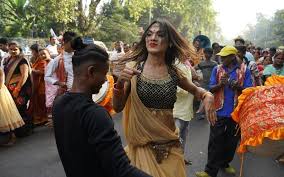
Through several landmark judgments, India’s Supreme Court has redefined inclusion for transgender people Today, supposed good-faith debates around gender theory are too often recast as a moral panic around gender, specifically, around what many on the right wing pejoratively call “gender ideology.” To be clear, from the very outset, the non-duality of gender is not an ideology; it is both theory and fact. For instance, one of US President Donald Trump’s first actions after taking office for his second presidential term was to eliminate the word “transgender” from the official lexicon of the United States federal government. This came amid his administration’s broader efforts to scrap federal DEI (Diversity, Equity, and Inclusion) policies and dismantle USAID projects around the world, which have had disastrous repercussions globally. That same year, the United Kingdom Supreme Court handed down a disappointing ruling that held that under the UK’s Equality Act (2010) — the primary anti-discrimination legislation in the UK — transgender women could be excluded from single-sex spaces and services. Across Europe and Central Asia, too, transgender people are witnessing a sharp erosion of their rights and protections under the guise of “protecting traditional values.” Thus, at a time when global backlash against transgender rights is surging, the Supreme Court of India is charting a totally different path, moving towards the “full realisation” of equality for transgender people under the law. A breath of fresh air The Supreme Court of India’s recent jurisprudence on transgender rights is a breath of fresh air in an otherwise polluted, anti-transgender global climate. More than 10 years ago, the Supreme Court of India, in NALSA v. Union of India (commonly known as the NALSA judgment), recognised the “third gender” as not only a legally distinct gender category under the law, but also endowed them with the same fundamental rights as everyone else. Then in 2019, the Indian government passed the much-contested Transgender Persons (Protection of Rights) Act, 2019 and the accompanying Rules, 2020, to codify the principles laid down in the NALSA judgment. Over the years, however, the on-the-ground impact of these progressive developments has remained limited, and transgender people continue to face multiple barriers in exercising their rights — including, and especially, in obtaining their official gender identification documents. Yet, amid this administrative ambiguity at home and rising anti-transgender sentiment globally, India’s constitutional courts have continued to (somewhat surprisingly) stand by the transgender community through progressive and expansive interpretations of the law. Recent progressive developments Most recently, on October 20, in Jane Kaushik v. Union of India, the Supreme Court of India handed down an important judgment that directed the formation of a high-level advisory committee tasked with drafting a practical policy framework to strengthen transgender rights and ensure the effective implementation of the beneficial provisions of the Transgender Persons (Protection of Rights) Act, 2019. Earlier this year, in June 2025, the Andhra Pradesh High Court issued a landmark judgment clarifying that transgender women were to be legally recognised as women under Indian law. This ruling further affirmed that transgender women in heterosexual marriages were entitled to the same legal protections as cisgender women under Section 498A of the Indian Penal Code (which criminalises cruelty, harassment, and domestic abuse by a husband or his relatives). It is worth noting that, unlike other jurisdictions that do not explicitly recognise the third gender as a distinct gender category, India’s constitutional position also means that transgender women are legally recognised in their own right, thereby ensuring that the advancement of their interests cannot be seen as an encroachment on or undermining of the rights of their female cisgender counterparts. A case in point is Shanavi Ponnusamy v. Ministry of Civil Aviation (2022), where a transgender woman seeking employment as a cabin crew member at Air India was forced to apply under the “female” category because no separate option existed for transgender applicants. Despite clearing all medical tests, she was ultimately denied employment. When she challenged the decision before the Supreme Court, the Court ruled in her favour. This was therefore not a case of a transgender woman attempting to unfairly “encroach upon women’s spaces,” as some right-wing activists might suggest, but rather an instance where the airline simply failed to provide a legally required, designated category or space for a transgender individual. Several other cases also echo this progressive judicial trend, including a widely reported 2023 same-sex marriage case. While the Supreme Court declined to grant legal recognition to same-sex marriages, it nevertheless made an exception for transgender people in heterosexual marriages and extended legal recognition to them. This marked a significant expansion from an earlier, narrower interpretation of the law, which recognised only a limited subset of such relationships under Hindu personal law alone. While these cases collectively signal the higher judiciary’s proactive approach toward expanding the scope of transgender rights in India, there is still room for improvement. For instance, transgender people in non-heterosexual relationships cannot yet have their marriages legally recognised. Similarly, various petitions challenging certain provisions of the Transgender Persons (Protection of Rights) Act, 2019, were filed before the Supreme Court years ago but are still awaiting adjudication. That being said, these judicial developments represent a promising trajectory, particularly when viewed in the troubling and volatile global context in which they are embedded. Therefore, there is reason to remain hopeful about India’s higher judiciary and its inclination to expand, rather than restrict, the scope of transgender rights under the law. This is a trend that activists can only hope continues in the years, if not decades, to come. By Kanav Narayan Sahgal Courtesy : The Good Men Project Note: This news is originally published on https:/thegoodmenoroject.com/bha and is used purely for non-profit/non-commercial purposes, especially human rights