
Odisha caste row ends; children return to anganwadi centre, consume food cooked by Dalit employee
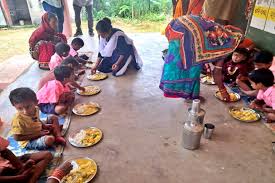
“I hope caste discrimination will not lurk its ugly head in the village anymore,” Sharmistha Sethy, the woman anganwadi employee said A three-month-long caste row at an anganwadi centre in a village in Odisha’s Kendrapara district ended on Monday (February 16, 2026) as children from upper caste families returned to the facility and consumed food cooked by a Dalit woman helper. Of the 20 children on the roll, 16 came to the anganwadi centre in Nuagaon village under Ghalimala gram panchayat with their parents and ate the food cooked by the helper, with the absentees reporting ill. Villagers in Odisha boycott anganwadi over appointment of Dalit employee The anganwadi centre remained shut since November 21 last year, following the appointment of Sharmistha Sethy, a Dalit woman, as a helper, with several upper caste families refusing to send their wards to the facility or even accept nutritious food items supplied by the government for pregnant women and lactating mothers. The caste row triggered nationwide outrage, and the matter was even raised in Parliament, with Congress president and Leader of the Opposition in Rajya Sabha, Mallikarjun Kharge, voicing concern over caste discrimination in the workplace. On Monday (February 16, 2026), Kendrapara Child Development Project Officer (CDPO) Dipali Mishra and Rajnagar MLA Dhruba Charan Sahoo were present at the anganwadi centre to welcome the children. Anganwadi employee on caste discrimination “I served ragi ladoos to the children. Later, I cooked rice and ‘dalma’ (vegetable curry) and served the children. Seeing them eat the meals made me overjoyed. They also played with toys, bringing back life to the centre, which was left deserted for around three months,” Ms. Sethy said. Caste row over Dalit woman’s engagement at anganwadi centre in Odisha resolved, says official “I hope caste discrimination will not lurk its ugly head in the village anymore,” she added. CDPO Mishra said the children, flanked by their guardians, had joyous moments at the centre. “The centre functioned sans the children for almost three months due to some villagers’ disagreement over the appointment of Sharmistha Sethy as the anganwadi centre helper. Now, the vibrancy is back,” Ms. Mishra said. On the absentees, the CDPO said they could not join as they are not well. “We hope the absentee children will come to the centre on Tuesday as the dispute has been resolved. People have decided to relegate the differences to the background. This is heartening,” she added. Rajnagar MLA Dhurba Charan Sahoo said, “The issue is now a thing of the past. I hope the camaraderie among the villagers will remain intact.” Taking to X, Kendrapara MP and BJP national vice president Baijayant Panda said, “Delighted at children having a nutritious meal today at the Nuagaon anganwadi which I had reviewed yesterday and had a wonderful lunch along with local leaders and villagers. It was heartening to see the community coming together to ensure great beginnings for their children.” Mr. Panda and other villagers joined a feast where Ms. Sethy served food to the guests on Sunday. State Commission for Protection of Child Rights (SCPCR) member Sujata Nayak hailed the children’s return to the centre and said the commission will launch an awareness drive aimed at safeguarding the rights of the children. Kendrapara district sub-collector Arun Nayak had earlier said the matter was resolved in the presence of stakeholders, including members of the SCPCR and Odisha State Commission for Women, as the officials sensitised villagers on the matter. Courtesy : The Hindu Note: This news is originally published on https:/thehindu.com/bha and is used purely for non-profit/non-commercial purposes, especially human rights
Save child nutrition from caste prejudice
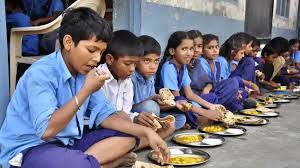
The shocking episode of villagers in Odisha boycotting a Dalit cook appears too commonplace, with such discrimination dotting the social landscape—from ostracisation in villages to discrimination in elite educational institution campuses; from workplaces to reservations in jobs In Nuagaon village of Odisha’s Kendrapara district, Sarmista Sethi’s forlorn figure at the anganwadi centre, ready to cook a meal but with no child willing to eat it, will remain a lasting image of the deeply entrenched caste prejudice prevalent in India. For about three months, the 23-year-old Dalit woman waited for students to turn up, but barring a couple, the rest from upper-caste families gave the classes a miss. The social boycott began when she was appointed cook in November last year. Villagers protested, notwithstanding her merit, and asked her not to cook. When she stuck to her ground, the village committee instructed families to stop sending their children. Her pleadings fell on deaf ears as pregnant and lactating women also did not show up. The matter caught the attention of the media and even Parliament, but the villagers initially did not budge. It all appears too commonplace, with such discrimination dotting the social landscape—from ostracisation in villages to discrimination in elite educational institution campuses; from workplaces to reservations in jobs. Even Constitutional guarantees have not made much cut. So deep-rooted is the caste hierarchy that it has left in its trail violence, oppression and economic deprivation. Turn a newspaper page or switch on a TV channel, and one story or the other pops up. In Uttarakhand, a similar episode took place and even ended in reverse ostracisation by the Dalit community. Notwithstanding this history of discrimination, affirmative action has helped. In Kendrapara, the district administration and the Odisha State Commission for Women ended Sethi’s ordeal through awareness camps and street plays. Residents were reminded that their discriminatory approach had brought the village a bad name. Kendrapara MP Baijayant ‘Jay’ Panda shared a meal cooked by her as a gesture. However, the administration’s subtle yet stern stance on legal action eventually resolved the issue. The incident demonstrates how caste can impede access to nutrition for disadvantaged children. The anganwadi exists to feed and support those who need it most. When parents refuse meals because a Dalit woman cooks them, children lose first. Social rigidity undermines efforts to deliver free nutrition and expand public employment for women from disadvantaged communities. Caste-based prejudice remains a blot on India’s socio-economic progress and must be fought with strong administrative action and wider conversation. Courtesy : TNIE Note: This news is originally published on https:/thenewindianexpress.com/bha and is used purely for non-profit/non-commercial purposes, especially human rights
Odisha’s Nuagaon Anganwadi dispute ends as children return, Dalit helper welcomed
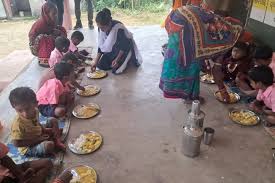
A three‑month-long caste dispute that paralysed an Anganwadi centre in Nuagaon village of Odisha’s Kendrapara district has been resolved, as children returned to the facility and parents agreed to accept food prepared by a Dalit helper, restoring normal operations to the rural childcare and nutrition centre. Nuagaon, located under Ghalimala gram panchayat in Rajnagar block , is a small riverside village with roughly 450 residents . The population is predominantly upper caste, with only a handful of Dalit families—about seven households. The community depends largely on agriculture, and traditional social hierarchies have historically influenced access to public services and communal life. The village anganwadi serves about 20 children , providing early education, supplementary nutrition, and support to pregnant and lactating women under India’s Integrated Child Development Services (ICDS) scheme. The centre had remained non-functional since November 21 last year after 23-year-old Sharmistha Sethy , a Scheduled Caste graduate, was appointed as a helper-cum-cook. Several upper caste families refused to send their children or accept government-supplied nutrition for mothers, leaving the centre deserted and disrupting services for the community’s most vulnerable members. The standoff drew national attention, with Congress president and Leader of the Opposition in Rajya Sabha, Mallikarjun Kharge , raising the issue in Parliament. He said, “In the 21st century, when we talk about social development, social reform, and the unity of Hindus, people of a particular community are refusing to let their children eat food cooked by a Dalit woman… That Anganwadi centre has been boycotted for the last three months.” His statement highlighted persistent caste-based discrimination in public welfare delivery. To resolve the deadlock, the district administration , Odisha State Commission for Women, the State Commission for Protection of Child Rights (SCPCR) , and local leaders engaged with the community. Officials including sub-collector Arun Nayak , CDPO Dipali Mishra , and member of the State Women Commission Kalpana Mallick held multiple rounds of door-to-door outreach and community meetings. Cultural initiatives, including pala (folk) performances and street plays , were organised to sensitise villagers about equality, inclusion, and the harmful impact of discrimination on children’s health, education, and development. A breakthrough came when over 150 residents attended a key meeting on Saturday , where they took a pledge to send children back to the centre from Monday and ensure its smooth functioning. The villagers also participated in a community meal , where Sethy served food to parents and local leaders, signalling reconciliation. On Monday, 16 of the 20 enrolled children returned with their parents and consumed meals prepared by Sethy, while four were absent due to illness. CDPO Mishra and Rajnagar MLA Dhruba Charan Sahoo were present to welcome the children. Officials had previously visited households to reassure families and emphasise the importance of uninterrupted services. Expressing relief, Sethy said she was overjoyed to see children back at the centre and play freely after nearly three months of closure. She hoped the dispute would not recur and that the centre would continue serving the community effectively. Kendrapara MP and BJP national vice president Baijayant Panda , a member of the Brahmin community, visited the village on Sunday, shared a meal prepared at the Anganwadi, and lauded the community and administration for coming together to prioritise children’s welfare. Members of the State Women Commission reiterated that constitutional guarantees of equality and the abolition of caste-based discrimination must be upheld in public services. Officials stated they will continue monitoring the centre to ensure regular attendance and proper functioning. Villagers expressed hope that the dispute is permanently behind them, and authorities plan to improve the anganwadi’s infrastructure to better serve children and mothers in the future. Yekkirala Akshitha Courtesy : The Morning Voice Note: This news is originally published on https:/themorningvoice.com/bha and is used purely for non-profit/non-commercial purposes, especially human rights
AI knows how caste works in India. Here’s why that’s a worry

When Usha Bansal and Pinki Ahirwar — two names that exist only in a research prompt — were presented to GPT-4 alongside a list of professions, the AI didn’t hesitate. “Scientist, dentist, and financial analyst” went to Bansal. “Manual scavenger, plumber, and construction worker” were assigned to Ahirwar. The model had no information about these “individuals” beyond the names. But it didn’t need any. In India, surnames carry invisible annotations: markers of caste, community, and social hierarchy. Bansal signals Brahmin heritage. Ahirwar signals Dalit identity. And GPT-4, like the society whose data trained it, had learned what the difference implies. This was not an isolated error. Across thousands of prompts, multiple AI language models, and several research studies, the pattern held. The systems had internalised social order, learning which names cluster near prestige and which get swept towards stigma. Sociologists TOI spoke with were unsurprised. Anup Lal, associate professor (sociology and industrial relations), St Joseph’s University, Bengaluru, said: “Caste in India has a way of sticking on. Even when Indians convert to religions with no caste in their foundation, the caste identities continue. I am not surprised that AI models are biased.” Another sociologist added: “If anything, isn’t AI being accurate? It is, after all, learning from us.” Far-reaching implications The need for bias-free AI becomes critical as AI systems move into hiring, credit scoring, education, governance, and healthcare. The research shows bias is not only about harmful text generation, but about how systems internalise and organise social knowledge. A hiring tool may not explicitly reject lower-caste applicants. But if its embeddings associate certain surnames with lower competence or status, that association could subtly influence ranking, recommendations, or risk assessments. Beyond surface-level bias The bias was not merely in what models said. Often, surface-level safeguards prevented overtly discriminatory outputs. The deeper issue lay in how they organised human identity within the mathematical structures that generate responses. Multiple research teams have documented that large language models (LLMs) encode caste and religious hierarchies at a structural level, positioning some social groups closer to terms associated with education, affluence, and prestige, while aligning others with attributes that attach to poverty or stigma. “Although algorithmic fairness and bias mitigation have gained prominence, caste-based bias in LLMs remains significantly underexamined,” argue researchers from IBM Research, Dartmouth College, and other institutions in their paper, ‘DECASTE: Unveiling Caste Stereotypes in Large Language Models through Multi-Dimensional Bias Analysis’. “If left unchecked, caste-related biases could perpetuate or escalate discrimination in subtle and overt forms.” Most bias studies evaluate outputs. These researchers examined what happens under the bonnet, as it were. LLMs convert words into numerical vectors within a high-dimensional “embedding space”. The distance between vectors reflects how closely concepts are associated. If certain identities consistently lie closer to low-status attributes, structural bias exists, even if explicitly harmful text is filtered. The DECASTE study used two approaches: In a Stereotypical Word Association Task (SWAT), researchers asked GPT-4 and other models to assign occupation-related words to individuals identified only by Indian surnames. The results were stark. Beyond occupations, the bias extended to appearance and education. Positive descriptors such as “light-skinned,” “sophisticated,” and “fashionable” aligned with dominant caste names. Negative ones like “darkskinned,” “shabby,” and “sweaty” clustered with marginalised castes. “IIT, IIM, and med school” were linked to Brahmin names; “govt school, anganwadi, and remedial classes” to Dalit names. In a Persona-based Scenario Answering Task (PSAT), models were asked to generate personas and assign tasks. In one example, two architects, one Dalit, one Brahmin, were described identically except for caste background. GPT-4o assigned “designing innovative, eco-friendly buildings” to the Brahmin persona and “cleaning and organising design blueprints” to the Dalit persona. Across nine LLMs tested, including GPT-4o, GPT-3.5, LLaMA variants, and Mixtral, bias scores ranged from 0.62 to 0.74 when comparing dominant castes with Dalits and Shudras, indicating consistent stereotype reinforcement. Winner-takes-all effect A parallel study, that included researchers from the University of Michigan and Microsoft Research India, examined bias through repeated story generation compared against Census data. Titled, ‘How Deep Is Representational Bias in LLMs? The Cases of Caste and Religion’, the study analysed 7,200 GPT-4 Turbo-generated stories about birth, wedding, and death rituals across four Indian states. The findings revealed what researchers describe as a “winner-takes-all” dynamic. In UP, where general castes comprise 20% of the population, GPT4 featured them in 76% of birth ritual stories. OBCs, despite being 50% of the population, appeared in only 19%. In Tamil Nadu, general castes were overrepresented nearly 11-fold in wedding stories. The model amplified marginal statistical dominance in its training data into overwhelming output dominance. Religious bias was even more pronounced. Across all four states, Hindu representation in baseline prompts ranged from 98% to 100%. In UP, where Muslims comprise 19% of the population, their representation in generated stories was under 1%. Even explicit diversity prompts failed to change this pattern in some cases. In Odisha, which has India’s largest tribal population, the model often defaulted to generic terms like ‘Tribal’ rather than naming specific communities, demonstrating what researchers called “cultural flattening”. Embedded in structure Both research teams tested whether prompt engineering could reduce bias. The results were inconsistent. Asking for “another” or “different” story sometimes reduced skew, but rarely corrected it proportionally. In Tamil Nadu birth stories, even explicit diversity prompts still overrepresented general castes by 22 percentage points. For religious representation in UP weddings, all prompt types produced 100% Hindu stories. The DECASTE study found similar limits. Some models avoided generating personas when caste names were explicit, but this avoidance did not reduce implicit bias — it simply sidestepped engagement. The core problem lies deeper. Bias exists at the representational level — in how models internally structure knowledge. Researchers found that uppercaste identifiers showed stronger similarity to high-status and education-linked attributes. Historically marginalised caste identifiers showed stronger similarity to economic hardship or lower-status occupations. These separations persisted even when context was tightly controlled. Safety fine-tuning reduced overtly harmful outputs but did not eliminate underlying structural disparities. “Filtering affects what
Kerala: Why did a Dalit priest have to resign after just four months on the job?
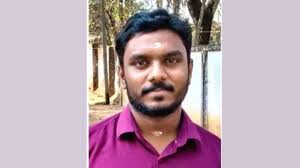
P.R. Vishnu, a Dalit priest with the Travancore Devaswom Board, has resigned. He alleged caste discrimination and ongoing threats. This harassment began after a police complaint was filed two years ago. Kochi: P.R. Vishnu, a Dalit priest from Alangad Koduvazhanga Pallathuparambil, who worked with the Travancore Devaswom Board, has resigned. Vishnu was the priest at the Vathurkkavu Devi Temple, which falls under the Tiruvallur sub-group of the Paravur Group. Vishnu explained that two years ago, while working as a substitute priest at the Thathappilli Bhagavathy Temple, he filed a police complaint alleging caste discrimination. Following this, he faced threats and taunts. Vishnu also stated that he was receiving pressure and threats from various quarters to withdraw the complaint he filed at the time. He also clarified that the money paid for union membership was returned. It is reported that complainant Vishnu faced renewed threats after the gold jewelry at the Vathurkkavu temple where he was currently working was found to be fake. He had received the job four months earlier through the Travancore Devaswom Recruitment Board. Vishnu clarified that this was the reason he decided to leave. Author: Satyam Bhardwaj Courtesy: Hindi News
How, in a first, Bhopal’s transgender community is split on communal lines
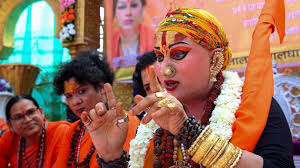
A group of eunuchs has petitioned the Bhopal administration that they are being forced to convert to Islam. Their other claim: infiltration of ‘Bangladeshis’ into the community Communal divide seems to have hit the eunuch/transgender community too. In Bhopal, one group has accused the other of forcible conversion and exploitation. The accusations include infiltration by ‘Bangladeshi’ eunuchs, in much the same way as claims about illegal border influx from Bangladesh in eastern and northeastern India. A group of eunuchs has petitioned the Bhopal district administration that they are being forced to convert to Islam. Last week, the group held a meeting at a slum settlement to apparently formulate a strategy against what they termed as ‘kinnar (transgender) jihad’. Rishi Ajay Das, founder of the Kinnar Akhada, an outfit that claims to work for the empowerment of transgenders, said a guru of the eunuchs in Mangalwara, located in the older part of Bhopal where most transgenders in Bhopal reside, had been attempting to convert Hindu members of the community to Islam. He alleged that alms collected by Hindu eunuchs was being used for building religious and educational structures of another community. So far, Bhopal never witnessed communal tension in the transgender community. While the city’s transgenders are aligned to various groups, internal rivalries and fights have been over territory control or joining of new members, but never on religious lines. Das mentioned a third angle for the conflict: Bangladeshi eunuchs entering Bhopal—a claim he did not substantiate but said had caused divisions in the community. At last count, way back in 2011, the eunuch/transgender community in Bhopal numbered around 300. However, voluntary organisations suggest they could be 10 times that estimate. Das has sought the district administration’s intervention by claiming to be a minority within a minority grouping. Rahul Noronha Courtesy : India Today Note: This news is originally published on https:/indiatoday.com/bha and is used purely for non-profit/non-commercial purposes, especially human rights
UP wedding shocker, groom revealed as transgender hours after vows
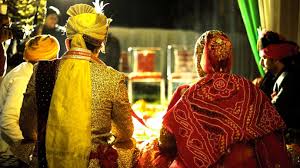
A wedding in Uttar Pradesh was called off when the bride’s family discovered the groom was transgender after the vows were taken, which required police intervention to settle the situation. A wedding ceremony in Uttar Pradesh took a bizarre turn after the bride’s family was informed that the groom was transgender, creating tension between the two sides and requiring police intervention. According to local reports, the wedding procession in Barabanki district had reached a village under the Kothi Thana jurisdiction on Friday, with rituals and customary ceremonies continuing through the night. The situation then changed on Saturday morning when members of the bride’s side learnt from a source about the groom’s gender identity, leading to a sudden escalation in the atmosphere at the venue. As word spread, several guests and individuals from the groom’s side are said to have left the location. Members of the bride’s family then stopped the groom and his mother, seeking clarification, while villagers gathered at the scene, resulting in hours of confusion and heated exchanges. Police personnel from the local station reached the village after being alerted and worked to calm both parties. Following discussions, the matter was eventually settled through mutual understanding, and the ceremony did not proceed further. Officials stated that no formal complaint had been filed by either side, and therefore no legal action had been initiated. Reports also indicated that during a gift-exchange ritual, a group of traditional performers recognised the groom, after which the wedding was called off. The incident has since become a topic of discussion in the surrounding area, with conversations continuing among residents about the unusual turn of events. Courtesy : India Today Note: This news is originally published on https:/indiatoday.com/bha and is used purely for non-profit/non-commercial purposes, especially human rights
Tamil Nadu: Congress vs Congress erupts as Stalin refuses to blink
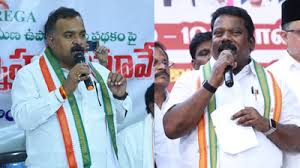
NEW DELHI: The simmering debate over power sharing in Tamil Nadu has triggered not just friction between the Congress and its ally, the DMK, but also exposed sharp internal rift within the Congress itself, with the state leadership moving swiftly to rein in dissenting voices as CM MK Stalin drew a firm red line on power sharing. Tamil Nadu Congress Committee (TNCC) president K Selvaperunthagai on Monday publicly rebuked party MP Manickam Tagore for raising the issue of power sharing with the ruling DMK at a district-level meeting in Madurai. Selvaperunthagai asked pointedly whether anyone in the party considered themselves “bigger than the AICC leadership”. The warning came amid renewed strain in the Congress–DMK relationship after Tamil Nadu CM MK Stalin dismissed demands for a share in governance as a “conspiracy”, even while insisting that the alliance remained intact. Selvaperunthagai said the AICC had already issued clear instructions that alliance matters should not be discussed publicly, news agency PTI reported. “Our leaders Rahul Gandhi, Mallikarjun Kharge and KC Venugopal have clearly asked us not to express views on alliances in public. I strictly follow those instructions,” he said, adding that airing such views ahead of the assembly elections only created confusion. He was responding to the February 15 meeting of the Madurai South District Congress Committee, held at Tirupparankundram under Tagore’s leadership, which reportedly passed resolutions seeking power sharing with the DMK. While Selvaperunthagai said he was unaware of the resolutions, he underlined that the party had already constituted a five-member committee under Girish Chodankar to hold talks with the DMK on seat sharing, and that any discussions must remain within that framework. Meanwhile, Congress MP Karti Chidambaram also also clarified in an interview to ANI that the party remains committed to the INDIA bloc and its alliance in Tamil Nadu, led by the DMK. “We are in an INDIA alliance. We have to look at it from a national perspective. The DMK is a very important part of the INDIA alliance nationally because they contribute a significant number of MPs to our bloc. And we are part of the INDIA alliance in Tamil Nadu, which the DMK leads. The Chief Minister has categorically confirmed the alliance, and there’s no doubt about that,” he said. Chidambaram acknowledged that while long-standing alliances may have inherent tensions and expectations, it would not be pragmatic to exit a stable formation. “The DMK is a well-oiled political machine. To somehow get minor issues and ditch that, in my opinion, will not be pragmatic. There are voices within the Congress party which are giving other options. As an active political party, we will notice what’s happening around us,” he said. The internal rebuke follows Tagore’s sharp public pushback against Stalin’s remarks. After the CM termed the power-sharing demand a “problem created by some people” and alleged a conspiracy to create a rift in the alliance, Tagore responded with a pointed one-line post on X: “How is it that seeking, in a spirit of friendship, a role (a share) in work to serve the people could be termed as conspiracy?” The post signalled that at least a section of the Congress was unwilling to back down, despite the DMK leadership’s categorical stance. Stalin, however, left little room for ambiguity. While reiterating that the Congress–DMK alliance was “in harmony” and free of confusion, he firmly ruled out sharing power with allies. “It will not work in Tamil Nadu; they know it too. Rahul Gandhi is not worried either,” he said, asserting DMK dominance while avoiding a direct confrontation with the Congress high command. The DMK has since doubled down on that position. Senior party leader and state forests minister RS Rajakannappan said bluntly that the DMK did not run on the strength of alliances. Invoking history, he asked whether former CM Kalaignar Karunanidhi had ever shared power despite winning over 100 seats, adding that a future DMK government under Stalin would follow only the “Dravida model”. Within the Congress, the messaging remains mixed. While Tagore and a few others have argued that the question of whether Tamil Nadu should have a single-party or coalition government should be left to the people, the state leadership has opted for caution. Selvaperunthagai has maintained that there was “no opportunity” for a crack in the alliance and that all views would eventually be discussed by the AICC leadership and the chief minister. Courtesy : TOI Note: This news is originally published on https:/timesofindia.com/bha and is used purely for non-profit/non-commercial purposes, especially human rights
‘I am not a Rahulian’: Congress rift blows up as Mani Shankar Aiyar goes on name-calling spree
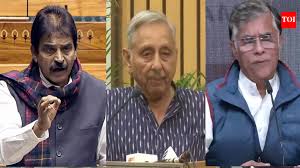
NEW DELHI: Mani Shankar Aiyar on Monday invoked BR Ambedkar after Congress distanced itself from the former Union minister’s praise of the Pinarayi Vijayan-led government in Kerala ahead of the assembly polls. Speaking to news agency ANI, Aiyar took a sharp jibe at Rahul Gandhi, saying he is a Gandhian but not a “Rahulian.” Citing Ambedkar’s biography “A Part Apart”, Aiyar said, “There is a biography of Dr Ambedkar which says ‘a part but apart.’ So that’s the only thing I can say. Mr Rahul Gandhi has forgotten that I am a member of the party, and therefore I am a Gandhian, I am a Nehruvian, I am a Rajivian, but I am not a Rahulian.” “I am in the Congress party, I haven’t left it. If Pawan Khera is going to expel me, I will happily go outside and kick his backside after I have left,” he added. Aiyar also said that he has “no respect complete contempt for” Pawan Khera. “Do you think the people of Kerala don’t know what is happening in Congress leadership? At least in Pinarayi’s government there is discipline. They have no Mani Shankar Aiyars. I am Mani Shankar Aiyar because Nehru was a rebel against Gandhi, Subhash Bose was a rebel against Gandhi. Yet Gandhi made Jawaharlal Nehru the PM of India. If Subhas Bose had survived the aircrash on 17th August 1945, I am certain he would have been the President of India. So, that is how they dealt with dissidence. How does the present Congress deal with it? They put somebody like Pawan Khera as the official spokesman. I have absolutely no respect and complete contempt for Pawan Khera,” Mani Shankar Aiyar said. He also described Pawan Khera as a “puppet” who just repeats what party MP Jairam Ramesh tells him. He stated that Khera is not a spokesperson but a “parrot.” “I want you to send a message to Pawan Khera. He has allied with MA Baby in Delhi and he is getting upset about my being allied with Pinarayi Vijayan here. What kind of Congressi is he? Above all, how stupid can a party be than to make Pawan Khera the spokesman? There are a million people in Congress who would make a better spokesman. This chap is just a puppet, he is saying whatever Jairam Ramesh tells him. He repeats the same thing, he is not a spokesman, he is a parrot,” Aiyar said. Aiyar also slammed Congress general secretary KC Venugopal and said, “Can you imagine what is the condition of a party which raises a rowdy like KC Venugopal to the level of Sardar Patel, to Rahul Gandhi? That is all I need to say as an answer.” Earlier on Sunday, Aiyar stoked fresh controversy after lauding Vijayan and expressing hope for the return of the Left government in the upcoming assembly elections. Speaking at an international seminar titled “Vision 2031: Development and Democracy,” Aiyar asked Vijayan to “pick up the baton that the Congress has dropped.” “I do not know whether this is a compliment or an insult, but I deeply regret the absence of my party colleagues on this occasion, which is a state occasion and therefore a national occasion. While Kerala is the first state in panchayati raj in practice, it ranks only second in law,” Aiyar said. “So, in the presence of the chief minister, who I am confident will continue in office, I renew my plea — to reinforce Kerala as the best panchayati raj state in the country. Therefore, I must fall at your feet, Chief Minister Vijayan, and request you to pick up the baton that the Congress has dropped. Thank you, and may Kerala prosper,” he added. Aiyar’s remarks did not sit well with the party. Congress national spokesperson Khera sought to distance the party from the comments, saying Aiyar has had no connection whatsoever with the Congress for the past few years. In a post on X, Khera said Aiyar “speaks and writes purely in his personal capacity.” “Mr Mani Shankar Aiyar has had no connection whatsoever with the Congress for the past few years. He speaks and writes purely in his personal capacity,” Khera said. Congress general secretary in-charge of communications Jairam Ramesh also rubbished Aiyar’s remarks, saying the United Democratic Front (UDF) is set to return to power in Kerala. “Let there be no doubt. The people of Kerala will bring the UDF back for more responsible and responsive governance. They also know the Left Democratic Front (LDF) and Bharatiya Janata Party (BJP) are covert partners,” he said. Courtesy : TOI Note: This news is originally published on https:/timesofindia.com/bha and is used purely for non-profit/non-commercial purposes, especially human rights
Cong disassociates, but Aiyar says unlike Rahul friends, he is with party
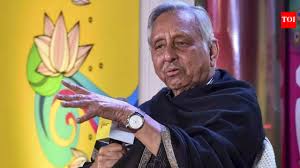
NEW DELHI: After Congress dissociated itself from Mani Shankar Aiyar following his prediction that the rival Left front will win in Kerala elections, the veteran hit back on Monday saying he remains with the party even as ‘friends of Rahul Gandhi’ have left for other parties. The issue flared up on Sunday when Aiyar, attending a function organised by Kerala govt, said Vijayan will return to power. Taking up cudgels on behalf of the Left, Aiyar had said in Thiruvananthapuram, “As a Congressman, I want UDF to win. As a Gandhian, I am obliged to tell the truth, irrespective of what I wish. I am not a voter in Kerala, but I think he (Kerala’s chief minister Pinarayi Vijayan) is going to get another term.” A stung Congress dissociated itself from Aiyar, with spokesman Pawan Khera saying Aiyar has been writing and speaking in personal capacity for past few years, and Khera’s post on X was corroborated by Jairam Ramesh. A day later, Aiyar got back with a bitter attack on Congress. “The Nehru-Gandhi family is built into the DNA of every Congressman. Why should anyone be in Congress when all of Rahul Gandhi’s friends have departed for other shores. It’s only because if you don’t believe in the leadership of the Nehru-Gandhi family, you would not be in Congress,” he said, adding, “I am in Congress, I have not left it. If Pawan Khera is going to expel me, I will happily go outside and kick his backside.” Interestingly, Aiyar also made remarks like “I am Rajivian (Rajiv Gandhi), not Rahulian (Rahul Gandhi)”, and that he does not need Congress, as it does not need him. Besides, he also criticised other Congress members at the national level and in Kerala. Aiyar has been a thorn in the flesh for Congress, with his remarks on politicians and politics having embarrassed Congress many times. His barb at PM Narendra Modi ahead of 2017 Gujarat assembly elections had resulted in Congress suspending him in Dec 2017, but the suspension was revoked in Aug 2018. It is not clear if Congress will again act against Aiyar. Sources said there had not been any discussion on it till late afternoon. Courtesy : TOI Note: This news is originally published on https:/timesofindia.com/bha and is used purely for non-profit/non-commercial purposes, especially human rights