
Farmers, workers bring their worries, expectations at Rahul-Kharge event
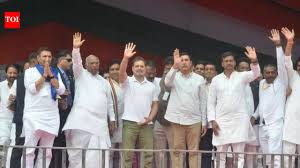
Bhopal: The loudest sounds at the Congress’s ‘Kisan Maha Chaupal’ at Jawahar Chowk on Tuesday were from slogans and loudspeakers, but the stories, almost drowned out by the shrill chants and public announcements, were conveyed through hushed conversations reflecting the many challenges faced by farmers, workers and labourers who enable city lives everyday. From an elderly woman, who came all the way from her village in a nearby district to not just to hear about the impact of the India-US trade deal but also share how badly she needed a pension for survival, to a single mother facing the challenge of eviction from the piece of land where her humble accommodation exists as the area is set for redevelopment under the smart city project, these were some of the stories shared by women as they joined thousands of others at the Congress event. For many, the event, headlined by Congress heavyweights Rahul Gandhi and Mallikarjun Kharge, was yet another way to make themselves heard by those in places of authority for the varied concerns that affected them. Along the footpath, near a small table set up with drinking water arrangements, farmers gathered in small circles, talking about land, prices and survival — conversations shaped less by ideology and more by everyday uncertainty. Seventy-year-old GL Gour from Koudiya village in Phanda tehsil did not push his way forward. He stood patiently, listening, occasionally nodding. For him, the present is best understood by remembering the past. “Back in the day when HD Deve Gowda was prime minister, I used to sell soybean at Rs 8,000 per quintal. Now it is below Rs 4,000,” he said, in an almost matter-of-fact manner. Gour has 20 acres of land, and a family of 10 entirely dependent on agriculture. He identifies himself as an educated farmer — he passed higher secondary in 1968. “I did not come here with any political leader. I came on my own with a belief that when we fight, something will surely happen,” he told TOI. Nearby, 75-year-old Chain Singh Patel from Biccholi village in Sehore district spoke of a different kind of insecurity. His village lies in a forest area, and ownership of land remains a dream. “My grandfather was born there. We have been cultivating this land for generations, but we still don’t have patta,” he said. Asked why he made the journey to Bhopal, Patel paused before replying, “I hope something will happen”, in a voice betraying lack of conviction. Not all the journeys were short. Acche Lal Saket, 60, travelled more than 500 km from Naigarhi in Rewa district, spending the night in a general class train compartment with two friends. “I have only five acres. Earlier,it was enough to raise my family. Now, things are getting more difficult day by day,” he said, adding, “We are here in the hope of our betterment.” For 28-year-old Bhola Singh Lodhi, a small tribal farmer from Bargi in Jabalpur, the expectation was simpler. “We should get better prices for our crops,” he said, watching the crowds swell as Rahul and Kharge spoke at the Kishan Maha Choupal. Arun Patel and Sewak Ram Patel, both farmers, sat in the front row at the rally listening cautiously to every speech. When this correspondent asked them what brought them here, they said they were Soybean farmers from nearby districts. “We have come with a memorandum that we want to share with the Congress leaders about our challenges in getting compensation when crops are damaged due to rain. We also want to hear about what this trade deal is about and how it will impact us,” Patel said. As the rally continued at Jawahar Chowk, many farmers stayed back even after the speeches ended. Some folded banners carefully, others sat quietly on the pavement. They did not speak of victories or assurances — only of hope. Courtesy : TOI Note: This news is originally published on https:/timesofindia.com/bha and is used purely for non-profit/non-commercial purposes, especially human rights
Dalit Couple Faces Humiliation Inside Karnataka Temple, Forced To Leave Premises
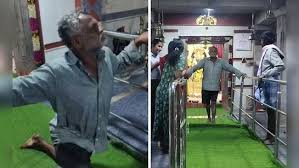
A Dalit couple was humiliated at Arasamma Temple in Tumakuru. An FIR was filed under SC/ST Act. A newly married Dalit couple was allegedly humiliated inside a temple in Karnataka and forced to leave the premises in an apparent case of caste discrimination. The incident took place at Goni village in Tumakuru district on February 19 when the Dalit couple visited the Arasamma Temple. It is learnt that a man belonging to an upper caste, identified as Narayanappa, allegedly pretended to be possessed by a deity and told the couple that they were not allowed inside the temple. Footage from the temple shows Narayanappa blocking the pathway to the deity while kneeling, before standing and shouting at the family, forcing them to get out of the temple. The couple reportedly faced humiliation before leaving the temple. He reportedly shouted, “Dalits cannot enter temple. Leave immediately.” Speaking to news agency ANI, SP Ashok KV said, “…One aged person started shouting at the couple in the name of God. He told them things like ‘you should not enter into the temple’. We received a complaint at the Turuvekere police station in which they mentioned seven people, six named and one unknown person.” Following the incident, the victim, Jagadish, filed a complaint with the Turuvekere Police Station. Authorities have registered a First Information Report (FIR) under the SC/ST (Prevention of Atrocities) Act against Narayanappa and several others present at the temple, including Prabha, Kantanna, Amulya, Puttegowda, and Padma. “We received the complaint and filed an FIR under the SC/ST Act and BNS 190 and 352…. Immediately, we nabbed the person who appeared to be shouting in the video. A peace meeting has been conducted in that village under the joint leadership of the police and the revenue department. We also ensured the temple entry and other rituals of the newlywed couple…,” he added. Narayanappa has been taken into custody and police were working to trace the remaining accused. The investigation into the matter was underway. Courtesy : News18 Note: This news is originally published on https:/news18.com/bha and is used purely for non-profit/non-commercial purposes, especially human rights
Dismissing Dalit Assertion as Victimhood Is an Insult to the Constitution
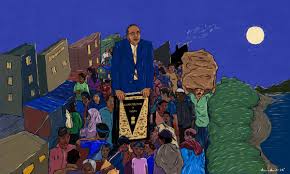
Calling Dalit assertion ‘victimhood’ is not a philosophical position. It is the oldest reflex of every dominant order: discredit the claim before examining its truth. There is a particular kind of violence that never raises its hand. It arrives, instead, in the language of wellness and self-improvement. It does not deny history, it pathologises the act of remembering it. Nowhere is this violence more precisely deployed than in the recurring accusation that Dalits – one-sixth of India’s population, constitutionally recognised as the subjects of the country’s most urgent social justice provisions – ‘play the victim card.’ When that accusation comes from a person occupying a position of institutional authority, it does not merely insult the community, it also rejects the constitutional philosophy of the Republic of India. The ‘victim card’ Let us be precise about what the ‘victim card’ accusation actually claims. It claims that Dalit assertion is not a legitimate constitutional exercise but a psychological performance – that the demand for the implementation of Articles 15, 16, and 17 of the Constitution is not citizens asking for their rights but dependency; that the invocation of the Supreme Court’s jurisprudence on caste discrimination is not law but theatre. It is, in short, a demand that Dalits stop using the Constitution of India in the manner that the Constitution of India was specifically and explicitly designed to be used. Dr. B.R. Ambedkar – the man who designed that Constitution, warned in his closing address that ‘political democracy cannot last unless there lies at the base of it social democracy’. He did not write Articles 17 and 46 as aspirational poetry, but as tools to help dismantle the unequal social order. He knew that a formal constitution in fundamentally unequal society could not produce justice. The reservation system, the anti-atrocity law, the National Commission for Scheduled Castes – these were not gifts from the state to a disadvantaged community. They were constitutional rights, extracted by democratic assertion from a state that would, without them, have perpetuated the very order the Constitution claimed to abolish. Calling Dalit assertion ‘victimhood’ is not a philosophical position. It is the oldest reflex of every dominant order: discredit the claim before examining its truth. What the data shows In 2022, the National Crime Records Bureau recorded 57,582 cases of atrocities against people from Scheduled Caste (SC) communities. That is roughly 157 cases every single day. These were not mere reports of discrimination or allegations of social slights, but registered cases of violence, humiliation, and abuse — everything from murder and rape to the forced drinking of urine, the destruction of homes, and the prevention of access to public water sources. According to the fifth National Family Health Survey, women from SC communities face significantly higher rates of violence than caste Hindu women. According to the 2011 Census, 79.8% of India’s manual scavengers – those who clean human excrement by hand because no one with a choice would do so – belong to SC communities. A landmark 2007 study by economists Sukhdeo Thorat and Paul Attewell found that identical job applications sent to employers with only the applicant’s name changed resulted in 67% fewer callbacks for Dalit names compared to upper-caste ones. Oxfam India’s 2022 Discrimination Report found that SC households earn, on average, 21% less than upper-caste and dominant caste households even in formal, regulated employment, where the law theoretically guarantees equal treatment. CASTE OPPRESSION IN NUMBERS ■ 57,582 registered SC atrocity cases in 2022 alone (NCRB) — 157 every single day ■ 79.8% of manual scavengers belong to Scheduled Caste communities (Census 2011) ■ 67% fewer job callbacks for identical CVs with Dalit names (Thorat & Attewell, 2007) ■ 21% income gap between SC and upper-caste workers in formal employment (Oxfam 2022) ■ 3.6% SC literacy rate at Independence — the direct product of millennia of educational prohibition ■ 20 Dalit student suicides at elite central institutions between 2014 and 2023 These are not the numbers of a community suffering from a psychological addiction to grievance. They are the numbers of a community living inside a system so comprehensively hostile to their existence that the real question is not why they assert their rights, but why they are required, in the face of this evidence, to justify the assertion to anyone at all. The American lesson The comparison to the Black community in the US is frequently used in this debate – usually to suggest that India, like the US, should move beyond race or caste-conscious remediation toward a colour-blind meritocracy. This selective reading of American history is a reversal of what that history actually demonstrates. Martin Luther King Jr., writing from a Birmingham jail cell in 1963, described the greatest obstacle to Black freedom as not the violent racist but the ‘white moderate’ – the liberal who was ‘more devoted to order than to justice,’ who told Black Americans their demands were badly timed, their demonstrations extreme, their sense of urgency unreasonable. King wrote that this moderate preferred a ‘negative peace which is the absence of tension to a positive peace which is the presence of justice.’ The counsel to stop playing the victim card is, in every era and in every country where it has been deployed, the voice of King’s white moderate. The Kerner Commission, appointed by President Lyndon Johnson after the 1967 urban uprisings, concluded with the full authority of the American federal government that the United States was moving toward ‘two societies, one Black, one white – separate and unequal’ and that passive non-discrimination was woefully inadequate to address centuries of structural racism. The US responded with affirmative action. When the US Supreme Court struck down race-conscious university admissions in 2023, Black and Latino enrolment at elite institutions dropped within a single admissions cycle. Evidently, its removal immediately reconstituted the exclusion it had been designed to address. India, with thirty centuries of caste oppression and a SC literacy rate of 3.6% at independence, is in a far more severe position
JNU Student Bodies Clash Amid VC’s ‘Dalit Victimhood’ Remark, Demand Resignation
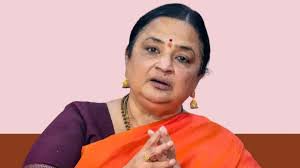
More than 10 students were injured in the clashes that broke out at Jawaharlal Nehru University on Sunday night. Some of them reportedly suffered serious head injuries. Jawaharlal Nehru University (JNU) witnessed another bloody clash at midnight on Sunday night, a fierce clash broke out between the Akhil Bharatiya Vidyarthi Parishad (ABVP) and Left student organisations on the campus. Students affiliated with Left organisations took out a torchlight procession demanding the resignation of VC Shantishree Dhulipudi Pandit. The protesters alleged that ABVP students attacked them, while the ABVP claimed that Left-wing students targeted students studying in the library. Several students were seriously injured amid the lathi-charge and stone-pelting, rekindling the debate on campus about security and freedom of expression. The main root of this entire fight is the recent interview of Vice Chancellor Shantishree Dhulipudi Pandit, in which she made some comments about Dalits and blacks, which the students are considering ‘casteist’ and ‘insulting’. As JNU VC Shanti Shri Dhulipudi Pandit dismisses UGC regulations as “irrational” and “unnecessary,” student union has demand her resignation. The VC, known for her RSS association, labelled Dalits as under “permanent victimhood,” All India Students’ Association (AISA) said in a press release. “AISA extends its solidarity to the students of JNU as well as the rusticated JNUSU Office Bearers and ex-JNUSU President in their fight against the Brahmanical forces in their campus as well against their unjust rustication in an attempt to deprive JNU students of their right to democratic representation,” the students’ union stated. What Happened At The Protest? The Left claimed that while the march was going on peacefully, ABVP members pelted stones at them and attacked them with sticks. While the ABVP said that under the guise of ‘resignation’, Left students entered the library and beat up students who were studying peacefully. More than 10 students were injured in the clashes that broke out at Jawaharlal Nehru University on Sunday night. Some of them reportedly suffered serious head injuries. The injured have been admitted to the AIIMS Trauma Center. Delhi Police remained on alert outside the campus, but due to JNU’s autonomy rules, efforts to control the situation inside were only made after obtaining permission from the police administration. Delhi Police could not enter without the permission of the JNU administration. What JNU Said? Meanwhile, the JNU administration said it has taken note of the matter and will be taking appropriate action against “unruly behaviour on campus” and “repeated destruction of public property. How The Controversy Begun? The latest controversy began with a podcast interview released on February 16, 2026. In it, the Vice Chancellor, while discussing the UGC’s equity regulations, said, “You can’t always progress by playing the victim card. Just as it happened for Black people, the same thing has happened here for Dalits.” Student organisations (SFI, AISA, JNUSU) said that this statement is casteist and an insult to the struggles of Dalits. They called it an attack on constitutional rights in the name of ‘woke culture’ and demanded the Vice Chancellor’s resignation. The VC clarified that her statement had been distorted. She said no one should be permanently categorised as a “victim.” Courtesy : News18 Note: This news is originally published on https:/news18.com/bha and is used purely for non-profit/non-commercial purposes, especially human rights
‘Let me tell you what shame is’: Rahul Gandhi attacks PM Modi, flags US trade deal & Epstein files
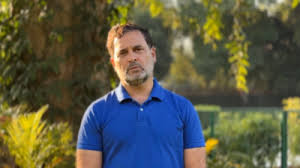
NEW DELHI: Lok Sabha leader of opposition Rahul Gandhi on Monday stepped up his attack on Prime Minister Narendra Modi, accusing him of presiding over what he described as a series of national “shames”, as he went on to talk about the US trade deal and Epstein files charges. This comes after PM Modi slammed Congress for the ‘shirtless’ protest at AI Summit terming it “gandi aur nangi (dirty and shameless) politics”. “Modi ji, you talk of shame? Let me tell you what shame is. Your name, your minister’s, and your friend’s appearing together in the Epstein files, your name being linked to such a vile criminal—that’s what shame is,” he said in a post on X, along with a video message. Accusing the PM of selling out the nation to the US via the trade deal, Rahul said, “The trade deal you’ve struck with America, in which you’ve sold out the country—that’s what shame is. You’ve handed over our country’s data. You’ve wiped out the farmers. You’ve ruined the textile industry—that’s what shame is.” He brought up the Gautam Adani indictment case in the US, and alleged that the prime minister was favouring his “friends Anil Ambani, Adani”. “The entire country knows it: the case running against Adani in America has kept you awake at nights—because it’s a case against the BJP and your financial architecture. For 14 months, no action has been taken on it—that’s what shame is. Modi ji, do whatever you deem fit for your friends Anil Ambani, Adani, and yourself,” he said. “I and the lion-hearted warriors of the Congress Party will keep defending the country—we won’t retreat an inch,” he added. Bharatiya Janata Party reacted to this questioning Rahul’s basis of his claims. “Rahul Gandhi Ji, You’re a perennial ANTI INDIA lier ! There is no verified document, court record, or official investigation that names Prime Minister Narendra Modi in any Epstein-related case. STOP LYING! It was Pt Nehru who wrote letters to Edwina Mountbatten at 2 am midnight! It was you who partied when Mumbai was under terror attack! India–US trade has grown from around $74 billion in 2014 to over $190+ billion in recent years,” BJP national spokesperson Pradeep Bhandari said. Union petroleum minister Hardeep Singh Puri has clarified over his purported links to Epstein. He said that during the eight years he spent in the United States, he met convicted sex offender Jeffrey Epstein “only three to four times” in a private capacity. He said the interactions occurred when he was associated with the Independent Commission on Multilateralism after retiring from the Indian foreign service, and added that he had just one email exchange with Epstein. Puri maintained that the meetings took place before he joined the Union Cabinet in 2017 and that the details were already in the public domain. Courtesy : TOI Note: This news is originally published on https:/timesofindia.com/bha and is used purely for non-profit/non-commercial purposes, especially human rights
‘INDIA bloc is intact’: Akhilesh Yadav’s remark amid calls for leadership change in oppn camp
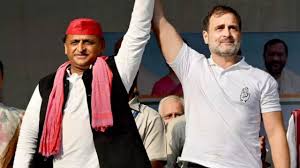
NEW DELHI: Samajwadi Party chief Akhilesh Yadav on Tuesday asserted that the “INDIA bloc is intact” amid ongoing calls for a leadership change within the alliance. While talking to reporters in Chandigarh, the SP chief slammed critics and said that those who talk about “divide-and-rule politics” must be dealt with very cautiously. “The INDIA alliance is intact and will remain intact. Our priority is how to defeat the Bharatiya Janata Party in West Bengal and how to defeat it in Uttar Pradesh,” Akhilesh said. “The election in Uttar Pradesh will not just be the 2027 election; it will also set the direction for 2029. Those who talk about divide-and-rule politics must be dealt with very cautiously. They may create such situations that divide society, so we need to remain very careful about that,” he added. This comes after veteran Congress leader Mani Shankar Aiyar said that West Bengal Chief Minister Mamata Banerjee is central to the survival of the opposition INDIA bloc. While talking to news agency IANS, Aiyar suggested that Congress leader Rahul Gandhi should allow leaders of smaller parties to steer the INDIA bloc. “Without Mamata di, the ‘I’, ‘N’, ‘D’, ‘I’, ‘A’ of the INDIA alliance will all be gone. Because Mamata Banerjee is the leader of this alliance,” Aiyar said. Earlier, Sanjaya Baru, who served as media adviser to then Prime Minister Manmohan Singh, said that “new ideas should” lead or manage the INDIA bloc. Additionally, Shiv Sena (UBT) also called for dialogue within the alliance and said that the opposition must not wait until polls are announced to coordinate its strategy. In an editorial, the party’s mouthpiece Saamana said, stressing that multiple inner voices are emerging within the grand old party. The statements comes e ahead of assembly elections in four states and one Union Territory — West Bengal, Tamil Nadu, Assam, Kerala, and Puducherry. The Election Commission of India (ECI) is expected to announce the official schedule soon. Courtesy : TOI Note: This news is originally published on https:/timesofindia.com/bha and is used purely for non-profit/non-commercial purposes, especially human rights
‘Peaceful protest our right’: Rahul Gandhi backs Youth Congress after chief’s arrest, says ‘proud of Babbar Sher comrades’
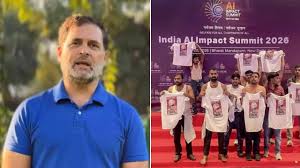
NEW DELHI: Leader of opposition Rahul Gandhi on Tuesday hailed “Babbar Sher comrades” of the Indian Youth Congress (IYC) workers detained for protesting during the AI Summit at Bharat Mandapam. He praised the youth wing for fearlessly raising their voices, saying “peaceful protest is our right.” Sharing a post on X, Rahul Gandhi said, “Peaceful protest is our historic heritage. It is in our blood and is the democratic right of every Indian. I am proud of my Babbar Sher comrades in the Youth Congress, who have fearlessly raised their voices in the nation’s interest against the ‘COMPROMISED PM’.” He alleged that the India-US trade agreement was detrimental to national interests. “The Trade Deal with America has compromised the country’s interests. This agreement will harm our farmers and textile industry and hand over our data to America,” he said. Reaffirming his party’s support for the protesters, he added, “The Congress Party and I stand firmly with our Babbar Sher comrades. Holding a mirror to power with the truth is not a crime, it is patriotism. Do not fear – truth and the Constitution are with us.” Rahul’s remarks came after around 10 IYC workers were detained on Friday for briefly raising slogans against Prime Minister Narendra Modi inside Exhibition Hall No. 5 at Bharat Mandapam during the AI Summit. According to police, the incident occurred around 12.30 pm. Additional Commissioner of Police Devesh Mahla said the protesters had registered online to attend the summit. The group entered the venue wearing or carrying white T-shirts printed with images of Prime Minister Narendra Modi and US President Donald Trump. The T-shirts also bore slogans such as “India-US Trade Deal,” “Epstein Files,” and “PM is compromised.” The protest reportedly led to heated exchanges with some attendees before security personnel intervened. Officials said those detained are being identified and that appropriate legal action is being initiated. Earlier in the day, Delhi Police sought seven days of police custody for Indian Youth Congress chief Uday Bhanu Chib, who was arrested in connection with the protest. Chib was produced before a judicial magistrate at Patiala House Court following his arrest after questioning. Police alleged that there was a “common intention” behind the demonstration and claimed Chib was the mastermind. According to investigators, he “hatched the conspiracy” and arranged logistics and funding for the protest. Responding to the arrest, Rahul Gandhi described it as politically motivated. “The arrest of Youth Congress President Uday Bhanu Chib and other IYC comrades for bringing this truth before the nation is proof of dictatorial tendencies and cowardice,” he said in his post on X. The protest, including reports of a “shirtless” demonstration by some youth wing members, triggered sharp political reactions. BJP leaders criticised the Congress, accusing it of orchestrating a disruption and attempting to “bring shame to the country on the global platform.” Courtesy : TOI Note: This news is originally published on https:/timesofindia.com/bha and is used purely for non-profit/non-commercial purposes, especially human rights
‘Peaceful protest our right’: Rahul Gandhi backs Youth Congress after chief’s arrest, says ‘proud of Babbar Sher comrades’
Dalit man tied to wooden cot, beaten to death in Jharkhand; mob violence suspected over love affair
DALTONGANJ: A 25-year-old Dalit man was lynched allegedly by a mob on the intervening night of Saturday and Sunday at Telyahi village in Palamu district, police said. According to the law enforcers, the lynching could be related to a love angle, but the accused charged him with theft. “We are probing the crime from all angles,” Palamu SP Reeshma Ramesan said. The victim, Pawan Kumar, was tied to a leg of a wooden cot and beaten up. One person has been detained in connection with the crime. Parwa police station officer-in-charge Anchit Kumar said they received a call around midnight alleging that a youth was being beaten up on suspicion of attempting to steal a tractor battery. A patrol team reached the village and found Kumar tied up and surrounded by an aggressive mob. Police rescued him and rushed him to the Medinirai Medical College and Hospital in Daltonganj around 4.06 am, where the doctors declared him dead on arrival. SP Ramesan said no battery was recovered from the victim and described the theft allegation as “unfounded” and a “deception” meant to mislead the police. The investigators are probing a possible “love angle,” as Kumar was allegedly called to the spot by a girl. Police sources suspected the killing may have been linked to a personal relationship and could involve members of the girl’s family and their associates. Kumar, a resident of nearby Kokarsa village, was allegedly lured to Telyahi. An FIR was lodged by the victim’s father, Manoj Ram, with Parwa police station in connection with the incident. The case has been registered under Section 103(2) of the BNS, which pertains to mob lynching. Police have withheld the names of the accused, saying they could abscond. Under the direction of the District Legal Services Authority chairman, Ram Sharma, who is also the principal district and sessions judge, para-legal volunteer Pankaj Pathak will visit the family to initiate and provide interim victim compensation. DLSA secretary Rakesh Ranjan said the family would receive legal assistance.The post-mortem was video-graphed. The victim, Pawan Kumar, was tied to a leg of a wooden cot and beaten up. One person has been detained Courtesy : TOI Note: This news is originally published on https:/timesofindia.com/bha and is used purely for non-profit/non-commercial purposes, especially human rights
‘Opposition Raising Dalit CM Slogan To Cover Shortcomings,’ Says Karnataka Home Minister G Parameshwara; Cabinet To Decide On Student Union Elections
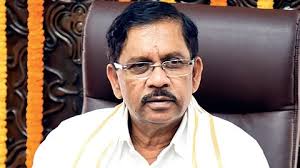
Karnataka Home Minister G Parameshwara accused opposition parties of using the Dalit Chief Minister issue to cover their shortcomings, stating Congress decides on such appointments. He said student elections will be decided by the Cabinet and declined to comment on the dispute between Siddaramaiah and H.D. Kumaraswamy over caste politics. Bengaluru: Karnataka Home Minister G Parameshwara on Monday accused the opposition parties of raising the slogan of a Dalit Chief Minister to cover up their own shortcoming, asserting that it is the Congress party that makes Dalits Chief Minister and only the High Command decides on the timing of such an appointment. Speaking to reporters in Bengaluru, Parameshwara also addressed the ongoing discussion regarding conducting student elections in colleges and regarding the war of words between former CM Siddaramaiah and Union Minister H.D. Kumaraswamy over caste politics. On the discussion around the Dalit Chef Minister, Parameshwara dismissed it as an opposition move to cover up their own shortcomings. “This is all the handiwork of the opposition parties. To cover up their own shortcomings, the opposition has raised the slogan of a Dalit Chief Minister. Isn’t our Chief Minister governing? Isn’t the administration functioning? It is the opposition that is unnecessarily bringing in the Dalit CM factor,” Parameshwara said. He further emphasized that it is congress party that provides opportunities to Dalits to become chief ministers. “It is the Congress party that makes Dalits the Chief Minister — who else does it? The High Command will decide when a Dalit Chief Minister should be appointed,” Parameshwara said. On the question regarding conducting student elections in colleges, Parameshwara said the decision will be taken in the Cabinet. “Earlier, when K.H. Ranganath was the Higher Education Minister, clashes took place in some colleges and universities. At that time, elections to student unions were stopped. When I was the Higher Education Minister, we had banned syndicate elections. Now, there is again a discussion about conducting student union elections. We have to see what decision will be taken in the Cabinet,” Parameshwara said. Regarding the war of words between CM Siddaramaiah and Union Minister H.D. Kumaraswamy over caste politics, Parameshwara declines to respond, citing their past association. “I cannot respond to this. Siddaramaiah was earlier in the JD(S) and was its president. Later, he was expelled from the party. We do not know what all issues exist between them. I cannot comment on the exchange of words between the two,” Parameshwara said. (Except for the headline, this article has not been edited by FPJ’s editorial team and is auto-generated from an agency feed.) Courtesy : TFPJ Note: This news is originally published on https:/thefreepressjournal.com/bha and is used purely for non-profit/non-commercial purposes, especially human rights