
Pargat meets Rahul, Kharge; AAP questions Cong leadership change
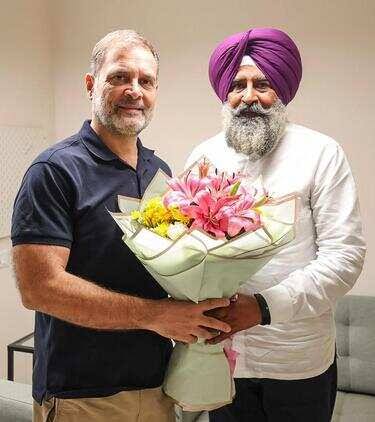
Chandigarh: Newly appointed Punjab Pradesh Congress Committee (PPCC) president Pargat Singh on Monday met Congress leader and Leader of Opposition in the Lok Sabha Rahul Gandhi and Congress president Mallikarjun Kharge in New Delhi, as AAP state president Aman Arora questioned the Congress high command’s handling of its Punjab unit. After meeting Rahul, Pargat said he was committed to strengthening the Congress organisation in Punjab and working for the rights and interests of the state and its people. “With renewed energy and the collective strength of our leaders, workers and people of Punjab, we will work tirelessly to strengthen the Congress organisation and build a better future for Punjab,” he said. Pargat also met Kharge, thanked him and sought his guidance as he takes charge of the state unit. Arora congratulated Pargat but alleged that the Congress had disregarded the sentiments of its Punjab workers while making leadership changes. He questioned the removal of Amrinder Singh Raja Warring as PPCC chief, saying, “Amarinder Singh Raja Warring took charge of the Congress during a difficult period and worked with party workers for four and a half years. But Sachin Pilot, who replaced Bhupesh Baghel as Congress’s Punjab incharge, decided to remove him during a visit to Punjab that lasted barely two hours.” Arora also questioned Rahul’s meeting with Pargat four days after his appointment. “This raises questions about the attitude of the Congress high command towards Punjab,” he said. On reports that Vijay Inder Singla’s name had been considered for the post, Arora said overlooking him had disappointed people in Sangrur and Malwa. He also alleged that factionalism remained unresolved in the Congress, citing social media posts by former CM Charanjit Singh Channi’s son and reports of Warring travelling to London with his family. “Instead of the enthusiasm that should have followed the appointment of a new state president, there is silence among Congress workers,” he said. Courtesy : TOI Note: This news is originally published on https:/timesofindia.com/bha and is used purely for non-profit/non-commercial purposes, especially human rights
Transgender activist dies following vehicle crash
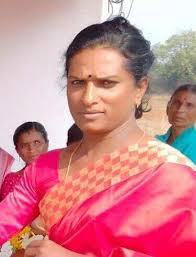
Chitradurga: Transgender activist Arundhati, 45, who worked for the rights and social security of transgender persons in Karnataka, died following a road accident near Bharamasagara in Chitradurga on Saturday night. Arundhati was riding her scooter on a service road along the national highway when the accident occurred. Its cause was not immediately known. She was taken to Basaveshwara Medical College Hospital in Chitradurga and later shifted to a govt hospital in Davanagere. She died while being moved to a medical college hospital in Hubballi for further treatment. Bharamasagara police registered a case. A postgraduate and Mandya native, Arundhati had participated in several social movements and campaigns against violence against women. She had settled near Kasavanahalli village, where she farmed leased land and reared sheep, goats and poultry. She played a prominent role in movements seeking dignity and social security for transgender persons, and helped community members become self-reliant by providing them with livestock and poultry. During the Covid-19 pandemic, she set up a drinking-water kiosk along the national highway for travellers. Several organisations had honoured her social work. Dharwad-based Navilugari organisation was scheduled to confer its state-level award on her on Oct 11. Women’s organisations condoled her death. Writer Sabita Bannadi said Arundhati had overcome social challenges and built an independent life through farming and social work. Courtesy : TOI Note: This news is originally published on https:/timesofindia.com/bha and is used purely for non-profit/non-commercial purposes, especially human rights
IIT Bombay Investigation: APPSC Fears Sahil Wakode’s Case Will Follow the Same Fate as Ambhore and Solanki, “Conclusion Already Decided”
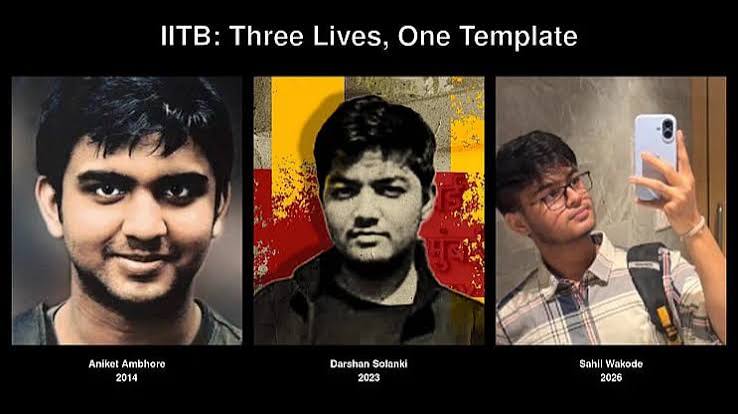
Student Group Alleges Inquiry Committees Follow a “Template,” Always Clean Chit to the Institute of Caste Discrimination Mumbai – The Ambedkar Periyar Phule Study Circle (APPSC), a student group at IIT Bombay, believes that the institute’s internal investigation into Sahil Wakode’s death has already concluded. According to the group, like the cases of Aniket Ambhore and Darshan Solanki, this case will also be considered to have no caste discrimination. The group alleged that the institute investigates the deaths of Scheduled Caste (SC) and Scheduled Tribe (ST) students according to a set “template.” It called Wakode’s death an “institutional death” and reiterated its demand for an independent, external investigation. In a statement on Sunday, the group cited the reports of two previous internal committees. The student group stated that a committee headed by Professor A.K. Suresh was formed after Aniket Ambhore’s suicide. According to the group, its report (page 24) concluded that the institute and its official bodies did not discriminate, either explicitly or implicitly. The committee headed by Professor Nand Kishore, formed to investigate Darshan Solanki’s death, stated in its report (page 6) that none of the people interviewed—friends, wingmates, teachers, TAs, mentors, and Hostel 16 staff—mentioned caste-based or any other discrimination. Neither Solanki himself nor any of his friends mentioned this. The APPSC stated that these findings reflect a pattern rather than an independent investigation, “a template is set and the conclusions are predetermined.” Questioning the functioning of the inquiry committees, the group stated, “These committees are formed by the Board of Governors and work in coordination to quickly rule out caste-based discrimination.” The group alleges that they operate in isolation, within a well-designed institutional framework, and consistently draw the same limited sample and ultimately exonerate the institution of all charges. The statement describes these ad hoc committees as “placeholders for institutional inertia.” The group also commented on the committees’ social composition. According to it, their members are not separate from the country’s social fabric, and caste does not exist for them because it is not an intimate experience of their lives. The group argues that this blanket denial of discrimination reveals how caste privilege masks inequality within the institution. The Students’ Collective argues that investigations demand evidence of “clear acts of caste aggression.” This reduces a multi-layered and nuanced phenomenon to a narrow set of criteria. According to the group, this places the burden of proof on the person least capable of doing so, as dominant groups define “intent” and “overt act.” The group also raised three questions about campus preparations: Have those with authority over students fresh out of school received caste sensitivity training? Is there a system in place to identify and bridge the gap in social and material status among peers? Why should SC/ST students be burdened with creating a safe and inclusive environment, when they already bear the double burden of proving merit, grappling with the “stigma of quotas,” and constantly being wary of their caste identity? What are the Supreme Court’s directives? The statement said that the Supreme Court’s guidelines in the case of Sukadeb Saha v. State of Andhra Pradesh and others are binding on every educational institution in the country from July 25, 2025. These require: Written protocols for immediate referral to mental health services. Twice-yearly training of staff to recognize warning signs. Dedicated mentors, especially during examination periods. The group states that the IIT Bombay administration is guilty on many of these counts, but is vulnerable to acquittal at every turn due to institutional apathy and the “dominance of caste-blind forces.” The statement questions the image of IITs as destinations for the country’s brightest minds. According to the group, rankings and research output create an image of a “smooth-flowing machinery of academic production,” while the merit that is celebrated is “upper caste dominance couched in the language of modernity and castelessness.” The group alleges that the system implicitly requires students to be upper caste, while the space for disadvantaged students is “limited and restricted.” According to it, acknowledging caste discrimination would be detrimental to the notions of post-colonial modernity and merit that privileged castes celebrate. Citing RTI data, it stated that as of September this year, out of 412 professors at IIT Bombay, only 5 are from the SC and 6 from the OBC categories, while there is no professor from the ST community. According to the group, this demonstrates that knowledge production is limited to a specific segment of society. Citing the institute’s motto, “Gyanam Param Dhyeyam,” the student collective also stated that the institute’s knowledge production process is an “echo chamber of upper-caste-disseminated knowledge,” making it devoid of diversity. The Students Collective states that IITs are designated as “Institutes of National Importance” under the Institutes of Technology Act, 1961. Citing scholar Jayaram (2011), it states that these institutions operate autonomously and have largely been free from government or political interference. According to the group, it is time to subject IITs to close scrutiny and open dialogue among stakeholders and civil society. It described the institute’s “caste amnesia” as “ridiculous and violent.” The statement also said that IITs have long been free from student politics, which should be condemned in a democratic framework. The group claims that the aim of these institutes is to produce an “obedient, caste-blind, and efficient workforce.” Referring to the Wakode case, the APPSC said that the same institutional indifference persists here, and the “falsity” of IIT excellence and reputation remains unchallenged. The group reiterated its demands, demanding an external and independent investigation without institutional interference or “unconditional support” for the accused. They demanded that the committee be chaired by a person from the SC/ST community and include at least one external expert member to ensure a fair investigation. The committee should have at least 50% SC/ST representation and at least 50% women members from various disciplines. Geetha Sunil Pillai Courtesy: Hindi News
A Dalit woman (VOA) was slapped, dragged by her hair, and thrown to the ground during a village council meeting in Telangana; an FIR was filed against the Congress leader under the SC/ST Act.
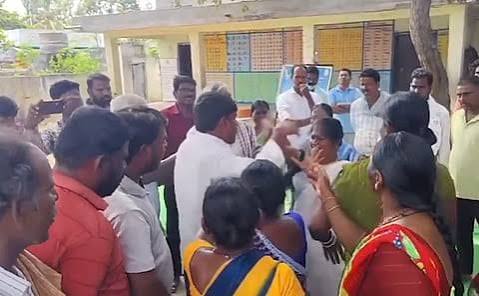
Dalit organizations strongly condemned the incident and demanded strict action against Amarnath Goud. MRPS leader Manda Krishna Madiga strongly condemned the incident and called for a massive road blockade at the Chintapalli mandal headquarters. Nalgonda: A shameful incident of a Dalit woman being publicly assaulted during a village council meeting on October 2nd occurred in PK Mallepally village, Chintapalli mandal, Nalgonda district, Telangana. Local Congress leader Amarnath Goud (Kappula Amarnath) assaulted, mistreated, and verbally abused the woman during a dispute over women’s savings group funds on the village panchayat office premises. The victim, Ganipalli Madhavi (30), wife of Abbaiah, belongs to the Scheduled Caste (Madiga) community. She had been working as the village’s Village Organization Assistant (VOA) for the past eight years and was removed from the position four months earlier. On the day of the incident, she was participating in a discussion with women from the Samabhavana Sangham (women’s savings group). Amarnath Gaud also arrived at the Gram Sabha and began an argument with Madhavi over an old rivalry and the savings group’s funds. He used casteist slurs, slapped Madhavi, dragged her by her hair, threw her to the ground, and kicked and punched her. This all happened near the Gram Panchayat office in the presence of villagers, which escalated tensions at the scene. The victim recounted her ordeal to the police, saying, “Amarnath asked, ‘Who are you? Why have you come to the Gram Sabha? We removed you. What’s the point of coming here? Why have you come?” She continued, “They slapped me, dragged me by my hair, threw me to the ground, and trampled me. They humiliated me in front of so many people. They’ve been harassing me for three months. They targeted me because I asked for money. No one provided justice. They’re mentally harassing me, pushing me to suicide. I have two young children. Whatever they did, it was completely malicious.” Madhavi filed a complaint at the Chintapalli police station around 6 p.m. that same day. Police registered an FIR under Crime No. 172/2026. It includes sections 74, 115(2), and 352 of the Indian Penal Code (IPC), as well as sections 3(1)(r), 3(1)(s), and 3(2)(va) of the Scheduled Castes and Scheduled Tribes (Prevention of Atrocities) Act, 2015. Police confirmed that the investigation is ongoing. Videos of the incident are going viral on social media. Dalit organizations strongly condemned the incident and demanded strict action against Amarnath Goud. Madiga Reservation Protest Committee (MRPS) leader Manda Krishna Madiga strongly condemned the incident and called for a massive road blockade at the Chintapalli divisional headquarters. The protesters staged a sit-in on the road, completely halting vehicular traffic in the divisional headquarters. They demanded the immediate arrest of the accused and justice for the victim. Geetha Sunil Pillai Courtesy; Hindi News
Officials ensure entry of Dalits into Chennakesava Swamy temple in AP
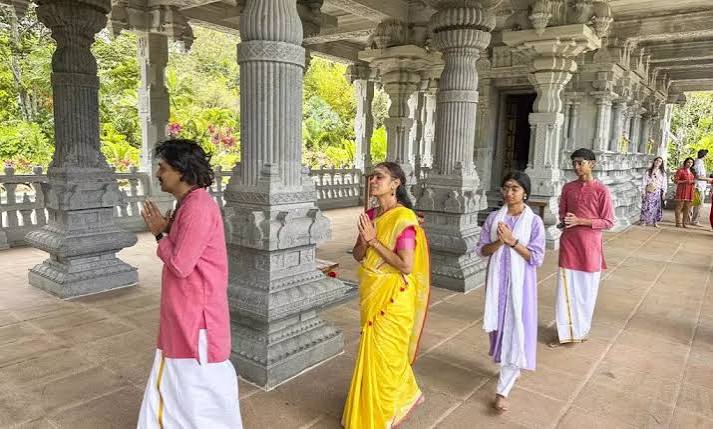
A video circulating on social media purportedly showed a Dalit devotee and his daughter being prevented from entering and subjected to caste-based abuse. KADAPA: Officials intervened in a controversy over alleged denial of temple entry to Dalits at the Sri Lakshmi Chennakesava Swamy temple in Erragudipadu village, Kamalapuram and facilitated their entry and darshan on Sunday. Reports said Chandra and his family visited the temple on Saturday to offer prayers, but former sarpanch Brahmananda Reddy allegedly objected, claiming Dalits were not permitted. The confrontation led to a complaint with Dalit organisations. Based on a complaint by Ramu, Kamalapuram police registered a case against Reddy. A video circulating on social media purportedly showed a Dalit devotee and his daughter being prevented from entering and subjected to caste-based abuse. The complainant alleged they were told to worship from outside the temple premises. The incident sparked widespread debate online. Responding on Sunday, DSP Balaswamy Reddy, Tahsildar Srinivasulu Reddy, CI Mohan and SI Srinivasulu visited the village, consulted locals and took steps to prevent tensions. Later, the affected family and Dalit leaders were allowed to enter the temple and have darshan. Courtesy : TNIE Note: This news is originally published on https:/thenewindianexpress.com/bha and is used purely for non-profit/non-commercial purposes, especially human rights
Dalits Allegedly Served Separate Meal at Karnataka Temple Fair on Gandhi Jayanti, Case Filed
People from the Dalit community in Karnataka’s Bagalkot district were allegedly served a separate meal at a temple fair, triggering a controversy over alleged caste discrimination and untouchability. The incident was reported from Tamadaddi village in Teradal taluk, where a Lakshmi Devi temple fair was held on October 2. A complaint was filed at Teradal Police Station by Basappa Yaladagal, a Dalit resident of the village. According to his complaint, separate arrangements were allegedly made for members of the Dalit community during the fair. Dalits Allegedly Served Ganji Separately According to the complaint, members of upper caste communities were served a regular meal, while Dalit attendees were allegedly served only ganji separately. Ganji is a fermented rice-based dish consumed in several parts of India. IndianMinorities Reports A case was registered on October 3 based on Yaladagal’s complaint. Around 20 people have been named, including Sukumar Patil, Basavaraj Yadawad, Nandappa Nandappanavar, Bhimappa Konnur and Suresh Akkivatti. The allegations have raised concerns over possible caste-based discrimination at a public religious gathering. Article 17 Prohibits Untouchability Untouchability is prohibited under Article 17 of the Indian Constitution, which states that its practice in any form is abolished. Laws including the Protection of Civil Rights Act, 1955, provide for penalties for enforcing disabilities arising from untouchability. The incident took place on October 2, which is observed as Gandhi Jayanti, marking the birth anniversary of Mahatma Gandhi. Gandhi had opposed untouchability and advocated equal access to public spaces, including temples and schools. Similar Allegations Reported Earlier The incident has also raised concerns because similar allegations had reportedly surfaced earlier in Tamadaddi village during another religious event, the Panchakalyanotsava. Courtesy : TOP Note: This news is originally published on https:/theobserverpost.com/bha and is used purely for non-profit/non-commercial purposes, especially human rights
‘Gandhi, Nehru, Ambedkar are India’s soul, mind, backbone’: Dipke’s jibe at Centre
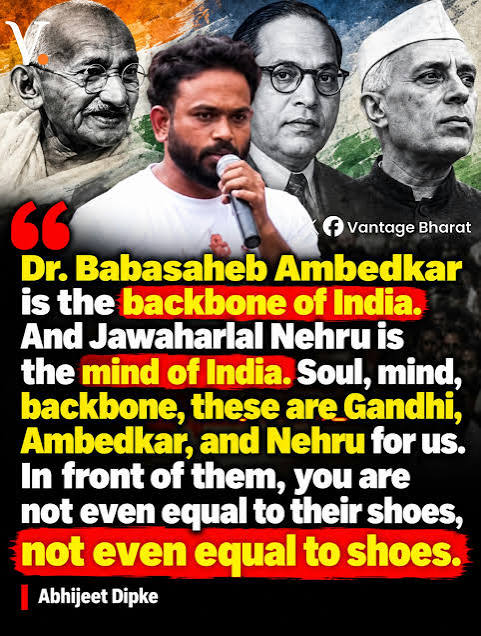
NEW DELHI: Cockroach Janta Party founder Abhijeet Dipke on Sunday said Mahatma Gandhi, Dr Babasaheb Ambedkar and Pandit Jawaharlal Nehru represented three distinct pillars of India’s political and social legacy. In a video post, Dipke described Gandhi as the “SOUL of India”, Ambedkar as the “BACKBONE of India” and Nehru as the “MIND of India”, adding, “You can never become like them.” — abhijeet_dipke (@abhijeet_dipke) The development comes as the CJP, led by founder Dipke, organised a protest at Mumbai’s Shivaji Park on Friday, demanding the resignation of Chief Election Commissioner Gyanesh Kumar over irregularities in the Special Intensive Revision of electoral rolls. Coinciding with Mahatma Gandhi’s birth anniversary, the protest stage displayed quotations on non-violence and simplicity, alongside tributes to Babasaheb Ambedkar. Mumbai Police have registered an FIR against the organisers and 400-500 unidentified persons in connection with the protest at Shivaji Park. The case has been registered under provisions of the Bharatiya Nyaya Sanhita and the Maharashtra Police Act for unlawful assembly, wilful disobedience of a lawful order issued by a public servant and other offences, a Shivaji Park police station official said. The FIR was registered based on a complaint filed by a resident of the Shivaji Park area, the official added. Dipke on Friday night also announced a fresh protest at Delhi’s Jantar Mantar if Chief Election Commissioner Gyanesh Kumar did not resign. “If Gyanesh Kumar doesn’t resign, cockroaches from across India will march to Delhi & protest at Jantar Mantar on October 10,” he said in a post on X, adding that the protest would be peaceful and urging every citizen who wants free and fair elections to join it. Courtesy : TOI Note: This news is originally published on https:/timesofindia.com/bha and is used purely for non-profit/non-commercial purposes, especially human rights
‘What has changed in 17 years?’: Rahul Gandhi hits out at BJP over Bihar flood crisis
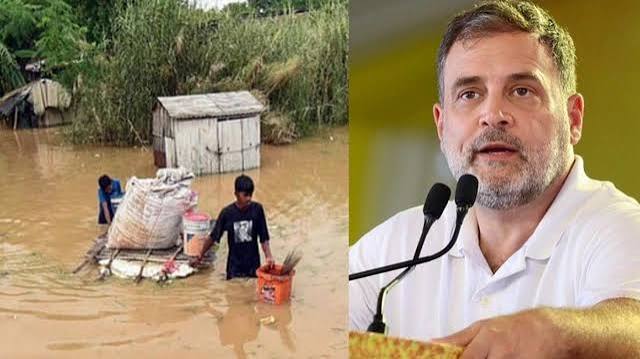
NEW DELHI: Congress leader and leader of opposition in the Lok Sabha Rahul Gandhi on Saturday targeted the BJP-led government over Bihar’s recurring flood crisis, asking what had changed on the ground in the last 17 years and calling for a permanent solution instead of yearly relief and assurances. In a post on X, while offering his condolences Rahul said that floods had once again struck Bihar with “devastating force”, affecting millions, submerging hundreds of villages and leaving several people dead or missing. — RahulGandhi (@RahulGandhi) “The most heartbreaking thing is that this crisis in Bihar is not new,” Rahul said, pointing to the recurring cycle of floods, deaths, shattered families and migration. “The BJP’s double-engine government should tell us — what has it done in the last 17 years to address this annual tragedy? What has changed on the ground?” he asked. Rahul said people in Bihar did not need relief and assurances every year but a permanent solution to the recurring floods. Nearly 50 lakh affected The latest flood spell affected 49.67 lakh people across 15 districts, according to the Bihar disaster management department. The affected districts included Patna, Bhojpur, Saran, Vaishali, Bhagalpur, Begusarai, Buxar, Samastipur, Munger, Katihar, Lakhisarai, Khagaria, Purnea, Madhepura and Araria. The floods came amid heavy rainfall in Bihar and neighbouring areas, with officials saying water levels in the Ganga, Sone and Gandak rose sharply after heavy rain in Jharkhand and Uttar Pradesh, as well as rainfall in the catchment areas of rivers originating in Nepal. This year’s flooding also differed from the usual pattern. While the Kosi and Gandak were responsible for the first two flood spells, the prolonged third spell in September was mainly driven by the swollen Ganga, Sone and Punpun rivers. Government pushes relief, long-term measures The Bihar government has stepped up relief operations, with chief minister Samrat Choudhary saying the administration would ensure assistance reached affected families. The state also transferred Rs 579 crore to 8.27 lakh flood-affected families across 15 districts, with each eligible family receiving Rs 7,000. Union agriculture minister Shivraj Singh Chouhan also visited flood-hit areas and assured Bihar of the Centre’s support for rescue, relief and rehabilitation. He said the scale of damage and the state’s requirements would be placed before Prime Minister Narendra Modi and Union home minister Amit Shah. The state government has also been looking beyond immediate relief. Choudhary later said surveys of the Kosi and Mahananda rivers were being conducted as part of a comprehensive study of recurring floods and efforts towards a permanent solution. The issue of embankments has also remained central to the flood response. Bihar’s water resources department said scientifically strengthened embankments had remained intact this season, while older ring and zamindari bunds had suffered breaches. Courtesy : TOI Note: This news is originally published on https:/timesofindia.com/bha and is used purely for non-profit/non-commercial purposes, especially human rights
AAP holds protest after 3 women journalists allege sexual harassment by cops – key points
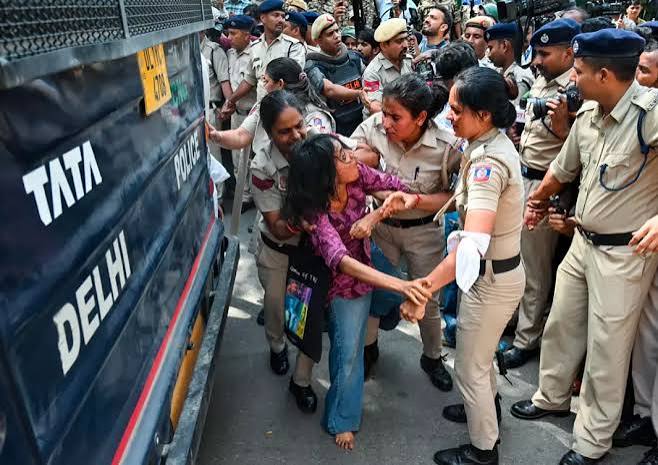
NEW DELHI: Three women journalists have alleged sexual harassment by police personnel while covering a protest against Chief Election Commissioner Gyanesh Kumar at Jantar Mantar on October 3, with the complaints now transferred to the Crime Branch for a “fair and impartial enquiry”. The allegations have drawn criticism from journalists and opposition leaders, with the Committee to Protect Journalists (CJP) set to protest over the incident. AAP Delhi unit chief Saurabh Bharadwaj and party workers staged protests in front of Parliament Street police station, demanding registration of an FIR. The complaints were received by the New Delhi district police following the protest, during which police personnel were deployed to maintain law and order. Delhi Police said the complaints against police officers were being transferred to the Crime Branch, Kamla Market, which will examine the allegations and record statements of the complainants and other people concerned. The allegations have also triggered wider questions over the treatment of journalists and protesters during the demonstrations. CJP has announced a protest following the allegations, while journalist Dipke hit out at Delhi Police on X, alleging that the force had also picked up people who had no connection with CJP and tried to link them to the organisation to establish a foreign-funding angle. What the journalists alleged One of the journalists told PTI that an assistant commissioner of police sexually assaulted her while she was covering the protest. She alleged that police personnel were detaining protesters and that no women police personnel were present at the spot. “Police personnel were detaining protesters, and there were no women police personnel present at the spot. I asked ACP Vivek Bhagat of the Delhi Police about the absence of women police personnel, following which he sexually assaulted me and pushed me back,” she alleged. The journalist said she and others subsequently went to a police station to lodge an FIR but alleged that no action had been taken so far. Delhi Police, however, said on Sunday that complaints had been received from three women journalists alleging sexual harassment by police personnel. “On 03-10-26, during the protest in New Delhi area, while being in law and order situation, allegations of sexual harassment were made by three female journalists against police officers. New Delhi District has received their complaints,” Delhi Police informed on X. Dipke’s allegations, Rahul Gandhi’s attack Dipke alleged that Delhi Police had also detained people who had nothing to do with CJP and tried to establish a foreign-funding connection. “Delhi Police has also picked up a couple of people who had nothing to do with CJP and tried to forcibly link them to CJP to establish a foreign-funding angle. A friend just told me that one of them was brutally beaten by Delhi Police and has also lost his job because of the arrest,” Dipke wrote on X. The Press Council of India expressed “shock and dismay” over the treatment of journalists and urged Delhi Police to immediately act on the complaint. Rahul Gandhi also accused Delhi Police of misconduct at Jantar Mantar and questioned Union home minister Amit Shah over the alleged treatment of journalists and protesters. The protests were held against CEC Gyanesh Kumar amid demonstrations over the Special Intensive Revision of electoral rolls. Delhi Police detained several protesters, while at least three FIRs were registered in connection with the mass protest held near Jantar Mantar on October 2. Courtesy : TOI Note: This news is originally published on https:/timesofindia.com/bha and is used purely for non-profit/non-commercial purposes, especially human rights
‘Good thing’: Union minister praises Rahul’s Satyagraha website, then takes swipe at opposition

NEW DELHI: Union minister Chirag Paswan on Sunday praised Lok Sabha leader of opposition Rahul Gandhi for launching a digital platform named “Satyagraha” to gather information on various issue-based protests occurring across the country.The Union minister said that as many platforms as possible must be provided for the youth to express their views. “That is a good thing. I have always advocated for providing as many platforms as possible for the youth and for our Indian citizens to express their views,” Paswan said. “It was with that very mindset that Rahul Gandhi initiated the Satyagraha,” he added. He, however, also targeted the opposition and accused it of spreading lies and raising issues only to abandon them halfway. “The name is well-chosen, but the opposition has developed a habit of repeatedly spreading lies and confusion. Raising issues only to abandon them halfway, spreading confusion among the public about everything from EVMs to the SIR,” he said. “The reality is that the people are rejecting you; you won’t grasp this through Satyagraha, but rather through introspection,” he added. This comes a day after Rahul launched the “Satyagraha” website and said that protesters can submit details about their causes, find similar movements across the country through an interactive map and seek direct support. “People across the country are fighting for their rights and often fighting alone. Gen Z, students, farmers, tribals, Dalits, women – every struggle has its own story. But the voice that rises alone often gets suppressed. ‘Satyagraha’ is an initiative to bring these voices together on a map. Bapu taught us this; truth is the greatest weapon. But an even greater weapon is standing together with truth in unity. If you’re also fighting against any injustice, share your story. It will take two minutes,” the Congress leader said. “Your story will appear on the map. You’ll see who else is fighting like you. And I’ll do whatever I can, in Parliament, on the streets, by writing letters, standing with you wherever I’m needed, as the leader of the opposition; this is my responsibility,” he added. Courtesy : TOI Note: This news is originally published on https:/timesofindia.com/bha and is used purely for non-profit/non-commercial purposes, especially human rights