
‘Team UDF is Team Keralam, people ready for change’: Rahul Gandhi’s message ahead of Kerala polls
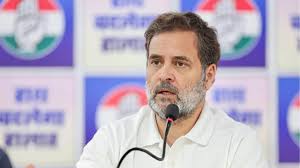
NEW DELHI: Leader of opposition Rahul Gandhi on Fruday pitched the Congress-led United Democratic Front (UDF) as a unified and people-centric alliance ahead of the Kerala assembly elections, saying the coalition represents both experience and fresh leadership rooted in local realities.”Each candidate reflects the voice, the aspirations and the trust of the people of Keralam. This is a collective of experienced leaders and young change-makers – a strong team of men and women who understand the intricacies of the constituencies they represent,” Rahul said in a post on X. “For me, Keralam is home and the people of Keralam are family. I owe a great debt to the people for everything they have taught me and for the love and warmth they have embraced me with – I will always be your partner,” it added. Projecting the election as a moment of political shift, Rahul said, “The message from Keralam is clear — the people are ready for change, they seek a government that listens, understands, and delivers with honesty.” He also expressed confidence in the UDF’s prospects, saying, “Along with the coming UDF government, I will do everything to help build a better future for this beautiful state. Keralam will win. UDF will lead.” Kerala will go to the polls on April 9 to elect a new 140-member Assembly, with results scheduled for May 4. The contest has largely crystallised into a three-way battle between the CPI(M)-led Left Democratic Front (LDF), the Congress-led UDF, and the BJP-led National Democratic Alliance (NDA). The LDF, led by Chief Minister Pinarayi Vijayan, is seeking a rare third consecutive term, banking on its governance record over the past decade. The BJP, under state president Rajeev Chandrasekhar, is attempting to regain ground after losing its only seat in Nemom in 2021. While the outgoing Assembly was dominated by the Left with 99 seats against the UDF’s 41, the opposition is hopeful that shifting political currents and localised anti-incumbency could narrow the gap. Nearly 35 constituencies saw victory margins of less than 10,000 votes in the last election, making them key battlegrounds this time. Courtesy : TOI Note: This news is originally published on https:/timesofindia.com/bha and is used purely for non-profit/non-commercial purposes, especially human rights
Muthukur Dalit Farmers Receive Revised Compensation
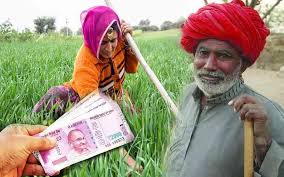
Somireddy said the revision reflects the government’s commitment to protecting farmers’ interests Nellore: In a major relief, 14 Dalit farmers from Eepuru-Mittapalem in Muthukur mandal were each given compensation cheques of ₹26.95 lakh on the occasion of Ugadi. The farmers had lost about 33 acres of assigned land, which was sold through APIIC to a private firm in 2022 at ₹9 lakh per acre, totaling ₹2.97 crore. Each farmer owned roughly 77 cents. Following their representations, Sarvepalli MLA Somireddy Chandramohan Reddy took up the issue, pressing for compensation in line with market rates. Officials subsequently revised the value to ₹42 lakh per acre, including service charges and compensation for trees and structures After deductions, the final amount was fixed at ₹35 lakh per acre, translating to ₹26.95 lakh per farmer. The MLA also directed officials to ensure that an additional ₹2 lakh paid by the company towards trees and structures is fully disbursed to the beneficiaries. The cheques were distributed at a programme in Vedayapalem, attended by Inland Waterways Authority Chairman Dr Z. Siva Prasad and local leaders. Somireddy said the revision reflects the government’s commitment to protecting farmers’ interests. Courtesy : Deccan Chronicle Note: This news is originally published on https:/deccanchronicle.com/bha and is used purely for non-profit/non-commercial purposes, especially human rights
Madhya Pradesh: Alleged Attack on Dalit Family in Neemuch; Hospital Protest; Demand for Suicide Permission if Justice Denied
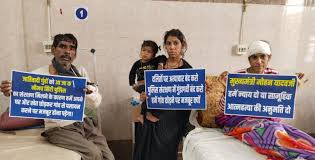
A grave incident has come to light in the Neemuch district of Madhya Pradesh, where a Dalit family has raised its voice against caste-based violence and alleged police negligence. The family members, injured in the attack, staged a protest right inside the district hospital, demanding justice and warning that if their grievances were not addressed, they would seek permission to commit mass suicide. The incident originated on February 26 in Dasia village, stemming from a dispute over a chickpea crop. The victim, Premchand Mogia, alleged that certain villagers assaulted his daughter and subjected her to casteist slurs. The family claims that when they attempted to file a police complaint, there was a delay in registering the FIR, compelling them to seek recourse through the Chief Minister’s Helpline. According to the victimized family, following their complaint, the accused launched a second attack on March 15, leaving Premchand, his wife, and their daughter critically injured. Currently, all three are undergoing treatment at the district hospital, where they staged a protest holding placards. These placards bore slogans such as “Stop atrocities against Dalits” and “Give us justice or let us die.” The family has accused the police of shielding the perpetrators and failing to initially invoke the relevant sections of the SC/ST Prevention of Atrocities Act. Conversely, police officials have refuted these allegations, stating that a proper FIR was registered following the attack and that the necessary legal sections have since been added. The victimized family has appealed to the State Chief Minister, Mohan Yadav, demanding an impartial investigation, protection, and strict punitive action against the culprits. The family asserts that they have lost faith in the system and now look solely to justice as their only hope. Courtesy : Hindi News
SC status sought for Dalit Christians in A.P.
Dalit Christians continue to face untouchability, social exclusion and economic backwardness, says former DGP Purnachandra Rao Addressing the media, former DGP J. Purnachandra Rao alleged that successive governments headed by Chief Ministers from dominant communities, including Kamma and Reddy leadership, for decades had not made adequate efforts to secure a favourable decision from the Centre. Despite having political influence at the national level, the issue was not accorded a priority, he alleged. Pointing to the implementation of the reservation for Economically Weaker Sections (EWS), he said political leadership had acted with speed and coordination to extend benefits to the dominant communities, while the long-pending demand of Dalit Christians had not received with similar urgency. “If governments could move swiftly to ensure EWS reservations for the Kammas and Reddies, why has there been no comparable effort to secure SC status for Dalit Christians for over seven decades?” he asked. Mr. Rao said that Dalit Christians continued to face untouchability, social exclusion and economic backwardness, but were denied SC status solely on the basis of religion. He argued that this amounted to ‘discrimination’ and called for corrective action in line with constitutional principles. Former IAS officer Samuel Anand Kumar, CCC president Ashok Kumar and others demanded the repeal of Paragraph 3 of the Constitution (Scheduled Castes) Order, 1950, and the granting of SC status to Dalit Christians. Later, the leasders submitted a representation addressed to the President of India to the NTR district Collector. The Hindu Bureau Courtesy : The Hindu Note: This news is originally published on https:/thehindu.com/bha and is used purely for non-profit/non-commercial purposes, especially human rights
Dalit collective hits out at Congress over denied tickets; alleges RSS-NSS pressure in candidate selection
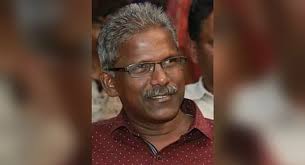
Speaking to media in Kottayam on Thursday, Dalit Samudaya Munnani leaders alleged that Congress denied the candidature for Sunny under the pressure from the RSS and NSS. KOTTAYAM: Amid ongoing challenges over the candidate selection for the assembly elections, the Congress encountered another jolt after dalit collective came out against it for reneging promised candidatures for dalit activist Sunny M Kapikad and tribal leader C K Janu. Speaking to media in Kottayam on Thursday, Dalit Samudaya Munnani leaders alleged that Congress denied the candidature for Sunny under the pressure from the RSS and NSS. They also warned that Congress’ decision to abandon the inclusive politics put forward by national leaders Mallikarjuna Kharge and Rahul Gandhi at the Raipur plenum will lead to a change in the political climate, which was favourable to the UDF. “RSS-Sangh Parivar leaders such as R V Babu and Sasikala were the first to oppose Sunny’s candidacy. It is evident that some Congress leaders were reluctant to challenge the RSS’s stance. The influence and pressure from the NSS on key Congress leaders in candidate selection highlight the oligarchic tendencies within the party,” said P A Prasad, organisation’s state general secretary. Courtesy : TNIE Note: This news is originally published on https:/thenewindianexpress.com/bha and is used purely for non-profit/non-commercial purposes, especially human rights
Dalit Samudaya Munnani: Dalit leaders announce new outfit ahead of Kerala polls
KOTTAYAM: Members of the dalit community are planning to launch a new political outfit in response to the alleged denial of candidacy to prominent thinker and writer Sunny M Kapicadu and tribal leader C K Janu. The party is set to be called Dalit Samudaya Munnani (DSM). Addressing a news conference in Kottayam on Thursday, DSM leaders said that the two were denied candidacy because Congress failed to politically include the dalit and adivasi communities. “The inclusive politics proposed by Congress national leaders Mallikarjun Kharge and Rahul Gandhi at the Raipur Plenary was abandoned by Congress in Kerala, which could lead to a change in the political climate that had turned favourable for UDF,” said DSM state committee members. DSM leaders said that initially RSS leaders like R V Babu and Sasikala opposed Kapicadu’s candidacy. “It is understood that some Congress leaders were afraid to counter the RSS stance. The influence and pressure from NSS in determining Congress candidates revealed the oligarchic governance within the party. This is extremely shameful and objectionable. If anyone suspects that RSS sleeper cells are operating within Congress, it would not be wrong. The lack of a stance by Congress in Kerala on the caste census proposed by the national leadership is a clear example,” they said. The DSM leaders added that Kapicadu received an assurance of a seat. “Even when it was a regular topic in the media, Congress leaders did not deny it. Only on the day the primary list was announced was his candidacy opposed. There is strong public sentiment against this in Kerala, which will undoubtedly be reflected in the elections,” they said. In the local body elections, the dalit and adivasi communities voted in favour of Congress, granting them a significant victory, which should not be forgotten, the DSM leaders said. Since Congress could not consider the dalitadivasi communities as a political entity, the unconditional support of these communities will be reconsidered, and they will support acceptable candidates, they added. “It is clear that neither the Left nor right fronts are interested in considering the dalit and adivasi communities, who hold a 20% vote share in Kerala. In this situation, it has been decided to form a broad Ambedkarite political party under the leadership of Kapicadu, bringing together marginalized communities, minorities, backward classes, fisherfolk, women, different gender groups, and democrats, and to actively participate in the electoral arena from the next general elections,” said according to DSM state general secretary P A Prasad and organization secretary Bijoy David. Courtesy : TOI Note: This news is originally published on https:/timesofindia.com/bha and is used purely for non-profit/non-commercial purposes, especially human rights
99 Years After Mahad Satyagraha: The Invisible Walls of the Chardar Tank
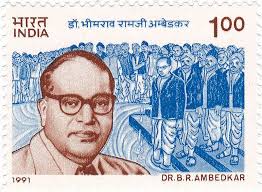
On March 20, 1927, Dr. B.R. Ambedkar led thousands of Dalits to the Chardar Tank in Maharashtra to drink water, a revolutionary act of reclaiming human dignity. While the physical tank may be open, the ritual codes of purity have merely migrated into the boardrooms of industry, the fields of science, and the hidden data of our national surveys. While the world admires the craftsmanship of Agra’s shoes, the Dalit artisans who create them remain trapped in a state of precariousness. From the manual scavengers cleaning sewer lines at night in Maharashtra to the Dome community in Banaras tasked exclusively with cremation, specific occupations remain caste-locked. Today, India marks the 99th anniversary of the Mahad Satyagraha. On March 20, 1927, Dr. B.R. Ambedkar led thousands of Dalits to the Chardar Tank in Maharashtra to drink water, a revolutionary act of reclaiming human dignity. In the popular imagination, this struggle is often viewed as a historical victory, a battle won before the ink of the Constitution was even dry. However, as we stand on the threshold of the centenary, a deep dive into the modern landscape suggests that while the physical tank may be open, the ritual codes of purity and pollution have merely migrated into the boardrooms of industry, the fields of science, and the hidden data of our national surveys. Professor Atul Thorat of JNU highlights that the exclusion Dr. Ambedkar fought against has become sophisticated and, in many cases, invisible to the urban eye. Nowhere is this more apparent than in the leather industry of Agra. While the world admires the craftsmanship of Agra’s shoes, the Dalit artisans who create them remain trapped in a state of precariousness. Thorat points out a stark contrast with Europe: in Italy or England, a handmade leather shoe is a brand of prestige where the artisan captures the full value and credit. In India, the system is designed to keep the creator hand to mouth. Because the retail, branding, and management systems have been captured by specific business communities, the Dalit worker, despite being the primary skilled worker, is denied the path to becoming an entrepreneur. They are forced to buy raw materials on credit, ensuring they never gather enough capital to start their own enterprise. They provide the skill, but the market system ensures they remain labourers rather than proprietors. This obsession with ritual hierarchy even acts as a barrier to scientific and medical innovation. Thorat recounts the story of an American-educated PhD engineer who returned to India to revolutionise agriculture using organic manure derived from human waste, what is known as Okla manure in Delhi. “Despite the scientific fact that organically decomposed waste is simply fertilizer, the project collapsed under the weight of caste-based perception. Farmers rejected it, claiming human excreta is defiling and polluting, whereas cow dung is celebrated as pure.” Thorat said. This unscientific divide mirrors a historical tragedy in Indian medicine. Thorat notes that Ayurvedic medicine historically failed to evolve as rapidly as Unani or Chinese medicine because practitioners, bound by codes of purity, refused to perform autopsies or examine polluting bodily fluids like urine and stool. Even today, this manifests in the fields: when truckloads of manure are delivered, the driver may be middle-caste, but the off-loaders are exclusively Dalits, relegated to the task because it is their traditional assignment to handle what the body gives up. This is rooted in the Bühler (1867) definition of Hindu ritualism: anything the body sheds—blood, sweat, spit, or excreta, is considered spiritually polluting for the priest-class, leading to the relegation of these tasks to a designated untouchable group. The persistence of these practices is backed by hard data that challenges the narrative of a post-caste India. Thorat, who co-authored research with Diane Coffey of Princeton and UT Austin, explains that traditional face-to-face surveys often hit a wall of survey guilt. When an urban interviewer asks a person if they practice untouchability, only about 30% admit to it. However, when the same questions were asked in an anonymised telephonic survey, the mask of political correctness slipped. In Delhi, 40% admitted to practicing untouchability; in rural Uttar Pradesh, that figure surged to 64%. This data provides a sobering context to the hidden-camera research conducted by the Indian Institute of Dalit Studies (IIDS). Their work documented the covert reality of 21st-century India: Dalit girls in villages sitting in corners for hours, waiting for the sun to set and for every other community to finish before they are allowed to touch the Chhapakaal (handpump). Once they finish, the pump is ritually washed and purified. At village tea stalls, the two-cup system persists, where Dalit men must wash their own glasses kept outside and receive tea poured from a height to avoid physical contact. From the manual scavengers cleaning sewer lines at night in Maharashtra to the Dome community in Banaras tasked exclusively with cremation, specific occupations remain caste-locked. National Sample Survey data reveals that across hundreds of occupational codes, categories like leather workers and tanners remain almost exclusively the domain of Scheduled Castes. Whether it is the Vaidyas (physicians) of old who were sidelined for their indigenous herb knowledge or the basket weavers of today, the Hindu fold has historically expanded by relegating frontier communities to the status of untouchables based on their proximity to polluting materials like dead hide. As we enter the 99th year of the movement at Mahad, the message is clear: Article 17 of the Constitution may have abolished the word untouchability, but it has not yet abolished the mind that practices it. The struggle of 1927 was not just about water; it was about breaking the monopoly on merit and purity. Until the skilled artisan in Agra can brand his own shoe and the farmer in Karnataka can see science instead of pollution, the Chardar Tank remains a mirror reflecting a journey that is far from over. Pritha Vashisth Courtesy : Outlook India Note: This news is originally published on https:/outlookindia.com/bha and is used purely for non-profit/non-commercial
PUCL Calls 2026 Transgender Rights Amendment Bill Unconstitutional, Demands Immediate Withdrawal

The amendments proposed in the Transgender Persons (Protection of Rights) Amendment Bill, 2026 constitute a gross dilution of valuable rights provided under the Transgender Persons (Protection of Rights) Act, 2019 and shall result in exclusion of a large number of Transgender Persons from its ambit, denial of their constitutional and statutory rights and targeting their support system. The proposed amendments are unconstitutional and infringe upon the fundamental rights of Transgender Persons, while being violative of established international human rights standards and conventions, and judicial precedents. The Bill constitutes a blatant betrayal by the Indian government of Transgender citizens, which will only put them to further risk, social and legal exclusion and denial of their basic human rights; The Bill should be withdrawn forthwith! The Union Social Justice and Empowerment Minister, Dr. Virendra Kumar introduced the Transgender Persons (Protection of Rights) Amendment Bill, 2026 (“the Bill”) in Parliament on March 13th, 2026. The Bill was not released in the public domain for scrutiny and consultation. The Bill is regressive and nothing but a shocking attempt to take back the hard won rights of the transgender community. The aim of the proposed amendments is to destroy the framework set by the Supreme Court of India in its historic decision in NALSA v Union of India (2014) which recognised the right to self-identification of gender by transgender persons and set in place the legal recognition of the rights of the transgender community. Narrowing of the definition of transgender persons who are entitled to protection by the law The Bill fundamentally alters the scope of the Transgender Persons (Protection of Rights) Act, 2019 (“the Act”) by diluting the existing definition of a transgender person under Section 2 (k) of the Act and replacing it with a reductive definition of a transgender person. This tantamounts to changing the law altogether and excluding a large number of transgender citizens from the ambit of the law, which is a shocking development. The amendment at its heart seeks to take away the right of a transgender person to self-identification, which was recognised under the 2019 Act. This is made clear by the deletion of Section 4 (2) of the 2019 Act which read, ‘A person recognised as transgender under sub-section (1) shall have a right to self- perceived gender identity’. According to the new definition, only three groups are entitled to the protection of the law, namely 1) someone from the traditional socio-cultural trans groups like Kinnars, Jogtis, Hijras, etc. 2) intersex people 3) or a person who has been “by force, allurement, inducement, deceit, or undue influence” been subject to “mutilation, castration, amputation or emasculation” and forcibly made to present “a transgender identity” can be considered a transgender person under this new bill. A proviso has also been added to specifically exclude persons with different sexual orientations and self-perceived sexual identities. This amendment instead of expanding the rights of the transgender community dilutes it significantly. By way of this amendment, all the rights which transmen enjoyed will be taken away as transmen are no more considered transgender as far as the law is concerned. Moreover under the amendment, no person can exercise their right to identify as a transwoman either. The only option for a transgender person under the law is a traditional identity. Those who see their identity on a spectrum fall outside this conservative new definition proposed by the amendment. Thus the law expressly discriminates against trans men, trans women, genderqueer and non-binary persons, because of the narrow definition of transgender persons which the proposed law adopts. Discriminatory intent of the amendment The objects and reasonings of the Bill goes on to underline that the legislative policy has been formulated to only protect those who “face severe social exclusion due to biological reasons for no fault of their own and no choice of their own.” It then goes on to state that the purpose of the Act was not to “protect each and every class of persons with various gender identities, self-perceived sex/gender identities or gender fluidities.” This goes against the historic NALSA judgement which recognised the right of transgender persons to determine one’s own gender identity as integral to lead a life with dignity as recognised under Article 21 of the Constitution. It also emphasised that while discrimination on the ground of “sex” is prohibited under Articles 15 and 16 of the Constitution, sex here does not only refer to biological attributes but also one’s self-perceived gender. The Bill is premised on an entirely false assertion that the intent of the 2019 Act was not to protect all categories of transgender persons, self perceived sex/gender identities and gender fluidities, in as much as the 2019 Act categorically included all transgender persons, including self-perceived gender identities and did not make any distinction or exclusion on the basis of self-perceived gender or sexuality. This is also clear from the Statement of Object and Reasons of the Transgender Persons (Protection of Rights) Bill, 2019, which clearly acknowledged that it was being introduced in compliance of the directions of the Supreme Court of India in the NALSA judgment and further stated under clause 4 (c) that the 2019 Bill sought to “confer right upon transgender persons to be recognised as such, and a right to self-perceived gender identity”. Accordingly, the `Statement of Objects and Reasons’ of the 2026 amendment Bill by itself reveals the falsely-premised regressive and unconstitutional intent of the proposed law. The Bill discriminates upon a large category of transgender persons by denying them the right to be legally recognised by their gender identity. Till date only around 37000 people have been registered on their portal in the six years since the Act came into operation. There has been little intent displayed by the government to implement the Act. Instead of ensuring that the transgender persons are legally recognised and benefit from the provisions of the Act, the law is being diluted on the excuse of this very non-implementation and claiming that the object of
Uttam Nagar: Rahul targets BJP, Sachdeva strikes back

New Delhi: Congress functioanry Rahul Gandhi on Thursday said Uttam Nagar does not want “bloodshed” and urged people not to fall into the trap of violence bei-ng stoked there, referring to a murder on Holi at the we-st Delhi locality. He alleged that BJP and its ecosystem seize upon every opportunity to “fan hatred”. “The people of Uttam Nagar have paid a heavy price for the violence — on one side, a young man, Tarun, lost his life, and on the other, an entire family is facing persecution. They don’t want any more bloodshed,” Rahul said on X. Targetting BJP, he said, “They want the country to remain entangled in Hindu-Muslim tension so that people cannot ask why the PM is being forced to hand over the country’s defence, energy security, food security and strategic sovereignty to America — and that’s why, in broad daylight, riot-like conditions are once again being created in the nation’s capital.” “An appeal to residents of Delhi: Do not fall for any provocation — the strength of the country lies in our unity, brotherhood and love. Jodo, jodo, Bharat Jodo…” he said. Hitting back, Delhi BJP president Virendra Sachdeva said that it would have been better “if instead of issuing an irrelevant appeal to Delhiites, Rahul Gandhi had first condemned the killers of Tarun in Uttam Nagar during Holi days violence”. “It is sad that Gandhi kept silent for almost two weeks and has today put the blame on BJP, instead of condemning the killers of Tarun,” he added. Courtesy : TOI Note: This news is originally published on https:/timesofindia.com/bha and is used purely for non-profit/non-commercial purposes, especially human rights
Alld HC: Implead centre in Rahul’s citizenship case
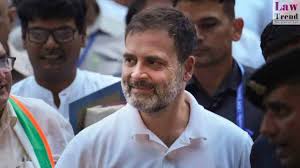
Lucknow: A Lucknow bench of Allahabad high court heard the case of Rahul Gandhi’s citizenship dispute on Thursday and asked the petitioner to implead the central govt as party in the case . As soon as the hearing began, senior advocate SB Pandey, representing the central govt, requested the court not to conduct the hearing in open court as the documents received from the home ministry were of a highly confidential nature. The single bench of Justice Rajiv Singh accepted his request and heard the case in his chamber. Following the hearing, the court passed an order requiring home ministry under secretary Vivek Mishra and assistant section officer Pranav Rai to appear with the relevant records. TNN Courtesy : TOI Note: This news is originally published on https:/timesofindia.com/bha and is used purely for non-profit/non-commercial purposes, especially human rights