
Rape Convict Sentenced to 10 Years in Sonbhadra: Court Imposes Fine of ₹55,000 in Case Involving Rape Under False Pretext of Marriage

In a significant verdict delivered on Tuesday, the court of Special Judge (SC/ST Act) Abid Shamim in Sonbhadra convicted Dhanesh—alias ‘Stander’ Patel—of rape and sentenced him to 10 years of rigorous imprisonment. The court also imposed a monetary fine of ₹55,000 on the convict. The court clarified that in the event of non-payment of the fine, the convict would be required to undergo an additional six months of imprisonment. The period already spent in judicial custody will be adjusted against the sentence. Half of the imposed fine amount is to be awarded to the victim. This case dates back approximately five years, when a young Dalit woman from the Karma police station area filed a complaint. The woman alleged that Dhanesh—alias ‘Stander’ Patel (son of Rajkumar Raja Patel, a resident of Khairpur Sirsiya Thakurai, under Karma Police Station, District Sonbhadra)—had engaged in sexual relations with her on multiple occasions under the false pretext of marriage. According to the victim, when Dhanesh announced his intention to marry a girl from his own caste community and was confronted about it, he verbally abused her and issued death threats. Subsequently, on May 17, 2021, the Karma police registered an FIR against him under various sections, including those pertaining to rape and the SC/ST Act. The Circle Officer (CO) investigated the matter and, based on sufficient evidence, filed a chargesheet in the court. The court heard the arguments presented by the counsels for both the prosecution and the defense, recorded the statements of seven witnesses, and conducted a thorough examination of the case records. Based on all these facts, Dhanesh—alias ‘Stander’ Patel—was found guilty. Government Counsel C. Shashank Shekhar Katyayan represented the prosecution during the arguments. Manoj Kumar Verma | Sonbhadra Courtesy: Hindi News
Can Dalit voters become game-changers in 2027 UP polls?:SP banks on Constitution; Congress leans on Jagjivan Ram’s legacy

Two recent political statements have made it clear that Dalit voters—who constitute around 21% of Uttar Pradesh’s population—could play a decisive role in the 2027 Assembly elections. “Mayawati only used Dalits and later abandoned them. Even today, Dalits and weaker sections remain marginalized,” said Ajay Rai on April 2. “We will celebrate Ambedkar Jayanti at the village level and discuss the threats facing the Constitution,” said Akhilesh Yadav on April 3. These remarks indicate that both the Samajwadi Party (SP) and Congress are actively trying to consolidate Dalit voters ahead of the elections. Congress revives Jagjivan Ram’s legacy Jagjivan Ram, India’s first Dalit Deputy Prime Minister, played a crucial role in the 1971 India-Pakistan war that led to the creation of Bangladesh. As Agriculture Minister, he also contributed to the Green Revolution. His rise to the top echelons of power sent a strong message that Dalits could play a decisive role in mainstream politics. Although Jagjivan Ram hailed from Bihar, Congress used his legacy for decades to maintain a strong hold over Dalit voters in Uttar Pradesh. Read in this report… Samajwadi Party cheif Akhilesh Yadav said on Friday in Lucknow that the constitution will be discussed in every village. Samajwadi Party cheif Akhilesh Yadav said on Friday in Lucknow that the constitution will be discussed in every village. Congress outreach through Meira Kumar To reinforce this connection, Congress is organizing a seminar in Lucknow on the eve of Jagjivan Ram’s birth anniversary (April 4). The party has invited his daughter Meira Kumar and Dalit thinker and Delhi University professor Ratan Lal as key speakers. Through this, Congress aims to send a message that Dalit interests are best protected under its leadership. Party workers have also been instructed to spend more time in Dalit localities and engage directly with their concerns. Why Dalit votes matter Senior journalist Ratan Mani Lal explains that Dalits constitute around 20–21% of UP’s population. There are 84 Assembly seats reserved for Scheduled Castes, and nearly 120 constituencies where Dalit voters exceed one lakh. Since Mayawati weakened after 2012, there has been no single dominant Dalit leader to unify the community. In 2014, a significant section of Dalit voters supported Narendra Modi, contributing to the BJP’s sweeping victories. However, voting trends suggest that such support typically lasts about a decade before voters begin exploring alternatives. Dalit vote shifts and Political competition After a BSP rally on October 9, 2025, there were indications that Dalit voters were returning to Mayawati. This prompted SP and Congress to intensify efforts to prevent a consolidation of Dalit votes in BSP’s favor. Their strategy showed partial success in the 2024 Lok Sabha elections, where the alliance secured around 43% of the vote in UP, with significant support from Dalit voters. They now aim to replicate this in the 2027 Assembly polls. Election data reflects changing trends In the 2022 Assembly elections, Congress contested 399 seats independently but won only two, with a vote share of 2.33%. However, in the 2024 Lok Sabha elections, the party won six seats and increased its vote share to 9.46%. The Samajwadi Party also saw a 2% increase in vote share compared to 2022. Percentage of Major Dalit Sub-Castes Sub-Caste % in Dalit Population % in Total UP Population (Approx.) Area of Influence Jatav/Chamar 54.2% 11.3% Strong in Western and Eastern UP Pasi 15.8% 3.2% Influence in Awadh and Purvanchal Dhobi 5.9% 1.2% Central and Eastern UP Kori 5.5% 1.1% Bundelkhand and Awadh Valmiki 3.2% 0.7% More in urban areas Khatik 2.2% 0.5% Small but active Search for a new Dalit leadership Senior journalist Sharat Pradhan notes that Dalits once saw Jagjivan Ram’s image reflected in Mayawati. However, as her influence declined post-2012, dissatisfaction grew among Dalit voters. This has led to the emergence of new leaders like Chandrashekhar Azad. Congress, traditionally seen as the “old home” of Dalits, regained some traction in 2024, aided by Rahul Gandhi’s campaign centered on the narrative that the Constitution is under threat. This messaging also benefited SP, helping consolidate Dalit support for the opposition alliance. Dalit sub-castes and Voting patterns Dalits make up about 20.7% of UP’s population (around 41.4 million people) and are divided into 66 sub-castes. Six major sub-castes account for 87% of the Dalit population The remaining 60 sub-castes are smaller and fragmented Among them, the Jatav community is the most influential and forms the core vote base of BSP. Non-Jatav Dalits—including Pasi, Kori, Dhobi, Khatik, and Balmiki communities—are more divided. The BJP successfully consolidated these groups between 2017 and 2024. However, in the 2024 Lok Sabha elections, a section of non-Jatav voters shifted towards the opposition alliance, contributing to its strong performance with 43 seats. Santosh Singh, Uttar Pradesh Courtesy : Bhaskar English Note: This news is originally published on https:/bhaskarenglish.com/bha and is used purely for non-profit/non-commercial purposes, especially human rights
The quiet denial of justice to Dalit converts: Conversion without freedom in India
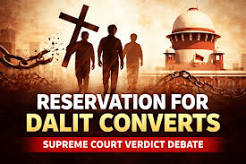
India often takes pride in being the world’s largest democracy, a constitutional republic anchored in rights, representation, and the promise of equality. But as B. R. Ambedkar warned, political democracy without social democracy is fragile – perhaps even hollow. Nowhere is this contradiction starker than in the experience of Dalits who convert out of Hinduism, seeking dignity, only to find that the law withdraws its protection the moment they do so. Ambedkar powerfully expressed this sentiment: “Turn in any direction you like, caste is the monster that crosses your path”. In India’s long and unfinished struggle with caste, there exists a paradox so glaring that it ought to trouble the conscience of any constitutional democracy. A Dalit may change their religion, but not their social reality. Yet, in the eyes of the law, that act of conversion is treated as if it dissolves centuries of oppression. The result is a quiet but profound injustice—one that is not always loudly proclaimed, but deeply felt. At the heart of this paradox lies a legal and constitutional anomaly, upheld and sustained over decades, including by the Supreme Court of India. The issue concerns Dalits who convert to Islam or Christianity and, in doing so, lose their Scheduled Caste (SC) status—and with it, the protective safeguards and affirmative action benefits designed to address historical discrimination. The question that demands asking is simple: does conversion erase caste? And if not, can a constitutional democracy justify withdrawing protection from those who continue to suffer its consequences? A Legal Framework Built on a Narrow Assumption The origins of this exclusion lie in the Constitution (Scheduled Castes) Order, 1950, which initially restricted SC status to Hindus. Subsequent amendments extended this recognition to Sikhs and Buddhists, but conspicuously left out Muslims and Christians. The rationale offered has been that caste – and specifically “untouchability”- is a phenomenon unique to Hindu society. This reasoning, though convenient, is increasingly difficult to defend. It relies on a theological abstraction rather than a sociological reality. Courts, including the Supreme Court of India, have often deferred to this framework, as seen in cases such as Soosai v. Union of India, where the burden of proof was placed on demonstrating that caste-based disabilities persist after conversion. But decades of scholarship, lived experiences, and community testimony suggest that caste does not disappear – it adapts, survives, and often reasserts itself in new forms. The Persistence of Caste Beyond Religion Dalit Christians and Dalit Muslims across India continue to face forms of discrimination that are unmistakably caste-based. Segregated burial grounds, separate seating in places of worship, endogamous marriage practices, and social exclusion are not uncommon. These are not isolated incidents but patterns that have been documented by sociologists, activists, and even government-appointed commissions. To suggest that conversion erases caste is to ignore this lived reality. It is to privilege doctrinal ideals over empirical truth. And when such an assumption informs policy and judicial reasoning, it risks turning the Constitution’s promise of equality into a selective guarantee. The legal and social status of Dalit converts in India – particularly those who convert to Christianity or Islam—represents a critical intersection of religious freedom, constitutional rights, and enduring social reality. While conversion is intended as an act of liberation, it often leads to a “quiet denial of justice,” where individuals lose state-mandated protections against caste discrimination without escaping the stigma of their birth. A Penalty for Seeking Dignity (The Wire) Perhaps the most troubling aspect of this framework is the implicit message it sends: that a Dalit who seeks to escape caste through conversion must pay a price for that choice. By losing SC status, the convert is effectively stripped of access to reservations in education and employment, as well as other safeguards intended to level a historically uneven playing field. The act of seeking dignity—of rejecting a system that has long dehumanised—is met not with support, but with withdrawal. This creates a perverse situation. Those who remain within the fold of the caste system are eligible for protection, while those who attempt to leave it behind are rendered invisible to the law. It is a paradox that borders on coercion, subtly discouraging religious freedom by attaching material consequences to it. The Constitutional Tension This framework sits uneasily with the broader principles enshrined in the Constitution, particularly Article 14 of the Constitution of India and Article 15 of the Constitution of India. If two individuals suffer the same social and economic disadvantages rooted in caste, can the State justify treating them differently solely on the basis of religion? The answer, from a strictly moral standpoint, would seem to be no. Yet, legally, the distinction persists. The judiciary, including the Supreme Court of India, has often adopted a cautious approach, refraining from issuing sweeping directions and instead deferring to the executive or calling for further study. While judicial restraint has its place, there are moments when restraint can appear indistinguishable from reluctance. The Burden of Proof and the Politics of Delay One of the recurring features of this issue has been the insistence on “adequate data” to establish that caste discrimination persists among converts. While the demand for evidence is not unreasonable in itself, it has, in practice, contributed to a cycle of delay. Commissions are appointed, reports are commissioned, and findings are debated—but the status quo remains unchanged. In the meantime, generations of Dalit converts continue to navigate a system that acknowledges their marginalisation in society but not in law. This raises a difficult question: how much evidence is enough? And at what point does the demand for further proof become a means of postponing a necessary decision? Between Law and Justice It would be simplistic to attribute this entire situation to judicial failure. The framework itself is rooted in legislation and executive orders, and any comprehensive reform would likely require political will as much as judicial intervention. Yet, the role of the judiciary in interpreting and, where necessary, challenging unjust frameworks cannot be overlooked. The Supreme Court of
Tamil nadu polls: DMK using dalits for mere votebank, says PMK
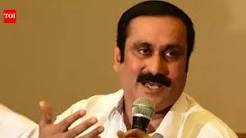
CHENNAI: PMK president Anbumani Ramadoss on Friday alleged that dalits were being reduced to a “mere vote bank” under DMK regime, saying no real welfare reaches them. Anbumani launched his campaign for the upcoming election for his candidate K Balu after offering prayers at the Thiruporur Kandaswamy Murugan temple. “DMK is using dalits for votes without delivering justice or dignity. It has been allocating six to eight seats for VCK president Thol Thirumavalavan, which will not lead to empowerment of dalits. In the Cabinet, DMK gave limited importance to Scheduled Caste ministers by making them sit in the last row,” Anbumani said at the campaign, recalling the seats given to Puratchi Bharatham MLA Poovai M Jagan Moorthy and Tamil Manila Bajuhan Samaj party founder Porkodi Armstrong. “There are more than 62,000 crimes against children in five years, including 27,000 Pocso cases, averaging 35 cases a day. The state has become unsafe for women and children,” Anbumani said. “Social justice declined in DMK after the demise of the late chief minister M Karunanidhi,” he added. Courtesy : TOI Note: This news is originally published on https:/timesofindia.com/bha and is used purely for non-profit/non-commercial purposes, especially human rights
UN Human Rights Office Says India’s Changed Transgender Law Risks Hard-Won Rights
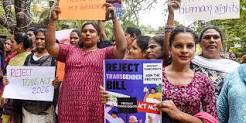
The UN criticised the swift passage of the Transgender Persons (Protection of Rights) Amendment Act, 2026, saying mandatory medical verification undermines self-identification and marginalises transgender people. New Delhi: The United Nations Human Rights office on Thursday (April 2) denounced the swift passage of the Transgender Persons (Protection of Rights) Amendment Bill, 2026, saying it risks “setting back hard won rights” of the transgender people in India. “We regret the fast passage of Transgender Persons (Protection of Rights) Amendment Bill, 2026, without adequate stakeholder consultation. The amendments risk setting back hard-won rights of transgender people, replacing self-identification with mandatory medical verification processes,” the international body stated in a post on X. Noting that India has been a pioneer for rights of transgender and gender-diverse people, the UN said that the Bill “will have far-reaching impacts on right to privacy & risk marginalisation of transgender people”. The statement comes days after President Droupadi Murmu gave her assent to the Bill on March 30, amid widespread protests and condemnation from across the country. According to the law ministry’s gazette notification, the amended bill – now an Act – came into effect almost immediately. Earlier on March 31, Amnesty International condemned the president’s assent to the Bill saying it “denies transgender and gender diverse people the right to self-identify”. and “is a serious setback for human rights in India”. Aakar Patel, the organisation’s India head, said, “This regressive law dilutes safeguards and deepens state intrusion into the lives of transgender people.” Meanwhile, the Rajasthan high court, while hearing a separate matter on horizontal reservation for transgender persons in the state, also underscored that the right to self-identify one’s gender is a matter “of right”, cautioning that the Modi government’s Bill risks reducing it to a “contingent, state-mediated entitlement”. Lok Sabha as well as Rajya Sabha passed the Bill by voice vote after minimal discussion, dismissing opposition MPs who slammed the government’s haste and demanded the Bill be referred to a select committee. Opposition MPs had criticised the Bill for taking away the right to self-determination of identity, granted by the 2014 NALSA judgement and part of the 2019 Transgender Persons (Protection of Rights) Act. The 2026 Act seeks to redefine the term transgender as “a person having such socio-cultural identities as kinner, hijra, aravani and jogta or eunuch”, or a person with specific “intersex variations”, or “a person who, at birth, has a congenital variation” in sex characteristics as compared to male or female development in their “primary sexual characteristics, external genitalia, chromosomal patterns, gonadal development, endogenous hormone production or response or such other medical conditions”. It controversially mandates that a transgender person “shall not include, nor shall ever have been so included, persons with different sexual orientations and self-perceived sexual identities”. Courtesy : The Wire Note: This news is originally published on https:/thewire.com/bha and is used purely for non-profit/non-commercial purposes, especially human rights
80% of Pakistan is gay: Karachi transgender activist Hina Baloch’s viral claim

Pakistani transgender activist Hina Baloch claimed in a viral video that “80% of Pakistanis are gay,” calling it an “open secret” hidden by social and religious pressures. How do cultural pressures affect LGBTQ+ visibility in Pakistan? What basis does Hina Baloch use for her 80% claim? How do cultural pressures affect LGBTQ+ visibility in Pakistan? Why do Indian trans activists oppose the 2026 bill? A viral video featuring Pakistani transgender activist Hina Baloch has triggered widespread debate after she claimed that “80% of Pakistan is gay and the remaining 20% are bisexual,” arguing that sexuality in the country is largely hidden due to social pressure, religion, and family honour. In an interview with Queer Global YouTube Channel, Baloch describes what she calls an “open secret” in Pakistani society. “I believe that more than half of Pakistan is quite gay actually. They don’t want to just say it out loud, but I guess 80% of Pakistan is gay and the remaining 20% are bisexuals, so I don’t think that anybody is straight in Pakistan in terms of their sexuality,” she says. She adds that people often deny or conceal their sexual orientation, citing cultural and religious factors. “They will deny it, they will bring religion into it, they will bring culture into it, but this is an open secret. Nobody’s straight in Pakistan,” Baloch says, while recounting her own perceptions growing up. Reflecting on her personal experiences, Baloch says her concerns were less about sexuality and more about gender expression. “What I was worried about was how to apply lipstick and not get lots of shit from the family for that. How do I get to dress feminine, wear jewellery and not get the beatings?” she says. Baloch also speaks about the structural challenges faced by the khawaja sira community in Pakistan, noting that many are pushed into limited and often exploitative livelihoods such as begging, dancing, or sex work. Rejecting these constraints, she became actively involved in organising for gender and minority rights. She went on to co-found Sindh Moorat March and participated in Pakistan’s Aurat March, positioning herself as a vocal advocate for transgender and minority rights. Baloch has previously said she faced violent retaliation after raising a Pride flag at a protest and survived kidnapping and abuse by law enforcement, experiences that ultimately forced her to leave Pakistan. She later secured a scholarship to SOAS, University of London, and sought refugee status in the United Kingdom. Written By: Akshat Trivedi Courtesy : India Today Note: This news is originally published on https:/indiatoday.com/bha and is used purely for non-profit/non-commercial purposes, especially human rights
Rahul Gandhi enjoys ‘appam and omelette’ with UDF leaders ahead of Kerala Assembly polls

NEW DELHI: Congress MP and Leader of Opposition Rahul Gandhi on Friday shared a video on social media showing him having snacks with United Democratic Front (UDF) leaders in Kerala ahead of the 2026 assembly elections. In the video, Gandhi is seen enjoying local delicacies like Appam, Puttu and omelette while engaging with UDF leaders on the ground realities of the upcoming polls. In a post on X, he wrote: “In between bites of Appam, Puttu and omelette the UDF leaders and I had a very interesting conversation on the ground realities of the Keralam election. It’s evident that Keralam deserves change – an overhaul of the education system, real opportunities for youth and a government that supports its people in sickness and old age. UDF is renewed hope for the people of Keralam – our team is strong, united and ready to lead.” The ruling Left Democratic Front (LDF) is expected to face a stiff challenge from the opposition United Democratic Front (UDF) led by the Indian National Congress. Meanwhile, the Bharatiya Janata Party (BJP)-led National Democratic Alliance (NDA) is also trying to expand its footprint in the state, aiming to turn the contest into a three-way fight. The 2026 Kerala Legislative Assembly elections will be held in a single phase on April 9, as announced by the Election Commission of India on March 15. The counting of votes is scheduled for May 4, while the tenure of the current assembly is set to end on May 23. Courtesy : TOI Note: This news is originally published on https:/timesofindia.com/bha and is used purely for non-profit/non-commercial purposes, especially human rights
85% candidates finalised, 15% pending: Congress to seal Tamil Nadu list at CEC meet today
NEW DELHI: The Indian National Congress is set to finalise its candidates for the upcoming Tamil Nadu Assembly elections at a Central Election Committee (CEC) meeting in Delhi, with 85 per cent of names already decided, according to state unit chief K Selvaperunthagai. Selvaperunthagai said discussions involving senior leaders, including Mallikarjun Kharge and Rahul Gandhi, have largely concluded, with only a small portion of seats left to be finalised. “All India Congress President Mallikarjun Kharge, Opposition leader Rahul Gandhi and senior leaders discussed the candidates. 85% have been decided, 15% are pending. Today we are going to decide,” he said. The Congress will contest 28 constituencies as part of the alliance led by the Dravida Munnetra Kazhagam, which heads the Secular Progressive Alliance (SPA). The DMK has retained the lion’s share, deciding to contest 164 of the 234 seats, while allocating the remaining 70 seats to its partners. Apart from Congress, key allies include the Communist Party of India (CPI) and Communist Party of India (Marxist) (CPI-M) with five seats each, Viduthalai Chiruthaigal Katchi (VCK) with eight seats, and Marumalarchi Dravida Munnetra Kazhagam (MDMK) with four seats. Other alliance partners include the Desiya Murpokku Dravida Kazhagam (DMDK) with 10 seats and the Indian Union Muslim League (IUML) with two seats, along with smaller regional players. Tamil Nadu chief minister and DMK president M K Stalin has already unveiled candidates for several key constituencies. Stalin will contest from Kolathur, while Deputy chief minister Udhayanidhi Stalin has been fielded from Chepauk-Thiruvallikeni. Other prominent candidates include Mahesh from Kanyakumari, Appavu from Radhapuram, Vahab from Palayamkottai, Kalaikathiravan from Tenkasi, and KKSSR Ramachandran from Aruppukottai. Additional names include Velu from Mylapore and Ma Subramanian from Saidapet. The main contest in the state is expected between the DMK-led SPA and the NDA led by the All India Anna Dravida Munnetra Kazhagam, which includes the BJP and PMK. A recent survey by polling agency Lok Poll projected a strong performance for the DMK alliance, estimating 181 to 189 seats with a vote share of 40.1 per cent. The AIADMK-led alliance was projected to secure 38 to 42 seats. Tamil Nadu will go to polls in a single phase on April 23, with counting scheduled for May 4. The last date for filing nominations is April 6, scrutiny will take place on April 7, and candidates can withdraw nominations until April 9. With candidate lists nearing completion and alliances finalised, political parties are entering the final phase of preparations for what is expected to be a closely watched electoral contest in the state. Courtesy : TOI Note: This news is originally published on https:/timesofindia.com/bha and is used purely for non-profit/non-commercial purposes, especially human rights
Bhadohi Crime News: Elderly Dalit Man Murdered in Bhadohi; Attacker Stabs Him to Death in Broad Daylight, Arrested

In Bhadohi, Uttar Pradesh, a deranged young man publicly stabbed a 60-year-old elderly Dalit man to death. A live video of this heart-wrenching incident has also surfaced. Acting with promptness, the police have arrested the accused, Shravan Kumar, seizing the blood-stained knife from his possession. Bhadohi News: A spine-chilling report has emerged from Bhadohi, Uttar Pradesh. The authority of the law appeared to crumble here when a deranged youth publicly stabbed a 60-year-old elderly Dalit man to death in a bustling market. A “live video” of this bloody crime has surfaced, leaving everyone who witnessed it in shock. This daylight murder has spread terror throughout the entire locality. However, demonstrating swift action, the police have arrested the killer—recovering the “blood-stained knife” from him—and have commenced further investigations. The events that unfolded at Pal Crossing in Jagdishpur village have put humanity to shame. The images captured on camera bear witness to how a 32-year-old youth chased after the elderly Bachhan Ram—a man twice his age—wielding a “knife of death.” The elderly man pleaded for his life and begged for mercy, but the attacker, Shravan Kumar, was consumed by a murderous rage. He continued to strike the elderly man in the middle of the street until he breathed his last. In the ensuing chaos, several bystanders who attempted to intervene and save the victim also sustained injuries, yet the killer’s brutality remained undiminished. Knife Attack in the Middle of the Market A blood-soaked Bachhan Ram was rushed to the hospital in a frantic effort to save him, but fate had other plans. He breathed his last moments before even reaching the hospital’s doorstep. As soon as the news of his death reached the village, it was met with an outpouring of grief and wailing. The protective shadow of a father has now been lifted forever from over the heads of the deceased’s four sons. There is widespread outrage throughout the entire Dalit settlement over this audacious act. This broad-daylight murder has shaken the Bhadohi police department to its core. Deputy SP (CO) Prabhat Rai personally took charge of the situation and stepped into the field to lead the operation. He stated that, thanks to the police cordon, the prime accused—32-year-old Shravan Kumar—was apprehended within just a few hours. From the killer now in police custody, the police have recovered the very “blood-stained knife” used to carry out this bloody crime. **Police Arrest the Accused** Circle Officer Prabhat Rai stated that, according to preliminary investigations, the aforementioned incident appears to stem from an old feud and a personal dispute. Prabhat Rai emphasized that intense interrogation of the accused is currently underway, and anyone who takes the law into their own hands will not be spared at any cost. Currently, police personnel are patrolling the village streets, and appeals are being made to maintain peace. Rohit Gupta Courtesy: Hindi News
AIADMK functionary arrested for assaulting dalits
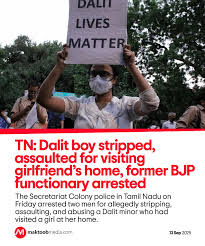
Trichy: An AIADMK functionary was arrested for allegedly assaulting a group of dalit youths campaigning for a DMK candidate in Mannachanallur constituency and was later released on bail following a protest by his supporters on Thursday. The complainant, S Rahul, 26, of Mahalikudi near Samayapuram, along with two others, was campaigning near Maniyampatti on Tuesday in support of DMK candidate S Kathiravan when the incident occurred. Police said a group of AIADMK cadres led by P Kumar, 47, confronted them, allegedly abused them using casteist slurs, threatened them and assaulted them. Rahul sustained injuries in the attack. Based on the complaint, Pulivalam police registered a case under relevant sections of the Bharatiya Nyaya Sanhita for assault, abuse and criminal intimidation, along with provisions of the SC/ST (Prevention of Atrocities) Act, and arrested Kumar on Wednesday. Following the arrest, AIADMK workers and locals staged a road blockade on the Trichy–Thuraiyur State Highway near Peramangalam on Thursday, demanding his release. Traffic was disrupted for about an hour before police intervened and pacified the protesters. Kumar was later released on bail. Courtesy : TOI Note: This news is originally published on https:/timesofindia.com/bha and is used purely for non-profit/non-commercial purposes, especially human rights