
MP: Social Boycott and ₹11,000 Fine Imposed After Dalit Groom Enters Temple

A decree was issued during a village *panchayat* (council meeting) stating that if any farmer or laborer in the village were to employ any member of this Dalit family, that individual would face a financial penalty of ₹11,000. In Padlya Gawli village of Madhya Pradesh’s Khargone district, the village *panchayat* decreed a social boycott against a Dalit family after a young Dalit man entered the local temple. Consequently, all social ties with the family were severed, and a ban was imposed on selling them goods at village shops, dairies, and ration outlets. According to a report by *The Mooknayak*, Nirmal Kanade (belonging to the Balai caste), a resident of the village, got married on April 20. The groom recounted that after the wedding, when the newlyweds went to the Hanuman temple to offer prayers, they were denied entry as the doors were shut. It is alleged that the groom was barred from entering the temple solely because he was a Dalit. The temple doors were even padlocked, subjecting the newlywed couple to humiliation. They were instructed to offer their prayers from outside the temple premises. However, the groom was eventually granted entry into the temple later, under police supervision. Subsequently, the situation escalated further. It is alleged that certain villagers convened a *panchayat* with the specific intent of “teaching the Dalit family a lesson.” During this *panchayat*, held on April 24, the following resolutions were passed: A decision was taken to cut off the Dalit family’s “Hukka-Pani” (social interaction/access to basic necessities)—meaning no one was permitted to touch their water or maintain any social relations with them. An announcement was made throughout the village via public proclamation (*dhindhora*) stating that no shopkeeper was to sell rations, milk, or any other goods to this family. Anyone found violating this order would also face a social boycott. If any farmer or laborer in the village were to employ members of this Dalit family for work (daily wage labor), that individual would be subject to a financial penalty of ₹11,000. The silence maintained by the Khargone district administration and police regarding this entire episode has raised serious questions. Activists and supporters of the Bhim Army have strongly criticized this caste-based decision on social media. They have stated that they will soon visit the village to hold a meeting with the locals and, while protesting against this decision, will raise their voices against those responsible. Condemning this incident in the strongest terms, Bhim Army leader Sunil Astey posed a question to Chief Minister Mohan Yadav. He asked whether, under his administration, depriving Dalits of basic amenities—such as temple entry, water, and rations—is what is to be considered “law and order.” Or will the government continue to disregard the sanctity of the Indian Constitution in this manner, bowing to the pressure of a “Manuvadi” (casteist) mindset? It is noteworthy that incidents involving caste-based discrimination and humiliation against Dalit grooms are frequently coming to light in Madhya Pradesh. In many instances, young men are targeted simply because they wish to take out their wedding processions (barats) while riding a mare—a traditional custom. Sunil Astey alleges that the administration’s response is often lax, which emboldens the perpetrators. He warned that if strict action is not taken against the culprits—specifically under the SC/ST Act and the NSA—the Azad Samaj Party and the Bhim Army will launch a large-scale agitation. It is worth noting that similar incidents have surfaced in the past, involving disputes over the entry of Dalits into temples. Earlier this year, in February, a man was arrested in a village in Karnataka’s Tumakuru district on charges of forcibly evicting a newlywed Dalit couple from a temple. The police confirmed this information to the media. According to a report by the *Hindustan Times*, the incident took place at the Arasamma Temple in Goni Tumakuru village, located in the Turuvekere taluk—the home district of the state’s Home Minister, G. Parameshwara. The couple, identified as Pankaja and Puneeth, had visited the temple after their wedding to seek blessings when they were confronted by a man named Narayanappa. According to the police, Narayanappa allegedly feigned being possessed by the deity and began shouting at the couple, thereby preventing them from entering the temple. In a video of the incident, he can allegedly be heard saying, “Dalits cannot enter the temple. Go worship somewhere else. Leave this place immediately.” Officials stated that the newlywed couple subsequently went to the police station on their own. A senior police officer remarked, “Pankaja’s younger brother, Jagdish, filed a complaint at the Turuvekere police station. Based on the complaint, the police registered a case under the Scheduled Castes and Scheduled Tribes (Prevention of Atrocities) Act and arrested Narayanappa.” Meanwhile, a controversy erupted in Somayajulapalli village—located in the Orvakal Mandal of Kurnool district, Andhra Pradesh—after a Dalit woman was allegedly denied entry into the Sunkulamma temple. In this instance, a complaint was lodged with the police under the Scheduled Castes and Scheduled Tribes (Prevention of Atrocities) Act. According to the complaint, Malathi—a government employee belonging to the Mala community—had visited the temple to offer prayers. It is alleged that a priest named Janardhan prevented her from entering the temple premises. The woman stated that the priest told her she had certain “boundaries” and could not be granted entry. During this exchange, the priest’s son, Vamsi, also allegedly sided with him. Malati stated that when she asked for the reason, the priest told her that she could complain to anyone she pleased, but she would not be granted entry into the temple. This incident sparked an altercation within the temple premises, creating an atmosphere of tension in the village. Ultimately, Malati lodged a complaint at the Orvakal Police Station and demanded action under the SC/ST Act. Speaking to the media, she remarked that facing caste-based discrimination in this day and age is deeply distressing. She asserted, “Everyone is equal before God. Denying entry to a temple on the basis of caste is absolutely wrong.” Courtesy :
High command to decide on leadership change or cabinet reshuffle, says Parameshwara
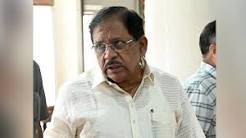
Speaking at a press conference here, G. Parameshwara said the Congress high command is aware of all developments and will take a decision shortly, which everyone will abide by. KALABURAGI: Karnataka Home Minister G. Parameshwaraon Tuesday said the Congress high command will soon take a decision on whether there will be a change of guard in the State or a cabinet reshuffle. Speaking at a press conference here, G. Parameshwara said the Congress high command is aware of all developments and will take a decision shortly, which everyone will abide by. Replying to a question on the frequent visits to New Delhi by groups aligned with Chief Minister Siddaramaiah and Deputy Chief Minister D. K. Shivakumar to meet the party high command, Parameshwara said ministers visit the national capital to hold discussions with Union ministers and senior officials of various departments regarding development works and to seek funds for their respective departments. He added that it is natural for them to meet the party high command during such visits, as Congress leaders treat the high command as their temple. “Whenever they meet the party high command, they will discuss several things, including politics. What is special in it?” he asked, adding that he is not going to Delhi as of now. On the demand to make a Dalit leader the Chief Minister of Karnataka, the Home Minister said it was the desire of the people, including Dalits. Responding to another question on whether ministers in the Siddaramaiah cabinet were lobbying for a Dalit Chief Minister, he denied the claim. On Dalit ministers meeting frequently over dinner, Parameshwara said, “Yes, we are meeting frequently for dinner and the Chief Minister Siddaramaiah has also joined the dinner meeting. Do you consider it wrong?” He added, “During dinner, we discuss many subjects, including politics. There is nothing wrong in it, and we have not asked the high command to make any one among Dalit leaders the Chief Minister. It is left to the Congress high command.” Minister for Medical Education Dr. Sharanaprakash Patil, Kalaburagi North MLA Kaneez Fatima, Kalaburagi South MLA Allamaprabhu Patil, Afzalpur MLA M. Y. Patil, and MLCs Jagadev Guttedar and Tippannappa Kamaknoor were present at the press conference. Ramakrishna Badseshi Courtesy : TNIE Note: This news is originally published on https:/thenewindianexpress.com/bha and is used purely for non-profit/non-commercial purposes, especially human rights
Dalit Organisations’ Hartal Over A Dental Student’s Suicide Disrupts Normal Life In Kerala
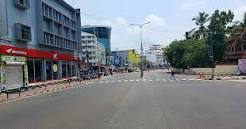
Action council demands arrest of teachers accused of caste discrimination and harassment THIRUVANANTHAPURAM: A dawn-to-dusk hartal called by Dalit/Adivasi organisations to protest the delay in arresting those accused in the death of BDS student Nithin Raj at Kannur Dental College disrupted normal life in several parts of Kerala. Organized by the Nithin Raj Action Council, comprising 56 Dalit and Adivasi groups, the protest affected public transport, businesses, and both private and government offices across many districts. Nithin, a first-year BDS student belonging to the Scheduled Caste community, died on April 10 after falling from a building, sparking outrage across the state. His family accused faculty members of caste- and colourbased discrimination. A case was filed against Dr M.K. Ram, Head of the Dental Anatomy Department, and Associate Professor Dr Sangeetha Nambiar under the SC/ST (Prevention of Atrocities) Act, but no arrests have been made so far. Nambiar has secured interim bail from the Thalassery Additional Sessions Court. Dalit organisations have called for the arrest of the accused teachers, the implementation of the Rohit Vemula Act, and financial compensation of Rs 10 crore for the victim’s family. Traffic disrupted Traffic came to a halt on national and state highways in several areas as protesters blocked roads. Passengers arriving at the Inter-State Bus Terminus in Thiruvananthapuram, as well as at railway stations and bus stations across Kerala, were stranded for hours without access to buses or taxis Students appearing for the NEET examinations were hit hardest, with many unable to reach their exam centres on time. Despite the Vyapari Vyavasayi Ekopana Samithi announcing that shops and markets would stay open, hartal supporters forced many to close. Reports from Kasaragod, Kannur, Kozhikode, Palakkad, Thrissur, Ernakulam, Alappuzha, Idukki, Kottayam, Pathanamthitta, Kollam, and Thiruvananthapuram indicated that the hartal disrupted normal life, affecting public transport, businesses, and various institutions. Although the Action Council stated that vehicles would not be forcibly stopped, supporters blocked traffic on highways. Police intervened in several areas to remove protesters and restore movement. Essential services like milk supply, newspapers, hospitals, and weddings were exempted. Kerala HC initiates contempt proceedings The Kerala High Court on Tuesday initiated Suo motu contempt proceedings over the hartal organised by Dalit and Adivasi groups, directing the DGP (Law and Order) to submit a report by evening on the reported violence and blockades, and issued notices to those who called for the hartal. Courtesy : Deccan Chronicle Note: This news is originally published on https:/deccanchronicle.com/bha and is used purely for non-profit/non-commercial purposes, especially human rights
Andhra MLA appoints transgender woman as personal assistant

Amaravati (Andhra Pradesh) In the bustling streets of Guntur, where traffic signals often become silent witnesses to untold struggles, Varsha’s life once stood still, defined by survival, not dignity. Born with dreams but pushed to the margins of society, Varsha, a well-educated transgender woman, found herself with no choice but to beg for a living. Like many in her community, rejection followed her everywhere, from job interviews to everyday interactions. Society saw her identity before her ability, but destiny took a turn when she crossed paths with Galla Madhavi, the legislator from Gunturu West. The Gunturu West MLA said, “Many times I felt pained seeing transgender persons begging at traffic signals. I wanted to do something meaningful, not just offer sympathy. Recognising Varsha’s education and determination, I appointed her as a Personal Assistant in my office. A role that not only provides employment but restores dignity and self-worth. Varsha said, “She didn’t just give me money like others do. “She spoke to me, understood me, and gave me an opportunity. I will prove myself worthy of this trust” Varsha said Today, instead of standing at traffic signals, Varsha walks into an office at the Secretariat with pride, her identity no longer a barrier, but a symbol of resilience. Varsha’s journey is not just personal; it reflects the silent aspirations of thousands in the transgender community. Meanwhile, Kalpana, a doctor from Guntur, speaking to ANI, said,” Galla Madhavi, Guntur West MLA, appointed transgender Varsha as her PA. It is well appreciated by the community because transgender people are also normal human beings. They have all the rights of a human being. All transgender by birth born in equal ratios. As Versha grew up, at the age of 13-14 years, she recognised she was not developing a secondary sexual character of a male. Her mindset and heart were telling her that she is female. So, she told the entire story at home. Everybody, her friends and family, thought she was a boy, but later everybody come ot know she is a girl. The decision taken by the MLA, I, as a doctor and activist, appreciate taking transgender people into jobs.” From the harsh glare of traffic signals to the dignified corridors of governance, her story proves one powerful truth: Sometimes, all it takes is one person to see potential where others see difference. This is not just a story of employment, it’s a story of dignity, inclusion, and hope. A reminder that real change begins when society chooses empathy over indifference. Posted by Ashhar Alam Courtesy : Awaz The Voice Note: This news is originally published on https:/awazthevoice.com/bha and is used purely for non-profit/non-commercial purposes, especially human rights
Tamil Nadu: Surya Crowned ‘Miss Koovagam 2026’ At Vibrant Transgender Festival In Villupuram

The Koovagam festival, held annually during the Tamil month of Chithirai, is a major cultural and spiritual gathering for the transgender community. Villupuram: At the annual beauty pageant, held as part of the famed Koovagam Festival at the Koothandavar Temple that celebrates transgender people, Surya Kutty from Coimbatore was crowned ‘Miss Koovagam 2026’ on Monday (April 27). The event, hosted at the Villupuram Municipality Grounds, drew participation from transgender individuals across India and abroad, reflecting the festival’s global significance. Nisha from Malaysia secured the second position, while Ananya from Puducherry finished third. The Koovagam festival, held annually during the Tamil month of Chithirai, is a major cultural and spiritual gathering for the transgender community. Thousands of participants from Tamil Nadu, Karnataka, Maharashtra and Andhra Pradesh, along with international attendees from Singapore and Hong Kong, took part in the festivities. A total of 25 contestants competed in the ‘Miss Koovagam’ pageant, which featured three rounds assessing confidence, talent, and stage presence. Surya’s standout performance in the ramp walk and her articulate responses, helped her clinch the coveted title. Earlier, in the ‘Miss Thirunangai 2026’ competition, participants from Chennai dominated the top three positions, with Omana winning first place, followed by Sai Sri and Sukhi. Addressing the gathering after the event, the winners highlighted the importance of family acceptance for transgender individuals and voiced concerns over the proposed Transgender Bill 2026. The event also honoured seven individuals with the ‘Young Achiever Transgender Award,’ presented by the South Indian Transgender Federation. Cultural performances and celebrity presence, including playback singer Velmurugan and actor Bala, added to the festive atmosphere, with financial incentives awarded to achievers from the community. The celebration once again underscored Koovagam’s status as a powerful platform for visibility, empowerment, and solidarity within the transgender community. Courtesy : ETV Bharat Note: This news is originally published on https:/etvbharat.com/bha and is used purely for non-profit/non-commercial purposes, especially human rights
Rahul Gandhi talks to tribal leaders in Campbell Bay over Great Nicobar Project concerns
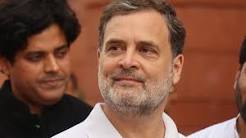
Congress leader Rahul Gandhi, who is on a visit to Andaman and Nicobar Islands, on Tuesday met tribal leaders who are raising concerns over the mega infrastructure project in the Great Nicobar region. He, along with local Congress leaders, went to Campbell Bay on Tuesday to understand the concerns of the tribal people related to the Great Nicobar projects. A section of tribal communities in Campbell Bay in Nicobar district has been alleging lack of transparency, environmental risks, and neglect of tribal rights in the project. The project includes building a transhipment port, an integrated township, a dual-use civil and military airport, and a power plant. On April 26, Rahul Gandhi arrived here in Andaman and Nicobar Islands and had a meeting with the party leaders. Congress leader Rahul Gandhi, who is on a visit to Andaman and Nicobar Islands, on Tuesday met tribal leaders who are raising concerns over the mega infrastructure project in the Great Nicobar region. A section of tribal communities in Campbell Bay in Nicobar district has been alleging lack of transparency, environmental risks, and neglect of tribal rights in the project. The project includes building a transhipment port, an integrated township, a dual-use civil and military airport, and a power plant. On April 26, Rahul Gandhi arrived here in Andaman and Nicobar Islands and had a meeting with the party leaders. He, along with local Congress leaders, went to Campbell Bay on Tuesday to understand the concerns of the tribal people related to the Great Nicobar projects. Gandhi criticised the alleged corporate influence in the archipelago and stressed that development should prioritise local needs rather than corporate interests. During his visit, he interacted with members of the Nicobarese tribal community and others in Campbell Bay. The Congress leader also visited Indira Point, the southernmost tip of India, and paid floral tribute to former Prime Minister Indira Gandhi, after which the spot was named. Tribal communities alleged that they are facing considerable hardship due to the proposed Great Nicobar projects and demanded that the central government take their concerns into account. Titus Peter, First Captain (village head) of Pulobhabi village, said that people of Campbell Bay expressed apprehension about the impact on the Shompen tribe, a Particularly Vulnerable Tribal Group (PVTG), claiming that increased outside contact could expose them to diseases and threaten their survival. Peter also warned of ecological damage, saying the Great Nicobar project could adversely affect endemic species unique to the island. While thanking Rahul Gandhi for understanding their concern, Peter alleged that the administration has not maintained transparency over the project, leaving tribal communities unaware of the full scale and implications of the project. Andaman’s senior Congress leader G Bhasker, who is accompanying Gandhi, alleged that the government had ”cheated” the tribal communities by obtaining their No Objection Certificate (NOC) without disclosing the full facts about the project. ”In its present form, the project raises significant environmental and social concerns, and we want urgent attention in this matter,” Bhasker said. (This story has not been edited by Devdiscourse staff and is auto-generated from a syndicated feed.) Courtesy : Devdiscourse Note: This news is originally published on https:/devdiscourse.com/bha and is used purely for non-profit/non-commercial purposes, especially human rights
Fuel prices may rise after April 29, says Rahul Gandhi; govt denies any hike plan amid polls

Gandhi further alleged that the government had benefited when crude prices were low but would now shift the impact of rising costs onto the public. Petrol and diesel prices could rise after April 29, Congress leader Rahul Gandhi warned on Tuesday, accusing the government of passing on the burden of higher global crude oil prices to consumers once elections conclude. In a post on X in Hindi, Gandhi said, “Election relief over, inflation’s heat is on its way! After April 29th, watch out – petrol, diesel, everything will get expensive.” He further alleged that the government had benefited when crude prices were low but would now shift the impact of rising costs onto the public. “When (crude) oil was cheap, the Modi government pocketed the profits. Now that it’s expensive, it’ll dump the burden on you,” Gandhi said. “A government that loots when it’s cheap – leaving the public to bear the brunt of inflation,” he added. His remarks come ahead of the second phase of polling in West Bengal scheduled for April 29. Assembly elections in Tamil Nadu, Kerala, Assam and Puducherry have already concluded, with results due on May 4. Meanwhile, global crude oil prices have surged amid tensions in West Asia. Israel and the United States attacked Iran on February 28 and since then the global oil supply chain has been disrupted due to the closure of Strait of Hormuz. The government has no plans to raise petrol and diesel prices, a senior official said on Tuesday, dismissing speculation of a hike after polling in West Bengal ends on April 29. Retail petrol and diesel prices have remained unchanged for a record fourth year, even as conflict in West Asia has pushed crude oil costs up more than 50 per cent over the past two months. The widening gap between input costs and pump prices has left state-run fuel retailers incurring heavy losses – with some estimates pegging daily loss at about Rs 2,400 crore – fuelling speculation of an imminent price hike after politically charged assembly elections in Tamil Nadu, West Bengal, Assam, Kerala and Puducherry conclude on Wednesday. “There is no proposal to increase petrol and diesel prices,” Sujata Sharma, Joint Secretary in the Ministry of Petroleum and Natural Gas, said at a news briefing on the fallout of developments in West Asia. Courtesy : TNIE Note: This news is originally published on https:/thenewindianexpress.com/bha and is used purely for non-profit/non-commercial purposes, especially human rights
Panchayat secretary declares two widows, Dalit man living in MP village dead

Two widows, along with a Dalit man, were denied benefits of the widow pension and Dalit welfare schemes, respectively as a panchayat secretary in the Chhatarpur district of Madhya Pradesh issued death certificates in their names. Two widows, along with a Dalit man, were denied benefits of the widow pension and Dalit welfare schemes, respectively as a panchayat secretary in the Chhatarpur district of Madhya Pradesh issued death certificates in their names. Following separate complaints lodged by the trio, and the finding of a preliminary inquiry, Amar Singh, the panchayat secretary of the Chandrapura village panchayat, was suspended by District Panchayat Chief Executive Officer (CEO) Namah Shivay Arjaria on Saturday. The action followed complaints filed on April 17 by Ramabai Raikwar, Girja Vishwakarma and Kallu Ahirwar, who alleged they were wrongly declared dead in official records and their death certificates had been duly made. In their complaints, Ramabai and Girja stated that their widow pension had been stopped after the duo was declared dead. Ahirwar stated that he was unable to reap the benefits of government schemes meant for Dalits as he has been declared dead. According to officials, prima facie it was found that the panchayat secretary’s act constitutes serious misconduct under the Madhya Pradesh Panchayat Service (Conduct) Rules, 1996. Officials said the suspension was carried out under the Madhya Pradesh Panchayat Service (Discipline and Appeal) Rules, 1999. During the suspension period, Amar Singh will be attached to the Janpad Panchayat Gaurihar office and will receive subsistence allowance. Courtesy : The Statesman Note: This news is originally published on https:/thestatesman.com/bha and is used purely for non-profit/non-commercial purposes, especially human rights
Karnataka: What the Revision of Internal Reservation for Scheduled Castes Means for the Community

Siddaramaiah stated that the earlier notifications issued under a scrapped 6:6:5 ratio will be withdrawn, and new notifications will be issued to start the recruitment process immediately. New Delhi: The Karnataka Cabinet on Friday (April 24) approved a revised internal reservation matrix for Scheduled Castes within the 15% quota, paving the way to resume stalled government recruitment. After a special Cabinet meeting at the Vidhana Soudha chaired by chief minister Siddaramaiah, the state government announced the sub-classification formula for 101 Scheduled Caste (SC) communities. The decision modifies the recommendations of a technical committee, formed on April 16 and headed by the chief secretary, which had initially suggested a distribution of 5.3%, 5.3% and 4.4%. The immediate implementation of this revised matrix will allow the state to begin filling 56,432 government vacancies announced in the budget. Siddaramaiah stated that the earlier notifications issued under a scrapped 6:6:5 ratio will be withdrawn, and new notifications will be issued to start the recruitment process immediately. BREAK UP: The Revised SC Quota Matrix (15% Total) Category 1 (5.25%): Dalit Left factions (Edagai), primarily consisting of Madiga and Adi Jambava allied castes. Category 2 (5.25%): Dalit Right factions (Balagai), primarily consisting of Holeya and Adi Karnataka allied castes. Category 3 (4.5%): Other SC communities, including Bhovi, Lambani, Koracha, Korama, and 59 nomadic (Alemari) groups. Historical and socio-political context The demand for internal reservation stems from historic disparities among Dalits. The most backward groups (the SC ‘left’) have long argued for better opportunities, noting that the blanket 15% quota was disproportionately availed by more dominant sections, such as the SC ‘right’. Historically, Right-hand groups were often linked to landholding and skilled occupations, while Left-hand groups were associated with marginalised work and faced greater social disadvantages. The government’s decision has come amid concerns raised by the Dalit right and “touchable” communities in Category 3, who felt the sub-classification restricted their opportunities in public education and employment. Tracing the background, Siddaramaiah noted that the move fulfils a promise made in the Congress party’s 2023 election manifesto and follows a consensus reached at a Chitradurga convention representing 101 SC communities. He added that the state had previously relied on the findings of the Justice A.J. Sadashiva Commission and the Justice H.N. Nagamohan Das Commission. While the latter’s recommendations were enacted into law, they faced implementation hurdles regarding the roster system. Legal constraints and the ‘backlog’. The state government had previously attempted to implement a 17% SC quota and a 7% Scheduled Tribe (ST) quota. However, to comply with the 50% reservation ceiling mandated by the Supreme Court in the 1992 Indra Sawhney case, the current implementation is capped at 15% and 3%, respectively. Siddaramaiah stated that the additional proposed quota (2% for SCs and 4% for STs) will be maintained as a backlog. “The 6% kept aside will remain as a backlog until the final court decision,” he said, referring to the ongoing case in the Karnataka high court regarding the state’s overall 56% reservation policy introduced by the previous government. Nomadic safeguards and roster rules Addressing concerns from the 59 nomadic communities placed in Category 3 — who had approached the Karnataka high court against the earlier sub-classification — the government stipulated that one in every five posts reserved for this category will be dedicated exclusively to them. If no candidate from a nomadic community is available, the post will revert to other groups within Category 3. Social Welfare Minister H.C. Mahadevappa clarified the roster rules to address previous administrative confusion, noting that “some people instigated and created confusion.” He stated that internal reservation requires adequate vacancies to ensure opportunities for all three categories. If the total number of SC-reserved posts in a recruitment drive is below 15, the internal sub-quotas will not apply, and the posts will be open to all SC candidates based on merit. Political unanimity The chief minister, flanked by Dalit Cabinet colleagues, stated the decision was unanimous. Ministers present included K.H. Muniyappa, G. Parameshwara, H.C. Mahadevappa, Priyank Kharge, and Satish Jarkiholi. Law and parliamentary affairs minister H.K. Patil stated that the law was framed by taking all communities and the House into confidence. The move makes Karnataka the third state, after Haryana and Telangana, to implement SC sub-quotas since the Supreme Court permitted sub-classification. Home minister G. Parameshwara noted that while Haryana, Punjab, Telangana and Andhra Pradesh have similar models, Karnataka’s case is unique due to its 101 distinct SC communities. “The Karnataka model may be emulated as we have shown how to implement it legally, politically, and administratively,” he stated. Courtesy : The Wire Note: This news is originally published on https:/thewire.in/bha and is used purely for non-profit/non-commercial purposes, especially human rights
Temple, shops reopened for Dalit families in Khargone village

Khargone: Two days after a newly married Dalit couple was denied entry into a temple and three families faced social boycott in Padliya Gavli village of Khargone district, the boycott was revoked on Sunday after multiple rounds of discussions between the two sides. Khargone Superintendent of Police Ravindra Verma told TOI that the matter was settled after three rounds of talks involving both communities and local authorities. “As part of the agreement, restrictions imposed on three Dalit families have been lifted. They are now free to enter the temple and resume purchasing goods from local shops, which had earlier been denied to them. Both sides have clarified before officials that their differences have been resolved, and normal activities have resumed from Sunday,” Verma said. On Friday, a Dalit family had organized a wedding ceremony in the village. After the ceremony, the newlywed couple visited a Hanuman temple for darshan but their families complained that the couple was denied entry. Following police intervention, the temple was opened and the couple was allowed to perform rituals. Gogawa police station in-charge Deepak Yadav said that members of three Dalit families allegedly used objectionable language against elders of the other communities, leading to resentment. In response, the other side decided to socially boycott the three families and restrict their access to shops and community resources. Courtesy : TOI Note: This news is originally published on https:/timesofindia.com/bha and is used purely for non-profit/non-commercial purposes, especially human rights