
Rahul Gandhi Congratulates Vijay After TVK Party Sweeps Tamil Nadu Assembly Elections
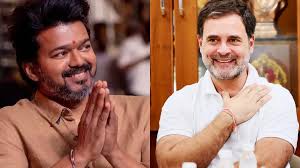
Rahul Gandhi speaks to Vijay after TVK victory in Tamil Nadu elections praising rising youth voice and reaffirming Congress commitment to public issues across Tamil Nadu and Puducherry. In a notable political development following the Tamil Nadu Assembly elections, senior Congress leader Rahul Gandhi personally reached out to actor turned politician Vijay to congratulate him on the impressive performance of the Tamilaga Vettri Kazhagam. Sharing the update on social media platform X, Rahul Gandhi said he had spoken directly with Vijay and appreciated the scale of the party’s victory. Describing the results as a reflection of changing political energy, Rahul Gandhi remarked that the growing influence of youth voices is clearly visible through this election outcome. He emphasized that such a shift indicates a new phase in regional politics where younger leadership and fresh narratives are gaining ground. The TVK party, under Vijay’s leadership, secured victory in more than 100 constituencies, marking a significant breakthrough in Tamil Nadu’s political landscape. In comparison, the Dravida Munnetra Kazhagam won over 70 seats, while the All India Anna Dravida Munnetra Kazhagam managed to cross the 50 seat mark. Rahul Gandhi also took a moment to acknowledge Congress workers who contributed to the party’s efforts in Tamil Nadu and Puducherry. He thanked them for their dedication and assured that the Congress party would continue to raise and fight for public issues in the region. Looking beyond Tamil Nadu, the elections also saw varied outcomes across states. The Bharatiya Janata Party and its allies performed strongly in states like West Bengal and Assam, while in Kerala, the Congress led United Democratic Front succeeded in forming the government. Reiterating his party’s stance, Rahul Gandhi affirmed that Congress remains committed to serving the people and addressing their concerns, particularly in Tamil Nadu and Puducherry, in the days ahead. Courtesy : The South India Times Note: This news is originally published on https:/thesouthindiatimes.com/bha and is used purely for non-profit/non-commercial purposes, especially human rights
West Bengal election results 2026: BJP surges past majority as TMC loses edge

TMC supremo and Chief Minister Mamata Banerjee, who was initially trailing in her Bhabanipur turf, regained the lead over BJP’s Suvendu Adhikari by 898 votes after the third round of counting. With more than four hours into vote counting, the BJP-led NDA has crossed the majority mark of 148 seats in West Bengal, securing a lead in over 180 seats. The incumbent Trinamool Congress (TMC) was restricted to 109 seats, while the CPI(M) led in just one seat. TMC supremo and Chief Minister Mamata Banerjee, who was initially trailing in her Bhabanipur turf, regained the lead over BJP’s Suvendu Adhikari by 898 votes after the third round of counting. However, several TMC leaders, including ministers Udayan Guha and Sashi Panja, were trailing, initial trends showed. In Cooch Behar district’s Dinhata, minister Udayan Guha was trailing by 6,259 votes against BJP’s Ajay Ray after four of the 24 rounds of counting. In Kolkata’s Shyampukur, minister Sashi Panja was trailing BJP’s Purnima Chakraborty by 934 votes after two rounds of counting, with another 19 rounds left. Aam Janata Unnayan Party (AJUP) chief Humayun Kabir was leading in the Nowda seat in Murshidabad district over his nearest TMC rival after the first round of counting, according to the Election Commission. Kabir was leading by a margin of 2,890 votes over TMC’s Sahina Momtaz Khan after the first round of counting. The polls are seen as a crucial test for Chief Minister Mamata Banerjee and her TMC’s bid for a fourth consecutive term, amid a stiff challenge mounted by the BJP. The CPI(M)-led Left Front and the Congress are also hoping to improve their tally after successive electoral setbacks. Exit polls present a sharply divided picture, with some projecting a BJP edge while others forecast a comfortable return for the All India Trinamool Congress, underlining an uncertain and closely fought contest. West Bengal BJP president Samik Bhattacharya said he was confident of a landslide victory, as counting of votes for the assembly elections began on Monday morning. “People of the state have already rejected the Trinamool Congress government, and in a few hours, the overwhelming majority of the seats will confirm that in the fight between Mamata Banerjee and the people, people have rejected Mamata Banerjee,” Bhattacharya said outside a counting centre in Kolkata. The counting of votes for the state’s 293 Assembly constituencies began at 8 am, with postal ballots taken up first in keeping with Election Commission norms. Follow live updates on results and trends: Tamil Nadu Results, West Bengal Results, Kerala Resuts, Assam Results, Puducherry Results Courtesy : TNIE Note: This news is originally published on https:/thenewindianexpress.com/bha and is used purely for non-profit/non-commercial purposes, especially human rights
VD Satheesan says Congress high command will soon decide on next CM
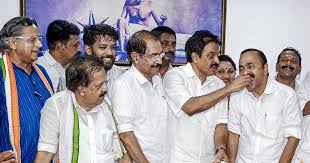
Satheesan said he was happy to have delivered on his promise given to Congress leader Sonia Gandhi while assuming the post of the Opposition Leader that he would guide the party to win. THIRUVANANTHAPURAM: Congress leader and potential chief minister candidate V D Satheesan on Monday said the party high command will soon take a decision on who will lead the state after consulting with various coalition partners of the UDF. Addressing the media after the UDF delivered a landslide victory in Kerala, elbowing out the CPI(M)-led LDF government, which ruled the state for two consecutive terms, Satheesan said it reflected the people’s strong decleration about the triumph of secular forces. Satheesan said he was happy to have delivered on his promise given to Congress leader Sonia Gandhi while assuming the post of the Opposition Leader that he would guide the party to win. The Congress leader said all communities and regions voted for the UDF, including traditional left voters and some party workers, letting the front breach several CPIM bastions. “We had told them that we are the ones upholding Nehruvian leftist view and the LDF has become the far right. The left sympathisers as well as some of their leaders accepted our perspective,” he said. Satheesan also said that the women and the youth have contributed to UDF’s win and assured to work towards fulfilling the front’s poll promises. Speaking on the UDF’s poll strategy that facilitated the historical win, Satheesan said, “In 2011, we came to power, but had won only 72 seats. Many social groups had veered off from the UDF, but we brought them back. We had planned several surprises, including in Ambalappuzha and Taliparamba. We had proudly welcomed G Sudhakaran to our fold.” G Sudhakaran, a veteran Communist leader, had resigned from the party and contested as an independent with UDF support in his traditional bastion, Ambalappuzha. He won by a margin of over 25,900 votes. Satheesan also reiterated the Congress’s allegation that the BJP and CPM leaders had entered into an electoral pact. The LDF suffered a major setback as results were declared for the crucial Assembly elections on Monday. The CPIM-led front was reduced to just 35 seats, while the UDF passed the majority mark with over 90 seats. The BJP, which has struggled to make a mark in the state politics for several years, delivered a surprising performance, winning three seats. Courtesy : TNIE Note: This news is originally published on https:/thenewindianexpress.com/bha and is used purely for non-profit/non-commercial purposes, especially human rights
Ganesh Kumar faces shock defeat in Pathanapuram after 25-year winning streak
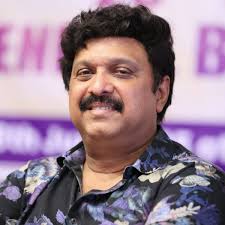
The Kerala Congress (B) chief is trailing Congress candidate Jyothikumar Chamakkala by more than 5,000 votes. Keralam’s Transport Minister and actor K B Ganesh Kumar, who has remained unbeaten in electoral politics for over two-and-a-half decades, is on the brink of defeat in the Pathanapuram constituency as vote counting in the Kerala Assembly elections enters its final stages, according to Election Commission figures. The Kerala Congress (B) chief is trailing Congress candidate Jyothikumar Chamakkala by more than 5,000 votes. In the 2021 Assembly polls, Kumar had defeated Chamakkala by nearly 15,000 votes. However, Chamakkala has continued his constituency-level work in Pathanapuram over the past five years, which appears to have translated into significant gains in the 2026 election. Kerala Congress (B), traditionally aligned with the UDF, joined the LDF ahead of the 2021 election following the death of party founder R Balakrishna Pillai, with the shift led by his son, Ganesh Kumar. During the campaign, controversy erupted after Congress leaders targeted Kumar over allegations related to his purported role in defaming former Chief Minister Oommen Chandy in a sexual assault case that was later closed by the CBI. Kumar had expressed confidence during the campaign that he would retain the seat with a record margin. The election is being closely watched as a high-stakes contest between the ruling LDF, which is seeking a rare third consecutive term, and the UDF, which is aiming to return to power after nearly a decade. The NDA, though not considered a frontrunner for power, is hoping to improve its presence and vote share in the state. Courtesy : TNIE Note: This news is originally published on https:/thenewindianexpress.com/bha and is used purely for non-profit/non-commercial purposes, especially human rights
Dalit Groups Seek Judicial Probe Into Akiveedu Temple Demolition
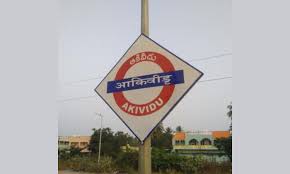
Srinivasa Rao demanded that the government immediately withdraw the restrictions and reconstruct the temple with the participation of local residents VIJAYAWADA: Dalit and civil rights organisations on Saturday staged a protest near Ambedkar Smriti Vanam in Vijayawada, demanding a judicial probe into the alleged repression of Dalits in Pedapeta of Akiveedu in West Godavari district following the demolition of the Hindu Gonthenamma temple. Dalit Soshan Mukthi Manch national leader V. Srinivasa Rao alleged that the temple was demolished illegally at midnight without conducting a proper panchanama, despite constitutional provisions that disputed religious structures should not be disturbed. He demanded a judicial inquiry into the incident. The protesters further alleged that severe restrictions had been imposed in the Dalit locality, with surveillance cameras installed and youth being harassed by police seeking Aadhaar details of residents and visitors. They claimed that outsiders were being prevented from entering the colony, creating fear among Dalits. Srinivasa Rao demanded that the government immediately withdraw the restrictions and reconstruct the temple with the participation of local residents. He also accused RSS and Vishwa Hindu Parishad activists of creating tension in the area with police support. KVPS state general secretary Andra Malyadri termed the demolition “a blow to democracy” and warned of intensified protests if action was not taken. Courtesy : Deccan Chronicle Note: This news is originally published on https:/deccanchronicle.com/bha and is used purely for non-profit/non-commercial purposes, especially human rights
‘Farming for 30 Years’: Dalit Families Claim Forced Land Takeover Near Temple in Mathura Village
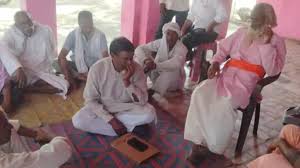
A land dispute near the Dauji Maharaj Temple in Aicha village, Mathura, Uttar Pradesh, has sparked tension, with Dalit families alleging that their agricultural land is being forcibly taken over by people linked to a local religious figure. Two Dalit families, including Kewal Singh and Suresh Chandra, have accused individuals allegedly associated with Mahant Baba Shyam Das of trying to encroach on their land located behind the temple. “We have been farming this land for years, but now some people are trying to take it away forcefully,” one of the victims said. The families claim that the land is still recorded in their names in official revenue records. “Farming This Land for 30 Years” According to the families and villagers, they have been cultivating the disputed land for nearly three decades. “This land has been in our possession for the last 30 years. It is our only source of livelihood,” a family member said, adding that the sudden dispute has left them distressed. Allegations Against Mahant’s Supporters Villagers alleged that some individuals are attempting to take control of the land by using the name of Mahant Baba Shyam Das. “Some anti-social elements are trying to grab the land by misleading the Mahant. This has created tension in the village,” a local resident said. Administration Steps In, Orders Status Quo Following the complaints, revenue officials visited the site and conducted a measurement of the land. An official said, “Both parties have been instructed not to carry out any activity on the land for now. Status quo must be maintained until further orders.” Authorities said a detailed report will be submitted to higher officials before any final decision is taken. Victims Seek Justice, Allege Threats The affected families said they have approached multiple authorities but are yet to receive concrete relief. “We are going from office to office seeking justice, but no action has been taken so far,” Kewal Singh alleged. “We are also being threatened and not being heard.” Local residents have urged the administration to ensure a fair investigation and restore the land to the rightful owners. Courtesy : TOP Note: This news is originally published on https:/theobserverpost.com/bha and is used purely for non-profit/non-commercial purposes, especially human rights
Lost in translation: When Kinnaur became ‘transgender’ in Himachal Class 6 textbook

The Hindi text is translated into English using some AI tool, which appears to have mistaken ‘Kinnaur’ for ‘Kinnar’ and changed it to ‘transgender’ The Himachal Pradesh Board of School Education has landed in an awkward situation due to the careless use of Artificial Intelligence (AI). In a Class 6 book, ‘Folk Culture of Himachal and Yoga’, district Kinnaur has been mentioned as ‘transgender’ in the English version. However, the Hindi version mentions the correct name. Apparently, the Hindi text was translated into English using some AI tool, which appears to have mistaken ‘Kinnaur’ for ‘Kinnar’ and changed it to ‘transgender’. The state government has introduced English as a medium of instruction in the government schools, and the Hindi version was translated into English. “It’s alright to use AI for translations but one should at least have seen the final text. AI is helpful but it can lead to embarrassing errors, as seen in this case,” said a teacher. Meanwhile, the education board has decided to issue a corrigendum stating that the word ‘transgender’ in the book should be read as ‘Kinnaur’. “We have noticed the error, and a corrigendum will be issued in a few days,” said Board secretary Vishal Sharma. The error will be corrected when the book is reprinted for the next academic session. Article_Author Subhash Rajta Courtesy : The Tribune Note: This news is originally published on https:/thetribune.com/bha and is used purely for non-profit/non-commercial purposes, especially human rights
Supreme Court to hear plea against Transgender Amendment Act on May 4
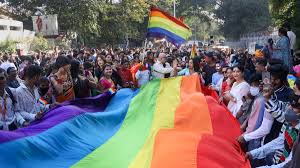
The petition argues that the Act amended the Transgender Persons (Protection of Rights) Act, 2019, in its structure, object, and affect, and thus violated the fundamental rights of transgender persons. New Delhi: The Supreme Court is scheduled to hear on Monday a plea challenging the constitutional validity of the Transgender Persons (Protection of Rights) Amendment Act, 2026 for replacing the individual’s own understanding of their gender or identity with a biological or socio-medical category of the State’s choosing. A bench of Chief Justice of India Surya Kant and Justice Joymalya Bagchi would take up on May 4, 2026 the petition filed by Laxmi Narayan Tripathi, the chairperson of National Council for Transgender Persons (NCTP), and its member Zainab Patel. The petition contended the Amendment Act amended the Transgender Persons (Protection of Rights) Act, 2019, in its structure, object, and affect, and thus violated the fundamental rights of transgender persons guaranteed under Articles 14, 15, 19, and 21 of the Constitution. The plea pointed out in National Legal Services Authority Vs Union of India, (2014), the Supreme Court, recognised for the first time that transgender persons have a fundamental right to be identified as a third gender, distinct from the male-female binary It highlighted that the court then directed that transgender persons would be treated as socially and educationally backward classes for the purposes of reservation under Articles 15 (4) and 16 (4), and called upon the State to take affirmative steps to address the marginalisation they face. Above all, NALSA judgment established that the right to self-identification of gender is a fundamental right under Article 21, not a privilege to be conferred by a certificate, not a status to be earned through surgery and not a conclusion to be reached by a medical board, the plea said. The 2019 Act preserved the core of what NALSA required. However, the Amendment Act arbitrarily removed the provision, which stated that a transgender person is someone whose gender does not match their birth assignment, and that they have the right to self-identify, the plea contended. “The deepest constitutional wound inflicted by the Amendment Act is the substitution of the definition of “transgender person” in Section 2(k) of the Principal Act,”‘ it stated. The plea emphasised in NALSA judgment, the Supreme Court explicitly and unequivocally repudiated the requirement of surgical intervention as a precondition for legal gender recognition. This court further held that each person’s self-identification of gender must be accepted as the foundation of their legal gender identity, without the State imposing medical, psychiatric, or bureaucratic gatekeeping. The right to determine one’s own gender, free from coerced bodily alteration, was held to flow directly from the right to privacy and dignity under Article 21, it pointed out. The plea contended a legislature cannot repeal a provision that gives concrete form to a fundamental right recognised by this court without violating Article 21. Ashish Tripathi Courtesy : DH Note: This news is originally published on https:/deccanherald.com/bha and is used purely for non-profit/non-commercial purposes, especially human rights
Dr G Parameshwara meets Hariprasad, says no leadership issue discussed
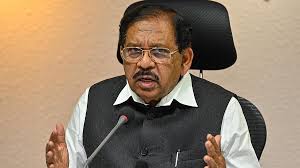
Minister BZ Zameer Ahmed Khan, another close confidant of Siddaramaiah, was also present in the meeting that lasted over 90 minutes. BENGALURU: Even as All-India Congress Committee (AICC) president Mallikarjun Kharge has clarified that the party high command has not taken any decision on change in leadership in Karnataka, the Siddaramaiah camp is continuing its efforts to project the state’s Home Minister Dr G Parameshwara as the next CM. Senior Congress MLC BK Hariprasad, a permanent invitee of the Congress Working Committee and who is said to be close to Congress Parliamentary Party chief Sonia Gandhi, seems to have entered the scene. After meeting Chief Minister Siddaramaiah on Friday evening, Hariprasad held separate confabulations with Parameshwara and asked the latter to be ready to throw his hat into the ring for the CM’s post if the party top brass decides to change the leadership, sources told The New Sunday Express. Minister BZ Zameer Ahmed Khan, another close confidant of Siddaramaiah, was also present in the meeting that lasted over 90 minutes. They chalked out a plan to pitch Parameshwara for the top post under the Dalit quota if the option of making Kharge CM and Deputy CM DK Shivakumar staking claim is ruled out. Hariprasad has information that Kharge is hesitating to take up the Chief Minister post for various reasons, sources said. Parameshwara, however, on Saturday said that the discussion among the trio revolved around the outcome of the West Bengal, Kerala and Tamil Nadu Assembly polls with a little bit of Karnataka politics. “We had a good meal together. Naturally, since we are politicians, we had to discuss politics. There is nothing to hide. Since election results will be declared on Monday, we analysed the situation. We discussed what is happening in West Bengal, Kerala, Tamil Nadu, and the status of our party there. We did not discuss state politics much,” he told reporters. On internal quota for SCs, he said the entire political dynamics has changed in Karnataka and Congress is assessing how things pan out. “For the past 25 years, we have adhered to a specific ideology. Initially, the Congress included all major, minor, and backward communities. But when the Ahinda movement began, the entire dynamics changed. We are seeing developments regarding internal reservations for SC communities and adjustments in ST percentages. Many things are currently unfolding in Karnataka, and we will see what happens next,” he added. Dr G Parameshwara Courtesy : TNIE Note: This news is originally published on https:/thenewindianexpress.com/bha and is used purely for non-profit/non-commercial purposes, especially human rights
Her Last Stand

Mamata Banerjee is conducting, in her own phrase, ajibaner lorai—a fight for life, against her most formidable foe, the BJP. A Mamata loss will end her career, and a saffron victory will decide the shape of a Hindu Bengal The woman in white buying vegetables does not look like a chief minister. That, of course, is precisely the point. It is past nine on a warm April evening in Bhabanipur, the south Kolkata neighbourhood where Mamata Banerjee was born, and lives in a two-room house, and has now come to fight, for the third consecutive time, for her political birthright. The crowd surrounding her is not the choreographed kind. You can tell. The faces are too excited, too lit from within. The vegetable seller, a local woman of indeterminate middle age, grins at Mamata Banerjee like a teenager. In the allegorical theatre of Indian electoral politics, symbolism is the only currency that never inflates. A fruit seller presses a box of mangoes into Didi’s hands. She refuses, then relents and accepts one. One mango. The detail is so perfectly calibrated, so exquisitely Bengali in its domestic frugality that you have to remind yourself it is happening on a campaign trail, not in a kitchen. “This is the difference between her and Modi,” says Hiran Majumdar, who manages the constituency, with the serene confidence of a man who believes Bengal has already endorsed his argument. “Narendra Modi eats jhalmuri in a fully stuffed shop for a pre-arranged photo op. Didi buys vegetables from a roadside stall.” Mamata Banerjee is not merely campaigning here. She is claiming ground. Bhabanipur is also where Suvendu Adhikari—her former protégé, now her most implacable tormentor—held a rally the previous evening. He is the man who bested her in Nandigram in 2021, the wound she has never publicly acknowledged and cannot stop picking at. This time, he has come for her on her own street, in her own constituency, with the easy confidence of a man who believes he has both God and Amit Shah on his side. Nandigram is where Mamata’s political career was reborn, and Bhabanipur is where she was born and lives, even after becoming the CM. Suvendu looks every inch a man at war. Going by the warmth of the greeting he receives on stage—“Swagatha, swagatham, Suvenduda swagatham”—and the composition of the men on stage, there is a certain resonant quality about him. Bhabanipur is a small constituency with a big chunk of different faiths: Bengali Hindus, Muslims, Sikhs, Marwaris, and also migrants from Odisha, Jharkhand, and Bihar; the stage is representative of the place except for the absence of Muslims. Suvendu’s speech emphasises on one of the BJP’s main planks—protect women, end TMC rule, and bring Sanatan Dharma to Bengal. It is a no-holds-barred war in which Suvendu could maybe come close to winning. The crowd at Suvendu’s rally that night was worked up by a speaker named Mohan Patel, a tall, athletic, conspicuously bearded figure, who rolled up his sleeves and delivered his warning—“Hindus would become a persecuted minority at the mercy of Muslims.” The speech was entirely in Hindi, in a city that has composed its most important thoughts in Bengali for three centuries. The assembly roared, “Bharat Mata ki jai,” and “Jai Shri Ram” in response. Nobody seemed to notice his language. That same evening a Mamata rally was going on in a parallel street; it was disrupted by BJP volunteers turning the blaring loudspeakers in her direction. The CM left, calling her walk-out an act of resistance. Those two nights at Bhabanipur brought in the essential difference between TMC’s Bengal-ism and BJP’s idea of Bharat. This is the essential grammar of the 2026 Bengal Assembly elections: the BJP’s Shri Ram taking on the TMC’s Joi Bangla—pan-Indian Hindu nationalism versus exclusive Bengali cultural identity. Delhi’s idea of what India should be versus a three-term chief minister’s insistence that Bengal is not a province of India so much as a civilisation that has graciously agreed to share a border with it. Modi speaks at Bengal. Mamata speaks from it. The distinction is not rhetorical. It is everything. This is the difference between Mamata Banerjee and Modi. Narendra Modi eats jhalmuri in a fully stuffed shop for a pre-arranged photo op. Didi buys vegetables from a roadside stall. Hiran Majumdar, who manages the Bhabanipur constituency To understand Bengali politics, you must first understand the bohiragato—the outsider. Bengal’s relationship with the rest of India has always been marked by a proud, sometimes ferociously prickly sense of cultural distinction. This is, after all, the land of Tagore and Nazrul Islam, of Satyajit Ray and Subhas Chandra Bose, of a Renaissance that preceded Indian independence and in many ways made it imaginable. Bengalis believe, not without evidence, that they invented modern Indian intellectual life and a cuisine so precisely regional that the distinction between ilish and chital is not a food preference, but a declaration of who you are and where you come from. The consequence of this pride is a deep, instinctive suspicion of the outsider who arrives, however well-intentioned, to tell Bengal what Bengal should be. The Left understood this and draped its ideology in Bengali cultural attire for 34 years. Mamata Banerjee understood it even better and weaponised it into something more raw and personal. The BJP, relatively new to the state’s complicated emotional weather, has repeatedly underestimated it and paid the price. The TMC masterstroke in 2021 was not any single policy or personality. It was a slogan ‘Bangla Nijer Meyekei Chai’—Bengal Wants Its Own Daughter. The BJP campaign that year was led largely by leaders parachuted in from Delhi and Uttar Pradesh, whose sloganeering about Ram and borders landed in Bengal like a foreigner’s mispronunciation—technically legible, tonally catastrophic. The result was 213 seats for the TMC, 77 for the BJP: a rout so complete it prompted, by all accounts, a brutally honest internal post-mortem. The BJP is not an organisation that repeats its mistakes without attempting, at minimum,