
NEET aspirant dies by suicide in Rajasthan days after exam cancellation over paper leak allegations

According to family members, Pradeep was expecting to score over 650 marks in NEET-UG 2026, a score they believed could have got him admission to any reputed government medical college. JAIPUR: A 23-year-old NEET aspirant died by suicide in Rajasthan’s Sikar on Friday, days after the cancellation of the NEET-2026 examination amid allegations of a massive paper leak. The deceased, identified as Pradeep Mahich, allegedly hanged himself from a ceiling fan using his sister’s scarf at his rented accommodation in Sikar’s Jaldhari Nagar area on Piprali Road. Originally from a village in Jhunjhunu district, Pradeep had been preparing for NEET in Sikar for the last three years. According to family members, Pradeep was expecting to score over 650 marks in NEET-UG 2026, a score they believed could have got him admission to any reputed government medical college. His relatives claim he had been under severe mental trauma ever since the National Testing Agency (NTA) cancelled the examination following the paper leak controversy. Pradeep’s family and members of the local community gathered outside the mortuary of SK Hospital after the incident. Pradeep, the only son of a financially struggling family, lived in Sikar with his two sisters who were preparing for railway recruitment exams, his father Rajesh Kumar Meghwal said. According to police and family members, the incident took place on Friday afternoon. Pradeep’s younger sister had gone to coaching classes while his elder sister was in the bathroom, when Pradeep allegedly hanged himself inside the room. When the elder sister returned, she found him hanging from the ceiling fan. She immediately informed the landlord and alerted the police. Police personnel reached the spot and rushed Pradeep to SK Hospital, where doctors declared him dead. The police is investigating the matter based on the information provided by the family. The tragedy comes amid a widening investigation into the alleged NEET-UG 2026 paper leak, which has placed Rajasthan’s coaching hub Sikar under intense scrutiny. Before the examination held on May 3, a 150-page document titled “Guess Paper” was allegedly circulated among students in Rajasthan’s Sikar and Jhunjhunu districts. The document reportedly contained 410 questions, of which 135 are alleged to have matched the actual NEET paper. According to sources, the similarities extended beyond the questions themselves. Officials reportedly found matches in the sequence of options, language patterns, and even punctuation marks. On May 7, the NTA acknowledged receiving inputs regarding alleged irregularities, four days after the examination. Around the same time, Special Operations Group (SOG) teams reached Sikar and Jhunjhunu to begin an investigation. On May 8, the NTA formally handed over the matter to central agencies. The Rajasthan SOG subsequently launched a full-scale investigation into the alleged paper leak. By May 12, at least 13 people had reportedly been arrested from Sikar and several other locations across the country, including Jaipur, Nashik and Gurugram. Among those currently in custody are Dinesh Binwal, his brother Mangilal, Mangilal’s son Vikas, and another accused, Rakesh, who allegedly operated a consultancy firm linked to the racket. Investigators suspect that Dinesh Binwal allegedly procured the leaked paper for his son Rishi, who was preparing for NEET in Sikar, and later sold it to other candidates for money. The probe has also expanded to examine admissions secured by other members of the Binwal family last year. Sources claim that five children from the families of Dinesh and Mangilal, all considered academically average, had reportedly cleared NEET in 2025. The revelation has now raised fresh questions over the integrity of last year’s examination process as well. Rajesh Asnani Courtesy : TNIE Note: This news is originally published on https:/thenewindianexpress.com/bha and is used purely for non-profit/non-commercial purposes, especially human rights
Opposition slams Rs 3 fuel price hike; says move will worsen inflation, economic distress

Congress said the fuel crisis was caused by government failures and incompetence, with ordinary citizens bearing the brunt of the economic distress. NEW DELHI: Several opposition parties, including the Congress, Samajwadi Party, Trinamool Congress and CPI(M), on Friday attacked the government over the increase in petrol and diesel prices, saying the decision would aggravate inflation and hurt economic growth. Leading the opposition criticism, Congress leader Rahul Gandhi said the public was paying for the Modi government’s “mistakes”, adding: “The Rs 3 shock has already arrived, the remaining recovery will be extracted in installments.” Party President Mallikarjun Kharge accused the Centre of pushing the country into an economic crisis because of a “leadership crisis, lack of vision and incompetence”. Kharge said the crisis was created by the government and ordinary citizens were suffering its consequences. He alleged that apart from the global fuel crisis, the Modi government’s failures and widespread incompetence were major reasons behind India’s economic troubles. In a statement, the CPM Politburo condemned the fuel price increase, saying it would place an additional burden on people already struggling with inflation, unemployment, stagnant wages and worsening economic distress. The party demanded an immediate rollback and asked its units to organise protests against the hike. CPI General Secretary D Raja said the crisis stemmed from PM Narendra Modi’s “disastrous foreign policy” and alleged that the government was functioning like a recovery agency for crony capitalists and foreign interests. Samajwadi Party chief Akhilesh Yadav said the bicycle, his party’s election symbol, remained the only alternative. The Trinamool Congress accused the Centre of deceiving citizens after the elections and deepening the economic crisis. Addressing a press conference, TMC leader Sagarika Ghose said, “After looting votes, you are now looting the purse of citizens”. Preetha Nair Courtesy : TNIE Note: This news is originally published on https:/thenewindianexpress.com/bha and is used purely for non-profit/non-commercial purposes, especially human rights
Attack on a family in Tilsuwa, Malihabad: Accused of setting cattle on fire, case filed against accused
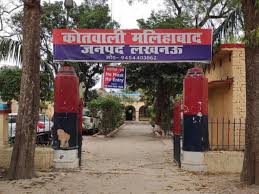
A Dalit family was attacked, hurled casteist slurs, and their cattle were set on fire in Tilsuwa village, under the Malihabad police station area of Malihabad, Lucknow. Based on the victim’s complaint, the police have registered a case and begun an investigation. The victim, Santosh Kumar, a resident of Tilsuwa village, stated in his police complaint that on March 15, 2026, four to five young men armed with sticks arrived at his home. The accused included Balendra Yadav alias Nitin and Abhay Yadav, along with three unidentified individuals. According to the victim, the accused stood outside the house, shouted casteist slurs, banged on the door, and threatened to kill the family if they came out. Frightened, the family refused to open the door. The miscreants then beat a pregnant cow and two buffaloes tied near the house and set their shed on fire. The incident was immediately reported to Dial 112. Police and fire brigade teams arrived at the scene, but by then the accused had fled. The victim alleged that while leaving, the accused threatened to kill his entire family if they complained. The victim also stated that he had previously submitted a petition to the Malihabad police in this regard, but no action was taken. Two months later, on the instructions of the ACP, a case has been registered and an investigation has been initiated. Malihabad ACP Sujit Kumar Dubey stated that based on Santosh’s complaint, a case has been registered under the Scheduled Castes and Tribes Act (SC/ST Act) and other relevant sections and the matter is being investigated. Courtesy: Hindi News
Why are Dalit organisations staging an indefinite protest for the PTCL Act in Karnataka?

To understand the reasons behind the protests at Freedom Park in Bengaluru, one has to look back at the sordid history of the hostility of the revenue bureaucracy and apathy of the judiciary towards the Karnataka Scheduled Castes and Scheduled Tribes (Prohibition of Transfer of Certain Lands) Act, 1978 (PTCL Act). “Do you see those apartments? That is where our lands used to be,” Krishnamurthy, a resident of Attibele in Bengaluru, said. Growing up in a landless Dalit family, he heard stories about how once his family had owned some land in the village, which was sold off for a petty amount. But nobody in his family knew where those lands were. This was Krishnamurthy’s primary motivation in joining a prominent Dalit organisation, founded by a leader from his own village. After hundreds of visits to the local tehsildar office, he discovered that his grandfather was granted 3 acres of land in 1951 with the condition that the land could never be alienated. But in 1958, the land was sold to a Lingayat landlord of the village. Since then, the land was transacted many times, eventually being bought by a developer who erected residential apartments on it. The land was worth a fortune today, if only Krishnamurthy could get it back. This is where the Karnataka Scheduled Castes and Scheduled Tribes (Prohibition of Transfer of Certain Lands) Act, 1978 (PTCL Act, 1978) came in. This special legislation was enacted to come to the aid of landless families like Krishnamurthy’s, allowing them to reclaim their lands which were alienated in violation of any of the conditions attached to the grant. But there was a problem. The Supreme Court of India had delivered a judgement in Nekkanti Rama Lakshmi vs State of Karnataka (2017), which held that applications for restitution of lands under the PTCL Act, 1978 should be filed without “unreasonable delay”. By the time Krishnamurthy could collect all the necessary documents, 40 years had elapsed since the enactment of this legislation, and he feared that his application would be dismissed on grounds of “unreasonable delay” as had happened to hundreds of others like him, who had become aware about this legislation only recently. For this reason, he was mobilising youths like himself to participate in the indefinite protests at Freedom Park in Bengaluru, when we met him in November 2022. Several Dalit organisations, including his own, were demanding that the government pass an amendment to overcome the difficulties created by the Supreme Court verdict. Eventually, these protests lasted for 208 days (7 months), and while the outgoing BJP government did not heed the demands, the Congress included them in their 10-point poll promises for the Dalit community in the state. When the Siddaramaiah-led Congress government came to power in Karnataka in 2023, one of the first legislative steps it took was to bring an amendment to the PTCL Act, 1978, raising hopes among those like Krishnamurthy that they can now get their lands back. But these hopes have been belied. Dalit organisations have resumed their protest on April 30, with a charter of 15 demands. To understand why such a protest became necessary despite the 2023 amendment, one has to look back at the sordid history of how the hostility of the revenue bureaucracy and apathy of the judiciary towards the objectives of this special legislation has almost entirely hollowed it out. Historical sources of land ownership for Dalits in Karnataka Broadly, there are three sources through which any person can come to own a piece of land – inheritance, purchase, and grant by the government. Historically, the first two channels were closed to Dalits because of the operation of custom, economics, and statutory law, undergirded by their location in the caste system, as noted by Dr BR Ambedkar in Untouchables or the Children of India’s Ghetto (BAWS, Vol 5, p 23): In an agrarian country, farming can be the main source of living. But this source of earning a living is generally not open to the Untouchables. This is so for a variety of reasons. In the first place, purchase of land is beyond their means. Secondly, even if an Untouchable has the money to purchase land s/he has no opportunity to do so. In most parts, the caste Hindus would resent an Untouchable coming forward to purchase land and thereby trying to become the equal of the so-called ‘Touchable’ class of Hindus. Such an act of courage on the part of an Untouchable would be seen as a provocation for harsh collective punishment. An entire community could be targeted for an individual’s transgression. In some parts, Dalits are disabled by law from purchasing land. For instance, in the Province of Punjab there is a law called the Land Alienation Act. This law specifies the communities which can purchase land and the Untouchables are excluded from the list. The result is that in most part the Untouchables are forced to be landless labourers. The reference here is to the Punjab Agricultural Land Alienation Act, 1901 which classified communities into agricultural and non-agricultural, and prohibited acquisition of land by the later sets of communities. Two of the most populous Dalit communities were included in the non-agricultural category, prohibiting transfer of lands to them. While the Dalits were not statutorily prohibited from purchasing land in the Princely State of Mysore, other caste-derived disabilities operated to ensure that here too, they were largely landless labourers. The 1931 Census, considered to be the most comprehensive, showed that while the Depressed Classes comprised only 15% of the population of the state, their share in agricultural labourers was over 36%. Of all the members of Depressed Classes deriving income from agriculture, over 46% were agricultural labourers, while just over 8% were tenant cultivators. Historically, there were two major sources of land ownership among Dalits in the Princely State of Mysore – grants of lands referred to as darkhast lands and gift of lands in lieu of services referred to as inams. The rulers of
Transcending Barriers: Maya Thakur’s Advocacy for Transgender Reforms in India

Activist Maya Thakur urges Chief Minister Sukhvinder Singh Sukhu to implement systemic reforms in criminal and labor laws to support the transgender community in India. Highlighting discrimination in jobs and education, Thakur calls for overseas job opportunities and European partnership initiatives to provide a safer environment for transgender individuals. In a passionate plea for reform, transgender activist Maya Thakur has addressed a letter to Himachal Pradesh Chief Minister Sukhvinder Singh Sukhu. She seeks systemic changes in criminal and labor laws to end discrimination against the transgender community. Thakur highlighted enduring biases in education and employment, drawing attention to the difficulty transgender individuals face in finding jobs and housing, especially in North India . Praising recent initiatives for overseas job placements, Thakur suggested collaborations with European countries to secure inclusive employment opportunities, citing Germany and Norway as models for safety and inclusivity. Courtesy : Devdiscourse Note: This news is originally published on https:/devdiscourse.com/bha and is used purely for non-profit/non-commercial purposes, especially human rights
Transgender Advocate Speaks Out: Systemic Reforms Needed for Inclusion

Activist Maya Thakur calls for systemic reforms in India’s criminal and labor laws to address discrimination against transgender people. She urges Chief Minister Sukhvinder Singh Sukhu to facilitate overseas job opportunities, highlighting ongoing challenges in employment and housing for transgender individuals, particularly in North India. Activist Maya Thakur has urged Chief Minister Sukhvinder Singh Sukhu to implement systemic reforms addressing challenges faced by India’s transgender community. In her letter, Thakur called for changes in criminal and labor laws to combat discrimination. Thakur, known as an ‘election icon’ for Solan, pointed out difficulties transgender people encounter in securing jobs and housing, particularly in North India. She highlighted the Himachal government’s efforts to facilitate overseas employment for youth and suggested similar opportunities for transgender individuals. Citing examples from European countries, Thakur proposed partnerships to recruit transgender persons for jobs abroad. She stressed the need for legal reforms, like stricter overtime provisions and anti-corruption measures, to improve living conditions for transgender individuals in the region. Courtesy : Devdiscourse Note: This news is originally published on https:/devdiscourse.com/bha and is used purely for non-profit/non-commercial purposes, especially human rights
Trans icon Maya Thakur writes to Himachal CM to facilitate overseas jobs for community

Shimla, Expressing concern over challenges faced by the transgender community in India, activist Maya Thakur has written a letter to Chief Minister Sukhvinder Singh Sukhu, seeking ‘systemic reforms’ in criminal and labour laws. Thakur, a transgender woman who was designated ‘election icon’ for the state poll body in Solan, told PTI on Friday that discrimination in education and jobs against the community remains a major issue in India, and urged the CM to facilitate overseas job opportunities for transgender people. Appreciating the recent initiative of the Himachal government facilitating overseas jobs for youths in Dubai and Saudi Arabia, Thakur — who herself has been seeking employment opportunities — pointed out that “even today, it is nearly impossible for a transgender person to find a decent job or even a room on rent, especially in North India, due to deep-rooted discrimination”. Last year, the Himachal Pradesh State Electronics Development Corporation was officially authorised by the Ministry of External Affairs to facilitate securing overseas jobs and organise recruitment drives for international positions like bike-borne delivery riders in the UAE. Citing examples of European countries like Germany and Norway, which have more inclusive laws and a safe environment for transgender persons, Thakur suggested initiating partnerships with European nations specifically for the recruitment of transgender persons from Himachal, adding that overseas employment in these nations will provide safety to the community. “There are transgender people who wish to study, become teachers, lawyers, join the police and excel in other spheres of life, but when we apply for jobs, the response that we usually get is — will tell you if there is any scheme for you.” “I was born a male but identify myself as a woman. My identity is a transgender woman, we are unisex, not eunuchs,” says Thakur, who hails from Kothi village in Kunihar area of Solan district. Thakur’s proposal, Himachal Pradesh Systemic Reforms Initiative (HPSRI), calls for amendments in criminal laws, saying that the fear of law has disappeared, and workers are being exploited Thakur, who previously worked for an NGO in Delhi and has been actively looking for jobs, has also pushed for a stringent ‘overtime law’ to compensate for extra work, instead of ad hoc payments ranging between Rs 100 and Rs 200. Other suggestions made by Thakur include Gulf-style law enforcement, which advocates the death penalty for rape as a deterrent, zero tolerance towards corruption, and speedy disposal of corruption cases. Thakur also suggested hiring European engineers for technical skill development, sending Himachali students to Europe and inviting European experts for “on-site training”. “Himachal ko ab purani neetiyon ki nahi, balki bade badlav ki zarurat hai (Himachal now needs change and not the old policies),” Thakur, who herself has been trying to seek jobs, said. PTI BPL KSI KSI This report is auto-generated from PTI news service. ThePrint holds no responsibility for its content. Courtesy : The Print Note: This news is originally published on https:/theprint.com/bha and is used purely for non-profit/non-commercial purposes, especially human rights
KC Venugopal will remain in the game with ‘powerplay’, say his supporters

There is palpable discontent within the Venugopal camp over the manner in which he was, according to his supporters, “disgracefully” elbowed out by the Congress high command. THIRUVANANTHAPURAM: Till Thursday, for some, Congress organisational general secretary K C Venugopal was the ‘kingmaker’. A powerful ‘Goliath’. But all that changed as the political landscape around him shifted dramatically in a matter of hours. Within party circles, the mighty Goliath appeared to fall before ‘David’ — V D Satheesan. And, with the tables now turned, the question being asked is: What next for the once-invincible and trusted lieutenant of Rahul Gandhi? Venugopal’s name was among the first to emerge for the post of chief minister after the UDF’s sweeping victory in Kerala. His political rise — from KSU state president in 1988, Youth Congress state president, MLA, MP, state minister, Union minister, and finally to the Congress’s second most powerful organisational post — had long been regarded as enviable. Consequently, he has as many detractors as admirers, with many now privately rejoicing his fall. Meanwhile, there is palpable discontent within the Venugopal camp over the manner in which he was, according to his supporters, “disgracefully” elbowed out by the Congress high command. “The high command should have asked him to stay away from the race if it had decided that Satheesan would be the chief minister,” said an associate of Venugopal. “Venugopal has played the role of kingmaker in several states while selecting chief ministers. However, in his own state, he could not even announce the next chief minister. The high command could have avoided such a humiliation.” Notably, it was Venugopal who played a major role in making Satheesan the leader of the opposition in 2021, even though Ramesh Chennithala enjoyed majority support in the Congress legislative party at that time. Subsequently, however, the Venugopal camp got rattled as Satheesan began asserting control over the organisation. As a counter, Venugopal first tightened his grip over the Youth Congress by appointing loyalists. Then, during the KPCC reorganisation, his faction secured near-complete control over the organisation. This was reflected in the distribution of Assembly election tickets, helping him secure the support of more than 40 MLAs for his chief ministerial ambitions. Meanwhile, the Venugopal camp dismissed murmurs that the Satheesan faction had begun influencing these MLAs. Leaders close to Venugopal indicated that, as long as he enjoys the trust of Rahul and remains the AICC organisational general secretary, he would continue to play a major role in the state Congress in the coming days. “In politics, power dictates everything. A Congress chief minister cannot move forward without relying on the AICC leadership. That dependence begins with cabinet formation,” said a veteran Congress leader. K S Sreejith Courtesy : TNIE Note: This news is originally published on https:/thenewindianexpress.com/bha and is used purely for non-profit/non-commercial purposes, especially human rights
Kerala CM selection: Priyanka Gandhi’s role, senior leaders’ backing turned tide in favour of VD Satheesan
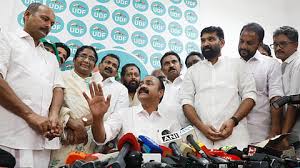
Sources said Priyanka’s influence was critical, pushing for consideration of public sentiment and grassroots opinion when making the decision. NEW DELHI: A decisive role played by Wayanad MP Priyanka Gandhi and the strong backing of senior Congress leaders from Kerala worked in favour of V D Satheesan to edge out K C Venugopal and Ramesh Chennithala in the final rounds of consultations to choose the chief minister pick for Kerala, said party sources. While Congress ended 10 days of political uncertainty by naming Satheesan as the CM, the path to the decision-making was anything but smooth. The high-stakes battle for the CM post saw marathon meetings, swirling speculation, last-minute changes, and intense back-channel negotiations. A key factor favouring Satheesan was the risk of potential by-elections if Venugopal were chosen. The UDF would have faced two polls — Venugopal’s assembly seat and the Alappuzha Lok Sabha seat — under politically challenging conditions, senior leaders had warned. Sources said Priyanka’s influence was critical, pushing for consideration of public sentiment and grassroots opinion when making the decision. The leadership was also mindful of the firm support Satheesan enjoyed from the Indian Union Muslim League, the UDF’s key ally. Sources said Rahul Gandhi and Priyanka held at least three rounds of discussions, anticipating potential setbacks in the 2029 general election. The internal divisions even spilled onto the streets. Early this week, posters appeared outside district Congress offices and Priyanka’s Wayanad office, warning Rahul against choosing Venugopal. “Mr Rahul, KC might be your bag bearer, but the people of Kerala will never forgive you,” read one of the posters. The final push for Satheesan came after Rahul’s one-on-one consultations with senior leaders, including former KPCC presidents K Muraleedharan and V M Sudheeran, and veteran leader A K Antony. They stressed that public sentiment, as reflected in widespread protests across the state, should be a decisive factor in selecting the new chief minister. It is learnt that Sudheeran briefed Rahul on Satheesan’s support across all sections of society. The reports from AICC observers had suggested Venugopal enjoyed strong backing, with at least 46 of 63 Congress MLAs in his favour. Insiders say that Chennithala, despite his experience and seniority, was never seriously considered even as a compromise candidate. Courtesy : TNIE Note: This news is originally published on https:/thenewindianexpress.com/bha and is used purely for non-profit/non-commercial purposes, especially human rights
‘Compromised PM bargained for Adani’s release’: Rahul slams Modi after US drops charges against Billionaire

His remarks came after reports that US authorities agreed to drop charges against the businessman in an alleged bribery scheme. Leader of Opposition in Lok Sabha, Rahul Gandhi on Friday slammed Prime Minister Narendra Modi, alleging that the recent India-US trade talks was aimed at securing relief for billionaire Gautam Adani rather than strengthening trade ties. His remarks came after reports that US authorities agreed to drop charges against the businessman in an alleged bribery scheme. The Congress earlier said it was now clear why the prime minister agreed to what it called a “hopelessly one-sided” India-US trade deal and abruptly halted Operation Sindoor. In a post on X, Congress general secretary in-charge communications Jairam Ramesh said, “It is now clear why the PM agreed to the hopelessly one-sided Indo-US trade ‘deal’ that was really a steal by the US. And it is also clear why he abruptly halted Operation Sindoor on May 10 2025, acting on President Trump’s threats rather than on our national interest.” “Reportedly, the Trump Administration is about to drop all charges of corruption against Modani,” he wrote on X. How much more “compromised” can the PM get, Ramesh asked. The US government on Friday agreed to settle a lawsuit filed against Billionaire Gautam Adani and his nephew after they agreed to pay civil penalties of $6 million while his nephew agreed to pay $12 million. In the lawsuit filed in late 2024, the Securities and Exchange Commission accused Indian billionaire Gautam Adani and his nephew Sagar Adani, both leaders of the energy company Adani Green Energy Limited of promising to pay Indian government officials the equivalent of hundreds of millions of dollars in exchange for government contracts to purchase energy at inflated rates. At the same time, the company secured several billions of dollars from Wall Street investors who were allegedly assured that the company had a robust anti-bribery compliance program and were given promises from senior management that no bribery would take place. Those actions, the SEC said at the time, violated antifraud provisions of US securities laws. Courtesy : TNIE Note: This news is originally published on https:/thenewindianexpress.com/bha and is used purely for non-profit/non-commercial purposes, especially human rights