
Uttarakhand Horror: Death penalty for befriending an upper caste girl; Dalit boy’s nails pulled out and nails driven into his feet

An 18-year-old Dalit student was beaten to death in Tehri Garhwal for befriending an upper caste girl. The girl’s family called him home and beat him, leading to his death. The girl’s father and grandfather have been arrested in connection with the case. Nainital: A heartbreaking incident has come to light from Tehri Garhwal, Uttarakhand. An 18-year-old Dalit student was beaten to death simply because he was friends with an upper caste girl. Ketan Lal, a 12th-grade student, was subjected to brutal torture before being murdered. This incident occurred on Sunday. Ketan’s father, Dhanpal Lal, stated in his police complaint that the girl’s family invited Ketan and his friend to their home. They then locked them in a room overnight and brutally beat them. The girl’s father, Yashbir Singh Panwar, called Dhanpal on Monday morning and threatened to throw his son and his friend into the river. When the father, alarmed by this, arrived at the scene, he found both boys covered in blood. Ketan died on the way to the hospital. On the way, Ketan recounted the entire incident to his father. He said he had gone to the girl’s house with his friend at her request. However, upon arriving, the girl’s father and grandfather grabbed them and locked them in a room. The family alleges that during the overnight assault, iron nails were driven into Ketan’s legs and he was subjected to caste-related abuse. Ketan’s friend, Diwakar, is also seriously injured. He suffered severe head and body injuries and is undergoing treatment. Initial police investigations have revealed that the girl’s family was strongly opposed to her friendship with Ketan. The Senior Superintendent of Police of Tehri Garhwal stated that the girl’s father had previously met with Ketan’s father and warned him not to harass his daughter. This old rivalry led to this horrific murder. In this case, the police have arrested the girl’s father, Yashbir Singh Panwar, and grandfather, Vidyadutt Panwar. They have been charged with murder and under the Scheduled Castes and Scheduled Tribes (Prevention of Atrocities) Act. Police say they are awaiting the post-mortem report to determine the exact severity of the injuries. Read the latest news on Uttarakhand’s pilgrimage and tourist destinations, hilly areas, weather, government schemes, and local administration. Follow the Uttarakhand News in Hindi section for reports from Dehradun, Rishikesh, Haridwar, and the hill districts—reliable and comprehensive state coverage right here. Author: Satyam Bhardwaj Courtesy: Hindi News
Bihar Human Trafficking Network: Poor and Dalit Girls Targeted by Organised Three-Tier Syndicate
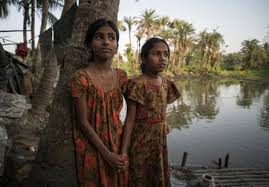
Missing children cases continue to rise in Bihar, with adolescent girls accounting for a majority of victims; investigations reveal a structured trafficking network stretching from villages to major Indian cities. Patna: A highly organised three-tier human trafficking network is allegedly targeting teenage girls from poor and Dalit families in Bihar’s rural and backward regions, according to recent investigations and rescue operations conducted by police and social organisations. The network operates through a structured system that lures girls from villages through false promises of jobs, marriage, friendship or a better life before transporting them to major cities across the country. Many victims are subsequently forced into domestic work, bonded labour or marriages against their will. The revelations come amid growing concern over rising missing children cases in Bihar, which has increasingly been identified as a major source state for human trafficking. Thousands of Children Reported Missing Official data indicate that between 12,000 and 14,000 children go missing in Bihar every year. In 2025 alone, the number reached 14,699. Adolescent girls remain the most vulnerable group. Nearly 60 per cent of all missing children in the state are girls below the age of 18. The situation was particularly alarming in 2023 when 12,299 children were reported missing. Of them, around 75 per cent were girls, meaning three out of every four missing children were female. Rescue Operations Continue Police and social organisations have rescued thousands of girls over the past two years. During 2024-25, authorities rescued 1,970 girls, while another 1,492 girls were rescued during 2025-26. These operations have helped investigators understand the structure and functioning of trafficking syndicates operating across Bihar and other states. How the Three-Tier Network Operates According to investigators, the trafficking system functions through three interconnected levels. Local Agents Identify Targets At the first level, local youths act as agents and identify vulnerable girls in villages. Victims are often approached through friendship, romantic relationships, marriage proposals or promises of employment. Agents reportedly work under pressure to recruit girls within a short period. Once trust is established, the girls are persuaded to leave their homes and villages. Transit Networks Move Victims After leaving their villages, victims are handed over to transportation networks. Transfers frequently take place at railway stations and bus terminals. In some cases, victims are allegedly drugged or threatened to ensure compliance. They are then transported to distant cities through long-distance trains and other means of transport. Final Buyers Exploit Victims The final stage operates primarily in metropolitan cities. Victims are reportedly kept at undisclosed locations, subjected to physical and psychological abuse, and stripped of their identities. Many are allegedly sold into forced marriages or made to work as bonded labourers. Rescue Cases Reveal Pattern Several recent rescue operations have highlighted similar trafficking methods. A 19-year-old woman from Sahibganj was allegedly taken to Hyderabad after leaving home to update her Aadhaar card. Investigators said she was lured with the promise of employment before being rescued by police. In another case, a 15-year-old student from Rohtas district was allegedly deceived by a friend and transported to Secunderabad after being drugged. She was later rescued from a railway station. An 18-year-old girl from East Champaran was reportedly forced into bonded labour in Secunderabad after being lured through a mobile contact provided by a friend. Police rescued her before an alleged forced marriage could take place. In Gopalganj, a 22-year-old woman who had left home to purchase medicines was allegedly taken to Kolkata under the pretext of marriage and employment. She was recovered after 15 days. A separate rescue operation led police to Hyderabad, where a 21-year-old woman from Siwan was rescued after allegedly being trafficked through the same network. Hyderabad-Secunderabad Emerging as Key Destinations Raju Ojha, Chairman of Bihar Samaj Seva Sangh, said more than six girls had been rescued from Hyderabad and Secunderabad over the past six months with the assistance of police. According to him, most victims were lured with promises of permanent jobs or marriage. They were initially forced to work for long hours before being prepared for sale into forced marriages. Police Intensify Monitoring Suhita Anupam, Additional Director General of Police (Weak Sections Crime Investigation Department), said trafficking hotspots across Bihar are being identified and placed under special surveillance. She said registration has been made mandatory for orchestra groups and similar institutions as part of preventive measures. The ADG also said villages witnessing repeated trafficking incidents are being mapped and monitored. Police are working with non-governmental organisations to raise awareness and prevent recruitment by traffickers. Anupam added that an online monitoring mechanism has been established at the police headquarters level to track trafficking cases more effectively. She emphasised that public awareness and community vigilance remain critical in preventing human trafficking and protecting vulnerable girls from exploitation. Courtesy : Patna Press Note: This news is originally published on https:/patnapress.com/bha and is used purely for non-profit/non-commercial purposes, especially human rights
MP Kavya bats for SC status for Dalit Christians

Warangal Member of Parliament Dr.KadiyamKavya on Wednesday urged the Centre to grant Scheduled Caste (SC) status to Dalit Christians and sought the deletion of Paragraph 3 of the Constitution (Scheduled Castes) Order, 1950, during a meeting with Justice K. G. Balakrishnan in New Delhi. Submitting a detailed memorandum to the Commission, Kavya argued that Dalit Christians continue to face social, educational and economic discrimination despite religious conversion. She maintained that conversion to Christianity does not eliminate caste-based disadvantages and that denying SC status solely on religious grounds runs contrary to the constitutional principles of equality and social justice. The MP called for extending Scheduled Caste recognition to Dalit Christians, citing Articles 14, 15, 16 and 46 of the Constitution, which promote equality, non-discrimination and the welfare of weaker sections. She also pointed out that similar recognition had been extended to Sikh and Buddhist communities in the past and said the same principle should apply to Dalit Christians. Referring to the recommendations of the Justice RanganathMisra Commission and other expert committees, Kavya urged the Commission to recommend the removal of Paragraph 3 and advise the Central Government to confer SC status on Dalit Christians. She noted that nearly three lakh Christians of Scheduled Caste origin reside in Telangana, particularly in the Warangal Parliamentary Constituency, and said granting SC status would improve their access to education, employment opportunities, welfare schemes and constitutional safeguards. Kavya appealed for a favourable recommendation to uphold the constitutional values of equality, secularism and social justice. Courtesy : THI Note: This news is originally published on https:/thehansindia.com/bha and is used purely for non-profit/non-commercial purposes, especially human rights
Bengaluru Traffic Advisory Today: Dalit Protest In Freedom Park Till 6pm; Check Alternate Routes

Day-long protest at Bengaluru’s Freedom Park is set to reshape traffic across the city centre. Road closures, diversions and parking curbs could test commuters throughout Thursday Bengaluru traffic police have announced a series of temporary restrictions and diversions across the Central Business District (CBD) on Thursday in view of a protest organised by the Karnataka Dalitha Sanghatana Samithi at Freedom Park. According to a Deccan Herald report, the demonstration is scheduled from 8 am to 6 pm. Motorists travelling from Mysore Bank Circle towards Freedom Park via KG Road have been advised to avoid the usual route. Instead, they should take a right turn and proceed via Maharani Underpass Road and Palace Cross Road. The stretch between Freedom Park Junction and Kanakadasa Circle will remain closed to vehicular traffic in both directions during the protest, with no movement of vehicles permitted along the route. Traffic police have also issued an advisory for vehicles moving from Khode Junction towards KR Circle. As protest participants are expected to march on foot from the City Railway Station via the flyover road to Freedom Park, motorists have been asked to use Old JD(S) Office Road to avoid congestion. In a temporary measure to ease traffic flow, the road connecting Subbanna Junction and MTR Junction, which normally operates as a one-way stretch, has been converted into a two-way route. Commuters travelling towards Gandhinagar can use this corridor as an alternative. Parking Restrictions In Force Parking of all types of vehicles has been prohibited along several key stretches in the city during the protest. The restrictions cover the route from Khode Junction to Maharani Junction, as well as V Ramachandra Road, Kalidasa Road, Palace Road and KG Road. The traffic police have urged commuters to plan their journeys in advance and use the designated diversions to minimise delays during the day-long protest. Published By : Parishmita Saikia Courtesy : News18 Note: This news is originally published on https:/news18.com/bha and is used purely for non-profit/non-commercial purposes, especially human rights
Ex-AIADMK minister and Dalit leader joins DMK
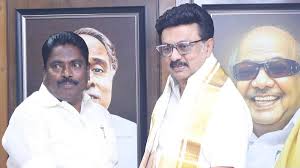
Benjamin is also known for organising the AIADMK general council meeting at Srivari Mahal in 2022, during which ex-CM O Panneerselvam was expelled from the party. CHENNAI: Former AIADMK minister P Benjamin joined the DMK in the presence of party president MK Stalin at Anna Arivalayam on Wednesday. Considered one of the prominent Dalit faces in the AIADMK after former Speaker P Dhanapal, Benjamin’s move comes amid a series of political realignments in the state. Though there had been speculation that he might join the TVK, following some of his former AIADMK colleagues, he ultimately chose the DMK. Benjamin was inducted into the cabinet of late chief minister J Jayalalithaa as school education minister in May 2016. Benjamin is also known for organising the AIADMK general council meeting at Srivari Mahal in 2022, during which ex-CM O Panneerselvam was expelled from the party. “A few of the ex-AIADMK ministers in the western region and in the delta are likely to join DMK soon,” sources said. Courtesy : TNIE Note: This news is originally published on https:/thenewindianexpress.com/bha and is used purely for non-profit/non-commercial purposes, especially human rights
Free bus travel in Kerala: ‘Priyadarshini Scheme’ to begin on June 15, women and transgender individuals to benefit

The Kerala government has decided to implement the ‘Priyadarshini Scheme’, under which women and transgender individuals will travel free on KSRTC ordinary buses. The government will compensate for the revenue loss. Read the full story The Kerala government on Wednesday approved the ‘Priyadarshini Scheme’, which will provide free travel to women on KSRTC ordinary buses from June 15. Chief Minister V.D. Satheesan made the announcement after the weekly cabinet meeting. He said there will be no eligibility criteria for the scheme, and there will be no age or income restrictions. Who will compensate? The government has decided to fully compensate KSRTC for the revenue loss caused by this initiative. It is estimated that this scheme will cost the state treasury approximately ₹800 crore annually, which will be transferred to KSRTC as compensation. “Currently, the state government will provide approximately ₹1,500 crore annually as financial assistance to the KSRTC,” Satheesan told the media shortly after the weekly cabinet meeting. “The additional burden arising from the free travel scheme will now be added to this assistance.” Review after six months The scheme will initially apply only to general service buses. The government plans to review it after six months. The KSRTC has been asked to increase revenue and strengthen its financial position during this period. Transgender persons will also benefit from the scheme, broadening its scope. This announcement is part of the government’s efforts to increase access to public transport and ensure mobility for women. The scheme is expected to become one of the new government’s major welfare initiatives, but its financial impact on the KSRTC and the state budget is likely to remain a major topic of discussion in the coming months. Responding to the discussion at a CPI-M party meeting, which analyzed the CPI-M’s crushing electoral defeat and suggested that a secret pact had been reached between the Congress and the BJP, which benefited both parties, Satishan said, “Was this the main point of discussion at their various party meetings? But from what we have read, the focus of the discussions at their meetings was that the main reason for their defeat was their leadership and their style of governance.” He also stated that no decision has yet been taken on the future course of action regarding the controversial PM-Shri project and the proposed high-speed rail project, which was discussed with Metroman. Published by: Asmita Tripathi Courtesy: Hindi News
Flawed changes

Under the 2019 Act, a transgender person could apply to the district magistrate for a certificate of identity on the basis of self-perceived gender identity. The 2026 amendment scraps that right There is a peculiar institutional reflex in Indian welfare legislation wherein when the State does not know what to do with a body, it hands it to a doctor. The doctor issues a certificate. The certificate becomes the body’s legal identity. And the person, somewhere in this chain of transactions, disappears. A person with a disability will recognise this sequence. The Rights of Persons with Disabilities Act, 2016, hailed as a transformative law, retained the same medical certification architecture it was supposed to supersede. Persons with disability, regardless of their experiences of impairment and exclusion, must obtain a Disability Certificate from a designated medical authority to access any of the Act’s protections. The Transgender Persons (Protection of Rights) Amendment Act, 2026 has now reproduced this architecture with even less ambiguity. Under the 2019 Act, a transgender person could apply to the district magistrate for a certificate of identity on the basis of self-perceived gender identity. The amendment scraps that right. Now the district magistrate will issue a certificate only after examining the recommendation of a designated medical board headed by a chief medical officer. The body must go to the doctor, once again, before the State will acknowledge it. This is not accidental bureaucratic design but rather ideological. The medical model of gender understands trans identity not as a variation in human experience but as a condition to be diagnosed, treated, and certified. The model produces a gatekeeping function wherein only those who conform to the clinical narrative of gender dysphoria gain access to legal recognition. The parallel with disability certification is not merely structural. It is philosophical. Both proceed from what disability studies scholars call the “medical model” — eligibility for legal protection depends on one’s body being assessed and classified by a medical professional. The disability rights movement has long argued for the “social model”, the understanding that disability is produced not by impairment but by the failure of society and institutions to accommodate human variation. Trans rights scholars have mounted an identical critique. Florence Ashley, writing in the Canadian Medical Association Journal, argues that the presumptive right to gender self-determination follows from the core medical ethics principle of autonomy. When the State erects medical barriers to this self-determination, it treats being transgender as pathology rather than diversity. Incidentally, the Supreme Court had said otherwise. In NALSA vs Union of India, the court asserted that gender identity belongs to the individual, and the State cannot condition its recognition on medical procedures. By interposing a medical board between a person and legal identity, it creates the conditions NALSA judgment was meant to dismantle. The Amendment’s definitional narrowing makes the medical logic explicit. The 2019 Act recognised trans men and trans women regardless of whether they had undergone any medical procedure. The Amendment removes this entirely. It confines recognition to historically accepted socio-cultural categories like hijra, kinner, aravani, jogta, and persons with medically recognised intersexed variations. Trans masculine persons disappear from the legal framework. Trans women who do not belong to these specific communities lose their footing. Genderqueer people, included in 2019, are struck out. The Amendment also adds a revealing category: persons “forced to assume a transgender identity” through mutilation or castration, effectively making victimhood the default frame for trans existence. The medical model, whether applied to disability or gender, does not function as protection. It functions as a rationing of recognition, of rights, of the State’s acknowledgement that a person legally exists. Parliament, which has congratulated itself on the 2016 RPwD Act, has enacted a transgender law that repeats that model’s foundational error. Shashank Pandey Courtesy : The Telegraph Note: This news is originally published on https:/thetelegraph.com/bha and is used purely for non-profit/non-commercial purposes, especially human rights
No proposal or discussion to merge with Congress: TMC

NEW DELHI: The Trinamool Congress on Wednesday denied that there was any proposal or discussion about the Mamata Banerjee led party merging with the Congress at a meeting between leader of opposition Rahul Gandhi and TMC national general secretary Abhishek Banerjee on Wednesday. The meeting between Rahul and Abhishek at 10, Janpath came a day after TMC chairperson Mamata Banerjee met CPP chairperson Sonia Gandhi. Speculation about a merger being deliberated — which TMC and Congress members have termed “bogus” and “baseless” — grew as sources within the rebel TMC camp said it has managed support of at least 19 Lok Sabha MPs — two-thirds of the party’s strength of 28 — and will claim to be representing its parliamentary wing in the House. The development only adds to Mamata’s West Bengal poll setback. “The issue of merger of TMC with Congress and all other speculation around this is all rumours and incorrect. No such thing was discussed,” TMC sources said. Even Congress sources denied any discussion or move for merger. Congress spokesperson Jairam Ramesh made it clear on X that some news reports on what supposedly transpired in the meeting between Sonia and Mamata on Tuesday are “completely inaccurate”. “The meeting was very cordial and many personal matters were talked about, given the long relationship they have had,” he added. On Monday, in an about turn from her past hostility, former Bengal CM Mamata at a INDIA bloc meeting said Congress should take lead in the opposition’s fight against BJP. Photos were also shared by Congress where Mamata and Sonia were seen hugging each other and sharing a warm interaction. Building on the discussions between the TMC chief and CCP chairperson when they met on Tuesday, Rahul Gandhi and Abhishek Banerjee on Wednesday discussed developments in West Bengal and how the TMC and Congress can coordinate and work together to strengthen their presence in the state. They also discussed the 2029 Lok Sabha polls and how they could strengthen the INDIA bloc and opposition unity to counter the BJP. TMC shared a post on X with a photo from the meeting of Rahul and Abhishek. “The meeting reflected a shared commitment to safeguarding democracy, upholding Constitutional values and working for the welfare of every Indian. INDIA stands united,” the TMC said. Ardent supporters in the Mamata camp were dismissive of the possibility of a merger with the Congress saying that the former West Bengal CM invested her all in the TMC and for now seems determined to rebuild the party rather than give up. Meanwhile, the speculative reports saw Shiv Sena UBT leader Sanjay Raut suggest that parties like TMC and NCP (SP) which were once part of the Congress should reunite and strengthen the grand old party. News agency PTI reported Raut saying in Mumbai that such reunification was the “need of the hour”. Amid hectic developments, TMC suffered another setback on Wednesday, as its Rajya Sabha MP Sushmita Dev resigned from the party and the Upper House. She is the second RS MP to quit. On Monday, Sukhendu Sekhar Roy had resigned from the Upper House and TMC after levelling allegations against the party. A former Congress leader who had joined the TMC a few years ago, Dev, also met Assam Chief Minister Himanta Biswa Sarma at his residence in Delhi triggering speculation that she was headed for the BJP. While Dev refused to make any comment on Mamata Banerjee, on reports of her joining the BJP, she told reporters, “when I take a decision I will let you know”. She asserted that she has resigned due to “personal and political reasons”. “I don’t want to be in a situation where I am in two boats at the same time. That is not the right way to do it…because.. the family background and upbringing I have, I have never stayed in one party and served another party,” she said. Courtesy : TOI Note: This news is originally published on https:/timesofindia.com/bha and is used purely for non-profit/non-commercial purposes, especially human rights
CM Vijay pays courtesy call on President Murmu, V-P Radhakrishnan; to attend Niti Aayog meet today
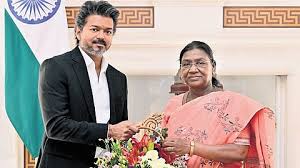
The Niti Aayog meeting, chaired by Prime Minister Narendra Modi, brings together CMs and administrators from across the country to discuss developmental agendas. CHENNAI: Chief Minister C Joseph Vijay on Wednesday called on President Droupadi Murmu and Vice President C P Radhakrishnan in New Delhi. Official sources described the meetings as courtesy calls. The CM was in the national capital where he will attend the meeting of the Governing Council of the Niti Aayog on Thursday. The Niti Aayog meeting, chaired by Prime Minister Narendra Modi, brings together CMs and administrators from across the country to discuss developmental agendas. This is the CM’s second visit to Delhi within a fortnight. During his first visit on May 27, the CM met PM Modi and submitted a memorandum highlighting important issues connected to Tamil Nadu. CM Vijay also called on Congress Parliamentary Party leader Sonia Gandhi and Leader of the Opposition Rahul Gandhi at their residence. This was his first meeting with the top Congress leaders after two Congress MLAs assumed office into his Council of Ministers and allocation of one Rajya Sabha seat to the Congress. This meeting assumes significance against the backdrop of speculations that the TVK may join the INDIA bloc following the exit of the DMK from the bloc. Vijay also called on CPI general secretary D Raja at the party headquarters. On June 12, the CM is likely to visit the Kollur Mookambika temple, Udupi, to offer prayers. Courtesy : TNIE Note: This news is originally published on https:/thenewindianexpress.com/bha and is used purely for non-profit/non-commercial purposes, especially human rights
Kharge convenes ‘urgent meet’ of senior leaders today

Congress president Mallikarjun Kharge will preside over the meeting, party general secretary (organisation) K C Venugopal said. NEW DELHI: Congress has called a meeting of its general secretaries, in-charges and state unit chiefs on Thursday during which the the party’s plans will be deliberated upon. Congress president Mallikarjun Kharge will preside over the meeting, party general secretary (organisation) K C Venugopal said. “An urgent meeting of AICC general secretaries, in-charges and PCC presidents will be held tomorrow, 11 June, 2026 at Indira Bhawan, New Delhi, to discuss current political developments,” he said. The meeting comes in the wake of the TMC’s political crisis. The meeting of LoP in the Lok Sabha Rahul Gandhi and Trinamool Congress national general secretary Abhishek Banerjee on Wednesday fuelled speculations of future ties between the parties. The meeting at 10 Janpath took place a day after TMC supremo Mamata Banerjee met former Congress president Sonia Gandhi at her residence and discussed ways to further consolidate the opposition alliance. Courtesy : TNIE Note: This news is originally published on https:/theindianexpress.com/bha and is used purely for non-profit/non-commercial purposes, especially human rights