
Shivani, killed by her father at a police station for marrying a Dalit man

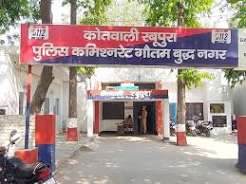
Controversy and outrage mount across the country over the latest femicide committed within the family. Fuelling the controversy is the fact that it occurred under the eyes of police officers who were supposed to protect the victim. Activists blame the killing on a mix of patriarchy, caste, and failure to enforce the law in Uttar Pradesh. Delhi – Patriarchy, the (sick) logic of caste, and a systematic failure to enforce the law and human rights in the heart of India are the main ingredients in the tragic and brutal death of Shivani Chauhan, a 19-year-old woman, killed by her own father inside a police station (pictured, police source). This is the latest episode of violence against a young woman in Uttar Pradesh, a state ruled by Prime Minister Narendra Modi’s ruling Bharatiya Janata Party (BJP), where minority and marginalised communities remain vulnerable even when they are supposed to be under state protection. The tragic murder of Shivani Chauhan – stabbed to death by her father, Satya Kumar Chauhan, while her mother held her down, at the Badausa police station in Banda District – highlights the persistent threat of honour killings. Such a practice is still widespread in the country, but this time, what shocked public opinion is the location where it occurred: inside a government facility, where the victim should have been under government protection, not in danger and defenceless. The young woman belonged to an Other Backward Class (OBC) community and had freely chosen to marry her neighbour, 20-year-old Lalit Verma, even without her parents’ approval. Since Verma was a Dalit, the marriage crossed rigid socio-religious caste boundaries, sparking strong opposition from the young woman’s family. Following the couple’s escape to Madhya Pradesh, Shivani’s family filed a kidnapping complaint against Verma. Uttar Pradesh police then tracked down the couple and took them to the Badausa police station for legal statements and a mandatory medical examination. During a formal counselling session at the police station, Shivani repeatedly maintained her initial position, declaring that she had married voluntarily and would remain with her husband. As tensions reached a fever pitch, Shivani’s mother, Ranno, reportedly pinned her arms from behind while her father, Satya Kumar Chauhan, 55, stabbed her with a knife he had hidden under his clothes. As a result of the attack, Shivani suffered multiple severe stab wounds to her abdomen and upper limbs and died hours later from her injuries as doctors at Banda Medical College desperately tried to save her life. The incident highlights the limitations of the state’s “counselling” system for cross-caste couples. Instead of prioritising physical safety, police routinely engage families to mediate, exposing vulnerable people to hostile environments and family contexts. The state’s failure to ensure a safe environment on the premises of a police station triggered widespread condemnation from the Indian public. Although her father has been arrested and faces charges of murder under Section 103 of the Indian Justice Code (BNS),[*] institutional responsibility remains unaddressed and a source of debate. Shivani Chauhan’s death, finally, highlights the reality that adult franchise and legal registration do not guarantee the safety of inter-caste couples. When the state fails to ensure security even in its own police stations, activist groups argue, the promise of constitutional freedom remains out of reach for vulnerable citizens. By Nirmala Carvalho Courtesy : Asia News Note: This news is originally published on https:/asianews.com/bha and is used purely for non-profit/non-commercial purposes, especially human rights
Dalit vegetable vendor assaulted for demanding repayment of a loan: Three accused booked under SC-ST Act in Greater Noida
A Dalit vegetable vendor has been assaulted and subjected to casteist remarks in the Rabupura police station area of Greater Noida for demanding repayment of a loan of 150 rupees. Police have registered a case against three accused, including a woman, and have begun an investigation. According to police, Jawahar, a resident of Bhekanpur village, travels from village to village selling vegetables. On Tuesday, he went to Bhoira village to sell vegetables. He then asked Om Prakash, a resident of the village, for repayment of an old loan of 150 rupees. Om Prakash became angry at the demand and began abusing Jawahar. The victim alleges that the accused insulted him using casteist slurs. When he protested, Om Prakash called his family members, Maya and Meghraj. The three attacked Jawahar with sticks, leaving him seriously injured. Bystanders intervened and rescued him. It is alleged that while leaving, the accused also threatened to kill the victim if he returned to the village. The injured Jawahar has been admitted to the hospital for treatment, where he is undergoing treatment. On Tuesday, based on the victim’s complaint, Rabupura police registered a case against Omprakash, Maya, and Meghraj under relevant sections and the SC/ST Act. Police say the matter is being investigated and further action will be taken based on the investigation. Courtesy: Hindi News
RTIH inks pact with Dalit Philanthropy Foundation to empower women entrepreneurs

Ratan Tata Innovation Hub (RTIH), Vijayawada, signed a Memorandum of Understanding (MoU) with Dalit Philanthropy Foundation (DPF) at the NTR District Collectorate on Tuesday. According to a press release, the partnership aims to promote women entrepreneurship, inclusive innovation, livelihood development, and social enterprises, with a special focus on empowering marginalised and underserved communities. Through this collaboration, both organisations will work together to strengthen entrepreneurial ecosystems, facilitate capacity-building initiatives, provide mentorship opportunities, and support sustainable livelihood interventions. Dalit Philanthropy Foundation executive director Santosh Kumar Samal and Ratan Tata Innovation Hub CEO G. Krishnan exchanged the MoU. Speaking on the occasion, the representatives of both organisations emphasised the importance of collaborative efforts in creating equitable opportunities for aspiring entrepreneurs and fostering inclusive economic growth. The Hindu Bureau Courtesy : The Hindu Note: This news is originally published on https:/thehindu.com/bha and is used purely for non-profit/non-commercial purposes, especially human rights
Anti-Conversion Laws in India: Not Only Anti-Minority but Also Anti-Dalit in Annihilate Caste

Anti-conversion laws, formally known as Freedom of Religion Acts, have been enacted in approximately twelve Indian states. These laws seek to regulate religious conversions by prohibiting those induced through force, fraud, or allurement. They typically mandate prior intimation to district authorities and prescribe penalties, often with enhanced punishments when the convert belongs to vulnerable groups such as women, minors, Dalits (Scheduled Castes), or Adivasis (Scheduled Tribes). While proponents present these statutes as protective measures safeguarding cultural identity and vulnerable populations from coercive missionary activities, critics contend that they curtail individual freedom, enable selective enforcement, and disproportionately harm Dalits seeking dignity and escape from caste oppression. The stated rationale behind these laws is rooted in concerns over demographic shifts and exploitation of the socio-economically disadvantaged. Advocates, often aligned with Hindu nationalist perspectives, argue that conversions—particularly to Christianity or Islam—frequently involve material inducements, social services, or “love jihad,” targeting lower castes and tribals who are portrayed as especially susceptible. By imposing stricter penalties for conversions involving Dalits, the laws ostensibly shield them from manipulation. However, this framing reveals a paternalistic undertone: it assumes Dalits lack the agency to make informed religious choices, thereby infantilizing a community that has long fought for equality. The impact on Dalits is particularly profound and multifaceted. Historically, conversion has served as a powerful tool for social mobility and resistance against caste discrimination. Dr. B.R. Ambedkar’s landmark 1956 mass conversion to Buddhism exemplified this quest for dignity free from the hierarchies of Hinduism. Similar patterns exist among those embracing Christianity or Islam in pursuit of equality. Anti-conversion laws erect administrative barriers, invite police scrutiny, and foster fear of prosecution, effectively deterring voluntary exits from the Hindu fold. This restricts a vital avenue for asserting personal autonomy in the face of persistent untouchability and social exclusion. A more glaring inequity arises from the linkage between religious identity and affirmative action benefits. Under the 1950 Presidential Order (and subsequent amendments), Scheduled Caste reservations, protections under the SC/ST (Prevention of Atrocities) Act, and related safeguards are largely confined to Hindu, Sikh, and Buddhist Dalits. Conversion to Christianity or Islam typically results in the loss of these benefits, despite evidence that caste-based discrimination often continues irrespective of faith. Dalit Christians and Muslims have long argued that this framework is discriminatory, as it ties constitutional protections to religious affiliation rather than lived social reality. Supreme Court rulings have largely upheld this distinction, treating caste as intrinsic to Hinduism for reservation purposes while adopting a more ethno-cultural approach for Scheduled Tribes. Consequently, anti-conversion laws compound this disadvantage by raising the cost of leaving Hinduism, sometimes compelling individuals to re-convert or conceal their faith to retain reservations. Enforcement patterns further underscore the laws’ adverse effects on Dalit communities. Reports frequently document arrests of pastors, missionaries, and community workers engaged in charitable activities—schools, health services, or prayer meetings—in Dalit-majority areas, often triggered by third-party complaints from Hindutva groups rather than the alleged victims themselves. Vague provisions such as “allurement” (which may encompass education or humanitarian aid) lend themselves to misuse, chilling social service initiatives and heightening vulnerability. While the laws claim to protect Dalits, they simultaneously limit access to services that could empower them and penalize those facilitating spiritual choices. This is not to suggest the laws are exclusively anti-Dalit. They are primarily deployed against conversions to minority faiths, notably Christianity and Islam, and have featured prominently in cases involving interfaith marriages or alleged demographic engineering. Claims of widespread forced conversions remain contested, with empirical data often showing limited scale relative to natural population growth. Mass Buddhist conversions by Dalits, notably, frequently preserve eligibility for benefits, highlighting inconsistencies in application. Moreover, general criminal laws under the Indian Penal Code already address coercion, cheating, and fraud, raising questions about the necessity of religion-specific statutes that risk majoritarian overreach. From a broader perspective, these laws intersect uneasily with Article 25 of the Indian Constitution, which guarantees freedom of conscience and the right to profess, practice, and propagate religion, subject to reasonable restrictions. The tension between protecting vulnerable groups and upholding individual liberty remains unresolved. Caste, as a deeply entrenched social reality, does not vanish upon conversion, yet Indian law treats it inconsistently across religions. This creates a contradictory framework: one that claims to safeguard Dalits while constraining their religious choices and material opportunities. In conclusion, anti-conversion laws are not merely instruments targeting religious minorities; they also function as barriers to Dalit emancipation. By restricting exit options from caste-laden Hinduism, paternalistically curtailing agency, and linking affirmative action to religious fidelity, they undermine the very dignity and equality Dalits have historically sought through conversion. Genuine protection against coercion can and should be achieved through neutral criminal laws applicable equally to all, without selective burdens on propagation rights. Reforming these statutes—through clearer definitions, uniform application, and decoupling reservations from religion—would better align with constitutional values of liberty, equality, and fraternity. Ultimately, a society committed to truth and human flourishing must prioritize individual agency over majoritarian control, empowering every citizen, including Dalits, to choose their beliefs free from both coercion and state-imposed obstacles. By SR Darapuri, I.P.S.(Retd), National President, All India Peoples Front Courtesy : Counter Currents Note: This news is originally published on https:/countercurrents.org/bha and is used purely for non-profit/non-commercial purposes, especially human rights
Devika first trans gender to get Bismillah Khan Samman
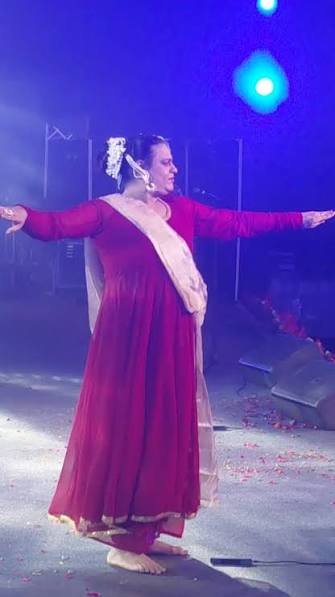
Lucknow: In a story of grit and perseverance, transgender Kathak dancer and cultural activist Devika Devendra S Manglamukhi became first from the community to be selected for the prestigious Ustad Bismillah Khan Yuva Samman-2025, conferred by the Sangeet Natak Akademi, New Delhi. Currently a state executive member and adviser to the UP Transgender Welfare Board, Devika said the recognition marks a significant milestone not just in one’s artistic journey but also for the transgender community. Devika’s achievements include Rajkiye Meera Samman (2016) and the National Samrasta Samman (2025). Having performed across 22 states, the exponent finds Kathak inseparable from life and identity and said, “I dedicate this award to my guru, the transgender community and everyone who supported me in my lowest moments.” Hailing from Dholpur in Rajasthan, the journey to national recognition was marked by hardship, social exclusion and years of struggle and first brush with the dance form, was as a four years old watching a Kathak concert on Doordarshan, inspiring to participate in school competitions. At 14, Devika left home to live according to gender identity and “My mother wanted to hide me. I left with just Rs 20.” In 2001, Devika reached the shrine of Hazrat Nizamuddin in Delhi. “I was crying bitterly. I had nowhere to go and to survive, I began begging, till a woman from the Valmiki community gave me the job of cleaning toilets in exchange for food,” recalls SNA awardee. A turning point came when Kathak guru Kapila Raj Sharma noticed Devika practising mudras on a Delhi street and offered to guide. In 2004, Devika moved to Lucknow and began training under Sharma and performed formally for the first time at Sharad Mahotsav in Dholpur in 2005. Devika has completed all education through distance mode and was nominated to the UP Transgender Welfare Board for work done for the uplift of the transgender community. Courtesy : TOI Note: This news is originally published on https:/timesofindia.com/bha and is used purely for non-profit/non-commercial purposes, especially human rights
Garima Grih rolled out in Dhanbad for transgenders

Dhanbad: In a step towards ensuring dignity, safety and empowerment of the transgender community, a Garima Grih (shelter home) was inaugurated in Dhanbad on Tuesday. The shelter home is being operated by non-profit organisation Manthan Sanstha under the direction of DC Aditya Ranjan. The inauguration was carried out by district social welfare officer Sneh Kashyap, who said that every individual in society has the right to live with dignity and respect. She stated that the initiative would provide members of the transgender community with safe shelter, social security, counselling, skill development opportunities and support to connect with mainstream society. Addressing the gathering, speakers highlighted that the transgender community has long faced social discrimination and exclusion. In such circumstances, the Garima Grih will not only offer secure accommodation but also facilitate access to education, healthcare, legal aid, mental health counselling and vocational training. The initiative is expected to help community members become self-reliant and lead a dignified life while actively participating in society. During the programme, guests inspected the shelter home and reviewed the facilities being provided there. They appreciated the initiative and stressed that joint efforts by the govt and social organisations are essential for the protection of transgender rights and their holistic development. Representatives of Manthan Sanstha informed that several welfare and empowerment programmes would be conducted through the Garima Grih to create a safe and supportive environment for transgender persons. They added that the objective of the shelter home is to strengthen confidence among community members and provide opportunities for sustainable livelihood and social inclusion. Members of the transgender community who attended the programme welcomed the initiative and described it as a positive step towards bringing meaningful change to their lives. They expressed hope that the shelter home would help them gain social acceptance and access better opportunities in the future. Sharad Chandra Courtesy : TOI Note: This news is originally published on https:/timesofindia.com/bha and is used purely for non-profit/non-commercial purposes, especially human rights
From the Urdu Press: ‘Mamata, Pawar must return to Congress’; ‘Rahul’s resistance pitch compelling’
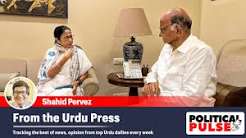
“INDIA bloc should try to induct parties such as Mayawati’s BSP, Naveen Patnaik’s BJD and Jagan Mohan Reddy’s YSRCP, which are currently neither aligned with the NDA nor any other front,” writes Munsif The unravelling of Mamata Banerjee’s Trinamool Congress (TMC) in just a few weeks after its humiliating loss to the BJP in the recent West Bengal Assembly elections has continued to dominate the front pages of the Urdu dailies. After losing control of her Legislature Party in the Bengal Assembly, Mamata is now reeling from a split in her Parliamentary Party in the Lok Sabha, with 20 rebel TMC MPs claiming their merger with an obscure outfit, Nationalist Citizens Party of India (NCPI), as part of their alignment with the ruling BJP-led NDA. The dailies kept the spotlight on these developments, which are set to have a bearing on national politics in the coming days. Flagging the BJP’s alleged bid to break parties in various states under “Operation Lotus”, the Mumbai-based Urdu Times, in its June 13 editorial, says that several Opposition parties, especially regional parties such as the Sharad Pawar-founded NCP and now the TMC, have already been split so far. “This has dealt a body blow to the Opposition groupings – the Maha Vikas Aghadi (MVA) in Maharashtra, and the INDIA bloc at the national level,” it says. The AAP has also suffered a division, the edit states, referring to the defection of its seven Rajya Sabha MPs, led by Raghav Chadha, to the BJP. “The unrelenting fragmentation of the Opposition parties has led to an atmosphere in which no party other than the BJP would be able to rule the country. This warrants a serious brainstorming by the Opposition leaders to work out joint strategies to counter the BJP.” The daily points out that in Bengal around 60 of the 80 TMC MLAs and about 20 Lok Sabha MPs have revolted and split the party. “Like the Shiv Sena in Maharashtra, the TMC has been buffeted with Mamata scrambling to save her party. Various agencies and money may have played a big role in breaking the TMC,” the edit says. “It is imperative for the struggling Opposition alliance to get its act together and save its existence and identity.” Citing the instances of breakaway factions of the Sena and the NCP, the editorial says the same may happen to the TMC. “It is time that Sharad Pawar and Mamata consider their homecoming to the Congress and merge their outfits with the grand old party. They had been associated with the Congress for a large part of their political careers. By returning to the Congress, they could strengthen the party in its battle against the BJP,” it states. The Congress also needs heavyweight leaders like Pawar and Mamata, who would have their own space in the party. Such a development would also galvanise the Opposition and disrupt the ruling dispensation’s game, the edit says. “This would be an effective payback from Pawar and Mamata to the BJP’s politics, which would also have a resonance among the people.” Referring to the INDIA bloc’s meeting in Delhi, the Hyderabad-based Munsif, in its June 12 leader, notes that it also saw participation of leaders like Mamata Banerjee who used to shy away from acknowledging the alliance’s importance before her party’s debale in the Bengal polls. “The point remains that any differences between the Opposition parties would only fuel the BJP to fulfil its designs. The INDIA allies must have a common agenda for the sake of the country to protect our democracy and Constitution. They must unitedly take on the BJP which is allegedly misusing power and agencies to script its electoral successes,” the editorial says. The Opposition parties do not have any option other than closing their ranks to face the BJP juggernaut, the daily states. “At the meeting, the INDIA allies agreed on several points. They would write to the Chief Justice of India to protest against the Election Commission’s Special Intensive Revision (SIR) and electoral irregularities. They pressed for the resignation of Union Education Minister Dharmendra Pradhan over the NEET-CBSE rows,” it says. “They also demanded that the Modi government convene an all-party meeting to discuss the precarious economic situation, unemployment, price rise, and atrocities against oppressed sections.” The edit points out that while the DMK boycotted the meeting to protest against the Congress’s move to join hands with Vijay-led TVK to form the new government in Tamil Nadu, the CPI(M) also took aim at the Congress for its campaign in the Kerala elections. “The deliberations over such concerns while displaying mutual respect could actually strengthen the INDIA bloc,” it states. Noting the INDIA parties’ decision to hold their meeting after every two months now, it says, “They should also have their alignments at the state level rather than just limiting it to the national plane. For, their state rivalries often inject bitterness into their central equations. A dominant ally in a state should take other partners on board to boost the alliance and deepen their ties.” Highlighting the speech delivered by Rahul Gandhi at the INDIA bloc meeting, the New Delhi edition of Inquilab, in its June 16 editorial, says that the nine-minute address of the Leader of the Opposition (LoP) in the Lok Sabha was “clear-eyed and compelling” in which he called upon his allies that it was easy to beat the BJP if they “stood together and resisted”. “Responding to the attacks on the Congress by its partners, Rahul told them that he was ready to accept all their criticism happily but they must understand the overwhelming reality — that it could no longer be business as usual and that the Opposition front must mount an effective resistance with unity to turn the tide and reclaim the vital institutions which have been captured,” the edit states. “Rahul exuded confidence and resolve, he sounded earnest and purposeful, and there was no tinge of disappointment in his pitch.” The daily underlines that resistance and
DMK attacks Rahul Gandhi for ‘dishonesty,’ ‘immaturity’ that harmed INDIA bloc

CHENNAI: DMK’s official organ ‘Murasoli’ on Monday launched a sharp attack on Congress leader Rahul Gandhi, charging that his “political immaturity” and “dishonesty” were the reasons for the criticism faced by Congress from its allies at the recent INDIA bloc meeting in New Delhi. In an editorial, Murasoli accused Congress of repeatedly undermining its alliance partners in states while seeking their support during parliamentary elections. “In state after state where assembly elections are held, Congress has done everything possible to prevent fellow INDIA bloc partners from coming to power. Yet, when parliamentary elections arrive, it seeks their support in the name of fighting BJP,” the editorial said. Questioning Congress leadership’s approach towards its allies, the DMK mouthpiece asked, “Isn’t Congress ashamed to first weaken alliance partners and then seek their support when the need arises?” Referring to the 2026 Tamil Nadu assembly election, Murasoli alleged that Congress had betrayed DMK despite remaining in the alliance. “The acts of betrayal committed by Congress while remaining in alliance with DMK were carried out with Rahul Gandhi’s blessings,” the editorial alleged. The editorial came days after Rahul Gandhi released the audio of his speech at the June 8 INDIA bloc meeting, in which he stressed the need for opposition unity. According to Murasoli, Rahul was now attempting to project himself as a unifying force after the party with which Congress has aligned in Tamil Nadu refused to join the INDIA bloc. The DMK organ said several leaders of INDIA bloc, including Samajwadi Party chief Akhilesh Yadav, RJD leader Tejashwi Yadav, Jammu and Kashmir chief minister Omar Abdullah and VCK leaders, had expressed dissatisfaction over Congress’s handling of its allies. “Rahul Gandhi apparently did not anticipate such criticism. At a meeting convened to discuss opposition unity against BJP, Congress itself became the principal target of criticism. The responsibility for that lies with Rahul Gandhi’s political immaturity and dishonesty,” the editorial said. While noting Rahul’s remark that Congress should accept criticism from its allies, Murasoli said it was immaterial whether he accepted criticism at this stage. Responding to Rahul’s comparison that Congress would absorb criticism just as Lord Shiva consumed poison, the editorial said Hindu mythology speaks of Shiva consuming poison to save the world, not creating it. “But who was responsible for churning the poison within the INDIA bloc?” the editorial asked. Courtesy : TOI Note: This news is originally published on https:/timesofindia.com/bha and is used purely for non-profit/non-commercial purposes, especially human rights
Congress open to ‘ghar wapsi’ of ex-members

NEW DELHI: Stoking the growing public chatter over merger of breakaway outfits with Congress, the AICC has expressed its readiness to accept its erstwhile members into the party fold. AICC general secretary (organisation) and Rahul Gandhi confidant K C Venugopal told TOI, “Everybody who believes in the Congress ideology can come back. There is no issue.” He said such mergers and homecomings will only strengthen the fight against “BJP-fascist forces”. “All the parties who want to join Congress and believe in the Congress ideology can approach us. We will welcome them,” he added. Venugopal, however, clarified that presently there are no such merger proposals under consideration of AICC. “We are hearing all these speculations from the media,” he claimed. Courtesy : TOI Note: This news is originally published on https:/timesofindia.com/bha and is used purely for non-profit/non-commercial purposes, especially human rights
Transgender pleas shifted to top court as HC proceedings face nationwide stay

Petitions question new medical verification rules and changes to self-identification provisions introduced under the 2026 legislation The Supreme Court on Monday stayed proceedings in high courts related to multiple petitions challenging the constitutional validity of the Transgender (Protection of Rights) Amendment Act, which they alleged grossly diluted transgender rights. A bench of Chief Justice Surya Kant and Justice V. Mohana, while staying the pending proceedings before the high courts of Delhi, Rajasthan, Karnataka and Kerala, transferred the cases to itself on a plea made by the Centre through solicitor-general Tushar Mehta. “Issue notice…. Further proceedings before the high courts…shall remain stayed,” the CJI said. The CJI indicated that either the top court may hear the batch of petitions or consolidate them and transfer them to one of the high courts for adjudication. Mehta requested the transfer of proceedings from high courts to avoid conflicting verdicts. He said the apex court, too, had on May 4 issued notice on a PIL challenging the amendments to the Act, hence, the matter should ideally be dealt with by it. The batch of petitions before the high courts and the Supreme Court had mainly challenged the amendments to the Act in 2026, which limited the definition of transgender individuals to hijra, kinner, aravani, jogta, eunuch, as well as those with congenital sex variations. The 2026 Act seeks to amend the original 2019 Act, which had permitted an individual to identify themselves as a “transgender” under the legal framework of “self-identification”. However, the 2026 amendment has made it mandatory for a person to be declared transgender through a medical board verification process. Courtesy : The Telegraph Note: This news is originally published on https:/thetelegraph.com/bha and is used purely for non-profit/non-commercial purposes, especially human rights