
Parliament passes Transgender Persons Amendment Bill, 2026 with Rajya Sabha approving it today

Parliament has passed the Transgender Persons (Protection of Rights) Amendment Bill, 2026, with the Rajya Sabha approving it today. The bill was passed by the Lok Sabha yesterday by a voice vote amid an Opposition-led walkout. The bill seeks to redefine the category of transgender, removes the provision of self-perceived gender identity and excludes several socio-cultural identities as well as transmasculine individuals from its ambit. It also further defines transgender persons within a biological framework, based on intersex variations and differences in sexual development. Replying to the discussion on the Bill in the Rajya Sabha, Social Justice and Empowerment Minister Dr Virendra Kumar said the government is compassionate towards the well-being of the transgender community. He said the Bill has provisions to empower the transgenders and give them dignity. The Minister said that the NDA government has taken several initiatives to bring transgender people to the mainstream and stop discrimination against them. Starting the discussion in the Upper House, Congress MP Renuka Chowdhury said this bill dilutes the privacy of an individual provided under the Constitution. Opposing the Bill, Ms Chowdhury said self-identification cannot be taken away through bureaucratic certification. Criticizing the government, she said that the proposed bill undermines the fundamental rights and dignity of transgender persons. Calling such a move wrong and illegal, she argued that forcing transgender persons to provide their identity through official certificates is against the spirit of equality and dignity guaranteed by the constitution. She also questioned the government’s approach for not properly consulting with the transgender community before bringing the Bill. She also referred to the Supreme Court’s landmark NALSA judgement of 2014, which recognized the right of transgender persons to self-identify their gender. Ms Chowdhury said the proposed Bill violates the principles laid down in that judgement and fails to respect an already established legal framework. DMK MP Tiruchi Shiva also opposed the Bill, saying that even if the Bill is passed in Parliament with a majority, it will be struck down by the Supreme Court. He further added that the Bill violates Articles 14, 15, 19 and 21 of the Constitution and it deprives the community of the right to freedom, dignity and self-determination. Supporting the Bill, BJP MP Medha Vishram Kulkarni said, ” This Bill ensures justice, dignity, protection from criminalisation and legal safeguards for transgender persons. She also thanked Prime Minister Narendra Modi for bringing this bill with certain amendments in order to ensure that the benefits reach the deserving people in a proper manner. She said there is a need for a law that brings justice to real transgender individuals and punishes fake ones. Mrs Kulkarni said the benefits should be extended to those who are transgender by birth. She said that the amendment to extend punishment will bring down the rate of crime and forced identities. TMC’s Saket Gokhale said that 31% of Transgender people in India have attempted suicide because of the discrimination that they are facing. He alleged that now the government is going to start discriminating against them as though social discrimination were not enough. He called it unacceptable. Mr Gokhale expressed concern that gender is going to be decided by the Chief Medical Officer and a District Magistrate, and the bill does not prescribe any qualifications for the Chief Medical Officer. Sanjay Singh of AAP said the Bill is a big let-down for the transgender community. He accused the government of not doing anything for the community. RJD’s Manoj Kr Jha said that prejudices against transgender people should stop, and they should be able to live with dignity. He added that self-determination of gender should not be taken away. CPI(M)’s John Brittas said it is a black-letter day and the Bill is taking India a century back. He pleaded with the government to either withdraw the Bill or refer it to a Select Committee. Jaya Bachchan of the Samajwadi Party also questioned the government over the legislation. She sought to know what the urgency was in bringing the Bill, without examining it with the depth and care that it deserved. Courtesy : Newsonair Note: This news is originally published on https:/newsonair.com/bha and is used purely for non-profit/non-commercial purposes, especially human rights
Father arrested for bid to kill girl over ‘transgender traits’

AURAIYA/KANPUR: Auraiya police on Wednesday arrested a man for attempting to kill his 14-year-old daughter after targeting her over her transgender characteristics. The accused allegedly beat the minor with a stick, threw her into the Patna canal and fled, police said. The girl, a resident of Kotwali Shivli area of Kanpur Dehat, survived because the canal’s water level was low, enabling her to drift towards the bank, where she was rescued by locals. She was taken to a nearby CHC, from where she was shifted to a hospital given her critical condition. According to police, the victim’s father took her on a scooter, claiming he would drop her at her aunt’s house in Bidhuna. On the way, between the villages of Baderahar and Bunchpur, he allegedly stopped the scooter, began abusing her with slurs related to her gender identity and assaulted her repeatedly. She told police he then dumped her into the canal and escaped. Bystanders who noticed the injured child and heard her cries informed the police. Inspector Lalitesh Narayan Tripathi, station house officer of Bela police station, and Santosh Kumar, in charge of the Purwa Sujan outpost, reached the spot and transported her to the CHC. “Since the girl had serious injuries, including trauma to her right eye and multiple injuries across her body, she was referred to a higher medical centre for advanced care,” said Dr Jitendra Kumar, posted at the CHC. Police said they conducted a raid soon after receiving the complaint and detained the father. During questioning, the accused allegedly admitted to beating the girl and throwing her into the canal, claiming he was angered by what he described as her transgender behaviour and alleging she was influencing her younger sister. Courtesy : TOI Note: This news is originally published on https:/timesofindia.com/bha and is used purely for non-profit/non-commercial purposes, especially human rights
Cartography of India’s future
Jorge Luis Borges wrote a famous fable on a 1:1 map that covered the entire land. In a way, our leaders are also offering us maps to cover the India of our imagination. One is about roads to a shiny future, the other about hazards to avoid In his one-paragraph fable ‘On Exactitude in Science’, Jorge Luis Borges imagines an empire whose cartographers become so obsessed with accuracy that they produce a map as large as the empire itself. It matches the territory point for point. The result is a masterpiece that nobody can use. Borges’s point is simple: every map leaves something out. When a map claims to represent everything, it stops helping us understand where we are. In India, we now live with two such maps. One is drawn by the cartographer of dreams, Narendra Modi. The other is sketched by Rahul Gandhi, who sees in the same dreams the makings of a nightmare. These maps are laid over the same territory, and yet they do not line up. The result is a peculiar double vision: we inhabit two countries at once and are at home in neither. Modi’s map is bright with ambition, infrastructure and civilisational purpose. He claims to have lifted India from an era of drift into an era of execution. Roads, bridges, expressways, factories, digital payments and welfare schemes all form part of a narrative in which “stability and development at an unprecedented speed and scale” have replaced the instability and “mis-governance” of earlier regimes. What makes Modi’s map attractive is not merely its optimism but its legibility. Roads lead somewhere. Airports appear where there were none. The citizen can point to a bridge, a welfare transfer, or a railway station and say: there, that is the future. The map offers destinations. It tells Indians not merely where they are, but where they are headed. Rahul Gandhi’s map is dominated by institutional decay and ecological loss. He sees a democracy in which “the BJP controls the institutions of the State… the legal system… the bureaucracy… the intelligence agencies” and even the Election Commission. The distance between election and selection, he argues, is shrinking. Level playing fields are history. Yet the difficulty for Rahul Gandhi is not that his map is necessarily false. It is that a map made entirely of hazards is difficult to follow. A traveller may wish to know where the swamps and cliffs are, but he also wants to know where the road leads. Gandhi identifies dangers that many independent observers would acknowledge, but he struggles to show citizens what lies beyond the warning signs. You could say the problem is also one of persuasion. Rahul Gandhi, for all his courage, may never be Prime Minister; he is like the salesman who turns up at your door and tells you the vacuum cleaner he is offering probably will not work. A moment later, Modi appears with the same machine and sells you two by showing you an image of your soon-to-be spotless house. The first model requires effort—you, the citizen, must roll up your sleeves and resist, organise and demand accountability. The second offers something closer to the ideal: buy the product and trust the company. ‘Bharat’ was recently represented at an innovation jamboree in Nice, where the leaders of India and France jointly inaugurated ‘Bharat Innovates 2026’, a showcase for Indian startups and venture capital. As a reasonable citizen of this cartographic wonderland, one might be forgiven for asking: what exactly have we innovated that is not packaging and scale? Yet, the spectacle works. Modi is an effective peddler of this dream. Rahul Gandhi’s latest map, outlined in his speech to the INDIA bloc partners on June 8, is harder to inhabit. He spoke of “unity and resistance” and compared today’s unequal playing field to the colonial period. He may be substantially right. There is mounting evidence, from Great Nicobar to the managed dismantlement of opposition parties, that the system is skewed. Yet his own allies—Mamata Banerjee, Akhilesh Yadav and others—do not fully buy the argument that every defeat is the product of rigging. To admit that would be to accept the need for something like a sustained civil disobedience movement. Nobody is ready for it. This is a country whose political culture is built on inertia. We are a civilisation more comfortable with meditation than mediation. Passive resistance—Mahatma Gandhi’s great insight—suited us because it allowed for the grace of restraint without constant confrontation. As new entrants like the Cockroach Janta Party discover, even mobilising the much-hyped Gen Z is hard. The poor, who might once have been the natural constituency for street politics, have seen their anger blunted by welfare. People remain poor, but they are not destitute in quite the same way. Welfare is both a genuine gain and an effective tranquilliser. Ironically, Rahul Gandhi has also been a strong advocate of this model, from NYAY (Nyuntam Aay Yojana or minimum income scheme) to a more generous safety net, which means his own politics co-opts the very constituency that might otherwise be tempted by insurrection. The clientele for his cartography has been neutralised by the policies he supports. In Borges’s story, the perfect map ends up in shreds, an object of pity in the desert. Our two Indian maps are nowhere near perfect, but they compete to cover every inch of the India of our imagination. Perhaps the country awaits the arrival of another cartographer, another map. C P Surendran Author whose latest volume of poetry is Window with a Train Attached (Views are personal) Courtesy : TNIE Note: This news is originally published on https:/thenewindianexpress.com/bha and is used purely for non-profit/non-commercial purposes, especially human rights
Amit Shah hell bent on making NDA ‘National Defectors Alliance,’ will not get two-thirds majority in LS: Congress

Congress general secretary Jairam Ramesh asserted that the Union Home Minister will not succeed in in his attempts to get a two-thirds majority in the Lok Sabha. Amid the ever-growing crisis within the opposition ranks, Congress leader Jairam Ramesh on Thursday slammed BJP leader and Union Home Minister Amit Shah for trying to break opposition parties, while asserting that he will not succeed in his attempts to get a two-thirds majority in the Lok Sabha. Ramesh said Shah suffered a “humiliation” in the Lok Sabha on April 17 this year when he failed in getting the Constitution amendment bill related to delimitation passed, and is now resorting to “dirtiest of tricks” in order to avenge that. He accused Shah of launching an “assault on the Constitution and democracy.” “Amit Shah is clearly hell-bent on making the NDA, the National Democratic Alliance, the NDA — National Defectors Alliance. He was humiliated on the 17th of April 2026 in the Lok Sabha. He expected the Constitution amendment bill that provides for delimitation to pass,” Ramesh told PTI. “He (Shah) had assured the Prime Minister (Narendra Modi). But because of opposition unity and solidarity, the bill didn’t pass. They got only 298 and they needed 362, if you go by 543 present and voting. So they felt hugely short of the two-thirds majority. And that was a humiliation. It was a setback for him,” Ramesh said, adding the home minister did not expect that. The Congress leader accused the home minister of orchestrating defections as a response to that “humiliation” of April 17. Shah has started on this massive programme to destabilise opposition parties, he alleged. “He’s (Shah is), you know, trying to break all opposition parties. But I can assure you that he’s not going to succeed in getting a two-thirds majority in the Lok Sabha. He’s trying similar tactics in the Rajya Sabha. But ultimately, it’s two-thirds majority in the Lok Sabha that matters,” Ramesh said. The Congress leader claimed that all sorts of incentives are being offered to opposition MPs to defect to the ruling alliance. “You know, in the mutual fund industry, you offer different products and different schemes catering to the needs of individual investors. So, he’s obviously offering a lot of incentives to individual MPs based on their needs and assessments. But, you know, this is an assault on the Constitution. It’s an assault on democracy,” Ramesh said. “It is an absolute disgrace that the man who occupies the place that was once occupied by Sardar Vallabhbhai Patel is indulging in all these dirtiest of tricks in order to avenge the humiliation that he underwent,” the Congress general secretary said. Asked about Uttar Pradesh minister Om Prakash Rajbhar’s remarks that a major split in the Samajwadi Party (SP) is on the cards, Ramesh dismissed the comments as “psychological games” that are part of Shah’s strategy. “He (Shah) is the master of sowing confusion. He is a weapon of mass distortion and disinformation –WMD, in the real sense of the term. So he is trying to create a lot of uncertainty and sow the seeds of dissensions but he is not going to succeed. He can do whatever he wants, he is trying to save his job,” Ramesh alleged. He claimed the Modi government had to suffer “humiliation” for the first time in 12 years on April 17. “So, there is a lot of bluff and bluster and the home minister is a master in this bluff and bluster. He is trying to create an impression that opposition parties are withering away, but opposition parties are united, there is solidarity, there is ideological and this ‘National Defectors Alliance’ will not get a majority whenever the Constitution amendment bill is brought into the Lok Sabha,” he asserted. Ramesh stressed that the Congress has ideological clarity and is well aware that it is fighting an ideological battle against the BJP and not merely a political struggle. “The home minister who does everything with the approval of the prime minister is hell-bent on destroying the Constitution and the foundational principles of our democracy,” the Congress general secretary in-charge communications said. “You saw what happened on April 17, he came a cropper, he was humiliated and he is now taking revenge, trying to compensate and send a message to the PM that ‘I am going to deliver a two-thirds majority for you’,” he said. Ramesh pointed out that Shah comes from the land of Gandhi who taught people that the ends are as important as the means. However, it is the “dirtiest of tricks” Shah is playing,” Ramesh said. He asserted that the Congress is not just sitting back and is talking to its allies opposition parties. “Our top leadership, the Leader of Opposition in the Lok Sabha (Rahul Gandhi) or the Leader of Opposition in the Rajya Sabha (Mallikarjun Kharge), people like me, are in touch with all the colleagues in the opposition parties. We are united and we are going to resist this nefarious, diabolical attempts of the home minister to get a two-thirds majority by hook or crook,” Ramesh said. The Congress’ attack came with Shiv Sena (UBT) facing an imminent split. Six of Shiv Sena (UBT)’s nine Lok Sabha MPs skipped its parliamentary party meeting here on Thursday, signalling that a formal crossover to the ruling Shiv Sena led by Eknath Shinde may be only a matter of time. Also, 20 rebel TMC MPs have met Lok Sabha Speaker Om Birla and announced their merger with the NCPI, a Tripura-based registered unrecognised political party. On Wednesday, Ramesh accused Shah of launching an “onslaught” on the opposition and “wrecking” Indian democracy to compensate for his “humiliation” in the Lok Sabha on April 17. Courtesy : TNIE Note: This news is originally published on https:/thenewindianexpress.com/bha and is used purely for non-profit/non-commercial purposes, especially human rights
IAF flies 200 sorties in 3-4 days to airlift NEET-UG retest papers to 18 zones

Indian Air Force (IAF) has carried out nearly 200 sorties over the past three-four days to ferry question papers for the June 21 NEET-UG retest to 18 designated zones across the country. The mission — launched on June 13 — is nearing completion ahead of the medical entrance exam. IAF’s Mi-17 helicopters and transport aircraft were pressed into service to deliver sealed question papers to their respective destinations. The aircraft have already logged around 200 sorties since the operation began, ensuring secure and timely dispatch to hubs nationwide. From these hubs, the question papers will be transported to different exam centres under tight security arrangements, sources said. “The use of IAF aircraft is aimed at guaranteeing foolproof, time-bound delivery,” an official said. The May 3 NEET-UG exam — the single-largest competitive test in the country with over 22 lakh candidates — was rocked by allegations of paper leaks and irregularities, leading to its cancellation and triggering nationwide protests and Supreme Court intervention. Officials maintain the July 21 retest will be conducted “smoothly and without any irregularities”. With lakhs of medical aspirants and their futures riding on the outcome, the govt appears determined to leave nothing to chance this time, deploying the armed forces to safeguard the sanctity of one of India’s largest exams. Courtesy : TOI Note: This news is originally published on https:/timesofindia.com/bha and is used purely for non-profit/non-commercial purposes, especially human rights
TMC implosion, NCP split and Congress question: Why ‘ghar wapsi’ may not be the answer
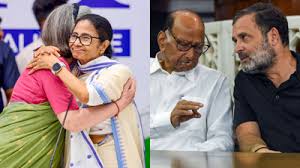
NEW DELHI: Mamata Banerjee’s Trinamool Congress is not merging with the Congress. That’s final for now. Both the parties have firmly rejected speculations about a merger, dismissing them as “baseless rumours” and “fake news”. But not before the speculations triggered a larger and far more interesting political debate: should leaders like Mamata Banerjee and Sharad Pawar, who broke away from the Congress decades ago to chart their own political course, consider returning to the grand-old-party’s fold to strengthen the opposition fight against the BJP? The merger buzz gained traction after Mamata Banerjee met Sonia Gandhi and later her nephew and political heir Abhishek Banerjee held a lengthy meeting with Rahul Gandhi. The meetings came against the backdrop of an unprecedented crisis within the Trinamool Congress following its crushing defeat in the 2026 West Bengal assembly elections. Sonia and Mamata For the first time, the once-impenetrable fortress of the TMC showed deep cracks. Mamata Banerjee, who ruled Bengal for 15 years and appeared invincible until recently, was reduced to just 80 seats in the assembly as the BJP formed its first-ever government in the state. But her setback did not end with the election results. Several newly-elected MLAs and some of the closest aides of Mamata Banerjee rebelled against the party and reached out to the BJP. Much of the anger within the TMC was directed at Abhishek Banerjee, with sections of the old guard accusing the leadership of sidelining those who spent years building the party. Such rapid was the unravelling of the Trinamool Congress that the once-invincible Mamata Banerjee, who had been dismissive about the Congress for the last 15 years, was forced to rush to the grand-old-party for help. It is this plight of Mamata Banerjee which prompted suggestions from some quarters that the Trinamool chief, who had formed the party in 1998 after breaking away from the Congress, should consider “Ghar-wapasi.” And this suggestion was not just for Mamata, but also for leaders like Sharad Pawar. Pawar, who formed the Nationalist Congress Party (NCP) in 1999, and faced a similar challenge after his party split. Pawar eventually lost control of the NCP name and its iconic clock symbol to the faction led by his nephew Late Ajit Pawar. Another leader who faces challenges similar to Mamata is Uddhav Thackeray. Udhhav, who lost control of Shiv Sena after rebellion by his party MLAs, is now battling fresh speculations of further defections amid reports of “Operation Tiger”. There are reports that 6 of his 9 MPs are in touch with Eknath Shinde, who had led the rebellion against Uddhav, and is now deputy chief minister in the BJP-led government in Maharashtra. Together these stories point to a broader reality: several regional parties that once appeared dominant in their respective states are confronting an increasingly assertive BJP that has not just defeated them but is also benefitting from their implosion. It is this backdrop that has revived an idea that would have seemed improbable just a few years ago. The ‘ghar-wapsi’ debate The homecoming debate was triggered by Shiv Sena (UBT) leader Sanjay Raut, who argued that parties born out of the Congress should reunite with the parent organisation to strengthen the opposition against the BJP. Sanjay Raut The Sena (UBT) leader went a step further, urging Sharad Pawar to take the lead in bringing together parties that emerged after splitting from the Congress. Former Rajasthan chief minister Ashok Gehlot backed the idea, saying “the time has come”, while Maharashtra Congress leader Nana Patole argued that leaders such as Mamata Banerjee and Sharad Pawar increasingly recognise the need for a stronger Congress to counter the BJP. Nana Patole At first glance, the argument appears compelling. The BJP has emerged as the dominant force in the country. When Prime Minister Narendra Modi first came to power in 2014, the BJP was in power in just seven states. With victories in West Bengal and Assam, the BJP-led NDA now governs 22 states and Union Territories. Opposition unity remains a work in progress. Several regional parties are weaker today than they were some years ago. But before asking whether Congress’s former children should return home, it is worth asking why they left in the first place. Why Congress’s children walked away Mamata Banerjee did not leave the Congress because of ideological differences. She walked out in 1998 because she believed the party had become incapable of defeating the Left Front in West Bengal. Frustrated with the Congress high command and convinced that Bengal required a more aggressive opposition, she founded the Trinamool Congress. The split tree The move paid off. In 2011, Mamata accomplished what the Congress had failed to do for decades, ending the Left Front’s 34-year rule in West Bengal. Sharad Pawar’s exit came under different circumstances. In 1999, Pawar, PA Sangma and Tariq Anwar challenged Sonia Gandhi’s foreign origin and subsequently formed the Nationalist Congress Party. While the NCP remained ideologically close to the Congress and frequently governed alongside it, Pawar succeeded in building an independent political identity rooted in Maharashtra. YS Jagan Mohan Reddy’s departure was driven by succession politics. Following the death of his father, former Andhra Pradesh chief minister YS Rajasekhara Reddy, Jagan felt sidelined by the Congress leadership and eventually floated the YSR Congress Party. Within a few years, the YSRCP had virtually replaced the Congress in Andhra Pradesh. Their exits were driven by different factors, but each believed they stood a better chance outside the Congress than inside it. In most cases, they were right. What has changed now What has changed is not the Congress. It is the exponential rise of the BJP. When Mamata Banerjee left the Congress in 1998 and Sharad Pawar followed in 1999, the BJP was nowhere near as dominant as it is today. Regional parties grew by occupying political space vacated by a declining Congress. Today many of those same parties are confronting a very different challenge. Over the last decade, the BJP has expanded beyond its traditional
CPM objects to Telangana CM renaming road after Trump
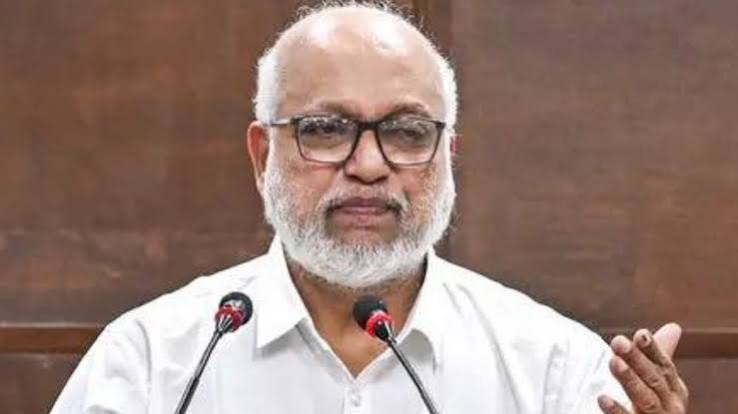
NEW DELHI: Communist Party of India (Marxist) has strongly objected to chief minister Revanth Reddy-led Telangana govt’s renaming the road adjoining the US Consulate in Hyderabad to honour President Donald Trump. “BJP has no qualms about surrendering India’s sovereignty and self-respect, and now it seems that neither does the Congress govt in Telangana,” CPM general secretary MA Baby said on Wednesday. “We expect Congress high command will take note of this outrageous move and intervene to make sure it is withdrawn. Claims of carrying on the ideals of our anti-imperialist resistance movement must not be limited to words,” he said in a post, sharing a screenshot of a news report stating Reddy will inaugurate the road on June 23. “At a time when the belligerent US is in the midst of a war against Iran, a genocide in Gaza, military intervention in Venezuela and a criminal stranglehold on Cuba, CM Reddy is renaming the road adjoining the US Consulate in Hyderabad to honour Trump…” Courtesy : TOI Note: This news is originally published on https:/timesofindia.com/bha and is used purely for non-profit/non-commercial purposes, especially human rights
Rahul Gandhi makes INDIA bloc speech public, allies ask: ‘Why not ours?’
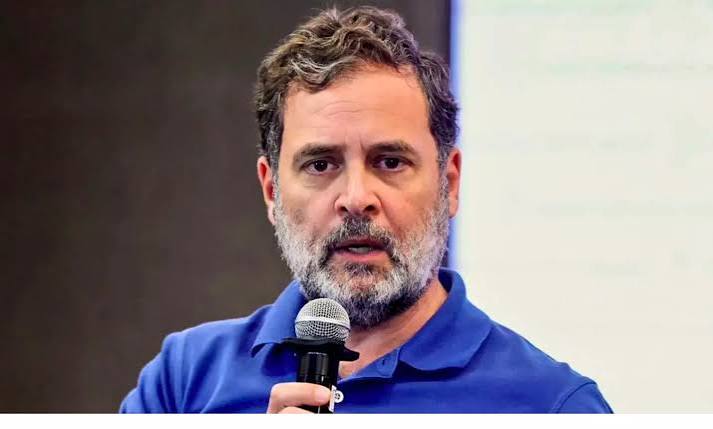
NEW DELHI: Congress functionary Rahul Gandhi’s decision to put in public domain the speech he delivered at INDIA bloc meeting on June 8 has not gone down well with some of the allies, given that it was a closed-door meeting where much was said and varied views were presented. Left parties CPM, CPI and CPI(ML) Liberation specially feel that “mutual trust” among members needs to be bolstered going forward if the bloc has to mount “resistance” against BJP, as suggested by Gandhi in his speech. Not just the release of speech, even what was said by Gandhi has evoked sharp reactions from certain allies over last few days. CPM general secretary MA Baby had on Saturday strongly objected to Gandhi’s remarks regarding former Kerala CM Pinarayi Vijayan in his speech. “While he released what he said to allies, the views of other INDIA bloc members expressed at the closed-door meeting are not in public domain,” Baby said. CPI(ML) Liberation general secretary Dipankar Bhattacharya emphasised that INDIA bloc will have to move beyond just being an electoral bloc and a grouping that comes together during Parliament sessions. “If we want to mount ‘resistance’ against BJP as suggested by Rahul Gandhi in his speech, then we have to meet and plan on raising issues affecting the public together as a group,” he said. On Rahul releasing his speech, he said, “This was an internal meeting, and if he was planning to release his speech, then ideally all political parties present in the meeting should have been consulted.” CPI general secretary D Raja said, “By that measure speeches of others should also be in public domain. Among various issues, the members had raised concern over Congress too.” While refusing to comment on Gandhi’s speech and his decision to release it, RJD MP Manoj Jha said it must be understood that as INDIA bloc is a grouping of political parties, there will be divergence of views. He sought focus on building synchronisation and highlighting issues as a group. Meanwhile, the DMK leadership is firmly holding on to its position over Congress severing its alliance with the party to support the TVK govt. DMK’s floor leader in Rajya Sabha Tiruchi Siva said, “We are very clear that we cannot share the same space with Congress anywhere in the backdrop of their betrayal in Tamil Nadu.” He said, “However, as far as other opposition allies go, we are with them in the fight against BJP.” Courtesy : TOI Note: This news is originally published on https:/timesofindia.com/bha and is used purely for non-profit/non-commercial purposes, especially human rights
Gobarha—the wages of untouchable laborers, extracted from animal dung! Baba Saheb revealed the extent of casteism in villages.

In some parts of Uttar Pradesh, Dalit laborers were paid “gobarha,” meaning “grain from cow dung,” for agricultural work. New Delhi—Imagine a poor laborer who has toiled all day in the scorching sun—sweating in the fields, harvesting crops, driving oxen to separate the grain from the chaff. His back is bent, his palms are chapped, but there is a small hope in his eyes that perhaps today he will receive some worthy reward for his hard work. Exhausted, he goes to his master to ask for his wages, hoping that perhaps today his children will have a full meal. But what does his master give him? Not money, not clean grain, but a bag full of gobarha—the very grain sifted from oxen dung. The same grains that passed through the stomachs of animals were now placed in the bag of this laborer, so that he could grind them into flour and make bread for his family. This is the story of Gobarha—a practice that symbolizes the inhumanity of the untouchables and the cruelty of the Hindu social system, as described by Dr. B.R. Ambedkar in his writings. This is a truth that shakes the heart and brings us to the depths of the oppression that the untouchables endured for centuries. Dr. Bhimrao Ramji Ambedkar’s Writings and Speeches, Volume 5, Chapter 4, poignantly describes the harsh realities faced by the untouchables (Dalits) in India’s caste-dominated society, with the practice of Gobarha emerging as a prominent symbol of their inhumanity. The practice of Gobarha highlights the systematic oppression of the untouchables under the Hindu social system. It explains how this degrading practice reflects the economic, social, and cultural marginalization of the untouchables, keeping them outsiders in the so-called “village republic.” Villages Divided Ambedkar described the then Indian village as a divided society, divided into two parts: Touchable: Upper-caste Hindus who lived within the village and held economic and social power. Untouchable: A marginalized minority group forced to live in separate settlements outside the village and treated as “hereditary bonded labour.” A strict code of conduct enforced by the touchables governed every aspect of the untouchables’ lives, criminalizing even dignified actions, such as: Acquiring wealth (e.g., land or livestock). Building houses with tiled roofs. Wearing clean clothes, shoes, or gold jewelry. Giving children respectable names or speaking a cultured language. Violation of these rules invited punishments ranging from social ostracism to violence, ensuring the oppression of the untouchables. Ambedkar calls the Indian village a “republic of the negated,” in which there is no place for democracy, equality, liberty, or fraternity. It is a “republic of the touchables, by the touchables, and for the touchables,” where the untouchables are deprived of rights and are reduced to mere service and subservience. Gobarha: A Symbol of Inhumanity In parts of Uttar Pradesh, untouchables were given “gobarha,” meaning “dung grain,” for agricultural work. During the harvest season (March or April), oxen tread on the threshing floor to separate the grain from the chaff, consuming some of the grain and chaff. The next day, the partially digested grain is extracted from their dung, sieved, and given to untouchable laborers as their wages. These laborers turn this grain into flour and make bread, a result of their compulsion. Ambedkarite thinkers point out that gobarha was not merely a form of payment, but a deliberate insult. It symbolized the denial of dignified labor and food to untouchables, forcing them to survive on the remains left by animals. Ambedkar’s documentation of this practice underscores the cruelty of the caste system, where the labor of untouchables is so undervalued that even their livelihoods become degrading. Economic Exclusion and the Role of Gobarha In an agrarian society, land ownership is key to economic stability, but untouchables were systematically denied this due to: Financial constraints: Most did not have the means to purchase land. Social resistance: Upper-caste Hindus opposed attempts by untouchables to purchase land, seeing it as a challenge to their superiority and often punished such “courage.” Legal barriers: In areas like Punjab, laws such as the Land Alienation Act explicitly prohibited untouchables from purchasing land. As a result, untouchables were forced to become landless laborers, dependent on touchable farmers for work. Lacking bargaining power, they were forced to accept minimal wages—often in the form of commodities like cow dung—or face starvation and violence. Gobarha symbolized the economic exploitation of the untouchables: it was not valuable labor, but a byproduct of animal waste, reflecting the disdain of the touchables for untouchable labor. The process of extracting, sifting, and converting cow dung into food is laborious and degrading, further deepening their inferiority. This practice, prevalent in regions like Uttar Pradesh, reflected the widespread denial of fair compensation, forcing untouchables to exist on the margins of human dignity. The Right to Beg: A Parallel Livelihood Mechanism Baba Saheb writes that when agricultural work is unavailable (outside the harvest season), untouchables rely on precarious means of subsistence: Selling grass and firewood: Collected from forests, often requiring bribes to forest guards, and sold in towns where touchable buyers collude to drive down prices. Statutory begging: In many villages, untouchables have the “right” to beg for food from touchable homes. This is not charity, but a systematic practice that ties untouchable families to specific touchable families, akin to medieval slavery. Ambedkar points out that even in government jobs, the “value” of the food begged is taken into account when determining untouchables’ wages. Like cow dung, begging also increases dependency and dehumanization, trapping untouchables in a cycle of survival at the mercy of touchables. The Village Republic: An Empire of Exploitation Ambedkar calls the Indian village a “republic of the negation,” in which there is no place for democracy, equality, freedom, or fraternity. It is a “republic of the touchables, by the touchables, and for the touchables,” where the untouchables are deprived of rights and are reduced to mere service and subservience. Cowsheds and alms are the cornerstones of this exploitative system, designed to keep the untouchables “outside
The Vatan system was abolished 67 years ago. Learn about the system that made Mahars hereditary slaves.
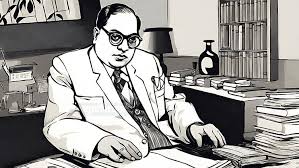
On June 16, 1956, Dr. Ambedkar founded the Bombay State Inferior Village Vatandar Association. Through this organization, he gave new direction and momentum to the struggle against the oppressive Vatan system. On June 16, 1956, 70 years ago, Dr. Ambedkar founded the Bombay State Inferior Village Vatandar Association, and he was also its president. Through this organization, he gave new direction and momentum to the struggle against the oppressive Vatan system. For decades, Babasaheb had been campaigning against the Mahar Vatans. This hereditary village service system deprived marginalized communities of their dignity, land rights, and economic independence. He sought constitutional and legislative solutions to ensure justice for the Vatandars and end this system based on social inequality. On this day, he organized affected communities to eradicate the Vatan system through democratic and legal means. Members of the Mahar community were required to perform compulsory services such as village security, delivering messages, and assisting in administrative work. The land they were granted in return was called ‘Mahar Watan Bhumi’. The Watan system was a hereditary system prevalent in the villages of Maharashtra for centuries. Under this system, certain families, particularly members of the Mahar community, were granted Watan land in exchange for various village services such as watchman duty, delivering messages, disposing of dead animals, cleaning, and other laborious tasks. This land was hereditary and could not be easily sold or transferred; in this system, the land was not completely private property. Due to this service obligation, the Watandars were essentially bound as bonded laborers to feudal lords or upper castes. Dr. Ambedkar had been fighting against this system since 1927. In 1937, he even introduced a bill in the Bombay Legislative Council to abolish the Mahar Watan system. His persistent efforts culminated in the Bombay Inferior Village Watan Abolition Act, 1958 (Act I of 1959), which came into effect on January 20, 1959. This Act abolished all inferior watans and merged watan lands with the state. Watandars received land rights under a re-grant, providing for possession after paying three years’ worth of taxes and full ownership after paying 13 years’ worth of taxes. These laws aimed to transform watan lands into regular agricultural land, although disputes and conflicts over the redistribution and possession of this land continue to this day. Dr. Ambedkar’s unwavering commitment to equality and social democracy played a crucial role in ending this oppressive practice. This Act proved to be a significant step towards socio-economic justice, paving the way for the end of hereditary exploitation. However, in practice, many watandar families faced challenges in obtaining land rights. Geetha Sunil Pillai Courtesy: Hindi News