
MP: Dalit Youth Assaulted, Abused With Caste Slurs in Mandsaur Village Over Old Dispute, Two Arrested
A Dalit youth was allegedly assaulted and humiliated with casteist slurs in Madhya Pradesh’s Mandsaur district. The incident took place in Dethli Khurd village under the Garoth police station limits, where police have arrested two accused. According to officials, the victim, Ramgopal Mehar, filed a complaint at Garoth police station, saying he was attacked over an old dispute related to “moram” (gravel). Year-Old Dispute Led to Assault Ramgopal told police that about a year ago, gravel was dumped near his plot. Since then, the accused — Bajrang Dhakad and Dilip Dhakad — were allegedly angry because he had not used their dumper for the work. Police said the same issue became the reason for the latest confrontation. According to the complaint, the accused surrounded Ramgopal, started arguing with him, and then allegedly abused him using casteist words before physically attacking him. Victim Suffered Serious Injuries The victim said he suffered injuries to his head, stomach, hands and legs during the assault. A woman present at the spot was also allegedly beaten during the incident. Locals who heard Ramgopal’s cries rushed to the scene and intervened, helping rescue him from the attackers. Case Registered Under SC/ST Act Balveer Singh Yadav, the station in-charge of Garoth police station, said that based on Ramgopal’s complaint, a case has been registered against both accused under various sections of the Bharatiya Nyaya Sanhita (BNS) and the Scheduled Castes and Scheduled Tribes (Prevention of Atrocities) Act. He said both accused have been taken into custody and further investigation is underway. Social Tensions Also Being Probed Local reports suggest that the victim’s family follows preacher Rampal, and there had been some social opposition in the village over this. It is also being reported that followers of Rampal were distributing books in the area, which may have contributed to tensions. Police are now investigating all angles behind the assault. Courtesy : TOP Note: This news is originally published on https:/theobserverpost.com/bha and is used purely for non-profit/non-commercial purposes, especially human rights
Police file case against Dalit youth: Victim approaches court for justice after mother and son beaten
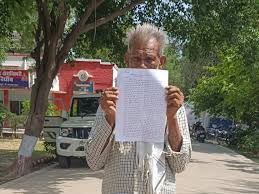
A Dalit youth and his mother were beaten in a dispute over the purchase of watermelons in the Khakhreru police station area of Fatehpur district. The victim alleges that instead of registering his complaint, the police filed a case against him. Failing to receive justice, the victim has now approached the civil court. This incident occurred in Anjana Kabir village. According to the victim, Rajkumar (20), on the evening of May 6, 2026, he had gone to Haji Baba’s field to buy watermelons. Ram Naresh and his uncle, Ram Swaroop, from the village, abused him for claiming the watermelons first. When Rajkumar protested, the accused, along with their unidentified associates, attacked his house that night. His mother, who tried to intervene, was also beaten. Rajkumar alleges that when he arrived at the police station injured after the incident, the police did not register his complaint. Instead, based on the complaint filed by the accused, a case was registered against Rajkumar and a friend under sections 115(2), 352, and 351(2) of the Indian Penal Code (IPC). Having failed to receive justice from the Superintendent of Police and the Circle Officer, the victim, Rajkumar, has now appealed to the Fatehpur Civil Court (JM Court Khaga). He has requested the court to register an FIR and conduct a fair investigation into the matter. Ayush Singh | Manjhanpur (Khaga), Fatehpur Courtesy: Hindi News
Bonded labour horror in UP: Worker’s alleged torture death emerges after rescue of 12

Uttar Pradesh police launch manhunt for absconding paper plate unit owner after raid exposes year-long confinement, brutal assaults, and a hidden fatality A case of alleged bonded labour, torture and illegal confinement has come to light in Uttar Pradesh’s Muzaffarnagar, where 12 workers, including minors, were rescued from a paper plate manufacturing factory in Mandi village following a joint raid by police and the administration. The investigation has revealed allegations of prolonged exploitation, physical abuse and the death of one worker who was allegedly tortured while being held at the factory. According to police, the labourers were brought from different states with the promise of a monthly salary of Rs 12,000. Instead, they were allegedly confined inside the factory premises for more than a year, denied wages and prevented from leaving. Several rescued workers bore visible injuries and torture marks. During questioning, they alleged that they were beaten, whipped, attacked with sharp weapons and assaulted by dogs when they tried to escape. They also alleged that they were forced to consume animal fodder and were kept in inhuman conditions. The extent of the alleged abuse emerged during the probe after the June 22 rescue operation. Police on Thursday revealed that one of the workers, identified as Arjun, died in November 2025 after being subjected to torture at the factory. His body was later allegedly disposed of after being packed in a bag. Police have registered a fresh case against factory owner Ankit Balyan and Shiva Tyagi. Tyagi has been arrested, while Balyan remains absconding. Another accused, Pradeep Balyan, is also being searched for. A Special Investigation Team (SIT) has been formed to investigate the case and collect evidence. The rescued workers have undergone medical examinations and their statements have been recorded before a magistrate. Authorities are now working on their rehabilitation, including assistance under government schemes, opening bank accounts and reuniting them with their families. Officials said contact has been established with the families of four workers, while efforts are continuing to trace relatives of the remaining survivors. Leader of Opposition in Lok Sabha Rahul Gandhi described the alleged abuse as an “assault on human dignity” and demanded strict action against those responsible. The accused have been booked under relevant provisions of the Bharatiya Nyaya Sanhita, the Bonded Labour System (Abolition) Act and the Child Labour (Prohibition and Regulation) Act. Courtesy : TNIE Note: This news is originally published on https:/thenewindianexpress.com/bha and is used purely for non-profit/non-commercial purposes, especially human rights
‘Students being called terrorists’: Rahul Gandhi attacks Modi govt, Pradhan over paper leaks

NEW DELHI: Leader of opposition in the Lok Sabha Rahul Gandhi on Thursday launched a sharp attack on the BJP-led central government, demanding the resignation of Union education minister Dharmendra Pradhan over his alleged “terrorist” remark against students protesting over education-related issues. In a post on X, Rahul Gandhi accused the BJP-led NDA government of suppressing dissent and failing to protect the interests of students. In a post on X, Rahul Gandhi alleged that the Modi government was branding students demanding fair examinations and a secure future as “terrorists.” He wrote, “Drowned in the arrogance of power, the Modi government has now reached a point where the Education Minister is calling students, who are merely demanding their rights, fair examinations, and a secure future, ‘terrorists’. “Just think about it, the one whose failures led to so many paper leaks, under whose rule 20 children lost their lives, who has pushed the futures of millions of youth into darkness, is today labeling the suffering children and those raising their voices as ‘terrorists’.” Rahul Gandhi further alleged that the government routinely branded its critics. “But this is nothing new: Farmers, the nation’s food providers, were called ‘professional agitators and parasites.’ Those who ask questions were branded ‘Anti-National.’ And now, the youth are being called ‘terrorists’.” Demanding Pradhan’s resignation, Gandhi wrote, “Anyone who questions the government, label them a traitor; that’s the entirety of their politics. Mr. Dharmendra Pradhan, immediately apologize to the millions of youth in this country and resign for your failures.” He also criticised the education system, saying, “As for me, go ahead and attack me as much as you want. I said it in Kota, and I say it again: This education system has today become nothing but an extortion racket. I won’t let it continue like this. Ensuring every child gets affordable, quality education and fair examinations, I will never stop raising this voice. This format is standard news style because every set of remarks is explicitly introduced as “he wrote”, “Gandhi further alleged”, or “Demanding Pradhan’s resignation, Gandhi wrote”, making it clear that these are Rahul Gandhi’s claims and not the reporter’s narration. Courtesy : TOI Note: This news is originally published on https:/timesofindia.com/bha and is used purely for non-profit/non-commercial purposes, especially human rights
Rahul Gandhi files application in MP HC, expresses regret over remark against Shivraj Singh Chouhan’s son
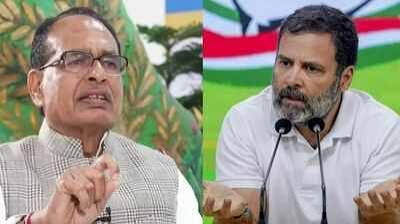
Shivraj Singh Chouhan’s son Kartikeya Singh filed a defamation case against Rahul Gandhi, alleging that Gandhi mentioned his name while referring to Panama Papers leak case, damaging his reputation. Congress leader Rahul Gandhi has approached the Madhya Pradesh High Court with an application expressing regret for his allegedly defamatory statement about Union Minister Shivraj Singh Chouhan’s son Kartikeya Singh. Kartikeya Singh had filed a defamation complaint in a Bhopal court against the Leader of the Opposition in the Lok Sabha. Gandhi’s application, filed by his lawyer on Wednesday, said his statement was not related to Singh. In the defamation complaint lodged in the Bhopal court for cases against MPs-MLAs, Kartikeya Singh alleged that during an election rally in Jhabua in 2018, Gandhi mentioned his name while referring to the Panama Papers leak scandal, thus damaging his reputation. The court issued a summons to Gandhi for personal appearance, following which the Congress leader moved the HC seeking to quash the summons as well as the defamation case. Justice Pramod Kumar Agarwal will hear Gandhi’s petition on Thursday. The petitioner on Wednesday produced the records of the lower court, as directed by the HC. Advocate Sankalp Kochhar represented the complainant before the high court. Responding to Gandhi’s regret application, Kartikey through his counsel on Thursday said that he didn’t intend to escalate the issue any further, so the proceedings before the MP HC as well as the trial court in Bhopal be closed. Courtesy : TNIE Note: This news is originally published on https:/thenewindianexpress.com/bha and is used purely for non-profit/non-commercial purposes, especially human rights
CJP protester attacked with iron rod; Dipke demands SC/ST Act, attempt to murder charges
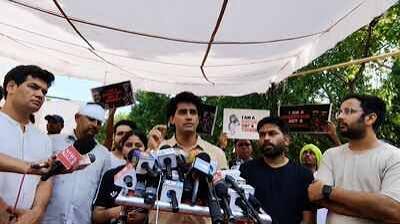
NEW DELHI: A person protesting with CJP sustained serious head injuries during the prolonged protest at Jantar Mantar on Tuesday night. CJP founder Abhijeet Dipke and CJP spokesperson Saurav Das have demanded that the Delhi Police take strict action against those responsible, alleging that while police have arrested one person, around 15 people were involved in the attack. Following the incident, a video of the injured man’s daughter surfaced on social media. In the video, she alleged that a group of “Manuvadi” people cornered her on the road and that when her father intervened to protect her, he was allegedly struck on the head with an iron rod, leaving him seriously injured. CJP demands justice CJP spokesperson Saurav Das said Delhi Police have taken “zero preventive action” regarding physical attacks and online threats. The CJP has demanded full accountability for the incident under the SC/ST Act and Attempt to Murder charges. Das said that the perpetrators targeted the protest so as to create an enviroment of terror and make it unsafe for those on ground to engage in a peaceful protest. He also revealed that the victim’s medical examination revealed three deep wounds to the skull, with the MLC report showing grievous injury, but police have recorded it as minor injury. Dipke urged authorities to identify and arrest all those allegedly involved in the attack. He further alleged that while police have arrested one person, but 15 were involved in the attack and have not been detained. The CJP has maintained that the protest will continue until Union Education Minister Dharmendra Pradhan resigns over alleged NEET-UG paper leaks and examination irregularities. Courtesy : TOI Note: This news is originally published on https:/timesofindia.com/bha and is used purely for non-profit/non-commercial purposes, especially human rights
Call for stronger awareness on SC/ST Act

Several senior officials on Thursday emphasised the need of the hour was for greater awareness of the Scheduled Castes and Tribes (Prevention of Atrocities) Act-1989, citing incidents of Dalits facing untouchability, social discrimination and other problems. The statement was made at the three day training programme organised by the Dalit Bahujan Shramik Union on community vigilance monitoring for committee members. Also present were Dalit Bahujan Shramik Union’s State general secretary and advocate P. Chittibabu. speaking at the event, APEPDCL Superintending Engineer M. Lakshmana Rao said that equal respect and opportunities need to be provided to all Dalit families in accordance to the provisions of the Indian Constitution written by Dr. B.R. Ambedkar. Deputy Director of Social Welfare Department Annapurnamma said that the government was extending immediate support to Dalit victims and implementing welfare measures for all Scheduled Castes. Mission for Elimination of Poverty in Municipal Areas (MEMPA) project director G.V.Chitti Raju, assistant director of A.P., Andhra Pradesh Government Life Insurance assistant director G. Hymavathi highlighted that women and children were also victimised due to discrimination. Mr. Chittibabu urged the government to take steps for quick filing of chargesheets in the courts so that the victims would get justice quickly under the provisions of the Act. People’s Action for Rural Awakening programme coordinator K.Ch. Bangara Raju clarified the doubts of the participants in the meeting. K Srinivasa Rao Courtesy : The Hindu Note: This news is originally published on https:/thehindu.com/bha and is used purely for non-profit/non-commercial purposes, especially human rights
Mangu Ram Mugowalia and Ad Dharm movement: A century of Dalit assertion in Punjab
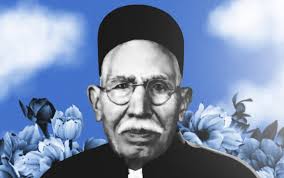
The Ad Dharm Movement, led by Mangu Ram Mugowalia, marked a transformative assertion of Dalit identity and dignity in Punjab, whose legacy continues to shape ongoing struggles for social and economic equality. June 11–12, 2026, marks the centenary of the Ad Dharm Movement, one of the most significant yet underappreciated chapters in the history of anti-caste struggles in India. Formally launched on June 11–12, 1926, under the leadership of Mangu Ram Mugowalia, the movement emerged as a powerful assertion of dignity, self-respect, and independent identity among the oppressed castes of Punjab. At a time when untouchability and caste discrimination structured everyday life, Ad Dharm challenged the social order by proclaiming that Dalits were not merely victims of caste oppression but a people with their own history, culture, and spiritual traditions. While anti-caste movements led by Jyotiba Phule in Maharashtra, Periyar in Tamil Nadu, and Ayyankali in Kerala have received recognition, the contribution of Mangu Ram Mugowalia remains relatively absent from mainstream narratives of social reform. Yet his role in shaping Dalit consciousness in Punjab was no less transformative. Through the Ad Dharm Movement, he laid the foundations of a distinct political and cultural identity that continues to influence Dalit assertion in the region even today. The movement also occupies an important place in the wider history of Dalit politics in India. Emerging during the same period that Dr. B.R. Ambedkar was mobilizing the Depressed Classes in India, Ad Dharm represented one of the earliest organized expressions of Dalit self-assertion in Punjab. Although they developed in different regional contexts, both Ambedkar and Mangu Ram shared a commitment to dignity, self-respect, and the rejection of caste-based oppression. From Ghadar revolutionary to a leader Born in 1886 in Hoshiarpur district, Mangu Ram’s political journey began with the Ghadar Movement, the revolutionary organization established by Indian migrants in North America to challenge British colonial rule. However, upon returning to India, he realized that political freedom alone could not guarantee social equality for the oppressed castes. The everyday reality of untouchability, exclusion, and humiliation demanded a separate struggle. This realization pushed him toward organizing Dalits and confronting caste oppression directly. The emergence of Ad Dharm must be understood within the social context of Punjab, where Dalits continued to face discrimination in social, religious, and economic spheres. Mangu Ram understood that emancipation required more than political representation; it required the creation of a collective consciousness rooted in dignity and self-respect. Religiousstudies books Long before the Ad Dharm Movement emerged, Guru Ravidas occupied a central place in the spiritual life of Punjab’s oppressed communities. His teachings of equality, human dignity, and the vision of Begampura—a society free from hierarchy, oppression, and suffering—had inspired generations of Dalits. Yet this reverence largely remained within the religious sphere. Mangu Ram recognized the immense emancipatory potential of Ravidas’s teachings. Through the Ad Dharm Movement, he transformed this spiritual legacy into a vehicle for social and political mobilization. Guru Ravidas became not merely a saint to be worshipped but a symbol of collective identity, resistance, and self-respect. The movement encouraged Dalits to take pride in their history and reject the caste labels imposed upon them by the oppressive social order. By placing Guru Ravidas at the centre of Dalit public consciousness, Mangu Ram created a cultural language through which oppressed communities could articulate dignity and equality. In this sense, he transformed an existing devotional tradition into a powerful instrument of social assertion. Ad Dharm: Transforming faith into assertion The Ad Dharm Movement sought to construct an alternative historical narrative. It argued that Dalits were the original inhabitants of the land and possessed an identity independent of the hierarchical framework of the social order. By promoting the term “Ad Dharm,” the movement challenged the legitimacy of caste classifications and asserted a distinct social existence. This was not merely a symbolic gesture. It represented a profound challenge to a social order that defined Dalits through exclusion and degradation. Ad Dharm offered dignity where caste society offered humiliation, and identity where caste hierarchy imposed stigma. The Ad Dharm Movement can be understood as Punjab’s own self-respect movement. Just as Jyotiba Phule’s Satyashodhak movement challenged Brahmanical domination in Maharashtra, Periyar’s Self-Respect Movement attacked caste hierarchy in Tamil Nadu, and Ayyankali fought for the rights of oppressed communities in Kerala, Mangu Ram developed a language of resistance suited to the social realities of Punjab. Each of these movements sought to restore dignity to those historically denied it. In Punjab, Ad Dharm became the vehicle through which Dalits asserted their humanity, cultural autonomy, and political agency. It gave Punjab’s Dalits a collective identity and a sense of pride that transcended caste-imposed inferiority. The movement demonstrated that social transformation requires more than political reform; it also requires cultural self-respect. Like the Self-Respect Movement in Tamil Nadu and the Satyashodhak Samaj in Maharashtra, Ad Dharm challenged the ideological foundations of caste and inspired oppressed communities to imagine themselves as equal citizens. The politics of recognition: The 1931 Census The movement’s impact became particularly visible during the 1931 Census, when thousands identified themselves as Ad Dharmis rather than under traditional caste labels. This was one of the earliest and most successful attempts in modern India to use the census as a tool of political assertion and collective self-definition. By refusing imposed identities and embracing Ad Dharm, Dalits challenged both colonial categories and caste hierarchies. The census thus became a site of resistance, demonstrating the transformative power of collective mobilization. The significance of the Ad Dharm Movement extends far beyond the colonial period. Its influence can be seen in the continued centrality of Guru Ravidas in Punjab’s Dalit public sphere, the emergence of Ravidasia religious institutions, and the enduring tradition of Dalit political mobilization in the state. Religiousstudies books Yet the centenary of Ad Dharm is an opportunity to reflect on the unfinished tasks of social justice. Punjab today has the highest proportion of Scheduled Castes among all Indian states, constituting nearly one-third of its population. Despite this demographic strength and
Rajgir Dalit Massacre: CPI-ML demands High Court investigation, punishment for the guilty, jobs and compensation for the victims’ families; warning of nationwide agitation
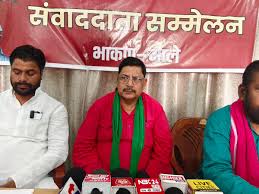
CPI-ML has attacked the government over the mob lynching of two Dalit youths in Rajgir, Nalanda district, and the police action against villagers demanding a degree college in Nagarnausa. Party leaders questioned the administration at a press conference on Wednesday after meeting with the families of the victims and affected people. The press conference was addressed by CPI-ML MP Sudama Prasad, MLA Sandeep Saurabh, former MLA Manoj Manzil, and former MLA Gopal Ravidas. They demanded an investigation into the Rajgir massacre by a sitting High Court judge, severe punishment for the culprits through a speedy trial, and compensation and government jobs for the victims’ families. Government failing to control crime MP Sudama Prasad alleged that crime is continuously increasing in Bihar and the government has completely failed to control it. He said that “encounter raj” prevails in the state, while criminals are carrying out crimes with impunity. Prasad questioned the government’s silence on the mob lynching of two Dalit youths in Rajgir. He demanded that the case be investigated under the supervision of a sitting High Court judge and that the culprits be punished with rigor by conducting a speedy trial. He also demanded compensation of ₹50 lakh each for the families of the deceased and a government job for one family member. Sudama Prasad also alleged that instead of taking action against criminals, the government is targeting the poor, laborers, Dalits, and those raising legitimate demands. Police entered homes and assaulted people in Nagarnausa Paliganj MLA Sandeep Saurabh said that while the Chief Minister constantly talks about taking strict action against criminals, incidents of murder, rape, and other crimes are continuing unabated in the state. He alleged that the administration brutally treated students and villagers protesting for a degree college in Nagarnausa. Police entered homes and beat people, breaking down the doors of approximately 300 houses, and arresting several people and sending them to jail. Saurabh claimed that even minor girls were assaulted during the operation. He demanded the immediate suspension of the local police station in-charge, action against the guilty officers, the unconditional release of the 39 arrested individuals, and the withdrawal of all cases. He said that a degree college should be established in the Nagarnausa block headquarters, as this has been a long-standing demand of local youth. The DM and SP should be held accountable. Former MLA Gopal Ravidas said that incidents of mob lynching are continuously increasing in the state, which is extremely worrying. He held the Nalanda district administration responsible for the Rajgir incident and demanded that the DM and SP be held accountable. He demanded that the district administration be held accountable for the entire matter and that an impartial investigation be conducted into the allegations against the chief priest of the Jhunukia Baba complex. A spectacle in the name of encounters Former MLA Manoj Manzil said that crime has reached its peak in the state. Incidents of atrocities against Dalits, women, and vulnerable groups are on the rise. He alleged that the police are attempting to suppress many cases instead of providing justice. Manoj Manzil said that a “spectacle in the name of encounters” is being staged, while crime and insecurity persist on the ground. CPI-ML leaders warned that if the government does not seriously consider their demands, the party will consider launching a statewide movement. Courtesy; Hindi News
Temple Entry: TN Dalit Families Enter Karur Mariamman, Sellandiamman Temples As Govt Ends Decades Of Discrimination Through Talks

After weeks of discussion, the existing temple administration was removed on June 20, and officials from HR&CE department were appointed to oversee temple affairs. Karur: Dalit residents of Punjai Kadambankurichi entered and worshipped main deities of Arulmigu Sri Mariamman and Arulmigu Sellandiamman temples after several decades of discrimination by caste-Hindus culminating with the intervention of the district administration, here on Tuesday. The issue of disallowing Dalits from worshipping at these temples came to light on May 19, while celebrating festivals. Though the upper caste families in the village which has over 1000 families honour Dalits for their role in carrying out the rituals involving burial of a sacrificed ox, the latter were not allowed to enter the temple to worship the deities. Temple Entry: TN Dalits Families Enter Karur Mariamman, Sellandiamman Temples As Govt Ends Decades Of Discrimination Through Talks A group of Dalits who were prevented from entering the temples which are believed to have been built about 150 years ago submitted their complaints to District Collector, the District Superintendent of Police district and the state government, seeking redressal to the long-standing dispute. The district administration led by Manmamangalam Tahsildar Kumaresan conducted proceedings with the members – including Murugesan and Kuppuswamy the key members – of the temple management committee and a series of peace talks involving both the communities. Temple Entry: TN Dalits Families Enter Karur Mariamman, Sellandiamman Temples As Govt Ends Decades Of Discrimination Through Talks After weeks of discussion, the existing temple administration was removed on June 20. Officials from the Hindu Religious and Charitable Endowments (HR&CE) department were appointed to oversee temple affairs. On the day of the worship, more than 100 police personnel were deployed to ensure peace and security. Dalit devotees carried traditional Maavilakku (made of rice flour and jaggery) offerings into the temples and performed prayers inside the premises for the first time in generations. Local resident Pon Muthukumar who acted on behalf of the members of the Scheduled caste community said they had historically been forced to worship from outside the temple and were denied even entry during festivals. Muthukumar thanked Chief Minister C Joseph Vijay for issuing directions in a separate petition filed before the Chief Minister’s Special Cell. He also credited the intervention of the district administration for ensuring that worship could take place peacefully. Temple Entry: TN Dalits Families Enter Karur Mariamman, Sellandiamman Temples As Govt Ends Decades Of Discrimination Through Talks “For generations we were denied to worship and now we express our gratitude to the Chief Minister of Tamil Nadu,” he daid. Welcoming the development, activists working against caste discrimination said the move marked an important departure from past approaches in similar disputes. They noted that, instead of restricting access to avoid tensions, authorities facilitated temple entry while maintaining law and order. Muthu Selvan, Karur district secretary of Tamil Nadu Untouchability Eradication Front, said: “During the previous administration, in various parts of Tamil Nadu, temples were often locked and sealed – preventing worship – whenever members of the Scheduled Caste communities sought to enter and pray. Authorities frequently cited ‘law-and-order issues’ as the reason for these closures, despite existing court orders upholding the right to worship.” Speaking to ETV Bharat, Aarayi, a 90-year-old-woman, said none of her relatives from her Schedule Caste community was allowed to enter the temple during any of the festivals. “It has become a custom here. Now, it is gone,” she said. The development has been viewed as a milestone in the struggle against untouchability and casteism, with residents describing it as the restoration of a fundamental right that had been denied to their community for generations. Courtesy : ETV Bharat Note: This news is originally published on https:/etvbharat.com/bha and is used purely for non-profit/non-commercial purposes, especially human rights