
UP: Dalit daughter missing from Ambedkar Nagar for a year, accused remarried, mother seeking justice hurled casteist slurs at police!
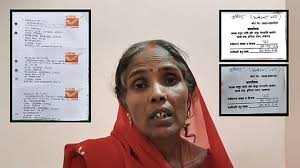
This case is from Akbarpur police station in Ambedkar Nagar. The accused poses for photos with ruling party leaders and police. After the Azad Samaj Party intervened, the FIR was filed under mild pressure, leaving the mother fearing her daughter’s murder. Ambedkar Nagar (Uttar Pradesh): Amidst claims of “zero tolerance” and “Mission Shakti” in Uttar Pradesh, a Dalit mother has been searching for her kidnapped daughter for the past year. But far from getting justice, her protectors have become predators. When this helpless mother went to the police to plead for justice, instead of justice, she received forced signatures on blank papers, threats, and vulgar casteist slurs like “Chamriya Saali.” This entire case, involving the Ahirauli and Akbarpur police stations in the Ambedkar Nagar district, presents a chilling picture of Dalits’ access to the justice system and the nexus between police, criminals, and politicians. What is the full story? Urmila (wife of Munnu), a Dalit woman, lives in Tiwaripur village under the Ahirauli police station. According to Urmila, on May 2, 2024, Ved Prakash Mishra, alias Bhola, a powerful upper caste man from the village, and his brother, Satya Prakash Mishra, alias Sattu, kidnapped her elder daughter, Jyoti. Following a complaint to Dial 100, the police pressured her into a compromise, claiming it was a “rural matter.” For safety, Urmila sent her daughter to her maternal home in Imampur village (Akbarpur police station). The mother alleges that the brazen men were so emboldened that on May 19, 2025, at around 12 noon, Ved Prakash, Satya Prakash, and their associates entered the Imampur home and forcibly abducted Jyoti in broad daylight. Since then, there has been no trace of Jyoti. Abused Dalit mother at the police station: “You Chamariya bitch… I will throw you in jail.” After her daughter’s second kidnapping, when Urmila went to the Akbarpur police station seeking justice, the police’s attitude resembled that of criminals. According to the victim’s video statement and the complaint to the Superintendent of Police, the police not only attempted to protect the accused but also forced Urmila to sign a blank paper. The extreme point was reached when policemen openly hurled casteist abuses at Urmila in the police station premises. In a complaint to the Uttar Pradesh State Women’s Commission, the victim’s mother accused the police of using them as a pretext: “You Chamariya bitch, you force girls into prostitution. I will file a false case against you and throw you in jail.” The police threatened Urmila and drove her away, saying, “You will be beaten with 50 sticks. Run away from here.” The accused’s influence: From the police inspector to the Deputy Chief Minister The reason for this police action is evident in the photos viral on social media. Satya Prakash Mishra, alias Sattu, brother of the main accused, Ved Prakash, has strong political influence. In the photos, the accused, Satya Prakash Mishra, is seen exchanging bouquets with Uttar Pradesh Deputy Chief Minister Brajesh Pathak, Minister of State Dayashankar Mishra “Dayalu,” and other senior BJP leaders. The most shocking photo is of Akbarpur’s police inspector, Srinivas Pandey, to whom the accused, Sattu Mishra, is presenting a memento on his birthday. When the inspector himself is seen standing with the kidnapping accused, how can a poor Dalit woman get justice? 60,000 forcibly deposited into her account, now the accused has married again According to the victim, the accused, with the connivance of the police, forcibly deposited 60,000 rupees into her son’s bank account to hush up the matter and promised that “the girl would return in two or three days.” However, the daughter never returned. The mother was devastated when she learned that Ved Prakash Mishra, the main accused in her daughter’s disappearance, had married another woman a few days ago (on the 14th). Now, Urmila fears that the kidnappers may have gang-raped and murdered her daughter and hidden her body somewhere. Azad Samaj Party’s Intervention and Legal Battle After administrative negligence reached its limits, the State Secretary of the Azad Samaj Party (ASP) intervened in the case. According to the ASP leader, only after she exerted pressure on police officers was a nominal FIR (FIR No. 293/2026) registered at the Akbarpur police station. The ASP leader told The Muknayak that the police deliberately omitted the serious sections of kidnapping and the SC/ST Act mentioned in the application in the FIR, so that the accused could be easily protected. The police are not arresting the accused. ASP officials have filed a caveat in the High Court to prevent the accused from obtaining an arrest stay from the High Court. A complaint has also been filed with the State Women’s Commission, the Human Rights Commission, and the SC/ST Commission in Lucknow. Questions Raised by the System This incident raises serious questions about Uttar Pradesh’s law and order model. Is the law different for criminals with political influence? Why are the police using caste-based abuse against the victim’s mother instead of searching for her Dalit daughter who has been missing for a year? What action will the department take against the police inspector, whose photographs of his cordial relationship with the accused have been publicly available? These are questions that remain unanswered. However, Urmila has only one demand: “I want my daughter. No matter what, they should bring my daughter back to me.” Rajan Chaudhary Courtesy: Hindi News
Dalit woman gang rape case: Accused held after encounter
Prayagraj: Three days after a Dalit woman was gang-raped, police arrested one of the accused after an exchange of fire in Pratapgarh on Tuesday. Two other accused are still at large. Cops seized a country-made pistol of 0.315 bore, along with four used and one live cartridge from the criminal identified as Sohail (22), a resident of Dilippur. Sohail, along with his two accomplices, is accused of gang-raping a Dalit woman three days back. Police said a joint team of Antoo police was conducting routine checks near Lohangpur village forest area when the cops noticed a suspicious man. The cops signalled him to stop, but he tried to escape. When the police team surrounded him, he opened fire. In retaliation, he was injured. Courtesy : TOI Note: This news is originally published on https:/timesofindia.com/bha and is used purely for non-profit/non-commercial purposes, especially human rights
Sikar News: ‘Entered the house and mistreated’, 10-15 people assaulted a Dalit woman
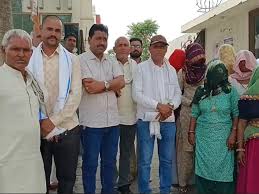
A case of assault and mistreatment of a Dalit family has come to light in Chatur Ki Dhani, Nangal, Gram Panchayat Dunga, Neemkathana area of Sikar district. The victim’s family and villagers demanded the immediate arrest of the accused from Prem Singh Bajor, Chairman of the Sainik Welfare Advisory Committee. Sikar News: Demand for action against the accused in the case of assault on a Dalit family in Chatur Ki Dhani, Nangal, Gram Panchayat Dunga, Neemkathana, Sikar district, Rajasthan. The victim’s family and villagers met with Prem Singh Bajor, Chairman of the Sainik Welfare Advisory Committee, and informed him about the entire incident. They also submitted a memorandum demanding the immediate arrest and strict punishment of the accused. Caste-based slurs were hurled at them. The victim, Santosh Devi, stated that she was working outside her house when about 10 to 15 people came and abused her and then assaulted her. They allege that the mine owner unnecessarily harasses them, hurling caste-based slurs at them, and assaulting them. Villagers reported that there is a mine in Dhani, where the mine owner brings in anti-social elements to assault and abuse Dalit women. They face unnecessary harassment on a daily basis. Assault on Women Today, they met with Prem Singh Bajor, Chairman of the Sainik Welfare Advisory Committee, regarding the incident of the mine owner summoning miscreants to assault women two days ago. The villagers stated that heavy blasting occurs on this lease, just 10 meters from the inhabited area, which has caused cracks in their houses and stones are thrown into their homes every day, posing a threat of loss of life and property. Furthermore, miscreants also engage in daily acts of bullying and abuse and assault in these lease areas. They even enter homes and misbehave and assault women. Incidents of assault against women were also reported on the 10th. A case was registered at the Patan police station. Edited by Sneha Aggarwal, Reported by Ashok Singh Shekhawat Courtesy: Hindi News
Kushinagar News: Life imprisonment for man accused of raping a mentally challenged Dalit girl
Padrauna. The court of Special Judge SC-ST Act, Ifraq Ahmed, sentenced a man convicted of raping and assaulting a mentally challenged Dalit girl to life imprisonment. He also imposed a fine of ₹56,500. Failure to pay the fine will result in an additional one year of imprisonment. Half of the fine will be given to the victim as compensation. The verdict states that a case of rape and assault of a mentally challenged Dalit girl was registered at the Kasya police station in 2019 based on a complaint from the victim’s uncle. On January 30, 2019, the girl had gone to the garden to graze goats. Ramnath Patel, son of Bhuteli Patel, resident of Nadah police station, Kasya, raped her and assaulted her when she resisted. The victim came to know about the incident upon returning home. The investigating officer filed a charge sheet against the accused, Ramnath Patel, in the court under sections of rape, the SC-ST Act, and assault. The plaintiff died during the trial. The victim’s parents had already passed away. A total of seven witnesses, including the plaintiff’s wife, were examined. The court found Ramnath Patel guilty of rape, violations of the SC/ST Act, and assault. He was sentenced on Wednesday. The accused was arrested after the case was registered and was later released on bail. After the verdict on Wednesday, the court sent him back to jail. Courtesy: Hindi News
Andhra Pradesh: PVTG tribal women in ASR district demand safe drinking water, a challenge in New India
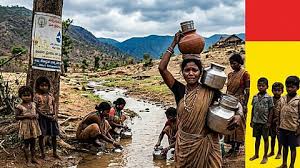
Despite the Jal Jeevan Mission, 450 tribals in Dayarthi village are forced to drink contaminated water and have threatened the administration with a violent protest. Andhra Pradesh: On Thursday, women from the Particularly Vulnerable Tribal Group (PVTG) Kondhu community in Dayarthi village, Jinabadu Panchayat, under Anantagiri Mandal in Alluri Sitarama Raju (ASR) district, appealed to the government for safe drinking water facilities. The villagers expressed their plight, stating that approximately 450 tribal residents of this hilltop settlement depend on contaminated springs for drinking water. Consuming this contaminated water frequently leads to illnesses like malaria, colds, and fevers. The villagers alleged that despite the implementation of major government schemes like the Jal Jeevan Mission and Janaman, their village has yet to receive any drinking water. Local residents say that while road connectivity to the village has improved following Deputy Chief Minister Pawan Kalyan’s recent visit, the acute drinking water problem persists. They also emphasized that patients suffering from waterborne diseases are forced to travel to Devarapalli by private vehicles for treatment. This compulsion costs them approximately 2,000 rupees on transportation alone, which is a significant financial burden for these families. Several tribal women, including Vantala Radha, Lakshmi, Kanthamma, and Devi, have strongly demanded that the administration install borewells and provide tap connections to their homes as soon as possible. Meanwhile, CPM district executive member K. Govinda Rao, along with local leaders Sridhar, Somanna, and Narasinga Rao, have urged the government to resolve the issue immediately. They have warned the administration that if concrete steps are not taken soon, they will stage a fierce protest at the ITDA office. Rajan Chaudhary Courtesy: Hindi News
‘It’s like a trans-Barbie world!’: the Indian festival where transgender women can celebrate without fear
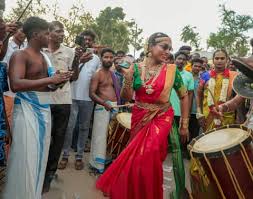
The annual gathering at Koovagam is rooted in an ancient poem. Five trans attendees talk about what the event means to them in light of a controversial change to the country’s gender recognition law The summer air is thick with dust, sweat and the scent of jasmine. In Koovagam, in southern Tamil Nadu, more than 100,000 people have gathered for one of India’s most distinctive festivals. Transgender women from across India, arrive in bright silk saris and gold temple jewellery, their hair oiled and braided with flowers. For nearly 18 days, the little town swells into a city of devotion, culminating in rituals that blur the boundaries between myth and reality. Closeup of a woman’s hands clasped in front of her pageant winner’s sash. She is wearing green glass bangles and jewellery, yellow nail polish and has henna on her hands The Koovagam festival pageant winner displays her rings The annual festival centres on the Koothandavar Temple and the story of Aravan, a figure from the Mahabharata, one of India’s most revered epic poems. According to the story, Aravan agrees to be sacrificed before a decisive battle, but asks for one final wish: to be married before he dies. When no woman is willing to wed a man fated to die the next day, the god Krishna assumes the female form of Mohini to fulfil his desire. By morning, Aravan is sacrificed, and Mohini, now widowed, mourns him – her grief forming the core of the festival that unfolds each year in Koovagam. This retelling has come to hold deep significance for trans women, who come to Koovagam to “marry Aravan” on the penultimate day of the festival. The next morning, the mourning is re-enacted: bangles are broken; vermilion powder wiped from hair partings; and white saris donned as they grieve his death. Festival goers walk past fruit stalls towards a display of neon light decorations at dusk For nearly 18 days, Koovagam swells into a temporary city of devotion as more than 100,000 people gather Two women, seen from behind, with intricate jasmine garlands wound into their hair and wearing silk saris Devotees wear a sacred thread or thali (mangalasutra) dyed in turmeric that symbolises the marriage between transgender women and Aravan. Jasmine garlands are worn in participants’ hair to signify their status as ‘brides’ This year, the festival took place against the background of a shifting legal landscape in India. An amendment to the Transgender Persons (Protection of Rights) Act 2019, passed in March, has scrapped the right to self-identify gender and introduced medical scrutiny into the legal recognition process. It also narrows the scope of who qualifies as “transgender”, privileging more fixed, state-recognisable categories while pushing trans men, and many non-binary identities, into a grey zone. Critics have called the new law regressive and an affront to human rights and dignity. For the trans women who gathered in Koovagam, the festival offered a temporary escape from the scrutiny. The Guardian spoke to some of the attendees about their lives and asked what the festival meant to them. Prazzi adjusts her sari as she stands outside the Aravan temple. This is her second time at the festival, and the joyfulness, she says, has not dulled. “You know what this is?” she says. “This is the only time of the year when we are not a minority. It’s like a trans-Barbie world.” A fashion designer and university tutor in Chennai, Tamil Nadu, Prazzi spends most of her year navigating spaces where she is, as she puts it, “a minuscule minority – someone whose presence or absence doesn’t even matter”. “People assume fashion is inclusive. It’s not,” she says. “Queer people maybe, but trans women? We are still not welcomed.” In Koovagam, that sense of isolation disappears. “For once, we are the majority. We are everywhere – in the streets, in the shops, in each other’s lives. I can just exist with my trans sisters without explaining myself.” She had more than 50 rejections before securing her teaching position. “Your CV gets you in; your identity gets you rejected,” she says. “They call you for an interview because your work and portfolio is good. But the moment you walk in, everything changes. You can see it in their faces – they’ve already decided.” What often goes unseen is how discrimination is built into paperwork. “They’ll say, ‘Your name doesn’t match across your ID proofs,’ or ‘you don’t have an address on your name. These become easy ways to exclude you,” she says. “It is not always said out loud, but you know why.” Prazzi is concerned about how the new Transgender Act deepens this. “When the state itself questions your identity unless you fit into its narrow definitions of ‘trans’, the whole issue of documentation becomes even more fraught,” she says. “It gives the state the power to decide – almost arbitrarily – whether to issue these documents to us or not. Without documents, you don’t exist,” she says. “And if you don’t exist, you can’t rent a house, you can’t move freely, work is even a distant possibility” “For many trans women,” she says, these “rejections decide our entire life. Most are pushed into begging or sex work. I was lucky – I have a job that gives me some stability. But that is not the reality for most of us.” Akshaya in sari and gold jewellery standing in front of police officers at Koovagam festival Akshaya, 29: ‘Our bodies are treated as illegal’View image in fullscreen Akshaya is at the edge of a brightly lit stretch of mud road, scanning the crowd, as the Miss Koovagam pageant takes place on the stage. Around her, her six “daughters” and two “sisters” chat and laugh. “This is my family,” she says. “Not by blood – but this is who I live for.” She has come to Koovagam to seek the blessings of Aravan, but her real wait, she says, is for the night. When the state looks away we
Tension in UP Village After Dalit Women Object to Maharana Pratap Jayanti Procession Route

Tension briefly prevailed in Maheshpura village on Saturday after members of the Dalit community, especially women, allegedly objected to a procession being taken out on the occasion of Maharana Pratap Jayanti and blocked its route. According to police officials, the disagreement took place over the path of the procession, leading to a standoff between two groups in the village. Police said the situation was later brought under control after talks between both sides and a written agreement reached in the presence of authorities. Police deny reports of violent clash Superintendent of Police (City) Manush Pareek said reports claiming that a violent clash had taken place were “completely misleading.” He said, “A disagreement had arisen between two groups regarding the procession route, but the matter was resolved peacefully through dialogue.” After receiving information about the dispute, Station House Officer Satish Kumar reached the village along with a heavy police force. Officials said the protesting women and villagers initially refused to allow the procession to move forward, leading to heightened tension in the area. Police first tried to convince both sides at the spot. However, as the disagreement continued, representatives from both groups were later called to the police station for discussions. Agreement reached after negotiations According to police, prolonged negotiations were held between both parties before a written compromise was reached around 1 pm. SP Pareek said the agreement was achieved “in an atmosphere of mutual coordination and harmony.” Following the settlement, the procession resumed around 5 pm on its scheduled route and concluded peacefully by around 7 pm. Situation under control Police said the situation in the village remains peaceful and under control. Additional security personnel were deployed during the procession to prevent any untoward incident. Authorities have not reported any injuries or arrests in connection with the dispute. Courtesy : TOP Note: This news is originally published on https:/theobserverpost.com/bha and is used purely for non-profit/non-commercial purposes, especially human rights
Rahul Gandhi Criticizes BJP’s ‘Anti-Women’ Stance

Rahul Gandhi has accused the BJP of exposing its ‘anti-women’ mindset after an alleged derogatory remark by a Gujarat BJP chief against a woman Congress MP. Gandhi criticizes the party’s commitment to women’s empowerment, highlighting a broader ideological conflict. Rahul Gandhi criticized the BJP for its alleged ‘anti-women and Manuwadi’ mindset during a recent speech. His comments were triggered by an indecent remark made by Gujarat BJP President about Congress MP Geniben Thakor. Gandhi questioned the BJP’s commitment to women’s rights, claiming their actions reveal a regressive ideology. He warned that women across India would respond strongly to any insults directed at them. In a recent verbal onslaught, Congress leader Rahul Gandhi lambasted the BJP, accusing it of harboring an ‘anti-women and Manuwadi’ mindset. Gandhi’s remarks were in response to an alleged indecent comment made by Gujarat BJP President on woman Congress MP Geniben Thakor. Gandhi questioned whether the BJP genuinely championed women’s rights, suggesting their actions betrayed a regressive ideology. He emphasized that the BJP’s mask of ‘Nari Vandans’—a claim to honor women—is slipping, revealing what he calls true intentions beneath. Further castigating the party, Gandhi accused Prime Minister Narendra Modi of evading Parliament, allegedly ‘frightened’ by Congress women MPs’ questions. The Congress leader warned that women across India will respond to any insult with equal measure. Courtesy : Devdiscourse Note: This news is originally published on https:/devdiscourse.com/bha and is used purely for non-profit/non-commercial purposes, especially human rights
Dalit History Month | ‘They Never Wanted This Job’: How ‘Warsa Hakka’ Forces Women into Safai Karamcharis in Maharashtra

A study of 115 women sanitation workers across Mumbai, Nagpur and Kalyan documents the intersection of caste, gender, occupational health risks and institutional neglect Mumbai- Every morning, while the city is still asleep, a woman ties her hair, picks up her long-handled broom, and steps out to clean the very streets that others will walk on their way to offices. She is a safai karamchari, a government employee of the municipal corporation and yet, she is almost invisible to the very world she cleans. A research study conducted across Mumbai, Nagpur, and Kalyan has brought the stories of these women into the public domain. The study, conducted recently among 115 women employed in municipal sanitation services, found that these women aged between 19 and 46 years, simultaneously face caste discrimination, gender inequality, severe health disorders, and economic uncertainty. Titled “Intersectionality of Caste, Gender and Occupation: A Study of Safai Karamchari Women in Maharashtra,” this research has been authored by Hemangi Kadlak, Pradeep S. Salve, and Payal Karwade. Lead researcher Hemangi Kadlak has shared this study with ‘The Mooknayak’ as a special report for Dalit History Month. The study notes that the problems of safai karamcharis are among the least discussed and most neglected areas in academia. Within this gap, issues specific to women safai karamcharis remain particularly unattended, receiving less coverage than those of their male counterparts even in popular media. This study was undertaken to fill that gap by highlighting the problems women safai karamcharis face, the coping mechanisms they use, and by critically examining government policies made for them. After two months of my marriage, I joined this work; before marriage I was not into it. I married at the age of 16 years. Nobody told me to do this work, I myself started this when I was pregnant with my elder daughter. I thought gharwala should not have financial problem… Muze accha nahi lagata tha, so I started the work. — 39-year-old sweeper, Kalyan Almost three-quarters of the women surveyed entered the occupation through the Preferential Treatment (PT) case locally known as Warsa Hakka, meaning hereditary right. Under this system, a safai karamchari can nominate a wife, son, daughter, sister or other dependent to take over the post after retirement, death or permanent disability. The study found that the majority of women in Mumbai and Nagpur municipal corporations were widows recruited under this system following the death of the male safai karamchari and key earning member of the family. Direct recruitment in Mumbai municipal corporation has been closed since 1989, with current recruitment mostly based on PT. Male safai karamcharis are replaced by female workers when no male relative is available or when male members are below official working age. Among those recruited directly, caste was the decisive factor, almost all women came from Scheduled Caste backgrounds, with castes such as Rukhi, Mehtar, Valmiki, Mahar and Matang most predominant. The majority of women studied were second or third generation in this occupation. The study also found that most women entered sanitation work after marriage, as their parents had discouraged them from doing so beforehand. The researchers recorded an age of marriage below 18 years among most respondents. The researchers observed cases where female karamcharis were forced by family members to enter sanitation work under unfavourable financial conditions, and some women also stated they agreed because of the job security of a government post. My father died with the paralysis and permanent disability of lower back six years after he met with a road accident during working hours. He worked for 20 years in the municipal corporation as street sweeper… my mother continued his work and being an elder in the family, I took over the charge of family… since the past 3 years, I am working in her place as third generation sweeper. — 20-year-old woman safai karamchari, Mumbai Women safai karamcharis are vulnerable to a range of serious health conditions including chronic cough, headaches, respiratory infections, skin disease, anaemia, diarrhoea, musculoskeletal disorders and mental disorders. They also suffer from reproductive health problems and gynaecological issues. The study found musculoskeletal disorders to be particularly prevalent, attributed to the dual burden of heavy physical activity at work and daily household chores. About 88 percent of respondents at Nagpur municipal corporation and 72 percent at Mumbai reported joint or musculoskeletal pain. A high percentage of women also reported mental distress due to work burden and working schedules. Women karamcharis wake between 3 and 4 am, prepare food for their families, and begin work at 6:30 am, continuing until 2 pm without any scheduled break. This schedule results in inadequate sleep and daily health issues including headache, acidity, nausea, blood pressure fluctuations, hypertension and menstrual problems. The study observed that women do not seek treatment in the primary phase of illness unless it becomes intolerable, preferring home remedies first. Despite being entitled to medical claims as government employees, the ground observations showed that women were not provided with medical insurance in Nagpur and Kalyan. In Mumbai, women reported recently receiving medical insurance of around ₹2,50,000, and were demanding its extension to family members with coverage up to ₹5,00,000. Whatever treatment expenditure occurs, women pay out of pocket through family savings, borrowing from friends or relatives, or mortgaging household assets. In Nagpur, women reported that workplaces lacked even basic amenities such as toilets, drinking water, sitting arrangements and first-aid boxes. Women in Nagpur also reported not being provided protective gear for a long time. A similar situation was observed in Kalyan. The situation in Mumbai was found to be better, with women reporting basic facilities and protective measures at reporting places. Across all cities, women had no changing room at their reporting stations I was 40 years old when my husband (age 47) died due to alcohol addiction… When I married him, he would never touch alcohol, but over the period of years he became addicted to alcohol after being engaged in this waste collection work. Many times when he
Mathura Dalit woman assault: Dalit woman assaulted in Mathura, victim identified by jurisdiction; demand for protection and action

Mathura Dalit woman harassment: A Dalit woman in Magorra, Mathura, has accused villagers of assault, casteist remarks, and poisoning a goat. Citing threats to her life from the bullies, the victim has appealed to the police for protection and strict action. Mathura Dalit woman harassment: A Dalit woman in Nagla Bhuchan village, under the Magorra police station in the Govardhan tehsil area of Mathura, has accused some villagers of assault, abuse, and casteist remarks. The woman also alleges that the accused poisoned her goat to death. The victim has filed a police report and demanded strict action and protection. According to Pooja Devi, wife of Rajkumar, a resident of Nagla Bhuchan village, some villagers abused her and used casteist slurs on April 15th. She filed a complaint with the Magorra police station on the same day, but no action was taken at that time. The victim alleges that on the morning of April 28, 2026, when her husband was not at home, the accused poisoned a goat tied outside their house, causing its death. When her husband protested, the accused assaulted him. The victim’s husband was rescued only after locals arrived at the scene and intervened. It is alleged that the accused also threatened to kill her while leaving. On Thursday, the victim submitted a complaint to Circle Officer Anil Kumar, stating that the accused have a domineering nature and encroach upon the land of the poor. Because of this, her family is terrified. The jurisdictional officer stated that a complaint has been received. The Magorra police station has been directed to investigate, file an immediate report, and take necessary action. Strict action will be taken against the culprits. Courtesy: Hindi News