
‘Can’t interfere’: Trans person’s plea on UAE entry denial junked

Mumbai: Observing that issuing a visa is a sovereign function and cannot be considered a deficiency in service under Consumer Protection Act, a consumer commission recently dismissed a complaint filed by a transgender person against the consulate general of UAE in Mumbai after they were denied entry into Dubai. It held that even with a valid visa issued by the UAE, the final decision on entry rests with the immigration authorities of the destination country. “Even though the visa service includes fees, a direct claim or complaint cannot be filed against the embassy under Consumer Protection Act… But since [the consulate] is a sovereign authority of another country, it is our opinion that this complaint cannot be maintained before this commission under Consumer Protection Act,” the commission said, adding that the Act’s scope is limited to Indian territory. Pointing out that embassies are protected by sovereign immunity, it said filing a direct complaint against a foreign embassy is not easily permissible and often requires consent of the Indian govt under Civil Procedure Code, which is rarely granted. In a Feb 13, 2024, complaint, Vikhroli-based Salim alias Salma Umar Khan Sakharkar, chairperson of Kinnar Maa Ek Samajik Sanstha Trust, said they were stopped at Dubai immigration and told that transgender persons are not allowed to enter the city on Feb 1 that year. They said they paid Rs 5.2 lakh for a five-day trip with two companions, which included visa processing by the UAE consulate in Mumbai, and argued that denial of entry after the consulate approved their visa constituted unfair and defective service. They sought a public apology from the consulate, a full refund of the tour cost and the return flight ticket, Rs 20 lakh in compensation for mental harassment, and Rs 10,000 for litigation costs. The commission acknowledged that the consulate approved the visa after the complainant paid the necessary fees, but said denial of entry is at the discretion of Dubai immigration officials upon arrival. It said the complainant did not qualify as a consumer of the UAE consulate in this context, and the Dubai immigration authorities’ act in denying entry did not constitute a deficiency in service by the consulate under Consumer Protection Act. It said had the consulate issued a visa despite having rules against issuing one to transgender persons, then it could be seen as incorrect information or negligence. The UAE consulate in Mumbai did not appear before the commission despite being sent a notice. Courtesy : TOI Note: This news is originally published on https://timesofindia.com/ and is for use by the non-military/non-commercial community, especially those in the human rights sector.
Three Bangladeshi women, including one posing as transgender, held in Delhi
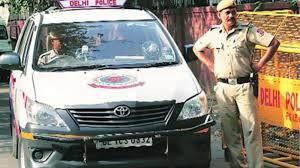
Two of the accused were found using smartphones with the banned IMO app to communicate with their families in Bangladesh, police said Three Bangladeshi women residing illegally in Delhi, including one who posed as a transgender, have been apprehended from North West Delhi’s Mahendra Park, police said on Saturday. The accused have been identified as Aleena (22), Tangina Rahaman alias Deepa (22), and Suhan Khan (30), said DCP (North West) Bhisham Singh. Two of the accused were found using smartphones with the banned IMO app to communicate with their families in Bangladesh, police said. “In May, a team of the Foreigners Cell began analysing social media accounts of suspected individuals. During this exercise, it was observed that a suspected illegal Bangladeshi transgender was residing at Mahendra Park. She was allegedly disguising herself as a woman from West Bengal and had taken to selling momos from a street cart to avoid suspicion,” he added. The police identified the woman as Deepa, who was apprehended on Thursday after she posted a video reel on social media showing an ice cream cart and inadvertently revealed surrounding buildings in a lane. The officers scanned about 50 lanes to locate the area and then identified the house shown in the reel, said Singh. “During questioning, she revealed that she had been in a relationship with a man she met on Facebook. After a period of online communication, she illegally crossed the Bangladesh border and entered India. Her boyfriend received her in West Bengal and subsequently brought her to Delhi, where they started living together in a rented accommodation. Neighbours knew her as Deepa and believed her to be a native of West Bengal,” he added. She allegedly told the police that she had crossed over to India illegally through Hili and Benapole border areas in West Bengal. Following her questioning, two more Bangladeshi women were detained, said police. Both initially claimed to be Indian citizens married to local men, but their phones and personal items revealed otherwise, said police. All three have been handed over to the Foreigners Regional Registration Office (FRRO) at RK Puram for deportation proceedings, said officers. Courtesy : TIE Note: This news is originally published on https://theindianexpress.com/ and is for use by the non-military/non-commercial community, especially those in the human rights sector.
B’deshi woman living as a transgender in city held for illegal border crossing

New Delhi: A woman from Bangladesh connected with a man in West Bengal on social media and they fell in love. She allegedly crossed the border illegally and they moved to northwest Delhi, where she adopted the name Deepa and began living as a transgender. Police recently received a tip about a suspected illegal immigrant in Mahendra Park. They found a reel made by the woman, which led them to her location. The woman, identified as Tangina Rahaman (22), initially claimed to be from West Bengal, but her lies were exposed, and she was detained. Her partner is being questioned, said police. Two other women, also residing in Mahendra Park and communicating with their families in Bangladesh via a banned app, were apprehended as well. They were identified as Aleena (22) and Suhan Khan (30). According to police, the foreigners cell of the northwest district, which was monitoring social media profiles of suspected people, identified Rahaman living under a false identity and selling momos from a street cart to blend in and avoid detection. Deputy commissioner of police (northwest) Bhisham Singh said investigators took note of her reel showing an ice cream cart in a narrow lane, which inadvertently revealed surrounding buildings. Using this clue, the team combed through approximately 50 nearby lanes and located the exact area. A focused search led them to her house. Rahaman admitted that she had illegally crossed into West Bengal, where her partner received her before bringing her to Delhi. The couple was living in a rented accommodation and neighbours knew her only as Deepa, believing she was from West Bengal. Police detained the other two women based on further intelligence. Initially, both tried to mislead investigators by claiming Indian citizenship and stating that they lived with their husbands. However, police spotted inconsistencies in their statements and also found two smartphones on them, both containing the banned app used for communicating with people in Bangladesh. It was found that they had entered India illegally through the Hili and Benapur border areas before travelling to Delhi by train and posing as Indians ever since. Both admitted to being in live-in relationships with their respective male partners and residing in the area using assumed identities. Police are questioning one of the partners. Courtesy : TOI Note: This news is originally published on https://timesofindia.com/ and is for use by the non-military/non-commercial community, especially those in the human rights sector.
SC expresses concern over branding entire community of transgenders as ‘risky’ blood donors
The Supreme Court on Wednesday expressed concern on branding an entire community of transgenders as “risky” as blood donors, and asked the Centre address their concerns of discrimination. “Are we going to brand all transgenders as risky and stigmatise them. You cannot say that all transgenders are indulging in sexual activity,” said a bench of Justices Surya Kant and N Kotiswar Singh. The apex court was hearing petition challenging the constitutional validity of Section 12 and 51 of Blood Donor guidelines, 2017, which has imposed a blanket ban on transgender persons from donating blood. The petition also challenged guidelines issued by the National Blood Transfusion Council (NBTC), which prevented transgender persons, men having sex with men (MSM) and female sex workers from donating blood for being at “high risk” for HIV, Hepatitis B or C infections. Additional Solicitor General (ASG) Aishwarya Bhati, appearing for Centre, said that the guidelines are not intended to stigmatise anyone but have been prepared by NBTC, which comprises doctors and experts, with scientific temper and keeping public health and welfare in mind. To this, the bench remarked that it was worried about the element of discrimination against transgenders and that they have been isolated and excluded. “Just think of something that such feeling does not come, and health standards are not compromised,” said the bench as it gave time to the Centre to address transgenders concerns of discrimination without compromising on medical precautions. The apex court said that with changing times, new technologies have emerged and there could be a way out to ensure any possibility of infections is checked and contained. Already transgenders suffer from severe biases and prejudices, does this guidelines not further it, said the bench. ASG Bhati assured the bench that she will raise the court’s suggestion to the experts. Bhati also apprised the bench that once blood is donated it goes directly to blood banks and there are vulnerable persons, such as thalassemic patients, who entirely depend on blood banks. “As a group, transgenders are considered a high-risk group the world over, with certain exceptions. There is a period within which infection has to be identified, and the risk window has to be carefully considered. Nobody can claim to have a fundamental right to donate blood. These guidelines must be seen from the perspective of public health as the idea is not to stigmatise anyone,” Bhati added. The petition filed by Manipur-based transgender and social activist Thangjam Santa Singh, termed the guidelines unconstitutional for discriminating persons based on gender identity. Courtesy : TOI Note: This news is originally published on https://timesofindia.com/ and is for use by the non-military/non-commercial community, especially those in the human rights sector.
Koovagam festival celebrates transgender identity and the legend of aravan
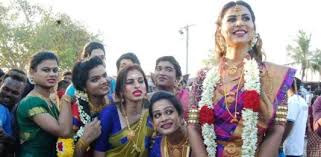
In the Mahabharata, when the five Pandavas decided to sacrifice Aravan to ensure victory over the Kauravas in battle, Aravan expressed his wish to marry. No one stepped forward, knowing Aravan would be sacrificed the next day. According to legend, Lord Krishna transformed into a woman and married him. Every year, Koovagam village in Kallakurichi district comes alive with the Koothandavar temple festival, which, over 18 days, commemorates the epic battle between the Pandavas and Kauravas. Thousands of transgender people come together at the temple dedicated to Koothandavar (Aravan), the son of Arjuna. On Tuesday, the penultimate day, devotees donned elaborate costumes, wore their favourite jewellery, and queued up at the temple to have their thalis tied, marking their symbolic marriage. On Wednesday, the final day of the festival, devotees broke their thalis and bangles, wiped off their sindoor, and mourned the sacrifice of their husband, Koothandavar, before taking a holy dip in the lake. A beauty contest was also held as part of the festival. “I’m fortunate to have been accepted by my parents, and it’s something I hope for others as well,” says S Renuga, crowned Miss Koovagam 2025. The 24-year-old model from Chennai, originally from Tirunelveli, says though she missed out on the title the previous year, she was determined to win this time. Email your feedback with name and address to southpole.toi@timesofindia.com Courtesy : TOI Note: This news is originally published on https://timesofindia.com/ and is for use by the non-military/non-commercial community, especially those in the human rights sector.
NMC Builds First Transgender-Friendly Units

Nagpur: In a pioneering initiative, the Nagpur Municipal Corporation (NMC) is constructing seven public toilets with dedicated facilities for transgenders, a first of its kind in the city. Simultaneously, 36 high-tech smart toilets are being developed in six phases. Currently, Nagpur has only 58 public and 36 community toilets, falling short of the required 150 public toilets based on population density. To bridge this gap, the civic body has identified spaces in markets, gardens, and grounds, including Dhanwantari Nagar, Sugat Nagar, Futala, and Motibagh. Three of the seven public toilets with transgender facilities are nearing completion at locations such as Gorakshan, Mangalwari Bazaar, and near Futala Lake. The remaining ones will be constructed in Satranjipura, Pardi, Mankapur, and Gandhibagh. These toilets, estimated to cost Rs 5 crore, will also serve men and women and include commode facilities tailored for transgenders. This initiative, driven by municipal commissioner Abhijeet Chaudhari, has been welcomed by the transgender community, which has long demanded such facilities. Meanwhile, the NMC is spending Rs 17 crore to construct 36 smart public toilets with modern amenities like mobile-based location tracking, baby changing stations, and feeding rooms. Some smart toilets are already operational, and the NMC plans to incorporate transgender-specific facilities wherever possible in ongoing phases like Walkers Street and Mor Bhavan bus stand. Officials believe these upgrades are essential for improving sanitation and upholding the dignity of all citizens. The NMC aims to fast-track completion and make public sanitation in Nagpur more accessible, inclusive, and future-ready. Courtesy : TOI Note: This news is originally published on https://timesofindia.com/ and is for use by the non-military/non-commercial community, especially those in the human rights sector.
Maharashtra SSC Result 2025 likely to be declared on this date: Here’s how to check
Maharashtra SSC Result 2025: The Maharashtra State Board of Secondary and Higher Secondary Education (MSBSHSE) is gearing up to announce the Maharashtra SSC (Class 10) Result 2025, with expectations pointing toward the third week of May. Over 16 lakh students who appeared for the exams are eagerly awaiting their results, which will mark a significant milestone in their academic journey and determine their eligibility for higher secondary education streams. The results will be accessible online at the official website, mahresult.nic.in, requiring students to enter their roll number and mother’s first name to view their detailed scorecards. The SSC examinations, conducted from February 21 to March 17, 2025, in pen-and-paper mode, saw a robust participation of 16,11,610 students, including 8,64,120 boys, 7,47,471 girls, and 19 transgender candidates. The board has been working diligently to ensure a smooth evaluation process, with results expected to be released ahead of last year’s schedule, which saw the announcement on May 27, 2024. This early declaration aims to facilitate timely admissions to Class 11 and streamline the academic calendar. Record Participation and Exam Details The 2025 SSC exams witnessed a significant turnout, with registrations crossing 16 lakh, a slight increase from the 15,49,326 students who appeared in 2024. The exams, held across various divisions including Mumbai, Pune, Nagpur, and Konkan, commenced with language papers and concluded with Social Sciences on March 17. Practical exams were conducted from February 3 to February 20, ensuring comprehensive assessment. The board’s early release of the timetable on November 21, 2024, allowed students ample preparation time. Last Year’s Performance: A Benchmark In 2024, the Maharashtra SSC exams recorded an impressive overall pass percentage of 95.81%, with girls outperforming boys at 97.21% compared to 94.56%. The Konkan division led with a 99.01% pass rate, while Nagpur trailed at 94.73%. These statistics set a high benchmark for 2025, with expectations that continued educational reforms may further boost performance, particularly in rural areas. Accessing Results and Next Steps Students can check their results on official websites like mahahsscboard.in and sscresult.mkcl.org, with SMS and DigiLocker options available for convenience. The provisional online marksheet will include details such as marks obtained, roll number, and date of birth. Original marksheets will be distributed through schools post-declaration. For those dissatisfied with their scores, the board offers a re-verification process, with applications accepted within two weeks of the result announcement. Supplementary exams, scheduled for July 2025, provide an opportunity for students to improve their marks. The board will announce details for marks verification and supplementary exams soon after the results are declared. Courtesy: Times of India Note: This news is originally published on https://timesofindia.indiatimes.com/ and is for use by the non-military/non-commercial community, especially those in the human rights sector.
Crisis intervention centre for transgender people to come up at Kakkanad: Minister
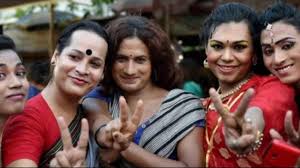
The centre will function as a safe space for transgender individuals facing emergencies, offering mental health support, legal guidance, and crisis management In a major step towards inclusive social welfare, a dedicated crisis intervention centre for transgender individuals is coming up at Kakkanad, Ernakulam. Minister for Social Justice R. Bindu announced the initiative at the Thrissur Press Club on Saturday. The centre will be inaugurated at 10 a.m. on May 12. Kerala, the first State in the country to implement a transgender policy, continues to lead from the front in transgender empowerment. Under the Social Justice department, various schemes are being rolled out to ensure holistic development of transgender individuals, the Minister said. “However, the transgender community still faces widespread discrimination, abuse, and mental trauma. From verbal abuse to physical assault and social exclusion, transgender individuals are often denied basic dignity. The new centre aims to provide immediate round-the-clock intervention and psychological support during such crises,” Ms. Bindu said. The centre will function as a safe space for transgender individuals facing emergencies, offering mental health support, legal guidance, and crisis management. It will also coordinate between the Police, Health, and other departments. There will be three trained counsellors and a dedicated coordinator at the centre. It has a 24-hour helpline (1800 425 2147). The centre will be run by transgender individuals themselves. “This is not just a support system — it is a symbol of how far we’ve come in ensuring dignity and autonomy for the transgender community,” the Minister said. In the previous fiscal, ₹24.75 lakh had been spent on renovating the building for the centre and ₹34 lakh was allocated for its operational activities in the current financial year, she added. Courtesy: The Hindu Note: This news is originally published on https://www.thehindu.com/ and is for use by the non-military/non-commercial community, especially those in the human rights sector.
Crisis intervention centre for transgender individuals to begin operations in Ernakulam
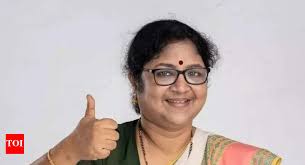
Kochi: A crisis intervention centre for transgender individuals will begin operations in Kakkanad, Ernakulam, on Monday, said minister of higher education and social justice R Bindu in Thrissur. The state govt has been implementing various projects for the comprehensive upliftment of transgender individuals, considering the importance of areas ranging from education and healthcare to self-employment skill training and marriage financial assistance. However, transgender individuals face various forms of social abuse, discrimination, neglect, mistreatment, physical assault and mental harassment. To address these challenges and provide necessary interventions and mental support, a 24-hour crisis intervention centre will be operational in Ernakulam, the minister said. The centre aims to alleviate the mental stress experienced by transgender individuals in various crises, including sexual harassment, physical assault, mental abuse, domestic violence and health-related issues, the minister added. The centre will offer a 24-hour helpline number and counselling services. Coordination with various departments, including police and health, will be carried out at the centre, which will also support transgender individuals during emergencies such as natural disasters and epidemics. The centre’s goal is to provide immediate care to individuals in crisis and help them return to normalcy, she said. In the initial phase, necessary staff, including three counsellors and a coordinator, will be appointed to operate the centre. A 24-hour active helpline number, 1800 425 2147, will be available as soon as the centre begins operations. Preliminary activities to equip the crisis intervention centre as a full-time call centre with modern information technology facilities have also commenced, the minister added. In previous fiscal years, Rs 24.75 lakh were spent on building renovation works for this purpose. In the current fiscal year, Rs 34 lakh have been allocated for project activities, the minister stated. The centre will be operated by transgender individuals themselves. Courtesy: Times of India Note: This news is originally published on https://timesofindia.indiatimes.com/ and is for use by the non-military/non-commercial community, especially those in the human rights sector.
NEET PG 2025 Transgender Horizontal Reservation Plea – SC Asks Centre to Respond, Hearing Soon.
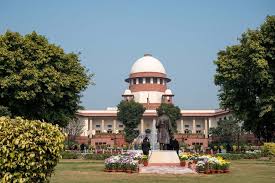
The Supreme Court on Monday asked the Centre and others to respond to a plea seeking horizontal reservation for transgender persons in the NEET-PG 2025 examination. The bench issued notices to the Centre, states, Union Territories and others, including the National Medical Commission, seeking their responses on the plea and posted the matter for hearing after two weeks. The Supreme Court on Monday asked the Centre and others to respond to a plea seeking horizontal reservation for transgender persons in the NEET-PG 2025 examination which is scheduled on June 15. A bench of Justices B R Gavai and K V Viswanathan agreed to hear the plea filed by three transgender persons who are doctors and have challenged the April 16 notice and information bulletin dated April 17 regarding the National Eligibility-cum-Entrance Test-Post Graduate (NEET-PG) 2025. The petitioners have claimed that the notification was issued in contravention of the directions given by the apex court in a 2014 judgement as it has not outlined any scheme/policy of horizontal reservations for transgender persons. Senior advocate Indira Jaising appeared for the petitioners. The plea said that in its 2014 verdict, the top court had directed the Centre and the states to take steps to treat transgender persons as socially and educationally backward classes of citizens and extend all kinds of reservations in cases of admission in educational institutions and for public appointments. “As a result of the impugned notice, the petitioners are left with a right without remedy, whereby there are now no reservations for transgender persons in educational institutions in post-graduate courses in medical education in institutes despite the binding declaration of the law by this court,” said the plea, filed through advocate Paras Nath Singh. The bench issued notices to the Centre, states, Union Territories and others, including the National Medical Commission, seeking their responses on the plea and posted the matter for hearing after two weeks. Seeking quashing of the admission notice and the information bulletin, the plea also called for a direction to authorities to issue a fresh admission notice that provides compartmentalised horizontal reservation for transgender persons by reserving one per cent seats for them in each vertical category. The horizontal reservation is a type of reservation that is provided across all categories namely the General Category, as well as vertical reservation categories –Scheduled Tribes, Scheduled Castes, and Other Backward Classes. The plea said in the absence of horizontal reservations, the petitioners would be deprived of equal opportunity with no specific reservation being extended to them to ensure representation of transgender persons in postgraduate medical education despite such persons facing several social barriers. It said the apex court, in its 2014 verdict, had recognised the fundamental rights of transgender persons under the Constitution, including the right to self-determination of gender identity. Courtesy: Telegraph India Note: This news is originally published on https://www.telegraphindia.com/ and is for use by the non-military/non-commercial community, especially those in the human rights sector.