
Bangladeshi man disguised as transgender nabbed in Delhi’s Bhalswa

Delhi Police arrested a 44-year-old illegal Bangladeshi national, Sukanta Chandra Das, under Bhalswa Flyover. He disguised himself as a transgender person at night to engage in illegal activities. Deportation proceedings have been initiated. In a continued drive against illegal immigration, Delhi Police apprehended one illegal Bangladeshi national during an operation conducted in the early hours of the morning under Bhalswa Flyover, within the jurisdiction of Jahangir Puri police station. Acting on specific intelligence, the team intercepted the suspect, who was found moving in the area disguised as a transgender person. During sustained questioning and verification, it was established that he was a Bangladeshi national illegally residing in India without any valid travel or identity documents. It was further revealed that he used to disguise himself as a transgender person during the night to engage in illegal activities. The Delhi police informed that in the case of the secret informer, the team apprehended one suspicious person. During initial questioning, the suspect failed to produce any valid travel or identity documents. Detailed verification of documents, digital footprints and sustained interrogation established that he was a Bangladeshi national illegally residing in India. During interrogation, he disclosed that he used to disguise himself as a transgender person during the night to engage in illegal activities, police said. Investigation Reveals Key Evidence During the investigation, one smartphone installed with the banned IMO application and Bangladeshi national identity documents stored in the phone gallery was recovered, press release stated. Necessary legal action was initiated as per the provisions of law. The apprehended Bangladeshi national was produced before the Foreigners Regional Registration Office (FRRO), and deportation proceedings were initiated as per the established procedure. Suspect Identified The Delhi Police disclosed the details and said the apprehended individual is identified as Sukanta Chandra Das, alias Madhuri, a 44-year-old male. A resident of Village Baria, P.O. Bhawal Baria 1700, P.S. Gazipur Sadar, District Gazipur, Dhaka, Bangladesh. The suspect was taken into custody following the recovery of evidence, which includes one smartphone containing the banned IMO application and various Bangladeshi National Identity documents recovered from the phone gallery, police said. (ANI) (Except for the headline, this story has not been edited by Asianet Newsable English staff and is published from a syndicated feed.) Courtesy : Asianet News Note: This news is originally published on https:/asianetnews.com/bha and is used purely for non-profit/non-commercial purposes, especially human rights
Modi Government is Committed to the Empowerment of Transgenders: Union Minister Ramdas Athawale

National Seminar on Awareness of Transgender Identity and Issues Concludes at Savitribai Phule Pune University The two-day National Seminar on Awareness of Transgender Identity and Issues successfully concluded today at Savitribai Phule Pune University (SPPU) with a valedictory session addressed by Shri Ramdas Athawale, Union Minister of State for Social Justice and Empowerment, Government of India. Addressing the audience, Union Minister Ramdas Athawale reaffirmed the Government of India’s commitment to promoting the rights, dignity, and inclusive development of transgender persons. He emphasized the importance of coordinated efforts among government institutions, educational establishments, and civil society organizations to ensure equal opportunities, social acceptance, and the effective implementation of welfare initiatives for the transgender community. “The Modi government is fully committed to the empowerment and welfare of transgender persons,” stated Shri Ramdas Athawale. “The government is working for every oppressed community, and transgender empowerment is a major point on our national agenda.” The Minister highlighted key central initiatives, including the SMILE (Support for Marginalized Individuals for Livelihood and Enterprise) Scheme, which is actively working to bring transgender individuals into the mainstream and include them in national development by facilitating education, healthcare, livelihood, rehabilitation, and social security. The national seminar was jointly organized by the School of Education, Department of Education and Extension (DEE), and the Department of Gender Studiesat SPPU, in collaboration with the Social Justice and Special Assistance Department, Government of Maharashtra. The seminar held on July 11–12, 2026, provided a vital platform for deep deliberations on crucial topics, including transgender identity, social inclusion, education, legal rights, healthcare, livelihood opportunities, and policy interventions. The two-day event drew active participation from academicians, researchers, policymakers, government officials, students, and members of the transgender community across various technical sessions. Distinguished dignitaries present on the occasion included Minister of state for Social Justice Madhuri Misal, Prof. (Dr.) Suresh Gosavi (Vice Chancellor, SPPU) and Prof. (Dr.) Parag Kalkar, (Pro-Vice Chancellor, SPPU), alongside other university officials and regional leaders. Harshal Akude/Parshuram Kor Courtesy : PIB Note: This news is originally published on https:/pib.com/bha and is used purely for non-profit/non-commercial purposes, especially human rights
Parliament passes Transgender Persons Amendment Bill, 2026 with Rajya Sabha approving it today

Parliament has passed the Transgender Persons (Protection of Rights) Amendment Bill, 2026, with the Rajya Sabha approving it today. The bill was passed by the Lok Sabha yesterday by a voice vote amid an Opposition-led walkout. The bill seeks to redefine the category of transgender, removes the provision of self-perceived gender identity and excludes several socio-cultural identities as well as transmasculine individuals from its ambit. It also further defines transgender persons within a biological framework, based on intersex variations and differences in sexual development. Replying to the discussion on the Bill in the Rajya Sabha, Social Justice and Empowerment Minister Dr Virendra Kumar said the government is compassionate towards the well-being of the transgender community. He said the Bill has provisions to empower the transgenders and give them dignity. The Minister said that the NDA government has taken several initiatives to bring transgender people to the mainstream and stop discrimination against them. Starting the discussion in the Upper House, Congress MP Renuka Chowdhury said this bill dilutes the privacy of an individual provided under the Constitution. Opposing the Bill, Ms Chowdhury said self-identification cannot be taken away through bureaucratic certification. Criticizing the government, she said that the proposed bill undermines the fundamental rights and dignity of transgender persons. Calling such a move wrong and illegal, she argued that forcing transgender persons to provide their identity through official certificates is against the spirit of equality and dignity guaranteed by the constitution. She also questioned the government’s approach for not properly consulting with the transgender community before bringing the Bill. She also referred to the Supreme Court’s landmark NALSA judgement of 2014, which recognized the right of transgender persons to self-identify their gender. Ms Chowdhury said the proposed Bill violates the principles laid down in that judgement and fails to respect an already established legal framework. DMK MP Tiruchi Shiva also opposed the Bill, saying that even if the Bill is passed in Parliament with a majority, it will be struck down by the Supreme Court. He further added that the Bill violates Articles 14, 15, 19 and 21 of the Constitution and it deprives the community of the right to freedom, dignity and self-determination. Supporting the Bill, BJP MP Medha Vishram Kulkarni said, ” This Bill ensures justice, dignity, protection from criminalisation and legal safeguards for transgender persons. She also thanked Prime Minister Narendra Modi for bringing this bill with certain amendments in order to ensure that the benefits reach the deserving people in a proper manner. She said there is a need for a law that brings justice to real transgender individuals and punishes fake ones. Mrs Kulkarni said the benefits should be extended to those who are transgender by birth. She said that the amendment to extend punishment will bring down the rate of crime and forced identities. TMC’s Saket Gokhale said that 31% of Transgender people in India have attempted suicide because of the discrimination that they are facing. He alleged that now the government is going to start discriminating against them as though social discrimination were not enough. He called it unacceptable. Mr Gokhale expressed concern that gender is going to be decided by the Chief Medical Officer and a District Magistrate, and the bill does not prescribe any qualifications for the Chief Medical Officer. Sanjay Singh of AAP said the Bill is a big let-down for the transgender community. He accused the government of not doing anything for the community. RJD’s Manoj Kr Jha said that prejudices against transgender people should stop, and they should be able to live with dignity. He added that self-determination of gender should not be taken away. CPI(M)’s John Brittas said it is a black-letter day and the Bill is taking India a century back. He pleaded with the government to either withdraw the Bill or refer it to a Select Committee. Jaya Bachchan of the Samajwadi Party also questioned the government over the legislation. She sought to know what the urgency was in bringing the Bill, without examining it with the depth and care that it deserved. Courtesy : NOA Note: This news is originally published on https:/newsonair.com/bha and is used purely for non-profit/non-commercial purposes, especially human rights
Kangra News: Nandrul Panchayat sets a congratulatory amount for transgender people

Kangra. In the Nandrul Panchayat of Kangra Development Block, transgender people will no longer be allowed to act arbitrarily and forcibly extort money in the name of congratulatory gifts. To end the hassles and disputes faced by transgender people, the Panchayat has set a maximum limit for the congratulatory amount. No transgender person will be able to demand more than the prescribed amount. A formal resolution was passed in this regard at the Gram Sabha meeting of Nandrul Gram Panchayat. Panchayat head Sanjeev Kumar and secretary stated that under the new system, the congratulatory amount has been fixed at ₹1,100 for BPL families and ₹2,100 for other general families. They clarified that if any capable or wealthy individual wishes to voluntarily donate more than the prescribed amount, the Panchayat will have no objection. Panchayat representatives have warned that if members of the transgender community refuse to adhere to this established arrangement or enter homes and display indecent language and unwanted behavior, the Panchayat will be forced to take strict legal action through the police and administration. Furthermore, the Gram Sabha meeting also discussed in detail the outline of upcoming development work in the Panchayat. Courtesy: Hindi News
Meet Madhu Bai Kinnar: India’s first transgender Mayor who won an election nobody thought she could
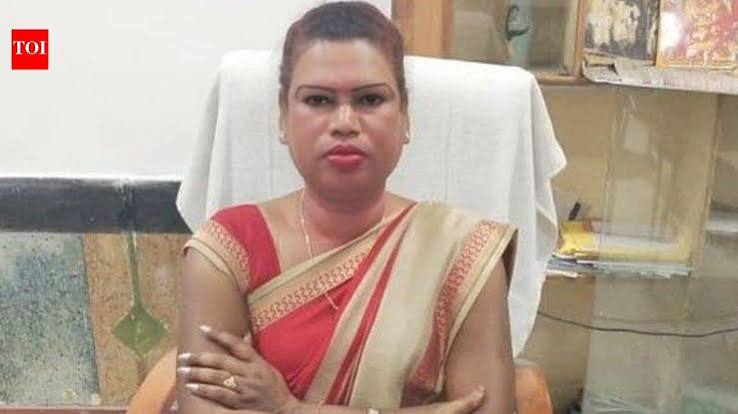
In 1980, in the Dalit community of Raigarh, Chhattisgarh, a child was born and named Naresh Chauhan. Her parents were laborers. The family was large, with five or six siblings, and life was simple and hard. She studied until class eight, but books never held her attention the way music and dance did. From a very young age, she felt something that she could not fully explain: that the life everyone expected her to live did not feel like her own. She felt more like a girl than a boy. And in the world she grew up in, that feeling came with a cost. When her family discovered how she truly felt inside, they asked her to leave the house. She was 15 years old. A new name, a new family, a new life With nowhere to go and no one to turn to, the young girl who had been named Naresh Chauhan walked away from everything she had known and found a community that welcomed her exactly as she was. She joined the transgender community of Raigarh. And for the first time in her life, she felt she belonged somewhere. She gave herself a new name: Madhu Bai Kinnar. A name she chose. A name that was truly hers. With her new community, she began dancing and singing on the streets of Raigarh and inside passenger trains on the Howrah-Mumbai route. It was not an easy life; she earned between 300 to 500 rupees a day. But she had friends, she had dignity, and she had joy. She came home every night to people who loved her. For nearly 15 years, this was her life. Invisible to the system. Dismissed by society. And yet deeply, quietly rooted in her community. The day everything changed: One form, one decision One ordinary day, Madhu went to the municipality office for her weekly collections. And there, almost by chance, she saw a form inviting applications for the mayor’s office of Raigarh. She had never planned to enter politics. It had never been a dream. But the people around her, ordinary citizens of Raigarh, tired of corruption and tired of politicians who made promises and disappeared, urged her to try. They told her that she was the one they trusted. That she was the one who actually lived among them and understood their problems. So she filled the form. And she went to work. A campaign like no other Madhu Bai Kinnar did not have political party money. She did not have powerful backers or a campaign team of hundreds. She had herself. And her friends. She collected money from her dancing and singing. And then, with four to five friends by her side every morning, she went door-to-door across Raigarh telling every single person she met about her agenda, her earthen pot election symbol, and her vision for the city. By evening, those four or five friends had become 600 to 700 people walking alongside her, drawn not by money or politics but by something they rarely saw in a candidate: honesty. Her entire 10-day campaign cost between Rs 60,000 and Rs 70,000, money she had saved herself, rupee by rupee, from years of singing on trains. January 4, 2015: A date India will not forget Just nine months after the Supreme Court of India delivered its landmark judgment recognising transgender people as a third gender, the people of Raigarh went to the polls. Running as an independent candidate, Madhu won the mayor election of the Raigarh Municipal Corporation, securing 33,168 votes and defeating the nearest rival, the ruling party BJP’s Mahaveer Guruji, by 4,537 votes. She is the first openly transgender person in India to be elected to a mayoral office. “People have shown faith in me. I consider this win as love and blessings of people for me. I’ll put in my best efforts to accomplish their dreams,” Kinnar said. The news spread across the country. And for the first time in a long time, India’s transgender community felt seen. Mayor who sat among the people What Madhu did after winning was as remarkable as the win itself. When she assumed responsibility as mayor, she rejected the big office that the mayor-elect is supposed to occupy. She wanted to be accessible to people, so their grievances reached her first-hand. She built an open cabin where people could approach her directly. She even refused to travel in the state-provided car and instead traveled in an auto. She believed simply that the people had chosen her, so she should sit among them. Her election agendas were manifold. She wanted to put an end to transgenders begging and busking in trains, ensure ration cards were issued, and work for the poor and for the transgender community equally. She and her team would go on rounds every morning, starting as early as 7 AM, urging city workers to fix clogged wells, pipes, and gutters. As a result of this hard work, in 2019, Raigarh won the Swachhata Excellence Award. More than a mayor, a mirror for all of India Madhu Bai Kinnar’s story is not just about one election in one city in Chhattisgarh. It is about what happens when a society is brave enough to look beyond gender, beyond caste, beyond everything the world uses to decide who matters, and simply votes for the person who actually cares. She was born into a family that asked her to leave. She lived on the margins for 15 years. She campaigned with her own hard-earned money. And she walked into a Mayor’s office wearing a white saree and a red bindi, and changed what India thought was possible. From a train to a town hall. From Naresh to Madhu. From invisible to unforgettable. Courtesy : TOI Note: This news is originally published on https:/timesofindia.com/bha and is used purely for non-profit/non-commercial purposes, especially human rights
India’s First Transgender Disaster Management Team Prepares To Deal With Flood Situation In Kolhapur

This team of ten members were made to undergo a rigorous, intensive training where they were given good experience to tackle life-saving situations Kolhapur: They are usually mocked or given money and shooed away; that is how the transgender people are normally treated in various parts of India. Not finding sufficient work for their sustenance, many transgenders are forced to take to begging. However, Kolhapur city has shown transgenders the way, by giving them an opportunity to be saviours. India’s first transgender disaster management team, trained by the District Disaster Management Authority, is now ready to tackle potential flood situations in Kolhapur district. On Wednesday, a 10-member team completed a rigorous ten days of intensive training where they were given hands-on field experience to tackle life-saving situations. This 10-member team was also given training to use disaster management equipment in order to get prior experience, so that they are present as rescuers when any emergency situation of a disaster occurs. Shivani Gajbar is enthusiastic about facing any calamity. Speaking with ETV Bharat, Gajbar said, “We are prepared to play this significant role of being rescuers as part of our district’s response to any disaster.” The country’s first transgender disaster management team Heavy rains have been wreaking havoc across Maharashtra, including Kolhapur district. Many local rivers have already touched danger mark, and people have been asked to remain vigilant or move to higher ground. During this period, Kolhapur District Disaster Management Authority mobilised a trained team comprising over 2,000 ‘Aapda Mitra’ (Disaster Friends) and ‘Sakhi’ volunteers. For the first time this year, a 10-member transgender disaster management team from Kolhapur district will also be operational. This team is now prepared to assist citizens in various situations that include search, relief and rescue operations. A part of their training also included clearing trees that had fallen on roads due to strong winds. They were given training to assess flood risks in affected villages, transport villagers during evacuations, and respond to road accidents or other monsoon-related emergencies. Gajbar stated that they aim to reach every citizen through real-life experiences during natural disasters. “We are committed to ensuring that timely assistance reaches citizens in case there is any situation of a disaster.” District Disaster Management Officer Prasad Sankpal stated, “Our district disaster management cell is fully prepared with our strategies that are in line with forecasts from the Indian Meteorological Department (IMD). This includes a team of transgender individuals to tackle any potential flood situation.” The transgender people expressed their joy of being selected as ‘saviours’ in these times and are thankful for being able to be useful to society. Courtesy : ETV Bharat Note: This news is originally published on https:/etvbharat.com/bha and is used purely for non-profit/non-commercial purposes, especially human rights
Parliament passes Transgender Persons Amendment Bill, 2026 with Rajya Sabha approving it today
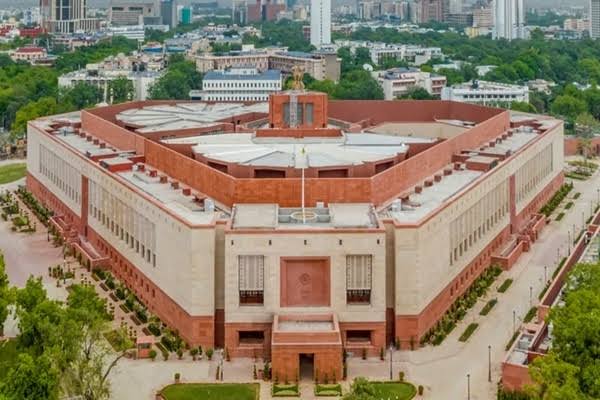
Parliament has passed the Transgender Persons (Protection of Rights) Amendment Bill, 2026, with the Rajya Sabha approving it today. The bill was passed by the Lok Sabha yesterday by a voice vote amid an Opposition-led walkout. The bill seeks to redefine the category of transgender, removes the provision of self-perceived gender identity and excludes several socio-cultural identities as well as transmasculine individuals from its ambit. It also further defines transgender persons within a biological framework, based on intersex variations and differences in sexual development. Replying to the discussion on the Bill in the Rajya Sabha, Social Justice and Empowerment Minister Dr Virendra Kumar said the government is compassionate towards the well-being of the transgender community. He said the Bill has provisions to empower the transgenders and give them dignity. The Minister said that the NDA government has taken several initiatives to bring transgender people to the mainstream and stop discrimination against them. Starting the discussion in the Upper House, Congress MP Renuka Chowdhury said this bill dilutes the privacy of an individual provided under the Constitution. Opposing the Bill, Ms Chowdhury said self-identification cannot be taken away through bureaucratic certification. Criticizing the government, she said that the proposed bill undermines the fundamental rights and dignity of transgender persons. Calling such a move wrong and illegal, she argued that forcing transgender persons to provide their identity through official certificates is against the spirit of equality and dignity guaranteed by the constitution. She also questioned the government’s approach for not properly consulting with the transgender community before bringing the Bill. She also referred to the Supreme Court’s landmark NALSA judgement of 2014, which recognized the right of transgender persons to self-identify their gender. Ms Chowdhury said the proposed Bill violates the principles laid down in that judgement and fails to respect an already established legal framework. DMK MP Tiruchi Shiva also opposed the Bill, saying that even if the Bill is passed in Parliament with a majority, it will be struck down by the Supreme Court. He further added that the Bill violates Articles 14, 15, 19 and 21 of the Constitution and it deprives the community of the right to freedom, dignity and self-determination. Supporting the Bill, BJP MP Medha Vishram Kulkarni said, ” This Bill ensures justice, dignity, protection from criminalisation and legal safeguards for transgender persons. She also thanked Prime Minister Narendra Modi for bringing this bill with certain amendments in order to ensure that the benefits reach the deserving people in a proper manner. She said there is a need for a law that brings justice to real transgender individuals and punishes fake ones. Mrs Kulkarni said the benefits should be extended to those who are transgender by birth. She said that the amendment to extend punishment will bring down the rate of crime and forced identities. TMC’s Saket Gokhale said that 31% of Transgender people in India have attempted suicide because of the discrimination that they are facing. He alleged that now the government is going to start discriminating against them as though social discrimination were not enough. He called it unacceptable. Mr Gokhale expressed concern that gender is going to be decided by the Chief Medical Officer and a District Magistrate, and the bill does not prescribe any qualifications for the Chief Medical Officer. Sanjay Singh of AAP said the Bill is a big let-down for the transgender community. He accused the government of not doing anything for the community. RJD’s Manoj Kr Jha said that prejudices against transgender people should stop, and they should be able to live with dignity. He added that self-determination of gender should not be taken away. CPI(M)’s John Brittas said it is a black-letter day and the Bill is taking India a century back. He pleaded with the government to either withdraw the Bill or refer it to a Select Committee. Jaya Bachchan of the Samajwadi Party also questioned the government over the legislation. She sought to know what the urgency was in bringing the Bill, without examining it with the depth and care that it deserved. Courtesy : News On Air Note: This news is originally published on https:/newsonair.com/bha and is used purely for non-profit/non-commercial purposes, especially human rights
Rajeev Khandelwal praises Pooja Sharma Rekha, apologises to transgender community

Mumbai: Actor and television host Rajeev Khandelwal has extended his support to the transgender community and publicly apologised for the discrimination they have faced, during an emotional episode of the television show Tum Ho Naa – Ghar Ki Superstar. The episode features social media personality Pooja Sharma Rekha, who shares her journey of resilience, self-acceptance and the challenges she faced while seeking acceptance in society. Rajeev’s heartfelt remarks have drawn attention for highlighting the need for dignity, equality and compassion towards transgender persons. Pooja Sharma Rekha shares her life journey In the upcoming episode, Pooja Sharma Rekha opens up about the struggles she endured because of her gender identity and the obstacles she overcame to build a life with confidence and self-respect. Her story focuses on courage, perseverance and acceptance despite years of prejudice and social discrimination. The conversation aims to shed light on the lived experiences of transgender individuals and encourage greater understanding among viewers. Rajeev Khandelwal offers an emotional apology After listening to Pooja’s experiences, Rajeev Khandelwal expressed solidarity with the transgender community and apologised for the way many members of the community have been treated by society. In an emotional message, he said he wished to apologise on behalf of everyone who had knowingly or unknowingly contributed to their pain and discrimination, adding that he bowed his head in shame over the treatment meted out to transgender persons. He also called for greater acceptance, respect and equal treatment, stressing that every individual deserves to live with dignity irrespective of gender identity. Episode highlights inclusion and acceptance The episode centres on the importance of recognising the struggles faced by transgender persons while celebrating stories of resilience and hope. According to promotional material for the show, Pooja Sharma Rekha’s appearance is intended to inspire viewers by demonstrating how determination and self-belief can help overcome adversity. The programme also reinforces the message that empathy, inclusion and equal opportunities are essential for building a more accepting society. Conversation sparks wider social message The episode comes at a time when conversations around inclusion and equal rights for transgender persons continue to gain prominence in India.South Asians & Diaspora By providing a national television platform for Pooja Sharma Rekha to share her experiences, the show seeks to encourage dialogue on acceptance and challenge stereotypes associated with the transgender community. Rajeev Khandelwal’s remarks have been widely shared online, with many viewers appreciating his public expression of support and his appeal for greater compassion and respect. Courtesy : News Karnataka Note: This news is originally published on https:/newskarnataka.com/bha and is used purely for non-profit/non-commercial purposes, especially human rights
Parliament passes Transgender Persons Amendment Bill, 2026 with Rajya Sabha approving it today

Parliament has passed the Transgender Persons (Protection of Rights) Amendment Bill, 2026, with the Rajya Sabha approving it today. The bill was passed by the Lok Sabha yesterday by a voice vote amid an Opposition-led walkout. The bill seeks to redefine the category of transgender, removes the provision of self-perceived gender identity and excludes several socio-cultural identities as well as transmasculine individuals from its ambit. It also further defines transgender persons within a biological framework, based on intersex variations and differences in sexual development. Replying to the discussion on the Bill in the Rajya Sabha, Social Justice and Empowerment Minister Dr Virendra Kumar said the government is compassionate towards the well-being of the transgender community. He said the Bill has provisions to empower the transgenders and give them dignity. The Minister said that the NDA government has taken several initiatives to bring transgender people to the mainstream and stop discrimination against them. Starting the discussion in the Upper House, Congress MP Renuka Chowdhury said this bill dilutes the privacy of an individual provided under the Constitution. Opposing the Bill, Ms Chowdhury said self-identification cannot be taken away through bureaucratic certification. Criticizing the government, she said that the proposed bill undermines the fundamental rights and dignity of transgender persons. Calling such a move wrong and illegal, she argued that forcing transgender persons to provide their identity through official certificates is against the spirit of equality and dignity guaranteed by the constitution. She also questioned the government’s approach for not properly consulting with the transgender community before bringing the Bill. She also referred to the Supreme Court’s landmark NALSA judgement of 2014, which recognized the right of transgender persons to self-identify their gender. Ms Chowdhury said the proposed Bill violates the principles laid down in that judgement and fails to respect an already established legal framework. DMK MP Tiruchi Shiva also opposed the Bill, saying that even if the Bill is passed in Parliament with a majority, it will be struck down by the Supreme Court. He further added that the Bill violates Articles 14, 15, 19 and 21 of the Constitution and it deprives the community of the right to freedom, dignity and self-determination. Supporting the Bill, BJP MP Medha Vishram Kulkarni said, ” This Bill ensures justice, dignity, protection from criminalisation and legal safeguards for transgender persons. She also thanked Prime Minister Narendra Modi for bringing this bill with certain amendments in order to ensure that the benefits reach the deserving people in a proper manner. She said there is a need for a law that brings justice to real transgender individuals and punishes fake ones. Mrs Kulkarni said the benefits should be extended to those who are transgender by birth. She said that the amendment to extend punishment will bring down the rate of crime and forced identities. TMC’s Saket Gokhale said that 31% of Transgender people in India have attempted suicide because of the discrimination that they are facing. He alleged that now the government is going to start discriminating against them as though social discrimination were not enough. He called it unacceptable. Mr Gokhale expressed concern that gender is going to be decided by the Chief Medical Officer and a District Magistrate, and the bill does not prescribe any qualifications for the Chief Medical Officer. Sanjay Singh of AAP said the Bill is a big let-down for the transgender community. He accused the government of not doing anything for the community. RJD’s Manoj Kr Jha said that prejudices against transgender people should stop, and they should be able to live with dignity. He added that self-determination of gender should not be taken away. CPI(M)’s John Brittas said it is a black-letter day and the Bill is taking India a century back. He pleaded with the government to either withdraw the Bill or refer it to a Select Committee. Jaya Bachchan of the Samajwadi Party also questioned the government over the legislation. She sought to know what the urgency was in bringing the Bill, without examining it with the depth and care that it deserved. Courtesy : NOA Note: This news is originally published on https:/newsonair.com/bha and is used purely for non-profit/non-commercial purposes, especially human rights
Legal changes disrupt transgender healthcare arrangements, doctors fear prosecution

Before the 2026 law, transgender people could apply online to change their gender marker on the basis of a letter from a gender-affirming care provider, such as a surgeon or psychiatrist Mehr Khan, an Indian transgender woman, arrived for a routine hormone therapy appointment only to discover the crucial treatment had been suspended after a recent change in the law narrowed the range of those eligible for such services. “The doctor was really just hiding his face. He didn’t know what to say,” said the 26-year-old event planner, adding that she glimpsed “fear on the staff’s faces” at the clinic in the southern city of Hyderabad. Khan is one of many Indians grappling with denial of care after the option for self-identification of gender was scrapped in March, making legal recognition conditional on certification by a panel of doctors instead. But the government has yet to specify the nature of specialists on such panels, leaving uncertain whether they owe responsibility to state or central authorities. Before the 2026 law, transgender people could apply online to change their gender marker on the basis of a letter from a gender-affirming care provider, such as a surgeon or psychiatrist. India says the change aims to curb misuse of welfare benefits and boost safeguards, but activists and doctors warn it could boost uncertainty for providers and cut many people off from key medication. The government and Tata Trusts, which funds the Sabrang Clinic, where Khan was being treated, did not respond to Reuters’ request for comment. At least a dozen transgender people told Reuters the change had disrupted their care arrangements, with clinics pausing services and delaying surgeries. Five doctors said they were proceeding cautiously, as some providers ask transgender people for declarations that they were seeking treatment voluntarily. “Doctors are very concerned and confused as to what kind of care they are now allowed to give,” said Arundhati Katju, a senior lawyer with a Supreme Court practice. Global trend targeting transgender rights The change comes amid a global trend to curb transgender treatment, as the United States has recently limited access to gender-affirming care, although in Asia, countries such as Thailand offer broader access but limited legal recognition. Activists who once saw India as taking a progressive stance on such recognition say it is now moving toward tighter state oversight. In the southern tech hub of Bengaluru, business development manager Ananya Balamurali, 24, said her July gender-affirming surgery at a private clinic in the capital, New Delhi, had been put on indefinite hold after the change to the law. In the port city of Kozhikode in the southern state of Kerala, makeup artist Ichu, 30, said a government hospital had refused to approve her hormone replacement therapy, despite months of consultations. Doctors were initially “ready to give the letter”, but withdrew approval after a board meeting, she added. The Association of Transgender Health in India estimates its transgender population at about 20 million among a populace of 1.4 billion, well in excess of a figure of about 500,000 in the most recent census of 2011. The amended law undermines a landmark 2014 Supreme Court ruling recognising transgender people as a third gender, said association founder Dr Sanjay Sharma. “This is a public health emergency,” said Sharma, a former air force official and the father of a transgender child. The legal provisions could be interpreted as penalising hormonal and surgical interventions and potentially expose doctors to prosecution, he said, besides fears that medical board checks could be physically and mentally invasive. Although transgender people are usually pushed to the margins of society in India, they are invited to bless weddings and births in some areas, in line with traditional beliefs. Members of such traditional groups, as well as intersex people and people “coerced” into being transgender, are the only ones the 2026 law recognises as “legitimate”. It also explicitly bars self-identification as a basis for transgender identity, ruling out gender changes on official documents for those outside the narrowed definition, Sharma said. Spectre of unregulated care Gender-affirming care includes HRT, making use of hormones such as estrogen or testosterone to align physical traits with individuals’ gender identity, with surgery preceded by up to a year of such treatment. Abruptly stopping HRT can disrupt endocrine function, causing bone density loss and symptoms similar to menopause, doctors say. Restricted access could drive the transgender community to seek unregulated care, say activists. “We’re worried that the new law might push the transgender community into a shell,” said Hyderabad-based activist Rachana Mudraboyina, adding that many might turn to quacks to avoid documentation hurdles. Debbie Das, the owner of a design business in the tech hub of Bengaluru, said the uncertainty prompted her to delay starting HRT, as she is chronically ill and lacks steady income after the legal change led to cancellation of some projects. “I didn’t want to start HRT and then have to panic about whether I should stop,” she said. Transgender men may be especially vulnerable as the law does not clearly cover them, said Fred Rogers, a counsellor based in the southern metropolis of Chennai, who added that public understanding of transgender issues revolves around women. As a whole, however, India’s transgender community must battle persistent stigma and exclusion in a society largely still patterned on traditional lines, where disapproval by family and employers pushes many into informal work. The government says the law aims to curb exploitation and trafficking and widen welfare access, but activists warn some aspects may have the opposite effect. Ichu, who gave only one name, now seeks care at a clinic 50 km (31 miles) away from her home, while Khan relies on an older prescription after missing a planned dosage change. “People at the clinic said, ‘Give us a week or two, we’ll figure this out,’” Khan said. “It’s been months now and we’re still entirely clueless about where to go, what to do.” Courtesy : The Telegraph Note: This news is originally published on https:/thetelegraph.com/bha and