
‘Rising From the Dust’: Luminous short stories about Dalit lives on both sides of the Bengal border
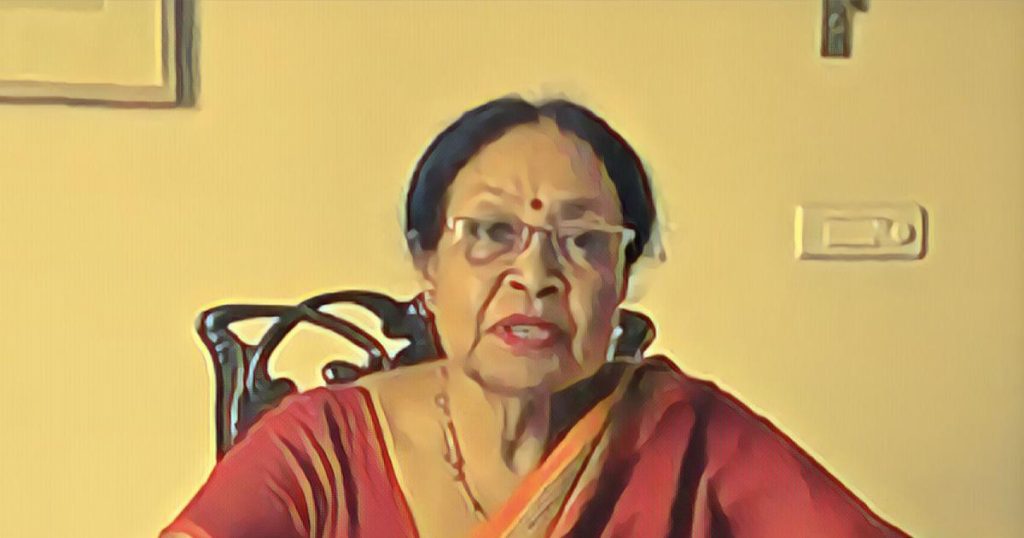
The anthology contains 12 stories curated and translated by Aruna Chakravarti. Aruna Chakravarti’s exceptional skills as both a translator and a writer of meticulously researched historical fiction are widely acknowledged and evidenced by her much-acclaimed oeuvre so far. This time, however, she has mobilised her art of translation to cast some light on the plight of the Dalits of Bengal, more specifically, of Dalit women, who confront a three-pronged dilemma: the stigma of their caste, gender-based injustice, and ubiquitous poverty. The result is Rising From the Dust: Dalit Stories from Bengal. Many Bengals For this anthology Chakravarti has translated 12 stories spread across a century, including works by both contemporary Dalit writers and those written about the community by non-Dalit writers who wrote sensitively about the condition of Dalit women. Apart from the sheer enjoyment of reading these stories, which I shall deal with later, I must mention here that for me, this book, at many levels, is an eye-opener and offers multiple layers of pleasure, like a matryoshka doll, encasing within itself a variety of linked worlds of personal and literary associations and significance. I come to it not just as a reader but as an expatriate Bangladeshi-Italian, and an anglophone writer and translator myself. There is also my background of being born in undivided Pakistan, and growing up in both East and West Pakistan, which enables me to relate to the stories where Bangladesh or East Bengal is mentioned. Also, to read in this anthology the works of some of the contemporary writers of Bengali Dalit literature, like Manoranjan Byapari, Manohar Mouli Biswas or Nakul Malik, all new to me and all born in East Pakistan, gives me a special insight into, at least, the geographic if not the economic or social circumstances of their remembered world. This is true also of the great Mahasweta Devi, many of whose stories about Adivasis I helped translate into Italian, and had the pleasure of meeting her during a film festival in Rome, in 2010, where the cinematic version of one of her stories was being screened as Gangor by the Italian director Italo Spinelli. Each story in this collection has a powerful impact, representing as it does a specific professional group of Dalits. The diversity here is tremendous: there are fisherfolk and boatmen, farmers and snake-charmers, doms and sweepers, tanners and drum-makers, basket-weavers, and rickshaw pullers. Even dung-cake-makers. Here, Mothos and Duleys, Bedeys and Vaishnavs, and poor Muslim farmers all exist side by side. Women at the centre There are strong female protagonists: Sarama in Manoranjan Byapari’s “The Fortress,” who makes her body her last battlefield. (“She is a pot brimming over with poison.”). In Chintay in Bimalendu Haldar’s “Salt,” we see the spirit of resistance among fisherwomen united against exploitation. (“Men…scorn us as weak and helpless. Let’s show them that we…can do everything they can. We are four women together.”) In Mahasweta Devi’s “Nalini’s Story,” we witness heartwarming female solidarity as Nalini’s friend, Mukundo’s mother, constantly stands up for Nalini against her greedy family. “You’re here to grab the old woman’s house and sell it … But it won’t be that easy. We’re with her.”) In Manohar Mouli Biswas’s “Shonkhomala,” the eponymous character, a rare, educated woman of the dom community, inspires her husband to help them escape their constraining circumstances. “Let us cast off the surname that brings us only shame and dishonour.” In Shankini, the beautiful and fiery leader of the band of bedeys, snake charmers in Prafulla Kumar Roy’s “Snake Maiden,” presents a version of the career-driven woman’s dilemma confronting domestic bliss versus ambition. (It wasn’t as though she herself was not lured by the prospect of putting down roots. “But I love my life as a bedeyni even more. The danger and excitement of sailing over tumultuous waters…We have been nomads for generations.”) Shefali, the wife in Nakul Mallik’s “Illegal Immigrant”, runs all the way from the slums of Bongaon to the Petrapole border office looking for her immigrant husband, and, when stopped from crossing the border, she rages at the officer. (“What passport? … I’m going to my husband. How dare you try to stop me?”) Larani in Anil Ghorai’s “Insect Festival” questions societal and religious rules. (“All these decrees are given out by evil men…in the name of the gods.”) And the pathetic old recluse Shora is seen as a fiendish creature in Tarasankar Bandyopadhyay’s psychologically complex story “The Witch,” about the battle of self-worth against public perception. (“There was no doubt in her mind now. What people said was right. She possessed a demoniac power…a power that destroyed everyone she loved.”) And even when the protagonists are frail or passive, their stories by dint of their narrative power, have the strength to move readers to tears, as in Saratchandra Chattopadhyay’s “Abhagi’s Heaven” where a dignified cremation with full funeral rites is craved by the lowborn protagonist as her most dazzling goal; or Mahasweta Devi’s “The True-Life story of Ulli-Bulli’s Mother” where a skilful use of dual points of view effectively reveals the mind of an unhinged old woman living in her past, searching for her lost twin daughters; orTarasankar Bandyopadhyay’s “Raikamal”, where a young Vaishnavi Kamal quietly struggles to embody the purity of spiritual love while suppressing her physical instincts. As to the faith of the other characters, whether the gods actually hear their fervent prayers or not, we see the wives of fishermen near the Sunderbans go to shrines of Bonbibi, the lady guardian spirit of the forest venerated by both Hindus and Muslims;,while the snake charmers bow to both Allah and Bishohari, another name for Manasha, the snake goddess. Some characters give offerings at Ma Sheetala’s temple, others at Kalighat. Translation and details Within a single volume one journeys through diverse settings and locations: refugee camps and slums, forests, fields of wild reeds, bulrushes, tussock grass, teeming bazars, urban alleys, streets and train stations, salt fens and muddy banks of rivers, bamboo groves, fish warehouses, paddy fields, dusty stretches
Cong doesn’t rule out TMC alliance for 2026 elections
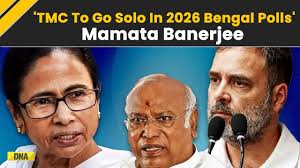
Kolkata: Congress on Thursday did not rule out a possible tie-up with Trinamool for the 2026 Bengal assembly polls. While the Congress high command left the question of an “alliance” to the opinion of state netas and “ground realities”, it said Rahul Gandhi and Priyanka Gandhi Vadra would be part of the election campaign. Congress general secretary (organisation) K C Venugopal held a meeting with Pradesh Congress netas to assess the party’s strength in the districts. “The issue of a possible alliance will be discussed in Pradesh Congress first. They will assess the political situation and come forward with a solution. The party high command will take a call at that point in time,” Venugopal said. During the two-hour meeting with Congress’s Bengal minder Ghulam Ahmed Mir, state president Subhankar Sarkar, Malda South MP Isha Khan Chowdhury and seniors like Adhir Chowdhury and Deepa Dasmunshi, Venugopal listened patiently to diverging opinions. Congress, which secured 44 seats in the 2016 assembly polls, was reduced to zero in 2021. Its vote share in Bengal declined from 12% to 3% during this period. In the 2019 Lok Sabha polls, Congress’s seats were reduced from four to two. In both the assembly polls, Congress was in alliance with the Left Front. In the 2024 Lok Sabha polls, its seat tally was further reduced to one, and the party was able to retain only the Malda Dakshin seat. However, its vote share increased marginally by a little more than 4.5%. “The Congress high command wants the state unit to consolidate its strengths first. We will leverage that and decide the number of seats the party wants to contest,” a Pradesh Congress neta said. Courtesy : TOI Note: This news is originally published on https:/timesofindia.com/bha and is used purely for non-profit/non-commercial purposes, especially human rights
Sensitisation drive for hosp staff on transgender patients’ rights
Kolkata: Shahanawaz, a transgender (TG) woman, was taken to SSKM Hospital with acute abdominal pain caused by appendicitis. The Alipore resident alleged that even while she was in extreme pain, doctors at the emergency department kept whispering to each other and offered her only a painkiller. Unable to bear the excruciating pain, she went to a nursing home to get her appendix removed. “I could understand they were discussing my gender and where to admit me. I was then rushed to a nursing home as the treatment was delayed. This was five years ago. But nothing much has changed since then,” said Shahanawaz. Shahanawaz is not alone; the TG community at large faces multiple problems in accessing healthcare services. The fear of being rejected and the negative experiences they face force many to shun medical care unless it is an emergency situation. “There is no doubt that TG persons face a lot of hurdles while seeking medical attention due to a lack of sensitisation. It is a painful experience for them. This sensitisation has to percolate down to the lowest rung of healthcare providers from the top,” said Kaustav Nayak, director of the Institute of Health & Family Welfare Kolkata, during a sensitisation programme at Swasthya Bhawan. Organised by the department of psychiatric social work, Institute of Psychiatry (IOP) IPGMER, and National Institute of Social Defense (TG division), doctors, paramedics, and even security guards of govt hospitals attended the three-day-long programme. “From being bullied in school because of our gender identity, which does not fall into the binary, to discrimination at hospitals, life is tough for a TG person,” said Kajal Roy, who dropped out of school. Anuprabha Das Mazumder, another TG woman, said she was forced to get her dengue treatment done in a cabin of a private hospital in 2022, even though she would have opted for a ward as her condition was not serious. “Apart from two private hospitals – one with a TG clinic and the other reserving one or two beds for patients from the community, there is no structured policy that would ensure equitable healthcare access, especially in public healthcare systems,” said Bappaditya Mukherjee, of Prantakatha, an organisation that works on gender issues and also runs a clinic for the TG community. Mayank Kumar, assistant professor at IOP’s department of psychiatric social work, hopes that such sensitisation programmes will evoke acceptable behaviour from the healthcare community. Plastic and reconstructive surgeon Manish Mukul Ghosh deliberated on the facts of sex reassignment surgery that many from the community undergo. Courtesy : TOI Note: This news is originally published on https:/timesofindia.com/ and is for use by the non-military/non-commercial community, especially those in the human rights sector.
West Bengal: Dalit families entered Shiva temple after 300 years, now the game of boycott and threats started in the village!
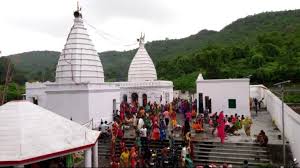
Dalit families entered Gideshwar Shiva temple after 300 years, but social boycott started. West Bengal – March 13, 2025 became a historic day for 130 Dalit families of Gidagram village in East Burdwan district. For the first time, after a wait of 300 years, they were able to enter the Gideshwar Shiva temple in their own village. The occasion took place under heavy police security, but the event was like a symbolic break on centuries-old caste discrimination. However, this moment of happiness could not last long. According to a report by Frontline The Hindu, after the temple entry, the Dalit families faced social and economic boycott by an influential section of the village. A visit to the village two months later found that while there was a grudging acceptance on the surface, deep tensions still simmered within — shattering the image Bengal has of itself as an ‘ajaati’ society. Victory, but at a heavy cost The Gideshwar temple is located just a few hundred metres from Das Pada, where Dalit (mostly Das sub-caste) families live. In Gidagram, which has around 2,000 families, only these 130 Dalit families were denied entry into the temple — a discrimination that had been going on for generations. After several meetings, administration intervention and local consensus, finally on March 13, five Dalits entered the temple under heavy police protection and worshipped the deity. But surprisingly, this was followed by a strong backlash. The Dalit families were socially boycotted for almost a month. The influential sections of the village also called for an economic boycott against them. “Our joy of entering the temple was taken away by the boycott. Though the situation is improving a little now and people are accepting us, the heartache remains,” said a resident. The suppressed pang The Das community says they never faced discrimination in other social matters — they attended weddings, invited guests, and had good relations with other communities. But when it came to the temple, they were treated as untouchables. “Now that we have been able to enter the temple, we have a new sense of self-respect. It is as if our fortunes have turned,” said Sukanto Das. “Earlier, our boys and girls lacked courage, but after this fight, they have a new courage,” said Dinabandhu Das, a senior member of the community. He admits, however, that relations soured after the demand for temple entry was raised, and the entry under police protection worsened it. Dalit families are keeping their cool Though Dalit families try to publicly pretend that things are back to normal, the anguish inside often spills over. “Initially, the upper caste women stopped going to the temple, but now they have returned, laughing and talking to our daughters as if nothing had happened,” says Dyuti Ram Das, whose two daughters were among the first Dalit women to enter the temple. But Mithu Das admits many women still shy away from visiting the temple. “We want these problems to end and we all live together in peace like before,” she said. Precautions to avoid escalation To avoid escalation of tensions in the village, the Dalit community has made its own rules — even though they have full authority, they make sure only two women enter the temple at a time. “We know what people think of us, so we don’t crowd too much. People are already angry, this will only add fuel to the fire,” said one woman. They also refused to be photographed in front of the temple. However, sometimes hushed threats are heard. A local resident said, “Many times we hear, ‘You have been able to enter now because of the government, we will see when the government changes.’” Tradition versus equality clash Not every voice in the village is in favour of the Dalits. Some men sitting near the temple openly expressed their displeasure. A local quipped, “What is the use of saying anything now, they entered with the help of the police. What will happen to our 400-year-old tradition?” This year, the biggest festival of the temple, which is celebrated every April, was not celebrated for the first time. Many villagers believe that the Das community traditionally worked with animal skins, so they were denied entry into the temple. “This is not the case of all SCs or OBCs, only Das,” said a villager with the surname Pramanik (barber caste), but refrained from giving his opinion. Questions on Bengal’s ‘Ajati’ image This incident highlights the caste reality in Bengal. “People from outside think there is no casteism in Bengal because all the information is centred around Kolkata. But the reality in the villages is different,” says noted sociologist Surjit C. Mukhopadhyay. Mukhopadhyay said Bengal’s reform movement — Raja Rammohan Roy, Vidyasagar, and later the Left movement — is relatively new, while caste structures are centuries old. “The Gidagram incident reflects the socio-political reality of Bengal,” he said. Inspired other villages According to senior CPI(M) leader Tamal Majhi, the fight of the Das community of Gidagram inspired other villages as well. “After this, the Dalit community in Ketugram and Devagram also got the right to enter the temple. In some places without a fight, in some places by court order,” Majhi said. It was a long and humiliating journey for the people of Das Pada, but they finally got the basic dignity they deserved. Their struggle may have alienated a section of the village, but they are confident that one day those who oppose them will also understand the error of their thinking. An elderly man confidently said, “We know, one day they will understand that it was not to end tradition, but to restore justice.” Courtesy : Hindi News
15 killed, including two children, in Kolkata hotel fire; several injured critical, SIT formed

Blaze breaks out at Mechuapatti hotel with 88 boarders; fire contained after hours, cause still under investigation. KOLKATA: Fifteen people, including a woman and two children, were killed in a devastating fire at a hotel in the Mechuapatti area of central Kolkata, police said on Wednesday. Thirteen others were also injured in the fire that broke out on Tuesday evening, a senior police officer said. Prime Minister Narendra Modi expressed anguish over the loss of lives in the fire incident, and announced ex gratia of Rs 2 lakh to the next of kin of each deceased. “Anguished by the loss of lives due to a fire mishap in Kolkata. Condolences to those who lost their loved ones. May the injured recover soon. An ex-gratia of Rs 2 lakh from PMNRF would be given to the next of kin of each deceased. The injured would be given Rs. 50,000,” the prime minister’s office said on X. According to the Kolkata Police officer, the deceased include 11 men, eight of whom have been identified so far. The condition of several of the injured is said to be critical, he said. “There were 88 guests in 42 rooms at the time of the incident. A boy, a girl and a woman are among the dead. The cause of the fire is yet to be ascertained. Our forensic team will examine the site, which has been cordoned off,” the officer said. The fire at the low-cost Rituraj Hotel was first reported around 7:30 PM on Tuesday. Ten fire tenders were pressed into service, and the blaze was brought under control, after nearly 10 hours, this morning on Wednesday, a fire and emergency services official said. “There were 15 fatalities in last night’s fire. Eight of the deceased have been identified,” state minister Sujit Bose told PTI. In the wake of the tragedy, the Kolkata Police has constituted a Special Investigation Team (SIT) to probe the incident. West Bengal BJP president Sukanta Majumdar lashed out at Chief Minister Mamata Banerjee, accusing her of “insensitivity” for attending a day-long inauguration programme of Jagannath Dham in Digha while the fire tragedy was unfolding in the state capital. “Yesterday, a devastating fire in the Mechhua area of Burrabazar claimed the lives of more than 14 innocent people. Many more are battling for their lives. Yet, the chief minister chose to remain silent and continued with her religious event in Digha,” Majumdar said in a strongly worded statement. “This exposes her lack of empathy and the failure of her administration. While helpless citizens were trapped in flames and dying in pain, the CM was busy exploiting religion for political gain. Her year-round appeasement and election-time religious posturing have once again taken precedence over governance,” he alleged Majumdar called upon BJP workers across the state to immediately mobilise relief efforts and extend support to the victims’ families. “I will personally stand by the affected families and oversee our party’s involvement in the rescue and relief operations,” he said. Courtesy : TNIE Note: This news is originally published on https://thenewindianexpress.com and is for use by the non-military/non-commercial community, especially those in the human rights sector.
Rioter tag, Muslim migrant workers from Bengal ‘thrashed’ in Odisha and Uttar Pradesh

‘Forced returns’ have sparked fear among migrant workers from Murshidabad and Malda, many of whom were now worried about their survival The fallout of the Samserganj riots reached BJP-ruled Odisha and Uttar Pradesh on Monday when around 70 migrant labourers of the minority community from Murshidabad and Malda were allegedly assaulted and sent home when they reached those states to resume work. Some 50 workers from Murshidabad had left for Keonjhar, Odisha, on Sunday, after their Eid break. They had to return home late Monday night in the same bus arranged by a labour contractor after being attacked allegedly by Hindutva activists who accused them of attacking a particular community in riot-hit Murshidabad. Similarly, 24 migrant workers from Sujapur in Malda, who had been working in a garments factory in Jamalpur in Uttar Pradesh, were also allegedly beaten up and forced back. The violence, which erupted over protests against the amended waqf law, had spread in pockets of Murshidabad, leaving three dead and damaging homes and property. The “forced returns” have sparked fear among migrant workers from Murshidabad and Malda, many of whom were now worried about their survival. On Monday, a Special Investigating Team (SIT) formed by the Bengal government arrested 12 migrant labourers from Jharsuguda in Odisha for their alleged role in the Murshidabad riots. However, these migrant workers who were attacked and forced to return home, claimed they were not involved in violence but were paying the price of perception. Momin Miyan, a labour contractor from Suti, who had arranged the Odisha-bound trip, said: “We just came home for a small break which coincided with the anti-waqf Act protests. We didn’t take part in it.” Momin, who has been recruiting labourers for 12 years, said he had arranged a bus for workers to Keonjhar as usual. “Around 5.30am on Monday, a group of youths with Bajrang Dal flags stopped our bus at Jashipur More in Mayurbhanj. We were dragged out and beaten up…. They accused us of attacking their community. They warned us that the bus would be set on fire if we didn’t leave,” said Momin. One of the 24 migrant workers from Sujapur in Malda who had been working in Jamalpur, Uttar Pradesh, for seven years, said a group of youths with saffron flags in their hands attacked them when they were working. “They accused us of attacking a community and asked us to leave, saying we would not be allowed to work there. Some of us were beaten up severely,” he said. Monirul Khan of Sujapur, who returned from UP, said when they went to the police, they were detained and were released “only after paying a bribe of ₹30,000”. “We have been working in UP for seven years. There was no problem earlier. But the scenario changed after the Murshidabad violence. Now it has become a question of our survival since we are not feeling secure to return there,” he said. When the Sujapur workers were detained at Jamalpur Kotwali police station, Fatema Khatun, wife of migrant worker Shariful Khan, lodged a complaint with the Kaliachak police in Malda. The issue was taken up by the Migrant Workers’ Unity Forum. Its general secretary, Asif Farooq, wrote to Union home minister Amit Shah, urging him to ensure the safety and rights of migrant workers across states. Jangipur SDO Ekam J. Singh professed ignorance. “If I get any complaint, I will report it to the state government,” he said. The CPM said that TMC MP Abu Taher’s comment about the role of migrant workers in the riots was also to blame. “Abu Taher’s comment was amplified by BJP leader Tarunjyoti Tewari on social media. Within hours, attacks were unleashed in Odisha and UP. The Centre has also abrogated its responsibility to protect migrant workers…,” said CPM state secretary Md Salim and added that his party units in the two states were alerted to help Bengal workers. Samirul Islam, chairman of West Bengal Migrant Workers’ Welfare Board and TMC’s Rajya Sabha MP, blamed the BJP. “Such attacks on migrant workers are not new in BJP-ruled states. Wherever they find Bengali-speaking Muslim migrant workers, they always find an issue to torture them,” he said. Samik Bhattacharya, the BJP Rajya Sabha MP, argued that such incidents were the result of suspicion after states like Tamil Nadu found many Bengali-speaking people with fake Indian documents, who are Bangladeshi infiltrators. He pointed out that Tamil Nadu was not a BJP-ruled state. “Tamil Nadu government, which is not run by the BJP, was the first to conduct a combing operation and discovered many such migrant workers with fake identities. After that, they stopped allowing Bengali migrant workers to work in their state. The allegations that came from other states are likely to be the result of such suspicion,” said Bhattacharya. Courtesy : Alamgir Hossain, The Telegraph Note: This news was originally published on https://thetelegraph.com/bha and is used purely for non-profit/non-commercial purposes, especially human rights.
‘Minority communities must take care of each other’: Mamata urges people to maintain peace after Murshidabad violence

Urging people not to trust the BJP and its allies, West Bengal CM Mamata Banerjee alleged that they want to incite riots. Kolkata: Alleging that the BJP and the RSS initiated a “vicious false campaign” in West Bengal, Chief Minister Mamata Banerjee on Saturday urged the people to maintain peace, and stated that the majority and the minority communities must take care of each other. Referring to the violence in Murshidabad, Banerjee said “these forces” were using the backdrop of “an unfortunate incident” that happened “on provocation” to play divisive politics. “BJP and its allies have suddenly become very aggressive in West Bengal. These allies include RSS. I have not taken the RSS’s name earlier, but I am being forced now to identify them. Together, they all have initiated a vicious false campaign in the State,” she alleged in the open letter, which was made public late in the night. “These forces are using the backdrop of an unfortunate incident that happened on provocation. They are using the backdrop to play divisive politics. They are planning to play the ‘divide and rule’ game. This is sinister,” she added. Asserting that the “criminals” behind the riots are being strongly dealt with, Banerjee said that at the same time “mutual mistrust and distrust” must be avoided. “The majority and the minority communities must work together and take care of each other,” she said. “They had originally planned to use the Ram Navami day for playing with fire, but the Ram Navami celebrations in West Bengal have been most peaceful. Then they tried to use some subsequent matters relating to the agitations against the Waqf (Amendment) Act,” she alleged. Urging people not to trust the BJP and its allies, she alleged that they want to incite riots. “…riots can affect everyone. We love all. We want to stay together. We condemn riots. We are against riots. They want to divide us for some narrow electoral politics,” she said. The CM said she has taken “strong actions” for maintaining law and order and saving human lives and dignity. “Two police officers-in-charge have been removed. Police is investigating. Further actions are being taken. Please remember that riots are created neither by Hindus, nor by Muslims, riots are engineered by criminals. Strict actions will be taken against all criminals. No one will be spared,” she said. Banerjee claimed that protest rallies are not allowed in the BJP-ruled UP, Bihar, MP and Rajasthan, but no such anti-Constitutional dispensation is there in West Bengal. “When they use bulldozers in UP, agony comes. In contrast, in West Bengal, when someone suffers, we help. That is our approach in West Bengal. No community will be disturbed or adversely affected in West Bengal. We strongly condemn such disturbances,” she said. “Those who create riots always come from outside and then go away. We from inside have to now fight against their bad deeds. We shall together survive and win,” she said. Banerjee said her “detractors”, the BJP, want to divert people’s attention from the burning problem of price rise, and hence they have taken recourse to “inflammatory propaganda”. “Jealousy has no cure. The jealous cannot go beyond their narrow vision. Our detractors do not want employment, development, creativity – their only interest is to ensure price rise, to enhance costs of medicines, hospital charges and insurance premium, to increase the price of petrol, diesel and even domestic cooking gas,” she said. “Finally, my appeal to everyone again is: stay calm, stay united. Do not give in to mistrust and distrust. Do not be diverted by their false communal rhetoric,” she said. Three people were killed, several others injured, and numerous properties were vandalised during protests over the Waqf (Amendment) Act in Murshidabad last week. Courtesy : News Nine Note: This news is originally published on https://newsnine.com/bha and is used purely for non-profit/non-commercial purposes, especially human rights.