
From Brahmins to Dalits to Adivasis, everyone has the same ancestors; BHU professor’s DNA research makes a major claim on castes.
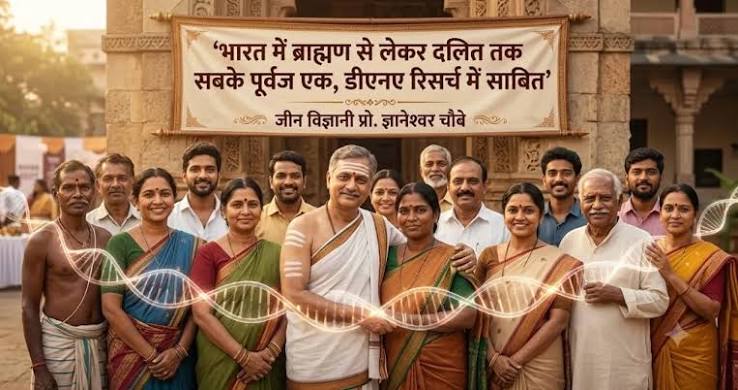
Professor Choubey stated that it is clear that the caste system that has developed here is local and not imposed from outside. The caste system in India is frequently debated. Furthermore, there have been discussions about the Aryan and Dravidian theories. Concerns have often been raised about caste dominance and a sense of superiority. Meanwhile, research led by Professor Gyaneshwar Choubey of Banaras Hindu University has made significant claims. According to him, although Indian society is divided into various castes, everyone has the same ancestors. He claims that people of all castes, including Brahmins, Kshatriyas, and Dalits, share the same ancestors. He has spent more than 10 years on this research. Recently, his research on the people of Northeast India has been published, rekindling discussions about his research. He told NDTV that the racial divisions in India, such as North and South, or Aryan and Dravidian, are incorrect. He said that the Aryan and Dravidian theory is completely misleading. He explained that through the Y chromosome, we have discovered that our ancestors were the same. He explained that we are studying the Y chromosome, which determines paternity. The father’s gene is passed on through the Y chromosome. Professor Gyaneshwar Choubey reported that a tribal and a Kshatriya have a common ancestry dating back 1,500 years. A similar connection was found with the Patels of Gujarat. Professor Choubey said that it is clear that the caste system that has developed here is local and not imposed from outside. He said that when some people gained socio-economic power, they decided on their caste, while others remained tribal. Thus, from Brahmins, Dalits, backward classes, and even tribal communities, everyone has the same ancestry. The professor said that they have now begun research on the Indian psyche. He stated that the “ANI” (Ancestral North Indian) and “ASI” (Ancestral South Indian) theories promoted by Harvard University never actually existed in India. Everyone in India, from Brahmins to Dalits, has a common ancestor. This has been proven through DNA research. Written by: Dr. Surya Prakash Courtesy: Hindi News
Chandrashekhar Azad vs. Akash Anand in UP: Who will support Dalit voters? BSP to hold a flurry of rallies starting October 28th
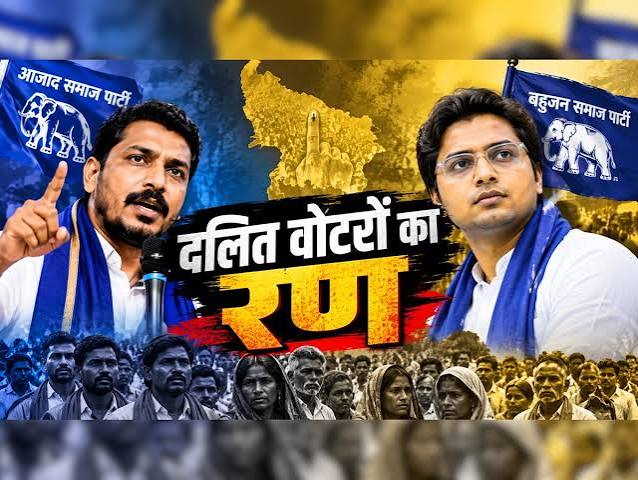
Uttar Pradesh has approximately 22% Dalit voters. The battle for Dalit voters in the state has become Azad Samaj Party vs. BSP. Akash Anand will begin his election rallies from October 28th, and Chandrashekhar Azad will begin his election rallies from October 18th. In response to the Azad Samaj Party’s proposed rallies, the BSP has also released its schedule. The BSP has fielded Akash Anand against Chandrashekhar Azad. Chandrashekhar Azad presents himself as a prominent Dalit leader in UP. Ahead of the upcoming assembly elections in UP, the battle for Dalit politics has now become Chandrashekhar Azad vs. Akash Anand. Dalit voters are at the center of the political battle between the Azad Samaj Party and the BSP. Both parties’ politics revolve around Dalits. Mayawati has fielded Akash Anand against Chandrashekhar. Akash Anand faces the challenge of regaining the BSP’s lost base, while Chandrashekhar faces the challenge of political expansion. The most important question now is who will Dalit voters support in the upcoming state assembly elections. Akash Anand to Hold a Series of Rallies Bahujan Samaj Party (BSP) chief Mayawati has made full preparations to field her nephew and party’s national convener, Akash Anand, in the electoral fray. A rally for Akash is scheduled for October 28th in Anupshahr, Bulandshahr. Following this, meetings are also scheduled in Saharanpur, Ayodhya, Agra, and Kanpur divisions. Through these rallies, the party will announce potential candidates and attempt to recapture its lost support base. Major Challenges Facing Akash Political analyst Vinod Shukla explains that Akash Anand faces more than just the challenge of holding election rallies. He must also demonstrate how active the BSP organization is at the booth level, how connected old workers are, and what the party is doing to bring its traditional supporters back to the polling booths. The campaign, which begins on October 28th, is crucial in this regard. After Anupshahr, meetings are scheduled in Nakur, Saharanpur, on November 2nd, Bikapur, Ayodhya, on November 20th, Agra, on November 22nd, and Bilhaur, Kanpur, on November 29th. Akash Anand’s programs have also been scheduled in Punjab and Uttarakhand. Assembly elections are due in these two states, along with Uttar Pradesh. Chandrashekhar’s path is not easy. Chandrashekhar Azad’s political career is rooted in Dalit rights, the Constitution, voices against social discrimination, and grassroots movements. After establishing his identity through the Bhim Army, he formed the Azad Samaj Party (Kanshi Ram) and won the Nagina seat in the 2024 Lok Sabha elections. His victory demonstrated that there are political parties for Dalits in Uttar Pradesh beyond the BSP. According to political analysts, winning one Lok Sabha seat does not necessarily sway Dalit voters across the state. Chandrashekhar’s programs are scheduled for Amroha on October 18, Aligarh on October 19, and Muzaffarnagar, Prayagraj, Varanasi, and Ghazipur from October 24 to 28. Chandrashekhar did not win due to the Dalit equation. In the 2024 Lok Sabha elections, Chandrashekhar Azad won the Nagina seat. Chandrashekhar received 512,552 votes, defeating BJP’s Om Kumar by 151,473 votes. BSP candidate Surendra Pal Singh received 13,272 votes. Political analysts say that Muslim voters voted for Chandrashekhar to defeat the BJP, which is why he won. The Dalit equation played no role in his victory. Will the Dalit vote be divided? Vinod Shukla says that Dalit voters in Uttar Pradesh have long been the BSP’s core support base and traditional vote bank. Azad’s victory in Nagina certainly saw a decline in the BSP’s old electoral base, but this result is specific to a specific Lok Sabha constituency. Therefore, this cannot be seen as a permanent shift in Dalit votes across Uttar Pradesh. He stated that Dalit voters will remain with the BSP. The likelihood of them switching to Azad is very low. There are approximately 22 percent Dalit voters in Uttar Pradesh, which is the BSP’s traditional vote bank. The role of Akash Anand and Chandrashekhar Azad will be in the spotlight for the 2027 UP Assembly elections regarding the support of Dalit voters. The BSP faces the challenge of re-establishing its old political base and organization. Chandrashekhar Azad faces the challenge of converting his victory in Nagina into a widespread electoral presence. Manoj Mishra Courtesy: Hindi News
Dalit Man Beaten to Death In Sitapur, Family Alleges Caste Abuse
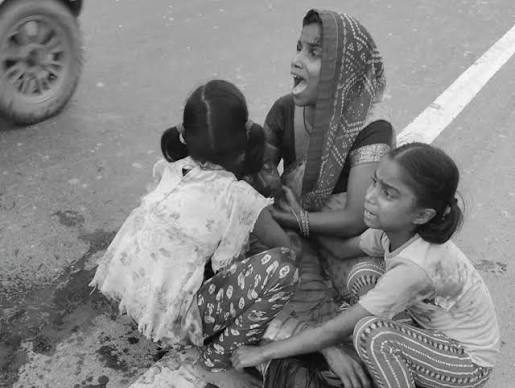
Dalit man Manoj Gautam was beaten to death in Sitapur, Uttar Pradesh, in front of his 10-year-old daughter. A Dalit man, Manoj Gautam, was beaten to death in Sitapur, Uttar Pradesh, allegedly amid casteist slurs and long-standing family rivalry. Four of the six accused have been arrested. The Bhim Army–Azad Samaj Party is supporting the victim’s family and demanding a fair, transparent probe. Will justice be ensured for the family? A 35-year-old Dalit man named Manoj Gautam was beaten to death in Sitapur district, Uttar Pradesh, on the evening of 17 October 2026. The incident occurred near Ludhaura village under the jurisdiction of Kamlapur police station while Gautam was returning home from a local market with his 10-year-old daughter. He was intercepted and assaulted by a group of men. Gautam was taken to a community health centre in Kasmanda, where he was declared dead on arrival. Police have registered a case and initiated an investigation. According to Maktoob Media, Gautam’s family alleged that casteist slurs were used during the attack. Police cited a long-standing family rivalry as the suspected motive. Four of the six accused have been arrested, including Shubham Singh, Dhirendra Singh, and Narendra Singh. The First Information Report (FIR) was filed under relevant sections of the Bharatiya Nyaya Sanhita and the Scheduled Castes and Scheduled Tribes (Prevention of Atrocities) Act. As reported by undefined, preliminary investigations suggest the murder was linked to a long-standing dispute between two families. Police confirmed that Gautam had previously filed a case against the accused under the SC/ST Act. The two sides were reportedly involved in a verbal altercation a day before the incident. Four police teams have been formed to apprehend the remaining accused, and the investigation is ongoing to establish the full circumstances surrounding the killing. Coverage revealed that a video showing Gautam’s grieving wife and children beside his body circulated widely on social media, drawing public attention to the case. Superintendent of Police Ankur Agarwal stated that the investigation is being conducted under the relevant legal provisions, and efforts are underway to ensure all accused are brought to justice. Police sources indicated during the investigation that Gautam’s prior complaint under the SC/ST Act is being examined as part of the motive. The authorities are also reviewing the events leading up to the assault, including the reported altercation on the previous day. The police have not released further details about the ongoing investigation or the status of the remaining suspects. “Our demand is that all the accused be arrested immediately, a fair investigation be conducted in the case, and strict legal action be ensured against the guilty,” said Bhim Army chief Chandra Shekhar Azad, as quoted in the coverage. Further details highlighted that the Bhim Army–Azad Samaj Party (Kanshiram) has been supporting the victim’s family since the incident. The organisation reiterated its commitment to securing justice for the family and called for a fair and transparent investigation. Community members and activists have condemned the killing as the case drew attention to issues of caste-based violence and the need for effective legal action. The police have assured that all aspects, including the allegations of casteist abuse and the history of rivalry, are being thoroughly investigated. “The local team of the Bhim Army–Azad Samaj Party (Kanshiram) had been standing with the victim’s family since the incident, and reiterated the organisation’s commitment to securing justice for them,” the coverage stated. Legal proceedings are ongoing, and authorities have stated that updates will be provided as the investigation progresses as new information emerges. The case remains under close scrutiny from both law enforcement and civil society groups. Courtesy : The Quint Note: This news is originally published on https:/thequint.com/bha and is used purely for non-profit/non-commercial purposes, especially human rights
Sold RS seat to ‘Mumbai bizman’: Yogi targets Akhilesh for ‘ignoring backward, Dalit candidates’

Uttar Pradesh CM Yogi Adityanath’s remarks came in the context of SP nominating senior Reliance Industries executive Dhanraj Parimal Nathwani to RS in the election this month. Lucknow: Uttar Pradesh Chief Minister Yogi Adityanath has accused the Akhilesh Yadav-led Samajwadi Party (SP) of selling a Rajya Sabha seat to a wealthy businessman while sidelining its “PDA” or “pichhda (backward), Dalit, alpsankhyak (minorities)” plank. Yogi’s remarks came in the context of Yadav nominating senior Reliance Industries executive Dhanraj Parimal Nathwani to the Rajya Sabha in the election held earlier this month, where the SP won two seats unopposed. Nathwani, one of the two SP winners, is also considered close to Prime Minister Narendra Modi and Union Home Minister Amit Shah. His father Parimal Nathwani is an Independent Rajya Sabha MP from Jharkhand. The latter had won the seat in April this year after defeating Congress candidate Pranav Jha. Addressing a teachers’ conference in Varanasi Wednesday, Yogi questioned the SP’s commitment to PDA, asking, “Those who kept raising slogans about PDA… where did that PDA go when it came to Rajya Sabha tickets?” “We have been saying from day one that PDA in the Samajwadi Party stands for ‘parivar development authority’ or, at best, ‘Paraya Dhan Apna’,” the chief minister said. Yogi said the SP leader fielded his uncle Ram Gopal Yadav from one of the seats it won, although he could have chosen a Yadav leader from Kashi, Ghazipur or Ballia for one seat. “For the second seat, they could have nominated a Dalit or someone else, or even a Muslim from their traditional vote bank. But they did not do so. Instead, they sold the seat to a wealthy businessman from Mumbai. Both ‘parivar development authority’ and ‘paraya dhan apna’ have been proved right,” he alleged. Yogi targets SP over recruitment row The chief minister also attacked the erstwhile SP government over alleged irregularities in recruitment, accusing it of compromising the future of young people. He referred to the appointment of Anil Yadav as chairman of the Uttar Pradesh Public Service Commission during the SP’s tenure in 2013—the appointment was set aside by the Allahabad High Court in 2015 amid questions over his selection—and claimed he was not qualified for the post. He further alleged that a candidate who had secured third division in high school, intermediate and graduation had topped the Uttar Pradesh Public Service Commission examinations under the previous government. “What kind of anarchy and hooliganism was this? The future of young people was being played with. Meanwhile, riots, unrest and mafia elements dominated the state,” Yogi alleged. SP’s Rajya Sabha wins The remarks come after 10 Rajya Sabha members from Uttar Pradesh were elected unopposed on October 9. The BJP secured eight seats, while the SP won two. The SP’s elected candidates were senior party leader and national general secretary Ram Gopal Yadav and businessman Nathwani. Within a few days of filing nomination, Nathwani’s social media post praising Prime Minister Narendra Modi had triggered unease within the party, with some leaders questioning how they would defend the candidature amid the SP’s opposition to the BJP and Modi. Nathwani, a Gujarat-based businessman associated with the Reliance Group, posted a lengthy message on X (formerly Twitter) on 9 October, congratulating Modi on completing 25 years in public office. He also shared a video highlighting Modi’s political journey from Gujarat chief minister to Prime Minister. Prashant Srivastava Edited by Sunanda Ranjan Courtesy : The Print Note: This news is originally published on https:/theprint.com/bha and is used purely for non-profit/non-commercial purposes, especially human rights
The issue of caste discrimination and mental harassment of a Dalit M.Ed. student at CSJMU heats up, with Bhim Army and student organizations staging a violent protest.
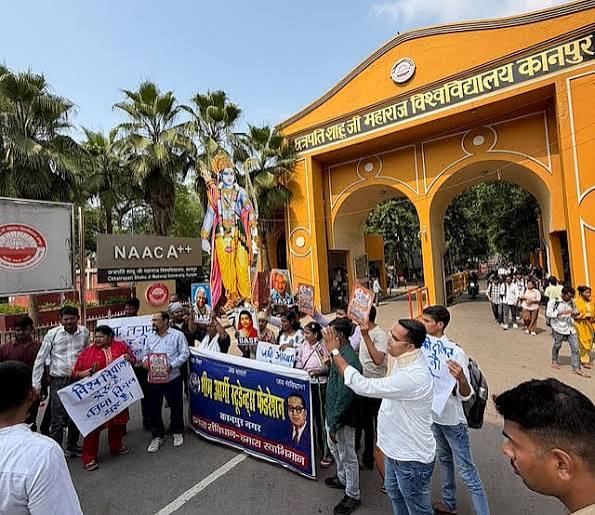
The Bhim Army Students Federation has launched a protest against the caste discrimination and mental harassment of an M.Ed. student at Chhatrapati Shahuji Maharaj University, leveling serious allegations against the administration and police. Lucknow: Student organizations, led by the Bhim Army Students Federation (BASF), have launched a protest to secure justice for Prema Devi, a Dalit M.Ed. (session 2024-26) student studying in the Department of Teacher Education at Chhatrapati Shahuji Maharaj University (CSJMU), Kanpur, with the support of the AISA student organization. As soon as the student organizations joined the protest, the police administration turned the entire campus into a cantonment, but the Bhim Army Students Federation remained firm on its demands and launched a vigorous protest. The Bhim Army Students Federation (BASF) submitted a detailed memorandum to the Vice Chancellor of the University, demanding strict action against the accused teachers. Student leaders accused the university administration of suppressing the ongoing cases of caste-based harassment and discrimination on campus. During the memorandum, Hemant Vidyarthi, District Coordinator of the Bhim Army Students Federation, stated that this is not the first case at the university, and that many previous instances of caste-based discrimination and administrative neglect have been reported against researchers and students. He alleged that whenever students raise their voices for their rights, the administration, instead of showing sensitivity, attempts to hush up the cases. During the protest, student leader Sachin Chandra stated that the Vice Chancellor is showing no urgency in providing justice to Prema Devi. Meanwhile, Abhishek Comrade, in his address, stated that casteism is rampant in the university and that if the victim does not receive justice, this place will be turned into Jantar Mantar. The organization has issued a strong warning that if the victim, Prema Devi, does not receive immediate justice, this fight will be escalated into a massive public movement from the university campus to the entire state. According to the complaint submitted by the victim, she was selected fourth in her class in the entrance examination, yet the Head of Department, Dr. Tanuja Bhatt, publicly discredited her by claiming that she had received admission through pleading. The student also alleges that teacher Dr. Vimal Singh targeted her with abusive language in class. The complaint further states that during the farewell ceremony, she was publicly humiliated, caste-based remarks were made that were derogatory to her dignity, and threats were made to ruin her future. The student alleges that when she protested, she was subjected to biased evaluation of answer sheets and undue pressure was exerted to enroll in mid-term examinations, contrary to the rules. Despite a previous complaint to the then Head of Department, Dr. Rashmi Gore, and the internal committee, an attempt was made to suppress the matter instead of conducting an impartial investigation. The memorandum submitted to the Vice Chancellor places a number of key demands. The first demand is that, given the sensitivity of the matter, an immediate administrative inquiry be initiated against the Head of Department, Dr. Tanuja Bhatt, and if the allegations are proven, legal action should be taken under the Scheduled Castes and Scheduled Tribes (Prevention of Atrocities) Act. The second demand states that, for a fair and transparent investigation, the accused teachers be removed from their current positions and an independent inquiry committee be formed, with no direct or indirect interest in the matter. The third demand calls for an independent review of the student’s answer sheets, internal marks, and evaluation records by impartial experts. The fourth and final demand calls for ensuring that any form of retaliatory action or psychological pressure against the student is completely prevented during the investigation process and that her legitimate academic rights are fully protected. Sachin Chandra, Abhishek, Kartik, Swarnkant, Rajesh, Amarkant, Riya, Neelam, Asha, Savita, and Govind, along with many other students, were present during the demonstration and memorandum program. Rajan Chaudhary Courtesy: Hindi News
Dalit man beaten to death in UP’s Sitapur in front of 10-year-old daughter
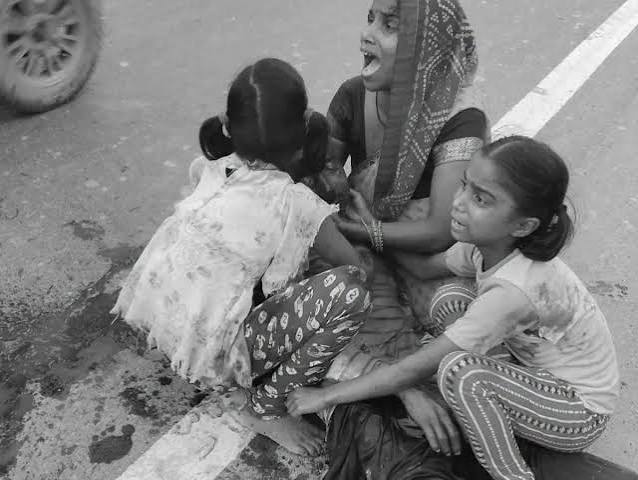
Preliminary investigation suggests the murder was linked to a long-standing rivalry between two families. A 35-year-old Dalit man was beaten to death in front of his 10-year-old daughter on a national highway in Uttar Pradesh’s Sitapur district, police said on Friday. Preliminary investigation suggests the murder was linked to a long-standing rivalry between two families. The incident took place on Thursday evening near Ludhaura village under Kamlapur police station limits, when Manoj Gautam was returning home from a local market with his daughter. A group of men intercepted and assaulted him, police said. His family took him to a community health centre in Kasmanda, where doctors declared him brought dead. Superintendent of Police Ankur Agarwal said an FIR had been registered against six people, including two women, under relevant provisions of the Bharatiya Nyaya Sanhita (BNS) and the Scheduled Castes and Scheduled Tribes (Prevention of Atrocities) Act. Four accused, including Shubham Singh, Dhirendra Singh and Narendra Singh, have been arrested, while four police teams have been formed to nab the remaining accused, he said. Police said Gautam had earlier filed a case against the accused under the SC/ST Act. The two sides had also engaged in a verbal altercation on Wednesday. Courtesy : TNIE Note: This news is originally published on https:/timesofindia.com/bha and is used purely for non-profit/non-commercial purposes, especially human rights
Honour is not family’s monopoly, Yogi says, invoking dalit freedom fighter
The CM said that the intersection where Masuriya Din’s statue was installed would be named after him and sought a proposal from the Prayagraj Mayor. LUCKNOW: Reminding people of the contributions of several Dalit icons to winning freedom for the nation, UP CM Yogi Adityanath, on Thursday, said Leader of Opposition Rahul Gandhi should know that it was not only Jawaharlal Nehru but also Masuriya Din Pasi who had gone to jail for the freedom of the country. Asserting that honour was not the exclusive property of any family, CM Yogi said those who raised their voices for Dalits and the deprived sections and dedicated their lives to the nation and society must also be given due respect. He was addressing a gathering after unveiling a statue of Masuriya, a Dalit freedom fighter from the Pasi community, at Mahashay Masuriyadin Smarak Inter College in Teliyarganj in Prayagraj. Notably, Masuriya Din Pasi was co-elected from the Phulpur Lok Sabha constituency twice, in 1952 and 1957, along with Nehru, and is also known to have worked towards the education of the Scheduled Castes. The CM stated that, as a member of the Constituent Assembly, Masuriya was the one who had got the British Criminal Tribes Act abolished. “After suffering defeat in the First War of Independence in 1857, the British enacted the Criminal Tribes Act in 1871 and humiliated numerous castes, including the Pasi community. Babasaheb and Masuriya Din ji fought against that law and eventually got it abolished, connecting the Pasi, Sonkar, deprived and Dalit communities with the mainstream of the nation and inspiring them to live a life of dignity,” said the CM. He added that Masuriya Din lived for 66-67 years, of which he spent nine years (1932-1944) in jail for taking part in the freedom movement. Even after his release, he continued to carry out public awareness activities. The CM said that the intersection where Masuriya Din’s statue was installed would be named after him and sought a proposal from the Prayagraj Mayor. “The name of one institution in Prayagraj would also be changed to Mahashay Masuriya Din’s name. His statue would also be installed, as the society can progress only by honouring great personalities,” said the CM. He claimed that by honouring the past, the present could be improved, and only by improving the present could the future be bright. “Honouring Mahashay is honouring the freedom fighters, and no shortcoming will be allowed in this regard,” he stated. “He was pushed into oblivion in the annals of history, but the BJP government, which believes in development and heritage, does not allow great personalities to be forgotten. We have unveiled his statue to keep his memories alive,” the CM added. Yogi also invoked the history of Pasi warriors, citing Maharaja Bijli Pasi, who, he said, established 12 forts in and around the state capital in the 12th century as part of the efforts to resist foreign invaders. He also recalled the contribution of Makkha Pasi and his wife, freedom fighter Uda Devi Pasi, who took up the fight against the British after her husband’s death and laid down her life in the struggle. Namita Bajpai Courtesy : TNIE Note: This news is originally published on https:/thenewindianexpress.com/bha and is used purely for non-profit/non-commercial purposes, especially human rights
Hardoi teenager held hostage and raped in Rajasthan: Lured with the promise of a job, forced to marry in a temple
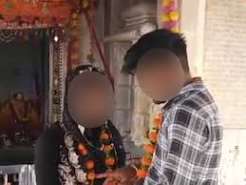
A 17-year-old Dalit girl from Hardoi has alleged that she was held hostage and raped in Rajasthan after being lured with the promise of a job. The victim alleges that she somehow managed to escape from the accused’s clutches and reach home. Subsequently, she filed a complaint at the police station around 4 pm on Tuesday, demanding action against the accused. The case is registered at Baghauli police station. Police have begun an investigation. Now learn the full story… According to the victim, she has studied up to grade eight. It is alleged that on August 3, 2026, a young man from her village, a truck driver in Rajasthan, lured her with the promise of a good-paying job in Chandigarh. Instead of taking her to Chandigarh, the accused took her to Rajasthan and held her captive there. During this time, he forced her into sexual intercourse against her will. Threatened to return home When she resisted and insisted on returning home, the accused threatened to kill her. The victim also alleges that the accused staged a forced marriage at a temple. 50,000 rupees withdrawn from bank account The teenager alleged that the accused fraudulently withdrew approximately 50,000 rupees from her bank account. Later, when the accused’s family learned about her caste, they refused to accept her. Shahnawaz Khan | Hardoi Courtesy: Hindi News
Allegations of house lock, assault, and forged deed: 75-year-old Dalit woman and family protest for the second day, administration begins investigation
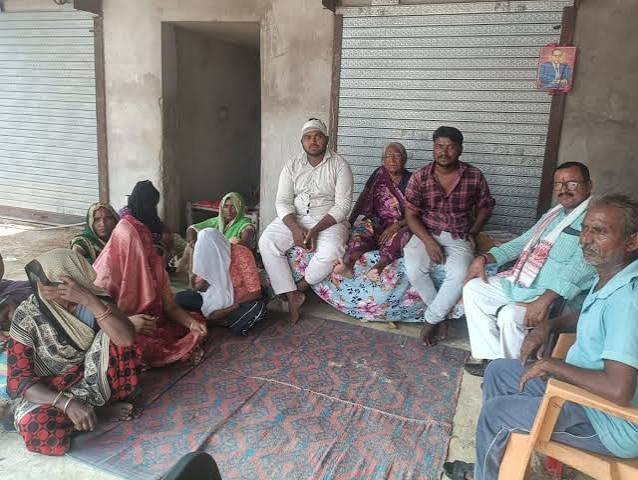
Phool Kali, a 75-year-old Dalit woman, continued her protest with her family for the second day in Gauhania Kaundhiara. The woman, from Barethia village, alleges that her house was locked, she was assaulted, and a forged deed was executed. At the behest of SDM Bara, a revenue department accountant arrived at the protest site and heard the woman’s complaint. Phool Kali alleges that on October 7th, Rammilan Kushwaha, the operator of Kanak Hospital, arrived at her house with about two dozen people. They assaulted her children and locked the house. The woman filed a complaint and provided the police with a video of the assault. However, the police also filed a case against her family. The dispute also relates to a deed. According to Phool Kali, Rammilan Kushwaha had executed the deed of land belonging to her son Sohan in November 2022. In January 2026, a deed was also executed for the same portion of the house through Sohan, which the woman claims is fraudulent. She has demanded an investigation and cancellation of the deed. The elderly woman has demanded the unlocking of the house, a proper investigation into the assault, and justice by investigating the fraudulent deed. She has stated that the protest will continue until justice is achieved. Pravez Alam | Parsara (Bara), Prayagraj (Allahabad) Courtesy: Hindi News
Road to Dalit cremation ground in Rahmatpur blocked: Robbers accused of encroaching on government road, halting construction work; complaint to SDM
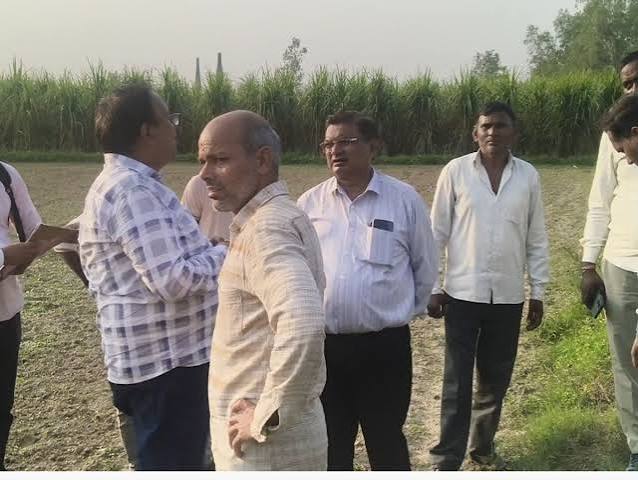
In Rahmatpur village, Muzaffarnagar, rowdy people have blocked the road to the Dalit cremation ground. They are accused of encroaching on the government road, hindering funerals and the construction of the cremation ground. Victims Moolchand, Chandrakiran, Vijaypal, Mohit, Indu, and village head representative Alok Kumar stated that this road has existed since ancestral times. Shubham, son of Karnail, Neeraj, son of Brajbir, and Karnail, son of Chatar Singh, are accused of blocking the road and digging pits, blocking traffic. Alok Kumar stated that the road blockage prevents construction materials from reaching the cremation ground, halting construction. There are also difficulties transporting bodies. Villagers have complained to the Sub-District Magistrate, Jansath, and the Bhopa police. A team from the Revenue Department inspected the site. Kanungo Sunil Sharma stated that the road appears to be old. After examining the documents, the measurement will be done and action will be taken as per the rules. Sandeep | Bhopa (Morna), Muzaffarnagar Courtesy: Hindi News