
Rajasthan: Bhim Army Chief takes umbrage over gang rape of a minor Dalit girl in Sriganganagar, demands arrest of absconding accused within 24 hours

So far, 14 to 18 accused have been arrested, including the hotel owner, manager, staff, and rickshaw driver. The search for the remaining absconding accused is ongoing. Sriganganagar – The brutal gang rape of a 13-year-old Dalit girl in the district has sparked outrage across Rajasthan. The incident began around June 18th when the girl disappeared from her home. According to the police investigation, an e-rickshaw driver kidnapped her and sold her to a hotel owner for a small sum of money. The girl was then held hostage for five days in various hotels in the city, including Joy Inn, Khunger, and Sapphire, where she was repeatedly gang-raped by 32 named accused. The victim’s statement states that sometimes three or four people, sometimes more, committed the crime against her, and if she screamed in pain, she was given alcohol. Kailash Dan, the investigating officer and Additional Superintendent of Police (SP) in this case, states that the girl had an Instagram friend, whom she met on June 18th in Vijaynagar, where she was raped by that friend. According to reports, the girl then traveled from Vijaynagar to Sri Ganganagar by bus at night and took a rickshaw. When the girl didn’t return home, her mother searched for her in various locations and inquired with relatives. However, when she still hadn’t returned home by June 22nd, she went to the police station. The police have intensified the investigation based on CCTV footage and DVR recordings. So far, 14 to 18 accused have been arrested, including hotel owners, managers, staff, and rickshaw drivers. The search for the remaining absconding accused is ongoing. In response to public outrage, the administration bulldozed these hotels late on July 1st, demolishing the illegal constructions. An FIR has been registered in the case under sections of the POCSO Act, rape, kidnapping, and human trafficking. The police say that all the culprits will be punished severely once the investigation is complete. The girl was held hostage for five days in various hotels in the city, where she was repeatedly gang-raped by 32 named accused. Bhim Army Chief and Nagina MP Chandrashekhar Azad reacted sharply to the incident. He said, “The incident of the 13-year-old Dalit girl being held hostage and gang-raped by 32 people in Sriganganagar, Rajasthan, is extremely horrific and a shame on humanity. According to the victim, she was sometimes raped by three to four, and sometimes more, men. Whenever she felt pain from the repeated assaults, she was forced to drink alcohol. This crime crosses all limits of brutality. What is even more shameful is that even 15 days after the incident came to light, all the accused have not been arrested. This raises serious questions about the government’s law and order.” Chandrashekhar demanded that Chief Minister Bhajanlal Sharma and the Rajasthan government arrest all remaining absconding rapists within 24 hours, have the case heard in a fast-track court, ensure the harshest punishment if convicted, and provide immediate security, justice, and adequate financial compensation to the victim’s Dalit family. He also appealed to lawyers not to represent such rapists. This case highlights the challenges of child trafficking, exploitation in hotel networks, and the protection of minors. The victim is undergoing medical treatment and counseling. Several viral videos on social media are being falsely linked to this case, but are actually from a separate incident in Hardoi, Uttar Pradesh. Local protests are taking place, and demands for justice have intensified. The police and administration claim they are taking the matter seriously and further action is underway. Geetha Sunil Pillai Courtesy: Hindi News
Why did tribal women in Udaipur wait for 4 hours for internet access? Brinda Karat writes to Union Minister Shivraj Singh Chouhan about the shutdown of MNREGA!
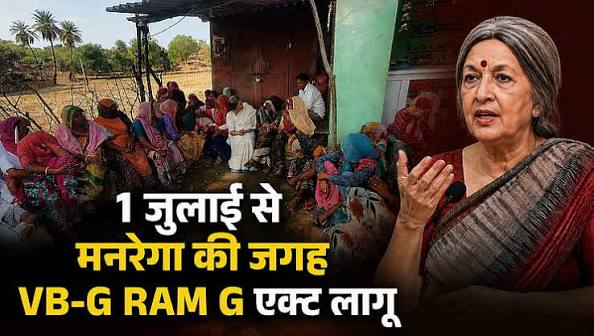
The ‘Vikasit Bharat – Rozgar and Ajeevika Mission (Rural) Act, 2025,’ or VB-GRAMG Act, will come into effect on July 1. New Delhi/Udaipur—Senior Communist Party of India (Marxist) leader and former Rajya Sabha member Brinda Karat has written a letter to Union Rural Development Minister Shivraj Singh Chouhan, raising serious objections to the rules of the Vikasit Bharat – Rozgar and Ajeevika Mission (Rural) Act (VB-GRAMG Act). This letter, written a day before the new law comes into effect, cites genuine problems faced by rural laborers and demands the immediate withdrawal of the rules and the reinstatement of MNREGA. Karat begins her letter by referring to Barapala, a tribal village in Rajasthan’s Udaipur district, where she had interacted with laborers at a MNREGA worksite the previous day. He reported that during the summer season, many female workers waited for about four hours from 6:30 am to 10 am for the online attendance site to open, but could not work that day due to a lack of internet connection. This situation was reported to be common. Indigenous He reported that after the end of MNREGA in December last year, these workers received only 18 days of work from January to June, despite assurances to Parliament that work would continue until the new law was implemented. In particular, at least 12 elderly women complained that the biometric facial recognition technology was unable to recognize their eyes, resulting in them being excluded from work. Karat said that the end of MNREGA has been devastating for the poor in the village. During the summer season, many female workers waited for about four hours from 6:30 am to 10 am for the online attendance site to open, but could not work that day due to a lack of internet connection. This situation is common in the tribal areas of Rajasthan. In light of these very real problems, Karat told the Union Minister that his ministry published eight rules of the VB-Gramji Act on May 22nd without consulting rural and MNREGA workers’ organizations and unions. Had they been consulted, the real problems could have been addressed, but the new rules are more flawed than the law itself and completely ignore the voices of workers. Internet and Telecom In the letter, Karat first raises the constitutional question of whether these rules violate Article 258 of the Constitution, which deals with the “conferring or imposing of duties” on states. According to him, the VB-Gramji Act not only imposes financial burdens on state governments but also imposes responsibilities without their consent. While Article 258(3) requires the central government to reimburse states for additional expenditure, the new rules deprive states of any role in decision-making, a direct attack on the federal structure. Kerala provided an average of 66 days of work a year, which is much higher than the national average, but will receive fewer funds due to its low population. Similarly, Tamil Nadu, which has the highest number of active MNREGA workers despite having a high GSDP, will also receive fewer funds. Karat also criticized the allocation criteria (Rule 396E). He said that the law already relies on fund allocation rather than demand-based work, but the rules determine allocation based on the recommendations of the 16th Finance Commission, which assigns a 42.5 percent weighting to per capita Gross State Domestic Product (GSDP) and 17.5 percent to population. He said these criteria have nothing to do with rural laborers seeking work. Politics Citing an example, he pointed out that Kerala provided an average of 66 days of work a year, which is much higher than the national average, but will receive fewer funds due to its low population. Similarly, Tamil Nadu, which has the highest number of active MNREGA workers despite having a high GSDP, will also receive fewer funds. Karat called this discriminatory and demanded an immediate reconsideration. Furthermore, Karat viewed the “additional expenditure” (Rule 403E) clause as an insult to state governments. He stated that state governments wish to spend their own funds on work expansion and innovation, but the rules bind them to central financial oversight. He sharply questioned whether the right to work would be held hostage to the efficiency or inefficiency of state governments as dictated by the central government. Regarding wage payment and worker identification (Rules 397E and 402E), Karat stated that the rules are completely silent on crucial issues such as the actual determination of wage rates, the timeframe for wage increases, or linking them to price indexes. He stated that the excessive emphasis on online registration and attendance is far removed from rural reality. Even with good internet access, registration can take 1-3 hours. Will this time be included in wages? He questioned why workers should be punished for the dishonesty of officials. Karat said that this approach to the use of technology is based on elitist thinking, while the experience of millions of MNREGA workers shows that this thinking is wrong. He warned that arbitrary and high productivity standards can make it impossible for workers to even earn minimum wages. Therefore, the rules should include a provision for time-use surveys. This is especially important for women workers, as most of the workers in these workplaces are women. Executive Branch Karat also described the formation of the National Level Steering Committee (NLSC) (Rule 397E) as a bureaucratic trap. He said that this committee has minimal representation from states (only five members) and no place for workers or other stakeholders. While more than 50 percent of workers are women, 18 percent are Scheduled Tribes, and 17 percent are Scheduled Castes, their ministries have been excluded from this committee. States are bearing 40 percent of the cost, but with only five members, they have been treated unfairly, as if the center is saying, “Share the cost, but the decisions will be ours.” The Central Council has no binding power, and no independent authority has been created for social audits, which are essential for transparency and corruption control. Finally, Karat said that these
27 Dalit families, inspired by Kabir’s equality, established ‘Kabir Basti’ in Jaisalmer 65 years ago, but basic rights remain unfulfilled.
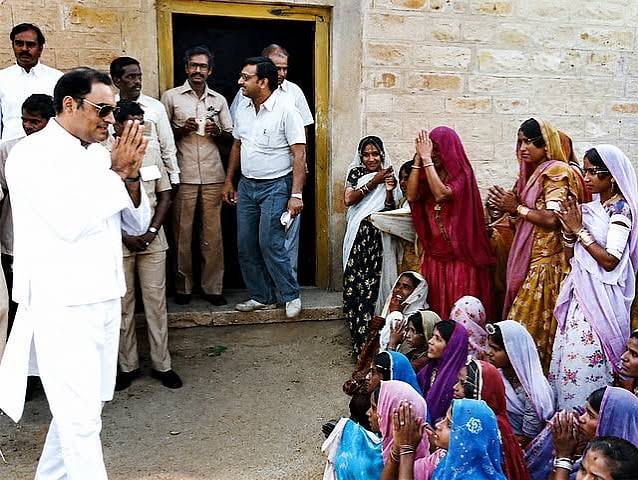
Kabir Basti holds the distinction of being not only the first Gramdani village in Jaisalmer district but also in Rajasthan. This village still boasts remarkable achievements in 100% literacy and women’s education. Many people from this settlement of approximately 200 families are employed in various government services. Jaisalmer – Kabir Basti in Jaisalmer district, Rajasthan, which embodies Saint Kabirdas’s message of labor, equality, self-reliance, and social harmony, is struggling today despite its historical identity and lacks basic amenities. This village, once known as ‘Gandhi’s Thana’ and proud to be Rajasthan’s first Gramdani village, is awaiting the revival of drinking water, roads, irrigation, and the Khadi industry. With the support of freedom fighters Manikyalal Verma, Gokul Bhai Bhatt, Siddharaj Dhadda, Ganga Singh Mohta, and local social workers Bhagwandas Maheshwari, Govardhan Kalla, Lalchand Joshi, Tarachand Jagani, and Satyadev Vyas, Dalit activists Amolkaram, Chandaram, and Khushalaram envisioned a self-sufficient, ideal village based on khadi. Toward this end, the foundation of Kabir Basti was laid on March 3, 1961, by settling 27 Meghwal families from Parewar village. At that time, the goal was to provide housing, water, agriculture, and employment to every family. Kabir Basti quickly became an important center for khadi production. The Kabir Basti Khadi Producer Cooperative Society, established here, provided employment to approximately 250 weavers and 5,000 spinners from 11 villages. Annual woolen khadi production worth approximately 30 lakh rupees and sales of 35 to 37 lakh rupees became the village’s hallmark. Pattu, Hirawal, Bardi, Chunari, and ladies’ shawls produced here were exported nationwide. But today, this glorious tradition is almost extinct, and the Khadi industry awaits revival. South Asians and Diaspora Kabir Basti’s achievements attracted national attention. On August 10, 1985, the then Prime Minister, Rajiv Gandhi, visited the village and highlighted its unique identity by calling it “Gandhi’s Thana.” Several MPs and national-level representatives had also visited the village before. This village is also notable for 100% literacy and women’s education. Many people from this settlement of approximately 200 families are employed in government services. Family The village’s biggest problem is water and infrastructure. Efforts to implement lift irrigation and khadi-based agriculture have not achieved the desired success. Drinking water is a constant problem during the summer. Villagers also report that a pipeline for industrial use passes through the area, but the village has not received the expected benefits. Heavy vehicles damaged roads, and local residents did not receive adequate compensation. Villagers have been awaiting solutions to these issues for a long time. The Incomplete Story of Development During a visit to Kabir Basti in 2020, villagers shared several long-pending demands. Their key expectations included granting Kabir Basti Gram Panchayat status, providing a permanent agricultural base by connecting it to a canal distributary, providing working capital to the Khadi Committee, a Khadi sales center in Jaisalmer city, a community health center, a modern Khadi and Village Industries Training Center, an RO plant, sewerage, playgrounds, stadiums, and tree plantation projects, expanding inhabited land, constructing ponds and canals, and expanding road and mobile network coverage. Villagers say that most of these demands remain unfulfilled. Geographical Context The village’s biggest problem is water and infrastructure. Efforts to implement lift irrigation and khadin-based agriculture have failed to achieve the desired success, and a drinking water crisis persists during the summer. Villagers allege that a pipeline for industrial use passed through the area, but the village did not receive the expected benefits. Heavy vehicles damaged roads, and local residents did not receive adequate compensation. Villagers say that Kabir Jayanti is not only an occasion to remember the saint’s couplets, but also a day to put his ideals into practice. They have appealed to the government, administration, public representatives, and society to work together to develop Kabir Basti to its full glory. Only then will this settlement named after Kabir truly be meaningful. Dr. Deepak Acharya The author is a retired officer from the post of Joint Director of the Rajasthan Information and Public Relations Department and has a deep interest in Indian culture and literature. Courtesy: Hindi News
Rahul Gandhi calls on ‘Gen Z comrades’ to join mega rally in Kota, targets Centre over paper leaks and jobs

NEW DELHI: Congress leader Rahul Gandhi is set to address a mega rally in Kota today, accusing the BJP government of “shattering millions of dreams” through paper leaks and exam mismanagement, even as a political row erupted over allegations that Lok Sabha Speaker Om Birla’s office tried to derail the event. Former Rajasthan chief minister Ashok Gehlot claimed on Tuesday that calls were being made from Birla’s office to Kota coaching centres and guest houses, warning them against allowing students to attend Rahul Gandhi’s scheduled interaction at Dussehra Maidan. Videos circulating on social media showed posters publicising Gandhi’s event being removed in Kota, triggering sharp reactions from the Congress. “LoP is visiting the constituency of the Lok Sabha Speaker and he should be welcomed. Instead, an atmosphere has been created where Birla ji himself is opposing the visit and wants to ensure no one attends the programme,” Gehlot said. “It does not befit the Speaker to create such circumstances that instill fear in the minds of educational institutions and ordinary people.” The BJP staged a counter-protest, with former minister Rajendra Rathore calling Gehlot’s allegations “extremely irresponsible and unfortunate.” Also read | Om Birla’s office tried to derail Rahul Gandhi’s Kota event, says Ashok GehlotOm Birla’s office tried to derail Rahul Gandhi’s Kota event, says Ashok Gehlot Congress: Youth face ‘two examinations’ Congress leader Pawan Khera asserted on Wednesday that Indian youth have to face “two examinations” — one at the examination center whose papers get leaked, and the other of “their patience, their courage, and their perseverance” for having to deal with dual struggles. “Our youth don’t face just one, but two examinations. One is the one that takes place in the examination center, whose papers get leaked. And the second is of their patience, their courage, and their perseverance,” Khera said in a post on X. He added that Rahul Gandhi and the Congress Party “will not remain silent on this injustice,” calling it “a major issue in our political agenda, because it is not just a question of the students, but of the entire society and the future of India. Nationwide movement to expand According to All India Congress Committee (AICC) general secretary K C Venugopal, the first phase of the “Chhatron Ki Goonj” campaign commences today from Kota and will continue with protests scheduled for Prayagraj, Patna and Delhi. According to the campaign website, rahulgandhi. in, “Chhatron Ki Goonj is a nationwide movement led by Rahul Gandhi, bringing together millions of students and young Indians whose hard work, dreams, and futures have been undermined by paper leaks, examination irregularities, and rising fees.” The site describes it as “a platform for young people to raise their voice, share their experiences, and demand accountability for repeated failures in India’s education system.” Rahul Gandhi’s message to students “My young and Gen Z comrades, one thing is clear in my mind, and you too should etch it in your heart: securing the future of every youth in India is the government’s responsibility. But responsibility and honesty — both are beyond the Modi government’s way of thinking,” Rahul Gandhi said in a social media post. He listed paper leaks, exam mismanagement, cancelled recruitments, skyrocketing fees, privatisation and scams as “tools” the government is using to destroy students’ futures. “Every paper leak, every canceled exam, every stalled recruitment – these aren’t just failures of the system, but blows struck against the dreams of millions,” he said. “I know you’re exhausted. You’re angry. But remember this – when the government refuses to listen, you have to raise your voice louder. That’s why I’m calling on all of you – June 17, Kota. Students’ Echo. Let’s come together and become a roar that can’t be ignored. Starting from Kota – then reaching every corner of the country,” he said. “This is a fight for your future. And I’m with you,” he added. NEET re-exam scheduled for June 21 The rally comes just days before the NEET-UG 2026 re-examination scheduled for June 21, from 2.00 pm to 5.15 pm. The National Testing Agency scheduled the retest following the cancellation of the May 3 exam due to paper leak controversies. The issue has also drawn attention to the temporary ban on Telegram imposed by the NTA ahead of the re-examination, which the agency said was necessary to prevent fraudsters from circulating fake question papers. Courtesy : TOI Note: This news is originally published on https:/timesofindia.com/bha and is used purely for non-profit/non-commercial purposes, especially human rights
Two-day Dalit writers’ conference concludes in Jaipur

Jaipur: A two-day state-level Dalit Writers’ Conference, jointly organised by Pranjal Sahitya Akademi, Jaipur, and Rajasthan Sahitya Akademi, Udaipur, concluded Sunday at the Mata Ramabai Auditorium of the Dr Ambedkar Memorial Welfare Society. The conference featured poetry recitals by writers from across Rajasthan, who presented works centred on the vision of an egalitarian society. Courtesy : TOI Note: This news is originally published on https:/timesofindia.com/bha and is used purely for non-profit/non-commercial purposes, especially human rights
A 16-year-old Dalit girl was gang-raped in Kishangarhbas.
Khairthal-Tijara. A case of gang rape of a 16-year-old Dalit girl has come to light in a village in the Kishangarhbas police station area of Khairthal-Tijara district in Rajasthan. The victim’s grandmother, while filing the case on Sunday, stated that after the death of their son, the family had gone to the Ganges River to immerse his ashes. At around 12 a.m. on June 20th, two men from the same village forcibly abducted her granddaughter, who was sleeping at home. They took the girl to a nearby field, where two other men were present. The four men raped her. Police have registered a case and launched a search for the accused. Courtesy: Hindi News
India’s education system crushes children: Rahul Gandhi at Kota rally

KOTA: Congress leader Rahul Gandhi on Wednesday said India’s education system puts immense pressure on children and “crushes” them, while calling for collective efforts to ensure that no student feels the way many young aspirants do today. “This is not good for the country. I want all of us to work together to ensure that no student in this country ever feels what this girl felt,” Gandhi said while addressing the “Chhatron ki Goonj” Maha Rally in Kota. He said, “the event was not a political meeting but a platform to discuss the struggles faced by students.” “This is a meeting about you, about the young people who are struggling to get a future. This evening is about you, the challenges that you are dealing with every single day,” he added. Five students — three girls and two boys — were invited on stage after Gandhi’s opening remarks. The students, who are preparing for NEET, JEE and civil services examinations, spoke about their aspirations, challenges and the money spent on coaching. While interacting with students, Gandhi said the biggest weakness of India’s education system was that it failed to encourage children’s dreams and aspirations. Chhatron Ki Goonj in Kota “The biggest weakness of India’s education system: it does not nurture the dreams of our children. It does not respect the options and aspirations they truly want to pursue. After that, I began thinking more deeply about the education system. Several questions came to mind. One was why the public-sector education system had declined. Another was why private education had become so expensive,” he said. Recalling his Bharat Jodo Yatra from Kanyakumari to Kashmir, Gandhi said he met thousands of young people and noticed a pattern in their career choices. “Some time back, I walked from Kanyakumari to Kashmir, covering 4,000 kilometers. Along the way, I met lakhs of young people like you and had discussions with thousands of them. I would always ask them one simple question: ‘What do you want to become?’ Almost every time, I received the same five answers, engineer, doctor, lawyer, IAS officer, or joining the armed forces. There was never a sixth answer.” “This made me wonder why our education system, when young people are the future of the country, seems to offer them only five options. I asked this question many times and always received the same responses…The truth was that there was a big difference between their real aspirations and the five standard options they had mentioned,” Rahul added further. The Congress has projected the Kota rally as the beginning of a nationwide student convention series focused on issues including paper leaks, unemployment and education reforms. The BJP has criticised the outreach, alleging that such programmes could distract students preparing for competitive examinations. Kota, one of India’s biggest coaching hubs, has around 1.2 lakh students preparing for NEET and JEE exams across various institutes. The Congress said Gandhi’s national education campaign will focus on highlighting students’ concerns, seeking accountability and demanding the resignation of Education Minister Dharmendra Pradhan. The campaign will be carried forward by Congress units, including the National Students’ Union of India (NSUI) and Youth Congress, with conventions planned in Allahabad, Patna and Delhi, according to the party. Courtesy : TOI Note: This news is originally published on https:/timesofindia.com/bha and is used purely for non-profit/non-commercial purposes, especially human rights
Rahul Gandhi to kick off Congress campaign on youth issues from Rajasthan’s Kota
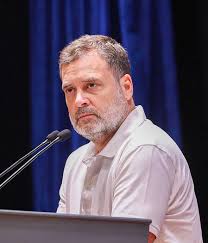
Rahul Gandhi will engage in a direct dialogue with students and aspirants preparing for competitive exams on paper leaks and major youth-related issues. JAIPUR: The Congress party will launch a nationwide movement on June 17 from Kota, renowned as the country’s “coaching capital”, to focus on issues such as paper leaks, examination irregularities, unemployment and other key issues affecting the youth. The Leader of the Opposition in the lok Sabha, Rahul Gandhi, will engage in a direct dialogue with students and aspirants preparing for competitive exams on paper leaks and major youth related issues. This effort is being viewed as not just a political event but as the launch of a new youth-centric narrative for the Congress to mobilize students across the country. The choice of Kota in Rajasthan is significant as it not only attracts thousands of students from across the country but also as it is represented in the Lok Sabha by Speaker Om Birla. The Congress is keen to corner the BJP in what is being seen as a major bastion for the saffron party and the RSS. Kota District Congress President Rakhi Gautam and Kota Rural Congress President Bhanu Pratap Singh stated that the decision was made to launch this nationwide campaign from Kota as it is the country’s “coaching hub”. Through this initiative, students across the nation will be connected, and their issues will be raised at the national level. Preparations for Rahul Gandhi’s proposed visit to Kota next week are already underway. Continuous contact is being maintained with students and coaching institutes regarding the student conference. Additionally, information about Rahul Gandhi’s interactive session is being disseminated to students via social media. At the Kota event, Rahul Gandhi will interact directly with students and the youth, listening to their concerns and suggestions. Discussions will cover various topics related to education and employment, including the repeated paper leak scandals, the NEET exam controversy, and key issues concerning the CBSE. The entire Congress team in Kota is actively engaged in preparing for the event. However, a final decision regarding the venue has not yet been reached. Congress leaders say that details of potential venues in Kota have been submitted to AICC officials and the venue will be announced once a final approval is received. Notably, this marks Rahul Gandhi’s second visit to Rajasthan within a fortnight. He had previously visited Pushkar in Ajmer district on June 1 to attend the concluding ceremony of the national training camp for Congress district presidents. It was during the Pushkar conference that he was invited to visit Kota. Kota is considered the country’s largest coaching hub, attracting thousands of students from all corners of the country every year for medical and engineering entrance exam preparations. Consequently, the Congress sees Kota as a most suitable platform to raise issues like paper leaks and transparency in the examination system. Rahul Gandhi had previously met with coaching students during a brief break from his ‘Bharat Jodo Yatra’ in December 2022. The Congress party also acknowledges that the NEET paper leak case has links to Rajasthan. Against this backdrop, Rahul Gandhi is set to hold a direct dialogue with students at the upcoming conference in Kota. At the Pushkar event recently, Rahul had praised the working style of state Congress chief Govind Singh Dotasra and Leader of the Opposition in the Vidhan Sabha Tikaram Jully. He remarked that the united manner in which the Congress organization is functioning in Rajasthan serves as a model for other states. Political analysts believe that Rajasthan was chosen for this national campaign because the party is considered organizationally strong there, and the participation of both party workers and the general public can be ensured for large-scale events. Kota is the parliamentary constituency of Lok Sabha Speaker Om Birla and is considered a stronghold of the BJP and the RSS. But Shanti Dhariwal, a senior Cabinet minister in the previous Congress government and a close confidante of former CM Ashok Gehlot, is the most influential Congress leader in Kota. Dhariwal is considered as a key figure in raising a formidable challenge for the BJP in Kota. Following the event in Kota, the first phase of the campaign will include programs in Allahabad on July 10, Patna on July 11, and Delhi on July 14. The Congress says this campaign will not be limited solely to the NEET paper leak issue. Instead, it will evolve into a nationwide movement addressing broader concerns such as the future of the youth, employment, transparency in recruitment exams, and much-needed reforms in the education system. Rajesh Asnani Courtesy : TNIE Note: This news is originally published on https:/thenewindianexpress.com/bha and is used purely for non-profit/non-commercial purposes, especially human rights
Gehlot says September 2022 incident was indication of disagreement against Sachin Pilot, not Congress leadership
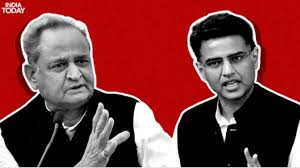
Ashok Gehlot alleged that Pilot’s associates were responsible for creating a perception that the MLAs supporting him had revolted against the Congress high command, leaving him with a bad reputation. Former Rajasthan chief minister Ashok Gehlot on Sunday criticised Congress leader Sachin Pilot and stated that the incidents that unfolded in September 2022 were not a revolt against the party high command but an indication of strong disagreement among the MLAs against Pilot’s elevation as the CM. The senior Congress leader alleged that Pilot’s associates were responsible for creating a perception that the MLAs supporting him had revolted against the Congress high command, leaving him with a bad reputation. Gehlot was speaking about the Congress Legislature Party (CLP) meeting that was called in Jaipur on September 25, 2022, to discuss the leadership of the Rajasthan government if Gehlot were to be elected president of the party. Several MLAs close to Gehlot did not attend the meeting and opposed any move to make Pilot the chief minister. Gehlot on Sunday said that he was in line to become the Congress President, but such a situation unfolded that appeared to be a conspiracy, and he ended up with a bad reputation. However, he felt sorry in front of Sonia Gandhi for not being able to get a resolution passed in the CLP meeting. “It is repeatedly asked what happened on September 25. There can never be a revolt against the high command,” he said, adding that the incident was against “Sachin Pilot, whose name was being circulated” that he could take oath as the chief minister. He said the MLAs’ stance was that they had demonstrated loyalty to the high command. They stayed confined in hotels and saved the government. “They wanted any of them to be appointed as the chief minister and they would accept it, but Pilot was unacceptable to them because he was the one who took his MLAs to Manesar,” he said. Pilot, who was serving as the deputy chief minister in the Gehlot government, had rebelled against his leadership in 2020. It is alleged that he and some MLAs stayed in Haryana’s Manesar. The rebellion led to a political crisis in the state, which the party leadership resolved through intervention. Gehlot had alleged that it was a conspiracy orchestrated by the BJP to topple his government, using Pilot and other MLAs as pawns. In September 2022, a CLP meeting was called in Jaipur to discuss the leadership of the Rajasthan government if Gehlot were to be elected president of the Congress party. Sachin Pilot was considered the top runner to replace him. But MLAs loyal to Gehlot did not attend the meeting. Instead, they held a parallel meeting and went to Assembly Speaker C P Joshi’s residence to submit their mass resignations. Gehlot said there was no question of rebellion against the Congress high command. “Sonia Gandhi had offered me the chief minister’s post three times without me even asking for it. I was in line to become the Congress President, and I am not uneducated. I am well-educated. If Sonia Gandhi and the Congress party were making me Congress President, would I have refused?” he asked. “The situation that unfolded…I feel it was a conspiracy. AICC observers arrived suddenly, a spectacle ensued, and I ended up with a bad reputation,” he said. “People believe that Ashok Gehlot wanted to remain the chief minister rather than become Congress president, and that is why the revolt happened. How do I explain it to them?” he said. “The media spread this narrative, and I remained silent,” Gehlot said. Gehlot said he stayed silent because he needed to convey to Sonia Gandhi that he was the leader of the Legislature Party, and AICC observers had arrived. He added that he was unable to get the resolution passed and “expressing his regret to her”, he “apologised” for the situation that had arisen. Asserting that truth has no alternative, Gehlot said, “I have placed the truth before everyone and will continue to do so.” He said that historically the Congress high command had maintained strong trust in the Rajasthan unit. He alleged that the perception of revolt against the party high command was created by Pilot’s associates, which was incorrect. He said that when the party high command decides to change a chief minister, a majority of MLAs tend to align with the one who is going to become the new chief minister. “Whenever the high command decides that the chief minister should be replaced, 90 per cent of the MLAs who were previously with the incumbent chief minister switch their allegiance to the new one. What was the reason that when the new chief minister’s name began circulating — whether floated by Pilot’s associates — MLAs did not go to him,” he said. “Sachin Pilot needs to understand this. He has been in politics for about 15-20 years now. He has gained considerable experience. We are not his enemies. I used to visit his family since his childhood,” he said. Pilot made a mistake, and he should acknowledge it. He has not learned to accept the truth, which is why this issue persists, he said, adding that he does not want this issue to persist. Gehlot said, today, the Congress is in crisis, the country is in crisis. Only Congress can save the country and all leaders of the party should be united for this. The former chief minister said that he had helped Pilot become a union minister in the UPA government, but he never acknowledged this help. He is no longer chasing any post, Gehlot said, adding that “it would be a different matter if a position were to come my way unsolicited. I am not vying for any post.” Serving as chief minister three times is no small feat, he said, adding that his message is “Do not erase my line. Instead, draw a line longer than mine.” As for who becomes the chief minister and who
Dalit Youth ‘Stripped, Assaulted and Dragged by Tractor’ in Rajasthan; Main Accused Arrested
A Dalit youth was allegedly subjected to inhuman treatment and assaulted in Rajasthan’s Jhunjhunu district, following which police arrested the main accused, officials said. The incident took place in Jhajhadiya Ki Dhani in Khinwasar village under the Gudhagaurji police station area. Police have identified the accused as Rakesh Dadiya, who was arrested after the victim filed a complaint. According to police, the victim, Pawan Meghwal, a resident of Jhajhadiya Ki Dhani, lodged an FIR alleging that he was forcibly taken away and assaulted by the accused. Victim Alleges He Was Taken to Isolated Spot and Assaulted In his complaint, Pawan said he was sitting at a local shop in the village on Monday evening around 8:30 pm when Rakesh arrived and allegedly forced him onto a tractor. The accused reportedly took him to a deserted location where he allegedly stripped him, forced him to consume alcohol, and assaulted him. “The accused took me to an isolated place, removed my clothes and beat me badly,” the victim alleged in his police complaint. Gold Chain and Cash Also Allegedly Stolen The complaint further stated that the accused allegedly snatched Pawan’s gold chain and took money from his pocket during the incident. The victim also accused the man of tying him to a tractor and dragging him, causing serious physical injuries. After the assault, Pawan somehow managed to contact his family members, who later informed the police. Police Say Accused Confessed During Questioning Taking the matter seriously, police launched an immediate operation and arrested Rakesh Dadiya from Khinwasar village. A police official said the accused was questioned after his detention and allegedly admitted involvement in the incident. “Considering the seriousness of the matter, immediate action was taken and the accused was arrested. Further investigation is ongoing,” police said. Authorities have not yet shared details about the charges filed, but the investigation into the case is continuing. Courtesy : TOP Note: This news is originally published on https:/theobserverpost.com/bha and is used purely for non-profit/non-commercial purposes, especially human rights