
Dalit women reclaiming Punjab’s farmlands. ‘We are born on this land, have a right to it’
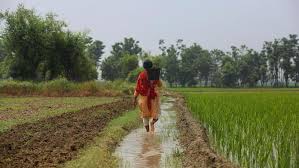
In village after village in the Malwa region, Dalit women have won the right to farm common land. They are now protesting and courting arrest to demand a new casteless settlement: Begumpura. Sangrur: Jasveer Kaur arrives on a shiny blue tractor and climbs down, her torn chappals sinking into the tilled soil. With glittering eyes and a faint smile, she surveys the newly planted paddy crop. “This land is ours,” she said proudly. It took Kaur several years of struggle to reach this moment. The seven acres of land in Sangrur’s Herike village aren’t in her name, but she fought and won the right to farm it. In village after village in the Malwa region, Dalit women like her are demanding what was long denied. They have already leveraged a 1961 law and turned it into a rallying cry for land, dignity, and ownership. The fire of hakk, or rights, is burning in their bellies. Now, Jasveer and hundreds of other women are part of a fresh agitation to claim 927 acres of unused estate land in Bir Aishwan village. They are marching, protesting, and courting arrest to demand a new settlement: Begumpura, a casteless village imagined by poet-saint Ravidas. “The Constitution of India has given us the right to own land, then why are we not given land just because we are from a lower caste?” said 41-year-old Jasveer. “We are born on this land and we have every right to have a piece of it.” Mustard fields, the Green Revolution, and, more recently, the farmers’ protests are the stories most associated with farming in Punjab. But beneath this image is a fraught history of caste discrimination. Dominant castes—primarily Jat Sikhs, along with Kamboj and Saini Sikhs—have sway over most of the farmland. Dalits, who make up about 32 per cent of Punjab’s population, own just 3.5 per cent of the state’s land. Most work as daily-wage labourers through heat waves and biting cold for around Rs 300 a day, planting and harvesting crops they have no claim on. But then, the Dalits in rural Punjab started fighting back. Their first weapon was a law that Punjab had passed in 1961. Under the Punjab Village Common Lands (Regulation) Act, one-third of village common land—known as panchayat land or shamlat deh— to be allotted to Scheduled Castes or Dalits for agricultural use. On paper, it gave Dalits the right to lease and farm these plots through panchayat auctions. In practice, the land stayed in the hands of dominant castes through dummy bidders and threats. The first major pushback came in 2008, when Dalit labourers in Benra village, Sangrur, took over panchayat land. In 2014, the Zameen Prapti Sangharsh Committee (ZPSC) began organising across the region, turning scattered protests into a coordinated campaign. Dalit women emerged as the heroes of this uprising. In their chappals and salwar-kameez, they stood on the roads, held up placards, and demanded their land. They faced off against Jats and other Chaudhrys (landlords) and braved arrests and beatings. The fierce battle spread like wildfire across the state. We women did not tell our husbands about the abuse we faced every day on the paddy fields because we feared we would not be allowed to work. Today we are here fighting for land In the Malwa region alone, Dalit families are now cultivating around 4,000 acres of land, according to the ZPSC. And now, many like Jasveer are demanding more. They are fighting for be-chirag (heirless) land to be redistributed to landless Dalits. The grit of Punjab’s Dalit women comes from years of daily indignities and casteist slurs on farms where they laboured or collected fodder. Today, they know they don’t have to tolerate it. “Dalit women have faced exploitation in the fields. They reared cattle and gathered fodder from the lands of the dominant caste,” said Ronki Ram, political science professor at Panjab University. “They did not want to depend on others’ land anymore and be subjected to everyday exploitation.” From a ‘nightmare’ to victory Until four years ago, Jasveer Kaur was just another woman in Herike village—feeding cattle, collecting fodder, raising her children, and working on a landlord’s fields. Her husband sold food from a thela, and the family scraped by on her daily earnings of Rs 300 from farm labour and selling milk. Men in the gurdwara called her “Churu Chamar”. Now she says they worry that Dalits like her might soon be called something else: landowners. On a pleasant July morning, the monsoon breeze brushed Jasveer’s hip-length hair as she briskly combed it. She was getting ready for a day in the fields. On such days, she likes to plait her hair. She gulped down three rotis with aloo ki sabzi and drank a glass of chilled water. Then she picked up her bright red dupatta and rushed to feed her three buffaloes—the mother, the father, and their newborn daughter. “Till three years ago, I was working at the farmland of the Chaudhrys. I used to collect the grass to feed the cattle from their field,” she said, as she scattered bhusa (fodder) for the animals. In many villages here, Dalit families rely on a mix of cattle rearing and daily-wage labour. Selling milk brings in some income, but fodder is always a challenge. For years, women like Jasveer gathered grass from the dominant caste’s fields and were regularly insulted for it. “It was a nightmare. It was usual for them to use abuse targeting our mothers and forefathers,” she recalled. Jasveer’s transformation began when members of the Zameen Prapti Sangharsh Committee came to Herike in 2021. She had never heard of the 1961 land law before. For the first time, someone told her she had a right to the soil beneath her feet. That same year, she and 14 other Dalit families in the village raised their voices during a panchayat land auction. They sat on dharnas and refused to work on the fields. After two years of pressure, the gram
AAP failed Dalits, showing bias in sacrilege law: BJP leader

Ludhiana: Former MP and BJP leader Sushil Kumar Rinku has accused AAP govt of cheating the Dalits of the state. In a press conference at the BJP office here Friday, Rinku said AAP made several commitments to woo the state’s 31% dalit population before elections. Among them were the appointment of a deputy CM from the Dalit community if AAP were to form its govt in Punjab. But three-and-a-half years have passed since it came to power, and a deputy CM has not been appointed, he alleged. Rinku said AAP’s prominent leaders had also promised the formation of a special SIT to address atrocities and false cases against Dalits, recommending strict punishments. He described the sacrilege law as politically motivated, stating that he has suffered its consequences for three-and-a-half years. The former (Jalandhar MP said, “All this while they did not remember to bring a sacrilege law. Now that the elections are near, the govt has suddenly remembered this law.” Criticising the bill for its “selective and biased approach towards protecting religious texts”, he said while it includes Guru Granth Sahib, Gutka Sahib, Bhagavad Gita, Quran and Bible, it disregards the holy texts of Buddhism, Jainism and Parsis. tnn Rinku argued that this bias reflects religious discrimination and violates the spirit of equality under the law. Additionally, he pointed out that the bill ignores the rich folk traditions and culturally significant religious practices of Punjab, which are integral to the people’s identity. By focusing solely on mainstream religious texts and overlooking diverse spiritual expressions, Rinku claimed the bill demonstrates a narrow vision and flawed intent. BJP district president Rajnesh Dhiman was also present at the presser. Senior BJP leaders Dr D Khosla, District General Secretary Yashpal Janotra, Vice President Dr Nirmal Nayyar, SC Morcha President Ajay Pal Disawar, District Press Secretary Dr Satish Kumar and SC Morcha District General Secretary Vijay Khatak attended the press conference. Courtesy : TOI Note: This news is originally published on https:/timesofindia.com/ and is for use by the non-military/non-commercial community, especially those in the human rights sector.
AAP govt ignored Dalit community on desecration issue, says BJP
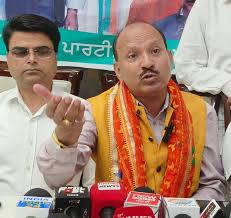
Senior Bharatiya Janata Party (BJP) leader SR Ladhar on Friday slammed the AAP government over the anti-sacrilege Bill, saying it lacked a provision to punish desecration of idols and scriptures revered by the Dalit community. “This omission clearly reflects AAP’s disregard for Dalit religious sentiments,” he told reporters here, adding that the Bill omitted any reference to works and idols of Guru Ravidas, saint Kabir and Bhagwan Valmiki, saint Kabir and saint Nabha Das. He alleged that while the Bill was cleared by the Cabinet and tabled in the Vidhan Sabha, none of the Dalit ministers or AAP MLAs raised any objections to the omission. “Despite having representation from the Valmiki Samaj, Ravidasia Samaj, Kabir Panth and Mahasha Samaj, no leader spoke out. They have forgotten their responsibilities towards their communities,” said Ladhar. Ladhar also alleged that the government was using such legislation to divert public attention from pressing issues in the state, including the failure of the land pooling scheme, the worsening drug crisis, and deteriorating law and order. Meanwhile Punjab Minister Balbir Singh said the Bill was “all-inclusive and democratic in nature”. Article_Author Mohit Khanna Courtesy : The Tribune Note: This news is originally published on https:/thetribune.com/ and is for use by the non-military/non-commercial community, especially those in the human rights sector.
Dalit activists protest against Cong leaders, demand apology
Office-bearers and activists of various organisations working for the welfare of the scheduled castes organised a protest against Congress leader and MLA Junior Henry for allegedly making derogatory remarks against AAP legislator Manwinder Singh Giaspura during the Vidhan Sabha session on Tuesday. Besides organising protest rallies and marches across the Payal Assembly constituency the protestors burnt effigies of Henry. Speakers alleged that the Congress leaders had no respect for Dalits as even their Leader in Opposition, Partap Singh Bajwa, had insulted them by calling them “material” and making a mockery of them through his jokes in the session. Protestors said that in a democracy, all, including elected representatives, must be treated with respect and derogatory language on a constitutional platform like the Vidhan Sabha must not be tolerated. They demanded that Henry and Bajwa apologise to the Sikh community and MLA Giaspura. Article_Author Our Correspondent Courtesy : The Tribune Note: This news is originally published on https:/thetribune.com/ and is for use by the non-military/non-commercial community, especially those in the human rights sector.
Punjab: Dalit youth brutalised on suspicion of helping lovers elope, paraded half naked, face shaved and blackened, video goes viral
A Dalit youth was brutally beaten up, paraded half naked with his face blackened on suspicion of helping a couple elope in Seeda village; police arrested one accused, search for others continues. New Delhi: A case of brutality against a Dalit youth has come to light in Seeda village on the border of Ludhiana. According to the police, the villagers not only beat the youth on suspicion of helping the lovers elope, but also forcibly shaved his head and beard-moustache, blackened his face and paraded him half naked in the village. According to a report in Telegraph India, the incident took place on Tuesday, but the matter gained momentum after its video went viral on social media. In the video of the incident, the accused can be clearly seen using casteist abuses and brutalising the victim. The police said that the victim has been identified as Harjot Singh. It is alleged that Harjot Singh had helped his friend and a young woman to elope and get married. Both of them got married on June 19, after which there was tension in the village. On Tuesday, Harjot was in a salon in the village when some people reached there and dragged him out. The accused beat him brutally, shaved off his beard and moustache, blackened his face, tore his clothes and paraded him around the village in a semi-nude state. According to the police, the accused also made a video of this entire act and shared it on social media. The accused have been identified as Gurpreet alias Gopa, Simranjit Singh alias Simma, Sandeep alias Sam, Rajveer and Ramdeep alias Kaka. Meharban police station in-charge Inspector Paramdeep Singh said that Simranjit Singh has been arrested, while the search for the remaining accused is on. He said, “This is not just a physical assault, but a barbaric attack on human dignity. We are investigating the matter in depth and will arrest all the culprits soon.” The police on Saturday registered an FIR under sections 115(2), 127(2), 351 of the Indian Penal Code, besides the IT Act and the Scheduled Castes/Scheduled Tribes (Prevention of Atrocities) Act. The victim’s family has demanded the strictest punishment for the accused and justice. Courtesy: Rajan Chaudhary, Hindi News
Channi slams Bhagwant Mann, Kejriwal as ‘anti-Dalit’

Ludhiana: Former Punjab chief minister Charanjit Singh Channi claimed that both the Aam Aadmi Party (AAP) and Arvind Kejriwal were anti-Dalit and poor people. Referring to the party not appointing a Dalit deputy chief minister, as promised before the 2022 assembly elections, Channi claimed that CM Bhagwant Singh Mann and AAP national convener Arvind Kejriwal did not participate in the programmes organised in the memory of Dalit gurus. Channi said that Kejriwal projected himself as a common man by wearing slippers and travelling in auto-rickshaws, but soon after coming to power, he started travelling in helicopters and staying in luxury hotels. On Wednesday, Channi said, a government programme was organised in Jalandhar on the occasion of Kabir Jayanti and both Mann and Kejriwal were supposed to attend it. However, he claimed that despite being in Jalandhar, both returned without attending the event. He added that Kejriwal and Mann spent time in a friend’s factory after inaugurating a park located about three kilometres from the Kabir Jayanti programme venue. He also said that the Kabir Bhawan was constructed during the Congress government at a cost of Rs 12 crore. Channi claimed that the AAP government did not pay attention to cleaning of the sarovar at the Bhagwan Valmiki Teerth in Amritsar, which, had been made using the machinery procured by the Congress government at expense of crores. The former CM said that the AAP government did not implement the project of building a research centre on the life of Dr Bhimrao Ambedkar for Rs 100 crore at the Technical University in Kapurthala. He claimed that during his tenure as CM, he presented a cheque of Rs 25 crore to the Dera Sachkhand Ballan management to build a study centre devoted to Guru Ravidas’s teachings at Dera Ballan, the holy place of Guru Ravidas. Channi alleged that the cheque was taken back by Kejriwal. On the eve of Lok Sabha elections, Kejriwal and Bhagwant Mann reached the dera to present the same cheque but the amount of Rs 25 crore has not been released to the dera so far, he claimed. “I genuinely want to ask CM Mann and Kejriwal what their issues are with poor and Dalit people,” Channi asked. He said that before the assembly elections, votes were collected by filling forms promising to give Rs 1,000 per month to women but after 40 months, women had not received anything. MSID:: 121804320 413 | Courtesy : TOI Note: This news is originally published on https:/timesofindia.com/ and is for use by the non-military/non-commercial community, especially those in the human rights sector.
Dalits’ rights on 927 acres of land! Hundreds arrested, hunger strike in jail… Anger erupted against Punjab government

Workers of the Jamin Prapti Sangharsh Committee went on hunger strike in jail demanding Dalit rights on 927 acres of land, hundreds arrested, serious allegations against the administration. Sangrur – The ongoing movement for land rights in Punjab took a new turn when more than 125 workers of the Jamin Prapti Sangharsh Committee (ZPSC), who were arrested during a demonstration in Sangrur on May 20, started an indefinite hunger strike in the jail premises. The protesters demand that 927 acres of land of Jind Riyasat be distributed among landless Dalit families and the proposed ‘Begumpura’ be settled on it. This demand arose after the death of Satbir Singh, the last ruler of Jind Riyasat, in August 2023. ZPSC says that this land is located in Beed Iswan village of Sangrur district and under the Land Ceiling Act, no person can own more than 17 acres of land. Therefore, this land should come under the government and be given to landless Dalits. ZPSC president Mukesh Maloud and treasurer Bakkar Singh Hathoa alleged that on May 20, when the activists were peacefully marching towards Beed Iswan village, they were forcibly stopped and arrested. Some people were released late night, but more than 400 protesters are still in custody, of which about 300 have been lodged in various jails. According to a report published in the Indian Express, Pendu Khet Mazdoor Union (PKMU) president Tarsem Peter said that 70 women are lodged in Sangrur jail, 35 in Malerkotla, 66 in Patiala, 85 in Nabha and about 100 in Bathinda jail. The location of many other activists has not been made public by the administration so far. Peter said, “This is a violation of every principle of democracy.” The ZPSC has alleged that the activists lodged in jail are being treated inhumanly. They are kept in overcrowded barracks, denied clean drinking water, poor food arrangements and even essential items sent by their families are being snatched away. Several student activists are also involved in the agitation, including Sukhdeep Kaur of the Punjab Students Union. They have reportedly not even been allowed to take their exams in jail. The ZPSC has called it “dictatorship and murder of democracy”. Following the development, the Pendu Mazdoor Union has launched a statewide campaign against the Aam Aadmi Party (AAP) government. “More than 400 Dalit labourers — men and women — have been arrested and many are still missing. This entire action is unjust and undemocratic,” said Avtar Singh Rasoolpur, general secretary of the union. Kashmir Singh Ghugashor, the press secretary of the union, said, “The government is standing with the landlords and corporate houses and is preventing the settlement of Begumpura, a proposed colony for landless labourers on 927 acres of land. We demand the unconditional release of all the arrested activists.” On this issue, Sangrur Deputy Commissioner Sandeep Rishi said, “Out of 927 acres, about 800 acres is forest land, while 125 acres of cultivable land is in the possession of some private individuals who are related to the late ruler of Jind state, Satbir Singh. The ownership of this land has not yet been handed over to the government, and the matter is pending in the Punjab and Haryana High Court. The court has ordered to maintain status quo, so the government or any organization cannot claim it right now.” Meanwhile, Satpal Virdhi, former general secretary of Sant Sarvan Das Ji Sachkhand Balan, the largest dera of Ravidasiya community from Jalandhar, has written a letter to Punjab Chief Minister Bhagwant Mann condemning this action. He wrote, “This arrest is injustice to the Dalits of Punjab. It is against the spirit of the Constitution and an attack on the entire concept of justice.” Virdhi has demanded a fair investigation of all the arrests, immediate release and transparent dialogue with grassroots organizations. He said, “This demand of the landless people is not alms, it is their constitutional right. The land reform law was implemented in 1972, but till date it is only on paper and in reality there is repression.” This ongoing struggle for land rights is now giving a new direction to the questions of human rights and social justice in the entire state and the country. Courtesy : Rajan Chaudhary, Hindi News
A 1st in 16 years in Punjab: No 5-marla plots for landless, Dalit group tries to take forcible possession
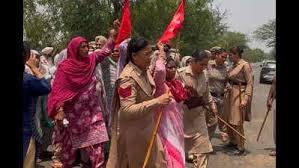
Bathinda: Punjab govt is planning to acquire 24,311 acres of land in villages around Ludhiana for developing urban estates, but the landless Dalits of the state have now been waiting for decades for the same govt to give them possession of their share of common village lands or those belonging to the erstwhile princely state of Jind. This demand for land reached a boiling point on Tuesday, when close to 350 Dalit activists, including women from a group called Zameen Prapati Sangharsh Committee (ZPSC), were taken into custody over their call to take possession of 927 acres of land near Bir Aishwan sanctuary in Sangrur. Though contacted, police officers refused to comment on the arrests. The name of ZPSC translates to land possession movement committee. The call for action had come as continuous state govts in Punjab have been promising landless Dalits 5-marla (125-square-yard) residential plots out of their village’s common land, but none has acted on it. The land in Bir Aishwan initially belonged to the erstwhile Jind and Sangrur princely state, but it later came under the control of certain companies and individuals, apart from some under the control of the state govt. While making demands to distribute this land to the landless, ZPSC made a call to forcibly take possession of the land under the Punjab Land Reforms Act, 1972. The act was a reminder of what unravelled in 2008-2009, when Dalit labour group Mazdoor Mukti Morcha forcibly took possession of over 500 acres of land in various villages in Mansa and Sangrur districts. The state govt, after a few days, took back the land by arresting hundreds of activists. Apart from these two instances, Dalit organisations have been making efforts to get these lands vacated from panchayats or even taking possession on a small scale across Punjab over the decades. Lachman Sewewala from Punjab Khet Mazdoor Union said no govt in Punjab had implemented the land reform law, and no excess land permissible under the act was taken back from any person, nor was any land allotted to the landless under this law. “The govts or various authorities very conveniently prefer to avoid such issues,” he said. In their action at Bir Aishwan, ZPSC had planned to build Begumpura (a concept originating in social thought, envisioning a society characterised by equality, freedom from oppression, and free from the constraints of caste, class, and social hierarchies). However, police conducted raids at the houses of leaders before May 20. Though leaders evaded arrest, a large number of activists started moving towards Bir Aishwan, and many of them were taken into custody. Dalit organisations have opposed the move of activists being arrested, and a protest was organised at New Delhi’s Punjab Bhawan on Thursday to oppose the arrests. The protest was organised by the Delhi Committee of CPI(ML) New Democracy, attended by leaders from other left-leaning organisations, where some activists, including Aparna (President, National Committee, IFTU), Poonam (General Secretary, PMS, Delhi), and Rajesh (General Secretary, IFTU, Delhi), were detained. They demanded the immediate release of all ZPSC leaders and activists and the distribution of surplus public land in Sangrur to landless Dalits. Pendu Mazdoor Union president Tarsem Peter, general secretary Avtar Singh, and functionary Kashmir Singh Ghugsher said ZPSC was demanding the land originally owned by Jind State for the landless, but instead of listening to their voices, the state made the police conduct raids at the homes of leaders and arrested over 300 protesters when they tried to take possession of the land. “The govt should implement the land ceiling act and distribute surplus lands to the landless,” said Peter. They also described the decision of the state govt to acquire over 24,000 acres of land as an assault on agriculture and environment. They said the state can acquire such huge tracts of land for industry, but is not ready to provide land to the landless. Courtesy : TOI Note: This news is originally published on https://timesofindia.com/ and is for use by the non-military/non-commercial community, especially those in the human rights sector.
Ludhiana News: Sexual harassment and assault case against AAP Dalit wing chief
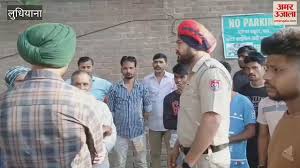
Halwara. A case has been registered against Aam Aadmi Party’s Dalit wing chief Meva Singh, a resident of Halwara, from Raikot assembly constituency, under sections of sexual harassment and assault of his former female employee at Thana Sudhar. Police is raiding in search of the accused. It is alleged that Meva Singh also beat the mother of the victim woman. Mother and daughter are admitted in the civil hospital of Raikot. Police have registered a case on the complaint of the victim woman and the MLR. The victim Amandeep Kaur said in the complaint that she was working in Meva Singh’s photography studio since 2021. He had contracted to pay a salary of Rs 10,000 per month, but used to pay only Rs 5000 per month. During this time, Meva Singh touched her inappropriately. He mentally harassed her to have sex. Fed up with this, on November 6, 2024, she left her job from Meva Singh’s studio and took up a job somewhere else. She pleaded with Meva Singh several times to pay her her six months’ salary, but he would refuse by threatening to kill her. Now Meva Singh called her to his M-10 restaurant near Rajoana Chowk to pay her the salary. She reached there with her wife. Meva Singh, along with his wife and two other female employees, beat her up. He also tried to kill her by strangulating her. On the other hand, the victim has accused the Sudhar police of being biased in registering a case against only Meva Singh. On the other hand, Jaswinder Singh, in-charge of Sudhar police station, said that if the role of anyone else comes to light, he will also be named in the case. Courtesy : Hindi News
Muslims, Dalits not disposed to crime, says survey report

This finding marks a departure from perceptions prevalent in other regions of the country and highlights the unique stance of the state’s law enforcement on issues of crime and community relations In a revealing survey conducted among police respondents in Punjab, a significant majority has expressed the firm belief that neither Muslims nor Dalits are naturally predisposed to criminal behaviour. As per the “Status of Policing in India Report’ (SPIR)”, done by the Common Cause and Lokniti-CSDC organisation, this finding marks a departure from perceptions prevalent in other regions of the country and highlights the unique stance of the state’s law enforcement on issues of crime and community relations. According to the survey data, an overwhelming percentage of police officers in Punjab (over 80%) contend that Muslims, Dalits and Adivasis do not have inherent tendencies towards crime. This belief was notably stronger among Punjab’s police compared to respondents from other states, indicating a profound suspicion of the stereotype that links specific communities to criminality. The survey also highlighted law enforcement’s approach to public safety issues. The Punjab Police reported the highest proportion of arrests related to loitering and public nuisance, accounting for 60% of the total arrests, significantly outpacing the other states surveyed. This reflects a proactive stance on maintaining public order, despite the low association perceived between crime and these communities. When it comes to justifying the controversial practice of torture, police respondents from Punjab displayed a relatively low tolerance. Only 15% reported a high propensity to justify such actions, while a considerable 30% indicated a low propensity and another 30% showed a very low propensity. Furthermore, Punjab has been identified as one of the states with the least justification for mob violence, especially concerning allegations of cow slaughter. A robust 62% of the respondents stated that mob violence was not at all justified, aligning with similar findings from states like Kerala and West Bengal, which also exhibited low levels of justification for such behaviour. The survey not only sheds light on the perceptions of crime among law-enforcement officials in Punjab but also reinforces the significance of community relations in upholding justice and security in the region. The findings suggest a move towards a more equitable perspective on crime with respect to community background, which could potentially influence future policing strategies and community outreach programmes. The Status of Policing in India Report (SPIR) 2025 was released on March 26 at the India International Centre by a distinguished panel of experts, including Justice S Muralidhar, former Chief Justice of the Odisha High Court, Vrinda Grover, lawyer and activist, Dr Amar Jesani, public health expert and the Editor of the Indian Journal of Medical Ethics, and Prakash Singh, IPS (retd) and a former DGP of UP, Assam and BSF. The Punjab angle of the report studied by The Tribune talks about the response of the Punjab Police respondents. Sixth in the series, the SPIR 2025 on “Police Torture and (Un)Accountability” is the only report of its kind in India to focus on police high-handedness and custodial violence at police stations across the country. 80 pc Punjab cops hold this view An overwhelming percentage of police officers in Punjab (over 80%) contend that Muslims, Dalits and Adivasis do not have inherent tendencies towards crime. This belief was notably stronger among Punjab’s police compared to respondents from other states, indicating a profound suspicion of the stereotype that links specific communities to criminality Courtesy :Jupinderjit Singh, The Tribune Note: This news is originally published on https://thetribune.com and is used purely for non-profit/non-commercial purposes, especially human rights.