
LPG price hike adds to household burden in Karnataka

This is the second hike in the past three months. BENGALURU: The recent increase in the price of domestic LPG cylinders by Rs 29 has pushed the cost in Bengaluru to Rs 944 from Rs 915, adding to the burden on consumers already grappling with a series of price hikes in recent months. This is the second hike in the past three months. In March, LPG prices were increased by Rs 60 per cylinder following disruptions in global energy markets linked to tensions in West Asia. The price of a 5-kg LPG cylinder has also risen by around Rs 10, from Rs 340 to Rs 351. Speaking to TNIE about the impact of the hike, Ravi Richard, a retired professor, said, “The LPG price hike affects lower-middle-class and economically weaker sections in a serious way. “The Union government should ensure that low-income groups are protected from such increases through a differential pricing system. Those who can afford higher prices may be charged more, while poorer sections should be shielded from the burden.” “The repeated increase in LPG prices is putting significant pressure on household budgets, particularly those of middle-class and poor families. For families like ours, every rupee matters. The rising cost of essentials such as milk, cooking oil and now cooking gas is making daily life increasingly expensive,” said Shrikant, a resident of Horamavu. He added that the impact is being felt across the economy, with hotels and restaurants already raising prices. “Coupled with higher electricity tariffs, garbage collection charges and the implementation of the new labour code, food prices are likely to rise further,” he said. Suresh Kumar, an employee of a private company, said, “Given the trend of frequent LPG price hikes, it will not be surprising if the price crosses Rs 1,000 per cylinder. We are already bearing the burden of rising fuel costs and the increase in prices of essential commodities driven by higher diesel prices.” Courtesy : TNIE Note: This news is originally published on https:/thenewindianexpress.com/bha and is used purely for non-profit/non-commercial purposes, especially human rights
Gehlot says September 2022 incident was indication of disagreement against Sachin Pilot, not Congress leadership

Ashok Gehlot alleged that Pilot’s associates were responsible for creating a perception that the MLAs supporting him had revolted against the Congress high command, leaving him with a bad reputation. Former Rajasthan chief minister Ashok Gehlot on Sunday criticised Congress leader Sachin Pilot and stated that the incidents that unfolded in September 2022 were not a revolt against the party high command but an indication of strong disagreement among the MLAs against Pilot’s elevation as the CM. The senior Congress leader alleged that Pilot’s associates were responsible for creating a perception that the MLAs supporting him had revolted against the Congress high command, leaving him with a bad reputation. Gehlot was speaking about the Congress Legislature Party (CLP) meeting that was called in Jaipur on September 25, 2022, to discuss the leadership of the Rajasthan government if Gehlot were to be elected president of the party. Several MLAs close to Gehlot did not attend the meeting and opposed any move to make Pilot the chief minister. Gehlot on Sunday said that he was in line to become the Congress President, but such a situation unfolded that appeared to be a conspiracy, and he ended up with a bad reputation. However, he felt sorry in front of Sonia Gandhi for not being able to get a resolution passed in the CLP meeting. “It is repeatedly asked what happened on September 25. There can never be a revolt against the high command,” he said, adding that the incident was against “Sachin Pilot, whose name was being circulated” that he could take oath as the chief minister. He said the MLAs’ stance was that they had demonstrated loyalty to the high command. They stayed confined in hotels and saved the government. “They wanted any of them to be appointed as the chief minister and they would accept it, but Pilot was unacceptable to them because he was the one who took his MLAs to Manesar,” he said. Pilot, who was serving as the deputy chief minister in the Gehlot government, had rebelled against his leadership in 2020. It is alleged that he and some MLAs stayed in Haryana’s Manesar. The rebellion led to a political crisis in the state, which the party leadership resolved through intervention. Gehlot had alleged that it was a conspiracy orchestrated by the BJP to topple his government, using Pilot and other MLAs as pawns. In September 2022, a CLP meeting was called in Jaipur to discuss the leadership of the Rajasthan government if Gehlot were to be elected president of the Congress party. Sachin Pilot was considered the top runner to replace him. But MLAs loyal to Gehlot did not attend the meeting. Instead, they held a parallel meeting and went to Assembly Speaker C P Joshi’s residence to submit their mass resignations. Gehlot said there was no question of rebellion against the Congress high command. “Sonia Gandhi had offered me the chief minister’s post three times without me even asking for it. I was in line to become the Congress President, and I am not uneducated. I am well-educated. If Sonia Gandhi and the Congress party were making me Congress President, would I have refused?” he asked. “The situation that unfolded…I feel it was a conspiracy. AICC observers arrived suddenly, a spectacle ensued, and I ended up with a bad reputation,” he said. “People believe that Ashok Gehlot wanted to remain the chief minister rather than become Congress president, and that is why the revolt happened. How do I explain it to them?” he said. “The media spread this narrative, and I remained silent,” Gehlot said. Gehlot said he stayed silent because he needed to convey to Sonia Gandhi that he was the leader of the Legislature Party, and AICC observers had arrived. He added that he was unable to get the resolution passed and “expressing his regret to her”, he “apologised” for the situation that had arisen. Asserting that truth has no alternative, Gehlot said, “I have placed the truth before everyone and will continue to do so.” He said that historically the Congress high command had maintained strong trust in the Rajasthan unit. He alleged that the perception of revolt against the party high command was created by Pilot’s associates, which was incorrect. He said that when the party high command decides to change a chief minister, a majority of MLAs tend to align with the one who is going to become the new chief minister. “Whenever the high command decides that the chief minister should be replaced, 90 per cent of the MLAs who were previously with the incumbent chief minister switch their allegiance to the new one. What was the reason that when the new chief minister’s name began circulating — whether floated by Pilot’s associates — MLAs did not go to him,” he said. “Sachin Pilot needs to understand this. He has been in politics for about 15-20 years now. He has gained considerable experience. We are not his enemies. I used to visit his family since his childhood,” he said. Pilot made a mistake, and he should acknowledge it. He has not learned to accept the truth, which is why this issue persists, he said, adding that he does not want this issue to persist. Gehlot said, today, the Congress is in crisis, the country is in crisis. Only Congress can save the country and all leaders of the party should be united for this. The former chief minister said that he had helped Pilot become a union minister in the UPA government, but he never acknowledged this help. He is no longer chasing any post, Gehlot said, adding that “it would be a different matter if a position were to come my way unsolicited. I am not vying for any post.” Serving as chief minister three times is no small feat, he said, adding that his message is “Do not erase my line. Instead, draw a line longer than mine.” As for who becomes the chief minister and who
Two Dalit youths stripped, tied, & dragged over theft suspicion in Muktsar; SC panel seeks report from SSP By June 9
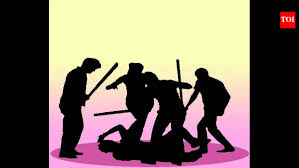
Bathinda: Two Dalit youths were allegedly stripped, tied, and dragged through agricultural fields in scorching heat over suspicion of theft in Punjab’s Muktsar district on Saturday. The incident comes just two days after a viral video surfaced from Haryana’s Hansi district showing a Dalit youth hanging upside down in a well over the alleged theft of a water pump. Punjab State Scheduled Castes Commission has taken suo motu notice of the incident in Jhord village, seeking a report from the Muktsar SSP, to be submitted through the SP (headquarters) by June 9. Sources said a group of villagers stormed the homes of the two local youths after learning about the theft of a mobile phone from a migrant labourer. The two were taken to the paddy fields, where they were initially tied to a tree, partially undressed, and bound by their hands before being dragged, showed a video that later went viral and sparked outrage. Ashok Mahindra, a representative of a local pro-Dalit organisation, said, “The villagers acted in a Taliban style. Even if these youths committed a crime, there is a legal system to deal with them. We will request the Punjab social security minister, who represents the Malout constituency, to take serious note of this incident.” Malout DSP JS Dhaliwal identified the two youths as Gurpinder Singh (27) and Sandeep Singh (28), both residents of Jhord. Police said Gurpinder already faces a case under the Narcotic Drugs and Psychotropic Substances (NDPS) Act. DSP Dhaliwal said the police are not overlooking the assault. “While we are investigating the alleged mobile snatching and the background of the youths, strict action is simultaneously being taken against those who indulged in this inhumane act.” Villagers claimed the two men confessed to the theft during the ordeal. Former Punjab SC Commission member Karanbir Singh Indora also strongly condemned the incident. “The villagers acted in a highly objectionable manner. No one has the right to take the law into their own hands.” Locals admitted to the assault but said they acted out of rage, claiming the two were involved in drug abuse and targeted a migrant labourer. Courtesy : TOI Note: This news is originally published on https:/timesofindia.com/bha and is used purely for non-profit/non-commercial purposes, especially human rights
Rajya Sabha Elections: Hemant surprises by giving ticket to a Dalit outside the Soren family, Baijnath becomes candidate
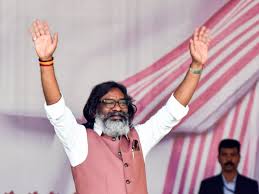
Political twist: Congress’s Pranav Jha, BJP’s Gaurav Vallabh, JMM’s Baijnath Ram, and independents Nathwani and Sai Reddy have filed nomination papers, but the BJP remains silent. The Rajya Sabha elections for two seats in Jharkhand have heated up the political atmosphere in the state. The Jharkhand Mukti Morcha (JMM) surprised everyone by not fielding anyone from the Soren family for the seat vacated by Guruji. The JMM, which had staked claim to both seats until Friday, announced former minister and central vice-president Baijnath Ram as its candidate on Saturday. However, the party has not yet given a concrete answer to the question of fielding a candidate for the second seat. Meanwhile, BJP’s chief whip in the Assembly, Naveen Jaiswal, claimed on Friday night that the party’s candidate would be announced on Saturday morning. Gaurav Vallabh has also purchased his nomination as a BJP candidate, but the party did not officially announce his name until late Saturday evening. Congress candidate Pranav Jha and JMM candidate Baijnath Ram have also purchased their nomination papers. JMM General Secretary Supriyo Bhattacharya said that Baijnath Ram will file his nomination papers on Monday, and Chief Minister Hemant Soren will be present. Parimal Nathwani met the Chief Minister, will contest as an independent Parimal Nathwani arrived in Ranchi at 8 pm on Saturday. He went directly from the airport to Chief Minister Hemant Soren’s residence on Kanke Road, where the two leaders met for about half an hour. After the meeting, Nathwani stated that it was merely a courtesy call and no discussion took place regarding the Rajya Sabha elections. He clarified that he will contest this election from Jharkhand as an independent. His nomination papers have been purchased and he will file his nomination papers on Monday. The ‘Behind the Scenes’ Game in the Rajya Sabha Elections Who will be the proposer? The ‘Mystery’ of 10 MLAs and the Entry of 2 Heavyweights The entry of heavyweight independents like Parimal Nathwani and Vijay Sai Reddy into the Rajya Sabha fray has made the election extremely interesting. According to the rules, a minimum of 10 MLAs are required for nominations. Inside Story: It is nearly impossible to gather 10 MLAs in the Jharkhand Assembly without the tacit consent or internal sabotage of a major party. Consequently, the biggest question in political circles is: who are the hidden MLAs willing to propose these heavyweights? Will this be a simmering discontent within the ruling and opposition parties, or will it be a new horse-trading game? BJP’s ‘Dark Horse’ Plan: Silence Behind the Chess Gaurav Vallabh has purchased his nomination papers, but the BJP has yet to reveal its cards. This delay in the official announcement is not without reason. Inside Story: The BJP’s silence isn’t a compulsion, but rather a part of Plan B. If the party doesn’t officially field its own candidate, it likely means it has decided to support a strong independent candidate behind the scenes. Instead of losing a direct contest, the independent candidate is intended to dent the Grand Alliance’s vote bank and appease disgruntled MLAs. Bhupesh and Ajay met the CM and said, “All is well.” Congress observers for the Rajya Sabha elections, Bhupesh Baghel and Ajay Sharma, met with Chief Minister Hemant Soren on Saturday afternoon. After a nearly two-hour meeting, both observers stated that everything was fine. The alliance would win both seats in the Rajya Sabha elections. Bhupesh Baghel said that they had a good and frank conversation with the Chief Minister, there were no misunderstandings, and the alliance was strong. Why did the JMM choose Baijnath Ram? Baijnath Ram’s name was included in the list of ministers in the Champai Soren government, and this list had even reached the Raj Bhavan. However, he was stopped just before the swearing-in ceremony, leading to accusations of the party neglecting Dalits. Later, he was promised a suitable position, and that is why he was nominated for the Rajya Sabha seat. Furthermore, the JMM has played the Dalit card after the Congress fielded a Brahmin candidate. Candidate Profiles: At a Glance Parimal Nathwani: Industrialist and current Rajya Sabha MP from Andhra Pradesh. He served as an independent Rajya Sabha MP from Jharkhand for two consecutive terms from 2008 to 2020. He lives in Dwarkesanandi, Ahmedabad, Gujarat. Pranav Jha: National Secretary of the Congress Party and media strategist for the party. He is also close to Congress President Mallikarjun Kharge. He is originally from Anadipur village in Bhagalpur district and studied in Bokaro. He currently lives in South Avenue, Delhi. Gaurav Vallabh: A prominent BJP leader, economist, and academic. He is currently a member of the Prime Minister’s Economic Advisory Council. He has served as a professor of economics at XLRI, Jamshedpur, and SISS, Ranchi. He is from Jodhpur, Rajasthan. Baijnath Ram: A senior leader of the JMM and has served as a minister in the Jharkhand government. He is known as an experienced and dedicated JMM worker. He is seen as a prominent face of the party’s SC community. He originally hails from Dhobi Mohalla in Latehar. Sai Vijay Reddy: Chartered accountant and politician from Andhra Pradesh. He has served as the National General Secretary of the YSR Congress Party and a Rajya Sabha MP from Andhra Pradesh. He is considered a close associate of YSRCP chief Jaganmohan Reddy and the party’s “Chanakya.” He hails from ISKCON City, Nellore, Andhra Pradesh. Courtesy: Hindi News
Dalit experience in Punjab, felt and seen
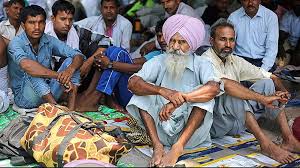
The works of poets such as Kabir, Ravidas and Namdev have resonated for centuries, but it is only recently that Dalit literature has come to occupy centre stage. With the rise of subaltern studies, literature has developed many a niche segment, where hitherto invisible or suppressed groups have asserted their literary presence. Dalit writing, particularly under the influence of Marathi pioneers like Babasaheb Ambedkar and Namdeo Dhasal, started showing its prowess some 60 years ago, and has now become an irrepressible voice in almost all states of the country. Punjab has a very large presence of Dalits and an equally large body of Punjabi Dalit literature, yet not much has been translated so far to give it readership beyond Punjabi. The anthology ‘Gangrene’ offers for the first time a set of 12 stories in English to fill that gap. Translated by Akshaya Kumar and Navdeep Singh, the book comes with an elaborate introduction that gives an insight into the development of Punjabi Dalit writings as well as the dynamics of Dalit narratives of exploitation, discrimination and oppression. The translators claim that in contrast to progressive writers’ narratives of the poor and the underprivileged, these stories by Dalits themselves explore more authentically their lived experience. Veracity apart, the stories in the collection stand out for the diversity of experience, both in terms of physical and mental trauma, as perceived by Dalits and as enacted by their oppressors. If there are stories like ‘Cry of the Sky’, ‘My Story’, and ‘Everybody’s Story’, in which crimes like rape and violence against Dalits are portrayed, then there are also stories like ‘Doomsday’, ‘Cancer’ and ‘Cactus’, where the dominant caste characters have been shown to harbour deep-seated hatred, but not without giving us a peep into their mental and emotional conflict. The stories are equally divided between rural and urban settings. If the vehra (Dalit colony in a village) is the site of open disdain and exploitation by Jats and other village heads, then the city is an equally inhospitable place where Dalits, even after education and economic progress, cannot live without hiding their identity. A cobbler’s son will remain a cobbler’s son and a Dalit rising up to become a landlord will find trust and strength only in his own community, as in the story ‘Gaurjan’. Religion, the much-touted causa prima of the caste divide, figures in three stories – ‘Gangrene’, ‘Doomsday’ and ‘Roots’. Though Hindu Brahmins’ attitude towards Dalits is well known, in these stories, even Dalits who converted to religions like Sikhism and Buddhism find no respite. One muted theme that runs through almost all the stories is that for a Dalit, there is no escape from being a Dalit. Even if they try to override it with professional progress, pecuniary leap or physical prowess, the Dalit identity does not leave them. It will continue to lead them to misery and humiliation. I particularly liked two stories: ‘Bathloo’ and ‘Aatu Khoji’. Both are proud and professionally skilful workers, yet one ends up dead because of his sense of internalised lowliness, and the other in an effort to save Dalit honour. The book is a ready compendium to understand the psyche of both Punjabi Dalits and their oppressors. At times, it also portrays the Dalit reaction where violence and highhandedness of the dominant caste are met with equal aggression. But the stories largely remain clueless about how the conflict can be reduced or resolved. The book is translated well despite the usual intrusion of local terms here and there. It is going to prove to be a good resource material for comparing the Punjabi Dalit experience with other regional writings, particularly in Marathi and South Indian languages. Courtesy : Dailyhunt Note: This news is originally published on https:/dailyhunt.com/bha and is used purely for non-profit/non-commercial purposes, especially human rights
Dalits are losing land in Karnataka despite PTCL Act protections
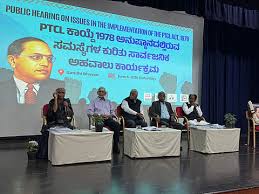
A public hearing organised by civil society groups in Bengaluru heard several testimonies of Dalits who lost their land and were unable to reclaim it due to adverse court rulings and bureaucratic hurdles. Karnataka appears to be on the cusp of another historic land struggle. Perhaps not as militant or as visible as the street marches organised by the Dalit Sangharsha Samiti in the 1970s, but no less significant in terms of its vision or potential for transformation. A small number of Dalits from seven districts in Karnataka told the jury of a public hearing in Bengaluru about how their families lost land to people from dominant castes and due to court rulings. Their stories were representative of 50 others whose testimonies will be presented to the government along with the observations of the jury. The public hearing on the implementation of the Karnataka Scheduled Castes and Scheduled Tribes (Prohibition of Transfer of Certain Lands) Act, 1978, was held on Saturday, June 6. The hearing was the result of over six months of work put in by the PTCL Kaayde Bhoomi Vanchitara Horata Samiti, the All India Lawyers Association for Justice (AILAJ), Manthan Law, Alternative Law Forum (ALF), and independent progressive researchers. Called the PTCL Act for short, the law itself was the result of a land agitation led by the Dalit Sangharasha Samiti in the 1970s. Under the law, land owned by people of the Scheduled Castes and Tribes cannot be transferred to non SC or non ST people. The public hearing was organised after compiling the testimonies of about 50 people from seven districts—Bengaluru Urban and Rural, Kolar, Tumakuru, Chitradurga, Bengaluru South, and Davanagere. The jury panel comprised retired Supreme Court judge Justice V Gopal Gowda, former IAS officers SM Jamdar and D Thangaraj, and activist Jyothi Raj, and legal expert on PTCL cases HL Venkatesh. About 15 Dalit people spoke of how they lost their land. One common obstacle that emerged was the 2017 Supreme Court ruling in the Nekkanti Rama Lakshmi case. The SC dismissed the case stating that there had been a delay of 20 years in filing the application to reclaim the land, even though the law itself did not specify that claims had to be filed within a certain period. Rangamma, of Chinakavajra village in Madhugiri taluk in Tumakuru district, told the jury about how her husband’s grandfather Rangaiah was cheated out of a portion of his land. Chinakavajra village has 300 Vokkaliga families, 20 Dalit families, and three Naika families. She said that Rangaiah was granted two acres of darkhast land in 1954. For several years the family cultivated ragi and other crops and sometimes even had enough left over to either sell or simply give away to someone in need. Once when Rangaiah needed money to treat his wife, he approached a Vokkaliga man for Rs 200. He got the money, but did not realise that a sale deed for one acre had been executed without his knowledge. In 1961, the Vokkaliga man and his goons began harassing Rangaiah’s family, claiming that the land was theirs. Finally, in 2016 they came and assaulted the family with weapons and drove them off. Rangamma later told TNM that the attackers stripped them, beat them, and rubbed chilli powder in their eyes. Her family filed an atrocity complaint and the other side responded with an allegation of assault. “We’ve been shattered by this. Now we have to buy food, and look for work as agricultural labourers. But work isn’t always available and there are a lot of people who need work,” Rangamma told TNM. “We’ve been very pained by all this, they created a lot of trouble for us,” she added. Her case is currently in the Karnataka High Court. Manjunath, founder of the PTCL Horata Samiti, told TNM that he started the Samiti after he lost his own family land in Magadi taluk in 2018 after a long legal battle. “The High Court simply dismissed mine and 45 other applications for delay, citing the Nekkanti case. That was when I learned what real law is, even though the Act itself is good.” Once he began looking for others like him, he realised the scale of the impact. In 2022, he led a seven-month agitation in Freedom Park, which eventually led to the state government amending the PTCL Act in 2023 to explicitly say that there would be no time period limitation to invoke the Act. When the constitutionality of the amendment was challenged in the Karnataka High Court, several members of the organisers of the public hearing also fought to defend the amendment. Hearings concluded 10 months ago and the verdict is now awaited. Manjunath estimates that there are hundreds of cases in each district. In Bengaluru Urban alone, he says there are about 4,000 such claims, of which 3,000 were dismissed citing Nekkanti. “Now, without bothering about whether the claim is genuine, the courts simply ask when the application was filed and what the delay was, and dismiss it. That ruling has completely destroyed the PTCL Act,” he said. Justice V Gopala Gowda said that in Nekkanti, the Supreme Court had violated its own ruling in the Manchegowda and others vs State of Karnataka case in 1984. The Manchegowda case had challenged the constitutionality of the PTCL Act. The SC upheld the Act. Justice Gowda said that economic freedom was essential to the meaningful enjoyment of the constitutional promise of the right to life. Access to land was fundamental to securing such freedom, he said according to a press release. Former IAS officer Thangaraj said that significant challenges remain in the implementation of the law. Despite favourable orders from Assistant Commissioners and Deputy Commissioners, beneficiaries often struggle to secure physical possession of their land due to a lack of cooperation from revenue and police officials, he said. Retired IAS officer SM Jamdar stated that the PTCL Act holds a mirror to the social inequalities that exist around us. There is a
Dalits not a factor in Nitish’s social justice? Even LJP’s Ram Vilas failed to light the ‘lamp of selfishness’
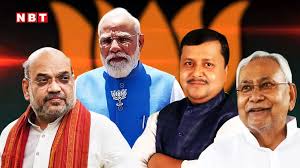
Bihar Politics: In Bihar politics, the electoral journey of all political parties remains incomplete without mentioning Dalits. Everyone desires this vote bank. But in this MLC election, the NDA did not nominate a Dalit candidate for the Upper House. Not a single Dalit in the NDA’s MLC candidate list Patna: All the fabrications that could be woven regarding the MLC elections in Bihar politics have already been woven. Speaking of the current MLC elections, Dalits are not a factor in the NDA’s social justice. The significant thing is that even the party that makes its political living by building on Dalit politics failed to send a Dalit leader to the Legislative Council, nor could it secure the rights of the 18 percent vote bank. Not a single Dalit in the NDA has been given an MLC ticket. NDA strategists have jointly announced the candidates for the nine full-time MLC seats and one by-election (vacated by Nitish Kumar) in 2026. Considering this announcement, the Janata Dal (United) has announced one candidate from the backward caste and three from the most backward caste. This list does not include any Dalit leaders. Nishant Kumar from the Kurmi caste, Dr. Bharti Mehta, Shivani Prajapati, and Lalan Mandal from the most backward castes have been nominated. BJP also distances itself from Dalits in the MLC elections. Meanwhile, the Bharatiya Janata Party also showed indifference towards Dalits. BJP strategists have announced two candidates from the upper caste and two from the most backward castes. These include Pawan Singh from the Rajput caste, Sanjay Mayukh from the Kayastha caste, Anil Kumar Thakur from the barber caste, and Sheela Pandit from the potter caste. The party that practices Dalit politics lagged behind. Chirag Paswan, the national president of the Lok Janshakti Party, a party that practices Dalit politics, also did not light the Dalit lamp this time, demonstrating mutual coordination. Chirag Paswan declared Ashraf Ansari, a Muslim, as his candidate. Learn the names and castes of the 11 MLCs announced for 2026. Arvind Sharma from Bhumihar Pawan Singh from Rajput Nishant Kumar from Kurmi Sanjay Mayukh from Kayastha Ashraf Ansari from Muslim Bharti Mehta from Extremely Backward Class Lalan Mandal from Extremely Backward Class Anil Kumar Thakur from Extremely Backward Class Sheela Pandit from Extremely Backward Class Learn how long has JDU rejected Dalits? In March 2021, members were nominated to fill 12 vacant seats in the Bihar Legislative Council (MLC) from the Governor’s quota. These nominations were made by then Governor Fagu Chauhan on March 17, 2021, on the recommendation of the state cabinet. JDU then sent a Dalit leader, Ashok Chaudhary, to the Upper House. At that time, JDU and BJP fielded candidates for six seats each. JDU sent Upendra Kushwaha, Ashok Chaudhary, Sanjay Kumar Singh (aka Sanjay Gandhi), Lalan Kumar Saraf, Ram Vachan Rai, Sanjay Singh, and the BJP sent Janak Ram, Devesh Kumar, Rajendra Prasad Gupta, Pramod Kumar, Ghanshyam Thakur, and Nivedita Singh to the Legislative Council. Written by: Ramakant Chandan Edited by: Rishikesh Narayan Singh About the Author Ramakant Chandan began his journalism career in 1988 as a freelancer with Navbharat Times and Dainik Hindustan. He formally joined Rashtriya Sahara in 1996, starting with Haatsekhar, Noida. He became a special correspondent in 2012. In 2020, he became the local editor of Rashtriya Sahara Patna and in 2022, he became the consulting editor of Rashtriya Sahara. Courtesy: Hindi News
Khaira demands murder case against police over death of Dalit youth
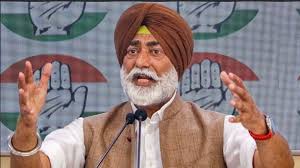
Senior Congress leader and Bholath MLA Sukhpal Singh Khaira strongly condemned the death of 22-year-old Dalit youth Lovepreet Singh, alias Labha, of Bangiwal village in Mehatpur, and demanded the immediate registration of a murder case against all police personnel involved in the firing incident. Khaira also urged the Chief Justice of the Punjab and Haryana High Court to take suo motu cognisance of the matter and order an independent judicial probe into the circumstances surrounding the youth’s death. Lovepreet Singh, who was wanted in connection with a case registered in January 2026, succumbed to injuries sustained after he was allegedly shot by police personnel during a raid at his residence on Friday evening. While the police have maintained that officers opened fire in self-defence following hostility from villagers, the victim’s family and local residents have disputed the official version. They alleged that Lovepreet was assaulted by the police before being shot and further claimed that he was denied timely medical treatment. Villagers have also questioned why no FIR had been registered against any police personnel, despite criminal cases being filed against members of Lovepreet’s family. In a statement, Khaira said the incident raised serious concerns about the conduct of the Punjab Police and reflected what he described as a culture of impunity under the AAP government. “The killing of a young Dalit man at the hands of the police cannot be brushed aside through a departmental inquiry alone. When a citizen dies in police firing, the law demands the highest standards of transparency and accountability. The police cannot be allowed to investigate themselves and then grant themselves a clean chit,” he said. The Congress MLA said the emergence of videos from the scene and the widespread protests by villagers further strengthened the case for an independent investigation under judicial supervision. He noted that several organisations, along with local residents, had already demanded action against the police personnel involved in the shooting. Khaira called for the immediate registration of an FIR for culpable homicide or murder against the officials responsible for the firing, suspension of all personnel involved pending investigation, and the preservation of all video footage, records and other evidence related to the incident. He also demanded adequate compensation and rehabilitation support for the bereaved family and reiterated his appeal for the Punjab and Haryana High Court to intervene and ensure a fair, impartial and independent investigation. Article_Author Aparna Banerji Courtesy : The Tribune Note: This news is originally published on https:/thetribune.com/bha and is used purely for non-profit/non-commercial purposes, especially human rights
JDS slams CM DK Shivakumar for no pic of Deputy CM in official ad

The JDS also said that the advertisement on the ‘Bhoo Guarantee’ did not carry the picture of Bengaluru Development Minister Krishna Byre Gowda. TUMAKURU: JDS on Saturday took a dig at Chief Minister DK Shivakumar after an official advertisement by the Backward Classes Department in newspapers on former CM D Devaraj Urs featured only the CM’s picture and not that of Deputy CM Dr G Parameshwara. “The true justice of the INC Karnataka party, which constantly preaches about social justice, has been exposed in today’s newspapers! When it was you, your photograph was mandatory. But when a Dalit leader is the Deputy Chief Minister, is there suddenly no space for his photo, Mr Chief Minister? In the very advertisement for a programme honouring Devaraj Urs, who dedicated his entire life to the Backward and Dalit classes, Shivakumar has displayed his arrogance and monopoly by completely omitting the photograph of the current DCM and prominent Dalit leader Dr G Parameshwara,” the JDS posted on the social media platform X. “Is this the level of neglect shown towards Dalit leaders…even in an official advertisement from the Backward Classes Welfare Department? The public will surely teach a fitting lesson to the arrogance of the Congress which treats Dalits as nothing more than a vote bank,” the JDS added. The JDS also said that the advertisement on the ‘Bhoo Guarantee’ did not carry the picture of Bengaluru Development Minister Krishna Byre Gowda. Courtesy : TNIE Note: This news is originally published on https:/thenewindianexpress.com/bha and is used purely for non-profit/non-commercial purposes, especially human rights
Congress eyes major reset of Revanth govt

The possibility of changes in the state party unit is also generating considerable discussion. HYDERABAD: Having completed half of its five-year tenure, the Revanth Reddy government appears headed for its biggest shake-up since coming to power in December 2023. With the Congress high command said to be weighing changes in both the Cabinet and the party organisation, ministers, MLAs and aspirants have begun jockeying for position, turning Hyderabad and New Delhi into hubs of intense political activity. According to sources in the ruling party, the proposed exercise is expected to go beyond a routine Cabinet expansion. The Congress leadership is reportedly considering a broader overhaul that could involve dropping some ministers, inducting fresh faces, redistributing key portfolios and reorganising the Telangana Pradesh Congress Committee (TPCC). Party insiders say two or three ministers could be shown the door as part of the exercise. However, the move is not being viewed as a demotion. Those relieved of Cabinet responsibilities may instead be assigned organisational roles in the All India Congress Committee (AICC), with some potentially being made in-charge of states such as Gujarat, Goa and Uttar Pradesh, which are scheduled to go to the polls next year. The possibility of changes in the state party unit is also generating considerable discussion. One of the names being widely talked about is TPCC president and MLC B Mahesh Kumar Goud, who is said to be under consideration for a Cabinet berth. His induction would also address the absence of Cabinet representation from Nizamabad district. If Mahesh moves into the Cabinet, party leaders believe a change at the helm of the TPCC could follow. Minister Ponnam Prabhakar’s name is doing the rounds as a possible successor. A long-time Congress leader who rose through the NSUI ranks and later represented Karimnagar in Parliament, Prabhakar is seen as someone with strong organisational credentials. Munugode MLA Komatireddy Rajagopal Reddy meets Rahul Gandhi in New Delhi on Saturday Munugode MLA Komatireddy Rajagopal Reddy meets Rahul Gandhi in New Delhi on SaturdayPhoto | Express The speculation has triggered a rush to New Delhi. Several leaders aspiring for Cabinet berths or key party positions have been making frequent visits to the national capital and meeting senior Congress leaders. Among the names being discussed are Speaker Gaddam Prasad Kumar, Munugode MLA Komatireddy Rajagopal Reddy and Parigi MLA T Rammohan Reddy. Sources indicated that the reshuffle, along with organisational appointments, could be announced in the third or fourth week of this month. Alongside personnel changes, the leadership is also believed to be examining a redistribution of important portfolios. Finance and revenue are among the departments being discussed in internal deliberations, with senior leaders who previously served as ministers in undivided Andhra Pradesh said to be in contention for greater responsibilities. Rammohan Reddy is also being mentioned as a possible choice for the post of chief whip in the Assembly. The ripple effects of a Mahesh Kumar induction could extend further. Party leaders say that if Prabhakar is moved to the TPCC chief’s post, it may create an opening in the Cabinet for Vemulawada MLA and whip Aadi Srinivas, who belongs to the Munnuru Kapu community. Leaders troop to Delhi to press their case Another subject of intense speculation is the Assembly Speaker’s post. According to sources, discussions are underway on whether a senior minister — from the same caste as Gaddam Prasad — could be made Speaker, potentially paving the way for further adjustments within the Cabinet. The expected exercise is also likely to cover appointments to corporations and public sector bodies. Aspirants from Warangal, Rangareddy and Nalgonda districts are said to be under consideration for chairperson posts in key corporations, while four former MLAs may also be accommodated. With every possible vacancy setting off a chain reaction elsewhere, the atmosphere within the ruling party has become increasingly charged. Ministers are lobbying to retain their positions or secure influential portfolios, while aspirants are reminding the leadership of assurances made during the Assembly election campaign. Several ministers recently met Congress president Mallikarjun Kharge during his visit to Hyderabad, while others have travelled to Delhi to make their case. Aspirants have also been seeking meetings with Rahul Gandhi as the party weighs what could be its most consequential political exercise since coming to power in Telangana. Ireddy Srinivas Reddy Courtesy : TNIE Note: This news is originally published on https:/thenewindianexpress.com/bha and is used purely for non-profit/non-commercial purposes, especially human rights