
Kerala government sets up expert panel for Wayanad landslide debris removal

The panel was formed following a meeting chaired by Chief Minister V D Satheesan with Home Minister Ramesh Chennithala and PWD Minister P K Basheer. THIRUVANTHAPURAM: The Kerala government has constituted a three-member expert committee to inspect the Wayanad tunnel and township project sites and submit recommendations for the safe removal of debris accumulated following a landslide. Seven bodies have been recovered from the site of the Wayanad landslide, which occurred on 7 July. The decision to form the panel was taken at a meeting chaired by Chief Minister V D Satheesan with Home Minister Ramesh Chennithala and Public Works Minister P K Basheer on Friday, according to a statement from the Chief Minister’s Office. The committee will include Dr Santhosh G Thampi, professor at NIT Calicut; Dr Jude Emmanuel, environmental scientist at the Directorate of Environmental and Climate Change; and a representative from the National Centre for Earth Science Studies (NCESS). An order issued by the Disaster Management Department said the panel would visit the tunnel and township project sites and assist the District Disaster Management Authority (DDMA) in carrying out the safe removal of debris. For the tunnel project, the debris will be transported to disposal sites identified by the Public Works Department (PWD). For the township project, the Project Implementation Unit (PIU) will identify suitable locations for depositing the material. The committee has also been asked to prepare a brief action plan with necessary safety measures for debris removal, which will be followed by the PWD and PIU. The government has directed the panel to inspect the sites and submit its report at the earliest. The Wayanad District Collector has been instructed to provide all necessary support to the committee. Courtesy : TNIE Note: This news is originally published on https:/thenewindianexpress.com/bha and is used purely for non-profit/non-commercial purposes, especially human rights
Congress may name new KPCC president within a week
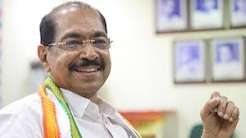
The exercise comes at a crucial juncture for the party. There is growing discontent among workers and leaders over the absence of a full-time KPCC president. THIRUVANANTHAPURAM: The Congress is set to kick-start the long-awaited organisational reshuffle in Kerala with the appointment of a new KPCC president. According to party sources, the high command could name a new state chief within a week. The process is likely to commence after July 10, once Leader of the Opposition in the Lok Sabha, Rahul Gandhi, returns to Delhi. Sunny Joseph, the incumbent KPCC president, had informed the high command his readiness to step down from the post after being inducted into the cabinet. However, he has been asked to continue until a replacement is appointed. The exercise comes at a crucial juncture for the party. There is growing discontent among workers and leaders over the absence of a full-time KPCC president. Though it’s been more than a month since the government assumed office in May, the committee meant to facilitate coordination between the government and the party has not yet been constituted. Leaders allege that the organisational inertia has affected the party’s ability to intervene on key policy matters. “The government has made U-turns on several appointments and courted controversy over some other decisions involving the party’s policy positions,” a Congress leader said. “Had there been a full-time working KPCC president and effective coordination between the party and government, contentious decisions such as the implementation of PM SHRI scheme, reduction of tax on low-alcohol beverages and private participation in mineral sand mining could have been avoided,” he said. Meanwhile, lobbying for the post of KPCC chief has also intensified, with former UDF convenor Benny Behanan and Lok Sabha Chief Whip Kodikunnil Suresh being seen as frontrunners. The reported rift between Chief Minister V D Satheesan and veteran leader V M Sudheeran has come as a setback for Suresh at a crucial juncture. The two were understood to have backed Suresh as the first Dalit KPCC president, in line with the party’s emphasis on social justice. Behanan, however, enjoys the support of different sections of the party. UDF convenor Adoor Prakash, V S Sivakumar, Anto Antony and Mathew Kuzhalnadan are also in the race. Party observers have submitted their assessment reports on prospective candidates to the high command. “The high command will initiate the appointment process once Rahul returns,” a leader said. Although a section in the party has demanded that the ‘one-person, one-post’ principle be applied while appointing the new president, the final decision will rest with the high command. Next steps The appointment of KPCC president is expected to set the ball rolling on a wider organisational overhaul, including the appointment of two working presidents and new general secretaries, followed by selection of new district chiefs. K S Sreejith Courtesy : TNIE Note: This news is originally published on https:/thenewindianexpress.com/bha and is used purely for non-profit/non-commercial purposes, especially human rights
Rajeev Khandelwal praises Pooja Sharma Rekha, apologises to transgender community

Mumbai: Actor and television host Rajeev Khandelwal has extended his support to the transgender community and publicly apologised for the discrimination they have faced, during an emotional episode of the television show Tum Ho Naa – Ghar Ki Superstar. The episode features social media personality Pooja Sharma Rekha, who shares her journey of resilience, self-acceptance and the challenges she faced while seeking acceptance in society. Rajeev’s heartfelt remarks have drawn attention for highlighting the need for dignity, equality and compassion towards transgender persons. Pooja Sharma Rekha shares her life journey In the upcoming episode, Pooja Sharma Rekha opens up about the struggles she endured because of her gender identity and the obstacles she overcame to build a life with confidence and self-respect. Her story focuses on courage, perseverance and acceptance despite years of prejudice and social discrimination. The conversation aims to shed light on the lived experiences of transgender individuals and encourage greater understanding among viewers. Rajeev Khandelwal offers an emotional apology After listening to Pooja’s experiences, Rajeev Khandelwal expressed solidarity with the transgender community and apologised for the way many members of the community have been treated by society. In an emotional message, he said he wished to apologise on behalf of everyone who had knowingly or unknowingly contributed to their pain and discrimination, adding that he bowed his head in shame over the treatment meted out to transgender persons. He also called for greater acceptance, respect and equal treatment, stressing that every individual deserves to live with dignity irrespective of gender identity. Episode highlights inclusion and acceptance The episode centres on the importance of recognising the struggles faced by transgender persons while celebrating stories of resilience and hope. According to promotional material for the show, Pooja Sharma Rekha’s appearance is intended to inspire viewers by demonstrating how determination and self-belief can help overcome adversity. The programme also reinforces the message that empathy, inclusion and equal opportunities are essential for building a more accepting society. Conversation sparks wider social message The episode comes at a time when conversations around inclusion and equal rights for transgender persons continue to gain prominence in India.South Asians & Diaspora By providing a national television platform for Pooja Sharma Rekha to share her experiences, the show seeks to encourage dialogue on acceptance and challenge stereotypes associated with the transgender community. Rajeev Khandelwal’s remarks have been widely shared online, with many viewers appreciating his public expression of support and his appeal for greater compassion and respect. Courtesy : News Karnataka Note: This news is originally published on https:/newskarnataka.com/bha and is used purely for non-profit/non-commercial purposes, especially human rights
Dalit family attacked, casteist slurs used: Case filed against five named accused in Sadabad

A Dalit family in the village of Heli Bhag Midawali in the Sadabad police station area has been accused of entering their home, assaulting them, and using casteist slurs. Based on the victim’s complaint, police have registered a case against five named accused under various sections and the SC/ST Act and have begun an investigation. Sanjeev, son of Sonveer, a resident of the village of Heli Bhag Midawali, stated in his complaint to the police that he is financially weak and lives with his family in a room near a tubewell outside the village. According to Sanjeev, at around 12:30 pm on July 7, Bani Singh alias Bijendra Singh, Arvind Kumar, Rahul, Gopal, and Shubham arrived at his room with iron rods and sticks. The accused entered the house and began assaulting Sanjeev’s wife, Preeti, and children. Sanjeev alleged that when he resisted, he was also assaulted, resulting in serious head injuries. Hearing the noise, Mukesh Kumar and Brajesh Kumar, who were working in a nearby field, rushed to the scene. They attempted to intervene, but the accused assaulted them as well, resulting in injuries to their hands. The complaint also alleges that during the assault, the accused used casteist slurs and threatened to kill him. They reportedly threatened to kill Sanjeev’s entire family and demolish the room he was living in with a JCB. Sanjeev somehow escaped and reached the Sadabad police station, reporting the incident to the police. Based on the complaint, the police have registered a case against the five named accused under relevant sections and the SC/ST Act. Deputy Superintendent of Police JN Asthana stated that the matter is being investigated and further legal action will be taken based on the facts that emerge from the investigation. Kishore Kumar Varshney | Sadabad, Hathras Courtesy : Hindi News
Rajasthan SI Suspended After Dalit Youth Dies in Knife Attack; Family Alleges Police Ignored Prior Complaint

A police sub-inspector has been suspended in Rajasthan’s Sri Ganganagar district after a Dalit youth died following a knife attack, with the victim’s family alleging that police failed to act on an earlier complaint that could have prevented the incident. The action was taken after allegations of negligence surfaced against the officer, who had reportedly ignored a written complaint filed by the victim two days before the attack. Victim Had Filed Harassment Complaint Before Attack The incident took place on the evening of July 3 near the Shani Temple in Srikaranpur town, where two youths, Charanjit Singh and Shivraj, were allegedly attacked with knives. Charanjit, who suffered critical injuries, was shifted to a hospital in Sri Ganganagar, where he died during treatment on July 4. Shivraj is still undergoing treatment. According to the police, Charanjit had submitted a written complaint to Sub-Inspector Mala Singh two days before the attack, alleging that the accused had harassed a girl. However, no action was taken on the complaint. Police believe that after the complaint was ignored, the accused allegedly attacked Charanjit and Shivraj out of revenge. Family Alleges Police Negligence Following Charanjit’s death, his family staged a protest outside the police station on July 5, accusing the police of serious negligence. The family alleged that timely action on the earlier complaint could have prevented the attack and saved Charanjit’s life. District chief Dularam Meghwal also submitted a written complaint to the Inspector General of Police (Bikaner Range), alleging that SI Mala Singh had deliberately failed to act despite receiving the complaint. Meghwal further stated that Charanjit belonged to a Dalit family and urged strict action against those responsible. SI Suspended, Probe Underway After receiving the complaint, the Inspector General directed Sri Ganganagar Superintendent of Police Harishankar to take immediate action. The SP subsequently suspended SI Mala Singh pending an inquiry. Speaking on the matter, SP Harishankar said, “The investigation is underway. Teams have been formed to arrest the accused, and the entire incident is being thoroughly investigated.” Police said further legal action will be taken based on the findings of the investigation. Courtesy : TOP Note: This news is originally published on https:/theobserverpost.com/bha and is used purely for non-profit/non-commercial purposes, especially human rights
‘One Sewer Death Every 45 Hours’: Safai Karamchari Abhiyan Asks Prime Minister to Save Dalit Lives

After the law banning manual scavenging was passed, deaths while cleaning sewers and septic tanks rose from 39 in 2016 to 121 in 2025 and the figure is set to jump again in 2026. ‘One Sewer Death Every 45 Hours’: Safai Karamchari Abhiyan Asks Prime Minister to Save Dalit Lives A file photo from May 2019 of Delhi Univesity students and sanitation staff protesting. Credit: Riya Bhardwaj New Delhi: The Safai Karamchari Andolan (SKA) has questioned the government’s silence and delays in ending manual scavenging in India. Highlighting the death of 101 people across the country since January 2026 while engaged in manually cleaning sewers and septic tanks, SKA said that its figure – 121 deaths for the whole of 2025 – showed the situation was worsening. “Needless to say, Dalit lives don’t matter for government and they have turned into a new normal,” Bezwada Wilson, a Magsaysay Prize awardee and head of the SKA, said in a statement. The NGO’s figures show an “alarming” rise in the number of deaths in sewers and septic tanks ever since manual scavenging was banned by the Prohibition of Employment as Manual Scavengers and their Rehabilitation Act, 2013. “In 2016, only 39 deaths were reported, which jumped by 350% next year in 2017 to 137 deaths,” said the statement. It said over 1,726 deaths have been reported across the country since 2013. It said a sanitation worker’s death is being reported while cleaning sewers and septic tanks, on average, “every 45 hours”, while governments choose “shameless” silence. “We demand that our Prime Minister immediately announce a complete stop to deaths inside sewers and septic tanks,” it said. Governments in denial Wilson pointed out that the government has been denying sewer deaths though they were still taking place, more than a decade after the practice was outlawed. “No death has been reported due to manual scavenging, which is lifting of human excreta from insanitary latrines,” the government of India told parliament in 2023. “Further, no report from States/UTs has been received about the inhuman practice of manual scavenging,” Union Minister of State for Social Justice and Empowerment Ramdas Athawale said in parliament. A press release issued by the government based on this parliament (Rajya Sabha) response said in October 2023 that out of 766 districts, only 249 – fewer than 35% – had declared themselves manual scavengers-free “and uploaded the certificate on portal”. At the same time, in 2018, the Delhi government admitted that manual scavenging was ongoing in the capital, while the Superme Court asked the Union government to correctly assess the situation. The SKA statement records 12 deaths in Delhi-NCR, which are part of the “horrific” increase in cases across the country. It said 16 states had reported such deaths so far in 2026, an indication of the spread of the problem. Complete ban on dry toilets and manual cleaning Bezwada Wilson spent four decades battling the practice through SKA’s activism, a social movement and a court case (related to a 1993 law that has also proved ineffective in ending the scourge) before manual scavenging could be outlawed, without exception and across the country, by the 2013 law. Both the 1993 and 2013 laws are in place, seeking to address separate aspects of the practice: employment of people to clean sewers and septic tanks manually as well as building of dry toilets, etc., both of which perpetuate the practice. The statement also criticised state governments for not taking action to prevent manual scavenging and said it had expected better response to the law. Of the 1,726 deaths since 2013, 1,203 were just from Tamil Nadu (332), Gujarat (216), Delhi-NCR (157), Maharashtra (155), Uttar Pradesh (148), Haryana (104) and Bihar (94). “Despite such big numbers, none of these states have taken a single step to stop these deaths,” the statement said. State governments complicit The SKA statement was also critical of the government’s flagship ‘Swachh Bharat‘ scheme to build toilets across the country as well as of the scheme for mechanised cleaning of drainage systems, saying they neither mechanised the sanitation ecosystem nor completely eliminated dry toilets. Wilson said the failure of governments to elimitate the practice showed “how much they value the lives of safai karamcharis, who are still considered to be untouchable”. In 2019, the Supreme Court had come down heavily on the Union government over ambiguity in eradication of manual scavenging and passed an order banning the practice in six metropolitan cities. It had said it was “sick” of trying to get the Union and state governments to implement the 1993 law. India ranks very poorly in terms of its global sanitation status, for which are responsible lack of scientific cleaning methods and planning and caste- and gender-based inequality, as acknowledged by UNICEF, the Indian government’s partner in Swachh Bharat Abhiyan, in 2020. A survey by the Ministry of Social Justice and Empowerment revealed in 2024 that 91.9% of the 38,000 sanitation workers profiled (thus far) belonged to a Scheduled Caste, Scheduled Tribe or Other Backward Classes. Courtesy : The Wire Note: This news is originally published on https:/thewire.com/bha and is used purely for non-profit/non-commercial purposes, especially human rights
Allegations of extortion in the name of the second installment of the PM-Awas Yojana: Dalit youth beaten up for protesting, SDM says action will be taken after investigation

A case of alleged illegal extortion for the second installment of the Pradhan Mantri Awas Yojana has come to light in Amila Nagar Panchayat in Mau. It is alleged that a Dalit youth was assaulted for resisting the demand for money. A 36-second video of the incident is also circulating on social media. However, the viral video has not been independently verified. Vikas Kumar, son of Virendra, a resident of Saraya Dalit Basti, alleged that on Thursday afternoon, two young men, reportedly associated with the regional accountant, came to the village to photograph houses for the second installment of the PM-Awas Yojana. Vikas says that the construction work for the first installment of his house had been completed. When he asked for the photos, the young men allegedly demanded money in exchange for the photos. The victim alleges that when he refused to pay and started filming with his mobile phone, one of the young men seen in the video got up from his chair and began assaulting and abusing him. His mobile phone was also damaged during the incident. Vikas alleged that the two youths, under the protection of the regional accountant, extort money illegally in the name of photographing residences. He said that the government has designated authorized employees for this task, yet such activities continue to occur. According to the victim, similar complaints have been reported in the Nagar Panchayat area before, but the lack of effective action is encouraging such cases. The matter has gained traction after a video went viral on social media. However, the video could not be independently verified. Ghosi SDM Ashok Singh stated that an investigation will be conducted. If the investigation confirms irregularities or assault, appropriate action will be taken as per the rules. Mithilesh Kumar Rai | Amila, Mau Courtesy: Hindi News
Dalit student murder protests get louder, 63 booked

Meerut: A day after using force to disperse Dalit demonstrators, the Meerut police have booked 13 named and 50 unnamed people on severe charges, including attempt to murder and outraging the modesty of women cops. Seven people have been arrested and remanded in 14 days of judicial custody. Police claimed 11 cops were injured and women personnel were harmed.The police crackdown on Wednesday targeted protesters demanding justice for Lalita Gautam, a BA final year Dalit student who went missing on May 15 and her body was found in a sugarcane field the next day in Rohta area of Meerut district. The victim’s family and local outfits alleged a shoddy police investigation. Tensions escalated when negotiations failed, and protesters blocked roads near the collectorate after being denied a personal audience with the DM VK Singh and SSP Avinash Pandey. The situation turned volatile when a police force led by SSP Pandey initiated a baton charge to clear the roadway. During the crackdown, SSP Pandey was seen assaulting a Noida-based lawyer, Ravi Gautam, inside a police transit van. Police have also invoked an attempt to suicide charge against Gautam, claiming he tried to hang himself inside the vehicle.Authorities allege that external, anti-social elements orchestrated the unrest. SP (Rural) Abhijeet Kumar identified Digvijay Singh Bhati, an externed history-sheeter from Amroha, as the mastermind behind the unauthorised blockade. Officials also linked some accused to the notorious Amit Miranda gang, claiming they intentionally placed local women and minors in the front. Police stated that local residents were spared, but strict legal action would continue against outside agitators.On Thursday, police sealed the deceased woman’s village Thiraut for outsiders to prevent any escalation of the situation.The accused have strongly denied the allegations. In a released video, Bhati claimed complete ignorance and challenged authorities to prove his presence in Meerut. Hemant Pradhan, a Congress functionary named in the case, stated that the protest was entirely peaceful. “The authorities shut the main gate of the collectorate and carried out the assault, which itself is illegal,” Pradhan said.Defending the police action, SSP Pandey stated that the primary suspect in the murder—who was in a relationship with the victim—had already been arrested and jailed before being released on bail. He alleged that external elements, including Ravi Gautam, were instigating the victim’s family with inducements like money and weapon licences to spread anarchy.The incident has triggered sharp political reactions. Samajwadi Party chief Akhilesh Yadav criticised the police action, while Azad Samaj Party MP Chandrashekhar Azad announced plans to visit the victim’s family. Additionally, activist and former IPS officer Amitabh Thakur filed a complaint with the National Human Rights Commission (NHRC) against the Meerut police. Courtesy : TOI Note: This news is originally published on https:/timesofindia.com/bha and is used purely for non-profit/non-commercial purposes, especially human rights
Ahead of cabinet expansion, MLC BK Hariprasad gains Siddaramaiah’s backing
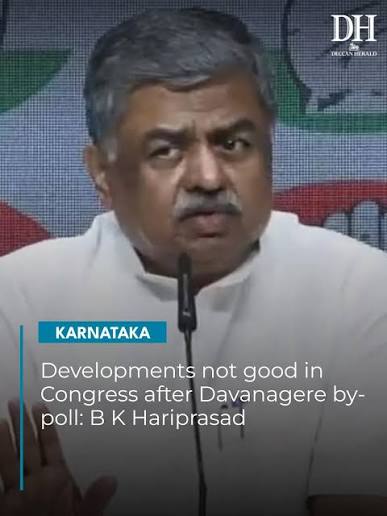
The argument is that if Hariprasad wields power, it would also help organise the party, drawing a parallel to Shivakumar, who held both the DCM and KPCC chief’s posts. BENGALURU: As the countdown begins for cabinet expansion, and Chief Minister DK Shivakumar gears up to fill 20 berths, the name of KPCC chief and MLC BK Hariprasad has come to the fore, springing a surprise. According to sources, former CM Siddaramiah has been backing Hariprasad to be made minister and also floor leader in the Council. The argument is that if Hariprasad wields power, it would also help organise the party, drawing a parallel to Shivakumar who held both the DCM and KPCC chief’s posts. It is to be seen whether Siddaramaiah’s plan materialises when he along with Shivakumar and Hariprasad, call on the high command after LOP in Lok Sabha Rahul Gandhi returns from his foreign trip on Sunday. If Hariprasad misses out on becoming minister, Siddaramaiah’s son and Urban Development Minister Dr Yathindra is likely to be the floor leader. Public Works Minister Satish Jarkiholi was also aspiring to be KPCC chief while keeping his ministerial berth, but the high command turned it down. Now, Satish is feeling let down as Siddaramaiah did not back him to the hilt. Sources said Satish’s relationship with Siddaramaiah began to sour a couple of months before the latter stepped down as CM, after Satish held talks with Shivakumar and his brother DK Suresh, former Bengaluru Rural MP, , say political analysts. Meanwhile, DK Suresh, who is now Bamul Chairman, hosted dinner for select Congress MLAs at a hotel in Bengaluru on Wednesday evening. The legislators, who were were vocal in backing Shivakumar’s claim the CM’s post, included Magadi MLA HC Balakrishna, Channagiri MLA Basavaraj Shivaganga, Maddur MLA Kadaluru Uday, Sira MLA TB Jayachandra, Hoskote MLA Sharath Bachegowda, Ranebennur MLA Prakash Koliwad, Srirangapatna MLA Ramesh Bandisiddegowda and newly elected MLC Vinay Karthik, sources said. In fact, Balakrishna hosted the dinner on behalf of Suresh as a goodwill gesture to keep the MLAs in good humour, they added. Courtesy : TNIE Note: This news is originally published on https:/thenewindianexpress.com/bha and is used purely for non-profit/non-commercial purposes, especially human rights
NC invites 52 leaders across party lines for J&K statehood protest at Jantar Mantar
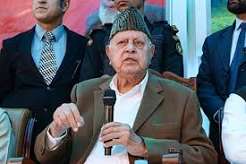
Farooq Abdullah reaches out to INDIA bloc, BJP, regional parties and Mirwaiz Umar Farooq ahead of Parliament’s Monsoon Session SRINAGAR: Jammu and Kashmir’s ruling National Conference has invited 52 political leaders of the country within and outside INDIA Bloc including J&K’s Grand Mufti and Hurriyat Conference chairman and cleric Mirwaiz Umar Farooq to join the protest at Jantar Mantar for statehood restoration to J&K on the opening day of Parliament’s Monsoon session. NC president Farooq Abdullah has reached out to political parties across J&K and leaders from across the country, inviting them to join the peaceful, democratic protest at Jantar Mantar on the opening day of the Monsoon Session of Parliament. “This is not about one party, one region, or one people. It is about defending India’s federal spirit, upholding the Constitution, and demanding the long-overdue restoration of J&K’s statehood as repeatedly promised,” he said. “We hope every democratic voice across the country will stand united in this collective cause”. Among the 52 prominent political leaders invited for the statehood restoration protest include Congress President Mallikarjun Kharge, Sonia Gandhi, Rahul Gandhi, Tamil Nadu CM C Joseph Vijay, TMC chief Mamata Banerjee, SP chief Akhilesh Yadav, NCP (SP) chief Sharad Pawar, Shiv Sena (UT) chief Uddhav Thackeray, former Odisha CM Naveen Patnaik, Asaduddin Owaisi, Y S Jagam Mohan Reddy, Sukhbir Singh Badal, Arvind Kejriwal, M A Baby CPI(M) General Secretary, D Raja of CPI, Kapil Sibal, BSP chief Mayawati, BRS President K. Chandrashekar Rao, AIADMK General Secretary Edappadi K. Palaniswami, former J&K Chief Minister Ghulam Nabi Azad, PDP chief Mehbooba Mufti, J&K Apni Party Chief Altaf Bukhari, J&K Congress chief G A Mir, J&K BJP president Satpal Sharma, Peoples Conference chairman Sajad Gani Lone, Hurriyat Conference chairman and cleric Mirwaiz Umar Farooq and J&K Grand Mufti Nasir-ul-Islam. In his letter, NC president said the central government had repeatedly assured in parliament that statehood would be restored after abrogation of Article 370 and bifurcation of the erstwhile State into two Union Territories by centre on August 5, 2019. He said despite successful conduct of Assembly elections in 2024 and formation of an elected government under Chief Minister Omar Abdullah, the promise of restoring statehood remains unfulfilled. “This is not merely a delay. It is an affront to the democratic will of an entire people,” he said, adding that the continued denial of statehood undermines the federal character of the Constitution and weakens democratic institutions. “Our protest shall be peaceful, democratic, and constitutional — as it must be, and as it shall be. We are not asking for anything beyond what was promised. Our demands shall not transgress from those which have already promised to us. The cause of federalism is not the cause of one party, one people or one region. It is the cause of every citizen of India who believes that the genius of our constitutional order lies in the balance it strikes between unity and diversity,” Abdullah said. He said the stand for restoration of statehood to J&K is to stand for the integrity of that balance — for the proposition that no people should be governed without their consent, and no promise made in parliament should be allowed to lapse into convenient oblivion. “People of J&K have chosen hope — we have chosen the ballot, the Constitution, and the democratic process that all of us in some way or another have been a part of. We deserve to be treated with the same dignity and respect,” the NC president said. “Together, let us send an unambiguous message that the people of J&K remain the guardians of the voice of those who have been made to wait too long,” he added. It would be interesting to see how many of the 52 leaders attend the NC leader’s protest for statehood restoration on July 20 at Jantar Mantar in New Delhi on the opening day of parliament’s monsoon session. After forming the government, CM Omar in his first cabinet meeting passed a resolution on restoration of statehood and handed copies of the resolution to PM Modi, Home Minister Amit Shah, Defence Minister Rajnath Singh and other central leaders but there has been no forward movement on the issue in over one and half year’s rule of NC government. Fayaz Wani Courtesy : TNIE Note: This news is originally published on https:/thenewindianexpress.com/bha and is used purely for non-profit/non-commercial purposes, especially human rights