
Minorities, Dalits and deprived sections must unite to fight for their constitutional rights, say intellectuals

Meeting presided over by Justice Ranjit Singh (Retd.), former Judge of the Punjab and Haryana High Court The representatives of the Sikh, Muslim and Dalit communities, along with intellectuals and social activists, on Saturday resolved to establish a common front to raise concerns over the constitutional rights and equal opportunities of deprived minorities and marginalised sections. The resolution was adopted at a joint meeting of Sikh, Muslim and Dalit thinkers held at Kendri Sri Guru Singh Sabha, here, to mark the 350th martyrdom anniversary of Sri Guru Tegh Bahadur. The meeting was presided over by Justice Ranjit Singh (Retd.), former Judge of the Punjab and Haryana High Court. GeographicReference Former Rajya Sabha MP Mohammad Adeeb said that the Muslims who remained in India after Partition and Sikhs who supported the Indian Union on the assurances of Jawaharlal Nehru and Sardar Vallabhbhai Patel now feel those promises have not been fulfilled. He said that if the BJP seeks to establish a ‘Hindu Rashtra’, it should obtain the people’s mandate through a national referendum. The gathering observed that although India adopted democracy, secularism and constitutional governance after Independence, the successive governments have increasingly pursued policies favouring the majority community and upper-caste interests. Former Chief Justice Iqbal Ansari alleged that the ruling establishment promotes religious polarisation by setting one community against another for electoral gains. Noted Sikh scholar Gurtej Singh, IAS (Retd.), endorsed the proposal for a united platform of minorities and deprived communities and recalled that Sant Harchand Singh Longowal had entrusted him with initiating dialogue with Muslim leaders as early as 1983. The participants further stated that many minorities and deprived communities have been reduced to second-class citizens and are being used as scapegoats for advancing Hindutva politics. They stressed the need for minorities, Dalits and other marginalised sections to unite on a common platform to safeguard their rights and dignity. Among those who addressed the gathering included Prof Sham Singh (President), Dr Pyara Lal Garg, Gurpreet Singh (Global Sikh Council), Daya Singh Delhi, Anzarul Bari, Rajwinder Singh Rahi, Senior Journalist Jaspal Singh Sidhu, Surinder Singh Kishanpura and several other distinguished speakers. Courtesy : The Tribune Note: This news is originally published on https:/thetribune.com/bha and is used purely for non-profit/non-commercial purposes, especially human rights
Dalit rights forum announces protest over ‘rise’ in atrocities across Haryana

The Dalit Adhikar Manch has announced a statewide protest in Haryana against the alleged rise in crimes against Dalits, social discrimination and what it termed government neglect. At a state-level meeting, the organisation decided to hold protests in all districts between July 20 and July 30. During the agitation, memorandums addressed to the CM will be submitted through the respective Deputy Commissioners. Dalit Adhikar Manch convener Ramkumar Bahbalpuria on Saturday alleged that the Dalits were facing increasing social, economic, political and caste-based discrimination under the present government. He claimed that several incidents of atrocities against the Dalits had been reported across the state over the past three months. Bahbalpuria also alleged an increase in cases of harassment and gang rape involving Dalit women and minor girls, claiming that victims were not receiving justice. He further alleged that attempts were being made in some areas to evict Dalit settlements to benefit land mafias. The body also expressed concern over the alleged reduction in and irregularities in scholarships for the Dalit students. It criticised the reported reduction in ration for pink ration card holders following changes to the Food Security Act and the discontinuation of mustard oil supply. Bahbalpuria said after the July protests, the organisation would launch a signature campaign in the Dalit colonies across the state in September and October. A detailed memorandum highlighting its demands will then be sent to the President during the Winter Session of Parliament. Anil Kakkar Courtesy : The Tribune Note: This news is originally published on https:/thetribune.com/bha and is used purely for non-profit/non-commercial purposes, especially human rights
Chandru panel’s reforms to curb casteism in TN schools yet to be fully implemented

The latest incident of assault on a differently-abled Dalit student has led to renewed calls for the comprehensive implementation of the Justice Chandru panel’s recommendations More than two years after retired Madras High Court judge Justice K Chandru submitted a comprehensive roadmap to address caste discrimination in schools, Tamil Nadu has implemented only a part of the recommendations. While the state government cites progress, Justice Chandru says many of the report’s most significant reforms remain unfulfilled, leaving schools vulnerable to recurring tensions. The latest incident of assault on a differently-abled Dalit student by his schoolmates inside a government higher secondary school at Mallal in Sivaganga district on June 14, once again brought the issue into sharp focus. Although the caste angle behind the attack is yet to be established, the fracas renewed calls for the comprehensive implementation of the Justice Chandru panel’s recommendations. Why was the panel constituted? The Chandru committee’s recommendations extend well beyond preventing caste-based clashes on school campuses. They outline a comprehensive framework to foster equality, social justice and a more harmonious atmosphere in educational institutions by addressing the structural and social factors that contribute to discrimination. Constituted in August 2023 after two Dalit siblings were brutally assaulted by their relatively upper-caste classmates in Tirunelveli, the Chandru committee submitted a comprehensive 680-page report. Justice Chandru visited several districts, meeting teachers, educationists and students, including those who were attacked, before finalising his recommendations. The report proposed a multifaceted approach to address the deep-rooted problem. What are the hits and misses? Though the DMK government never announced which of Justice K Chandru’s recommendations had been accepted or rejected, it implemented some of the suggestions. For example, on June 25, 2024, a Government Order was issued directing the removal of caste prefixes and suffixes from school names, one of the suggestions of the panel. The move was subsequently reinforced by the Madras High Court, which directed that no school or college in Tamil Nadu should carry a caste appellation from the 2025-26 academic year. The court specifically ordered the renaming of government-run Kallar Reclamation Schools and Adi Dravidar Welfare Schools. In a subsequent order, it fixed the 2026-27 academic year as the deadline for removing caste names from all educational institutions. However, the recommendation to bring all government schools under the umbrella of the School Education Department, though announced as a policy decision in the assembly, has not been implemented. What are the steps taken by the School Education Department? The School Education Department also issued detailed guidelines to curb recurring incidents of caste-based violence in schools. These included constituting district-level monitoring committees comprising the Chief Educational Officer (CEO), District Child Protection Officer (DCPO) and Superintendent of Police (SP). However, in many districts, these committees have remained largely inactive. The department also advised schools to prohibit students from wearing coloured wristbands or using bicycles with colours that may signify caste identity. Students displaying caste pride are to be counselled sensitively, while the use of mobile phones by students on school campuses has been ordered to be strictly prohibited. Orders have also been issued to transfer teachers found promoting caste or communal sentiments, install grievance boxes in schools, and conduct value education classes, all of which were recommended by the panel. In another reform, all 2,739 government hostels run by the Adi Dravidar and Tribal Welfare Department and the Backward Classes Welfare Department have been renamed Social Justice Hostels. What was the political reaction? However, the state BJP opposed the recommendations of the Chandru committee. The then state president of the BJP, K Annamalai, had argued that it would be counterproductive, adding the dominance of caste differences in schools would increase over the next five years. He suggested that the government factor in the views of all sections, and form a task force to implement the recommendations. On the contrary, the Dravidar Kazhagam, CPI, CPM, VCK, MDMK, and activists for human rights and anti-caste campaigners, welcomed the recommendations on the removal of caste names from schools, banning caste-identifying wristbands and symbols, periodic transfer of teachers, adopting a code of conduct for teachers, and creating institutional mechanisms to monitor caste discrimination. Why did the DMK government not implement it? Asked which of his recommendations needs to be implemented immediately, Justice Chandru said, “Implementation of my recommendations earlier was cosmetic, not substantive. After the submission of my report, the DMK government was in power for two years. Yet, they did not spell out their stand. They did not explain whether they would implement the report in full or issue an order stating which of the suggestions were acceptable. Except for a few like the removal of caste names from the schools, most of my recommendations remain pending.” Justice Chandru said recommendations like orientation programmes for teachers, revising the syllabus for teacher training, and recruiting teachers, should be implemented at the district level and not at the state level. The recommendation on non-posting of headmasters, CEOs, DEOs, and BEOs belonging to the dominant caste of that area in high schools and higher secondary schools is still awaiting implementation. Since his report was recommendatory, it was not placed before the assembly. As a result, the previous regime chose not to take a position on it, he said. What is the TVK’s take on it? As for the ruling Tamilaga Vettri Kazhagam (TVK) in the state, even before coming to power, its functionaries had questioned as to why the DMK government hadn’t implemented the report in full. After wresting power, School Education Minister A Rajmohan went on record saying his government will implement the panel’s report. “So, the present government should take steps to implement both short-term and long-term recommendations. The state government can make a strong statement on implementing them in stages and start discussions with the stakeholders, which can be a good starting point,” Justice Chandru suggested.The report had also recommended holding students’ union election, conducting orientation programmes for the students at the beginning of their academic year, conducting ethics classes, teaching social
‘7.5 crore students affected in 10 years’: Rahul Gandhi calls paper leaks the ‘norm’ at Chhatron Ki Goonj programme in Dehradun
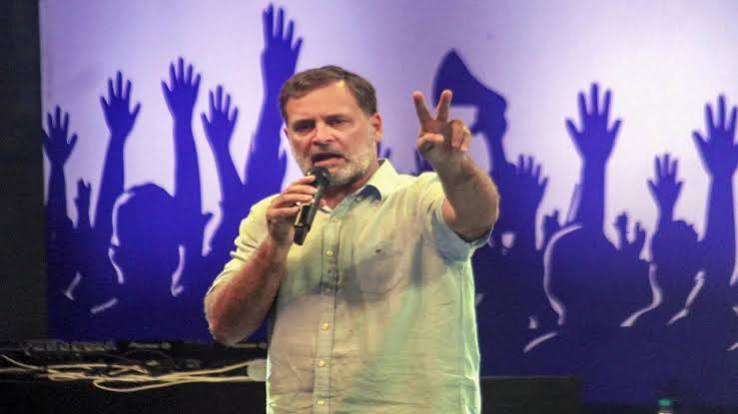
NEW DELHI: Congress leader Rahul Gandhi on Friday said India’s education system has reached a stage where paper leaks have become “the norm”, alleging that the issue affects millions of students and requires a political consensus to resolve. Addressing a student outreach programme, “Chhatron Ki Goonj,” in Uttarakhand’s Dehradun, he clarified that the event was not a political meeting but focused on the concerns, struggles and future of the youth. “This is not a political meet; it’s about youth, their future, struggles and difficulties,” PTI quoted the Lok Sabha leader of opposition as saying. The Raebareli MP further said that more than 7.5 crore students had been affected by paper leaks over the past 10 years, with 152 cases reported but no convictions recorded. “From top to bottom, the entire education system is involved in paper leaks,” he claimed, adding that “advanced technology” was being used to carry out such frauds. “If you have crores, you can select from a menu card of paper leaks,” the Congress leader stated. Rahul Gandhi also called for a political consensus to end paper leaks, stressing that all parties must implement measures to protect students. “There can be political consensus on ending paper leaks which everyone must implement,” he added. Calling for reforms in the examination system, he argued that the existing model was “outdated” and needed to evolve. “The current exam testing system is of the 19th century; we must evolve a 21st-century system,” the asserted. He proposed shifting from a government-centric to a student-centric examination framework, with secure question banks and randomised question papers to prevent leaks. “Today’s exam system is government-centric; we want a student-centric system,” he maintained. Rahul Gandhi also demanded protection and compensation for students affected by paper leaks, along with immediate re-examinations for those impacted by compromised tests. On educational institutions, he argued that political organisations should not control campuses and that vice-chancellors should not be appointed from a single organisation. “No political party or organisation should have a hold on any educational institution; VCs shouldn’t be from one organisation,” Rahul Gandhi stated. He further claimed that the current system benefits a small section while harming honest students. “One per cent uses the system, follows the path of paper leaks and hurts the 99 per cent others who are honest and poor,” he concluded. Courtesy : TOI Note: This news is originally published on https:/timesofindia.com/bha and is used purely for non-profit/non-commercial purposes, especially human rights
Cong netas’ comments keep speculation about alliance with SP alive

Lucknow: Even as Congress MP Rahul Gandhi and Samajwadi Party (SP) chief Akhilesh Yadav appear aligned on fighting the BJP together in the 2027 Uttar Pradesh assembly elections, repeated comments by a section of Congress leaders have kept speculation alive about the future of the alliance. Over the past three months, at least three episodes involving Congress functionaries have reignited debate over the SP-Congress relationship, prompting political observers to question whether the state Congress is deliberately keeping the issue alive as part of a negotiating strategy or for other political considerations. The developments come despite Akhilesh reportedly directing SP functionaries not to make loose statements on the alliance. Political analysts say such public sparring risks projecting an image of a divided opposition. “This may not sit well with voters who backed the INDIA bloc in the 2024 Lok Sabha elections, when the alliance won 43 seats in Uttar Pradesh and restricted the BJP-led NDA to 36,” said a political commentator. “At the same time, it is difficult to believe state-level Congress leaders would repeatedly make such statements without approval from the party’s central leadership.” Senior SP functionaries see a pattern in the recent remarks. According to them, some Congress functionaries appear keen on generating headlines, even if it contradicts Rahul Gandhi’s publicly articulated position on opposition unity. They argue that recurring media reports suggesting friction between the two parties only benefit their political rival, the BJP. Rahul’s July 1 birthday greeting to Akhilesh on social media had briefly quelled speculation. “With the participation of PDA, we will together fulfil the resolve for social justice,” he wrote. However, the debate resurfaced on July 13 when Congress MP from Saharanpur Imran Masood suggested that any future alliance in UP should be based on a 50-50 seat-sharing arrangement. He also argued that the SP stood to gain more from the alliance than the Congress, citing the SP’s tally of 37 Lok Sabha seats in 2024. The latest controversy is not the first sign of divergence between Congress’s central and state-level functionaries. Ahead of the 2024 Lok Sabha elections, Rahul Gandhi and Akhilesh Yadav finalised a seat-sharing arrangement under which Congress contested 17 seats. Subsequently, Congress sought the inclusion of Shravasti as an 18th seat, a demand the SP rejected. The matter was settled only after senior Congress leader Mukul Wasnik announced that the 17-seat formula was final. The SP went on to field Ram Shiromani Verma from Shravasti, who defeated BJP candidate Saket Misra. Another flashpoint emerged on May 20 this year when Barabanki MP Tanuj Punia and Congress Scheduled Caste wing chief Rajendra Pal Gautam tried to pay visit BSP chief Mayawati at her Lucknow residence. It came while Rahul Gandhi was in Amethi and reportedly prompted the Congress leadership to seek an explanation from the two leaders. Weeks later, Gautam was appointed the party’s Uttar Pradesh in charge. Tensions escalated further in June after Masood questioned the SP’s leadership structure, Muslim representation and future seat-sharing plans. The SP responded by urging the Congress high command to rein in the MP. While SP functionaries declined to comment officially on Masood’s latest remarks, they rejected his assertion that the SP was more dependent on the alliance. One party functionary pointed out that the idea of the INDIA bloc was floated by Rahul Gandhi and that Bihar chief minister Nitish Kumar was sent to persuade Akhilesh to join the grouping. Responding to Masood’s allegation that the SP remains silent on Muslim concerns, the SP camp noted that the party had four Muslim MPs among its 37 Lok Sabha members and 32 Muslim MLAs in the Uttar Pradesh assembly. “They could not have been elected from Muslim-dominated constituencies if voters believed the party did not represent their concerns,” a functionary said. SP functionaries also disputed Masood’s contention that the alliance benefits the SP more because Congress is a national party. They pointed to Congress’s defeats in Punjab (2022) and Haryana (2024), where it contested without significant alliance support, and argued that electoral data from other states does not support such claims. For now, despite periodic flashes of discord, the Congress and SP leaderships continue to signal commitment to opposition unity. Whether the public messaging from sections of the Congress reflects negotiation tactics or deeper unease within the alliance remains an open question as both parties begin positioning themselves for the 2027 battle in UP. Courtesy : TOI Note: This news is originally published on https:/timesofindia.com/bha and is used purely for non-profit/non-commercial purposes, especially human rights
CM Yogi sends min to defuse outrage over Dalit student murder in Meerut, orders wider probe into police role

Meerut: Days after the alleged police crackdown on Dalit protesters in Meerut snowballed into a major political flashpoint, the Yogi Adityanath govt has moved to contain the fallout by deputing Asim Arun, minister in charge of Meerut, former IPS officer and a prominent Dalit face in the BJP, “to personally intervene“ in the case. The controversy erupted after videos surfaced showing Meerut SSP Avinash Pandey allegedly assaulting Dalit protesters and a lawyer inside a police vehicle during demonstrations over the murder of a 20-year-old Dalit college student. The visuals triggered sharp opposition criticism, with rival parties accusing the govt of suppressing protests over the killing. After meeting the victim’s family, Arun sought to reassure them of a fair investigation. “I discussed their demands in detail. I am confident the probe will be impartial and the family will be satisfied with the outcome,” he said on Friday. Arun said CM Yogi had “personally“ directed him to visit Meerut and expedite action. “The CM has taken the matter very seriously and asked me to come to Meerut immediately. I met the family and officials concerned. I am confident the investigation will deliver the outcome the aggrieved family expects,” he said. He added that the inquiry would not be confined to the murder accused but would also scrutinise conduct of police. “If negligence or accountability is established at any level during the investigation, action will be taken against those responsible in accordance with the law,” he said. Arun confirmed that Brahmpuri circle officer Saumya Asthana had been transferred after the family expressed a lack of confidence in the investigation. He said DIG, Meerut rRange, had also ordered a departmental inquiry to examine why no effective action was taken during the 50 days between the student’s disappearance and the July 8 protests. “Appropriate action will follow based on the findings,” he said. The minister confirmed that a PAC constable, who is related to the main accused, has been suspended, arrested and sent to jail for his alleged involvement in the case. The main accused Ankush Kumar was already arrested and another accused Ankit is also behind bars. Responding to questions about the police’s use of force against protesters, Arun said, “Everything is under scrutiny. The police must also act with sensitivity so that situations do not escalate to a flashpoint.” The minister further announced an inquiry into circumstances under which an FIR was registered against Dalit protesters after police dispersed the July 8 demonstration by force and arrested eight protesters, who were later sent to jail. The victim, a 20-year-old BA final-year student, had gone missing on May 15 after leaving home to appear for an examination. Her body was later recovered from a sugarcane field. Police arrested her alleged boyfriend, Ankush Kumar, claiming he killed her following an argument. However, the family has consistently questioned the local police investigation, alleging serious lapses and demanding a comprehensive, impartial probe. Courtesy : TOI Note: This news is originally published on https:/timesofindia.com/bha and is used purely for non-profit/non-commercial purposes, especially human rights
No role in IPS postings, dalit representation in cabinet: Thiruma

Madurai: A false narrative was being built that VCK influenced IPS postings and dalit representations in cabinet, with the aim of portraying the govt as acting at his behest, VCK chief Thol Thirumavalavan said at a news meet in Madurai on Friday. Terming it “100% false,” he said TVK appointed only six scheduled caste ministers, while two others were selected separately by the Congress and VCK as coalition partners. Thirumavalavan said even these appointments were being used to ask whether TVK was “a party serving a particular caste” or giving importance to one community. He denied having any role in appointments, including that of a police officer, and asked why the officer was later removed if the claim was true. He said an OBC-versus-dalit narrative was being circulated to turn other communities against the govt. He asked why DMK and AIADMK had not been questioned for failing to provide scheduled caste communities cabinet representation based on their population, while traditionally limiting posts to representatives from three communities. Thirumavalavan said VCK had sustained itself in electoral politics for 25 years while several movements that began during the same period had lost momentum. He said the Aug 17 Tamil National Awakening Conference would focus on state autonomy and abolition of caste. Asked by reporters about TVK being cordial with PMK, Thirumavalavan said there was nothing wrong with maintaining cordial personal relations. “There is a good understanding between TVK and VCK. There is no gap between us,” he said. On an Ambedkar statue kept unopened for years at Pudaiyur near Gangavalli in Salem district, he asked the govt to simplify permission procedures, empower collectors to grant approvals, remove iron cages around Ambedkar statues and quash cases filed against those who protested demanding the statue. He also condemned the late-night questioning of journalist Vijayan, saying authorities must not intimidate journalists, and urged the chief minister to consider a CBI investigation sought by the family in the Sabari custodial death case in Kanyakumari. Courtesy : TOI Note: This news is originally published on https:/timesofindia.com/bha and is used purely for non-profit/non-commercial purposes, especially human rights
Attack on Dalit Priest in Rajasthan, Conspiracy to Evict Him from Temple

The Khakhul Dev Temple in Barana was established by the Dalit community approximately 400 years ago. As long as the temple generated no income, no one objected. However, as donations began pouring into the temple, the Manuwadis became increasingly suspicious. Manuvadvisers attack Dalit priest Vishnu Kumar Balai in Barana village, Bhilwara district. Bhilwara. There are reports of an attack on Dalit priest Vishnu Kumar Balai in Barana village, Bhilwara district, Rajasthan. The Khakhul Dev Temple in Barana was established approximately 400 years ago by a Dalit (Balai) priest family. This family has served it for eight generations. As long as the temple generated no income, no one objected. But as the temple’s income improved the lives of the Dalit priest, with children attending English schools and a permanent house being built, attempts to seize the temple began. A fake trust was formed, a dispute was created, and the temple was placed under the Tehsildar’s custody. According to the FIR, Vishnu Kumar, who had come to perform puja on July 16, 2026, was subjected to casteist slurs. He was attacked with sticks and iron pipes, and an attempt was made to kill him. Police have registered a case under sections of the BNS and SC/ST (PoA) Acts. The incident was reported by Bhanwar Meghvanshi, a social activist and member of the Dalit Adivasi and Nomadic Rights Campaign (Dagar). Meanwhile, the Dalit Adivasi and Nomadic Rights Campaign (Dagar) has demanded that the National Commission for Scheduled Castes take suo motu cognizance and send an investigation team. The temple should either be returned to its traditional Dalit priest family or placed under the Devasthan Department until a court decision. Given the continued attacks, Vishnu Kumar should also be granted a weapons license for self-defense. Dagar has sent a letter to the National Commission for Scheduled Castes and the Director General of Police of Rajasthan, demanding the immediate arrest of all the accused, the victim’s family security, compensation, and legal redress, and an impartial investigation of the entire matter. Bhanwar Meghvanshi says, “But the biggest question is: when the temple is under government control, who gave the violent mob the freedom to take the law into their own hands? Why was the administration unable to protect the Dalit priest? Is the law only on paper?” Courtesy: Hindi News
Innocent girls were traded for 1.5 lakh rupees: Learn about the exploits of this human trafficking gang, which spanned from Uttar Pradesh to Rajasthan.
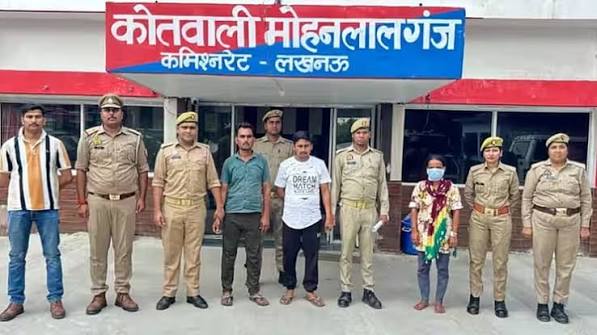
A human trafficking racket spanning Uttar Pradesh and Rajasthan has been busted. Innocent girls were traded for 1.5 lakh rupees in the name of marriage; 3 arrested. Uttar Pradesh: Police in the capital Lucknow have busted a major interstate child trafficking ring that sold innocent girls in Rajasthan under the guise of marriage. These girls were traded for up to 1.5 lakh rupees. Police have arrested three adults, including a woman, and a minor in this case. The search for the gang’s main leaders, based in Rajasthan, has been intensified. This horrific syndicate was exposed when Kamlesha, a resident of Ganiyar village in Mohanlalganj, filed a complaint with the police on May 12th. She reported that her two granddaughters, aged 16 and 12, had suddenly gone missing. The investigation revealed that the girls were kidnapped under the pretext of reuniting them with their estranged mother and providing them with a better life. Since the case involved minor girls, the police took immediate action and deployed four special teams in plain clothes. Footage from approximately 150 CCTV cameras was scanned during the investigation. Although the girls’ mobile phones were switched off, their location was traced to Rae Bareli using technical surveillance and ground intelligence. Acting swiftly, the police safely rescued both sisters on May 18th. The victims’ statements, recorded under the Indian Civil Defence Code, revealed a disturbing truth: the girls were being taken to Rajasthan for forced marriage and sold. Based on solid evidence, the police arrested the main suspects from Atrauli intersection on June 3rd. Those arrested include 25-year-old Anurag Yadav, 32-year-old Mohammad Akhtar, 23-year-old Priya Patel alias Sheela, and a 17-year-old juvenile. Additional DCP (South) Vasant Kumar Rallapalli stated that the investigation revealed several shocking revelations. This entire network had been active between Uttar Pradesh and Rajasthan since 2020. During interrogation, it was revealed that accused Priya Patel had contacted a woman named Sonam, who lived in Kota, Rajasthan. Priya, along with her live-in partner Anurag and associate Akhtar, began targeting orphans or girls from poor families whose families could not easily reach the police. This vicious gang lured girls by promising them jobs, travel, and a better life. In this latest case, the accused gained the girls’ trust and took them to Rae Bareli. There, they were dressed in new clothes and photographed. These photos were then sent via WhatsApp to Sonam and her husband, Bhupendra Chaudhary, in Rajasthan. Once the girls’ faces were “approved,” the deal was finalized. According to the police, the plan was to take the girls to Bambori in Kota district, where Priya was to receive ₹1.5 lakh per girl. Investigators have also uncovered important clues indicating that two sisters from Rae Bareli were previously sold through this network. Police have also seized two four-wheelers used to transport the girls from one district to another. According to Additional DCP Rallapalli, this is a highly organized gang, with pre-determined roles. Currently, the police are focused on arresting the masterminds, Sonam and Bhupendra Chaudhary, who are based in Rajasthan, and identifying other victims, for which raids are being conducted. Rajan Chaudhary Courtesy: Hindi News
UP police, searching for a Dalit son, woke a sleeping father; his body was found hours later; a murder case has been filed against six people, including a sub-inspector and a constable.

In Ballia, UP, police, searching for a son, detained a Dalit father. Following the suspicious death, a murder case has been filed against six people, including a sub-inspector, a constable, and the village head. Uttar Pradesh: A particularly tragic incident has come to light from Ballia district. Police arrived at the home of a 22-year-old man in search of him, but when they failed to find him, they detained his 44-year-old Dalit father. A few hours later, the laborer father died under suspicious circumstances. The deceased has been identified as Kamji Gond. The family alleges that the police severely beat and tortured Kamji to extract information about their son. A named FIR has been filed against two policemen, a village head, and three others for murder. The accused policemen have been suspended with immediate effect. However, the police have completely denied any allegations of custodial assault. Following the incident, the deceased’s family and villagers staged a massive protest. They alleged that the police assaulted Kamji, threw him unconscious in a field, and fled, where he later died in the hospital. Based on a complaint by Kamji’s son, Vishal, a murder case has been registered at the Revati police station against six people: Sub-Inspector Sachin Saroj, Constable Ankit Singh, Village Head Ashutosh Shankar Singh, and three local citizens. Ballia Superintendent of Police Omveer Singh stated that the accused inspector and constable have been suspended. SP Omveer Singh also stated that the SHO of Revati police station, Raj Kishore Singh, has been removed from his post and placed on the line. Given the seriousness of the matter, a magisterial inquiry has been ordered. No arrests have been made yet, and two of the accused belong to the Dalit community. The actual conflict began on July 7th. The deceased’s son, Vishal, had an argument with shopkeeper Suraj Kannaujiya over purchasing chicken at a shop near Khedan intersection in Gaighat village. The argument quickly escalated into a scuffle, which was later resolved with the intervention of local residents. Vishal claims that under pressure from the village head and others, the shopkeeper filed a complaint of assault against him. Based on this complaint, two policemen arrived at Vishal’s house at 1:20 pm on July 8th in search of Vishal. Vishal was not at home, so the policemen picked up his father, Kamji, who was sleeping there. The son alleges that the police took his father to a nearby brick kiln and brutally assaulted him to force him to reveal Vishal’s hiding place. According to family members, when Kamji fell unconscious due to the severe beating, the policemen abandoned him in a garden near the brick kiln and fled. Around 6 pm, locals found him unconscious and informed the family. He was immediately taken to a nearby hospital, where a team of doctors referred him to Varanasi. Kamji died while undergoing treatment at the Varanasi hospital. On the other hand, the police version is completely different. The police department states that Kamji began experiencing breathing difficulties during interrogation. According to officials, he was left in the custody of a neighbor at around 4 pm on July 8th, and that neighbor took him away. The police have denied the allegations of assault and abandonment. The police also clarified that the post-mortem report could not confirm the exact cause of Kamji’s death. Consequently, doctors have preserved the viscera for forensic examination, the report of which is currently awaited. Furthermore, the police also informed that the complainant, Vishal, already faces several serious criminal charges, including murder. Following this incident, the angry family refused to cremate the body, demanding strict action against the accused. After massive protests, when the police filed a murder case against the named accused, the family agreed to proceed with the funeral. Rajan Chaudhary Courtesy: Hindi News