
Kerala minister’s intervention sought over alleged denial of PhD to dalit researcher

Thiruvananthapuram: A group of students and research scholars from the University of Kerala’s (KU) department of Sanskrit studies has submitted a petition to higher education minister Roji M John, seeking urgent intervention in the case of dalit researcher Vipin Vijayan, who was allegedly denied a PhD despite completing all prescribed academic stages. According to the petition, Vijayan completed the research admission process, progress assessments, synopsis presentation, periodic reviews and thesis submission. His thesis was also evaluated by external examiners. However, objections that could delay the award of the degree were raised only during the final open defence. The petitioners said claims that Vijayan lacked adequate knowledge of Sanskrit were raised at a late stage, despite several earlier opportunities to assess his academic standards and language proficiency. They alleged that the failure to raise such objections during the initial stages raised questions about the neutrality and transparency of the process. They also pointed out that the same teacher who had guided Vijayan’s MPhil research and certified its successful completion had allegedly claimed that he lacked proficiency in Sanskrit. The petitioners said the contradiction warranted a detailed inquiry. The petition stated that the delay had affected Vijayan’s mental well-being and career prospects, leaving him unable to apply for other jobs. Citing Article 46 of the Constitution, the petitioners urged govt to examine whether caste-based prejudice or personal bias had influenced the proceedings. They clarified that they were not seeking any special concession, but a fair process free from discrimination. They sought an independent inquiry into the entire PhD process and urged govt to direct the university to award the degree if no procedural impediment was found. If corrections were required, these should be communicated in writing and Vijayan should be given a reasonable opportunity to address them, they said. They also called for urgent intervention in accordance with UGC norms. Courtesy : TOI Note: This news is originally published on https:/timesofindia.com/bha and is used purely for non-profit/non-commercial purposes, especially human rights
Dalit woman alleges caste-related abuse and death threats for demanding her son’s wages
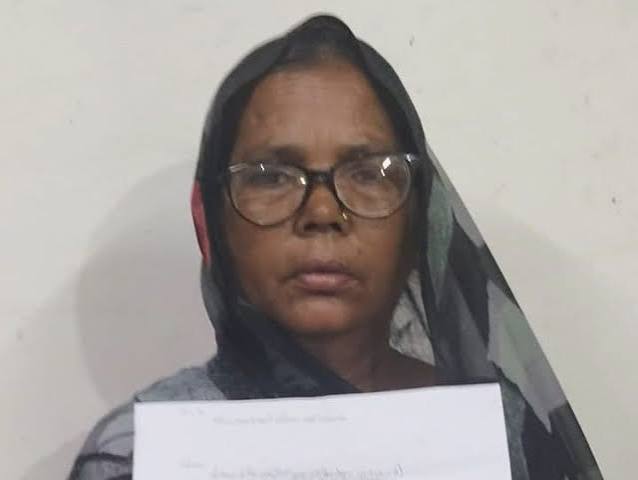
A Dalit woman in the village of Poore Khirodhar, under the Patti police station area, has alleged that she received caste-related abuse and death threats for demanding her son’s wages. The woman has filed a complaint with the Patti police. According to the complainant, Murti Devi, her son, Shivam, alias Chikki, worked as a daily wage laborer for a man in the village. When Shivam went to demand his wages, he was refused payment. It is alleged that during this time, Shivam was subjected to caste-related abuse, abuse, and threats of assault and death. Murti Devi has demanded that the police take cognizance of the matter, register a case against the accused, and take necessary legal action. She has also requested that the police ensure the safety of her and her son’s lives and property. In this regard, Station House Officer (SI) Vijay Yadav stated that he has received the application. The matter is being investigated, and further action will be taken based on the investigation. Amar Jeet Sharma | Patti, Pratapgarh Courtesy: Hindi News
Gujarat Police Firing Case: Father of Dalit Teen Killed in 2012 Dies by Suicide After 14-Year Fight for Justice

A 53-year-old father who had spent nearly 14 years seeking justice for his teenage son, who was killed in the 2012 Thangadh police firing in Gujarat’s Surendranagar district, has died by suicide. Amarshibhai Sumra reportedly jumped in front of the Hapa-Mumbai train near Thangadh and Lakhmanchi during the night. His 16-year-old son, Pankaj Sumra, was among three Dalit youths killed in police firing in Thangadh 14 years ago. Son Was Killed in 2012 Police Firing The incident took place in September 2012 following a clash between members of the Dalit and Bharwad communities during the Tarnetar fair in Thangadh. Police opened fire following the confrontation, killing three Dalit youths — Mehul Rathod, Pankaj Sumra and Prakash Parmar. The police action triggered widespread criticism and questions over whether the firing was justified. Following the incident, the Gujarat government constituted a Special Investigation Team (SIT) to investigate the circumstances surrounding the deaths. The SIT visited Thangadh and inspected the fairground and railway gate. It also reportedly took measurements to determine the location of the firing and recorded the sites on video. Family Says Justice Remained Elusive Despite 14 years having passed, the families of the three youths continue to demand justice. They have alleged that the investigation report has never been made public. Amarshibhai had continued to pursue the matter since his son’s death, seeking accountability for the police firing. Family members said he was particularly distressed on Raksha Bandhan after seeing his daughters grieving over their brother. He later took the extreme step near a memorial dedicated to the three youths. His death has once again brought attention to the long-pending Thangadh firing case and the demand for the SIT report to be made public. Railway Police Begin Investigation Railway police reached the spot after receiving information about Amarshibhai’s death and began an investigation. His death has also raised fresh questions over the status of the 2012 police firing investigation, including why the SIT report has remained undisclosed for so long and when the families of the deceased youths will receive justice. Courtesy : TOP Note: This news is originally published on https:/theobserverpost.com/bha and is used purely for non-profit/non-commercial purposes, especially human rights
SC/ST welfare minister sees Dalit politics behind Manjhi-Chirag row
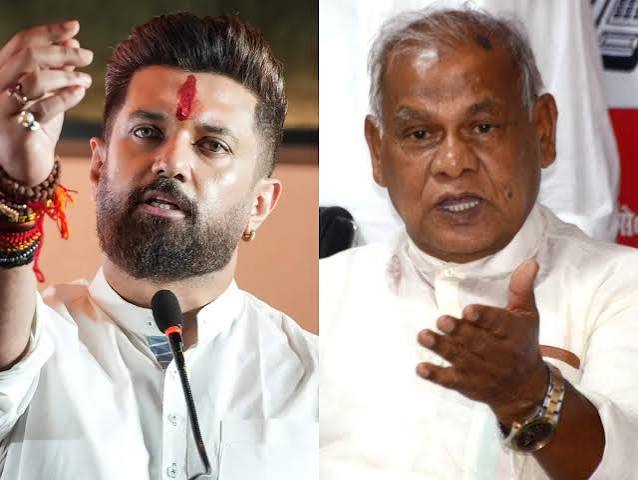
Patna: BJP neta and SC/ST welfare minister Lakhendra Kumar Raushan on Monday said the war of words between Union ministers Jitan Ram Manjhi and Chirag Paswan over the demand for a review of the SC/ST reservation system was largely aimed at establishing themselves as the principal political figures of the Dalit community in Bihar. Raushan said both Manjhi’s HAM(S) and Chirag’s LJP(RV) were part of the NDA at the Centre and in Bihar, questioning why the issue had become a source of confrontation between them. With the Supreme Court allowing sub-categorisation within Scheduled Castes and empirical data available in Bihar to identify relatively more deprived communities, Raushan said the issue should be approached sensitively and without political posturing. “Both Manjhi and Chirag are senior NDA netas. They should first honestly start giving opportunities to other people from their respective communities to contest elections from SC-reserved constituencies,” Raushan told this newspaper. He questioned how many people outside their families had been helped by the two to advance politically. Raushan, who belongs to the Paswan community, said reservation was a constitutional right and should not be treated as charity. He said as long as Narendra Modi remained Prime Minister, nobody could tamper with reservation or alter its basic framework. The minister said a war of words would not resolve the issue and termed demands for ministers’ resignations over the controversy futile. RJD state president Mangani Lal Mandal said there was nothing wrong with reviewing reservation arrangements, arguing a review did not mean its abolition. Senior BJP functionary and revenue and land reforms minister Dilip Kumar Jaiswal took a cautious stand, saying both Manjhi and Chirag were right from their respective perspectives. Former CM Nitish Kumar had created the Mahadalit category in 2007, covering 18 of Bihar’s 22 Dalit castes, to identify communities facing greater deprivation. Manjhi has sought sub-categorisation for greater benefits to the Musahar community, while Chirag fears such a move could affect the Paswan community’s political position within the larger Dalit constituency. Courtesy : TOI Note: This news is originally published on https:/timesofindia.com/bha and is used purely for non-profit/non-commercial purposes, especially human rights
PSC ‘scam’ case: ED raids multiple locations in Chhattisgarh, including ex-CM Baghel’s PA

RAIPUR: The Enforcement Directorate on Tuesday conducted searches at multiple locations in Chhattisgarh, including at the premises of a personal assistant of former chief minister Bhupesh Baghel. The searches are part of a money laundering probe linked to alleged irregularities at the state Public Service Commission, officials told news agency PTI. Officials said a total of seven locations are being raided as part of the investigation launched under the Prevention of Money Laundering Act (PMLA). The probe relates to alleged irregularities in the Chhattisgarh Public Service Commission (CGPSC). The premises being searched include those of K K Chandrakar, former chief minister Bhupesh Baghel’s personal assistant, officials said. Further details are awaited. Courtesy : TOI Note: This news is originally published on https:/timesofindia.com/bha and is used purely for non-profit/non-commercial purposes, especially human rights
Telangana BJP chief N Ramchander Rao house-arrested ahead of Nalgonda visit

HYDERABAD: A political row erupted in Telangana on Tuesday after BJP state president N Ramchander Rao was placed under house arrest, with the party alleging that he was stopped from travelling to Nalgonda following an attack on the residence of district BJP president Nagam Varshit Reddy. Rao was scheduled to meet Reddy and his family after the latter’s residence was reportedly vandalised and his family members, including his mother, were allegedly assaulted by Congress workers on Monday evening, the state BJP said. In a post on X, Telangana BJP accused the Congress government of failing to take strict action against those responsible for the alleged attack and instead preventing Rao from visiting the affected family. The party said Rao had planned to travel to Nalgonda to meet Reddy and express solidarity with his family. It alleged that placing the state BJP chief under house arrest was an attempt to stop him from visiting the district. The development comes days after Rao hit out at Lok Sabha Leader of Opposition Rahul Gandhi over his remarks on a ‘Shuddhikaran’ (purification) ritual following Congress president Mallikarjun Kharge’s visit to Uttarakhand. Speaking to ANI on Sunday, Rao accused Gandhi of indulging in “cheap politics” and misinterpreting the ritual, claiming that members of the Dalit community had also taken part in it. Rao alleged that Gandhi was attempting to divide people on regional and caste lines and accused him of trying to create a divide between North and South India. “He wants to twist the facts and mislead the people,” Rao said, while alleging that Gandhi was also seeking to create divisions on caste lines in Uttar Pradesh. Rao also targeted Kharge, alleging that the Congress had opposed BR Ambedkar and defeated him in elections, besides claiming that the party did not confer the Bharat Ratna on him. Courtesy : TOI Note: This news is originally published on https:/timesofindia.com/bha and is used purely for non-profit/non-commercial purposes, especially human rights
Vaiko backs Rahul as PM candidate; Tagore, Praveen Chakravarthy meet Vijay
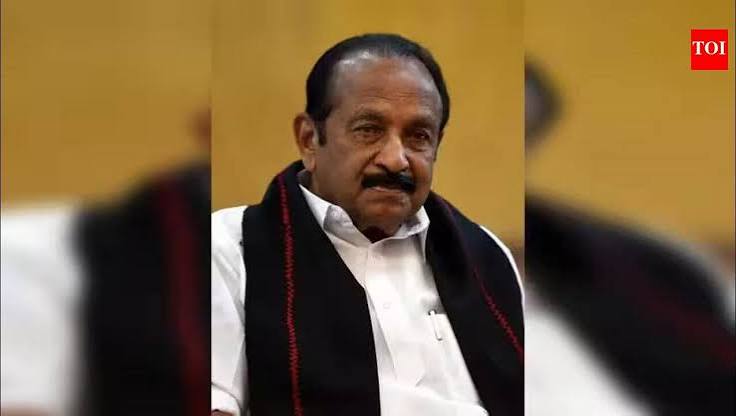
Chennai: A day after Tamil Nadu tourism minister R Rajesh Kumar warned that Congress would pull its two ministers out of the state cabinet if TVK failed to accept Rahul Gandhi as the prime ministerial candidate for the 2029 Lok Sabha election, the ruling party chose not to respond publicly. Meanwhile, TNCC president Manickam Tagore and Congress MP Praveen Chakravarthy separately met chief minister C Joseph Vijay on Monday. TVK’s silence and the visit of Congress leaders signalled an effort by both sides to defuse the situation. Manickam Tagore said in an X post that not all surveys reflect public sentiment, a reference to the survey by a media house that said Vijay was third most popular PM candidate in the country next to PM Narendra Modi and Rahul Gandhi. “Sometimes, numbers shown as voice of people are weapons intended to split people,’’ he said. Narrating a short story titled ‘a fox’s fake survey,’ Tagore said there are attempts to drive wedge between two friends through ‘fabricated numbers.’ Speaking at a public meeting in Kanyakumari on Sunday, Rajesh Kumar said Rahul Gandhi would be Congress’s prime ministerial candidate in 2029. He said the two Congress ministers in Tamil Nadu cabinet would quit if TVK refused to accept Rahul as PM candidate. The statement was a result of TVK ministers projecting Vijay as prospective PM candidate. On Monday, MDMK general secretary Vaiko joined the debate, backing Rahul Gandhi as the prime ministerial candidate and urging Vijay to restrain TVK ministers. “Congress party leads INDIA bloc at the national level. Therefore, Rahul Gandhi is the only viable PM candidate from the alliance. There is simply no alternative,’’ he told reporters in Tirunelveli. Vaiko said Vijay would not have such aspirations and that it was the TVK ministers who were making remarks projecting Vijay as the PM candidate. “Ministers should not speak haphazardly about these matters. CM must direct the ministers to avoid such statements in the future,” said Vaiko. Meanwhile, Congress MLA Tharahai Cuthbert was allotted front row among leaders of opposition parties triggering speculation it was a fallout of Rajesh Kumar’s speech. However, Tagore clarified in a statement that it was a routine administrative exercise after her election as the party’s legislative leader. Speaker J C D Prabhakar also clarified that Cuthbert was allotted the seat because of her designation as floor leader. Courtesy : TOI Note: This news is originally published on https:/timesofindia.com/bha and is used purely for non-profit/non-commercial purposes, especially human rights
The Dalit enigma: Why Mayawati is going solo in Punjab
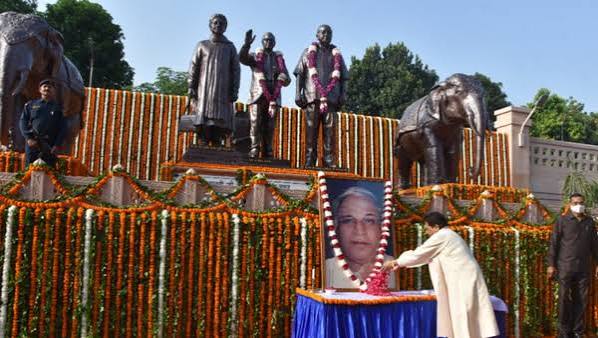
Bahujan Samaj Party (BSP) chief Mayawati has decided to go solo in the upcoming 2027 Punjab assembly election. This move has put the spotlight on a striking contradiction in the state’s politics: Punjab has India’s highest proportion of Scheduled Castes, but no political party has been able to turn that numerical strength into a durable Dalit vote bloc. On August 25, Mayawati announced that the BSP would contest the polls “alone without any alliance or compromise with anyone”, arguing that electoral tie-ups risked weakening the party’s vote share and demoralising its cadre. The decision carries particular significance in Punjab, where BSP founder Kanshi Ram began his political journey and where Scheduled Castes account for 31.94% of the population, according to the 2011 Census. Yet nearly one-third of Punjab’s population has never translated into nearly one-third of the vote for the BSP – or any other Dalit-centric political formation. Instead, the Dalit electorate has remained divided across caste, religious, regional and economic lines, allowing the Congress, AAP, SAD and BJP to each build pockets of support within it. That makes Mayawati’s 2027 gamble less about the size of Punjab’s Dalit population and more about a difficult political question: Can she turn the state’s 32% Dalit population into a coherent electoral bloc? Punjab’s number paradox The numbers explain why every major political party wants a share of the Dalit vote. Punjab had about 88.6 lakh Scheduled Castes in the 2011 Census, accounting for 31.94% of its population – the highest SC proportion among Indian states. The community is particularly concentrated in the Doaba region, which includes Jalandhar, Hoshiarpur and Nawanshahr. Eight of Doaba’s 23 assembly constituencies are reserved for SC candidates, while both Lok Sabha constituencies in the region, Jalandhar and Hoshiarpur, are reserved. Across Punjab, 34 of the 117 assembly seats are reserved for Scheduled Caste candidates. But the political influence of Dalit voters extends far beyond these constituencies. A 2021 analysis by Lokniti-CSDS professor Sanjay Kumar found that Dalits accounted for more than 30% of voters in 54 assembly constituencies and between 20% and 30% in another 45. In other words, Dalit voters can influence far more than the 34 seats formally reserved for them. But there is a crucial caveat: ‘Dalit’ is not a single political identity in Punjab. The community comprises several sub-caste and religious groups, including Ravidassias/Ad-Dharmis, Mazhabi Sikhs, Ramdasias and others. Their geographical distribution, religious affiliations, economic circumstances and political histories differ. That fragmentation has repeatedly prevented the kind of consolidated Dalit politics that emerged around the BSP in Uttar Pradesh. Punjab’s agrarian structure adds another layer. Land and economic power remain disproportionately concentrated among dominant agrarian communities, particularly Jat Sikhs. As a result, Dalit politics in the state often revolves around land rights, employment, reservation, social dignity and access to common resources, rather than caste identity alone. From Kanshi Ram’s Punjab to BSP’s high-water mark The irony is that Punjab was once among the BSP’s strongest political laboratories. Kanshi Ram, born in Punjab, built his early political movement around the mobilisation of Scheduled Castes and other marginalised communities before founding the BSP in 1984. The party’s breakthrough in Punjab came in the 1992 election. It won nine of the state’s 117 seats with 16.32% of the vote, emerging as the principal opposition party in the House. Six of those nine seats came from Doaba, underlining the region’s importance to the party’s political project. But the breakthrough proved difficult to sustain. In 1997, the BSP’s tally fell to one seat, although it still secured 7.48% of the vote. Its vote share then declined steadily — to 5.69% in 2002, 4.13% in 2007 and 4.29% in 2012. By 2017, it had fallen to 1.52%. In 2022, the BSP won just one seat with 1.77% of the vote, contesting as part of its alliance with the Shiromani Akali Dal. The steep decline in three decades captures the central problem Mayawati now faces. How 2022 exposed the paradox If the BSP’s decline showed the difficulty of sustaining Dalit-centric politics, the 2022 assembly election demonstrated how effectively mainstream parties can cut across caste identities. The AAP won 92 of Punjab’s 117 seats with 42.01% of the statewide vote, while Congress was reduced to 18 seats. The AAP’s performance was particularly striking in SC-reserved constituencies. It won 29 of the 34 reserved seats, while Congress won four and the SAD-BSP alliance one. The result also undercut the assumption that Congress’s elevation of Charanjit Singh Channi as Punjab’s first Dalit CM would automatically consolidate the Dalit vote behind the party. Channi became CM in September 2021, just months before the election. His elevation was widely viewed as an attempt to appeal to the state’s huge Dalit electorate. But in March 2022, Congress suffered a dramatic defeat. SAD and its alliance route The SAD has historically had its own Dalit support base, particularly among Sikh Dalits. Its alliance with Mayawati ahead of the 2022 election was an attempt to combine the Akali network among sections of the Sikh electorate with the BSP’s Dalit support base. The combination, however, failed to produce the revival the two parties had hoped for. The alliance won four seats – three for the SAD and one for the BSP – with a combined vote share of around 20%. BJP’s gamble: From alliance politics to going solo The BJP faces perhaps the most difficult social-coalition challenge of all. Its long-standing electoral arrangement with the SAD ended after the Akali Dal walked out of the NDA at the Centre over the farm laws. The BJP is now trying to establish itself as an independent force in a state where it historically relied heavily on the Akali alliance to provide it with a rural and Sikh social base. That means the party needs to build coalitions beyond the constituencies it traditionally relied on, while also trying to repair its relationship with farmers. Dalit voters are an obvious part of that expansion strategy. But Punjab is not Uttar Pradesh or Bihar.
Chirag Paswan Jitan Ram Manjhi: They don’t care about the entire Dalit community, Chirag and Manjhi are pursuing their own political interests.

Chirag Paswan Jitan Ram Manjhi: Bihar politics is currently witnessing a heated debate about reservation. Leaders are claiming their rights and constitutional privileges, but no one has seriously considered the welfare of the entire Dalit community. Everyone is busy pursuing their own political interests. Patna: These days, the buzzword “reservation, reservation” is echoing in Bihar’s political circles. Some are saying, “No one can abolish reservation.” Others say, “Reservation is our constitutional right.” But the sad truth is that no political party has considered the entire Dalit community’s thinking. Neither have the Dalit leaders who harp on Dalit politics and reservations suggested a formula for uplifting those at the bottom of the socio-economic ladder. One possibility was raised by Dr. Santosh Suman, National President of Hindustani Awam Morcha Secular, but he too has backed away from the campaign. When he said that the creamy layer should not be deprived of reservation, he did not mention it. What does LJP (R) National President Chirag Paswan want and what does Hindustani Awam Morcha Secular National President Dr. Santosh Suman want? Let’s expose these two leaders. What is Chhote Manjhi’s recent statement? Hindustan Awam Morcha Secular National President Dr. Santosh Suman Manjhi made it clear that he never talked about implementing a ‘creamy layer’ in SC-ST reservations or excluding anyone from reservations. I had said that his real issue was implementing a ‘quota within quota’ (sub-categorization) for the most disadvantaged and backward castes within the Scheduled Castes. He never said that the creamy layer should be deprived of reservations. Yes, I did say it, and I say it with full confidence, that there should be a sub-quota within the reservation quota. ‘Creamy layer’ and ‘sub-quota’ are two completely different concepts. Now, regarding resignations, Union Minister Jitan Ram Manjhi and I, Santosh Kumar Suman, will resign. However, we, the secular party, are a small party, while the LJP(R) is a large party. Chirag Paswan should resign his ministerial post first, and we too are ready to resign. I had said that his real issue is implementing a “quota within quota” (sub-categorization) for the most disadvantaged and backward castes within the Scheduled Castes. He has never talked about implementing a “creamy layer” within SC-ST reservations or excluding anyone from reservations. Why is Chirag Paswan in opposition? Actually, Lok Janshakti Party (Ram Vilas) National President Chirag Paswan is not concerned with Dalit politics; he is concerned with the Paswan caste. He knows that as soon as he advocates for a creamy layer or a quota within a quota, the Paswan community will become angry. And this Paswan community is the main political base of his politics. It’s a different matter that this statement exposes his Dalit politics and Dalit thinking, revealing that his overall Dalit thinking is not concerned with the development of all Dalits. Why is Chirag Paswan shying away from population share? The truth is that Paswan’s total population is just over five percent. However, he is the number one beneficiary of reservation. Regarding government jobs, the situation is such that while his population is between 5 and 6 percent, his share in government jobs, i.e., Dusadhs, is 32.7%. In such a situation, if the government adopts a quota within quota or a policy that the share depends on the population, Chirag Paswan’s political position will be in jeopardy. Accordingly, Paswan’s share in jobs will be reduced to five percent, resulting in a direct loss of 27 to 28 percent of his reputation. What is the principle of Manjhi’s politics? If we talk about central minister Jitan Ram Manjhi and his son, Dr. Santosh Suman Manjhi, a minister in the Bihar government, they play politics of approximately three percent. However, their percentage in government jobs is 0.26 percent, which is quite low. In such a situation, even if there is a quota within a quota, people of their caste will benefit. Even if we accept the existence of a creamy layer, the politics of Union Minister Jitan Ram Manjhi and Bihar Government Minister Dr. Santosh Suman will still be successful. In such a situation, the claim of 3 percent politics will increase, and so will its purpose. Written by: Ramakant Chandan • Edited by: Sunil Pandey About the Author Ramakant Chandan began his journalism career in 1988 as a freelancer with Navbharat Times and Dainik Hindustan. He formally joined Rashtriya Sahara in 1996, starting with Haatsapaksh, Noida. He became a special correspondent in 2012. In 2020, he became the local editor of Rashtriya Sahara Patna, and in 2022, he became the consulting editor of Rashtriya Sahara. Courtesy: Hindi News
Tamil Nadu Dalit Student Dies By Suicide After Alleged School Humiliation

A 16-year-old Dalit student in Class 11 has died by suicide in Usilampatti near Madurai, Tamil Nadu, following alleged caste-based discrimination and humiliation at a government school. The victim’s family alleged that the school’s headmistress, Vimala Devi, scolded and humiliated the student after she objected to her mother being forced to stand with folded hands in submission. The family claims the resulting severe mental trauma and distress led to the student taking the extreme step. A case has been registered against Headmistress Vimala Devi as the family demands legal action and her arrest, while police continue their investigation into the matter. Courtesy : India Today Note: This news is originally published on https:/indiatoday.com/bha and is used purely for non-profit/non-commercial purposes, especially human rights